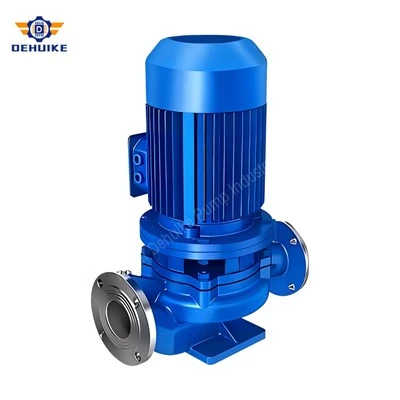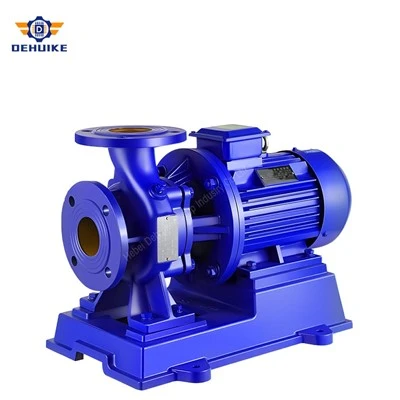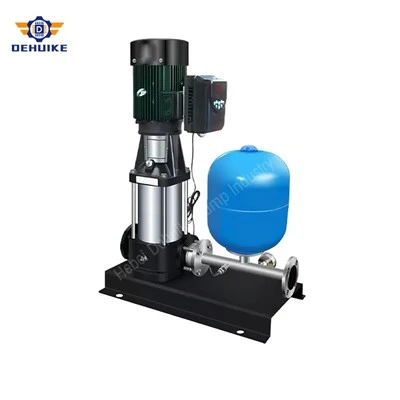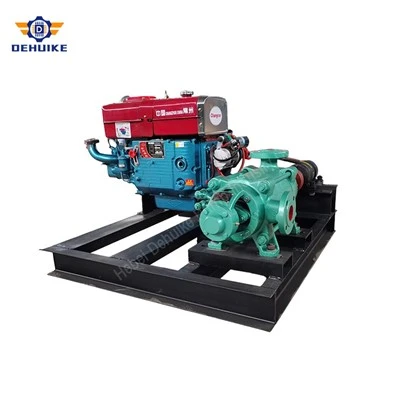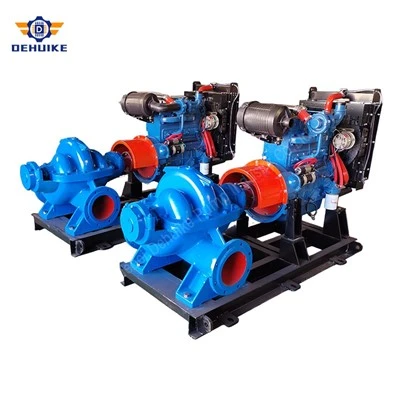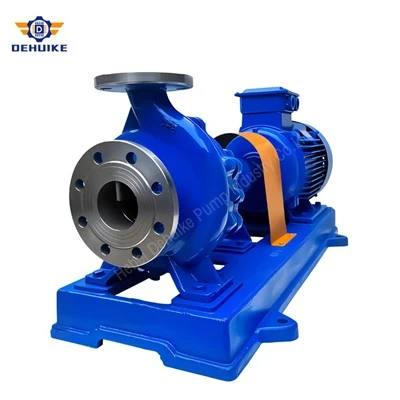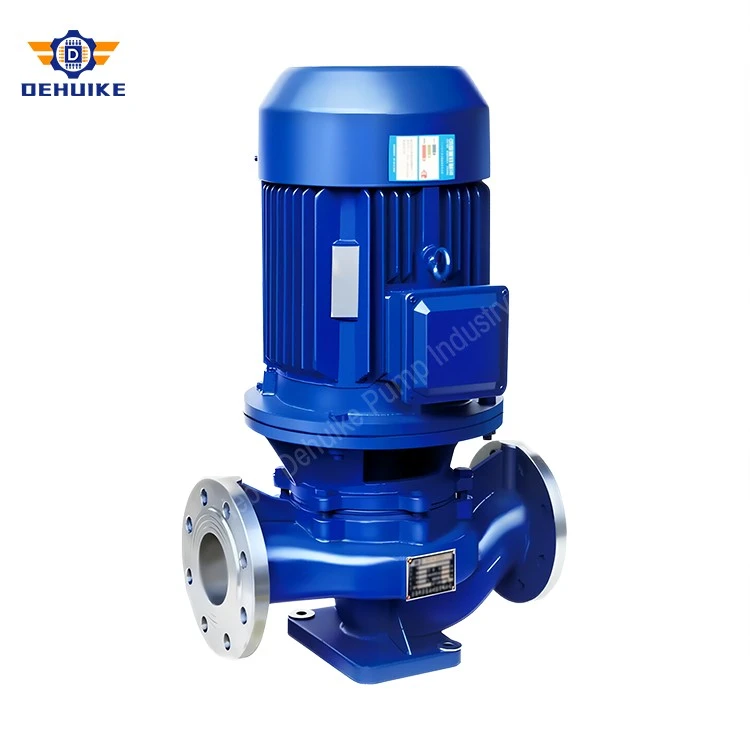
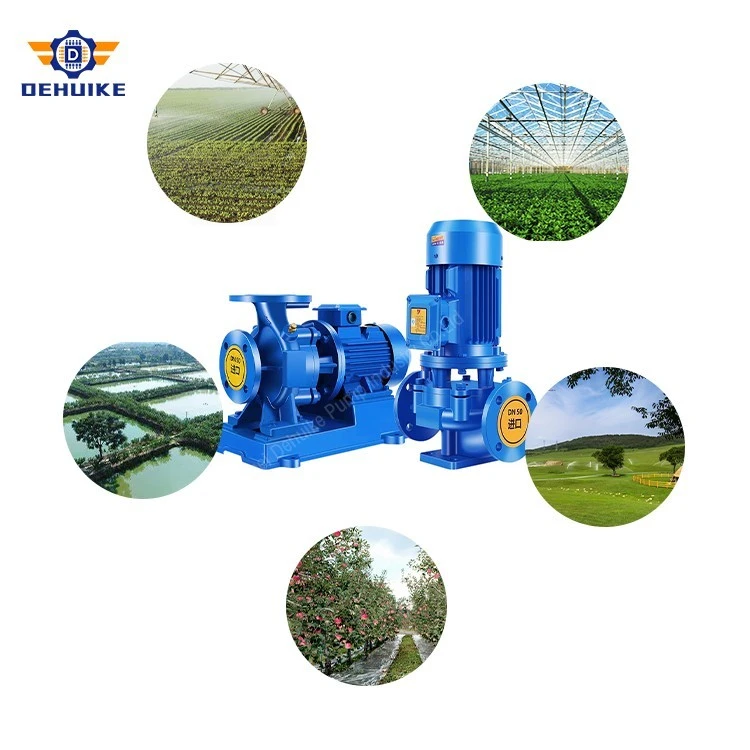
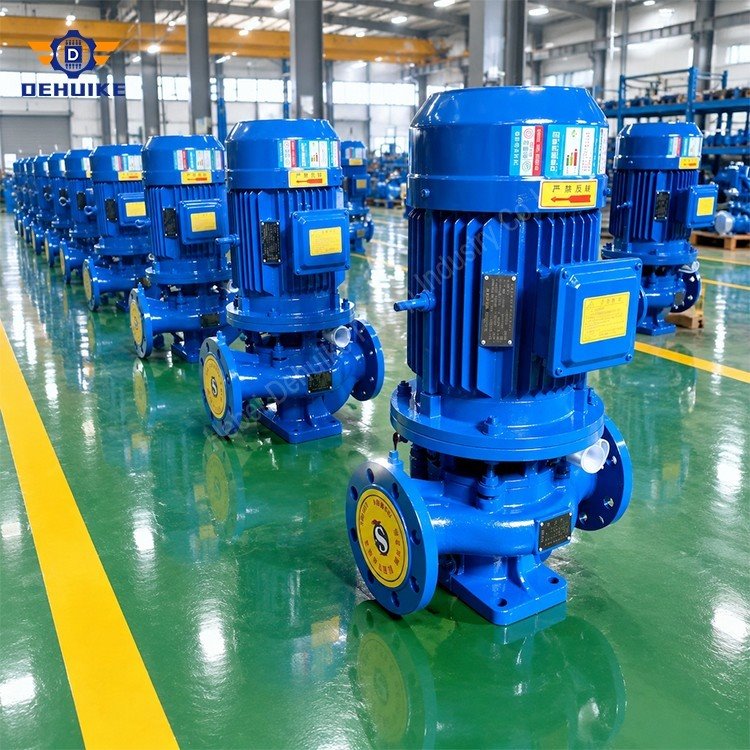
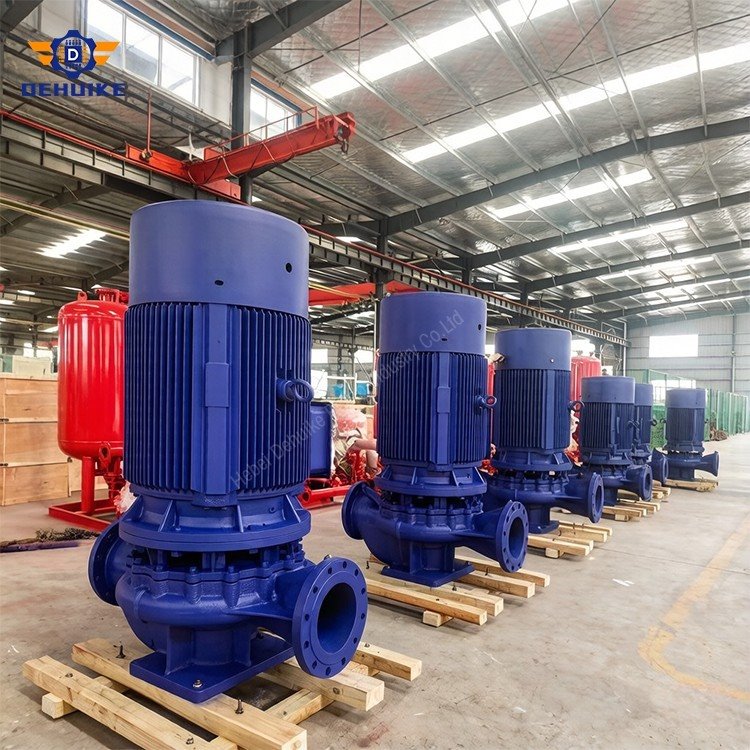
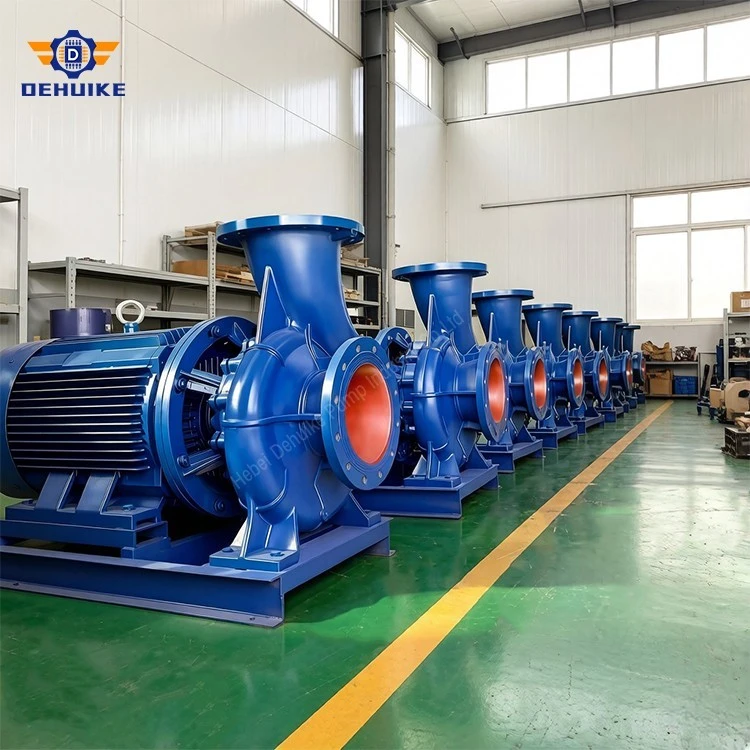
Hebei Dehuike Pump Industry Co., Ltd. is one of the most reliable manufacturers and suppliers of single stage inline water pump in China. With abundant experience, we are committed to providing high quality customized pumps with competitive price. Welcome to wholesale bulk single stage inline water pump for sale here from our factory. Also, pricelist is available.
Engineering Introduction: Single-Stage Hydrodynamics & Simplicity in Clean Water Networks
In clean water engineering, excessive mechanical complexity creates unnecessary points of failure. Plant engineers designing municipal water distribution booster stations, central HVAC cooling loops, and industrial washdown circuits often discover that adding extra stages hurts rather than helps. Stacking multiple impellers inside series diffusers increases rotor span, introduces internal interstage leakage paths, and demands delicate shaft seals that are prone to thermal binding. For clean hydronic transfer where operating heads fall between ten and eighty meters, single-stage fluid acceleration remains the most reliable, cost-effective engineering approach.
This operational preference for mechanical simplicity explains why the Single Stage Inline Water Pump serves as the undisputed workhorse for commercial and municipal hydronic networks. A single enclosed impeller rotates inside a precision-contoured volute casing, taking liquid into its suction eye and accelerating it outward in one clean, uninterrupted pass. By concentrating the entire kinetic-to-pressure energy conversion within a single hydraulic stage, hydraulic skin friction is reduced, internal recirculatory losses are minimized, and mechanical efficiency stays high across a wide operating envelope.
Packaging this single-stage hydraulic design into an in-line casing geometry solves the most frustrating layout challenge facing mechanical designers: bulky piping transitions. Traditional foot-mounted water pumps force pipefitters to drop down to floor level, install long-radius suction elbows, and build elevated pipe racks to reconnect to plant headers. A Single Stage Inline Water Pump, by contrast, splices straight into horizontal or vertical piping runs. Suction and discharge ports share identical diameters and sit on the exact same axis. The pump installs with the straightforwardness of a flanged check valve, allowing contractors to route straight, clean pipe spools with minimal joint fittings.
From an operating expenditure standpoint, running a Single Stage Inline Water Pump keeps maintenance budgets predictable. There are no interstage bushings to gall, no multiple stage casings to reseal during overhauls, and only one mechanical seal assembly to monitor. With hydraulic passages designed specifically for non-viscous clean water and neutral hydronic liquids, the machine runs smoothly at its Rated Optimal Efficiency Point (BEP). Plant operators get uninterrupted pressure boosting and circulating capability without paying for complex multistage hardware they simply do not need.
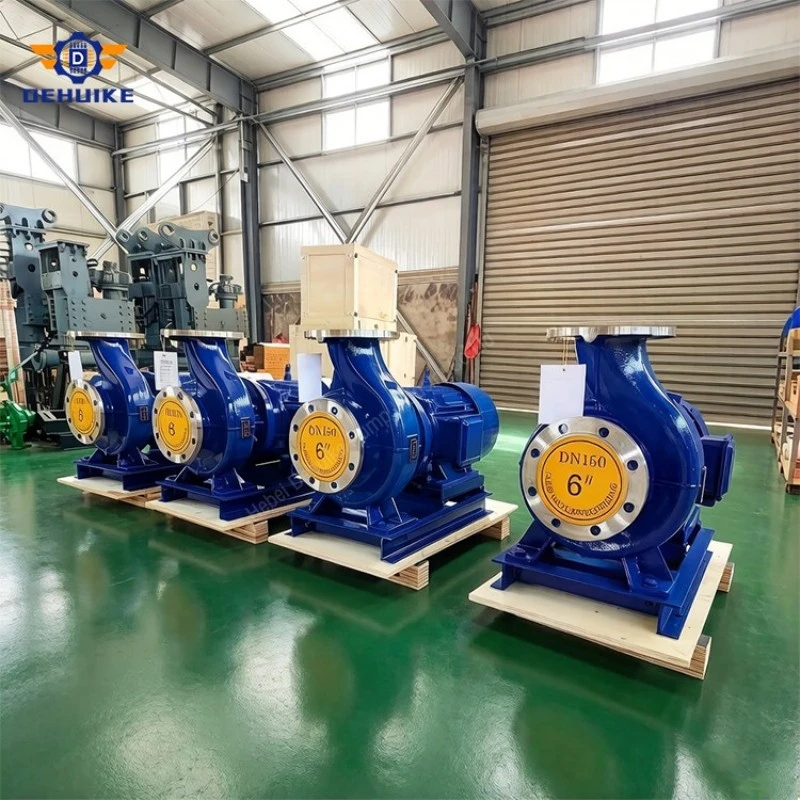
Operating Envelopes & Certified Hydraulic Performance Data
Specifying clean water pumping equipment requires hard test data, not vague sales claims. Our Single Stage Inline Water Pump portfolio covers nominal port sizes from DN40 through DN150, engineered specifically for non-viscous, non-abrasive neutral water transfer. Casings carry a PN16 design rating, providing safe pressure containment up to sixteen bar continuous line pressure. Fluid temperature envelopes span from freezing winter conditions up to +105°C, making these pumps equally suitable for chilled cooling loops and pressurized hot water heating circuits.
Table 1 displays authentic hydraulic ratings extracted directly from our verified factory engineering archives. The values record nominal connection bores, rated flow delivery, developed dynamic head, hydraulic efficiency, motor operating speed, absorbed shaft power, Net Positive Suction Head required (NPSHr), and total dry equipment mass across representative light, intermediate, and heavy-duty clean water models.
Table 1: Certified Performance Envelope for Industrial Single-Stage Clean Water In-Line Models
|
Model Ref |
Flange Nominal Size |
Volumetric Delivery |
Total Dynamic Head |
Hydraulic Efficiency |
Operating Speed |
Motor Shaft Power |
Required NPSH |
Net Equipment Mass |
|
ISG40-160A |
DN40 |
4.1 m³/h |
29.0 m |
34 % |
2900 r/min |
1.5 kW |
2.3 m |
43 kg |
|
ISG65-125A |
DN65 |
15.6 m³/h |
17.0 m |
58 % |
2900 r/min |
2.2 kW |
2.5 m |
49 kg |
|
ISG65-250 |
DN65 |
17.5 m³/h |
82.0 m |
39 % |
2900 r/min |
15.0 kW |
2.5 m |
180 kg |
|
ISG80-200A |
DN80 |
32.8 m³/h |
47.0 m |
54 % |
2900 r/min |
11.0 kW |
3.0 m |
165 kg |
|
ISG80-200 |
DN80 |
35.0 m³/h |
53.5 m |
55 % |
2900 r/min |
15.0 kW |
3.0 m |
175 kg |
|
ISG100-125 |
DN100 |
70.0 m³/h |
23.5 m |
70 % |
2900 r/min |
11.0 kW |
4.0 m |
169 kg |
|
ISG125-125 |
DN125 |
96.0 m³/h |
22.6 m |
80 % |
2900 r/min |
15.0 kW |
4.0 m |
220 kg |
|
ISG150-125A |
DN150 |
90.0 m³/h |
18.0 m |
77 % |
2900 r/min |
7.5 kW |
4.0 m |
130 kg |
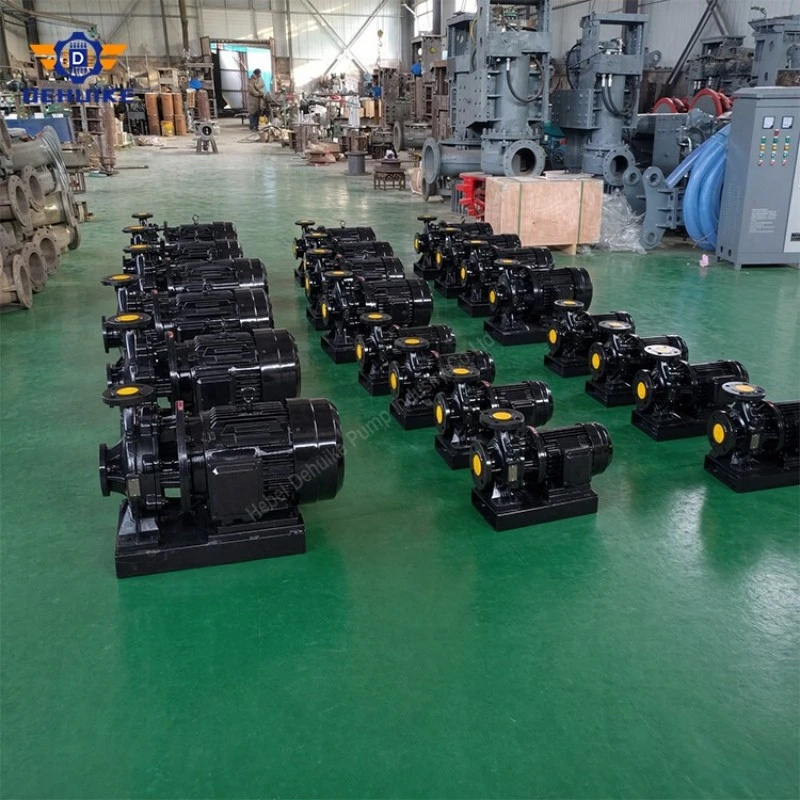
Product Details & Metallurgy: Clean Water Flow Paths, Wear Rings & Mechanical Seals
Water is often viewed as a benign fluid, but untreated municipal supplies, chlorinated cooling towers, and closed glycol loops can quickly corrode inferior metals and erode soft seal faces. Our engineering team selects metallurgy and sealing materials to withstand chemical wear, prevent scale binding, and maintain tight internal hydraulic tolerances.
Dense Pearlitic Gray Iron Volute Casting: Standard pump casings and back covers are poured from high-grade HT250 gray cast iron. The dense pearlitic micro-structure provides superior dampening capacity, attenuating fluid pulsations and hydraulic noise before they transmit into plant pipework. Smoothly contoured volute waterways prevent turbulent boundary friction. Where static line pressures exceed standard thresholds, casings can be cast in ductile iron QT450 for enhanced elongation and shock resistance.
Precision Clean Water Impeller Alloys: Impellers are cast as standard from fine-grained gray iron with hydro-dynamically profiled vane surfaces. For potable drinking water schemes or high-purity closed cooling circuits where rust staining cannot be tolerated, we cast impellers in investment-cast 304 or 316 stainless steel, or marine tin-bronze (ZCuSn10Pb1). These non-ferrous alloys resist galvanic corrosion and preserve smooth vane entry angles indefinitely.
Polished 304 Stainless Steel Shaft Sleeve: The drive shaft extension utilizes heat-treated 2Cr13 martensitic stainless steel for high torsional strength. Around the mechanical seal chamber, a removable 304 grade protective sleeve shields the internal spindle. Ground to a fine Ra 0.4 micrometer finish, this sleeve provides a true, polished surface for the seal bellows, eliminating shaft pitting and protecting the drive core from liquid contact.
Engineered Mechanical Face Seal with Potable-Grade Elastomers: Shaft sealing utilizes a balanced mechanical seal. For clean water duty, the primary sealing interface pairs a reaction-bonded silicon carbide stationary seat against an antimony-impregnated resin carbon rotating ring. This combination offers high hardness against trace pipe scale along with self-lubricating qualities during pressure fluctuations. O-rings are molded from potable-safe EPDM rubber that resists water up to 105°C without cracking.
Sacrificial Throat Rings & Annular Clearance: To prevent high-pressure discharge water from short-circuiting back into the suction inlet, the volute casing is fitted with a replaceable wear ring. Radial gap tolerances between 0.2 mm and 0.4 mm are held during factory boring. By taking the wear from fluid wash, the sacrificial wear ring protects the costly casing volute. During overhauls, mechanics simply replace the ring to restore original factory pressure and efficiency.
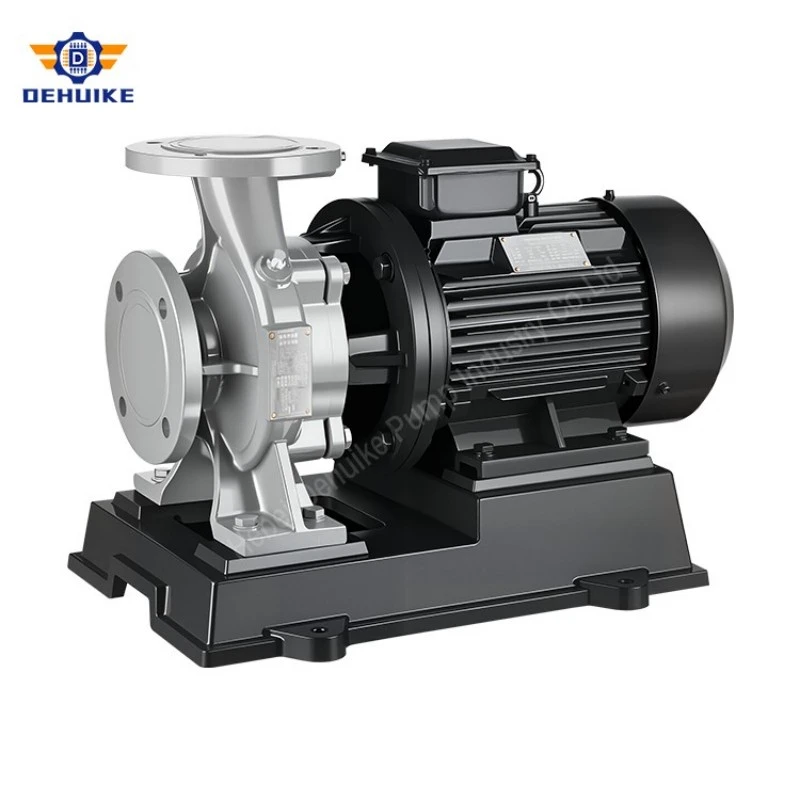
Our Service: Hydraulic Engineering Sizing, BIM Models & Jobsite Commissioning
Engineering procurement requires dependable vendor support from initial bid preparation through site commissioning. When engineering firms and mechanical contractors select our Single Stage Inline Water Pump, our application department provides thorough engineering assistance at every project phase.
Hydraulic Selection & Energy Payback Audits: Our technical specialists assist clients in auditing system friction calculations and static head requirements. We overlay system resistance curves against factory test curves, verifying that the selected unit operates reliably between 80% and 110% of its Rated Optimal Efficiency Point (BEP). This careful matching prevents motor oversizing, protects against cavitation, and maximizes energy savings across daily operation.
Drop-In Replacement Dimension Cross-Referencing: For brownfield facility upgrades where existing pumps must be replaced over a weekend shutdown, we provide exact dimensional mapping against legacy European, Japanese, and American in-line circulators. We confirm center-to-face flange spans, flange bolt patterns, and total vertical heights so site crews can drop in our replacement units without re-welding pipe spools.
Pre-Packaged Skid Design & Manifold Layout Consultation: For MEP skid builders assembling multi-pump domestic water booster packages or dual-pump standby circulation skids, our engineering office provides manifold sizing and header spacing guidance. We help designers optimize header flow velocities below 1.8 m/s, minimize tee-junction pressure drops, and position check valves to prevent hydraulic slamming.
Digital 3D CAD & Native Revit BIM Digital Integration: To streamline virtual engineering design and clash detection for building consultants and skid packaging specialists, we supply accurate 3D CAD models in universal STEP, IGES, and DWG formats. We also provide native Autodesk Revit BIM families containing exact nozzle centerlines, electrical wiring points, bolt-hole drillings, and dry equipment masses for accurate mechanical room spatial coordination.
Emergency Spare Seal Cartridge Inventory Support: We maintain dedicated regional inventories of pre-assembled seal cartridges, wear rings, and motor replacement bearings. Emergency maintenance orders ship within twenty-four hours, backed by laser-etched nameplate traceability that eliminates measuring errors and ensures guaranteed component fit.
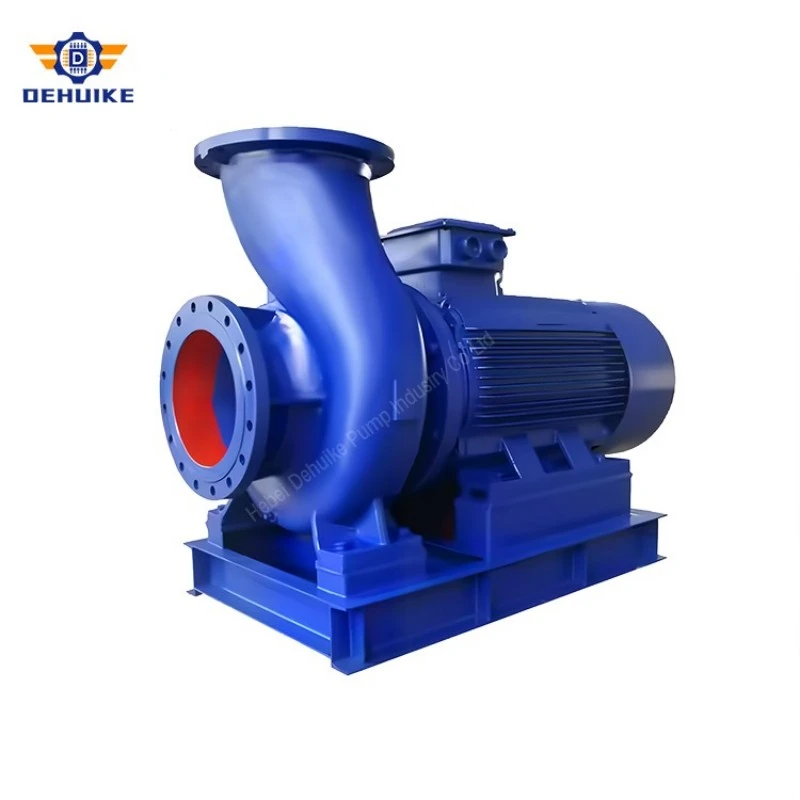
Experience and Markets: Regional Case Studies & Global Clean Water Deployments
Because clean water circulation represents the foundational utility across human infrastructure, the single stage inline water pump serves as the primary workhorse across a diverse spectrum of municipal, commercial, and industrial facilities. The operational scenarios below illustrate the pump's versatility and piping integration standards.
With over thirty years of focused fluid machinery manufacturing, our pumping units have been deployed across diverse international territories. Today, our clean water pumps operate in commercial, municipal, and industrial infrastructure projects across more than fifty export destinations worldwide, demonstrating reliable service across extreme climates and challenging electrical grids.
Municipal Potable Supply Networks in Central Asian River Basins: In municipal water supply districts across Kazakhstan, Uzbekistan, and Tajikistan, our single-stage in-line units serve inside secondary pumping stations and water treatment booster plants. Robust cast iron pressure casings and cold-climate elastomer seals deliver dependable performance through harsh continental winter freezes, ensuring uninterrupted clean potable water transmission.
Commercial Agricultural Greenhouses in the Mediterranean & North Africa: Across automated tomato and horticulture greenhouse complexes in Spain, Morocco, and Egypt, our pumps supply pressurized clean water to automated drip irrigation loops, nutrient dosing manifolds, and misting lines. Operating reliably across extended irrigation cycles under intense summer solar heat, our units maintain steady pressure at the furthest emitter nozzles.
Food Processing & Beverage Bottling Plants in Southeast Asia: In beverage packaging, brewing, and fruit canning operations across Thailand, Vietnam, and Indonesia, our stainless-impeller in-line pumps circulate pasteurizer cooling water, bottle rinsing wash lines, and clean utility water supplies. Smooth internal flow paths prevent bacterial colonization and resist sanitizing chemical flushes.
Mining Camp Clearwater Domestic Utility Skids in the Andean Region: In high-altitude mining operations across Chile and Peru, clean water must be lifted from treatment plants to worker living accommodations and vehicle wash facilities. Operating at altitudes exceeding 3,000 meters above sea level, our in-line pumps are engineered with low NPSHr margins to prevent boiling cavitation in thin mountain atmospheres.
Standardized Export Packing & Moisture Preservation: To ensure equipment reaches overseas job sites in factory-fresh condition, our shipping division follows strict export packaging protocols. Unpainted machined faces and internal waterways receive vapor-phase corrosion-inhibiting rust preventatives, are enclosed in heavy-duty vacuum-sealed moisture barrier film with desiccant canisters, and are bolted into rugged, solid timber export crates that comply strictly with international ISPM 15 heat-treatment standards.
Multimodal Logistics Coordination & Transparent Trade Terms: We operate within Incoterms 2020 commercial frameworks covering FOB dispatch or CIF delivered port arrangements. Urgent spare parts and small assemblies (50–500 kg) are dispatched via air cargo, while larger multi-unit container orders (500+ kg) are routed by sea freight accompanied by full bills of lading and custom clearance documentation.
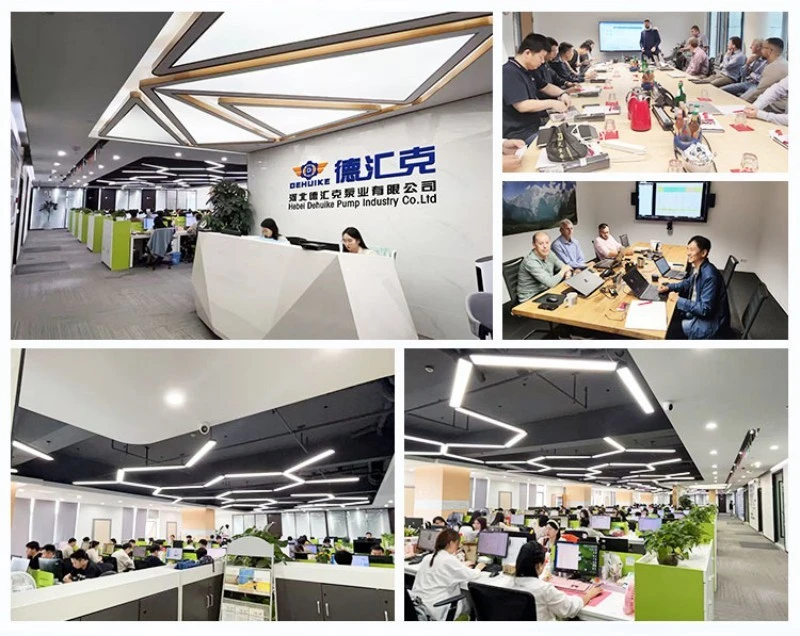
Quality Assurance: Factory Verification Standards, Hydrostatic Tests & Dynamic Balancing
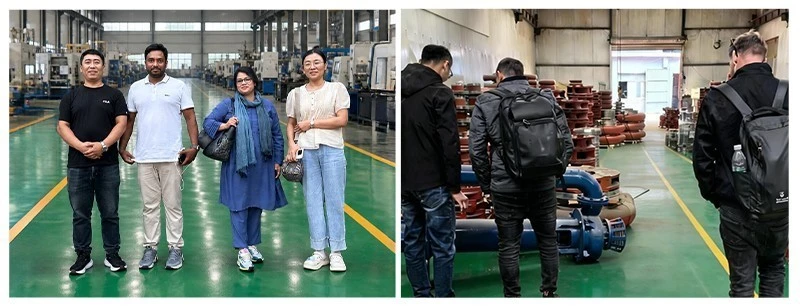
Our manufacturing quality system operates under full ISO 9001 certified protocols, with every component subject to physical inspection hold points before final release.
Foundry Heat Chemistry & Tensile Verification: Raw melt heats are evaluated via spectrometer analysis to confirm carbon-silicon metallurgical balance. Test coupons poured from each ladle undergo tensile pull tests, verifying minimum tensile ratings of 250 MPa for HT250. Casing assembly studs and high-tensile flange hardware must present verified metallurgical test certs before entering assembly bins.
Volute Wall Thickness Ultrasonic Auditing: To guarantee structural pressure containment, machined pump casings undergo ultrasonic thickness gauging across volute cutwaters and belly sections. Minimum casting thicknesses must exceed engineering drawings by at least 10% to provide an ample corrosion allowance over multi-decade operating horizons.
ISO 9906 Grade 2B Certified Performance Testing: Every production batch is routed through our digital hydraulic test pool. Calibrated magnetic flowmeters and pressure transducers record head, flow, and power across five test points. If hydraulic output deviates from ISO 9906 Grade 2B limits, the impeller diameter is reviewed and re-machined.
Triaxial Vibration Monitoring & Sound Level Verification: During full-load testing, piezoelectric vibration sensors measure bearing housing velocities across all three axes. Total velocity vibration amplitudes must not exceed 2.5 mm/s peak, well within smooth running criteria. Decibel meters verify that operational noise remains within low acoustic limits.
EAC & RoHS International Environmental Compliance: Our product lines carry Eurasian Conformity (EAC) validation certificates for customs territories and RoHS documentation certifying lead-free, non-toxic materials, alongside customs compliance paperwork for European and Eurasian border clearances.
Application: Essential Hydronic Duty Environments & Engineering Integration
The compact inline geometry, quiet mechanical operation, and solid pressure containment of the Single Stage Inline Water Pump make it an essential asset across commercial building services and industrial process loops. Plant engineers install these units across multiple duty sectors.
Municipal Drinking Water Secondary Booster Stations: In municipal water districts, secondary pumping stations draw water from treated ground storage reservoirs and push it into elevated storage towers or pressurized distribution mains. Installed in parallel duplex or triplex banks, our pumps provide reliable potable water transfer with low NPSHr characteristics that prevent cavitational noise during peak morning and evening draw periods.
Commercial Fire Jockey Pressure Maintenance Loops: In commercial distribution logistics warehouses and high-rise properties, fire protection systems require dedicated jockey pumps to maintain steady static line pressure in wet-pipe sprinkler grids. Our in-line units handle constant static pressure effortlessly, kicking on automatically to compensate for small valve weeping and keeping primary diesel fire pumps from nuisance starting.
Boiler Feedwater Makeup & Softener Water Circulation: Industrial steam boiler rooms require deaerated, chemically treated clean water circulation through zeolite water softeners, multimedia sand filters, and atmospheric condensate return tanks. Our cast iron and bronze-fitted in-line pumps move warm condensate and treated feedwater reliably, resisting thermal shocks up to 105°C.
Industrial Washdown & Commercial Laundry Water Systems: Continuous tunnel washers, commercial laundries, and meat processing facilities consume substantial volumes of pressurized clean wash water. Operating on variable-speed drives, our single-stage pumps maintain constant header pressure regardless of how many washdown spray wands or washing machines open simultaneously.
Commercial Greenhouse Hydroponics & Automated Irrigation: Large-scale commercial greenhouse complexes cultivating vegetables and flowers depend on uninterrupted clean water pressurization for drip irrigation tubes and overhead misting nozzles. Our pumps provide consistent water pressure across hectares of greenhouse bays, ensuring uniform water and nutrient distribution to every plant row.
FAQ: Technical Sizing, Piping Practice & Clean Water Engineering Inquiries
To assist consulting engineers, mechanical project estimators, and facility operations teams in selecting and maintaining their pumping infrastructure, our application engineering division has compiled authoritative answers to frequent technical inquiries.
Q1: How does a single-stage in-line pump compare to a vertical multistage pump for general commercial water distribution?
Vertical multistage pumps (such as CDL series) are engineered for high-pressure, low-to-medium flow applications like ultra-high-rise booster stacks or reverse-osmosis membranes. However, for primary hydronic circulation, chilled water loops, and district cooling headers where flows exceed 30 m³/h and heads stay under 80 meters, a Single Stage Inline Water Pump is far more practical. It features a larger flow throat, higher specific speed, fewer moving parts, lower internal friction, and significantly lower purchase and overhaul costs.
Q2: What is the recommended suction piping velocity to prevent inlet turbulence?
clean water piping systems, suction line velocity should ideally be maintained between 1.2 and 2.0 meters per second. Velocities above 2.5 m/s generate excessive pipe friction and turbulent swirl at the impeller eye, which increases NPSHr and can lead to localized cavitational erosion. We recommend installing an eccentric reducer (flat on top) if connecting to larger-diameter suction headers, along with at least five pipe diameters of straight pipe before the pump inlet flange.
Q3: Can this single-stage clean water pump handle mild glycol hydronic mixtures?
Yes. While designed primarily for clean neutral water, our pumps comfortably circulate closed-loop hydronic mixtures containing up to 40% ethylene or propylene glycol for freeze protection. Because glycol increases liquid viscosity and lowers specific heat, engineers should apply a small viscosity de-rating factor to head and flow curves, and verify that motor kilowatt sizing provides adequate thermal margin.
Q4: How should air binding be prevented in vertical in-line pump casings?
occurs when entrained air accumulates in the high point of the pump volute, causing loss of prime and mechanical seal dry-running. Our casings feature an integral air vent plug at the highest point of the casing cover. During initial commissioning, operators must loosen this plug until a steady stream of liquid emerges without bubbles, ensuring complete de-aeration before energizing the electric motor.
Q5: What are the tell-tale signs of mechanical seal face wear in clean water service?
Our motor adapter stool features an open atmospheric drainage cavity beneath the seal gland. During normal operation, slight vapor evaporation is normal. However, continuous liquid dripping exceeding five drops per minute indicates face wear or elastomer degradation. In clean water systems, replacing the seal cartridge before complete failure protects the stainless shaft sleeve and prevents water from entering the motor bearings.

Hot Tags: single stage inline water pump, China single stage inline water pump manufacturers, suppliers, factory