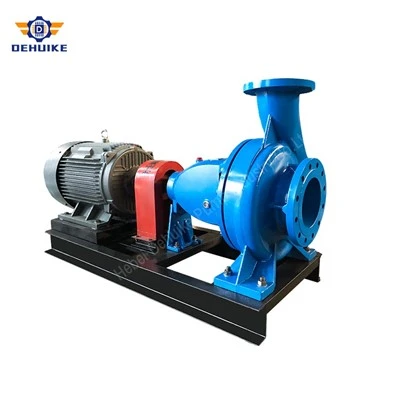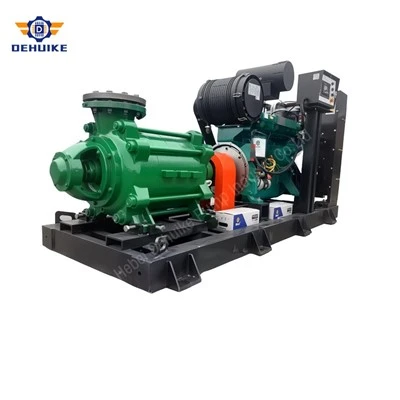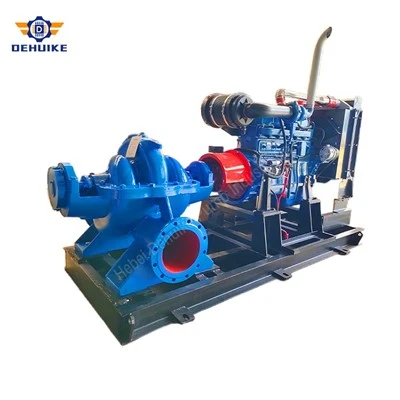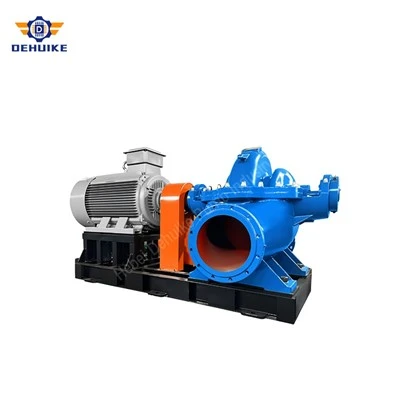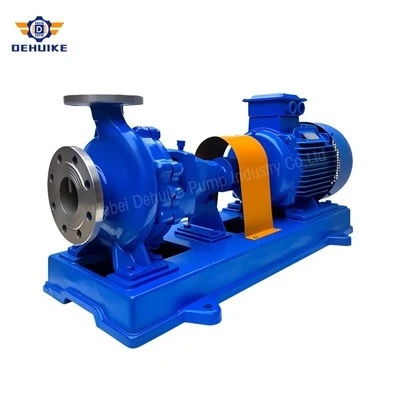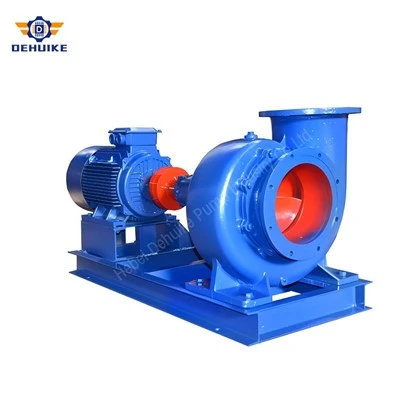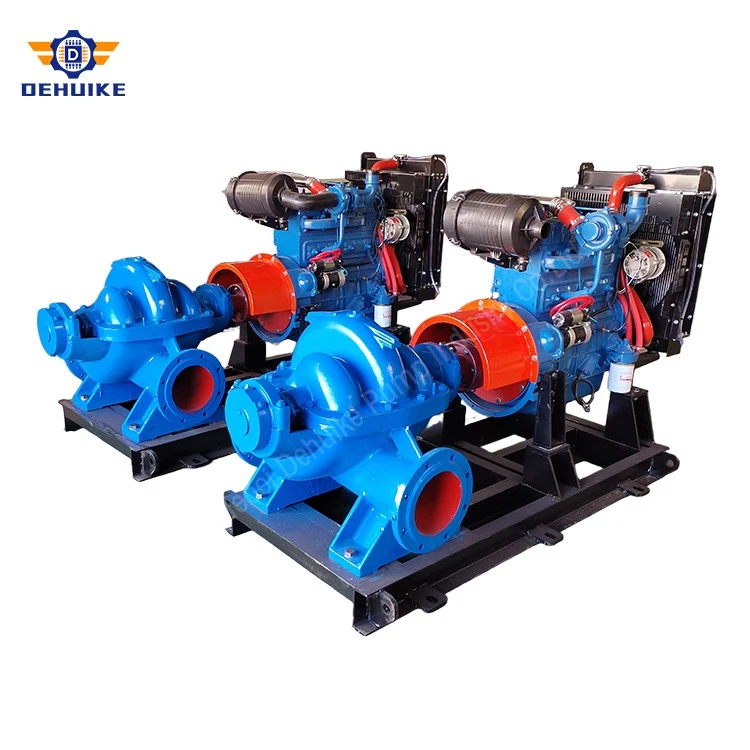
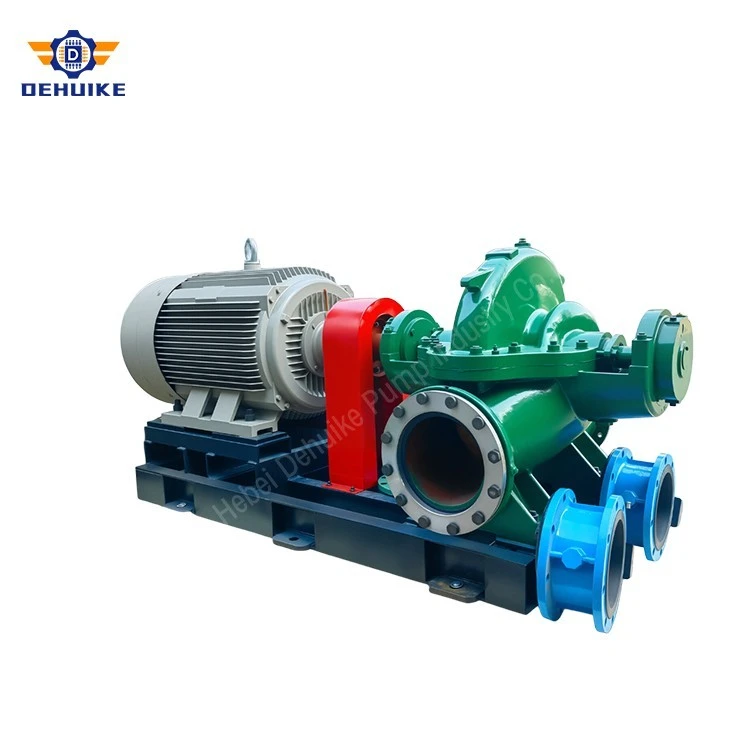
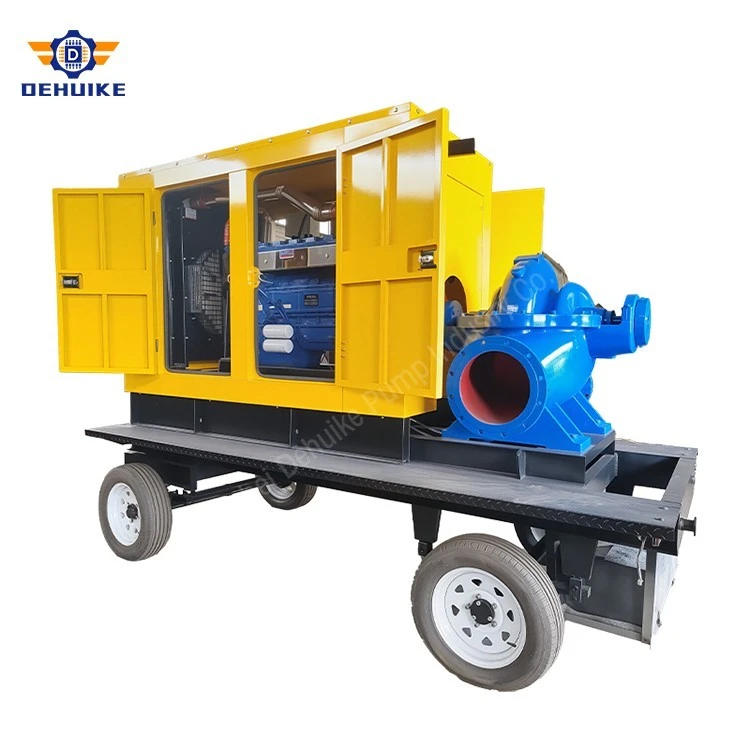
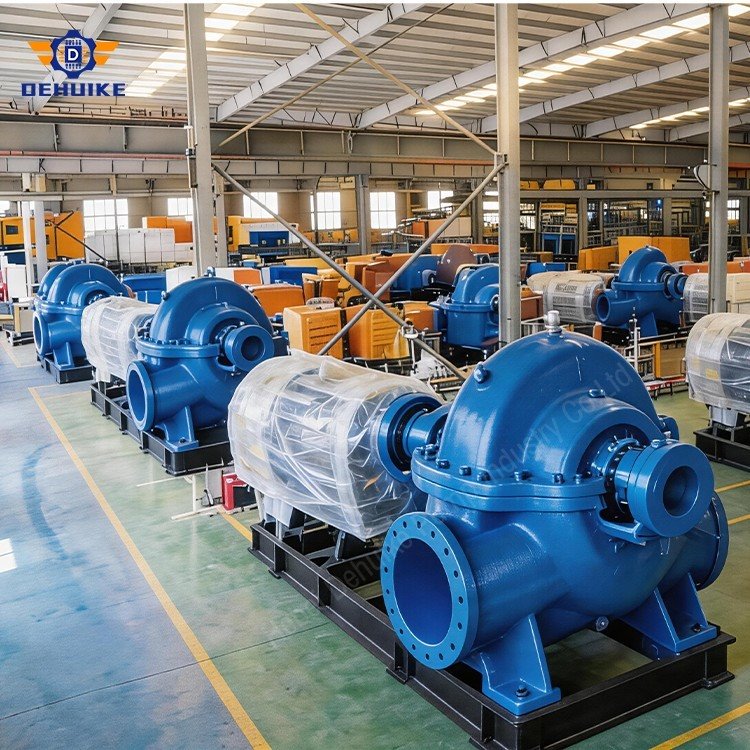
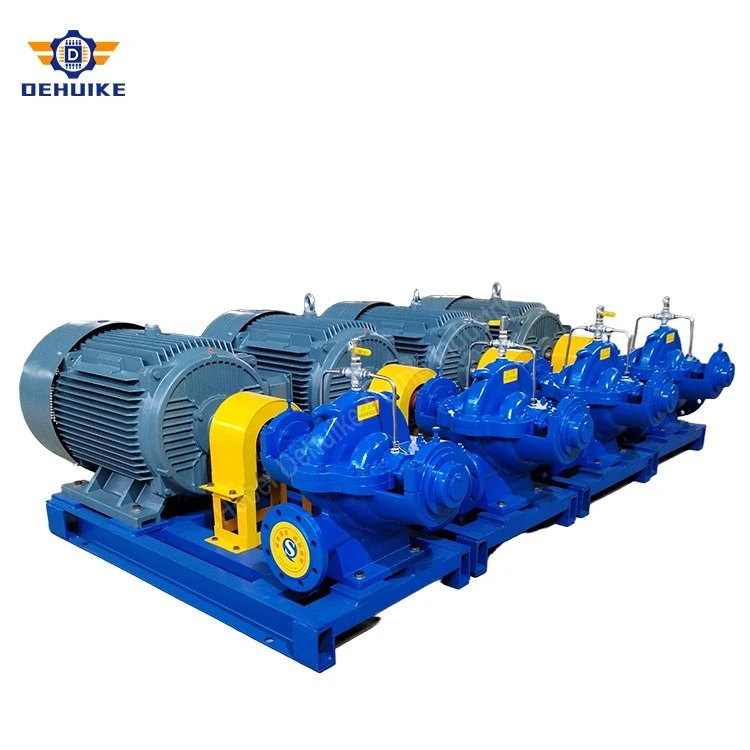
Hebei Dehuike Pump Industry Co., Ltd. is one of the most reliable manufacturers and suppliers of industrial split case centrifugal pump in China. With abundant experience, we are committed to providing high quality customized pumps with competitive price. Welcome to wholesale bulk industrial split case centrifugal pump for sale here from our factory. Also, pricelist is available.
Introduction
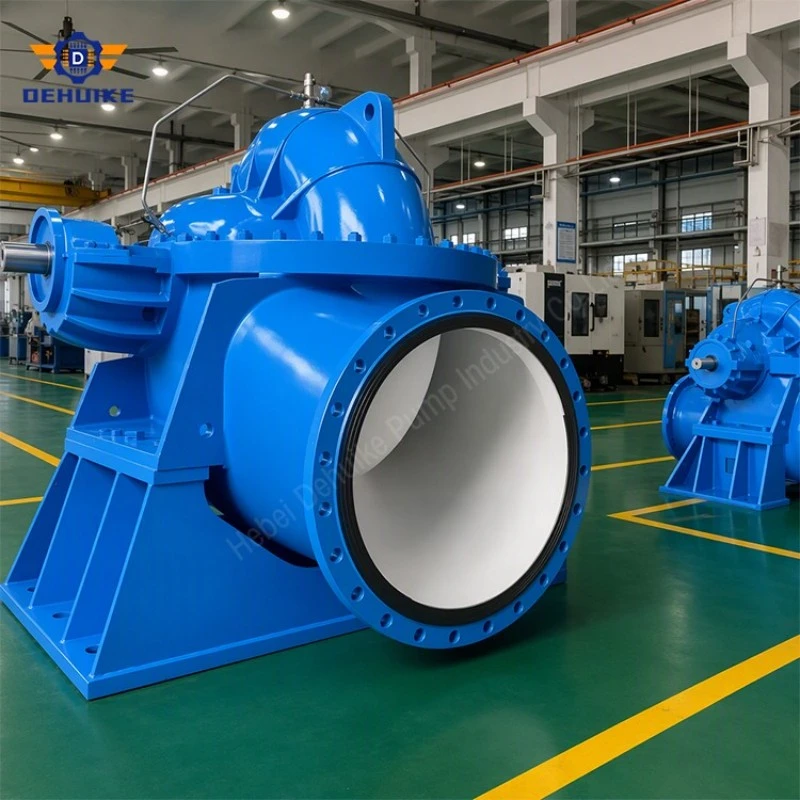
An Industrial Split Case Centrifugal Pump is considered for process-water, utility-water, circulation, and transfer installations where a large-volume water duty must be matched to a defined hydraulic system. Water is admitted to the impeller from two sides, accelerated by the rotating hydraulic element, and routed by the casing toward the discharge connection. In a plant environment, selection is governed by the entire system: source conditions, process demand, pipe losses, elevation, control valves, connected equipment, operating schedule, and maintenance access all influence the real duty point.
The split-case concept is relevant to installations where internal inspection access needs to be planned into the pump-room layout. It does not remove the need for proper foundation design, pipe support, coupling alignment, lifting provision, isolation procedures, and maintenance planning. A model should only be finalized after its full approved performance curve has been checked against the calculated system curve.
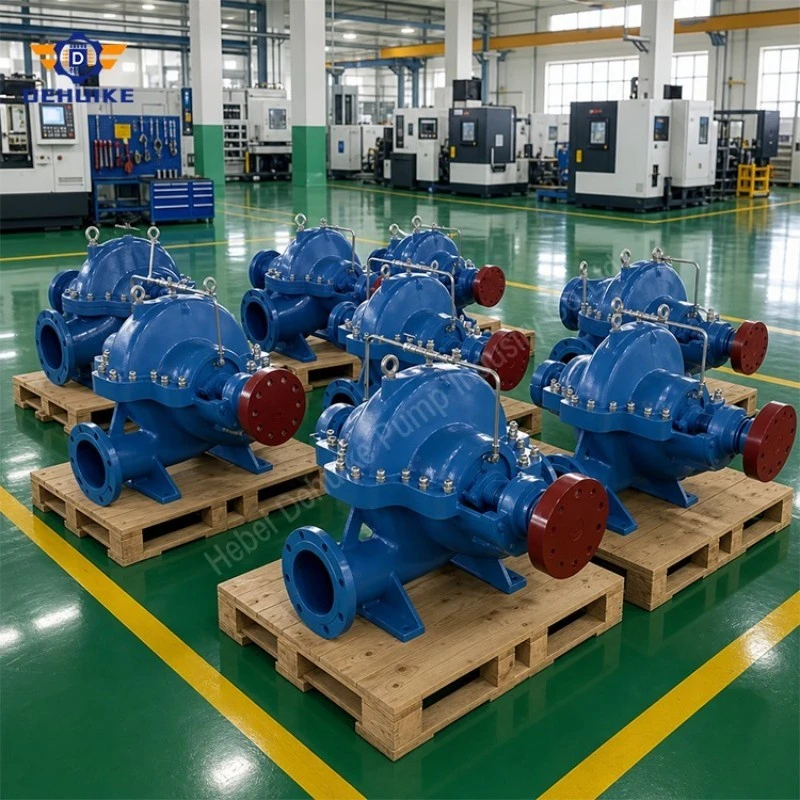
Specifications / Technical Parameters / Technical Data
The following records are intended as traceable duty references. Do not combine values between models: each row contains one linked set of flow, head, speed, shaft power, motor size, efficiency, NPSHr, impeller diameter, and pump-set weight.
Data-use note: These figures are the specified design-duty entries in the spreadsheet, not guaranteed operating values for every installation. As system resistance changes, the pump operating flow, differential head, absorbed power, efficiency, and NPSHr change. NPSH available must be calculated using site water level, liquid temperature, elevation, suction-pipe geometry, fittings, and friction losses.
|
Pump Identification |
Rated Capacity (m3/h) |
Rated Capacity (L/s) |
Total Head (m) |
Rotational Speed (r/min) |
Shaft Input (kW) |
Listed Motor (kW) |
Efficiency (%) |
NPSHr (m) |
Impeller Diameter (mm) |
Pump Set Weight (kg) |
|
10Sh-13A / 250S24A |
414 |
115 |
20.3 |
1450 |
27.6 |
37 |
83 |
4.0 |
270 |
420 |
|
12Sh-13A / 300S32 |
720 |
200 |
26 |
1450 |
60.7 |
75 |
84 |
5.5 |
322 |
809 |
|
14Sh-28A / 350S16A |
1044 |
290 |
13.4 |
1450 |
47.6 |
55 |
80 |
6.5 |
270 |
760 |
|
16SA-9JA / 16SA-9D / 400S96JA |
1080 |
300 |
35 |
980 |
123 |
155 |
84 |
5.0 |
510 |
1910 |
|
24Sh-19A / 600S32A |
2880 |
800 |
27 |
970 |
228 |
280 |
89 |
7.5 |
500 |
2550 |
Product Details
The hydraulic passage begins at the inlet and guides liquid toward both impeller eyes. As the impeller rotates, it transfers energy to the water. The casing gathers the resulting flow and directs it to the discharge connection. This double-entry hydraulic route is associated with high-volume water movement and with opposing liquid forces acting on the impeller sides.
An Industrial Split Case Centrifugal Pump is typically evaluated in a horizontal arrangement with a casing divided at the shaft centreline. With suitable lifting access and piping layout, the upper casing section can be removed to reach the internal assembly. Actual service access must be confirmed against the chosen drawing, baseplate, coupling guard, pipe support arrangement, lifting equipment, and plant safety procedure.
The supplied table is not a complete supply specification. Before order release, the equipment list should identify pump and driver configuration, rotation, coupling, guard, connection requirements, requested instruments, document package, inspection points, preservation method, and any special accessories required for the industrial site.
Features / Equipment Characteristics
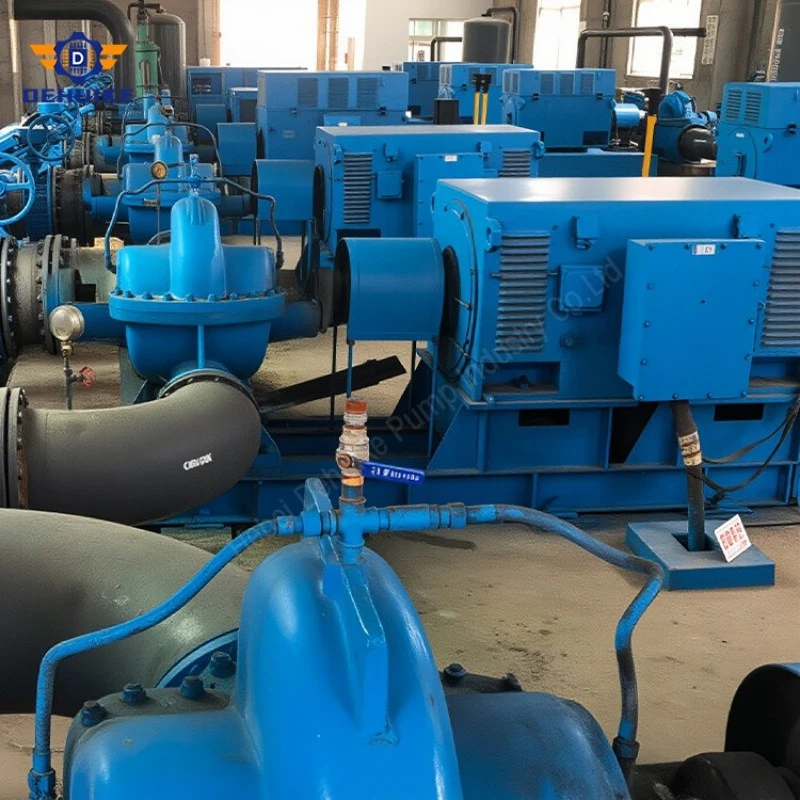
•Industrial duty references: the selected design capacities range from 414 to 2,880 m3/h.
•Multiple system-head cases: the stated design heads cover 13.4 to 35 m for distinct transfer and circulation requirements.
•Double-entry hydraulic arrangement: liquid approaches two impeller inlet sides before delivery through the casing passages.
•Recorded speed options: the five selected entries operate at 970, 980, or 1450 r/min; driver and control selection must follow the approved pump curve.
•Design-point efficiency values: the source rows show 80% to 89% efficiency at their own duty points.
•Suction-side values for review: NPSHr ranges from 4.0 to 7.5 m in the displayed records; compare these values with the site's calculated NPSH available.
•Mechanical planning data: listed pump-set weights range from 420 to 2,550 kg, relevant to transport, foundations, lifting equipment, and maintenance access.
Application
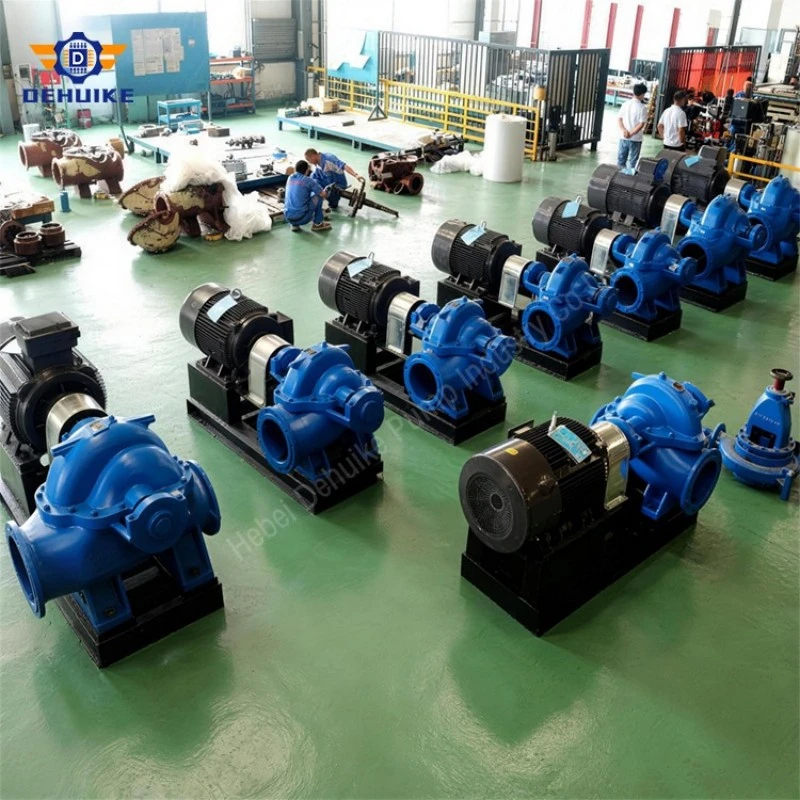
An Industrial Split Case Centrifugal Pump can be reviewed for water-based industrial duties where the liquid condition and ordered configuration are confirmed as suitable. Typical engineering contexts include:
•Process-water transfer between plant storage, treatment, and production areas.
•Industrial utility-water distribution through main pipelines and branch systems.
•Equipment circulation loops with a documented pressure-loss and flow calculation.
•Plant water-transfer projects linking basins, tanks, reservoirs, or service networks.
•Upgrade projects where actual operating flow, differential pressure, and mechanical interfaces have been measured.
The spreadsheet does not confirm suitability for chemicals, abrasive liquids, solids-bearing water, seawater, high-temperature fluids, flammable media, or viscous process liquids. Such duties require separate confirmation of liquid composition, solids, corrosion conditions, temperature, materials, sealing, and applicable plant safety requirements.
Match the Pump to the Industrial System
Begin by defining the process duty. Collect the required capacity, suction source, discharge destination, static elevation, pipeline profile, fittings, control-valve losses, filtration or treatment losses, connected-equipment pressure drop, minimum and maximum demand, and operating schedule. These inputs create the system curve that must be compared with the complete curve for the candidate pump.
The source rows show why a nameplate category cannot replace a duty calculation. The 10Sh-13A / 250S24A record lists 414 m3/h at 20.3 m head, while the 24Sh-19A / 600S32A record lists 2,880 m3/h at 27 m head. Their rotational speeds, motor sizes, suction requirements, impeller diameters, and handling masses differ. Every selection variable should be reviewed as part of its own source record.
Plant integration also matters after hydraulic selection. Confirm the suction route, potential air pockets, inlet losses, pipe loads, coupling alignment, driver-starting method, access platform, overhead lifting, isolation plan, and expected maintenance window. A pump curve does not independently confirm process compatibility or installation quality.
Our Advantages
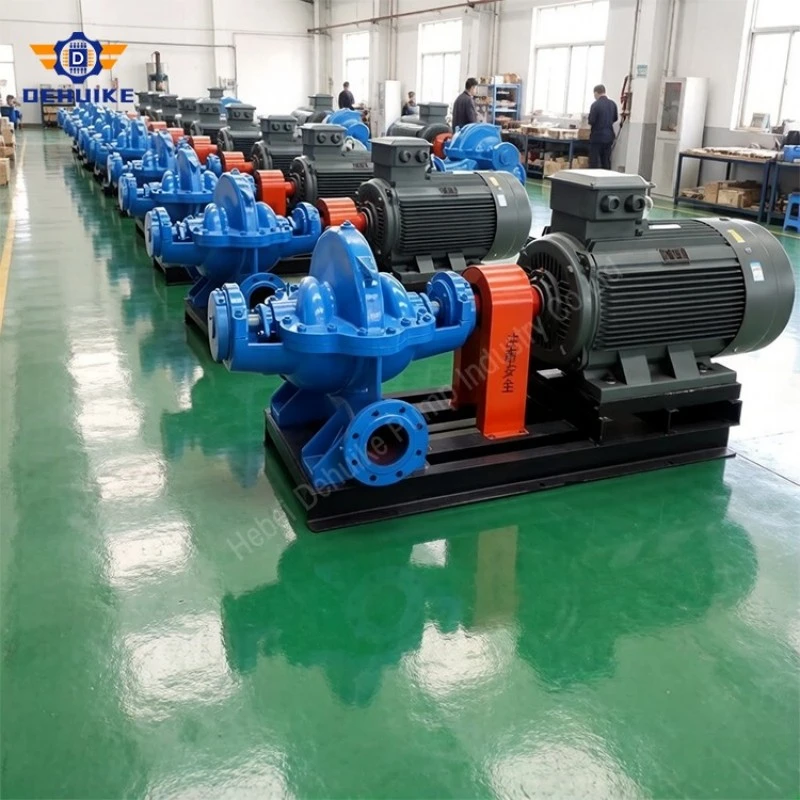
•Five design-rated source rows retained as complete, model-specific duty sets.
•All key available fields shown together: capacity, head, speed, shaft input, motor, efficiency, NPSHr, impeller diameter, and pump-set weight.
•Industrial selection discussion structured around system resistance, process demand, suction conditions, and maintainable layout.
•No unsupported claims for material, sealing, corrosion resistance, temperature, electrical details, certification, or process-fluid compatibility.
•Enquiry framework supports clear coordination of equipment scope, documents, inspection, and logistics requirements.
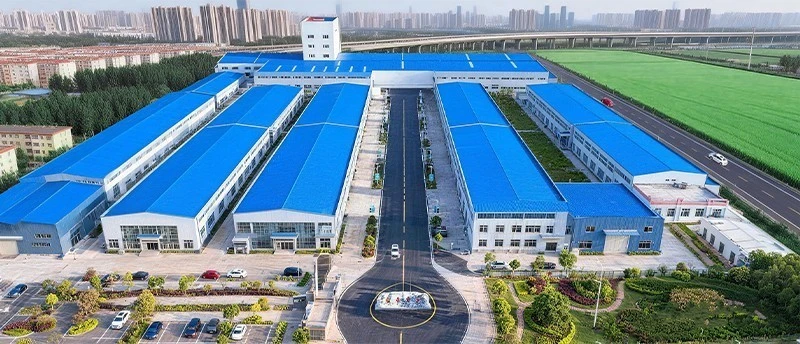
Production Process
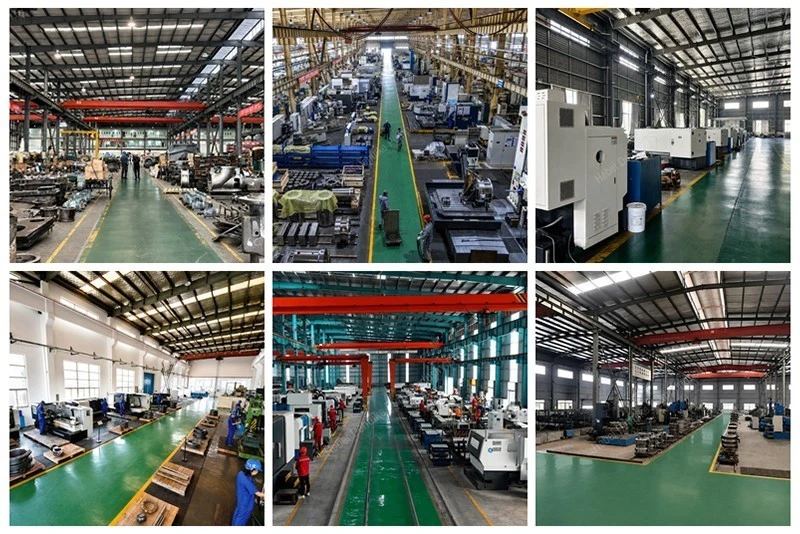
Production begins after the project order has released the approved pump record, driver arrangement, drawings, component scope, inspection plan, preservation requirements, and documentation list. The casing sections, impeller, shaft, bearing components, seal-related parts, and drive-end items are manufactured or prepared under the authorized production documents and assembled into the specified configuration.
The assembled equipment then follows the agreed inspection route. Depending on the contract, this can include dimensional review, rotational checks, hydraulic testing, customer witness arrangements, compilation of records, preservation, packing, and dispatch authorization. The final acceptance criteria and test method are defined by the confirmed order documents.
Quality Assurance
The quality file for an industrial pump order should be assembled from the confirmed technical basis. It can map the approved operating point to the equipment identification, component traceability requirements when specified, planned inspections, agreed tests, customer observation stages, and the records to be released with the shipment. This creates a controlled link between the selected duty and the delivered equipment.
Before packing authorization, the release review should reconcile the actual pump identification, agreed inspection results, requested documents, preservation arrangement, and shipping marks with the purchase specification. Certificates, material evidence, performance reports, third-party records, or compliance statements are issued only where expressly included in the order. No omitted item is treated as an implied deliverable.
Our Service
For a technical selection review, submit the target flow, total dynamic head, liquid description, temperature, source level, suction and discharge pipe details, elevation, process-equipment losses, electrical supply, control approach, operating schedule, destination, and document requirements. The information can be checked against the available performance records and used to identify open configuration questions.
Support may include preliminary duty comparison, clarification of the agreed delivery boundary, coordination of the specified technical documents, installation information within the purchased scope, and spare-parts identification from confirmed model and serial details. Site commissioning, training, field attendance, or inspection support should be defined as separate services in the quotation or contract when needed.
Experience and Markets
Industrial water duties vary across facilities and regions. Some plants operate around continuous process demand, while others follow batch cycles, seasonal production, scheduled shutdowns, or changing source-water conditions. The pump may interface with utility systems, water treatment, storage, production skids, heat-rejection equipment, or distribution headers. These factors must be reflected in the project duty calculation.
For international supply, technical communication should also address document language, delivery route, site handling limits, local electrical conditions, connection interfaces, inspection expectations, and plant operating constraints. Early clarification helps ensure that the proposed **Industrial Split Case Centrifugal Pump** supports the actual project scope rather than an assumed standard configuration.
Multi-Dimensional Project Content Angles
Process-Water Transfer Lines
Address source and destination levels, process flow demand, treatment-stage losses, pipe profile, control valves, required pressure, and operating window. Use the complete curve to compare the proposed pump with the calculated line duty.
Industrial Utility Networks
Explain simultaneous user demand, branch losses, pressure-control requirements, utility availability, maintenance isolation, and plant expansion plans. The selected pump must be checked against the combined network curve rather than one terminal connection.
Equipment Circulation Packages
Focus on connected-equipment pressure drop, return-line resistance, operating cycle, water condition, temperature, control method, and expected service interval. Material and sealing decisions require project data when fluid conditions differ from clean water.
Existing Plant Replacement
Collect measured duty, motor information, line sizes, nozzle orientation, base dimensions, foundation condition, pipe loads, lifting route, electrical starter details, and service access. Both hydraulic performance and mechanical fit must be reviewed before replacement.
FAQ
Q: What role does this pump type play in an industrial utility system?
A: It is a horizontal split-case centrifugal arrangement that can be assessed for large-volume water movement. The project system calculation and final equipment specification determine whether a particular record is appropriate.
Q: Which source rows support the specification table?
A: The five displayed records are 10Sh-13A / 250S24A, 12Sh-13A / 300S32, 14Sh-28A / 350S16A, 16SA-9JA / 16SA-9D / 400S96JA, and 24Sh-19A / 600S32A, each taken at its spreadsheet design condition.
Q: How broad is the displayed capacity selection?
A: The comparison begins at 414 m3/h and ends at 2,880 m3/h. It is a selected group of records, not an assertion of the full product-family capacity range.
Q: How should the displayed head figures be interpreted?
A: The listed values run from 13.4 m to 35 m at the documented duty conditions. A plant operating point is established by the pump curve intersecting the installed system curve.
Q: Why must the process liquid be reviewed separately?
A: The worksheet gives hydraulic performance, but it does not identify wetted materials, seal selection, corrosion allowance, solids capability, chemical resistance, or an operating-temperature envelope. Those decisions need application information.
Q: What is the purpose of the NPSHr figure?
A: It indicates the suction head requirement of the pump at that particular design point. The installation calculation must demonstrate sufficient available suction head using the real source and inlet arrangement.
Q: Are flow and head enough to place an order?
A: They are a starting point only. A final specification also requires the liquid condition, duty variation, piping and equipment losses, driver and control details, maintenance requirements, and site interfaces.
Q: What is useful information for an initial technical evaluation?
A: Send the process flow target, pressure or total head, liquid data, temperature, tank or source condition, line configuration, elevation, equipment losses, electrical supply, operating pattern, delivery location, and documentation expectations.

Hot Tags: industrial split case centrifugal pump, China industrial split case centrifugal pump manufacturers, suppliers, factory