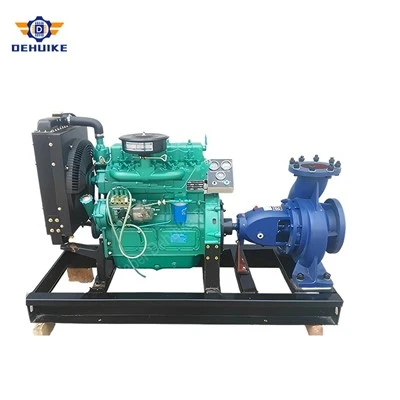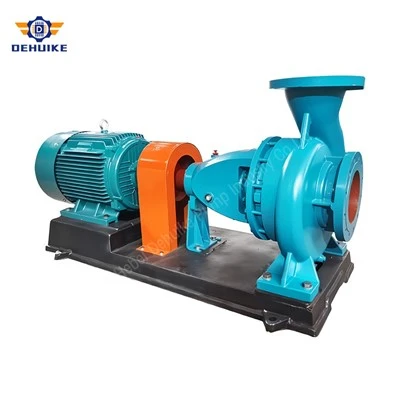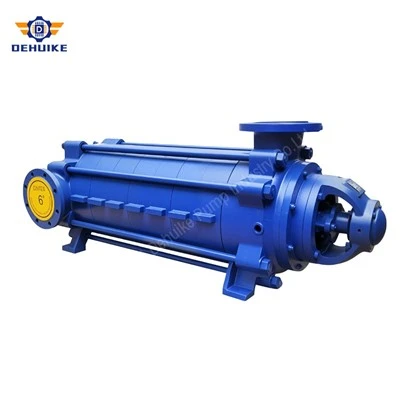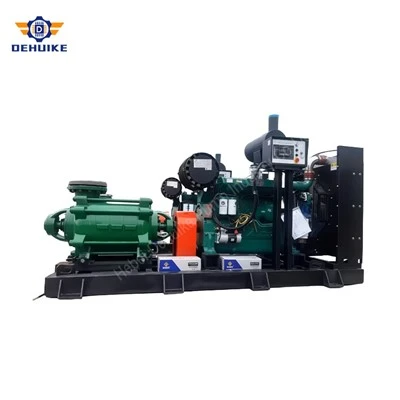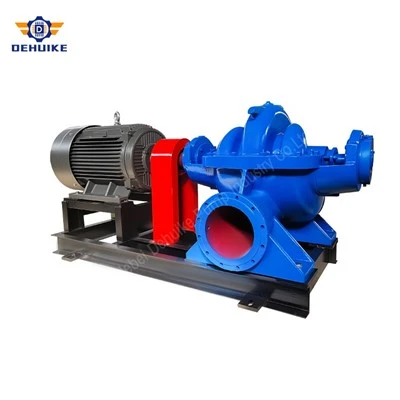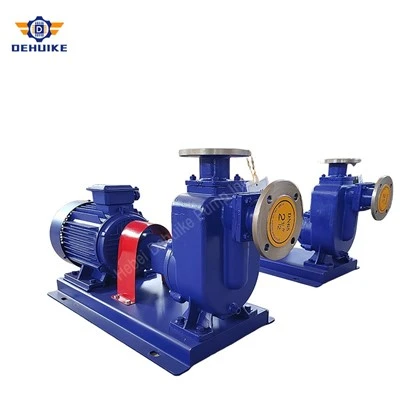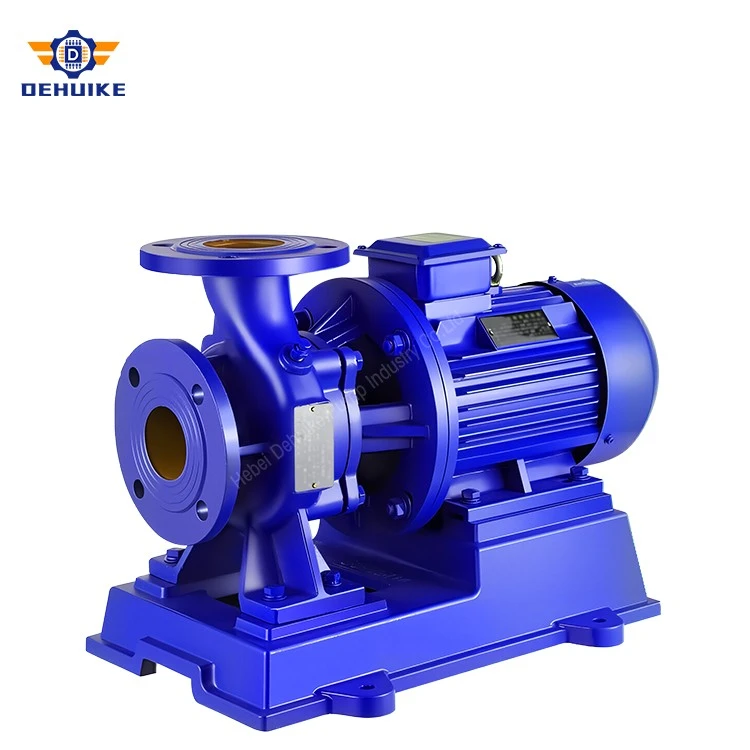
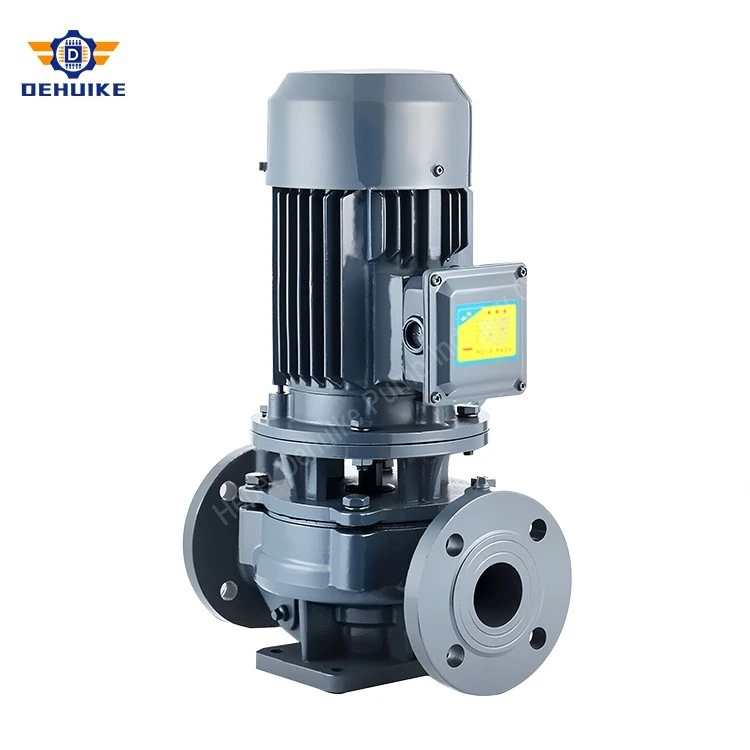
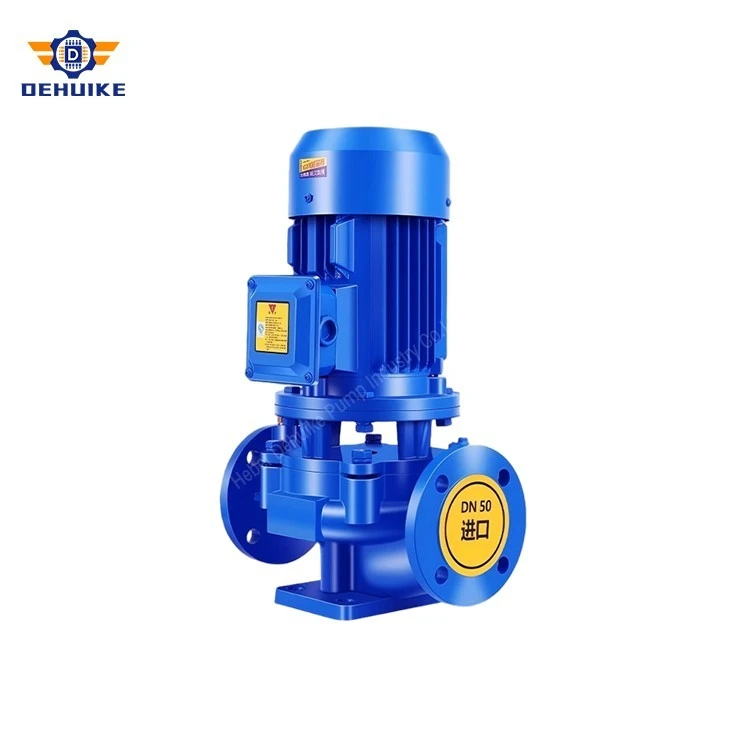
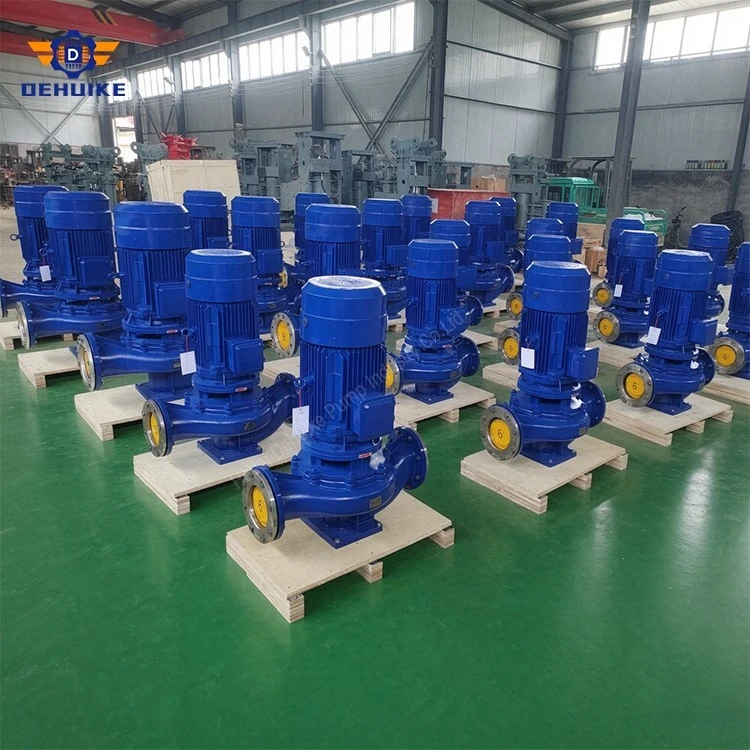
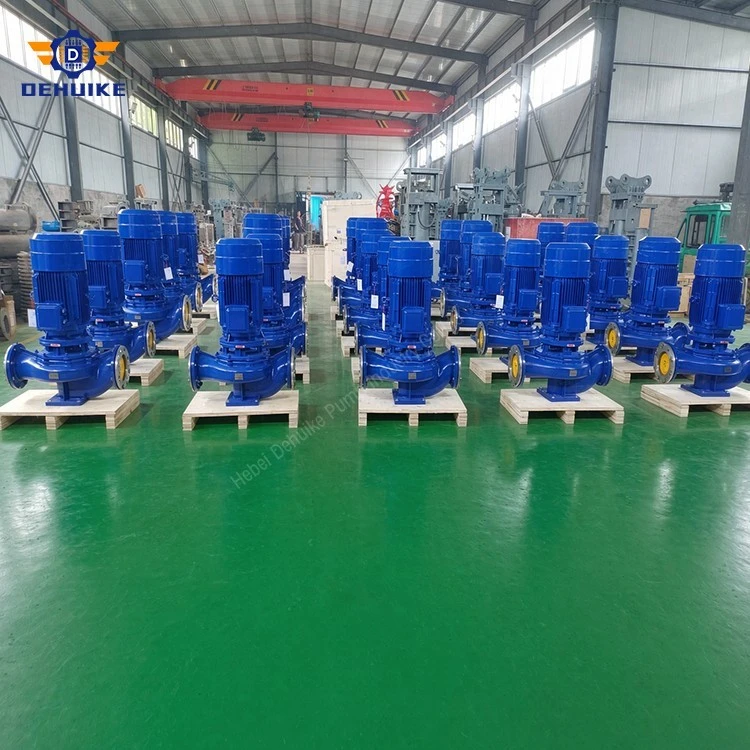
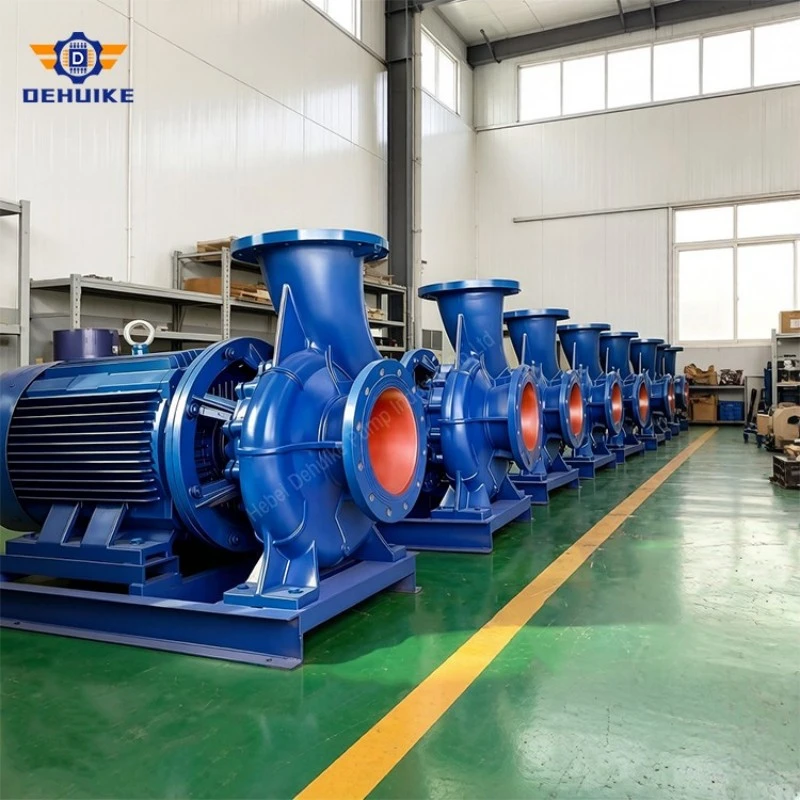
Hebei Dehuike Pump Industry Co., Ltd. is one of the most reliable manufacturers and suppliers of stainless steel inline pump in China. With abundant experience, we are committed to providing high quality customized pumps with competitive price. Welcome to wholesale bulk stainless steel inline pump for sale here from our factory. Also, pricelist is available.
Introduction - Why Stainless Wet Ends Exist
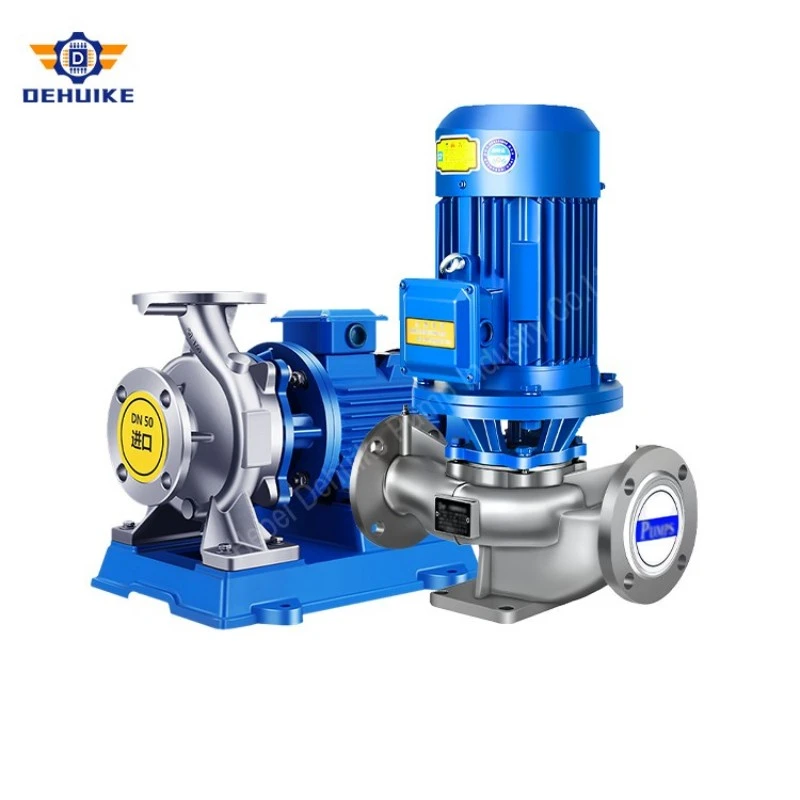
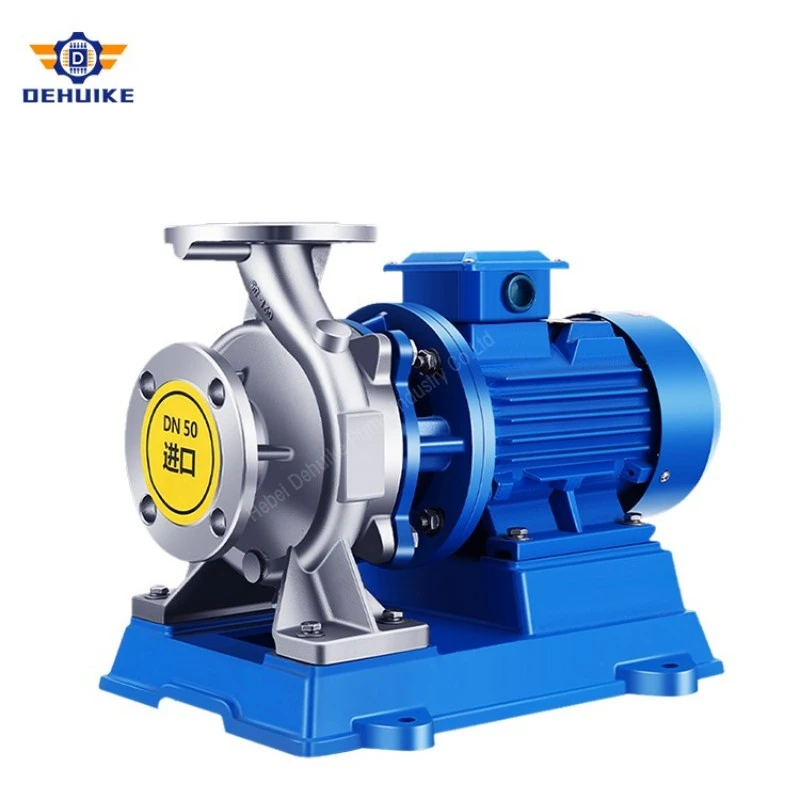
Definition by Material: A stainless steel inline pump is a pipeline-mounted centrifugal machine in which every wetted component - volute casing, impeller, shaft, shaft sleeve, seal hardware, and fasteners - is fabricated from austenitic stainless steel instead of iron. The machine retains the same coaxial in-line geometry as any valve: suction and discharge nozzles of identical nominal bore, 180 degrees apart on one shared horizontal axis, so it drops into a straight pipe run without elbows or transitions. What changes is not the hydraulic architecture but the material chemistry - and with that chemistry comes an entirely different service territory: aggressive waters, purity-critical fluids, and hygiene-regulated process loops that would consume an iron machine.
The engineering reason to specify a stainless steel inline pump is always one of three failure modes avoided. First, product purity: demineralized, reverse osmosis feed, and ultrapure water strips iron from cast surfaces and carries it downstream - into RO membranes where it fouls separators, into beverage products where taste and turbidity specifications fail, into pharmaceutical rinse loops where ionic contamination violates batch release limits. Second, corrosion survival: brackish cooling water, saline well supplies, and mildly acidic or alkaline process streams sit far outside any iron alloy's tolerance window, while austenitic stainless holds a stable passive film across those chemistries. Third, hygiene compliance: food, beverage, and dairy process loops are governed by regimes that demand smooth, non-porous, cleanable product-contact surfaces - a surface specification that stainless alone among economical pump materials can be machined, polished, and certified to meet.
The program's alloy options map directly onto those three missions. Standard clean-water and RO-feed duties run on CF8 (SUS304 equivalent) castings with a 2Cr13-series martensitic shaft upgraded to austenitic or duplex where chemistry demands. Saline, coastal, and chloride-bearing services move to CF8M (SUS316/316L equivalent) with its 2 to 3 percent molybdenum addition. Welded or thermally stressed executions specify the low-carbon L-grades to defeat sensitization. The hydraulic envelope is unchanged from the family program - flows from a few cubic meters per hour on compact frames to several hundred on large-bore executions, heads to 153.6 meters on high-head single-stage builds, containment certified to 1.6 MPa (with ductile-class stainless executions rated higher), and the standard water window of -10°C to +80°C with hot-water seal packages available beyond.
Austenitic Alloy Metallurgy - 304, 316 and the L-Grades
The Austenitic Foundation: Austenitic stainless steels are iron-chromium-nickel alloys engineered so that their crystal structure stays face-centered cubic - the austenite phase - at every service temperature. That single metallurgical fact delivers the property set pump engineering relies on: toughness that survives thermal shock without brittleness, ductility that yields visibly before failing, and the chromium content - a minimum of roughly 16 to 18 percent - that spontaneously grows the thin, adherent chromium-oxide passive film which is the entire corrosion strategy of the material.
Alloy Family Map for Pump Wet Ends
- CF8 / 304 - The General Duty Grade: The baseline austenitic grade: roughly 18 percent chromium and 8 percent nickel with balanced manganese and silicon. The 18/8 chemistry forms a tenacious passive film that handles potable water, softened water, most freshwater cooling loops, and clean condensate duty without measurable metal loss. Its weakness is localized attack in chloride-rich environments - the mechanism Dimension 3 quantifies.
- CF8M / 316 - The Chloride-Resistant Grade: The marine-duty upgrade: adds 2 to 3 percent molybdenum to the 18/8 base, and that single addition multiplies resistance to pitting and crevice attack in chloride-bearing waters. Wherever brackish water, coastal cooling, or chloride excursions define the duty, CF8M is the default specification and 304 is the wrong economy.
- 316L - The Low-Carbon Weldable Grade: Carbon held below 0.03 percent - a tenth of the standard-grade allowance. The purpose is weldability: standard grades precipitate chromium carbides at welded or thermally stressed grain boundaries (sensitization), locally stripping the passive film; the low-carbon chemistry leaves too little carbon to form those carbides. Any execution involving weld repairs, welded nozzles, or service above roughly 425°C is specified in the L-grade as standard practice.
- Duplex - The High-Strength Escape Hatch: Where chloride levels, temperatures, or shut-down deposits exceed even CF8M's comfort zone, the program offers duplex (2205-type) wet-end executions - a two-phase austenite-ferrite microstructure with yield strength near double the austenitic grades and PREN numbers approaching 35.
What the Nickel and Molybdenum Actually Buy
It is worth stating plainly what each alloying element contributes, because procurement frequently challenges the price step between grades. Chromium is the passive film - without its 16 to 18 percent there is no stainless behavior at all. Nickel stabilizes the austenite structure, which is what keeps the alloy tough, non-magnetic in service, and formable; it also improves resistance to stress-corrosion cracking in many environments. Molybdenum does one narrow, expensive, decisive job: it reinforces the passive film at exactly the sites - pit nuclei and crevice margins - where chlorides attack it. When a duty analysis shows chlorides, the molybdenum step from CF8 to CF8M is the least expensive corrosion insurance available in the alloy system.
Corrosion Mechanism Engineering - PREN and Chloride Service
The Localized-Attack Problem: Stainless steel does not corrode uniformly - it fails locally, at specific micro-sites, by three named mechanisms a specifying engineer must understand to match alloy to water. The passive film is the defense against all three, and chloride ion is the universal aggressor: small, mobile, and film-penetrating, it is the ion that breaches chromium oxide where other ions merely press against it.
The Three Failure Mechanisms in Brief
- Pitting Corrosion: Chlorides breach the passive film at weak points - inclusions, scratches, manganese-sulfide stringers - and once through, form an occluded micro-cell in which pH collapses and metal dissolves at accelerating rate. The visible signature is the pinhole: tiny, deep, and propagating invisibly beneath an intact-looking surface. Pitting is the dominant mechanism in chloride waters and is statistically probabilistic - induction times shorten with rising temperature and chloride concentration.
- Crevice Corrosion: The same chemistry trapped in geometry: beneath gasket edges, flange faces, deposit layers, and thread roots where stagnant micro-volumes deplete oxygen and let chlorides concentrate. Crevice attack begins at lower chloride levels than open-surface pitting, which is why the seal chamber, gasket grooves, and fastener details of a stainless steel inline pump are designed with smooth radii, full-penetration joints, and crevice-free gasket seats.
- Stress-Corrosion Cracking: The temperature-and-chloride-dependent cracking mechanism of austenitic grades under tensile stress - residual or applied. The engineering defenses are design-level: rolled or machined surface finishes rather than heavily ground ones, controlled cold work, duplex upgrade where the chloride-temperature combination enters the risk field, and eliminating stress concentrators at welds.
PREN - The Single Number That Ranks Alloys Against Chlorides
The Pitting Resistance Equivalent Number compresses an alloy's chloride tolerance into one figure, computed from its chemistry: PREN = %Cr + 3.3 x %Mo + 16 x %N. The coefficient on molybdenum is the number that matters - it quantifies why a small Mo addition buys so much protection. The industry rule-of-thumb bands that follow this formula rank the program's wet-end options:
|
Alloy (Cast / Wrought) |
PREN Band |
Chloride Service Guidance |
Typical Program Duty |
|
CF8 / 304 |
17-19 |
Fresh water, potable, condensate; chlorides ideally below ~200 ppm at ambient, less as temperature rises |
RO feed (fresh source), DI transfer, clean condensate loops |
|
CF8M / 316 |
23-27 |
Brackish and coastal waters; chlorides tolerated to several hundred ppm at moderate temperature |
Saline cooling, brackish boosting, washdown service |
|
316L |
23-26 |
As CF8M, plus weld-sensitization immunity for welded executions |
Welded skid builds, thermally cycled loops |
|
Duplex 2205 |
32-36 |
High chloride waters and warm saline service well beyond austenitic comfort |
Seawater-adjacent duties, hot brackish loops |
Two practical cautions complete the picture. Temperature accelerates every chloride mechanism - a water that sits comfortably within 316's tolerance at 20°C can pit it persistently at 60°C, so hot chloride service is duplex territory. And stagnation is the hidden aggressor: dead legs, standing pumps, and shut-down systems let chlorides and deposits concentrate exactly where crevice attack begins. Systems designed to be drained, flushed, or kept flowing through stainless components outlast systems that are merely alloyed correctly.
Surface Finish, Passivation & Cleanability Engineering
Surface as a Component: On a stainless steel inline pump, the surface is an engineered component in its own right. Corrosion resistance and cleanability are both surface phenomena: the passive film lives in the top nanometers of the metal, and hygiene standards live or die on the smoothness that pathogens can or cannot cling to. The program therefore treats finish specification as rigorously as alloy selection.
The Finish Ladder
- Industrial Finish (Standard): The as-cast and machined baseline: internal passages left in the cast state, machined faces at typical turned finishes, passive film restored by acid-free treatment after fabrication. Fully adequate for RO feed, demineralized transfer, and closed clean-water loops where hygiene codes do not reach.
- Polished Hygienic Finish (Optional): Wetted passages dressed to a sanitary-grade smoothness (Ra on the order of 0.8 micrometers or better on machined and polished surfaces), free of crevices, pits, and tool marks where product residues could hold. The specification level for food-grade rinse, beverage transfer, and CIP-cleanable loops.
- Electropolished Execution (Project Option): The electrochemical super-finish: the surface is dissolved uniformly in an acid electrolyte, peaking asperities away, embedding a chromium-enriched, exceptionally passive surface layer. The resulting finish improves cleanability dramatically and further delays corrosion initiation - specified for the most demanding pharma-adjacent and ultrapure rinse duties.
Passivation - Restoring What Fabrication Disturbs
Every step of pump manufacture - machining, grinding, welding, even handling - locally disturbs or contaminates the passive film: free iron smeared onto surfaces from tooling, heat tint beside welds, sulfide inclusions opened by cutting. Passivation is the controlled chemical treatment that dissolves that free iron and forces the chromium-oxide film to regrow uniformly - typically by nitric or citric acid immersion per the industry-standard ASTM A967 practice, verified by water-immersion or high-humidity testing. On a stainless steel inline pump from this program, every wetted assembly passes through this treatment after final fabrication and before hydrostatic test, so the machine that leaves the factory carries a fully restored, laboratory-verified passive surface rather than a merely nominal one.
Cleanability follows from finish plus geometry. A CIP (clean-in-place) regime relies on turbulent rinse flow reaching every wetted contour: the smooth radiused seal-chamber transitions, unobstructed volute throat, and drainable casing orientation of this in-line design leave no pocket where product or cleaning solution stagnates. For hygiene-audited installations, the engineering desk supplies a wetted-parts statement - an alloy-and-finish declaration for every product-contact surface - as part of the submittal package.
Specifications & Technical Data
Envelope for specification writers: flows to several hundred m³/h across the full family program with heads to 153.6 m on high-head stainless executions; flange drilling DN40 through DN150 to DIN EN 1092 or ANSI patterns; casing containment certified at 1.6 MPa with higher-class stainless executions available; standard water window -10°C to +80°C. Every wetted part - casting, impeller, shaft, sleeve, seal springs and set screws, and gasket-facing hardware - is austenitic stainless in the standard execution; no iron component contacts the fluid.
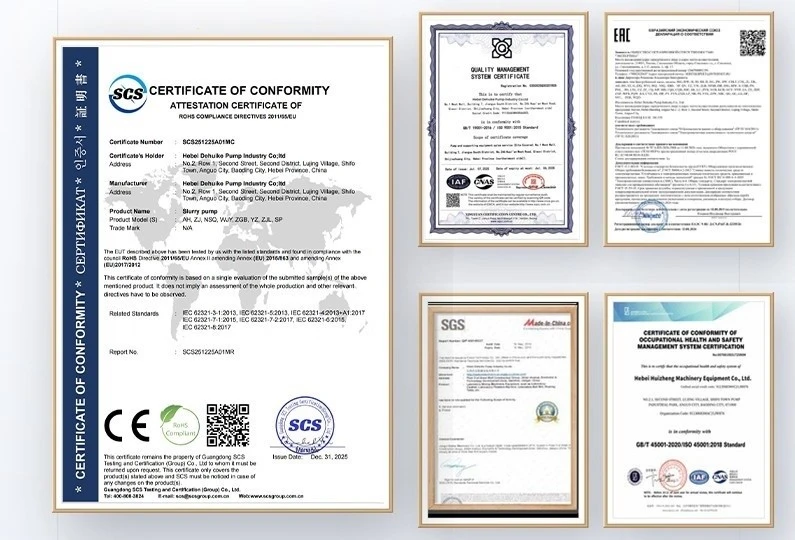
Table 1: Compact & Mid-Flow Stainless Duties (DN40 to DN80)
|
Model |
Rated Flow (m³/h) |
Head (m) |
Efficiency (%) |
Speed (r/min) |
Motor (kW) |
NPSHr (m) |
|
40-125A |
5.6 |
16.0 |
45 |
2900 |
0.75 |
2.3 |
|
40-160A |
5.9 |
28.0 |
39 |
2900 |
1.5 |
2.3 |
|
40-200A |
5.9 |
44.0 |
31 |
2900 |
3.0 |
2.3 |
|
40-250A |
5.9 |
70.0 |
28 |
2900 |
5.5 |
2.3 |
|
50-125(I)A |
22.3 |
16.0 |
66 |
2900 |
2.2 |
2.5 |
|
65-100(I) |
50.0 |
12.5 |
73 |
2900 |
3.0 |
3.0 |
|
65-125(I) |
50.0 |
20.0 |
72.5 |
2900 |
5.5 |
3.0 |
|
65-160(I) |
50.0 |
32.0 |
71 |
2900 |
7.5 |
3.0 |
|
65-200(I) |
70.0 |
50.0 |
79 |
2900 |
15.0 |
3.0 |
|
80-100(I) |
70.0 |
13.6 |
66 |
2900 |
5.5 |
4.5 |
Table 2: Large-Bore Stainless Duties (DN100 to DN150)
|
Model |
Rated Flow (m³/h) |
Head (m) |
Efficiency (%) |
Speed (r/min) |
Motor (kW) |
Unit Weight (kg) |
|
100-125 |
70.0 |
23.5 |
70 |
2900 |
11.0 |
169 |
|
100-125(I) |
96.0 |
24.0 |
62 |
2900 |
15.0 |
168 |
|
100-125(I)A |
84.0 |
20.0 |
64 |
2900 |
11.0 |
168 |
|
125-125 |
96.0 |
22.6 |
80 |
2900 |
15.0 |
220 |
|
125-125A |
86.0 |
18.0 |
77 |
2900 |
11.0 |
210 |
|
150-160 |
96.0 |
36.0 |
75 |
2900 |
22.0 |
270 |
|
150-160A |
90.0 |
32.0 |
76 |
2900 |
18.5 |
230 |
|
150-160B |
84.0 |
27.0 |
73 |
2900 |
15.0 |
220 |
Purity-Critical & Regulated Application Environments
The stainless steel inline pump earns its price in applications where the fluid itself is the product, the feedstock, or a regulated ingredient - duties where an iron machine contaminates what it pumps. The environments below are the core of its service territory.
1. Reverse Osmosis Feed & Desalination Pretreatment
RO membrane trains are the canonical stainless duty. The feed pump delivers raw or pretreated water against the membrane array's accumulating differential - commonly in the 8 to 15 bar class depending on source salinity - while contributing zero iron to a stream headed for membranes that iron fouls irreversibly. CF8 executions serve fresh-source RO; brackish trains move to CF8M as chlorides climb; the most saline duties justify duplex. The in-line geometry shines here: RO skids are built densely, and pumps that bolt straight into manifold piping keep the skid footprint minimal.
2. Demineralized & Ultrapure Water Transfer
Demineralized water is aggressive to iron precisely because it is pure: stripped of dissolved minerals, it dissolves them back out of unprotected metal. DI transfer loops, boiler make-up polishing, electronics-grade rinse supply, and laboratory water distribution all specify stainless wet ends as the default - not for the water's hostility to stainless (it is benign to it) but for what it would strip from anything less. Smooth industrial finishes suffice for most of these loops; the most stringent rinse specifications upgrade to polished or electropolished executions.
3. Food, Beverage & Dairy Process Circulation
Product-contact loops in food and beverage plants - CIP supply, product transfer, rinse-down, and cooling circuits carrying product-adjacent fluids - are governed by hygiene regimes that audit three things: alloy (austenitic stainless, per product-contact convention), surface (smooth, non-porous, cleanable, with defined roughness), and geometry (drainable, crevice-free, inspectable). This program's hygienic-finish executions, wetted-parts statements, and smooth seal-chamber design are engineered to pass those audits. Optional drive adaptations (washdown-duty motor enclosures and food-grade lubricants) complete the package for exposed installations.
4. Brackish Cooling, Aquaculture & Marine-Adjacent Service
Wherever the water carries chlorides - coastal cooling loops, brackish well boosting, aquaculture recirculation, marine vessel utility service - CF8M wet ends hold their passive film where iron machinery rusts through and 304 pit-maps within months. The duplex escape hatch covers the harshest corners: warm brackish service, high-chloride washdown, and seawater-adjacent duties beyond austenitic comfort.
Material Verification & Quality Assurance
Verification Philosophy: A stainless specification is only as good as the proof that the metal in the machine is the metal on the datasheet - and that its corrosion-critical processing was done correctly. The program's quality protocol for stainless wet ends closes every link in that chain.
Chemistry, Structure, and Heat Treatment Verification
- Melt Chemistry: Every stainless heat entering production is verified by spectrometric analysis against the specified grade window - chromium, nickel, molybdenum, carbon at the L-grade ceiling - with results recorded on the EN 10204 3.1 certificate that accompanies the shipment.
- Solution Anneal: Solution annealing - heating the casting into the solution range and quenching - dissolves any precipitated carbides and restores the fully austenitic, sensitization-free structure; cast wet ends are re-verified for ferrite balance and intergranular-corrosion resistance after treatment.
- PMI Spot Testing: Positive material identification spot-checks finished components - the portable analytical confirmation that the machined part in the bin is the alloy the traveler claims - eliminating the grade-substitution risk that haunts mixed-material shops.
- Chloride-Smart Hydro Testing: Hydrostatic proof testing to 1.5 times rated working pressure, performed with chloride-controlled test water and followed by full drain and dry - because leaving a stainless casing full of stagnant test water is precisely the crevice-corrosion setup Dimension 3 warns against.
Surface, Dimensional, and Hydraulic Assurance
Passivation per ASTM A967 with documented verification testing closes the surface loop. Multi-axis machining of seal chambers and mating registers holds concentricity within the program's standard tight tolerance band, verified on coordinate measuring machines. Every assembled unit then runs the closed-loop hydraulic test to ISO 9906:2012 Grade 2B - five-point curve capture across flow, head, efficiency, power, and NPSH - with vibration screening against the program's acceptance limits. The submittal dossier that leaves with each stainless steel inline pump therefore documents chemistry, structure, surface, geometry, and hydraulics as one continuous, traceable record.
Commercial Procurement & Global Engineering Support
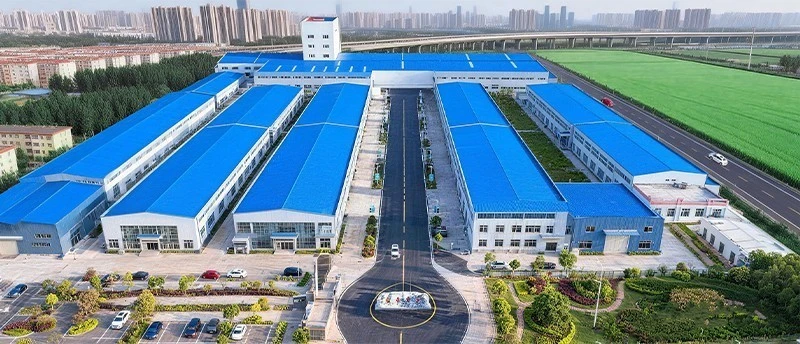
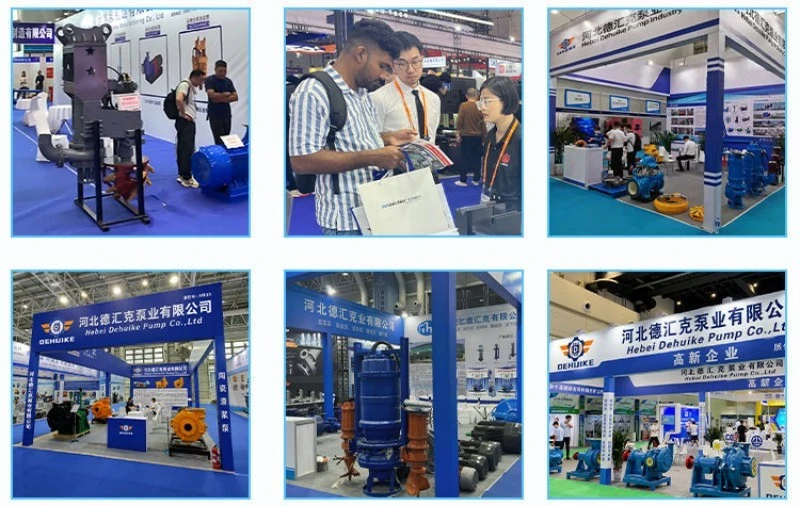
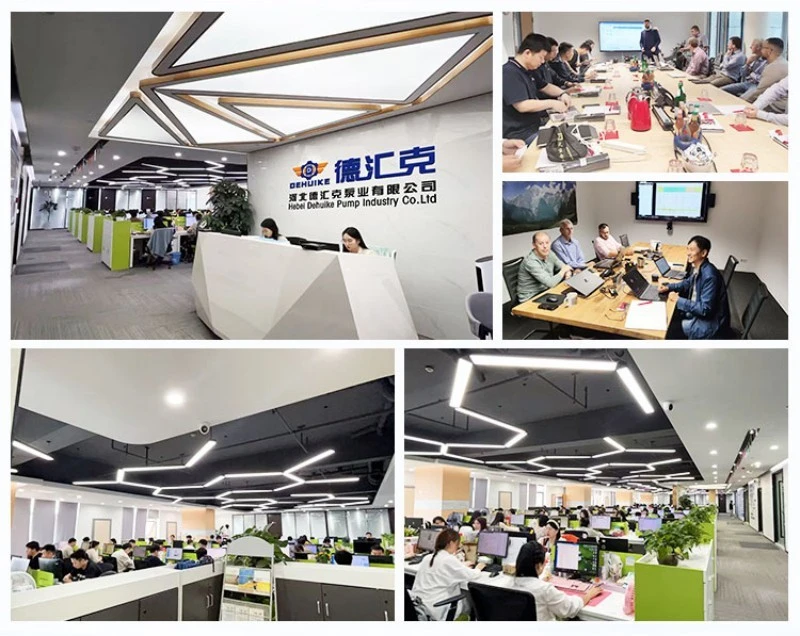
Manufacturer Profile: Hebei Dehuike Pump Industry Co., Ltd. (DHK Pump) has practiced specialized pump manufacturing for more than 30 years. From a 8,000+ m² production campus - precision machining cells, automated hydraulic test stands, and dedicated clean assembly bays for stainless executions - supported by a vetted supplier network of 900+ partners, our machines serve contractors, consultants, and operators across more than 50 countries.
- Warranty & Certification: Each stainless steel inline pump carries a 24-month (two-year) mechanical warranty covering materials and factory workmanship (wear parts excluded per industry practice), with ISO 9906 Grade 2B test certification and EN 10204 3.1 material documentation per unit.
- Commercial Terms: Export quotations follow Incoterms 2020 - FOB or CIF to the destination port - supported by passivation treatment records, wetted-parts statements, and stamped performance curves in the document dossier.
- Logistics: Freight moves by air for urgent consignments in the 50-500 kg range, and by ocean for volume orders above 500 kg, crated to ISPM 15 standard with VCI moisture-barrier protection.
FAQ - Grade Selection, Service & Procurement Questions
The questions below are the recurring specification conversations at the stainless desk, answered the way the engineering desk answers them.
The questions below are the recurring specification conversations at the stainless desk, answered the way the engineering desk answers them.
Q1 - Grade Selection Logic | How do I choose between 304 and 316 for my application - honestly?
Start with the water report: chlorides below roughly 200 ppm at ambient temperatures keep 304 comfortable in clean freshwater service; above that, or with any temperature rise, step to 316. If the execution involves welding or thermal cycling, make it 316L. If the chloride-temperature combination is severe - warm brackish, coastal, seawater-adjacent - quote duplex and stop stretching austenitic grades past their PREN.
Q2 - The Overkill Question | Is stainless steel overkill for ordinary building water?
Yes - a grey iron machine handles potable and closed-loop hydronic duty adequately at lower cost, and this program sells that machine too. The honest specifier reaches for the stainless steel inline pump when the fluid is demineralized, chloride-bearing, product-contact, or audited - not merely because stainless sounds better. Correctly matched, the stainless machine is not the expensive option; it is the cheapest machine that survives the duty.
Q3 - Wetted Parts Scope | What does 'all wetted parts stainless' actually include?
In this program's standard execution: the casing and covers, impeller, shaft and shaft sleeve, the mechanical seal's metallic components and springs, and all fasteners in the fluid path. The classic field failure of cheaper stainless pumps is a single iron set screw or carbon-steel fastener rusting in an otherwise stainless machine - the rust streak that seeds contamination and crevice corrosion. Our wetted-parts statement exists precisely so that no unlisted component can hide.
Q4 - CIP Compatibility | How is the pump cleaned in food and beverage service?
By the plant's CIP regime: heated caustic wash, rinse, and acid sanitize cycles routed through the loop including the pump, whose smooth finishes and drainable geometry are designed to be swept clean by these flows. Specify the elastomer package against the actual cleaning chemistry - EPDM suits most caustic CIP regimes, FKM where aggressive sanitizers or higher temperatures define the cycle - and the seal and gasket specification will match it.
Q5 - Maintenance Posture | What maintenance differences come with stainless?
Good news and one discipline. The good news: no coating to inspect and repaint - there is no sacrificial paint system on a stainless casing, and exterior corrosion is a non-issue in all but the harshest atmospheres. The discipline: prevent stagnant chloride exposure - drain idle pumps in brackish service, avoid dead legs, and flush before extended shutdown. Follow that one habit and the stainless steel inline pump outlives the plant around it.
Q6 - The Cost Justification | How do I justify the price step to a skeptical procurement team?
Reframe the number: acquisition premium versus avoided cost - one batch contamination event, one membrane replacement train, one hygiene-audit failure, or one premature corrosion replacement reprices the entire decision. In every duty this article's Dimension 6 describes, the stainless machine is not the premium option; it is the risk-management option whose failure case is the expensive one.

Hot Tags: stainless steel inline pump, China stainless steel inline pump manufacturers, suppliers, factory