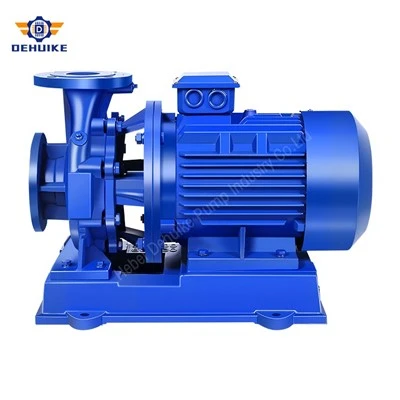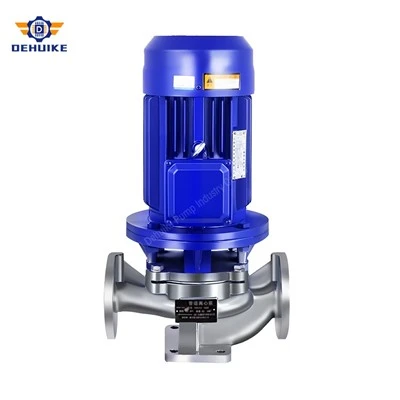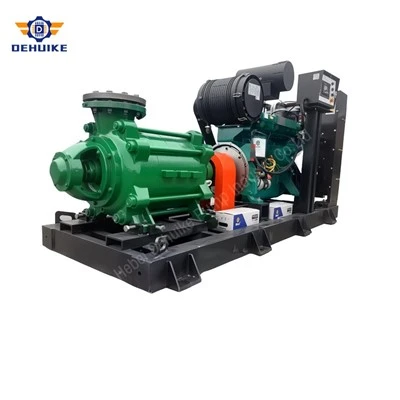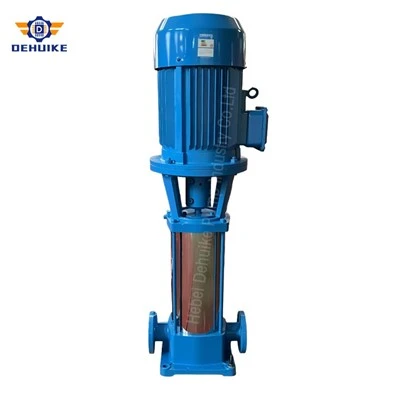
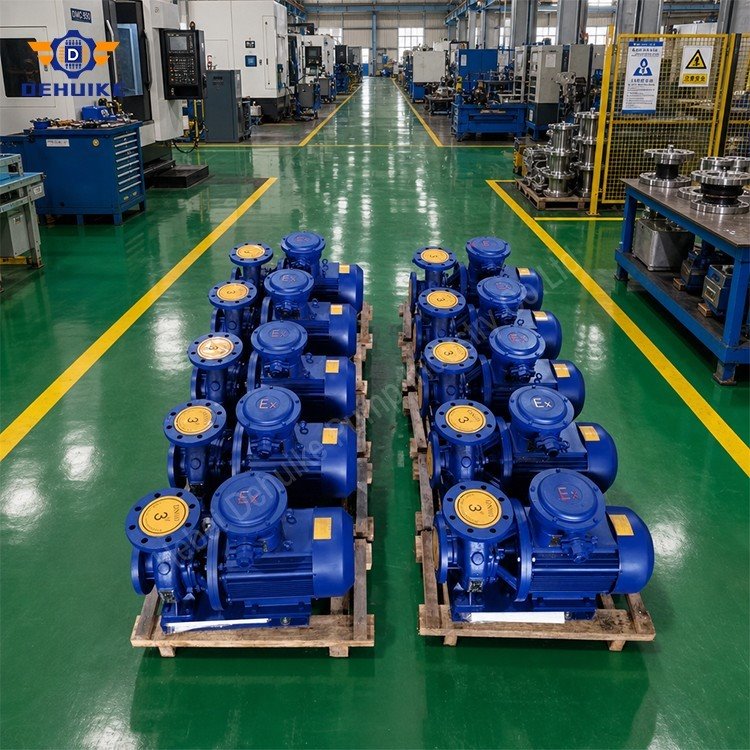
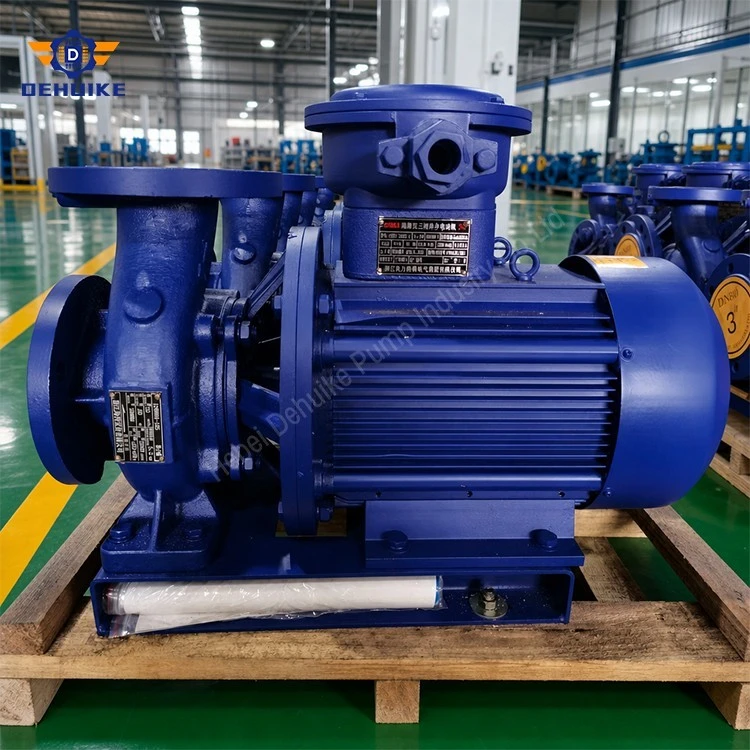
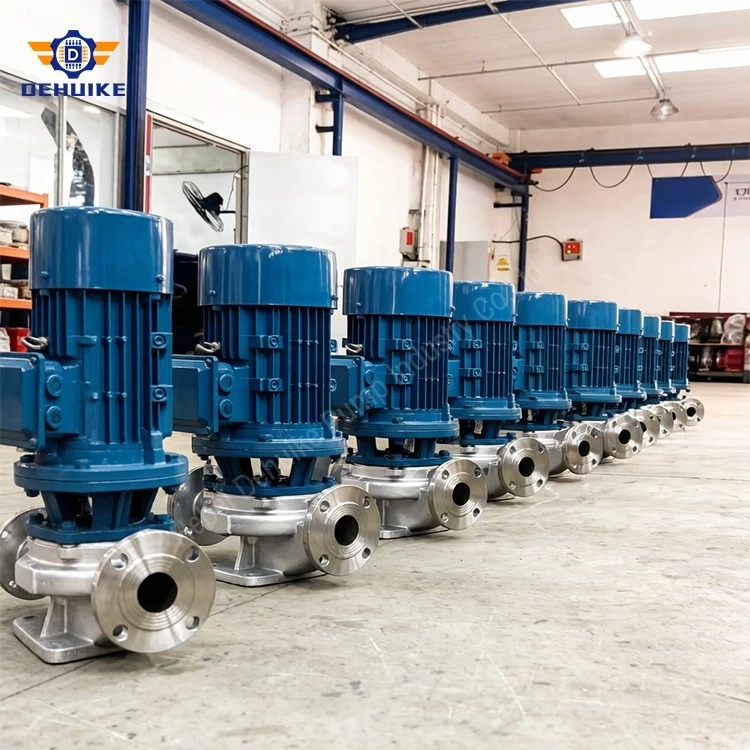
Hebei Dehuike Pump Industry Co., Ltd. is one of the most reliable manufacturers and suppliers of cast iron inline water pump in China. With abundant experience, we are committed to providing high quality customized pumps with competitive price. Welcome to wholesale bulk cast iron inline water pump for sale here from our factory. Also, pricelist is available.
Introduction - The Cast Iron Engineering Value Proposition
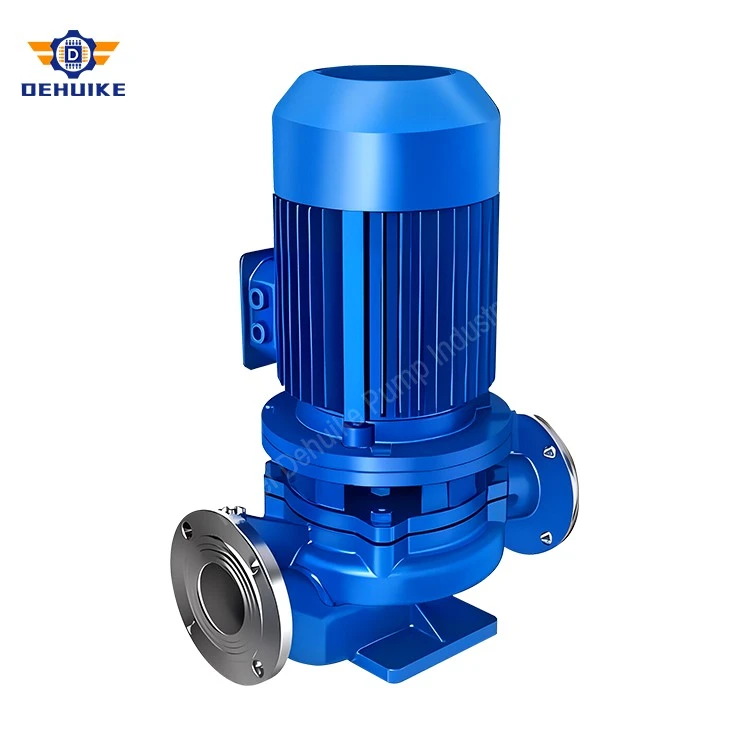
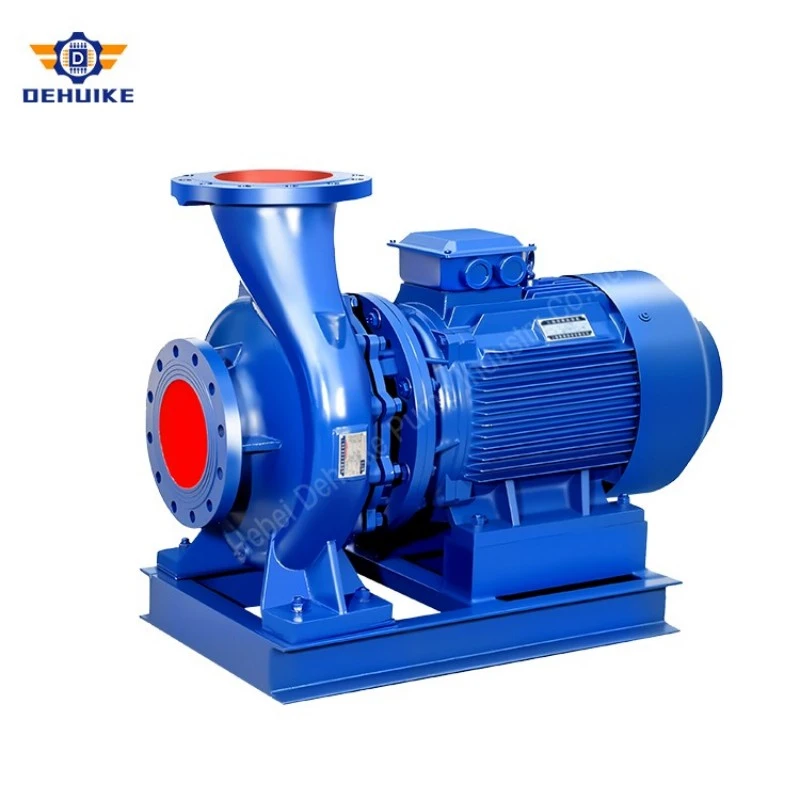
What This Machine Is: A cast iron inline water pump is a pipeline-mounted centrifugal water handling machine whose pressure casing, volute, and motor support stool are sand-cast in grey cast iron - the material that has carried the water infrastructure of the modern world for more than a century. Every specification in this program pairs that proven metallurgy with coaxial in-line flange geometry: suction and discharge nozzles of identical nominal diameter, mounted 180 degrees apart on a shared horizontal axis, so the pump bolts into a straight pipe run exactly like a heavy-duty valve.
Why does cast iron remain the default casing material for general clean water service when exotic alloys dominate the headlines? The answer is a combination of four material properties that no competing engineering metal matches simultaneously. Castability: molten grey iron flows into the intricate logarithmic volute passages, cored wear-ring recesses, and flanged nozzle geometry of a pump casing in a single pouring, reproducing complex hydraulic contours that would require welded fabrication in steel. Damping: the graphite flakes dispersed through grey iron's microstructure absorb vibrational energy an order of magnitude more effectively than steel, which is why a cast iron inline water pump runs measurably quieter than an otherwise identical fabrication. Machinability: free graphite in the matrix acts as a natural chip-breaker and cutting lubricant, letting machinists hold tight tolerances at high metal-removal rates. Economics: iron ore and foundry scrap streams are abundant, mature, and inexpensive, keeping acquisition cost the lowest of any pressure-containing pump material in general service.
The DHK Pump cast iron program spans rated flows from 3.8 m³/h in compact building loops to 260 m³/h on the largest four-pole frames, with single-stage heads reaching 153.6 meters on high-head executions. Working pressure containment is certified to 1.6 MPa for standard HT250 casings, and the standard water temperature window runs from -10°C to +80°C. Motor powers cover 0.75 kW to 90 kW, driven at either 2900 r/min or the quieter 1450 r/min synchronous speed. All envelope dimensions follow ISO 2858 and DIN EN 733, so a cast iron inline water pump drops directly into piping layouts designed around international interchange standards.
Positioning matters in procurement. Within a complete pump portfolio, the cast iron inline water pump is the economical core: the machine specified when the fluid is clean, the chemistry is benign, and the duty is steady. Higher-pressure or chemically aggressive duties escalate to ductile iron or stainless executions - a decision framework this guide develops fully in Dimension 5. Specified correctly, a cast iron inline water pump delivers fifteen to twenty years of quiet service at the lowest total cost of ownership in its class.
Foundry Metallurgy & Casting Material Science
Alloy Foundation: The behavior of a cast iron inline water pump in service is decided in the foundry, long before machining or assembly. The program's baseline alloy is HT250 pearlitic grey cast iron - a designation that specifies a minimum tensile strength of 250 MPa in a 30 mm test bar. Understanding what that designation means at the microstructural level explains nearly every performance characteristic the pump exhibits downstream.
Chemistry, Carbon Equivalent, and Graphite Morphology
Grey iron is essentially a Fe-C-Si alloy engineered to solidify with its carbon rejected as free graphite rather than locked into iron carbide. The melt is charged to a carbon content near 3.1 to 3.4 percent and silicon near 1.8 to 2.3 percent; the combined carbon equivalent - CE = %C + (%Si / 3) - is held close to eutectic composition at approximately 4.2. That near-eutectic chemistry keeps the solidification range narrow, letting molten iron flow into thin volute walls and intricate cored passages before freezing. Solidification is controlled so graphite crystallizes as Type A flake morphology: uniform, randomly oriented flakes distributed through a pearlitic matrix. It is precisely this flake structure that gives grey iron its signature combination of high damping, excellent thermal conductivity near 50 W/m·K, and outstanding machinability - while the pearlitic matrix delivers the hardness, wear resistance, and strength the HT250 grade certifies.
Strength Asymmetry and How Casings Are Designed Around It
Grey iron's mechanical personality is asymmetric: it is strong in compression - typically above 700 MPa - but comparatively weak in tension at its certified 250 MPa, because graphite flakes act as internal stress-raisers under tensile loading. Sound pump design therefore places material where the pressure tries to stretch it. Volute walls on this program are proportioned so that internal hydrostatic pressure loads the casting predominantly in hoop compression against generously radiused transitions; flange junctions and nozzle roots are thickened locally; and sharp internal corners - the classic crack-initiation sites of lesser castings - are eliminated by radiused core assembly. The result is a casing that has proven through decades of hydrostatic proof testing to contain its rated 1.6 MPa working pressure with wide margins.
Melt Verification and Casting Integrity Assurance
Every heat of iron destined for a cast iron inline water pump casing is verified before pouring. Optical emission spectrometry on a sample from each melt confirms carbon, silicon, manganese, sulfur, and phosphorus against the internal chemistry window; sulfur and phosphorus are held low to prevent embrittlement. Castings solidify in furan resin-bonded sand moulds with engineered risering that feeds shrinkage during freezing, and selected heavy-section castings are spot-checked ultrasonically for internal soundness. Brinell hardness verification in the HB 190-230 band on machined surfaces confirms the pearlitic matrix was achieved, closing the loop between melt chemistry, microstructure, and the mechanical properties the pump's pressure rating rests on.
Corrosion Engineering & Protective Coating Systems
The Passivation Principle: Cast iron and water have a negotiated relationship: in benign, near-neutral, oxygen-bearing fresh water, grey iron forms a stable surface layer of iron oxides and retained graphite that slows further attack - which is why century-old grey iron water mains still deliver water today. A cast iron inline water pump exploits that same passivating behavior, and its corrosion engineering consists of keeping the water inside the chemistry window where that protective film stays stable, then adding coatings as a second line of defense.
Water Chemistry Windows for Grey Iron Service
- Ideal Window: pH between roughly 6.5 and 8.5, with the protective oxide-graphite film stable across this band; excursions toward strongly acidic or alkaline water dissolve the film and accelerate metal loss.
- Chloride Discipline: Chloride content is the single most influential parameter for grey iron. Clean potable and fresh surface water - typically under 50 ppm chlorides - sits comfortably within the material's tolerance. Brackish water, seawater, and heavily saline well water do not, and call for stainless wet ends.
- Velocity Ceiling: Continuous high velocity above approximately 3 m/s in warm, oxygenated water can strip the protective film faster than it reforms - a mechanism known as flow-accelerated corrosion. The volute and nozzle sizing across this program keeps internal velocities within conservative limits at rated flow.
- Ultrapure Water Exception: Deionized and distilled water, though chemically 'pure', are aggressive to grey iron because they lack the dissolved minerals that help build the protective film; ultrapure loops should specify stainless construction.
Factory Coating System and Corrosion Margins
Every cast iron inline water pump leaves the factory with a layered protective system applied to prepared surfaces. Externally, castings are shot-blasted to near-white Sa 2.5 cleanliness, then coated with a high-build epoxy primer followed by a polyurethane industrial enamel, at a combined dry film thickness of at least 120 micrometers - a system chosen to resist condensation in plant rooms, occasional splash, and the humidity of tropical mechanical spaces. Internally, hydraulic passages receive a water-compatible epoxy coating on executions intended for aggressive softened or slightly corrosive waters, adding a barrier between the iron and the fluid. Machined flange faces are protected by removable covers and a solvent-displaceable rust preventive, because an uncoated machined face is the one spot where storage corrosion is both visible and unacceptable.
Specifications & Technical Data
The duty data below comes from the program's factory hydraulic test records, with each rating verified on closed-loop dynamometer stands to ISO 9906:2012 Grade 2B acceptance. Table 1 lists the compact and mid-range cast iron duties that carry the majority of building-services work; Table 2 gathers the large-bore, low-speed frames - including the 1450 r/min series - where quiet operation and high single-unit capacity matter most. The weight column supports rigging and structural planning in congested plant rooms.
Program envelope for specification writers: flows 3.8 to 260 m³/h per unit; single-stage heads up to 153.6 m; flange drilling DN40 through DN150 to DIN EN 1092 or ANSI patterns on request; casing containment certified at 1.6 MPa working pressure; standard water window -10°C to +80°C. Trim variants (A/B, and C on selected frames) let the final selection land on its duty point rather than below it.
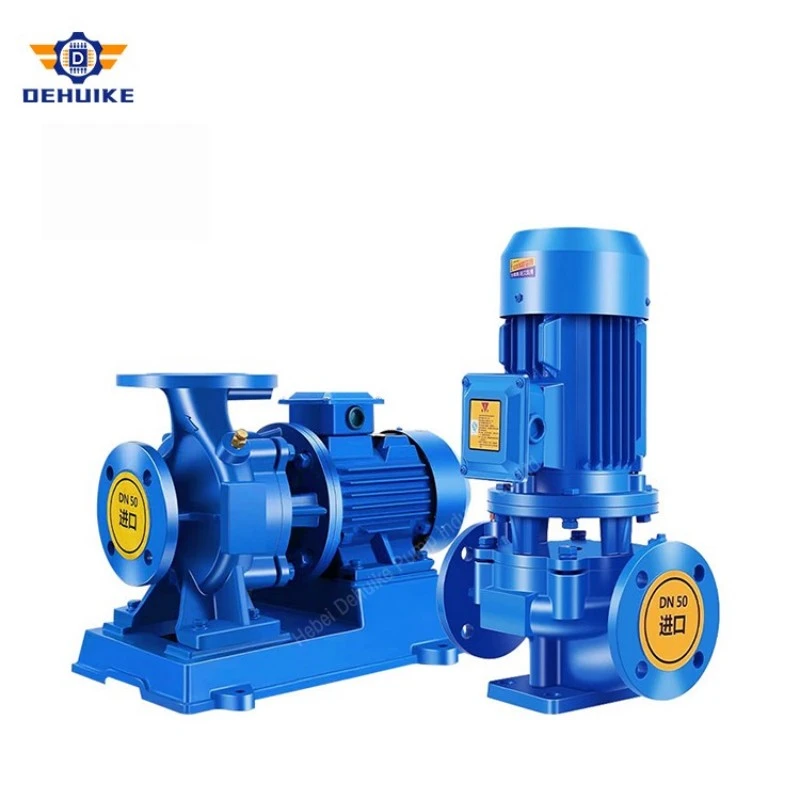
Table 1: Compact & Mid-Range Cast Iron Duties (DN40 to DN65, 2900 r/min)
|
Model |
Rated Flow (m³/h) |
Head (m) |
Efficiency (%) |
Speed (r/min) |
Motor (kW) |
Unit Weight (kg) |
|
40-125 |
6.3 |
20.0 |
46 |
2900 |
1.1 |
34 |
|
40-160 |
6.3 |
32.0 |
40 |
2900 |
2.2 |
47 |
|
40-200 |
6.3 |
50.0 |
33 |
2900 |
4.0 |
74 |
|
40-250 |
6.3 |
80.0 |
28 |
2900 |
7.5 |
105 |
|
50-100(I) |
25.0 |
12.5 |
69 |
2900 |
1.5 |
41 |
|
50-125(I) |
25.0 |
20.0 |
68 |
2900 |
3.0 |
56 |
|
50-160(I) |
25.0 |
32.0 |
63 |
2900 |
4.0 |
72 |
|
50-200(I) |
25.0 |
50.0 |
58 |
2900 |
7.5 |
108 |
|
65-100 |
25.0 |
12.5 |
69 |
2900 |
1.5 |
46 |
|
65-125 |
25.0 |
20.0 |
68 |
2900 |
3.0 |
58 |
|
65-160 |
25.0 |
32.0 |
63 |
2900 |
4.0 |
75 |
|
65-200 |
25.0 |
50.0 |
58 |
2900 |
7.5 |
107 |
Table 2: Large-Bore & Low-Noise Frames (DN100 to DN150, 2900 & 1450 r/min)
|
Model |
Rated Flow (m³/h) |
Head (m) |
Efficiency (%) |
Speed (r/min) |
Motor (kW) |
Unit Weight (kg) |
|
100-160 |
100.0 |
32.0 |
76 |
2900 |
15.0 |
191 |
|
100-200 |
100.0 |
50.0 |
74 |
2900 |
22.0 |
245 |
|
125-160 |
160.0 |
32.0 |
78 |
2900 |
22.0 |
265 |
|
125-200 |
160.0 |
50.0 |
77 |
2900 |
37.0 |
395 |
|
150-200 |
200.0 |
12.5 |
78 |
1450 |
15.0 |
265 |
|
150-200A |
176.0 |
10.0 |
76 |
1450 |
11.0 |
244 |
|
150-250 |
200.0 |
20.0 |
79 |
1450 |
18.5 |
300 |
|
150-250A |
184.4 |
17.0 |
78 |
1450 |
15.0 |
292 |
Material Selection Guide - Grey Iron vs Ductile Iron vs Stainless
Choose grey iron when: Specify the cast iron inline water pump when the fluid is clean fresh or potable water, pH sits in the neutral band, sustained working pressure stays at or below 1.0-1.2 MPa, and acquisition economics matter - which describes the majority of building-services and municipal boosting duties.
Choose ductile iron when: Step up to ductile iron when sustained pressures approach the 1.6 MPa ceiling, when the system sees hydraulic shock or water hammer events, or when a code or consultant requires a yielding failure mode as a structural safety property.
Choose stainless when: Reserve stainless construction for saline or brackish water, demineralized and RO feed streams, hygiene-regulated process loops, and any service where iron pickup into the product water is unacceptable.
|
Selection Criterion |
Grey Iron HT250 |
Ductile Iron QT450-10 |
Stainless CF8/CF8M |
|
Working pressure ceiling |
1.6 MPa (16 bar) |
2.5 MPa (25 bar) |
1.6-2.5 MPa by class |
|
Failure mode under overload |
Brittle fracture (no warning) |
Yields before fracturing |
Yields before fracturing |
|
Vibration damping capacity |
Excellent (graphite flakes) |
Moderate |
Low |
|
Chloride / saline water |
Not suitable |
Limited tolerance |
CF8M suitable; CF8 limited |
|
Ultrapure / DI water |
Not suitable |
Not suitable |
Suitable |
|
Relative acquisition cost |
Lowest of the three |
Moderate premium |
Highest of the three |
Total Cost of Ownership & Lifecycle Economics
Where the Money Actually Goes: Pump procurement matures the moment the conversation moves from purchase price to total cost of ownership. For a continuously operated inline water pump, the ledger over a fifteen-year service life is dominated not by the machine's price but by the electricity it converts into hydraulic energy. Across typical duty profiles, acquisition represents a modest slice of lifetime spend, energy the overwhelming majority, and routine maintenance the remainder. Every engineering choice in this program - hydraulic efficiency in the high-sixties to high-seventies percent band visible in the tables above, close-coupled alignment that never needs field re-shimming, balanced impellers that spare bearings - exists to shrink the two larger slices.
The cast iron inline water pump strengthens the economics at both ends of the ledger. On the acquisition side, grey iron's foundry economics keep the casing - the single heaviest, most geometry-intensive component in any pump - at the lowest cost of any qualified pressure material, and its free-machining behavior shortens the machining hours built into every unit price. On the recurring side, the same damped graphite structure that quiets the pump also shelters the mechanical seal and bearings from micro-vibratory wear, stretching the service intervals of precisely the components that dominate mid-life maintenance invoices.
End-of-life closes the argument. Grey iron is among the most recyclable engineering materials in existence: scrapped casings remelt indefinitely with no practical degradation, and foundry charge mixes routinely include a high fraction of recovered iron. A decommissioned cast iron inline water pump is therefore not waste with a disposal fee attached - it is feedstock with residual value, an increasingly relevant consideration under the environmental procurement criteria now appearing in public tenders across Europe and the Gulf.
Service Environments & Water Compatibility
Where It Belongs: A cast iron inline water pump is a clean-water machine by design, and it is at its best in the enormous population of duties where the fluid stays within the chemistry windows defined in Dimension 3. Mapping those duties - and naming the boundaries - protects both the pump and the system it serves.
Comfortable Service Environments
- Building Hydronics: Closed chilled and heating loops with inhibitor-treated water; stable chemistry, minimal dissolved oxygen, and negligible solids - the gentlest possible environment for grey iron.
- Municipal Potable: Potable boosting and distribution with standard residual chlorination; fresh municipal water sits far inside the chloride tolerance band.
- Irrigation & Fill: Filtered surface-water and reservoir-fed irrigation networks, cooling make-up transfer, and tank-filling duties where the water carries no abrasive load.
- Glycol Loops: Inhibited glycol solutions to roughly 40 percent concentration in freeze-protected loops, with fluid velocities and temperatures inside the standard window.
Boundary Conditions and Exclusions
Three exclusions keep the warranty intact. First, abrasive media: sand-laden well water, construction-site runoff, and any fluid carrying settling solids belong in dedicated solids-handling machinery, not a clean-water inline pump - abrasive wear attacks cast iron impellers and seal faces alike. Second, saline and brackish water: chloride contents typical of coastal wells and seawater cooling breach the grey iron window and demand stainless wet ends. Third, chemical service: process fluids outside the near-neutral pH band, and ultrapure demineralized streams, both fall outside this machine's remit. Between the comfortable and the excluded lies a gray zone - moderately hard well water, mildly chlorinated pool make-up - where a water analysis resolves the question in minutes and costs nothing but a laboratory fee.
Ambient conditions matter alongside fluid conditions. The standard execution suits plant-room ambients to +40°C; hot, humid tropical mechanical spaces are handled by the factory coating system, while outdoor installations in coastal salt air warrant the C5-class coating upgrade and motor canopy options. For winterized sites, the freezing boundary is absolute: a grey iron casing full of water and frozen solid will crack, so drainage provisions or heat tracing are mandatory wherever ambient temperatures can fall below 0°C (Dimension 8 details the winterization protocol).
Commercial Procurement & Global Engineering Support
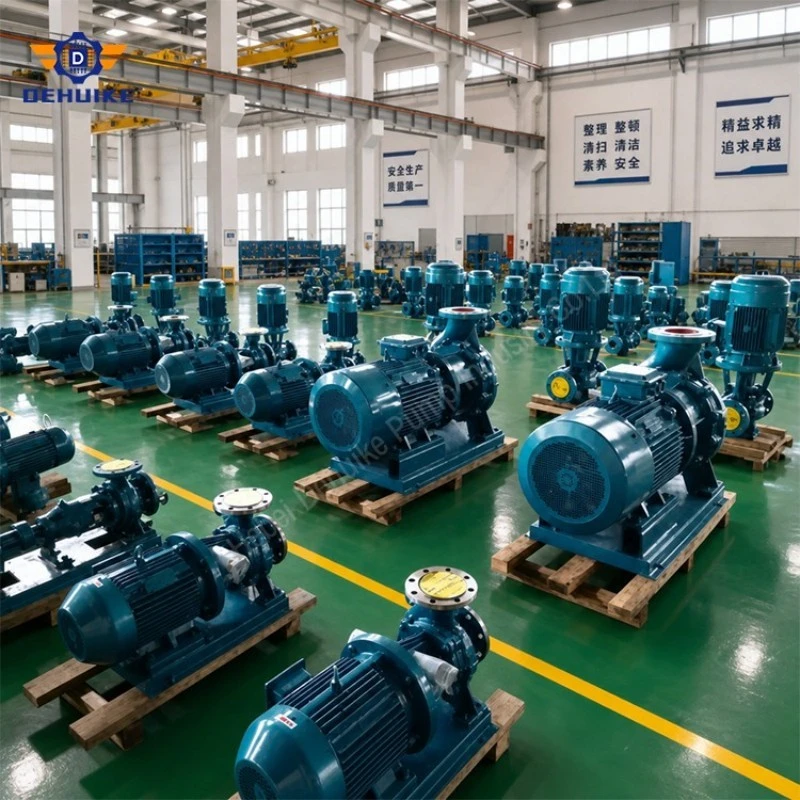
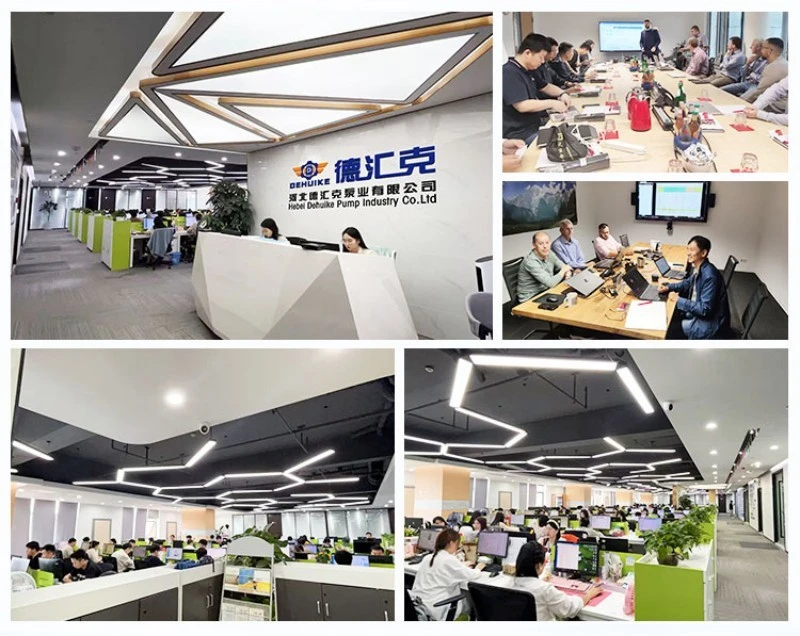
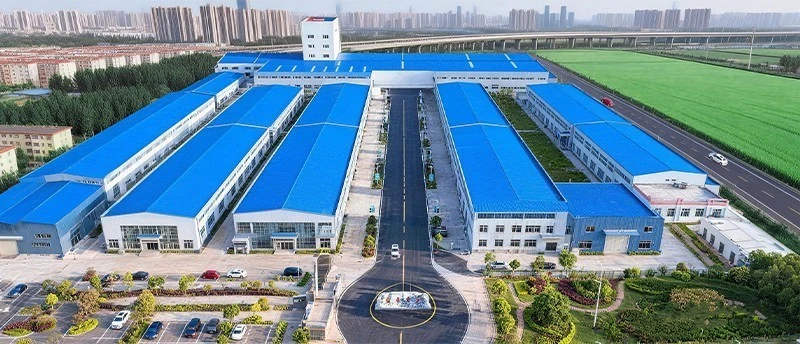
Manufacturer Profile: Hebei Dehuike Pump Industry Co., Ltd. (DHK Pump) has practiced specialized pump manufacturing for more than 30 years. From a 8,000+ m² production campus - foundry-adjacent machining cells, automated hydraulic test stands, and dedicated assembly bays - supported by a vetted supplier network of 900+ partners, our clean-water inline pumps serve contractors, consultants, and operators across more than 50 countries.
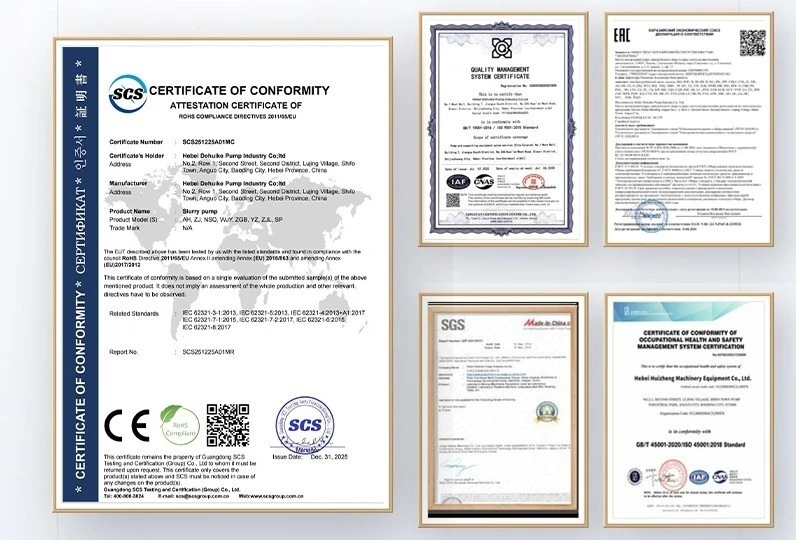
- Warranty & Certification: Each cast iron inline water pump carries a 24-month (two-year) mechanical warranty covering materials and factory workmanship, with wear parts excluded per industry practice; ISO 9906 Grade 2B test certification accompanies every unit.
- Commercial Terms: Export quotations follow Incoterms 2020 - FOB or CIF to the destination port - supported by EN 10204 3.1 material certification, hydrostatic proof test records, and stamped performance curves.
- Logistics: Freight moves by air for urgent consignments in the 50-500 kg range, and by ocean for volume orders above 500 kg, crated to ISPM 15 standard with VCI moisture-barrier protection.
Refurbishment, Winterization & Cast Iron FAQ
The Mid-Life Refurbishment Pathway: One under-appreciated virtue of a cast iron inline water pump is how gracefully it ages: the casing outlives its internals by decades, and a mid-life refresh restores original performance for a fraction of replacement cost. A standard refurbishment renews the wear rings, impeller, shaft sleeve, and mechanical seal, re-machines the mating faces, renews the internal coating where specified, and closes with a fresh hydrostatic proof test - returning the unit to service with a factory-grade certification. Because envelope dimensions follow ISO 2858, refurbishment parts remain interchangeable across the program, and a pump installed fifteen years ago is serviceable with today's component stock.
Winterization & Lay-Up Protocol
- Freeze Drainage: Wherever freezing is possible, drain the casing and suction piping through the drain plugs at shutdown; a cast iron volute holding frozen water will crack along its weakest section, and that failure mode is excluded from warranty coverage as a handling matter.
- Heat Tracing Option: For pumps that must stay charged in cold spaces, specify heat tracing and insulation on the casing and exposed piping, rated for the site's design minimum temperature.
- Extended Storage: During any lay-up beyond three months: drain hydrostatic test water, keep flange covers seated, store under cover, and rotate the shaft by hand monthly to re-establish the seal face film and prevent bearing point-load brinelling.
Frequently Asked Questions from Specifiers and Plant Managers
Q1 - Initial Surface Rust | The pump showed light surface rust inside the casing at startup - is that a defect?
No. Fresh grey iron in oxygenated water develops a thin flash-rust film within days; in near-neutral water this film quickly stabilizes into the protective oxide-graphite layer described in Dimension 3. It is cosmetic, self-limiting, and unrelated to structural integrity.
Q2 - Potable Water Service | Is a cast iron inline water pump acceptable for potable water systems?
Grey iron waterworks fittings and piping have served potable networks globally for generations; for pump interiors, the program offers water-compatible epoxy internal coatings, and potable executions are documented for local approval submissions where a project's regulations require them. Confirm the governing approval framework with our engineering desk at quotation stage.
Q3 - Service Life Expectation | How long will the casing actually last?
In closed, inhibitor-treated hydronic loops, grey iron casings commonly remain in serviceable condition beyond fifteen to twenty years; in open potable boosting duty with stable chemistry, comparable service is routine with periodic internal inspection. The life-limiting components are the wear parts - seal, bearings, wear rings - not the casting.
Q4 - Hybrid Material Builds | Can I upgrade just the impeller to stainless on a cast iron casing?
Yes - hybrid builds with stainless impellers and shaft sleeves inside grey iron casings are a recognized economical middle path for mildly marginal waters. Verify galvanic compatibility and confirm the pairing with our engineering desk; on strongly saline duties the upgrade path is a full stainless wet end, not a hybrid.
Q5 - Marginal Water Chemistry | My well water runs slightly acidic and carries fine sediment - will this pump survive?
Probably not economically. Both conditions sit outside the comfort zone: acidity attacks the protective film while sediment abrades the impeller and seal. The correct machine for that duty is a solids-handling or abrasion-rated pump; our engineering desk will redirect the specification honestly rather than sell the wrong pump into a duty that will consume it.

Hot Tags: cast iron inline water pump, China cast iron inline water pump manufacturers, suppliers, factory