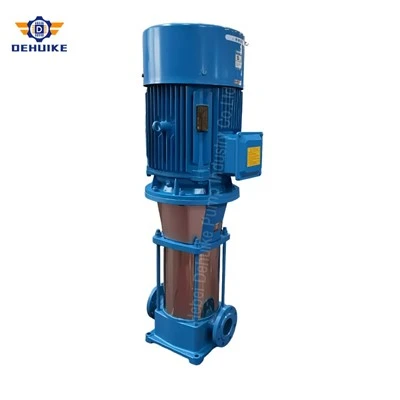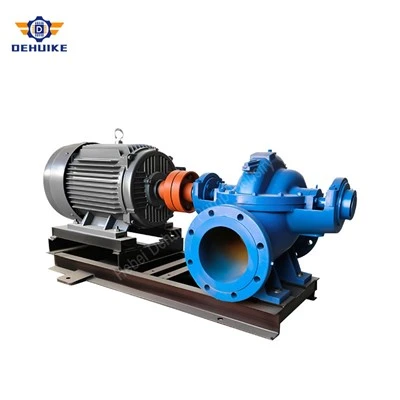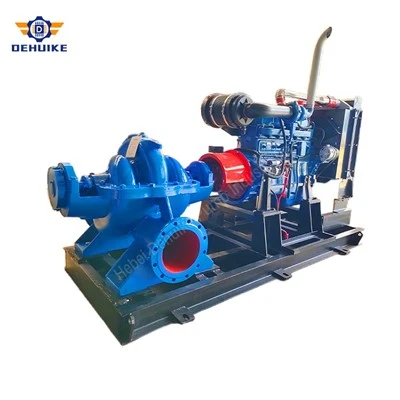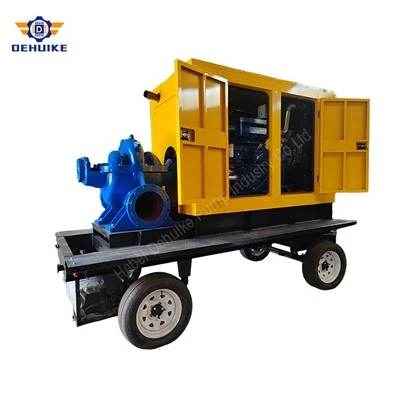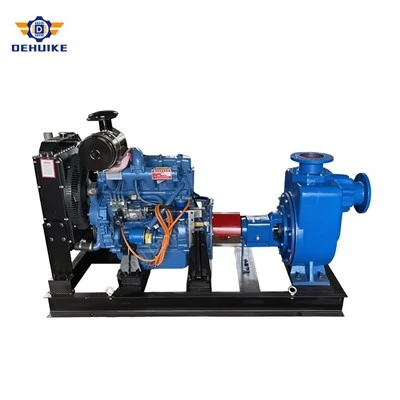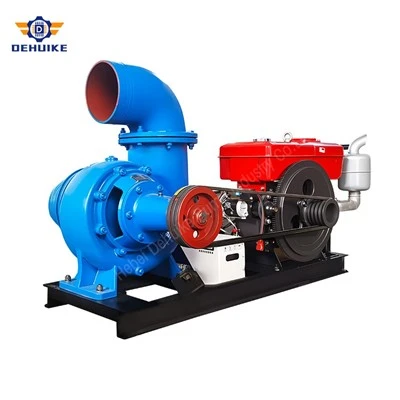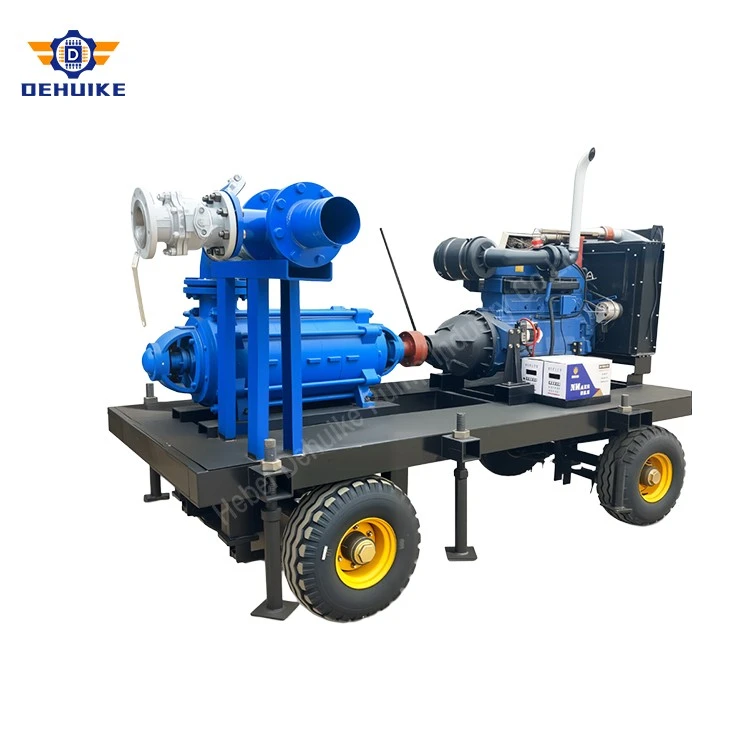
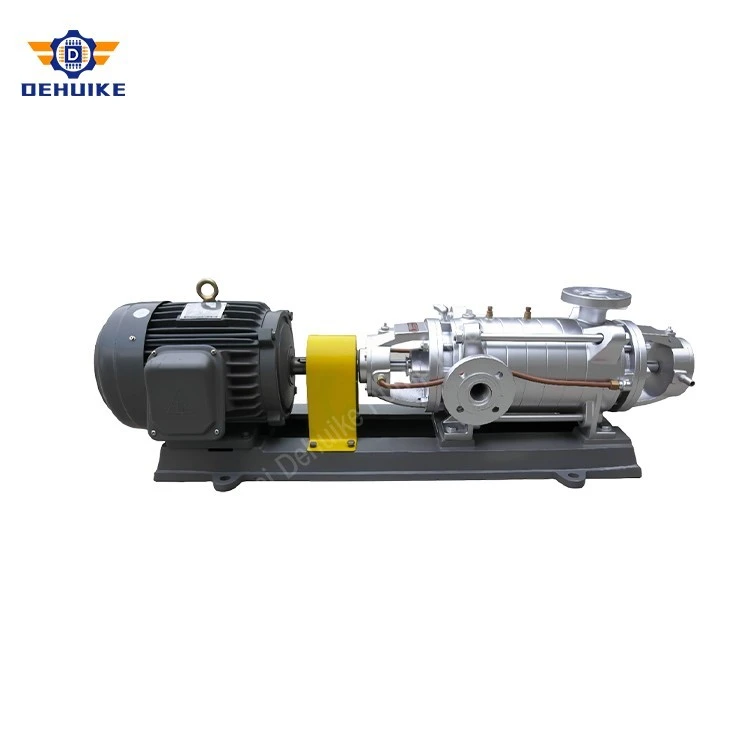
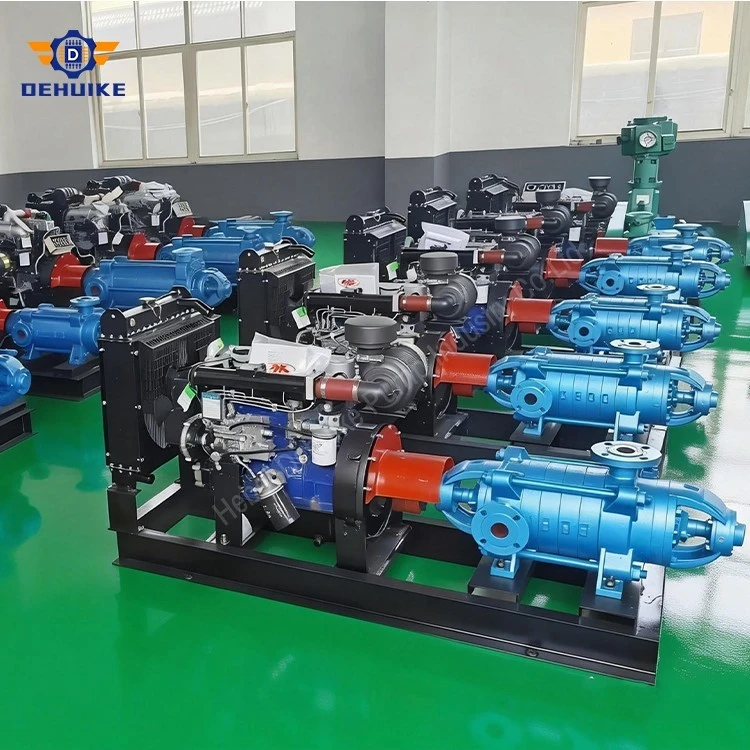
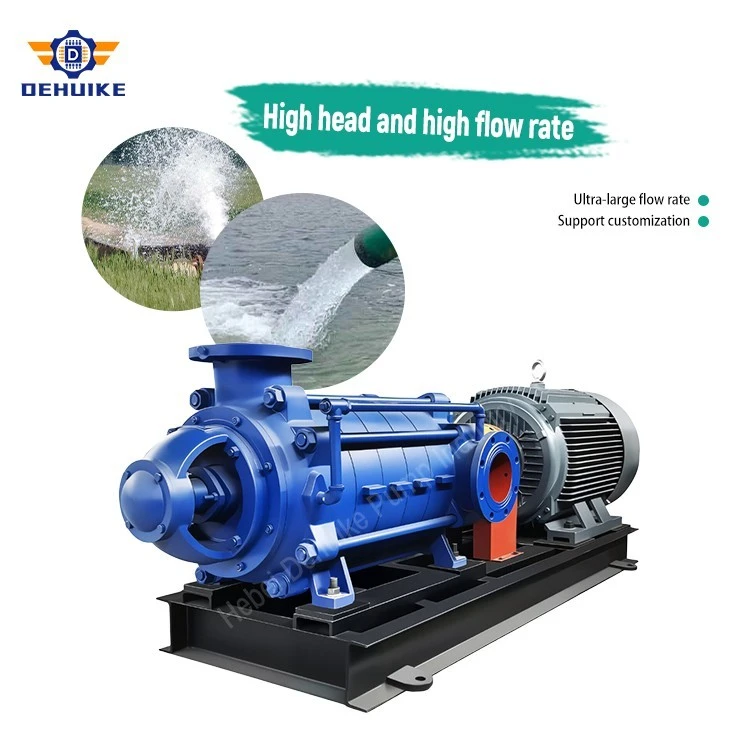
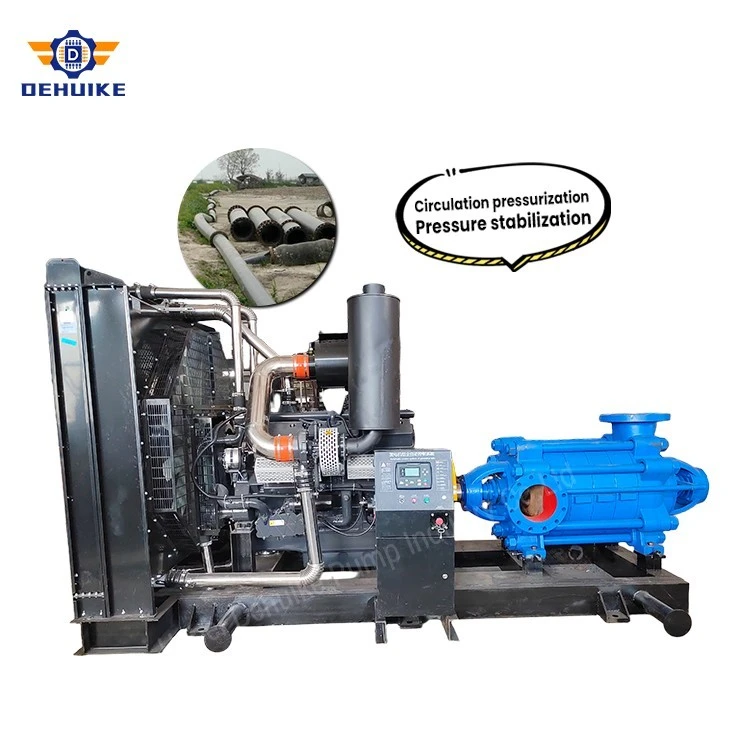
Hebei Dehuike Pump Industry Co., Ltd. is one of the most reliable manufacturers and suppliers of multistage booster pump in China. With abundant experience, we are committed to providing high quality customized pumps with competitive price. Welcome to wholesale bulk multistage booster pump for sale here from our factory. Also, pricelist is available.
Multistage Booster Pump: Choosing It Against the Alternatives
There are four practical ways to push water pressure higher, and a multistage booster pump is only one of them. The others work. Each has a band where it is cheaper to buy, simpler to install or easier to look after, and outside that band it becomes an expensive compromise. So the useful question is not which type is best. It is where your duty sits on the map.
The category decision comes before the model decision. Choose the wrong type and no amount of careful curve reading rescues the project: a plant room with three metres of headroom will not take a vertical stack, and a split case machine will not sit on a small skid beside a process line.
What follows puts the four side by side, shows where the DG range actually sits, works through one selection step by step, and names the four conditions that quietly move the answer.
Four ways to add pressure
A single-stage end-suction pump is the default for low lift and generous flow. One impeller, one volute, open access, cheap spares, and a price that makes multistage look unnecessary for a simple transfer job. Its limit is head. Past roughly 80 m per stage the impeller grows, tip speed climbs, the casing gets bulky and efficiency starts to slide. That is the point where stacking stages becomes the cheaper engineering answer.
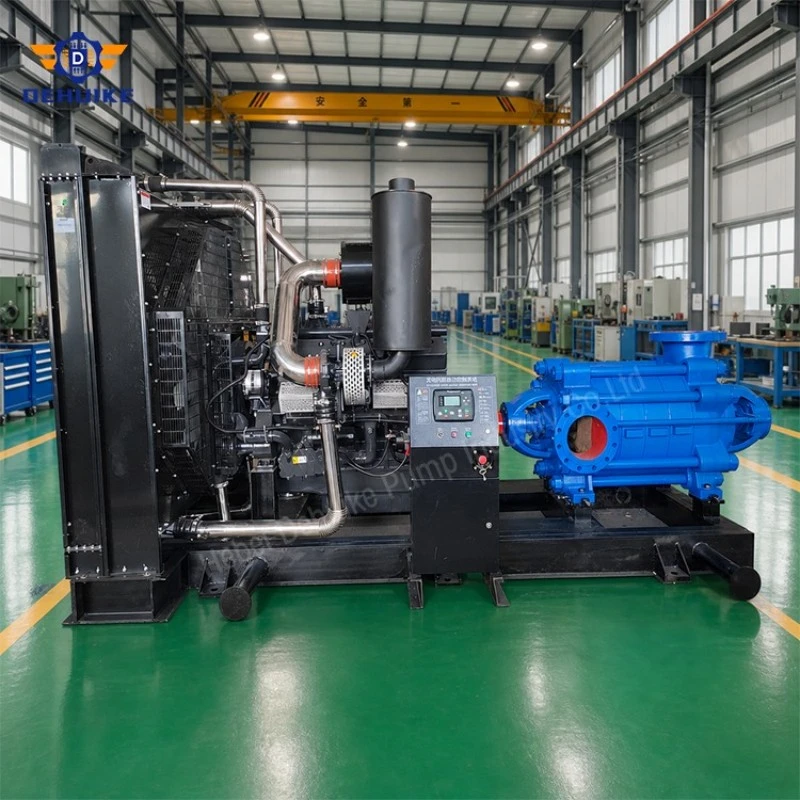
A horizontal multistage machine such as the DG series divides the head across a row of impellers, 30 to 100 m per stage in this family, while flow passes through the casing largely unchanged. The result is a long, low unit with a stable centre of gravity, service access from the side, and a shaft that can be stripped on site along its own axis.
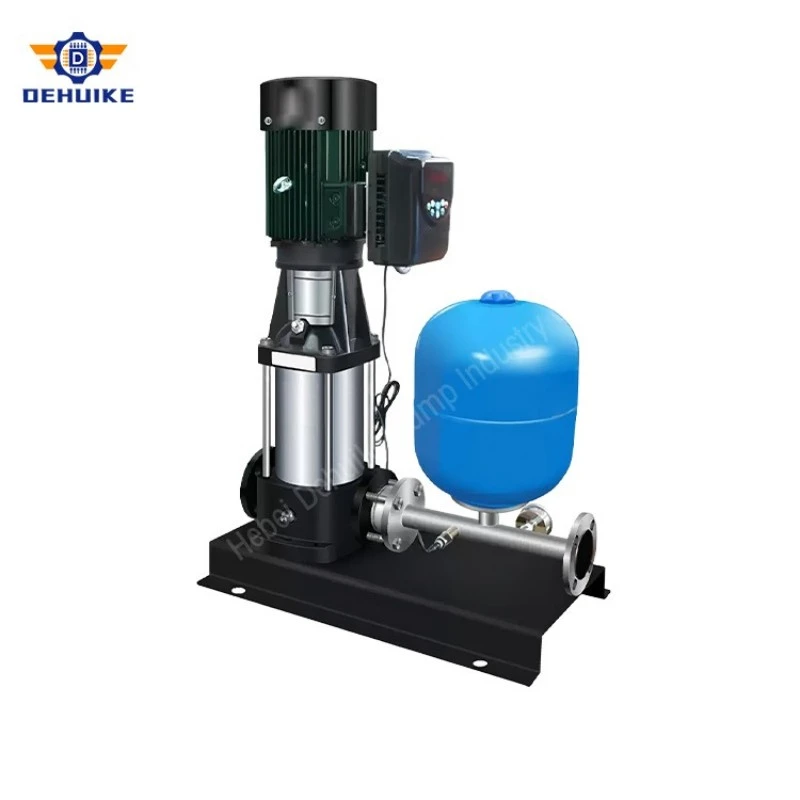
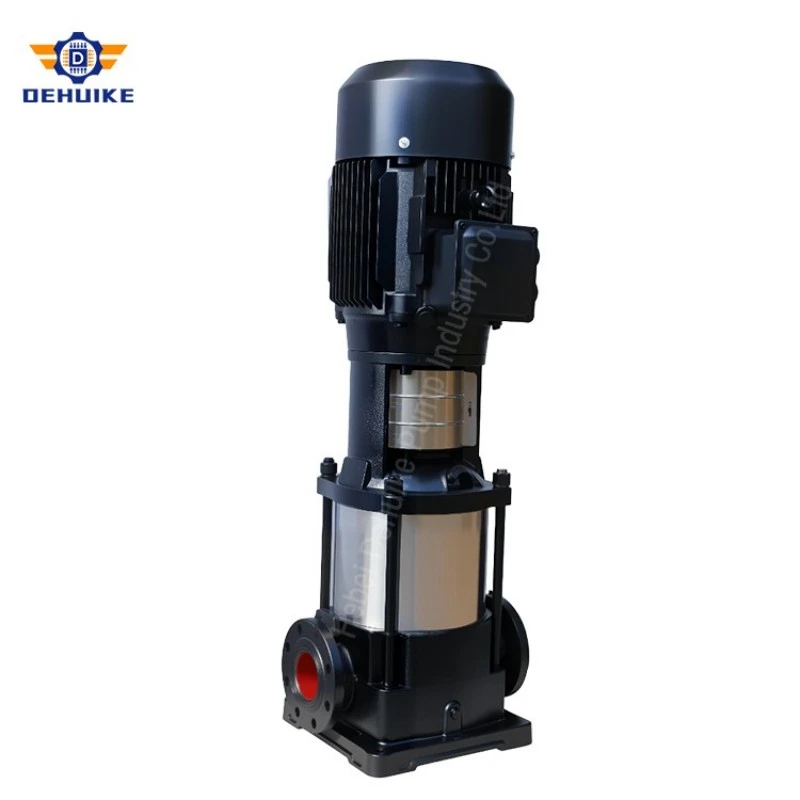
A vertical inline multistage pump does the same hydraulic work in the footprint of a column. It earns its place where floor area is scarce, but it needs headroom above the motor for lifting, and every service task happens at height. A split case multistage pump covers large flows at moderate to high head, and its horizontally split casing lets the rotor come out without breaking the pipework.
Those four differ in more than appearance. They differ in where the maintenance happens, how much room the installation needs, and how much head a single rotating element is asked to carry.
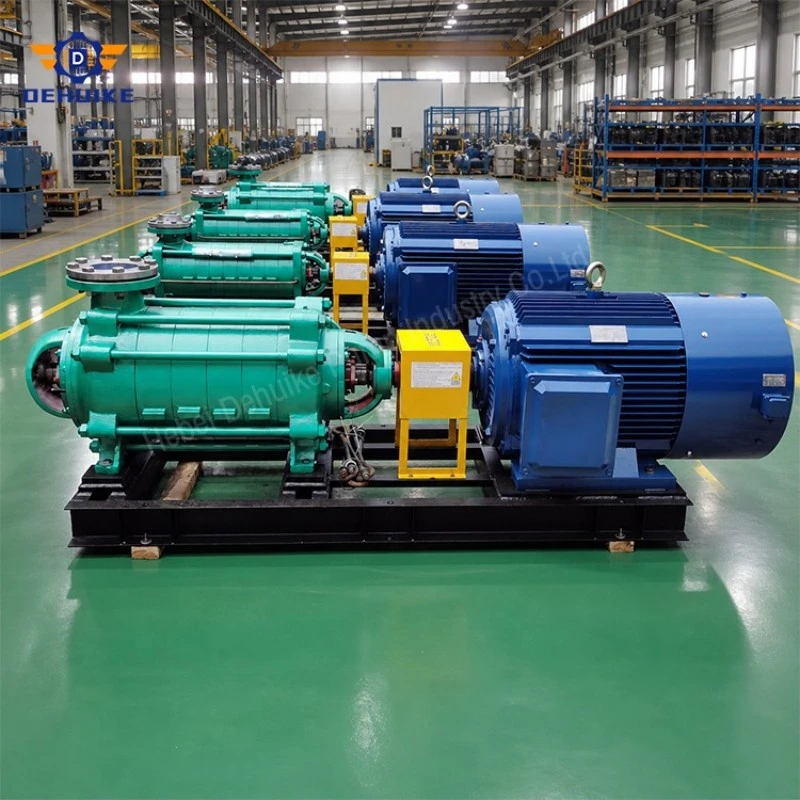
Table 1 Four routes to higher water pressure
|
Option |
Head band |
Space and layout |
Service access |
Where it fits |
|
Single-stage end-suction |
Low, up to about 80 m per stage |
Compact horizontal set |
Volute opened in place |
Low-lift transfer, circulation, dosing |
|
Horizontal multistage (DG) |
210 to 788 m, built from 30-100 m stages |
Long low skid, 1.5-2.5 m |
Side access, rotor stripped along shaft |
Boiler feed, plant headers, long lines |
|
Vertical inline multistage |
Up to about 30 bar typical |
Column footprint, needs headroom |
Work at height, stack removed upward |
Building supply, tight plant rooms |
|
Split case multistage |
Moderate head at high flow |
Wide and heavy |
Casing split, rotor lifted out |
Waterworks, large transfer mains |
Boiler feed is the hardest of the four because two constraints arrive together. The pump must beat a known drum pressure while drawing water close to its boiling point. A deaerator at saturation leaves almost nothing at the impeller eye, so the suction end gets designed before the discharge end. This is why feed pumps sit low and close to the tank, with a short, generously bored suction line rather than the tidy arrangement that suits the pipe fitter.
A building riser is a static-head problem first. The pressure that matters is at the top outlet, after the bends and terminal fittings, not at the pump flange. Sizing from discharge pressure usually ends with a unit that is short at the highest floor and noisy at the lowest. A long transfer line, by contrast, is a friction problem: distance multiplies loss, elevation adds lift, and a valve closing at the far end sends a pressure wave back down the pipe.
Where the DG sits, and why
The DG is a ring-section pump: suction cover, a run of intermediate bowls and a discharge head, all tied together by bolts along one shaft, with an impeller and diffuser in every bowl. Stage count is the design variable. Adding a stage adds head without changing flow, which is how one casing family covers a wide pressure span without a catalogue full of odd sizes.
Two consequences follow. First, the horizontal layout keeps the suction end low and close to the tank, which is exactly what hot feedwater needs. Second, everything that wears can be reached from the side of the skid, at floor level, without scaffolding.
The price of stacking is axial thrust. All the impellers face the same way, so pressure on the back shrouds pushes the rotor toward the suction end, and across eight stages at high head that load is far beyond what a rolling bearing should take. The DG absorbs it with a balancing disc and ring at the discharge end: water bleeds through a controlled clearance into a chamber behind the disc, the rotor shifts a fraction of a millimetre, and a water film carries the remaining load. The pair wears slowly and predictably, which is why rotor axial float is a scheduled measurement rather than a surprise.
Four conditions that change the answer after the calculation
Two projects can share a duty point and still need different pumps. These four conditions are the usual reason.
Temperature. NPSHr is published for cold water, and available NPSH falls as the liquid heats. Feedwater from a deaerator near saturation may leave the margin almost nil, so a hot duty has to be checked at the suction end before the discharge end is discussed.
Water quality. Treated boiler feed and raw river water are different problems. Clean water allows tight clearances and higher head per stage; abrasive or fouling water points toward lower stage head, harder wearing surfaces and a seal that tolerates grit. The series name does not settle this, the water does.
Duty pattern. A pump running steady around the clock, one working a single shift, and a duty-and-standby pair are three different selections. The motor is sized for the worst continuous condition, and the control arrangement decides whether the unit ever sits near its minimum flow.
Supply. All DG data is at 2950 r/min on 50 Hz. On a 60 Hz site, flow and head rise and shaft power rises faster still, so the point has to be recalculated and the motor, coupling and starter checked against the result rather than assumed.
A worked selection
Take a plant header that needs 70 m³/h at 420 m, drawing from a break tank 3 m above the pump centreline, water at 40 °C, 50 Hz supply. It is a clean-water duty, and the demand is close to steady during production hours.
Open the DG table and the gap becomes visible. DG46-50x8 gives 46 m³/h at 400 m, too little flow. DG85-45x7 gives 85 m³/h at 315 m, plenty of flow but short on head. DG85-67x8 gives 85 m³/h at 536 m, more head than the header needs. None of the listed rows lands on 70 m³/h and 420 m. This is normal, and it is the point where a buyer should stop shopping from the table.
The published rows are reference points on a family of curves, not a menu. What the 70/420 duty needs is the 85 frame at a trim or stage count that puts the best efficiency point near the duty, confirmed on a curve for the actual flow and head. Two things then follow from the numbers.
Power first. 70 m³/h at 420 m is about 80 kW of hydraulic work. At an overall efficiency near 68 per cent that lands around 118 kW at the shaft, which puts the motor in the 132 kW frame, with 160 kW if starting conditions at the site are awkward. Port sizes settle around DN100 to DN125, which decides the valve sizes and the space around the spool pieces.
Then the edges. If the header later grows to 90 m³/h, this selection has no room left and the answer is a different frame. If it only ever needs 55 m³/h, the unit runs well left of its design point for most of its life, and a smaller frame selected for that band would use less energy. Neither scenario is visible on a quotation, which is why the enquiry should carry a flow range rather than a single figure.
Comparing two quotations fairly
Offers on the same duty rarely differ only in price. They differ in what sits inside the number, and the difference usually appears later as a variation order.
Read each offer against the same eight lines: the model and the point it was selected for; whether the motor, coupling and baseplate are included or priced separately; wetted material and seal type; port sizes and flange standard; the test performed before shipment and the record supplied with it; documentation language and drawing set; the spare parts list and delivery for the items that wear; and the delivery terms with packing described. Two offers that agree on all eight can be compared on price. Two that do not are being compared on nothing.
One line deserves its own check. If a motor is excluded, the buyer carries the interface risk on speed, frame, mounting and starting current, and a mismatch surfaces during commissioning when nobody has time for it. Ask for the motor, coupling, baseplate and guard to be quoted as one package, then decide whether to split it.
What actually wears
On a multistage unit the consumables are predictable, and knowing them makes the maintenance budget a line item instead of a surprise. The balancing disc and ring wear as a pair, slowly, and their condition is read from rotor axial float. Bearings go at the end of their calculated life or after a period of misalignment. The shaft seal either drips through packing that needs occasional adjustment, or runs dry if a mechanical seal loses its supply. Impellers and diffusers, in clean water, outlast all of these.
Three habits keep the unit out of trouble: measure axial float on a schedule rather than waiting for noise, log bearing temperature and vibration alongside flow and pressure so a change has a baseline to be compared against, and keep the wear items on the shelf. Seal or packing, balance disc and ring, a bearing set, a coupling element and gaskets will not tie up much capital, and they are what stands between a weekend repair and a two-week outage.
Questions that come up in enquiries
Q1: What does the model number tell me?
Flow, nominal head per stage, and stage count. DG85-67x8 is 85 m³/h, 67 m per stage, eight stages, or 536 m. With that in hand, a quoted model can be judged at a glance.
Q2: One stage adds how much head?
Sometimes, but kilowatts are only part of the check. Shaft power at the new duty must leave margin, the speed must match, the frame must suit the baseplate, and the starter must carry the starting current. A motor that was comfortable on a smaller pump can be marginal on a larger one even when the figures look close
Q3:How much suction margin should I leave?
A metre above catalog NPSHr for clean cold water. On deaerator feedwater or anything warm, calculate available NPSH properly and add the working temperature into it. Here the requirement is 2.2 to 4.8 m, so small errors in the suction layout can eat the whole allowance.
Q4:What temperature can the pump handle?
No single figure covers every DG build, because the answer depends on seal, material and gasket choice rather than on the series. Send the working temperature with the enquiry and it will be matched. Borrowing a number from a similar-looking page is how a seal fails in the first month.
Send the flow, the total head, the suction arrangement, the water temperature and the supply available on site. We will put those against the DG data and reply with a model, a motor, a port arrangement, and the points still needing confirmation.

Hot Tags: multistage booster pump, China multistage booster pump manufacturers, suppliers, factory