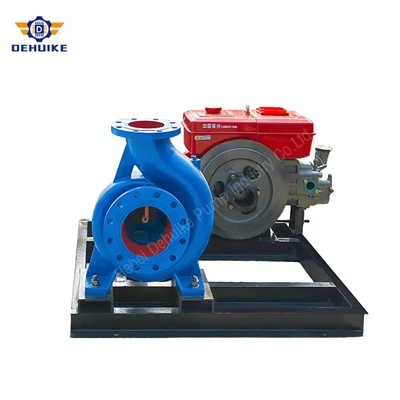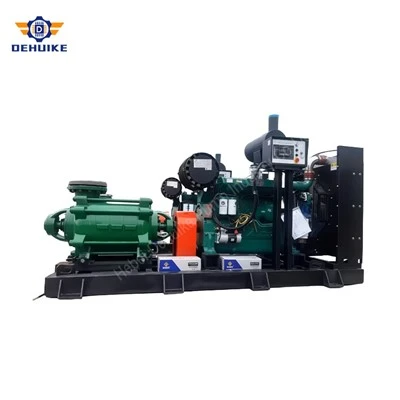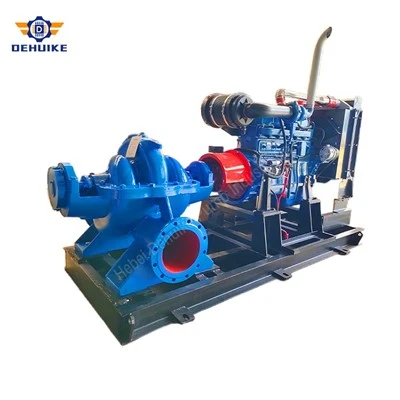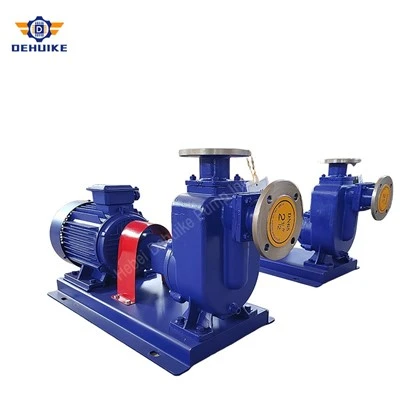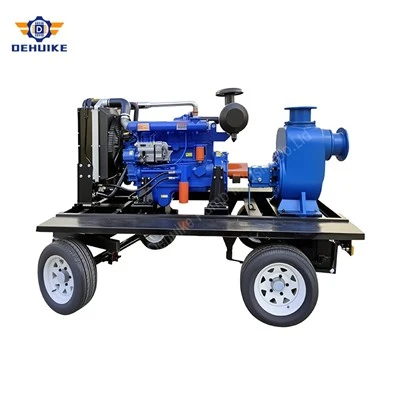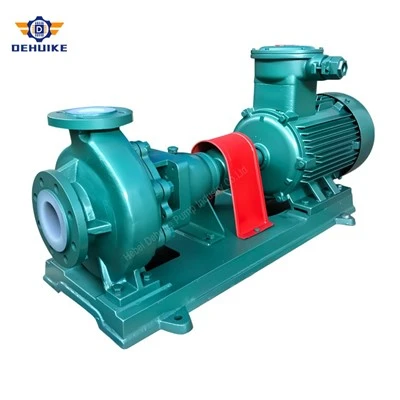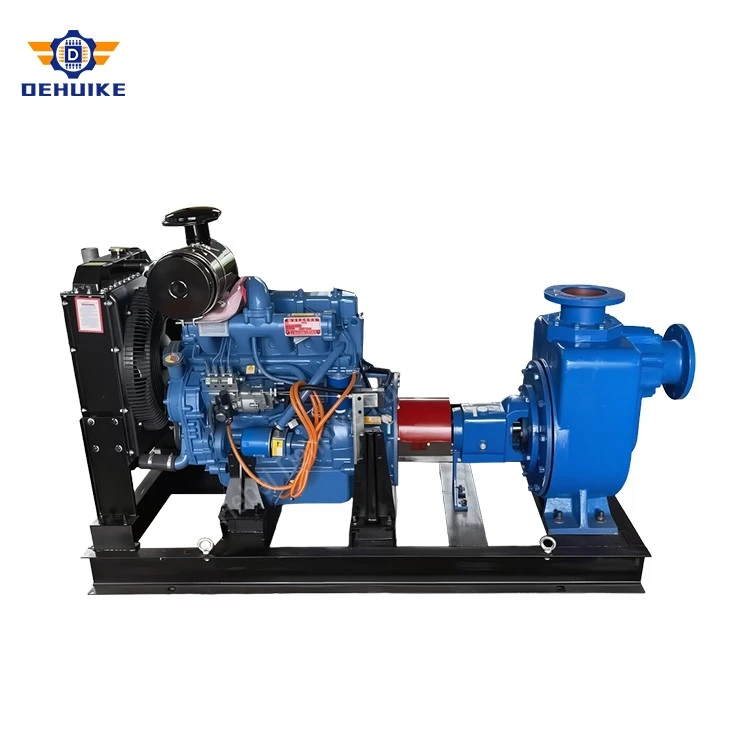
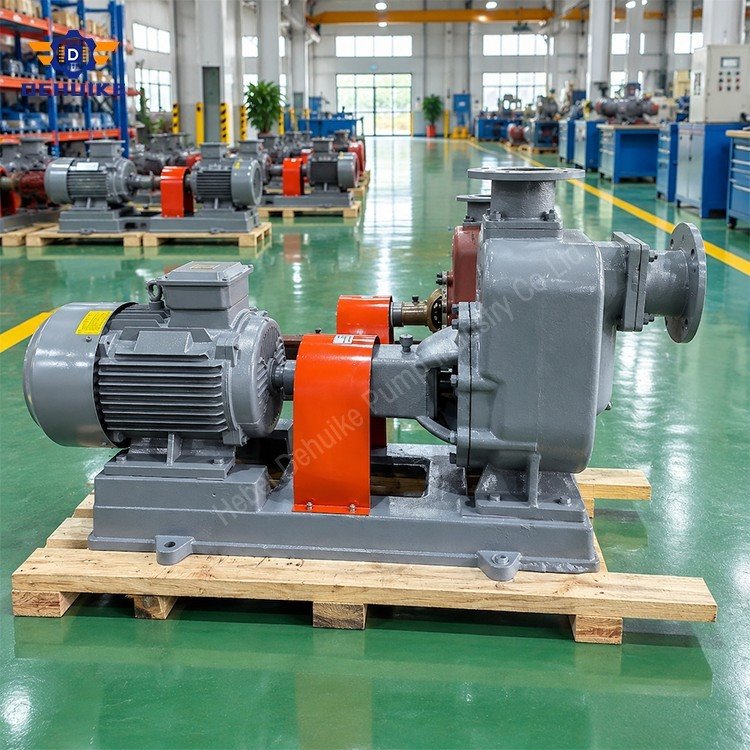
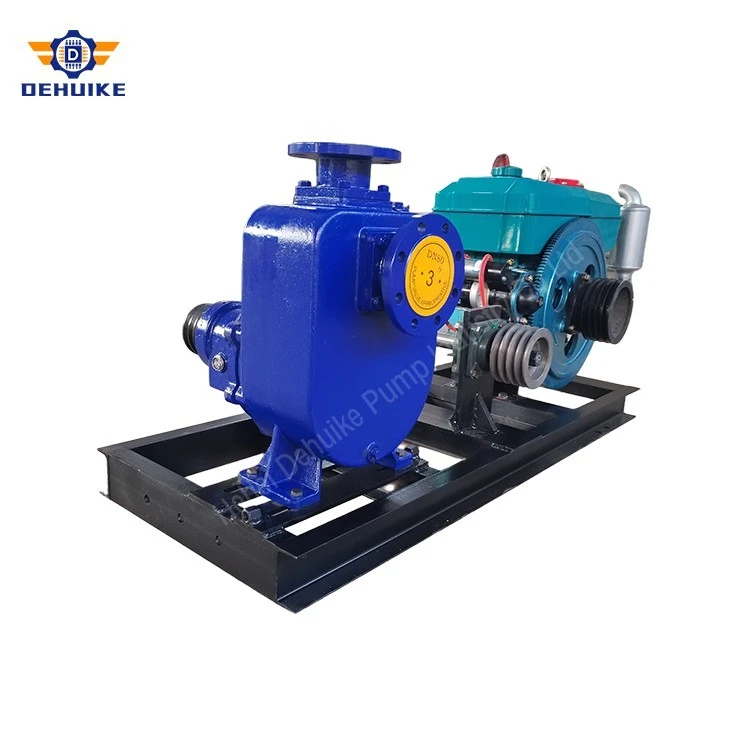
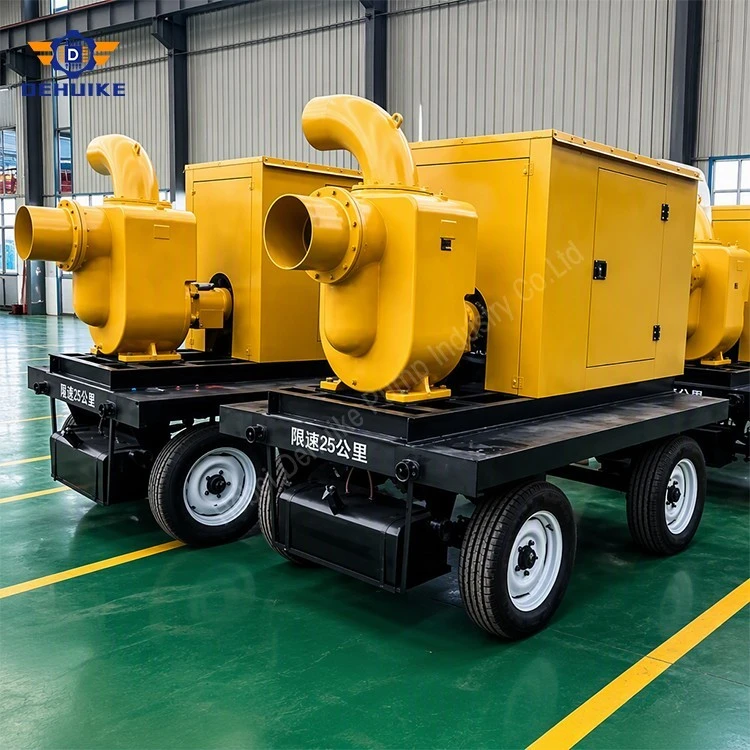
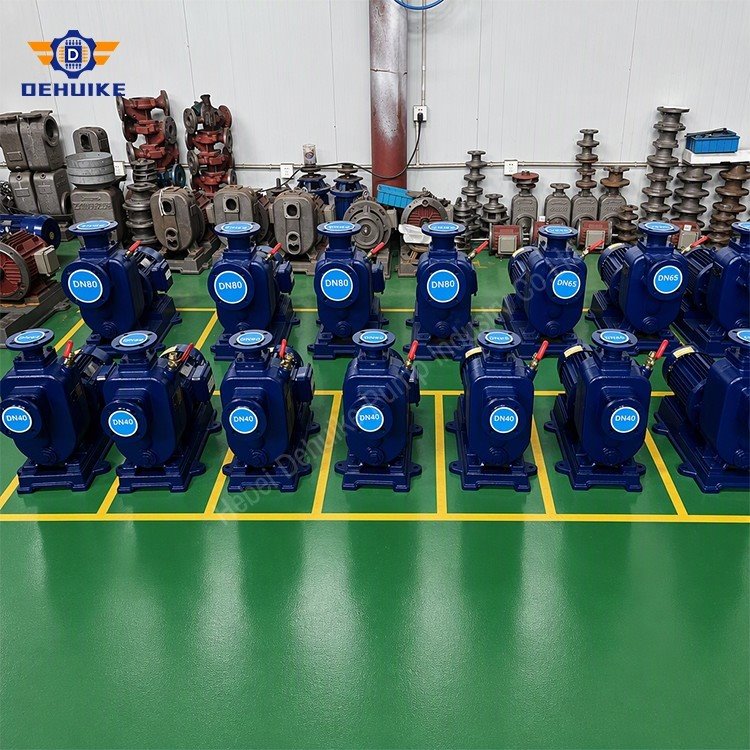
Hebei Dehuike Pump Industry Co., Ltd. is one of the most reliable manufacturers and suppliers of high suction self-priming pump in China. With abundant experience, we are committed to providing high quality customized pumps with competitive price. Welcome to wholesale bulk high suction self-priming pump for sale here from our factory. Also, pricelist is available.
Thermodynamic Vacuum Principles
Extracting liquids from deep subsurface reservoirs, sunken municipal interceptors, industrial wastewater ponds, and steep river embankments poses acute fluid dynamic challenges for hydraulic engineers. In conventional pumping configurations, placing centrifugal equipment above the water line creates an immediate thermodynamic constraint: atmospheric barometric pressure must force the liquid upward into the lower pressure zone generated by the rotating impeller. Standard end-suction centrifugal machines cannot evacuate pipeline gases on their own; even tiny volumes of air entrained within the intake pipe create an air-binding vapor lock that halts fluid flow and induces immediate seal overheating.
Our high-performance High Suction Self-Priming Pump overcomes these fundamental atmospheric constraints through an integrated two-phase gas-liquid separation reservoir and internal fluid circulation geometry. Rather than relying on fragile foot valves submerged beneath debris-laden sump floors or complex external vacuum priming ejectors, this machine achieves deep vertical static suction lifts reaching 6.5 meters autonomously. During initial startup, liquid retained within the internal casing chamber mixes intimately with entrapped pipe gases under the high-shear velocity of the impeller. The aerated mixture is propelled toward a vaulted deaeration expansion dome where separated gas purges out via the vertical discharge riser, while denser deaerated fluid flows through a recirculating duct back into the impeller eye. This continuous vacuum siphon mechanism rapidly evacuates entrapped pipeline gases, drawing a solid, cavitation-free fluid stream up from deep containment basins.
Structural Characteristics
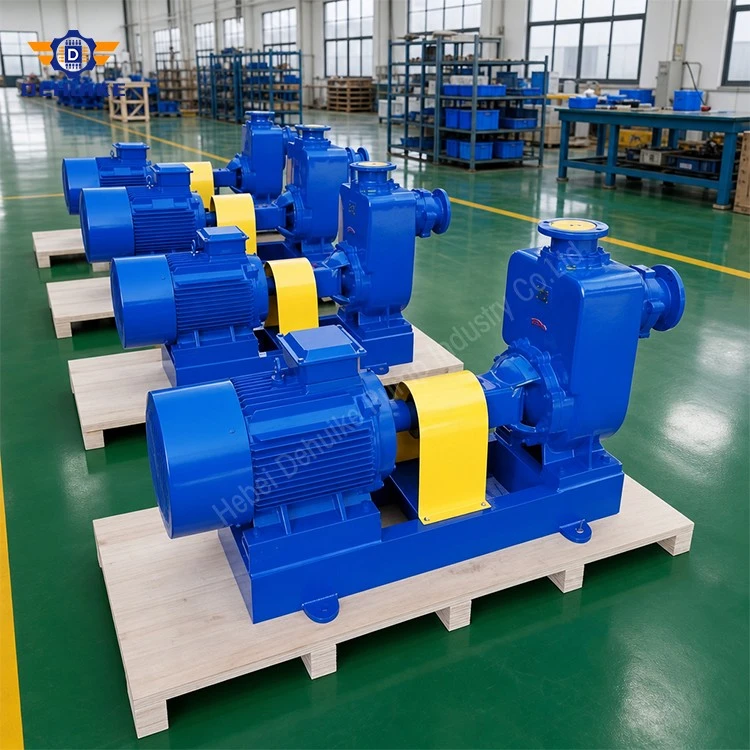
A rigorous mechanical examination of our High Suction Self-Priming Pump reveals why this surface-installed configuration dramatically lowers civil construction capital and lifecycle maintenance costs compared to submersible wet-pit units or deep underground dry wells. Key structural elements are engineered to balance rapid gas evacuation with extreme resistance against abrasive wear:
Integral Intake Check Mechanism (Zero Submerged Valving): Positioned directly inside the pump intake nozzle, an engineered synthetic elastomer internal non-return check flap eliminates the requirement for foot valves at the submerged lower intake terminal. Traditional foot valves in raw river water or wastewater sumps frequently jam from suspended rags, gravel, and biological debris, causing lost prime and catastrophic dry-run seal failure. Our surface-accessible check valve seals tightly under gravity immediately upon electric drive de-energization, trapping full fluid inventory inside the volute to ensure immediate, unattended restarts on subsequent automated cycles.
Dual-Volute Hydraulic Separation Geometry: The exterior pump casing is cast with enlarged upper and lower fluid reservoirs flanking a specialized dual-volute inner flow path. During the self-priming stage, this enlarged casing volume decelerates high-velocity discharge fluid, providing ample residence time for air bubbles to coalesce and escape upward into the discharge header while returning clean, bubble-free fluid through bottom recirculation ports.
Barrier-Fluid Lubricated Mechanical Shaft Seal: Because high-vacuum air evacuation creates temporary dry-running conditions across the stuffing box before the liquid column reaches the pump, standard single mechanical seals experience rapid thermal cracking. Our units feature balanced cartridge mechanical seals constructed with sintered SiC or TC sealing rings housed within an oil-quenched barrier fluid reservoir. This internal liquid barrier dissipates frictional heat during deep air draw, ensuring absolute hermetic sealing against atmospheric vacuum leaks.
Rigid 40Cr Forged Rotor & Oversized Bearing Frame: To absorb violent hydraulic shocks and turbulent radial thrust loads during deep suction draw, the pump rotor is precision-machined from normalized and tempered 40Cr structural alloy forgings. Supported within a rigid cast-iron bearing bracket by heavy-duty angular-contact thrust bearings and cylindrical roller bearings, dynamic shaft deflection at the seal face is kept strictly beneath 0.038 mm, greatly extending seal and bearing longevity.
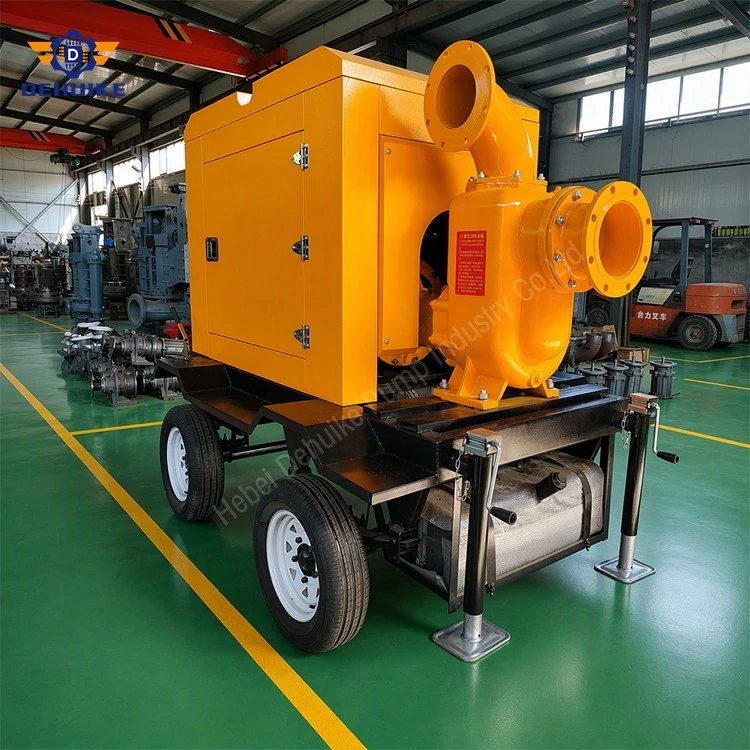
Engineering Technical Parameters
Accurate equipment sizing for deep suction installations requires matching required flow volumes, static vertical lift elevations, intake pipe diameters, and slurry specific gravities against verified performance envelopes. Dehuike Machinery manufactures standard High Suction Self-Priming Pump models covering connection sizes from DN32 to DN300, delivering flow rates up to 500 m³/h and dynamic discharge heads up to 75 meters.
|
|
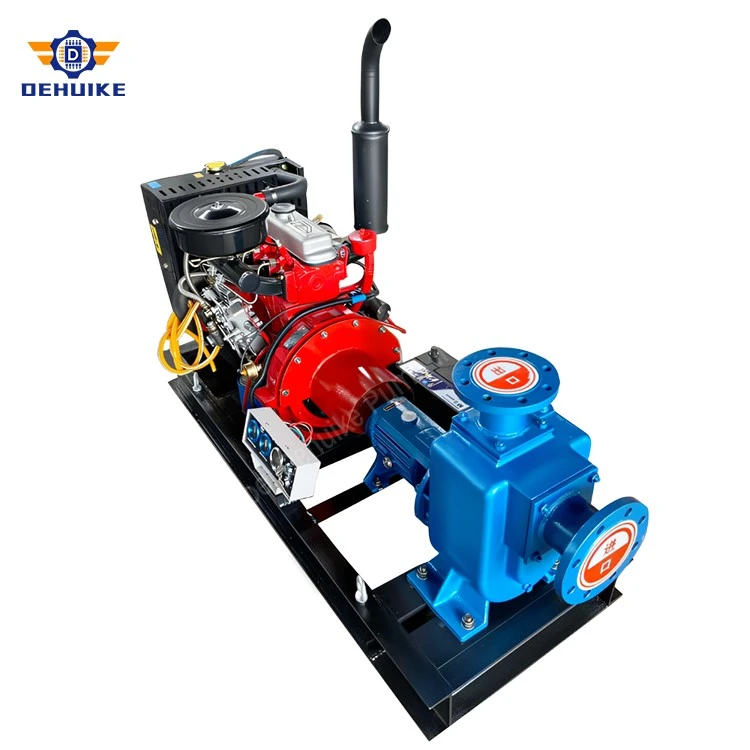
Precision Metallurgy
Sustaining deep vacuum suction without internal fluid slippage or structural leakage requires exceptional metallurgical density and micron-grade machining precision. At Dehuike, every specialized pumping unit is manufactured through an integrated quality sequence from raw furnace melting to finished assembly:
Controlled Cupola & Electric Induction Smelting: Raw foundry charges are assembled from high-purity virgin pig iron, selected steel scrap, and specialized ferro-alloys. Depending on customer fluid specifications, casings are cast from high-tensile gray iron (HT200), ductile iron (QT450-10 for shock resistance), or austenitic stainless steel (CF8M / 316 and CF3M / 316L for corrosive liquors). Molten metal chemistry is verified prior to tapping using vacuum optical emission spectrometry (OES) to ensure optimal pearlite matrix density and complete absence of porosity.
Furan-Bonded Resin Sand Molding: Casings and complex internal volutes are formed in rigid furan-bonded resin sand molds. This precision molding method guarantees smooth internal fluid passages with minimal surface roughness, drastically reducing boundary layer frictional losses during high-velocity air-water recirculation and preventing micro-void porosity that could bleed atmospheric air under deep vacuum draw.
Multi-Axis CNC Machining & Critical Register Control: Castings are transferred to our heavy machining bay, where multi-axis horizontal and vertical CNC machining centers mill flange sealing faces, bearing housings, and volute registers in single clamp setups. Concentricity between the stuffing box, bearing bore, and volute cutwater is maintained within ±0.012 mm, eliminating shaft deflection and guaranteeing a true hermetic seal.
Computerized Dynamic Balancing (ISO 1940 Grade G2.5): Every impeller undergoes dual-plane precision dynamic balancing on digital balancing machines. Adhering to the stringent ISO 1940 (Grade G2.5 balance quality) limits, material is removed by precision face milling until residual unbalance is eliminated, protecting bearings from cyclic fatigue during high-speed 2900 rpm operation.
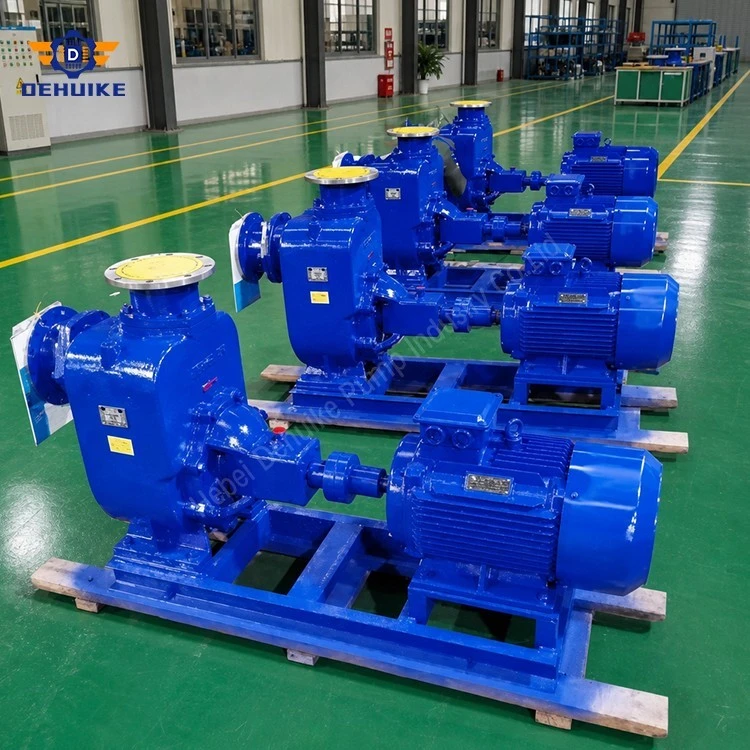
Global Deployment Footprint
-
With over 30 years of specialized manufacturing experience in industrial centrifugal fluid machinery, Hebei Dehuike Pump Industry Co., Ltd. has established a proven track record across demanding infrastructure and processing sectors worldwide. Our heavy High Suction Self-Priming Pump equipment operates reliably across more than 50 countries:
Southeast Asia Riverbank Municipal Intakes (Philippines, Indonesia, Vietnam): Deployed on high concrete riverbanks and irrigation canal bunds where seasonal water levels fluctuate up to 5 meters. Our ZX series pumps lift raw water directly into primary clarifying basins without requiring expensive underwater civil structures or silt-clogged foot valves.
Middle East Petrochemical & Wastewater Interceptors (Saudi Arabia, UAE): Mounted on dry surface slabs above deep oily water containment vaults, refinery drainage interceptors, and seawater intake basins, handling fluctuating tidal elevations and saline atmospheres up to 50°C ambient temperatures.
South American Open-Pit Mining & Tailings Dewatering (Chile, Peru): Utilized in open-cast copper and gold operations to dewater bench collection sumps and tailings filtration filtrate tanks. The dry surface-mounted format allows maintenance personnel to inspect skids quickly without entering muddy, hazardous pit areas.
European Chemical Processing & Effluent Neutralization (Germany, Poland): Constructed in 316L stainless steel to transfer acidic chemical liquors, pickling solutions, and industrial wastewater across deep below-floor neutralization trenches without risk of ground contamination.
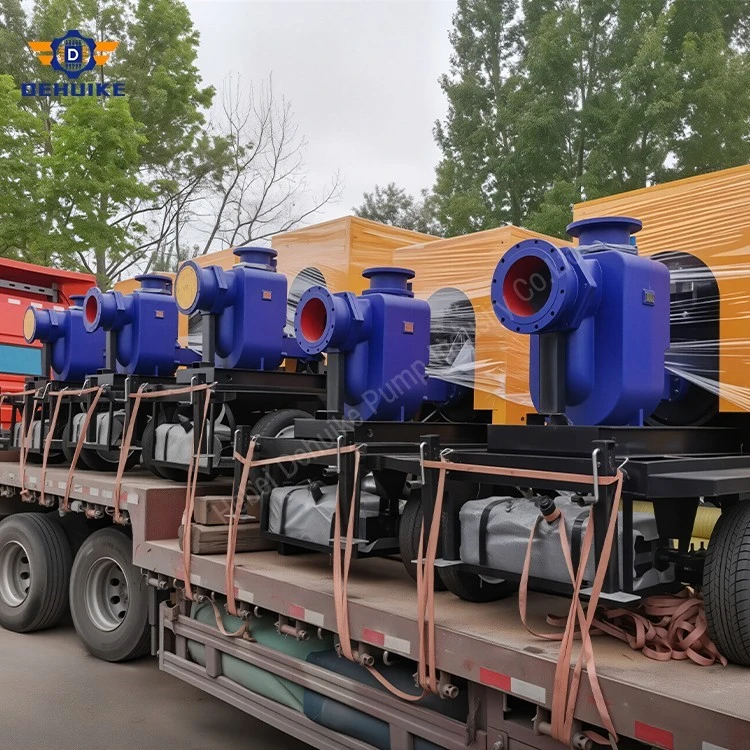
Turnkey Engineering Lifecycle
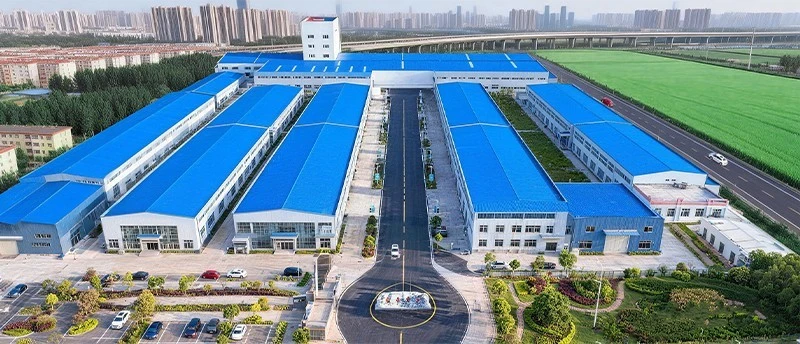
Dehuike delivers end-to-end commercial transparency, hydraulic engineering support, and dependable global logistics to streamline equipment procurement for international EPC contractors, plant owners, and distributor networks:
Pre-Purchase Hydraulic Analysis & CAD General Arrangement Support: Our specialized fluid engineering desk conducts rigorous site evaluations prior to equipment selection. By reviewing vertical static suction heights, intake pipe lengths, fluid viscosities, and operating temperatures, our engineers compute exact suction head margins, ensuring that chosen pump frames maintain a minimum 0.8m safety buffer against cavitation. Comprehensive dimensional CAD drawings, motor load curves, and formal commercial quotations are provided within 2 hours of technical inquiry.
Turnkey Power Skid Packages & Customized Transmissions: We supply complete skid-mounted pumping units customized for harsh outdoor environments. Packages include high-efficiency TEFC electric motors (IP55 through IP66 weatherproof electrical enclosures, 380V/415V/460V/575V at 50Hz or 60Hz), ATEX explosion-proof drives, or autonomous diesel engine systems complete with automatic throttle controllers and fuel storage bases. Drive transmissions include precision elastomeric pin couplings or heavy-duty V-belt drives.
Standardized International Logistics Protocols: We manage international shipping via reliable multimodal logistics networks. Shipments are strictly handled via maritime container shipping (>500 kg heavy assemblies) and dedicated air transport (50–500 kg for urgent parts). We quote clear international commercial terms under standard FOB and CIF destination port agreements without hidden port surcharges. All equipment is secured inside heavy-duty, seaworthy non-fumigation plywood crates lined with internal vapor-corrosion-inhibitor (VCI) protective barriers.
Comprehensive Two-Year Mechanical Warranty & Supply Chain: Every complete High Suction Self-Priming Pump manufactured by our works carries an unconditional two-year (24-month) comprehensive equipment warranty covering all non-consumable mechanical and structural components. Backed by our robust supply chain network of 900+ certified component suppliers, we maintain ready stock of impellers, mechanical seals, shafts, and casing wear parts for rapid global dispatch.
Testing Protocols
Reliable deep-lift operation demands absolute mechanical precision and airtight integrity. Hebei Dehuike Pump Industry Co., Ltd. enforces an exacting quality assurance protocol across every production unit under accredited ISO 9001 governance, supported by international EAC and RoHS product compliance certifications:
Static Vacuum Decay & Negative Pressure Verification: Prior to painting and final packaging, every assembled high-suction casing undergoes an automated negative pressure test. The pump is evacuated to -0.08 MPa static vacuum and isolated for 15 minutes. The internal pressure decay is continuously monitored to guarantee zero ambient air leakage across casing gaskets, mechanical seal faces, and inspection cover joints.
Hydrostatic Proof Pressure Containment Testing: Pump volutes and casing covers are subjected to hydrostatic pressure testing at 150% of the maximum rated working pressure (minimum 2.0 MPa), sustained for a continuous 30-minute test window. This rigorous test confirms casting structural density, flange rigidity, and total freedom from microscopic porosity defects.
Closed-Loop Hydraulic Bench Testing (ISO 9906 Grade 2B): Every completed unit is mounted on our automated closed-loop hydraulic test station. Calibrated electromagnetic flowmeters, multi-channel dynamic pressure sensors, and precision digital power analyzers log head, flow capacity, shaft power, and efficiency across multiple duty points, verifying full compliance with ISO 9906 Grade 2B acceptance standards.
Mechanical Vibration & Thermal Bearing Run-In: During full-speed hydraulic testing, three-axis vibration velocity sensors monitor the bearing housing against ISO 10816-3 Class II thresholds (maintaining overall RMS vibration strictly below 2.8 mm/s). Bearing temperature stabilization is logged via infrared thermography to confirm correct lubricant distribution and bearing clearance.
Frequently Asked Questions (FAQ)
The following engineering evaluations examine critical technical considerations submitted by EPC contractors, design consultants, and municipal plant managers when deploying our High Suction Self-Priming Pump:
Q1: What fluid-dynamic factors dictate the realistic static lift ceiling for self-priming surface equipment?
A: At standard sea-level atmospheric pressure (approximately 1.013 bar abs), theoretical suction potential tops out near 10.33 m of ambient liquid water. In actual field installations, however, several physical realities diminish this height: liquid vapor pressure, fluid dynamic velocity head, piping drag, and the impeller's Net Positive Suction Head Requirement (NPSHr). When water temperatures are around 20°C, these unavoidable hydraulic factors compress the dependable continuous lift envelope to 6.0m–6.5m. If the fluid is hot or if the plant sits at high altitude where barometric pressure is attenuated, available suction lift contracts further, necessitating careful verification to prevent acoustic cavitation and impeller erosion.
Q2:What engineering advantages arise from replacing traditional submerged foot valves with an integral intake flapper?
A: Conventional suction installations depend on a submerged bottom non-return valve to prevent siphon drainage. In industrial ponds, raw wastewater, and river intakes, these submerged components are notorious for jamming open when silt, weeds, or rags wedge between the seat and disc, resulting in silent drainage of the suction column and dry-run pump destruction. Our High Suction Self-Priming Pump eliminates submerged foot valves entirely. Instead, an elastomeric weighted check valve is integrated directly inside the above-ground suction spool. Gravity and discharge backpressure snap the flap shut the moment the motor stops, securing the priming charge inside the pump body while leaving the suction line clear of obstructions. When restarted, the unit quickly purges the empty intake pipe on its own.
Q3: What piping geometry and submergence rules must be followed to avoid vortex formation and air locking?
A: Suction piping should rise continuously toward the pump nozzle at an inclination of no less than 1:100, eliminating horizontal flat spots or inverted U-bends where air bubbles could collect. Eccentric pipe transitions must be oriented with their flat face facing upward to prevent high-point gas accumulation. Furthermore, the lower intake bellmouth must be submerged beneath the low-liquid level by at least 1.5 pipe diameters (with an absolute minimum immersion of 500 mm) to suppress free-surface vortices that draw air directly into the flow path.
Q4: How does the open-vortex geometry of ZW wastewater impellers handle stringy fibers and suspended trash without clogging?
A: Standard enclosed impellers force slurry through narrow internal channels between front and rear shrouds, which quickly plug with rags, weeds, and debris. In contrast, the ZW series employs an overhung semi-open vortex impeller spinning against a renewable wear plate. This geometry provides broad internal waterways through which solids reaching 60 mm spherical diameter and fibrous clumps pass smoothly without clinging to the vanes. Should severe debris ever wedge in the casing, a quick-opening cleanout port on the front cover permits rapid de-clogging without disturbing the connected piping.
Q5: What routine inspection protocol ensures sustained vacuum extraction performance over years of service?
A: Preventative maintenance focuses on three main checkpoints: First, periodically inspect the internal mechanical seal barrier liquid reservoir to confirm oil clarity and volume. Second, inspect the intake elastomeric flap valve during scheduled turnarounds to ensure the rubber face is supple and seats cleanly against the inlet rim. Third, follow grease relubrication intervals for the above-deck bearing carrier, using premium lithium-complex grease every 2,000 running hours. These straightforward deck-level procedures eliminate confined-space entry and ensure dependable operation for decades.

Hot Tags: high suction self-priming pump, China high suction self-priming pump manufacturers, suppliers, factory