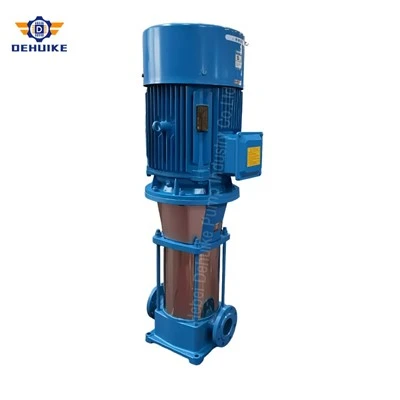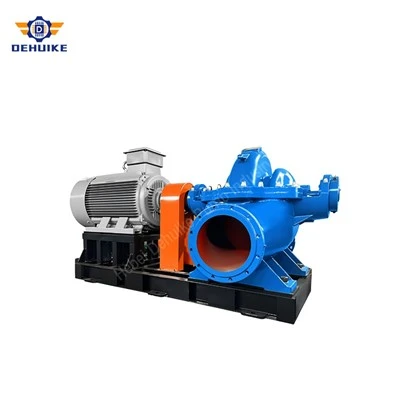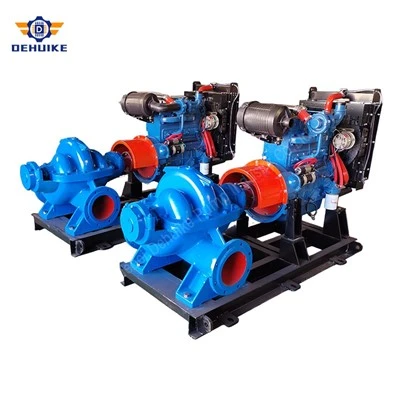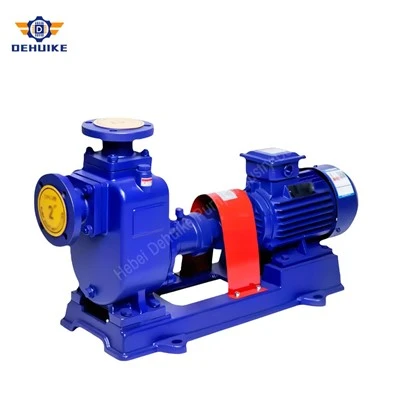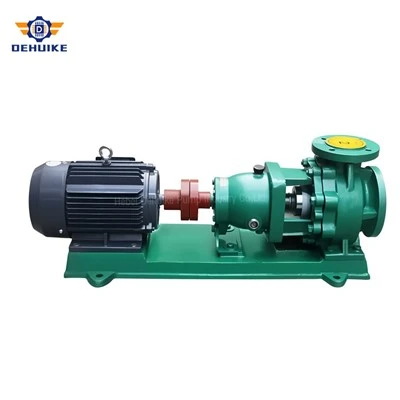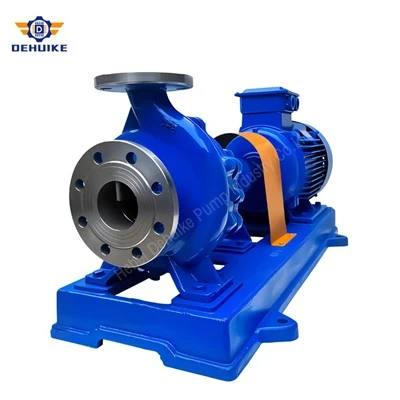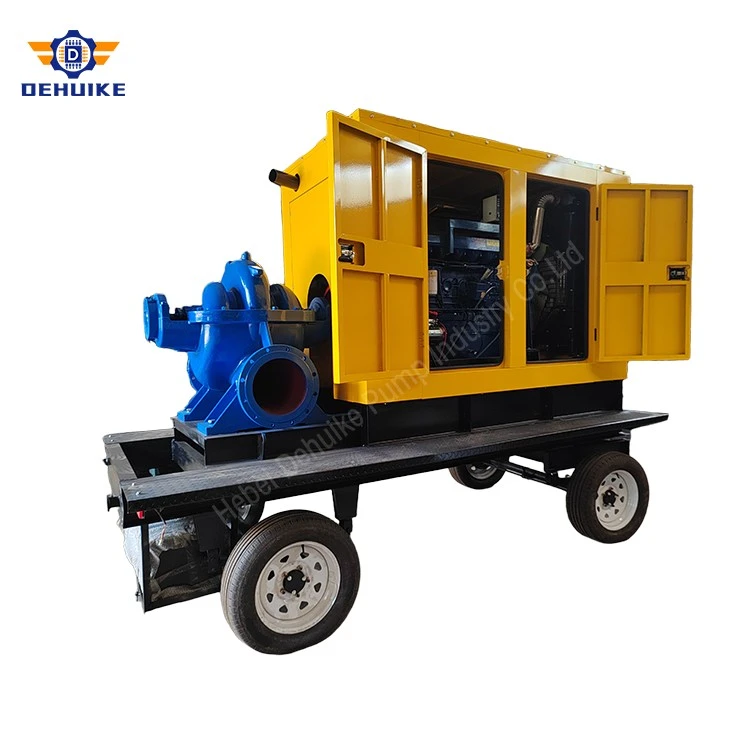
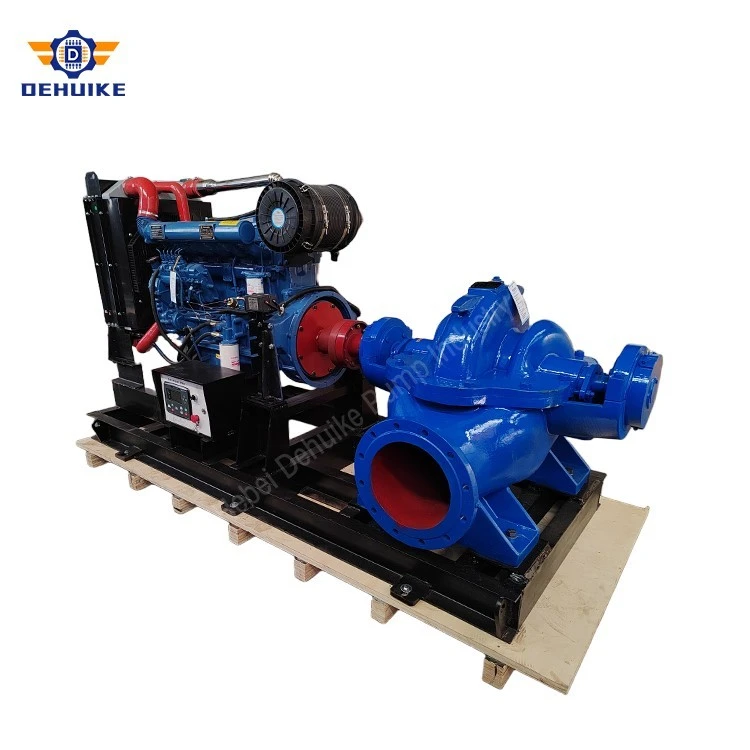
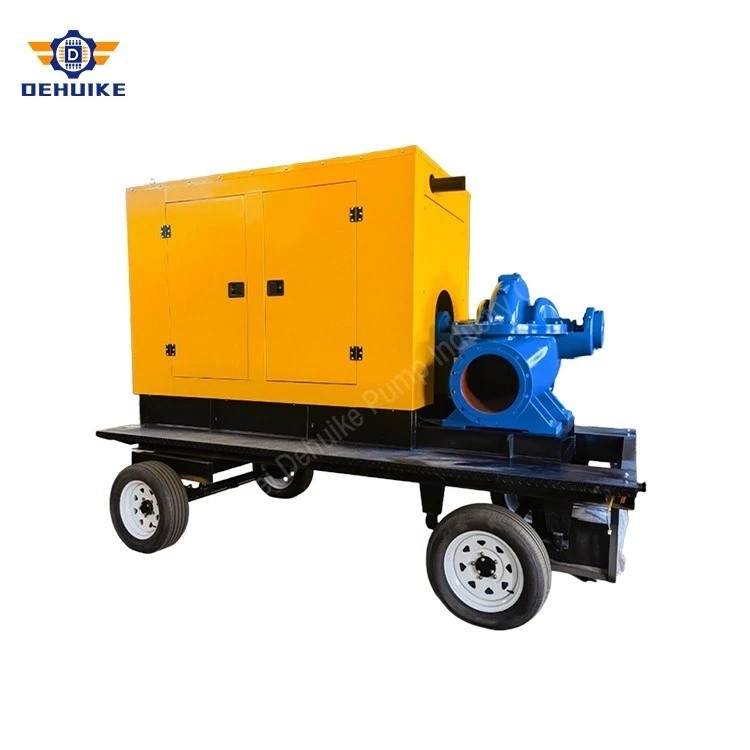
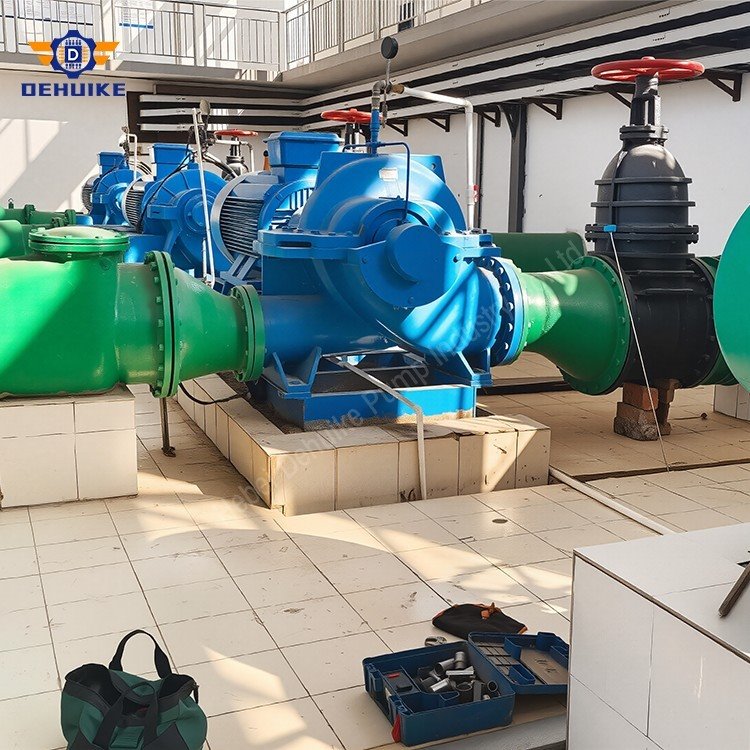
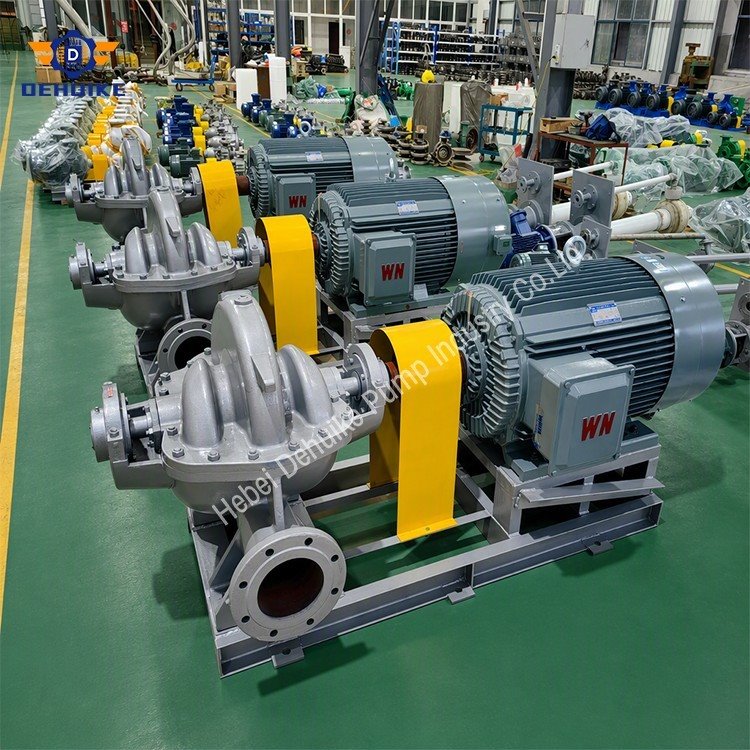
Hebei Dehuike Pump Industry Co., Ltd. is one of the most reliable manufacturers and suppliers of double suction pumps for cooling water supply and return in China. With abundant experience, we are committed to providing high quality customized pumps with competitive price. Welcome to wholesale bulk double suction pumps for cooling water supply and return for sale here from our factory. Also, pricelist is available.
Introduction
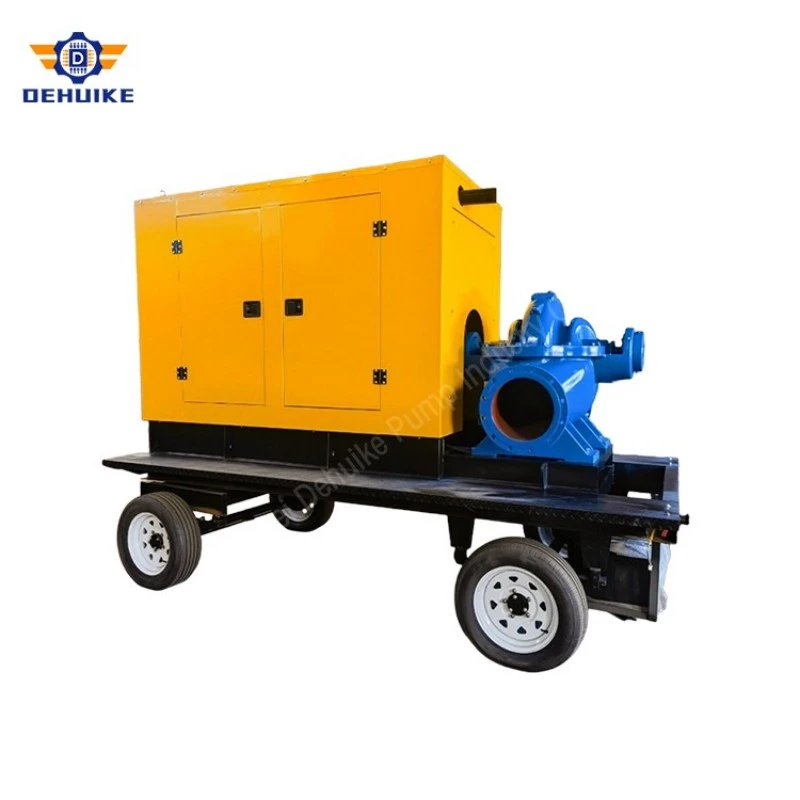
A field cannot wait indefinitely for water. When several farms share a canal intake, or a reservoir has to supply distant plots overnight, the pumping station has a clear task: move the allocation before the watering window closes. A **Double Suction Irrigation Pump** can be considered for this kind of bulk delivery. Its suitability comes down to the route, the available source water and the amount the fields need during each shift.
A useful starting point is the irrigation diary. Note which plots are watered together, how long each set runs and where pressure becomes inadequate. Include the weeks when demand is highest. This picture of the working farm gives a much better basis for selection than acreage alone. Two farms of the same size can need quite different pumping arrangements. Where neighbouring growers share the supply, agree whose outlets are open during each turn. A late change to that sequence can affect another grower at the end of the line. Give the selection team the intended sequence, not a total assembled from every outlet on the property.
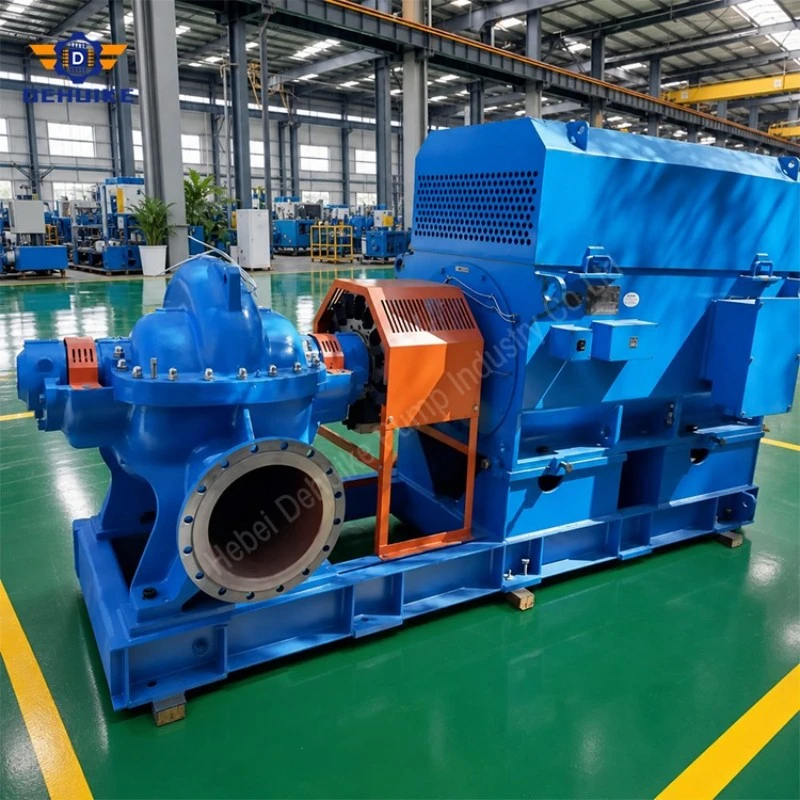
Specifications / Technical Parameters / Technical Data
The five entries below are reference duties, not a continuous operating envelope. Read each entry horizontally. Do not take the delivery figure from one line and pair it with the motor or impeller shown on another.
|
Pump Identification |
Design Flow (m3/h) |
Design Flow (L/s) |
Design Head (m) |
Speed (r/min) |
Shaft Input (kW) |
Listed Motor (kW) |
Efficiency (%) |
NPSHr (m) |
Impeller OD (mm) |
Pump Set Mass (kg) |
|
8Sh-6A / 200S95A |
215 |
59.7 |
75.6 |
2900 |
64.2 |
90 |
69 |
5.5 |
262 |
245 |
|
10Sh-13 / 250S24 |
486 |
135 |
23.5 |
1450 |
36.2 |
45 |
86 |
4.0 |
296 |
420 |
|
12Sh-6B / 300S90B |
720 |
200 |
67 |
1450 |
180 |
250 |
73 |
5.1 |
475 |
845 |
|
14Sh-19A / 350S26A |
1120 |
310 |
21.5 |
1450 |
77 |
110 |
85 |
6.5 |
326 |
880 |
|
24Sh-18 / 24Sh-13A / 600S47A |
3150 |
875 |
44 |
970 |
438 |
450 |
88 |
7.5 |
615 |
4000 |
Use these figures as the quoted reference records. They do not describe every point along a curve. The first entry lists 270 m3/h and 70 L/s, which do not convert exactly; ask for clarification before relying on that conversion. Keep the quoted data unchanged until the supplier confirms it. Calculate the intake conditions for the site separately.
Product Details
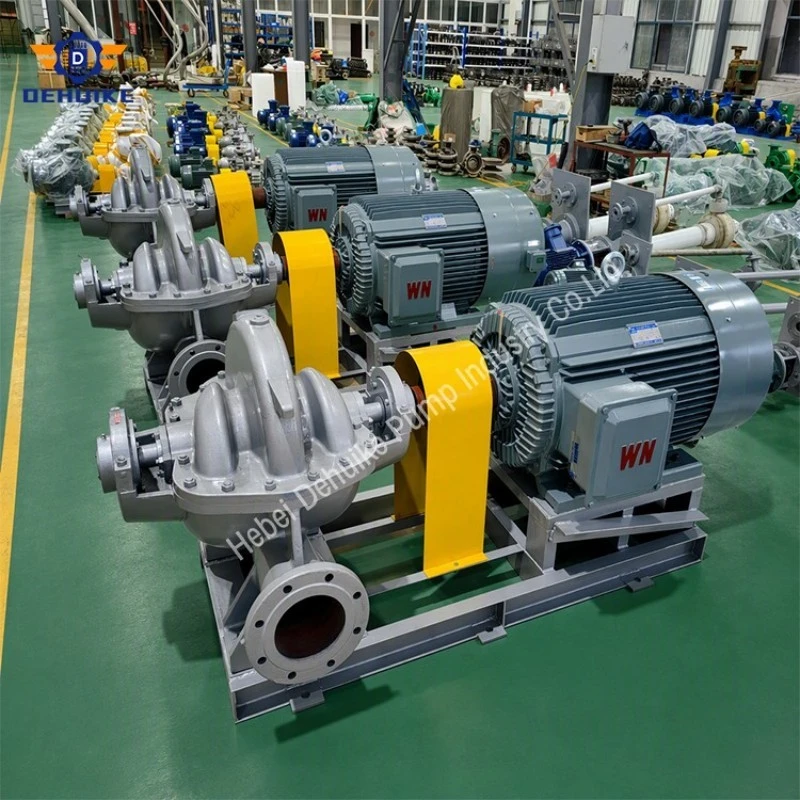
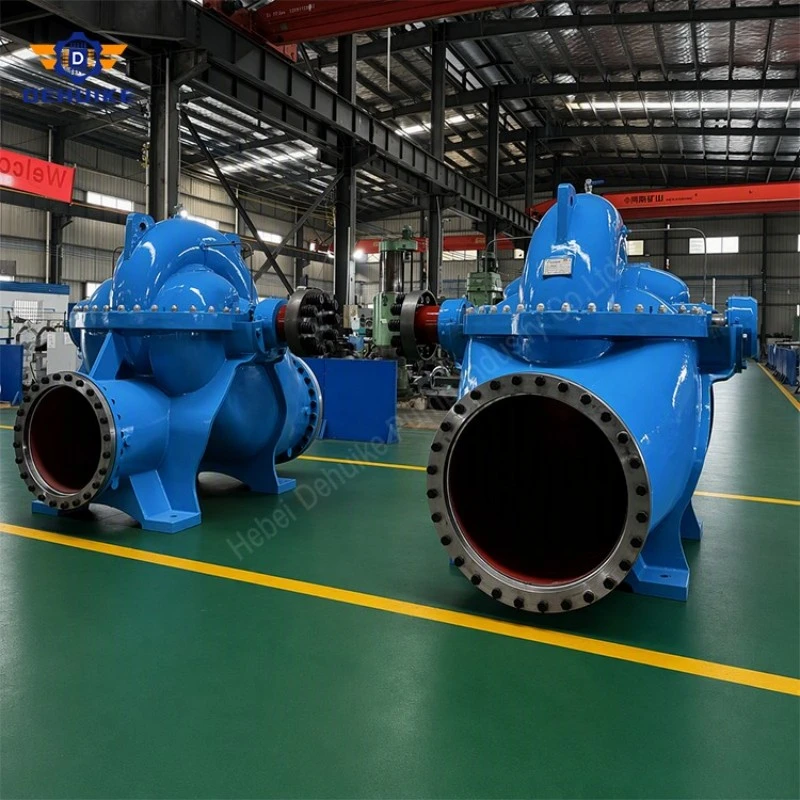
Water approaches the rotating impeller through openings on either face. Inside the casing, the outgoing streams are collected for delivery into the main. This is the hydraulic arrangement behind the double suction name. It does not, by itself, tell a buyer how much pressure will remain at a distant hydrant.
On a proposed split casing assembly, access above the shaft matters when internal parts need attention. Look at the roof clearance, the lifting route and the space beside the drive. A machine that fits through the door may still be awkward to service. Check the selected construction on its drawing before fixing the pump house layout.
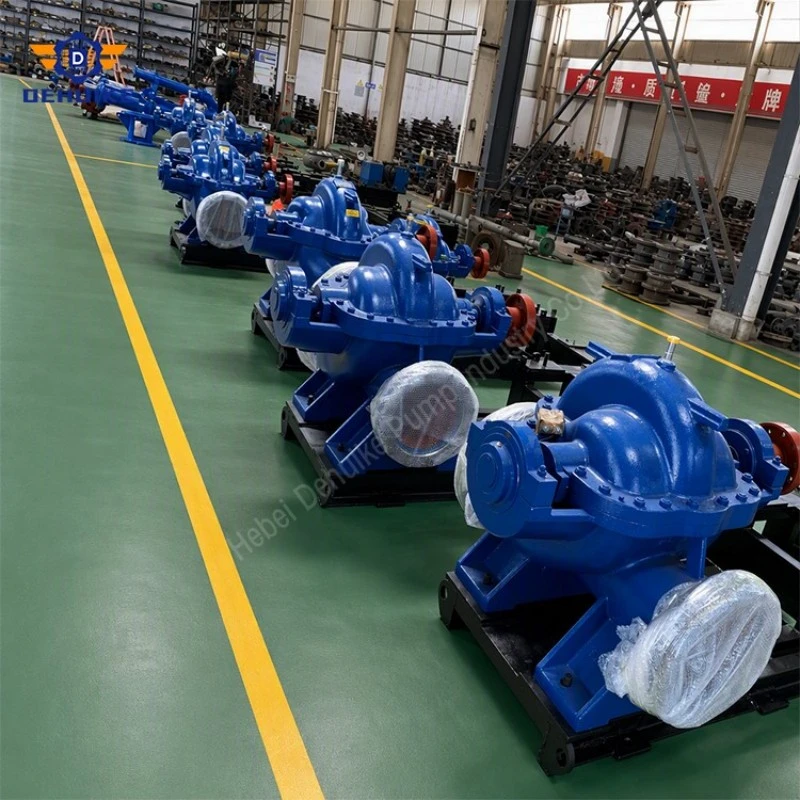
The purchase also needs a clear equipment list. Identify what arrives with the pump and what the installer must provide locally. Settle the base, drive connection, protective guard and pipe interfaces early enough for the civil and electrical work to follow the same arrangement.
Features / Equipment Characteristics
Large transfer duties: the examples offer rated deliveries from 270 up to 3,168 m3/h for comparison with the farm schedule.
Delivery pressure: heads of 46 to 65 m are represented; the required value comes from the actual route to the fields.
Opposed inlet faces: the impeller admits water from either side before the casing collects the outgoing stream.
Efficiency references: 70% to 90% is quoted across the chosen records. Seasonal consumption depends on where the unit actually runs.
Driver matching: the entries use 960, 970, 1450 and 2900 r/min. Specify the approved speed when confirming the electrical arrangement.
Intake allowance: listed NPSHr figures span 5.0 to 8.7 m. Use the corresponding model value in the site assessment.
Site handling: assembly weights of 265 to 4,300 kg appear in the records. Obtain the final lifting details before booking transport or unloading equipment.
Application
The agricultural task should be described in everyday working terms before it becomes a pump specification. These are examples of the duties a buyer might bring for assessment, subject to checking the water and the proposed equipment.
Taking a canal allocation into the farm supply main.
Moving stored reservoir water to elevated agricultural plots.
Feeding a shared header while neighbouring farms take timed turns.
Refilling a balancing pond before the next watering shift.
Restoring delivery at an older station after new fields have been connected.
Canal intakes can bring leaves and grit; ponds may have a different problem after heavy rain. Explain those conditions instead of describing the liquid simply as irrigation water. Particle handling, salt exposure and added crop nutrients need their own compatibility review. The reference duties do not establish what solids or chemical concentrations the equipment can tolerate.
Establish the Cooling-Water Duty
Write down the volume needed for one watering cycle and the hours available to move it. Then mark the outlets that will open together. The pump must satisfy that combination through the real pipe route, including the rise in ground level and the pressure required at the far end. Repeat the check for a quieter shift when fewer plots are taking water. A simple volume example helps organise the enquiry: if a farm needs 2,400 cubic metres within eight hours, its average delivery target is 300 cubic metres per hour. That calculation establishes a starting flow only. It leaves the required head and the suitability of any particular model to be assessed.
For perspective, the 8Sh-9A / 200S63A entry couples a delivery of 270 m3/h with 46 m head. The 24SA-10B / 24Sh-9A / 600S75A reference couples 3,168 m3/h with 61 m. Those are separate working points. A larger delivery figure is useful only if the intake, main and watering plan can accommodate it.
Visit the source when conditions are demanding, rather than judging it only after rain. Note the water surface, screen condition and inlet arrangement. Check whether staff can clean the intake during a busy week. Use the expected seasonal low level when assessing suction, with an appropriate margin agreed for the selected duty. Keep a record of drawdown during a long pumping shift if that information is available. The level before starting may differ from the level near the end of the turn. Explain whether the source is replenished while the machine runs, since a brief observation can miss the demanding condition.
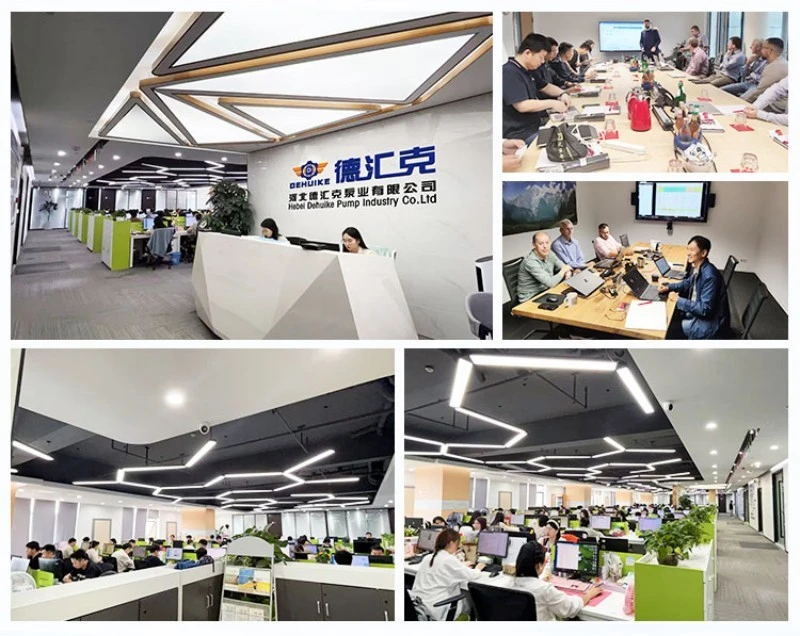
Our Advantages
For an irrigation buyer, the value of a proposal lies in how well it answers the farm problem. Keep the delivery target tied to a named watering shift, and make the installation decisions visible before an order is placed. The model references support that discussion without pretending to describe every material option or service commitment.
Reference duties give buyers specific starting points for a farm enquiry.
The figures can be reviewed alongside a dated watering plan and a route sketch.
Attention stays on delivery to the plots, including the busiest and quietest shifts.
Unsettled water and installation questions are resolved before equipment is ordered.
The same job description can be shared by the farm manager, designer and purchasing team.
Production Process
Production needs an approved arrangement to work from. Before releasing it, settle the hydraulic selection and the components included in the assembly. The manufacturing documents then identify the casing parts, rotating parts and associated items to be prepared. Any option requested for the agricultural site should appear in that released scope.
Decide how the completed assembly will be accepted before it reaches dispatch. Where a witnessed run or recorded performance check is required, put it into the purchase requirements. Agree the records, marking and protection for transport at the same time. Do not leave the evidence expected by the buyer to a last minute conversation.
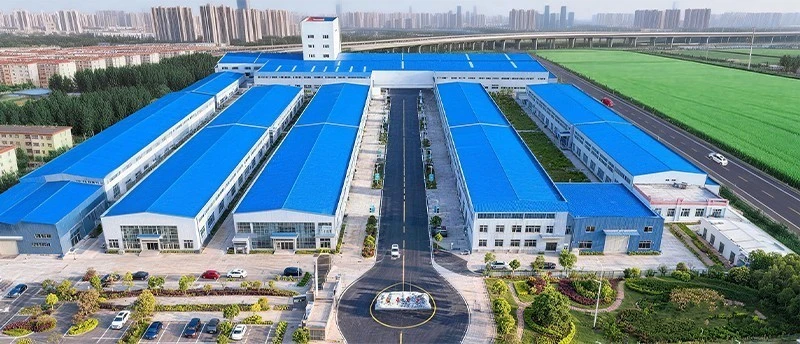
Our Service
Start the enquiry with the watering job: which fields need water, how much they need and the hours during which pumping is possible. Add the outlet pressure, ground levels and the source at its seasonal minimum. A marked sketch of the main is useful. Tell the supplier about filters, unusual water conditions and any local restriction on power or access.
The technical exchange should end with a duty and an equipment boundary that both parties understand. Ask for the information your installer needs, and confirm who handles unloading and starting assistance. Later, retain the serial details for replacement parts. Site visits, operator instruction and attendance at tests need a defined service scope where they are requested. After the first watering cycle, keep the readings with a note of which plots were supplied. This creates a useful baseline. If delivery later changes, the operator can compare like conditions instead of relying on memory of a different shift.
Experience and Markets
Some agricultural schemes pump steadily into storage; others have to deliver a large allocation during a short canal opening. A remote farm may have limited electricity, while a shared station may operate to a strict turn taking schedule. These differences explain why a selection made for one site cannot be carried across to another on acreage alone.
For deliveries across borders, practical details deserve early attention. Establish the available power, connection requirements and language needed by the installation team. Check the unloading area and the route into the building. State whether the assembly will be installed straight away or stored through part of a season so that packing can be discussed accordingly.
Multi-Dimensional Project Content Angles
Reservoir and Canal Intake Stations
Record the water level during the dry period and the time available to take the allocation. Show the screen and inlet route. Ask how cleaning can be carried out without losing the entire watering turn.
Irrigation Mainline Expansion
Treat an extension as a change to the network, rather than just an increase in area. Mark the added route, elevations and opening sequence. Check the old main before asking it to carry more water.
Farm Water Storage Transfer
Work backwards from the next watering period. Establish how much storage must be recovered and when pumping can start. The source and destination levels define the lift during that refill cycle.
Existing Station Upgrade
Take readings while a known group of fields is being watered. Photograph the nameplate and measure the connections. Check the mounting and service space before choosing a replacement that looks similar in a catalogue.
FAQ
Q: What is a Double Suction Cooling Water Pump?
A: It is a pump configuration evaluated for cooling-water circulation in which liquid is directed toward two impeller inlet sides. Final suitability depends on the calculated loop duty and the confirmed material, sealing, water-quality, temperature, and equipment requirements.
Q: Which models are included in the technical table?
A: The table uses design-rated worksheet records for 8Sh-6A / 200S95A, 10Sh-13 / 250S24, 12Sh-6B / 300S90B, 14Sh-19A / 350S26A, and 24Sh-18 / 24Sh-13A / 600S47A.
Q: What flow range is shown?
A: The five displayed design conditions span 215 to 3,150 m3/h. The original spreadsheet includes other model records and operating points not shown here.
Q: What head range is shown?
A: The selected design heads extend from 21.5 to 75.6 m. The actual operating head depends on the system curve and connected-equipment losses.
Q: Why are water chemistry and temperature required?
A: The supplied sheet does not identify material grades, corrosion resistance, seal arrangement, or allowable temperature. Cooling-water chemistry and temperature must be reviewed before the final configuration is confirmed.
Q: Why is NPSH review needed for a cooling-water loop?
A: NPSHr is the pump-side requirement at a specified condition. The installed system needs sufficient NPSH available after considering basin level, temperature, elevation, suction line, strainers, fittings, and friction losses.
Q: Can a pump be selected from flow and head only?
A: No. The selection also needs water condition, operating temperature, connected-equipment losses, suction arrangement, system operating range, driver supply, controls, and installation constraints.
Q: What should be included in a cooling-water pump enquiry?
A: Provide required flow, total head, water analysis, temperature, source level, suction and discharge pipe details, heat-exchanger loss, elevation, electrical supply, control requirements, operating schedule, destination, and requested documents.

Hot Tags: double suction pumps for cooling water supply and return, China double suction pumps for cooling water supply and return manufacturers, suppliers, factory