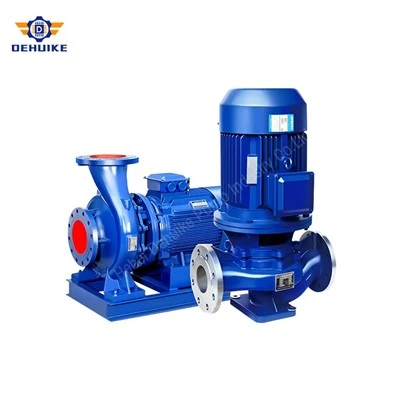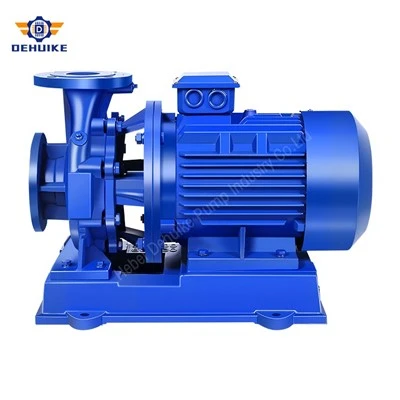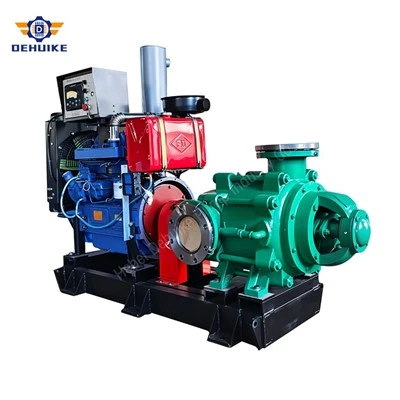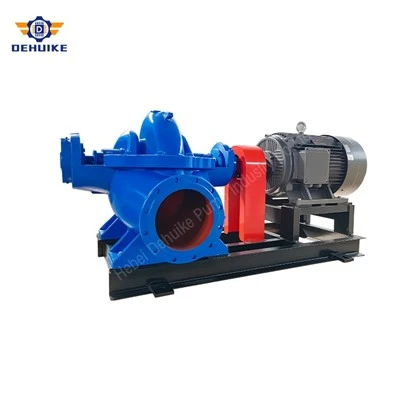

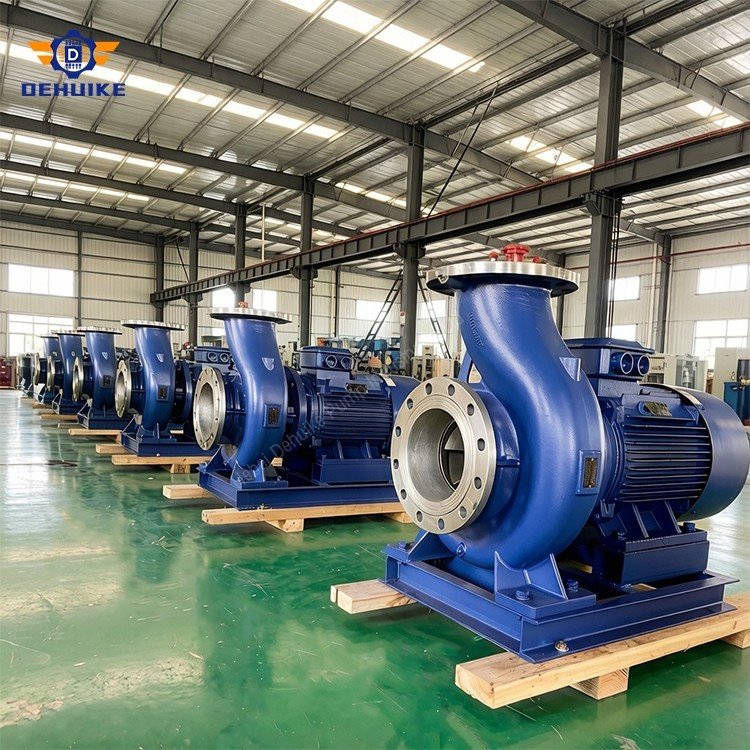
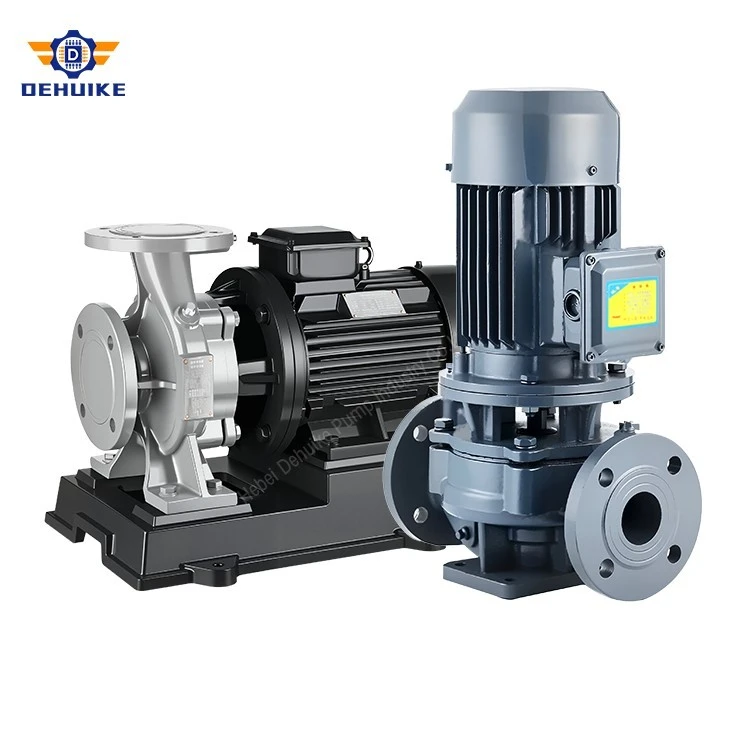
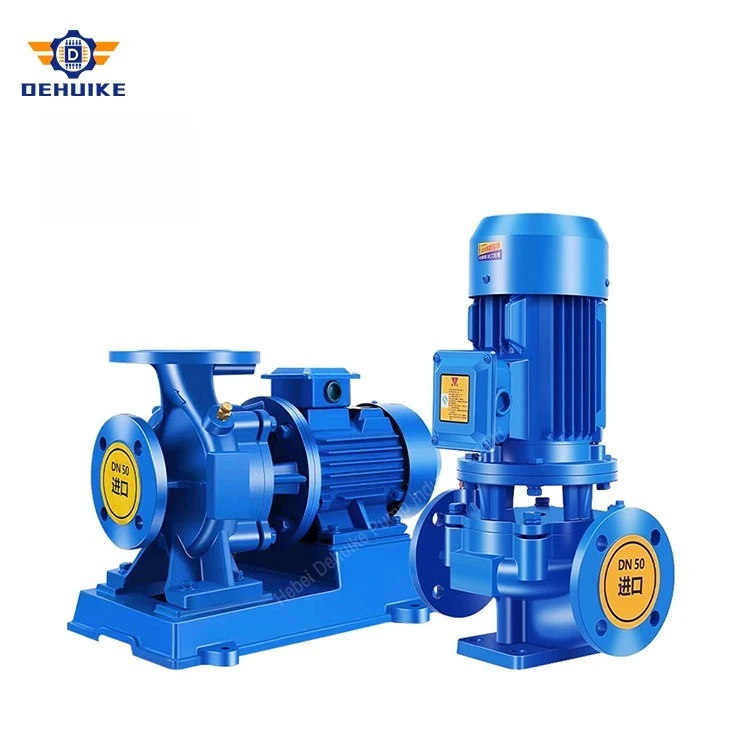
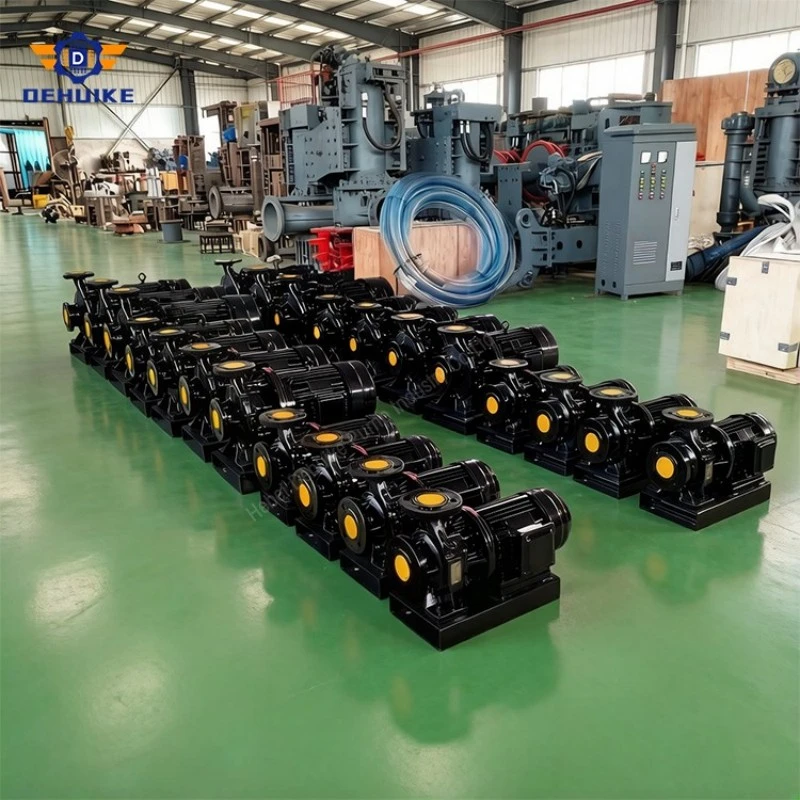
Hebei Dehuike Pump Industry Co., Ltd. is one of the most reliable manufacturers and suppliers of hot water circulation inline pump in China. With abundant experience, we are committed to providing high quality customized pumps with competitive price. Welcome to wholesale bulk hot water circulation inline pump for sale here from our factory. Also, pricelist is available.
Introduction - The Thermal Delivery Mission
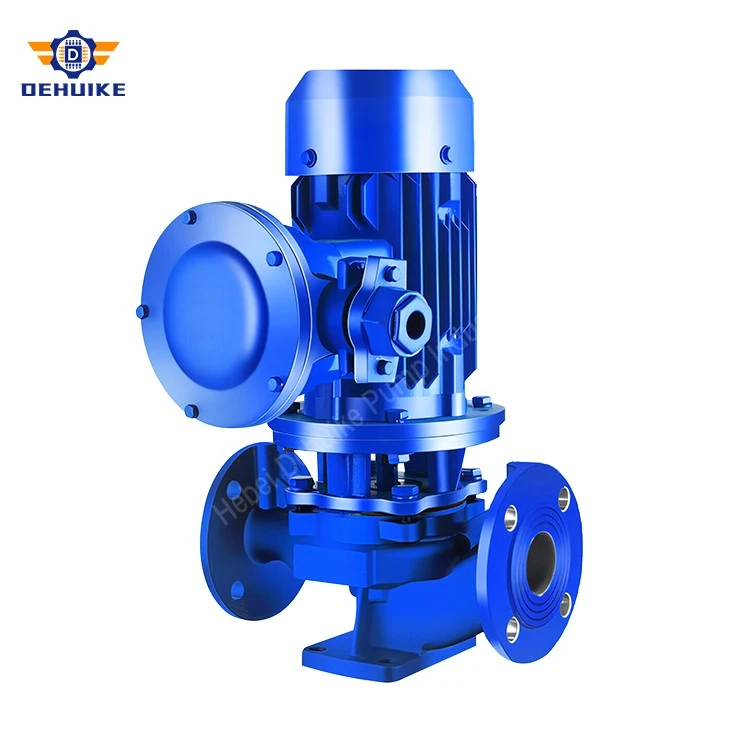
Thermal-Service Definition: A hot water circulation inline pump is a pipeline-mounted centrifugal machine engineered specifically to sustain continuous circulation of heated water through closed hydronic heating loops, district energy distribution networks, and thermal transfer circuits at sustained fluid temperatures that destroy standard water pumps. The IRG and IRW configurations in the program carry the same coaxial in-line flange geometry as the baseline inline family - identical-bore suction and discharge nozzles on a shared horizontal axis - but the entire rotating assembly, seal system, and structural architecture are rebuilt for thermal service at +80C to +120C in the standard hot-water trim, extending to +150C in the high-temperature execution.
The engineering problem this machine solves is not pressure or flow generation - those are shared with any inline centrifugal pump. The problem is that heat attacks every component a standard pump relies on. Elastomeric seals harden, lose elastic memory, and crack when their glass-transition temperature is approached. Lubricating grease thins and drains from bearing races. Motor winding insulation loses dielectric margin as copper resistance climbs with temperature. Differential thermal expansion between the hot pump casing and the cooler motor shifts shaft alignment and distorts seal-chamber bores. Stagnant pockets of hot water flash into steam, cavitate impellers, and vapor-lock the system. The hot water circulation inline pump is the engineered response to each of these thermal failure modes - not a standard pump with a temperature rating bolted on.
Within the broader inline pump portfolio, the hot water circulation variant occupies a distinct engineering niche. The standard ISG or ISW inline water pump handles ambient-temperature building water service; the high-pressure variant pushes heads above 80 meters; the stainless execution resists chemistry. The IRG/IRW hot water configuration is defined by its thermal envelope: flows from 3.8 m3/h on compact residential heating zones to 200+ m3/h on district energy primary loops; heads from 8 meters on low-resistance radiator circuits up to 153.6 meters on long-distance thermal transmission mains; motor ratings from 0.75 kW to 90 kW at 2900 r/min or the thermally quieter 1450 r/min speed. Casing containment is certified at 1.6 MPa standard and 2.5 MPa in ductile iron executions, because a heating loop at +120C runs at significantly elevated static pressure to suppress boiling.
Thermal Expansion Engineering & Structural Heat Isolation
Three-Layer Thermal Defense: When a pump casing at +120C is bolted to a motor whose windings must stay below their insulation class limit, the gap between those two thermal domains is the central engineering problem the hot water circulation inline pump must solve. The IRG/IRW architecture addresses it through a three-layer defense: structural isolation, thermal expansion accommodation, and heat-path interruption.
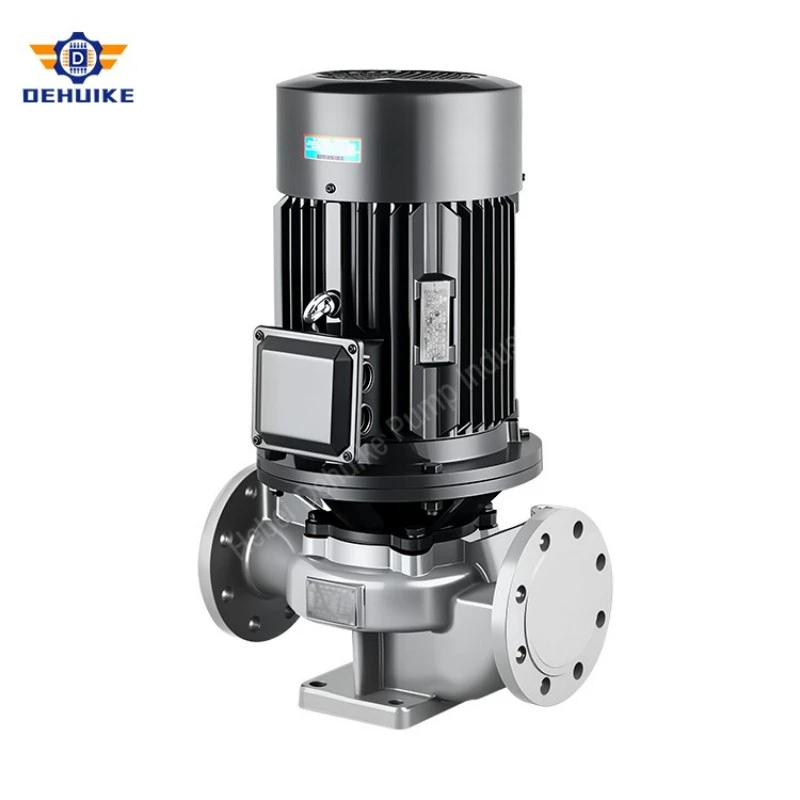
The Extended Intermediate Cooling Stool
The defining structural feature of the IRG/IRW hot water pump is its extended intermediate stool - a lengthened cylindrical adapter between the pump volute cover and the electric motor flange. On a standard-temperature inline pump, this stool is a short register whose only job is concentricity. On a hot water circulation pump, the stool is elongated to create a thermal conduction path of deliberate length and reduced cross-section between the hot casing and the motor end shield. Heat flowing from the +120C volute toward the motor must traverse this extended path, and by the time it reaches the motor flange, conductive attenuation has dropped the temperature to a level the motor's own cooling fan can manage. On larger frames, the stool is further equipped with external cooling fins or a water-jacketed cooling section that actively removes conducted heat.
Differential Thermal Expansion Accommodation
A pump casing heats from ambient to +120C while its motor stays near +40C; the resulting differential expansion between the two halves of the close-coupled assembly can reach several tenths of a millimeter on larger frames. If the assembly were rigidly fixed at both ends, this expansion would bend the shaft, distort the seal chamber, and crush the mechanical seal faces. The IRG/IRW design accommodates this through a floating volute-cover arrangement: the pump casing is anchored at its discharge flange to the pipeline, while the motor-stool-to-motor connection permits controlled axial growth along the shaft axis. The impeller-to-shaft fit includes a thermal expansion allowance, and the mechanical seal's spring-loaded drive compensates for the relative axial displacement between the rotating face (which grows with the shaft) and the stationary face (which grows with the casing). Every clearance in the rotating assembly is specified at operating temperature, not at ambient assembly temperature - the machine is built to be correct when hot, with intentional cold-build offsets.
Heat Path Interruption at the Seal Interface
The mechanical seal sits at the thermal boundary between the hot process fluid and the cooler bearing environment. Without active thermal management at this interface, conducted heat from the volute would raise the seal's elastomeric components above their service limit. The IRG/IRW design interrupts this heat path through a flush plan that routes a controlled bleed of cooler return water or external cooling supply through the seal chamber, maintaining the seal environment below the elastomer's continuous-service ceiling. On the highest-temperature executions, a dual pressurized seal arrangement with a barrier fluid circuit isolates the hot process entirely from the atmosphere-side seal, with the barrier fluid maintained at a controlled temperature by an external cooler.
High-Temperature Seal & Elastomer Engineering
Seal as a Thermal System: The mechanical shaft seal is the component most directly exposed to the fluid temperature, and it is the component whose failure mode most rapidly escalates from leak to shutdown. A hot water circulation inline pump requires a seal package engineered as a complete thermal system - face materials, secondary elastomers, spring hardware, and flush geometry selected together against the service temperature, not assembled from ambient-duty catalog parts.
Face Material Selection for Hot Water
At elevated water temperatures, the inter-face fluid film that lubricates and cools the seal faces thins and becomes less viscous, increasing the risk of boundary-contact friction and thermal cracking of the face material. The standard hot-water seal face pairing on this program is silicon carbide against silicon carbide (SiC/SiC), chosen for its exceptional thermal conductivity (approximately 130 W/m*K) - which conducts frictional heat away from the rubbing interface faster than it accumulates - and for its hardness (2500 HV), which resists the thermal-stress micro-cracking that destroys carbon-graphite faces at temperatures above +100C. The faces are lapped to a flatness measured in helium light bands, and the assembled seal is verified to maintain face parallelism across the full thermal expansion envelope.
Elastomer Chemistry for Continuous Hot Service
Elastomeric O-rings, wedges, and bellows in the seal assembly face the most severe thermal challenge: they must maintain elastic sealing force while continuously exposed to fluid at +120C or above. The program's hot-water seal packages use fluorocarbon (FKM, commonly known by the trade designation Viton) as the standard high-temperature elastomer, rated for continuous dry service to +200C and hot-water service to approximately +150C. For the most demanding duties at the top of the temperature envelope, perfluoroelastomer (FFKM) components are specified - a material whose fully fluorinated backbone resists the chemical and thermal attack that degrades standard FKM over extended service in hot water. The elastomer specification is matched to the fluid temperature and chemistry: FKM for standard +80C to +120C hot water; FFKM for +120C to +150C or where aggressive inhibitor chemistries are present in the heating water.
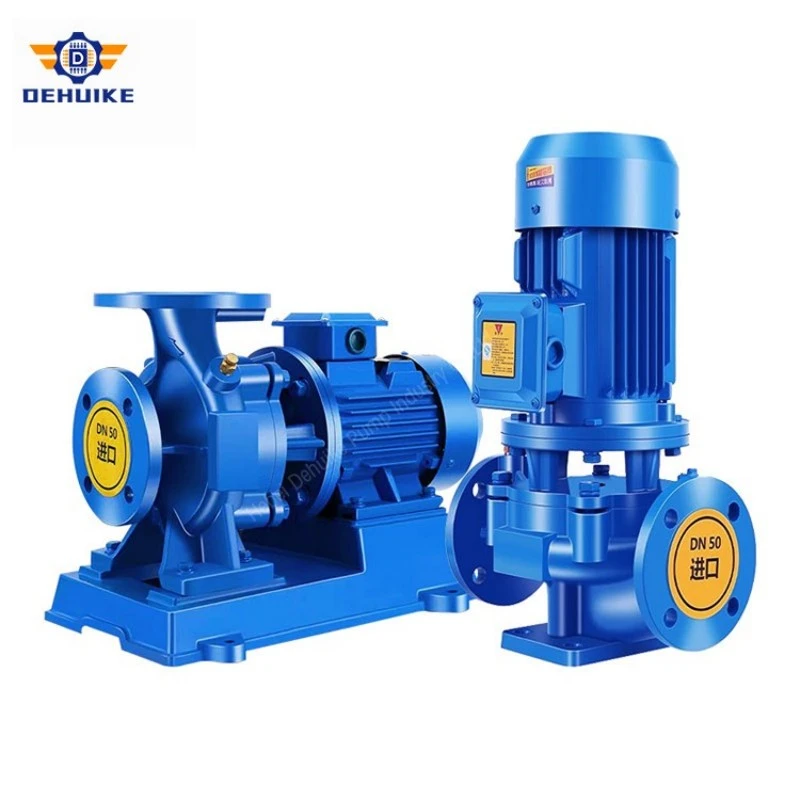
API Flush Plan Integration for Thermal Control
- Plan 11 (Discharge Recirculation): Recirculation from the pump discharge through a restriction orifice into the seal chamber, establishing controlled flow through the seal environment. Suitable where the discharge fluid temperature is within the seal package's direct tolerance.
- Plan 32 (External Injection): Clean cool fluid from an external source - a cooling-water supply or cooled return line - injected into the seal chamber to depressurize the thermal environment. This is the standard plan for the highest-temperature IRW executions where process fluid at +150C must be isolated from an FKM-sealed mechanical seal rated to +150C at the margin.
- Plan 53 (Dual Pressurized Barrier): A dual-seal arrangement with a pressurized barrier fluid (typically inhibited water or synthetic heat-transfer fluid) circulated between the inboard and outboard seals through an external cooler. The barrier fluid temperature is maintained well below the process temperature, protecting both sets of seal faces and elastomers.
The flush plan is factory-specified based on the pump model, rated temperature, and system layout; the casing is cast with integrated ports for the selected plan, so field piping connects to engineered NPT or BSP tappings rather than ad-hoc modifications. This integration is a structural distinction between a purpose-built hot water circulation inline pump and a standard pump retrofitted with high-temperature seals.
Specifications & Thermal-Service Performance Data
The duty ratings below are drawn from factory hydraulic test records for the IRG/IRW hot water circulation inline pump program, verified on closed-loop dynamometer stands to ISO 9906:2012 Grade 2B acceptance. The models tabulated here represent the frame selections most commonly deployed in heating-system duty - spanning compact residential radiator circulation at low heads and larger primary-loop distribution at substantial flows. Every unit in the hot-water program additionally undergoes a hot-run verification test (detailed in Dimension 6) that confirms seal, bearing, and motor thermal stability at the rated service temperature before dispatch.
Thermal-service envelope summary: fluid temperature window -10C to +120C in standard IRG hot-water trim, extending to +150C in IRW high-temperature execution with FFKM elastomers and Plan 53 dual-seal arrangements. Maximum casing working pressure 1.6 MPa (standard cast iron) or 2.5 MPa (ductile iron); system pressure must exceed water vapor pressure at the service temperature to suppress boiling - at +120C, water vapor pressure is approximately 0.2 MPa, so even moderate pressurization prevents flashing. Flange drilling DN40 through DN150 to DIN EN 1092 or ANSI patterns. Motor protection is TEFC IP55 with Class F insulation, thermally derated for the elevated ambient around the pump.
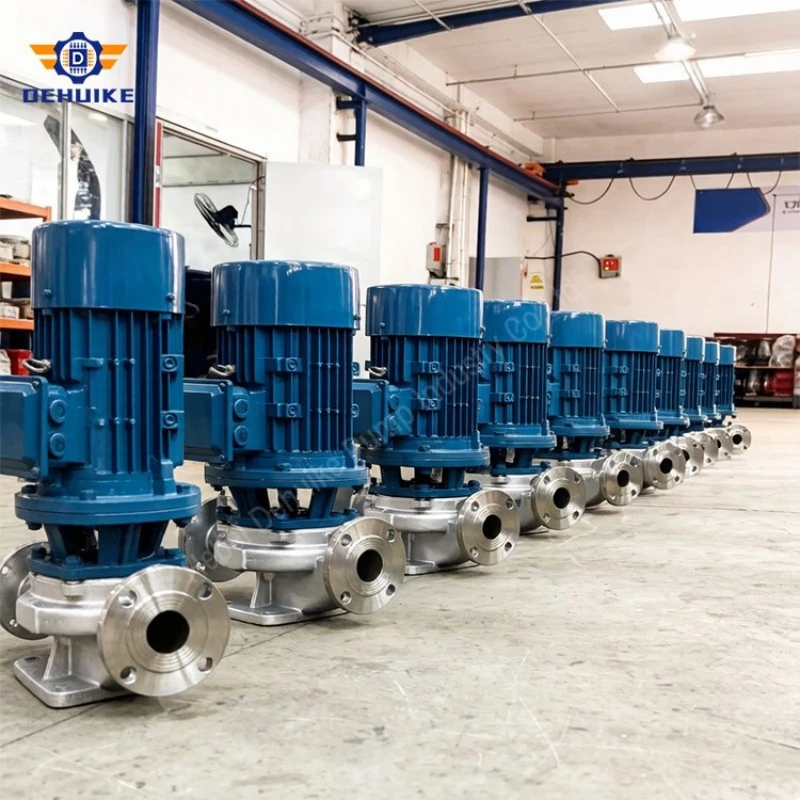
Table 1: Compact & Mid-Range Hot Water Circulation Duties (DN40 to DN80, 2900 r/min)
|
Model |
Rated Flow (m3/h) |
Head (m) |
Efficiency (%) |
Speed (r/min) |
Motor (kW) |
NPSHr (m) |
|
IRG 40-125 |
6.3 |
20.0 |
46 |
2900 |
1.1 |
2.3 |
|
IRG 40-160 |
6.3 |
32.0 |
40 |
2900 |
2.2 |
2.3 |
|
IRG 40-200 |
6.3 |
50.0 |
33 |
2900 |
4.0 |
2.3 |
|
IRG 50-125(I) |
25.0 |
20.0 |
68 |
2900 |
3.0 |
2.5 |
|
IRG 50-160(I) |
25.0 |
32.0 |
63 |
2900 |
4.0 |
2.5 |
|
IRG 50-200(I) |
25.0 |
50.0 |
58 |
2900 |
7.5 |
2.5 |
|
IRG 65-125 |
25.0 |
20.0 |
68 |
2900 |
3.0 |
2.5 |
|
IRG 65-160 |
25.0 |
32.0 |
63 |
2900 |
4.0 |
2.5 |
|
IRG 65-200 |
35.0 |
50.0 |
67 |
2900 |
7.5 |
3.0 |
|
IRG 80-125 |
50.0 |
20.0 |
72.5 |
2900 |
5.5 |
3.0 |
Table 2: Large-Flow Primary Loop & Distribution Duties (DN100 to DN150, 2900 & 1450 r/min)
|
Model |
Rated Flow (m3/h) |
Head (m) |
Efficiency (%) |
Speed (r/min) |
Motor (kW) |
Unit Weight (kg) |
|
IRG 100-160 |
100.0 |
32.0 |
76 |
2900 |
15.0 |
191 |
|
IRG 100-200 |
100.0 |
50.0 |
74 |
2900 |
22.0 |
245 |
|
IRG 125-160 |
160.0 |
32.0 |
78 |
2900 |
22.0 |
265 |
|
IRG 125-200 |
160.0 |
50.0 |
77 |
2900 |
37.0 |
395 |
|
IRW 150-200 |
200.0 |
12.5 |
78 |
1450 |
15.0 |
265 |
|
IRW 150-200A |
176.0 |
10.0 |
76 |
1450 |
11.0 |
244 |
|
IRW 150-250 |
200.0 |
20.0 |
79 |
1450 |
18.5 |
300 |
|
IRW 150-250A |
184.4 |
17.0 |
78 |
1450 |
15.0 |
292 |
Heating System Integration & Hydronic Architecture
1. Commercial Building Hydronic Heating - Primary/Secondary Loop Architecture
In institutional and commercial buildings, hydronic heating is frequently divided into primary and secondary circulation loops. The primary loop circulates high-temperature water (commonly +80C to +110C) from the boiler plant to a hydraulic separation point - typically a low-loss header or common pipe - where secondary distribution circuits extract heat for specific zones. The hot water circulation inline pump on the primary loop moves water continuously through the boiler and header at constant flow, while secondary-loop pumps modulate with zone demand via variable-speed control. The in-line geometry of the IRG series allows the primary-loop pumps to be mounted directly on the boiler-room distribution header with minimal footprint, and the coaxial flange arrangement eliminates the need for the 90-degree suction elbows that complicate boiler-room piping on baseplate-mounted pumps.
2. District Heating Networks - Transmission & Substation Boosting
District heating systems distribute thermal energy from centralized generation plants (combined heat and power, waste-to-energy, or large boiler arrays) across underground insulated pipelines to substations at individual buildings. The hot water circulation inline pump serves two roles in this architecture. At the source plant, large-capacity IRG/IRW units drive the primary transmission main - typically operating at +110C to +130C supply temperature, with return temperatures around +50C to +70C, generating the differential head required to push hundreds of cubic meters per hour through kilometers of buried pipe. At building substations, compact IRG units provide the secondary-side circulation that delivers heat from the substation heat exchanger to the building's internal distribution network, isolating the building from the district main's pressure and temperature regime.
3. Solar Thermal & Heat-Pump Transfer Loops
Solar thermal collector arrays and air-source heat-pump installations circulate a heat-transfer fluid - typically inhibited water or a glycol-water mixture - through collectors or heat exchangers at temperatures ranging from +60C to +90C. The hot water circulation inline pump moves this heated fluid from the collection point to a storage tank, heat exchanger, or distribution circuit. The thermal stability of the IRG/IRW seal package and the compatibility of FKM elastomers with standard inhibitor chemistries make the series well-suited to these renewable-thermal duties, and the low electrical consumption of the variable-speed-controlled execution matches the energy-conservation ethos of the systems it serves.
4. Industrial Process Heating & Thermal Oil Pre-Heating
Manufacturing processes - chemical reactors, drying ovens, platens, and heat exchangers - frequently require circulation of heated water or thermal fluid at controlled temperatures. The hot water circulation inline pump handles water-based process heating up to +150C (under pressurization) in the IRW execution, driving thermal fluid through process heat exchangers and returning cooled fluid to the heating source. For duties involving thermal oil rather than water, the pump can be configured with seal and elastomer packages matched to the specific fluid's chemistry and viscosity-temperature behavior.
Hot-Run Factory Testing & Thermal Quality Assurance
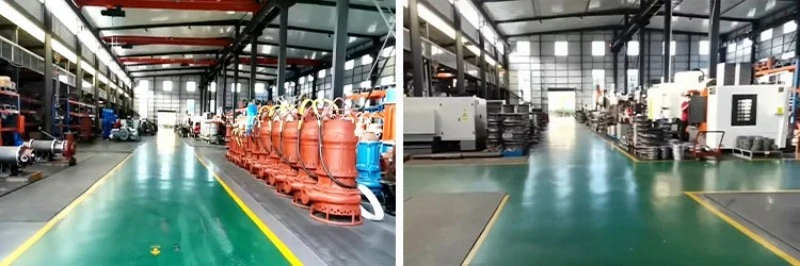
Standard Hydraulic Performance Test (Cold)
Every unit first undergoes the standard five-point hydraulic performance test on the closed-loop dynamometer at ambient water temperature, capturing flow, head, efficiency, shaft power, and NPSH data to ISO 9906:2012 Grade 2B acceptance. This establishes the pump's cold-state hydraulic baseline and verifies that the impeller and volute geometry produce the rated performance before the thermal test adds its own variables.
Hot-Run Verification Test
The test loop is then heated - using inline electric heaters or a heat-exchanger-fed hot-water supply - to the pump's rated service temperature. The pump operates at rated duty point for a sustained period (minimum 30 minutes; 60 minutes on frames above 22 kW), during which the following parameters are continuously monitored and recorded:
- Seal Face Thermal Stability: Seal chamber temperature, confirming the flush plan or cooling circuit maintains the seal environment within the elastomer's rated service window.
- Bearing Temperature Rise: Motor bearing housing temperatures at drive-end and non-drive-end positions, verifying the cooling stool's thermal isolation is performing within design limits.
- Winding Temperature: Motor stator winding temperature via embedded thermistors or infrared verification, confirming the thermal derating calculation holds.
- Hot-State Vibration: Vibration velocity (RMS) in the hot state, comparing against the cold-state baseline to confirm that thermal expansion has not introduced shaft misalignment or impeller unbalance.
- Leakage Verification: Visible leakage from the seal chamber, verifying zero weepage under hot operating conditions - the standard that the machine must meet throughout its service life.
Only a pump that passes both the cold hydraulic test and the hot-run verification receives its dispatch certification. The hot-run data sheet accompanies the unit's documentation dossier, providing the owner with the verified thermal baseline against which future field performance can be compared during preventive maintenance checks.
Commissioning Protocol & Thermal Safety Engineering
Thermal Commissioning Risks: Commissioning a hot water circulation inline pump involves risks that ambient-temperature pump startups never encounter. Hot water under pressure can flash to steam if the system depressurizes; thermal shock can crack castings if cold water is admitted to a hot casing; and a dry-started hot-water pump will destroy its seal within seconds because the seal's cooling fluid film depends on the pump being filled and pressurized. The protocol below reflects the accumulated field experience of the engineering support team.
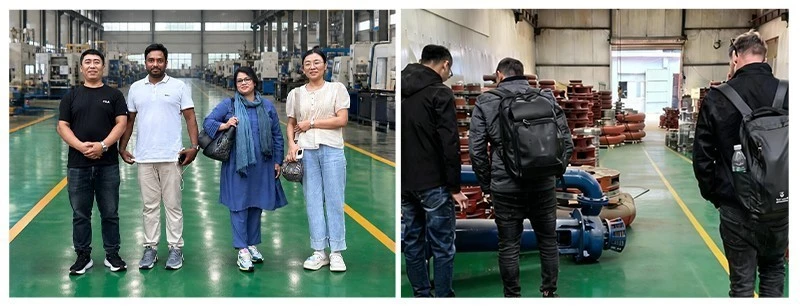
Pre-Start Thermal Commissioning Checklist
- System Fill & Pressurization: Before energizing the pump: verify that the entire heating loop is filled, vented at all high points, and pressurized to the design fill pressure - not to the operating pressure, but to the minimum cold fill pressure calculated from the vapor-pressure margin requirement. A loop that is not fully filled and pressurized will cavitate the pump the instant hot water reaches it.
- Valve Position Verification: Open all isolation valves on the pump's suction and discharge before starting - never start a hot-water pump against a closed suction valve. Confirm that the expansion tank is correctly pre-charged and that the system's air separator is functional; trapped air in a hot-water loop causes cavitation, noise, and circulation failure.
- Flush Plan Activation: For pumps with external flush plans (Plan 32 or Plan 53): verify that the barrier fluid or cooling water supply is flowing at the specified rate before the pump is started. The seal's thermal protection depends on this flow; starting without it exposes the faces to full process temperature without cooling.
- Soft-Start Sequence: Start the pump with the discharge valve 20-30 percent open and ramp to full open over 30-60 seconds, monitoring discharge pressure, motor amperage, and seal area simultaneously. Record the hot-state operating baseline on the commissioning data sheet.
Thermal Safety Interlocks & Operating Protections
Every hot water circulation inline pump installation should include the following minimum safety interlocks, wired into the motor control circuit or the building management system. A low-system-pressure switch that stops the pump if the loop pressure falls below the minimum required to suppress boiling at the operating temperature - because a pump running in a depressurized hot-water loop is a cavitation event waiting to happen. A high-temperature cutout on the pump discharge that halts circulation if the fluid temperature exceeds the pump's rated maximum - protecting the seal and elastomers from thermal degradation. A motor winding thermal protector (thermistor or bimetallic overload) that trips the motor before insulation damage occurs. And a dry-run interlock on the suction line that prevents startup when the pump is not fully flooded - the single most important protection against seal destruction.
Commercial Procurement & Global Engineering Support
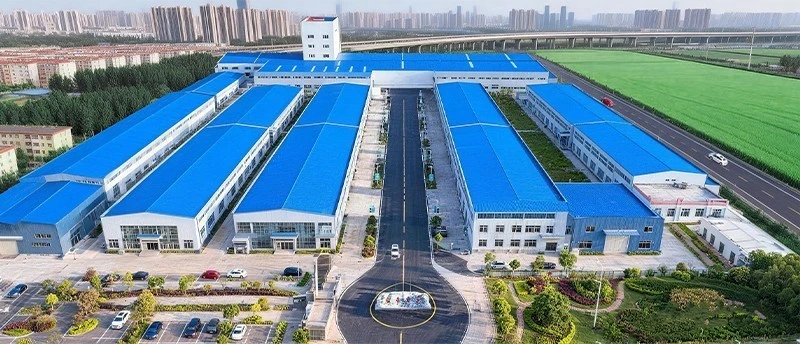
Manufacturer Profile: Hebei Dehuike Pump Industry Co., Ltd. (DHK Pump) has specialized in industrial fluid machinery manufacturing for more than 30 years. From a 8,000+ m2 production campus equipped with precision CNC machining cells, automated hydraulic test stands with integrated heating capability for hot-run verification, and dedicated thermal-service assembly bays - supported by 900+ qualified supply chain partners - our heating-circulation pumps serve district energy plants, commercial building projects, and industrial thermal systems across more than 50 countries.
Warranty & Certification: Each hot water circulation inline pump carries a 24-month (two-year) mechanical warranty covering materials and factory workmanship (wear parts excluded), with ISO 9906 Grade 2B hydraulic test certification and hot-run thermal verification data per unit.
Commercial Terms: Export quotations follow Incoterms 2020 - FOB or CIF to the destination port - supported by EN 10204 3.1 material certification, hot-run test records, seal specification documentation, and stamped performance curves.
Logistics: Freight moves by air for urgent consignments in the 50-500 kg range, and by ocean for volume orders above 500 kg, crated to ISPM 15 standard with VCI moisture-barrier protection.
FAQ - Hot Water Pump Engineering Questions
The questions below reflect recurring inquiries from heating-system designers, boiler-plant engineers, and building-services consultants when specifying the hot water circulation inline pump for thermal-service duty.
Q1 - Temperature Limits | What is the maximum water temperature this pump can handle continuously?
The standard IRG hot-water trim is rated for continuous service at +120C, using FKM (fluorocarbon) elastomers and SiC/SiC seal faces with the extended cooling stool. The IRW high-temperature execution extends this to +150C, using FFKM (perfluoroelastomer) secondary seals, a Plan 53 dual pressurized seal arrangement, and a water-jacketed or finned cooling stool. Above +150C in water service, the conversation moves to thermal-oil pumps with purpose-engineered seal and bearing systems.
Q2 - The Extended Stool | Why does the hot-water pump have a longer motor bracket than the standard inline pump?
The extended intermediate stool is a thermal isolation feature. Heat conducting from the +120C pump casing toward the electric motor must traverse the lengthened conduction path of the stool, and by the time it reaches the motor end shield, the temperature has dropped to a level the motor's integral cooling fan can manage. Without this elongation, conducted heat would raise the motor bearing temperatures and winding temperatures beyond their design limits, shortening motor life and tripping thermal protectors.
Q3 - Glycol Service | Can this pump circulate glycol-antifreeze heating mixtures?
Yes - the FKM elastomers and SiC seal faces are compatible with standard propylene and ethylene glycol heat-transfer fluids at concentrations up to approximately 40-50 percent. However, glycol mixtures have higher viscosity and lower specific heat than water, which affects pump performance: flow may drop slightly, motor power consumption rises, and the system's thermal delivery capacity changes. The engineering desk can adjust the pump selection and motor sizing to account for the glycol's viscosity-temperature behavior.
Q4 - VFD in Heating Duty | How does variable-speed control interact with hot-water circulation?
Variable frequency drive (VFD) control is highly effective in heating applications, where demand varies seasonally and the pump can modulate speed to match zone heating loads. The affinity laws deliver dramatic energy savings at part-speed, and the reduced flow-through velocity through the heating loop is matched by the system's own demand. One caution: at very low speeds, the seal flush flow (if the plan depends on discharge recirculation) may diminish below the rate needed for thermal protection. Confirm that the selected flush plan maintains adequate seal-cooling flow at the minimum operating speed.
Q5 - Boiling & Depressurization | What happens if the heating system loses pressure and the hot water starts to boil?
Boiling in a circulating pump is catastrophic: the pump cavitates violently as vapor bubbles form and collapse, the impeller experiences erosion damage, the mechanical seal faces are exposed to steam rather than liquid water (losing their cooling film), and the pump's discharge pressure collapses as the impeller tries to move a two-phase fluid. The system's pressurization - maintained by the expansion tank and fill system - is the primary defense. The low-system-pressure interlock described in Dimension 7 is the secondary defense, stopping the pump before boiling begins.
Q6 - Condensate Service | Can I use this pump for steam condensate return?
Condensate return is a related but distinct duty. Condensate is hot water (typically +80C to +100C) but is often aggressive - it carries dissolved oxygen and carbon dioxide that form carbonic acid, and it may carry trace boiler treatment chemicals. Standard cast iron IRG executions handle clean, deaerated condensate adequately; aggressive condensate with oxygen or CO2 ingress is better served by stainless wet ends. The seal package must be specified for the condensate temperature and any chemical treatment present. Our engineering desk will review the condensate chemistry before confirming the specification.

Hot Tags: hot water circulation inline pump, China hot water circulation inline pump manufacturers, suppliers, factory