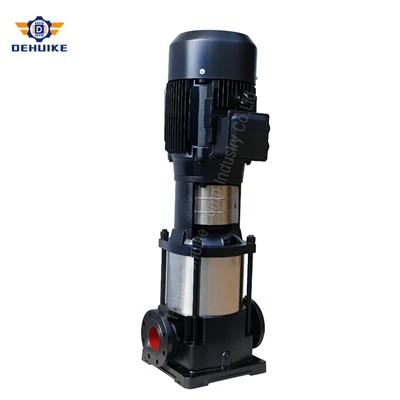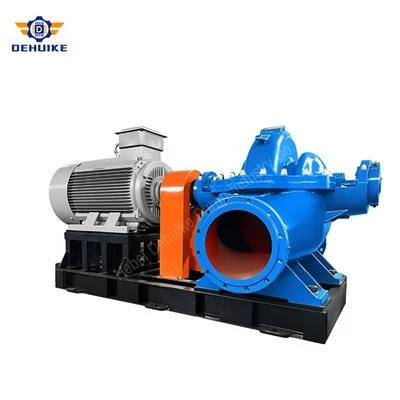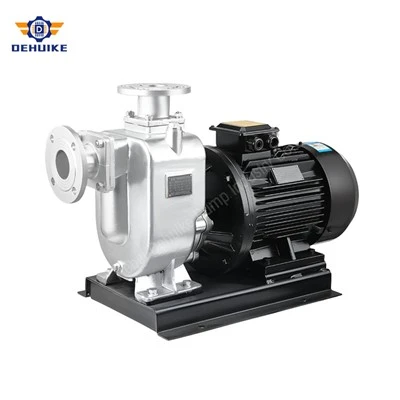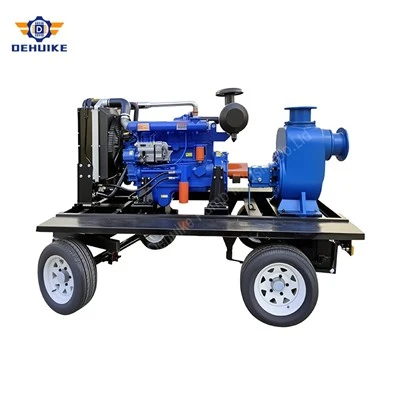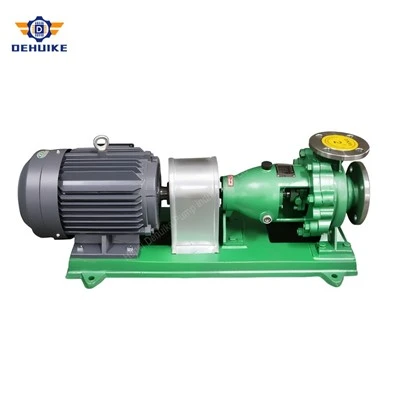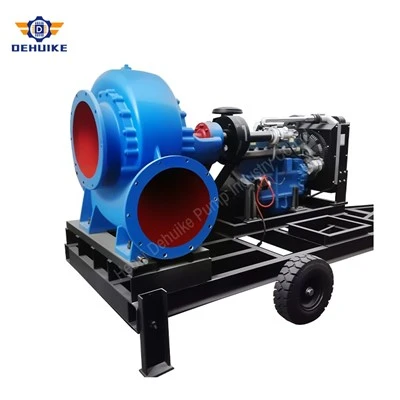

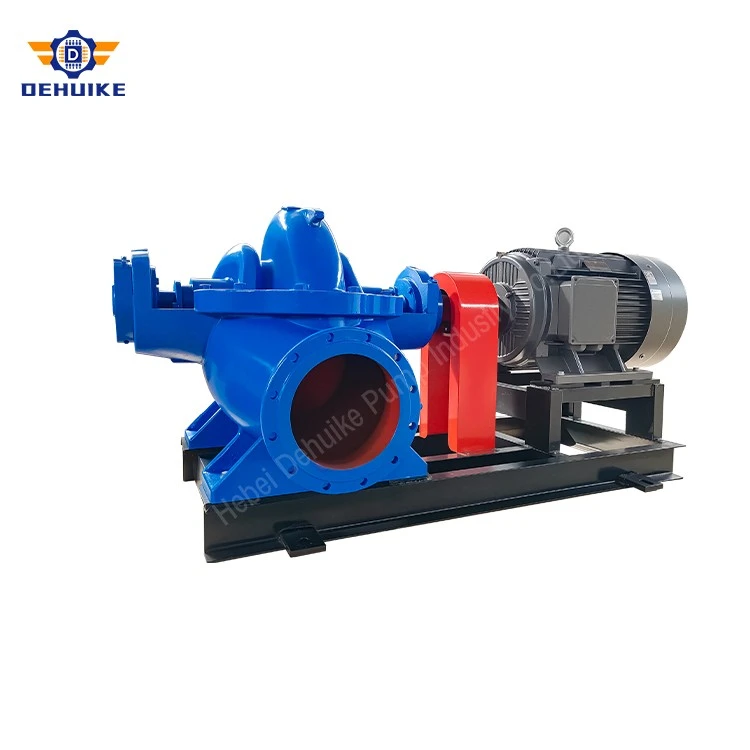
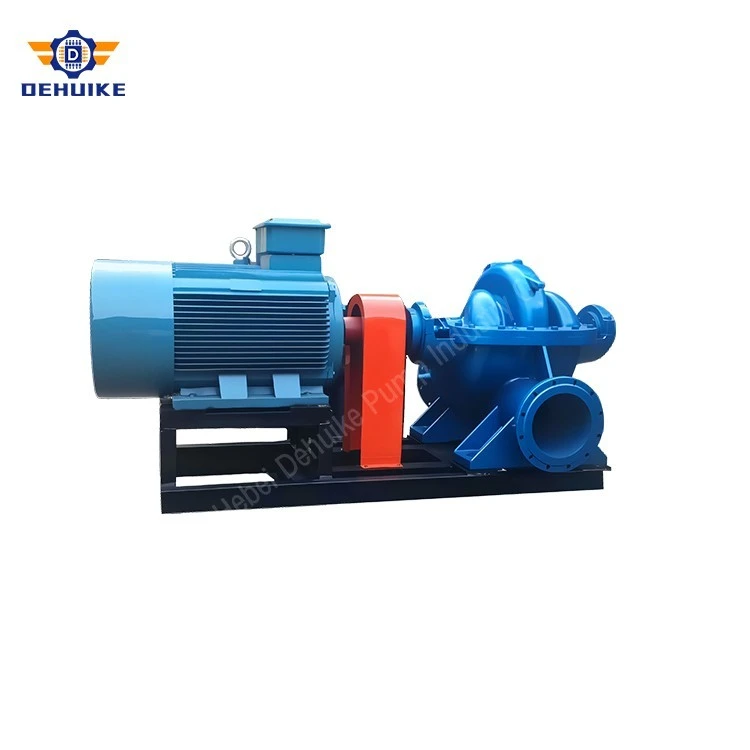
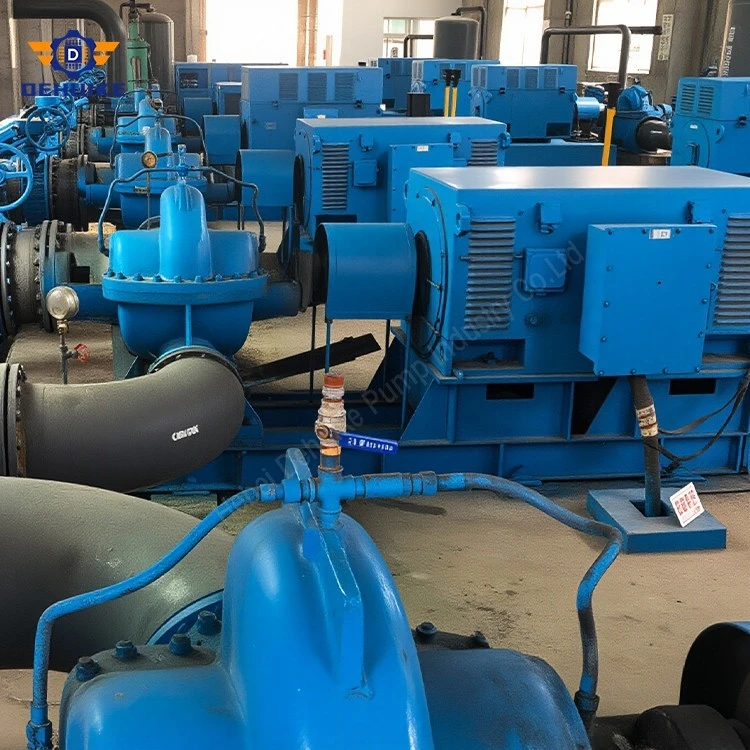
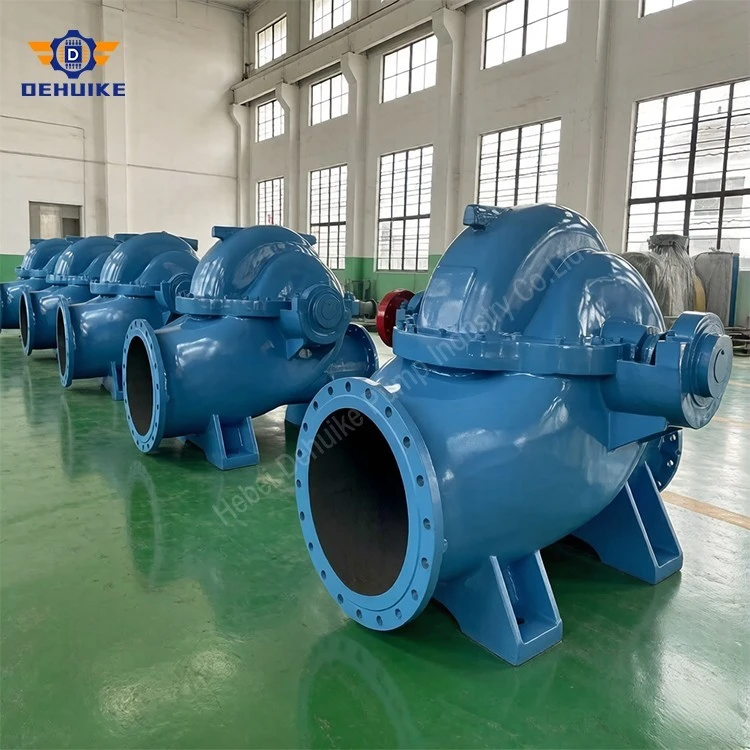
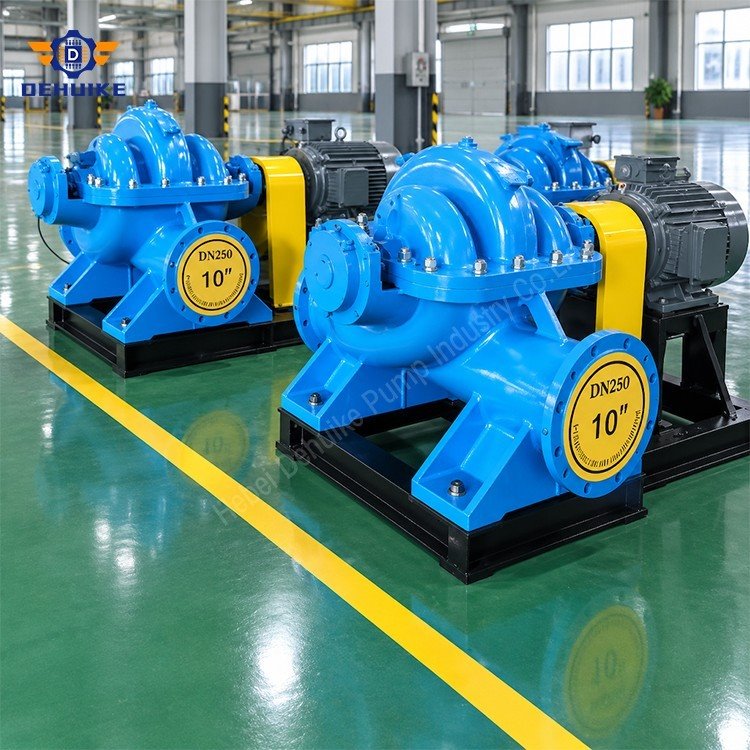
Hebei Dehuike Pump Industry Co., Ltd. is one of the most reliable manufacturers and suppliers of double suction fire water pump in China. With abundant experience, we are committed to providing high quality customized pumps with competitive price. Welcome to wholesale bulk double suction fire water pump for sale here from our factory. Also, pricelist is available.
Introduction
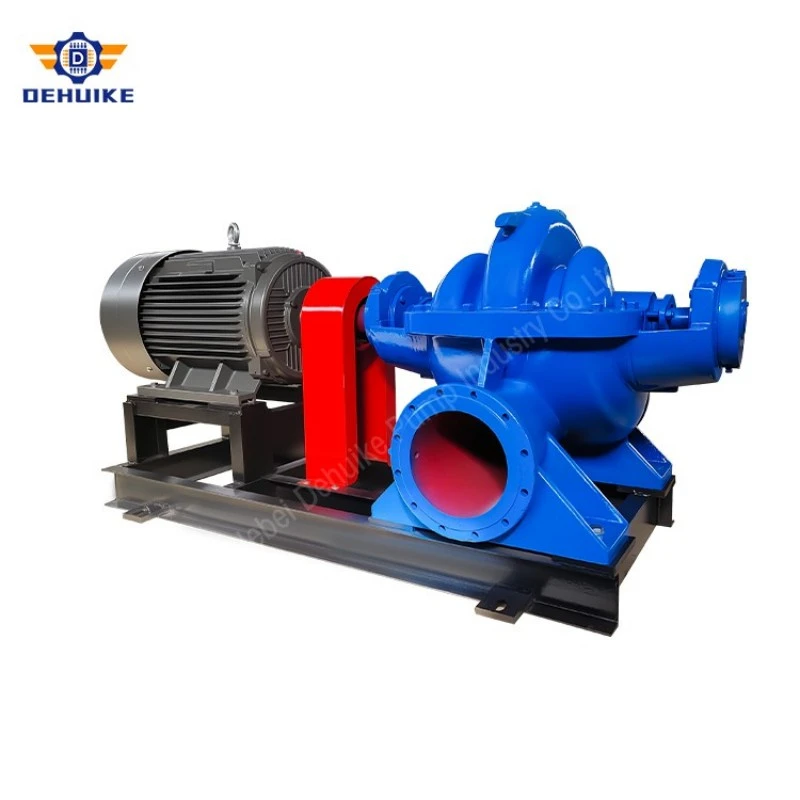
A Double Suction Fire Water Pump can be assessed for project fire-water supply arrangements where the required hydraulic duty, water source, driver arrangement, and applicable fire requirements are defined by the project. Water enters the impeller through opposing inlet paths, receives energy from the rotating assembly, and is discharged into the connected network. The split-casing layout is commonly considered where the pump room must also allow planned access to the internal assembly.
A performance table does not by itself establish fire-service suitability. The responsible project team must define the required flow, pressure or total head, water-storage arrangement, minimum water level, suction piping, standby philosophy, driver and control requirements, test obligations, and the local codes or authority approvals that apply. The final equipment configuration must be reviewed against those requirements.
Specifications / Technical Parameters / Technical Data
The figures below are five complete duty snapshots taken from the spreadsheet. Read each line as a self-contained pump condition: its discharge quantity, head, speed, power demand, hydraulic efficiency, suction requirement, impeller size, and handling weight belong to that specific entry.
How to use these values: They are spreadsheet operating points rather than evidence of fire-system approval. Movement along a pump curve changes pressure rise, power draw, efficiency, and suction requirement. Establish the installed system's NPSH available separately from source elevation, water level, temperature, inlet route, fittings, and friction loss.a
|
Pump Identification |
Rated Flow (m3/h) |
Rated Flow (L/s) |
Design Head (m) |
Rotational Speed (r/min) |
Input at Shaft (kW) |
Listed Motor (kW) |
Hydraulic Efficiency (%) |
Pump NPSHr (m) |
Impeller OD (mm) |
Set Mass (kg) |
|
6Sh-9A / 150S50A |
144 |
40 |
40 |
2900 |
20.9 |
30 |
75 |
5.0 |
186 |
145 |
|
10Sh-6A / 250S65A |
468 |
130 |
54 |
1450 |
89.4 |
110 |
77 |
4.0 |
436 |
565 |
|
14Sh-6B / 350S125B |
1100 |
305 |
96 |
1450 |
373 |
500 |
77 |
6.5 |
575 |
1580 |
|
24Sh-9B / 600S75B |
2800 |
778 |
56 |
960 |
514 |
550 |
88 |
7.5 |
690 |
4300 |
|
32SA-19 / 32Sh-19A / 800S32A |
5310 |
1475 |
29 |
730 |
500 |
560 |
84 |
6.5 |
950 |
5100 |
Product Details
The pump hydraulic path directs water from the suction connection into two impeller entries. The impeller raises the liquid energy, while the casing channels the combined stream toward the outlet. The opposing inlet paths place the water-induced hydraulic effect on both sides of the impeller.
A Double Suction Fire Water Pump configuration is generally arranged around a horizontal shaft with a casing split at the shaft centreline. If the station design includes lifting clearance and accessible pipework, the upper casing section can be removed for internal inspection. This construction feature does not replace the project requirements for pipe restraint, foundation design, coupling alignment, guarding, isolation, safety procedures, or emergency system reliability.
The complete delivery scope must be documented separately. It should identify the selected pump, driver, coupling, guard, rotation, suction and discharge interfaces, controls or instrumentation requested, documentation package, inspection stages, and test or witness requirements.
Features / Equipment Characteristics
•Source-table duty range: the five selected design points extend from 144 to 5,310 m3/h.
•Head reference: listed total head values range from 29 to 96 m at their individual design conditions.
•Two-sided inlet arrangement: liquid approaches both impeller eyes, a hydraulic layout used for substantial water handling in one centrifugal stage.
•Speed options: the displayed records operate at 730, 960, 1450, or 2900 r/min; driver selection and starting duty require project review.
•Design-point efficiency: the listed values range from 75% to 88% and apply only to the stated records.
•Suction calculation input: NPSHr in the selected rows is 4.0 to 7.5 m; it must be compared with actual NPSH available at site.
•Pump-room planning data: recorded pump-set weights extend from 145 to 5,100 kg, relevant to structural support, delivery handling, lifting equipment, and service access.
Application
•Dedicated water-transfer equipment proposed for a project fire-water network.
•Water storage to fire-water distribution transfer arrangements.
•Industrial facilities requiring a defined emergency water duty.
•Infrastructure projects where a fire-water pump room is designed around an approved hydraulic specification.
•Retrofit evaluations where existing pump room interfaces and required fire duty are documented.
Use in a fire-protection system must not be assumed from this page. The final application requires confirmation of governing codes, authority requirements, approved pump and driver arrangement, system duty, acceptance testing, and any required listing or certification.
Define the Fire-Water Duty Before Selecting a Pump
A responsible selection begins with the required emergency water demand and the system pressure calculation. Establish the water-storage level, minimum available supply, static elevation, pipe route, fittings, valves, network losses, expected simultaneous demand, design pressure, driver arrangement, and required operating duration. Then compare that system requirement with the complete approved curve for the candidate model.
The selected records represent different hydraulic conditions. The 6Sh-9A / 150S50A row shows 144 m3/h at 40 m total head, while the 32SA-19 / 32Sh-19A / 800S32A row shows 5,310 m3/h at 29 m total head. A larger capacity value alone does not determine suitability. Motor data, speed, NPSHr, impeller diameter, weight, driver compatibility, system curve, and project fire requirements must be reviewed together.
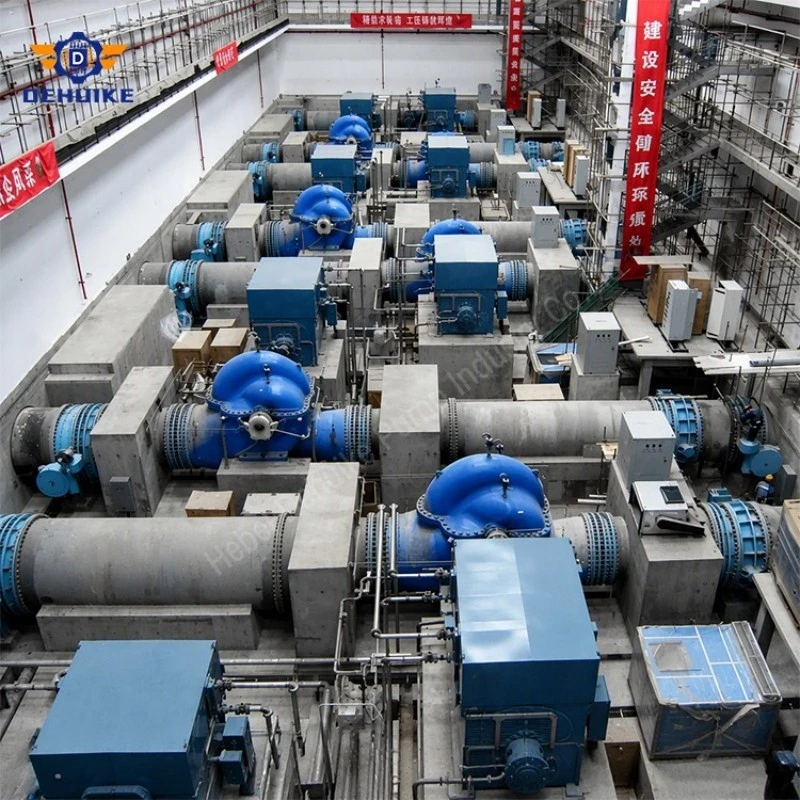
Pump room integration is equally important. The design should address water-source reliability, suction pipe routing, air exclusion, pipe support, baseplate alignment, driver access, ventilation, lifting provision, testing connections, and maintenance isolation. Project fire-water performance depends on the complete approved system, not one item of equipment in isolation.
Our Advantages
•Five complete source-table records retained without mixing parameters across models.
•Capacity, head, speed, power, efficiency, NPSHr, impeller diameter, and weight shown together for each reference.
•Fire-water selection discussion centered on documented duty, source condition, system curve, and installation design.
•Unprovided certification, driver, controller, material, sealing, and test requirements clearly identified as project confirmation items.
•Enquiry framework suitable for coordination between designers, contractors, owners, and procurement teams.
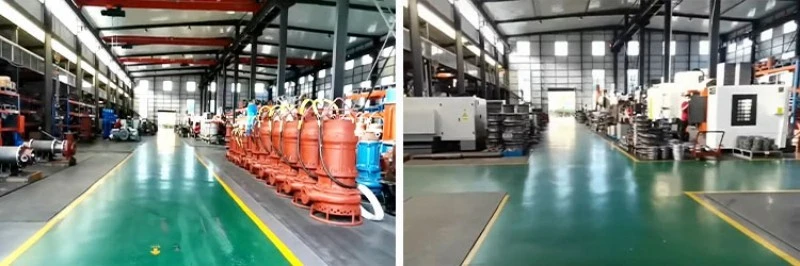
Production Process
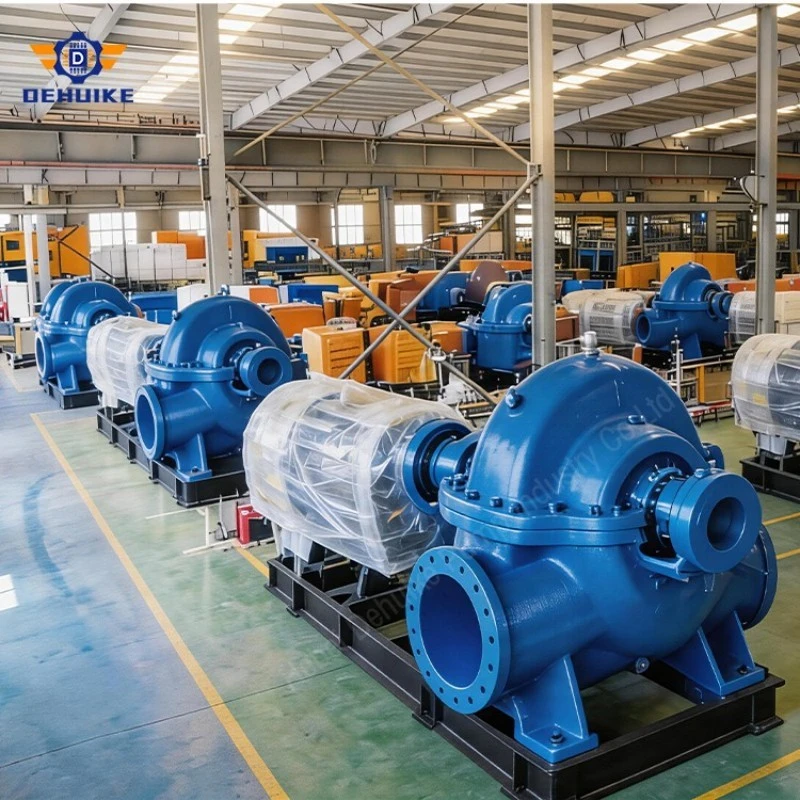
Manufacturing follows the released purchase specification. Before production begins, the specification should identify the approved pump record, driver and coupling arrangement, technical drawings, component requirements, quality checkpoints, and required documents. The casing, impeller, shaft, bearing components, seal-related parts, and drive-end elements are then produced or prepared and assembled according to the authorized production information.
After assembly, the unit undergoes the inspection activities included in the agreed plan. The contract may define dimensional checks, rotational verification, hydraulic testing, witness attendance, record review, preservation, packing, and shipment release. The test procedure and acceptance conditions must come from the approved project documents.
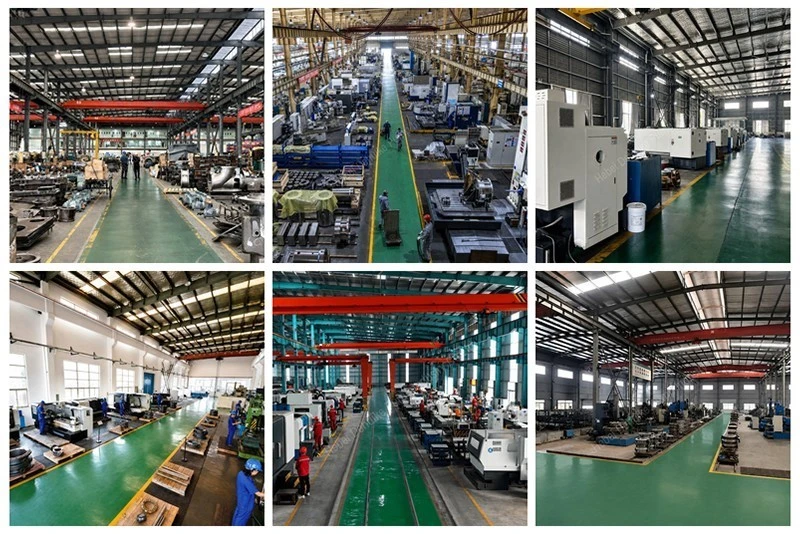
Quality Assurance
Quality assurance for a fire-water project should be controlled by the agreed project inspection and acceptance schedule. The schedule can define the selected duty, approved equipment identity, driver information, test responsibilities, documentation, marking, preservation, packing, purchaser review stages, and any independent inspection involvement.
Before dispatch, the release review should confirm that the equipment and documents match the finalized scope. Performance evidence, material evidence, compliance records, inspection reports, and certificates are included only when specifically requested and accepted in the project agreement. This avoids presenting a generic pump record as proof of an unconfirmed fire-system obligation.
Our Service
For a technical review, provide the required emergency water flow, pressure or total head, water-source description, water level range, suction layout, pipe data, elevation, driver supply, intended running arrangement, applicable project rules, destination, and document needs. These inputs enable comparison against the available performance records and identify the configuration details that remain open.
Support can be arranged for duty-point discussion, technical clarification before order release, coordination of the agreed documentation, and parts identification using the final model and serial information. Site testing attendance, commissioning assistance, authority coordination, training, or emergency-system validation are separate services only when explicitly included in the quotation or contract.
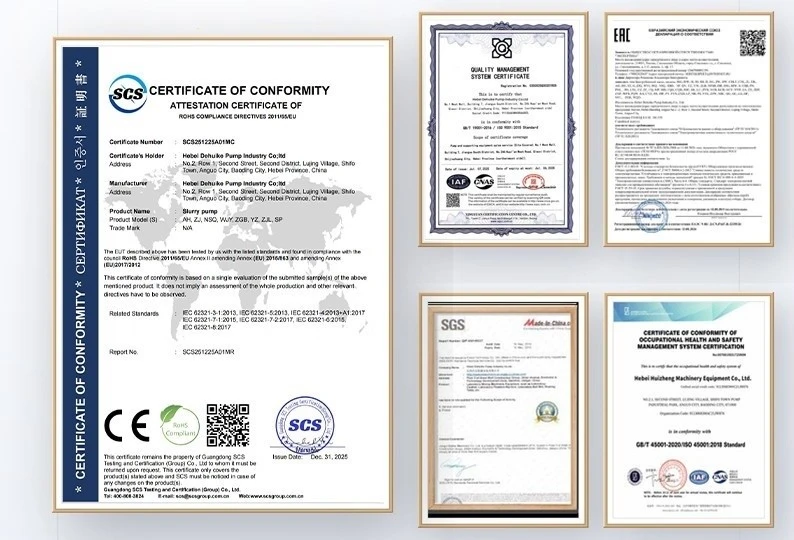
Experience and Markets
Fire-water projects are governed by local project conditions and applicable requirements. Industrial plants may have defined emergency scenarios, infrastructure developments may be governed by specific authority review, and commercial facilities may have distinct water-source, access, documentation, and test expectations. A technically sound proposal therefore begins with the project basis rather than a generic statement that one pump serves every fire-water system.
For international deliveries, technical discussions should also cover document language, delivery route, lifting limits, local electrical conditions, pump-room interfaces, test witness needs, and applicable jurisdictional requirements. Early clarification helps keep the proposed **Double Suction Fire Water Pump** aligned with the actual project basis.
Multi-Dimensional Project Content Angles
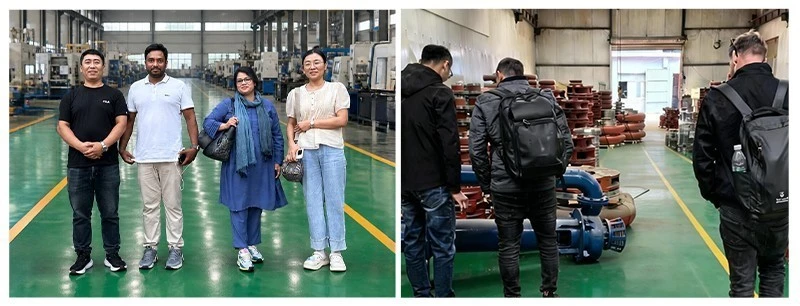
Fire-Water Storage and Transfer
Describe the available water volume, lowest operating level, transfer route, required demand, discharge pressure, and system-loss calculation. The final pump selection should be checked against the approved emergency duty.
Industrial Facility Fire-Water Rooms
Focus on the project duty, water source, driver arrangement, pipe support, ventilation, access, testing interface, maintenance isolation, and the local acceptance process. Do not state approval status unless the project documentation confirms it.
Infrastructure Retrofit Projects
Record existing hydraulic data, driver information, pump room dimensions, pipe centres, suction source, foundation condition, lifting route, electrical supply, controls, and any authority requirements. Mechanical fit and verified system performance both need review.
Engineering Procurement Packages
Structure the enquiry around the hydraulic duty, approved code basis, required documentation, testing scope, delivery boundary, inspection points, preservation, packing, and destination constraints. This makes technical comparison more reliable before procurement release.
FAQ
Q: Is this product automatically certified for fire-water use?
A: No. The supplied performance sheet contains operating data only. Fire certification, listing, code compliance, acceptance testing, and authority approval must be confirmed for the specific project.
Q: Which models are shown in the technical table?
A: The table uses the source-sheet design-rated records for 6Sh-9A / 150S50A, 10Sh-6A / 250S65A, 14Sh-6B / 350S125B, 24Sh-9B / 600S75B, and 32SA-19 / 32Sh-19A / 800S32A.
Q: What capacity range is displayed?
A: The five displayed design points span 144 to 5,310 m3/h. Other models and conditions exist in the source spreadsheet but are not reproduced on this page.
Q: What total head range is listed?
A: The selected design points show 29 to 96 m of total head. Actual operation depends on the complete system curve and the approved application conditions.
Q: Why must the water source and NPSH be reviewed?
A: NPSHr is the pump-side suction requirement at a given duty. The installed arrangement must provide adequate NPSH available after water level, temperature, elevation, inlet pipe, fittings, and losses are considered.
Q: Can a pump be chosen from the required flow alone?
A: No. The project also needs total head or pressure, water source, pipe layout, demand scenario, driver details, operating duration, applicable requirements, and installation constraints.
Q: Does the page confirm a particular driver or controller?
A: No. The source sheet identifies motor power at its listed design points but does not define a project fire-pump driver, controller, starting system, or control philosophy.
Q: What should be supplied for a quotation review?
A: Provide required flow, total head or pressure, water-source details, temperature, lowest water level, suction and discharge piping, elevation, driver supply, system duty, applicable project requirements, destination, and requested documents.

Hot Tags: double suction fire water pump, China double suction fire water pump manufacturers, suppliers, factory