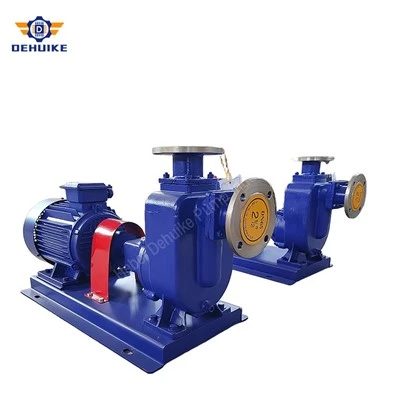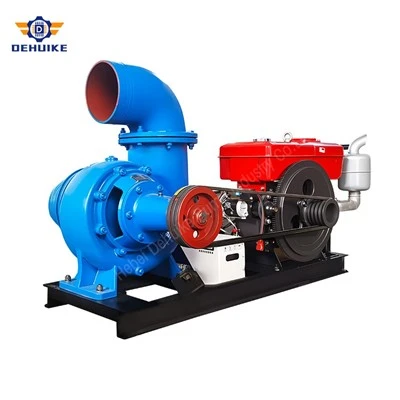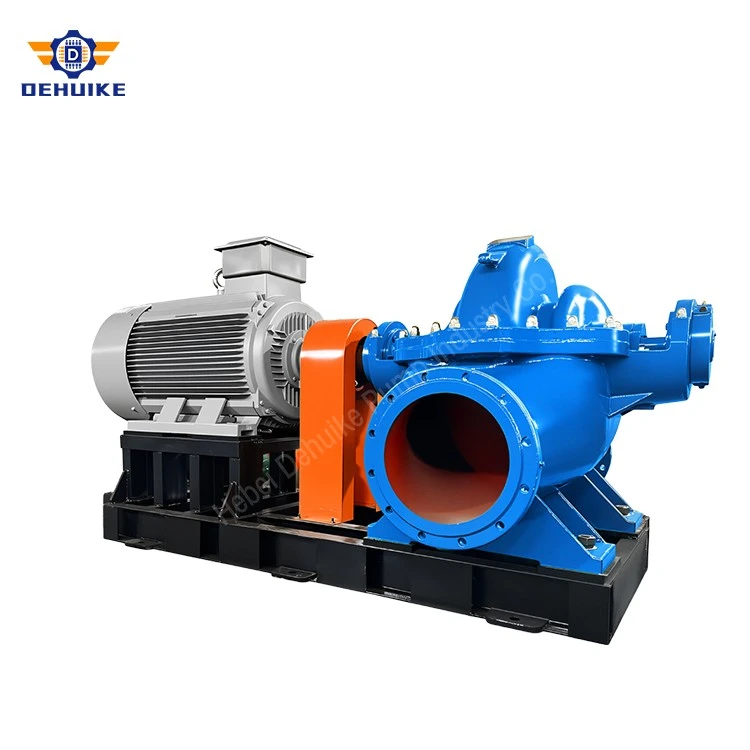
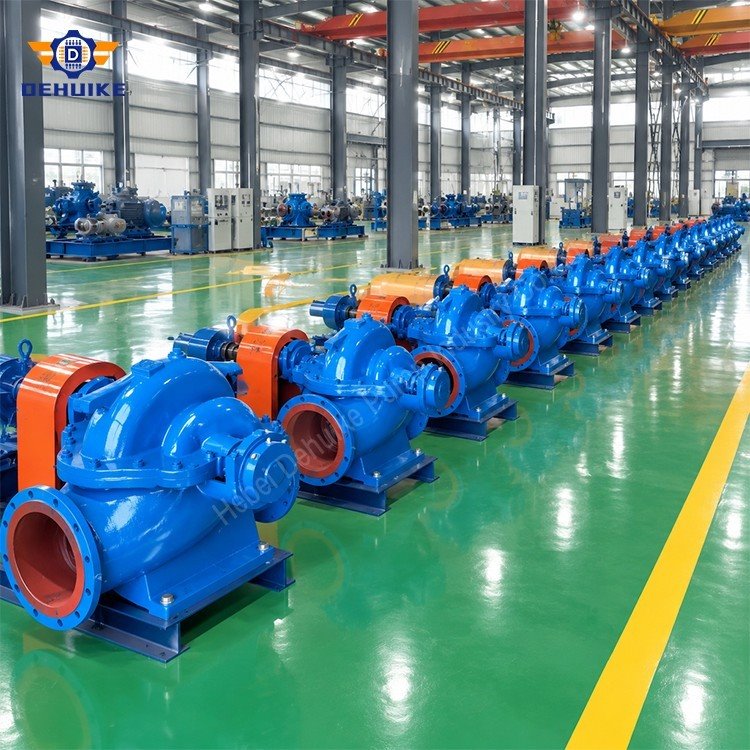
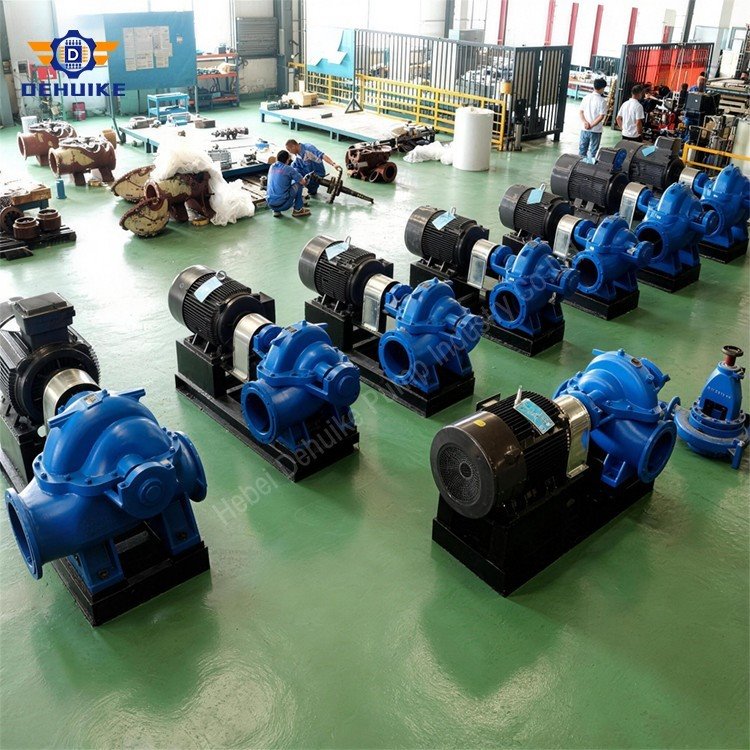
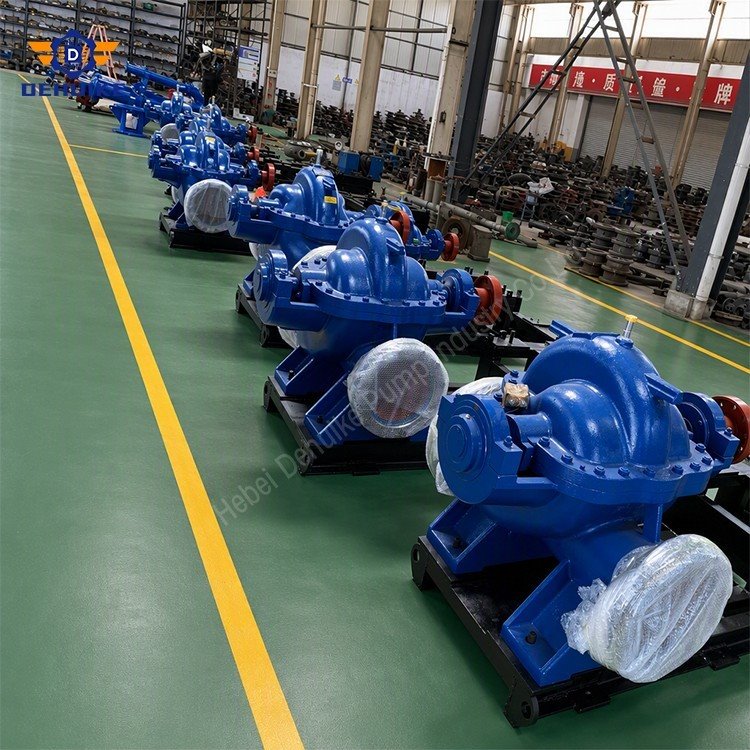
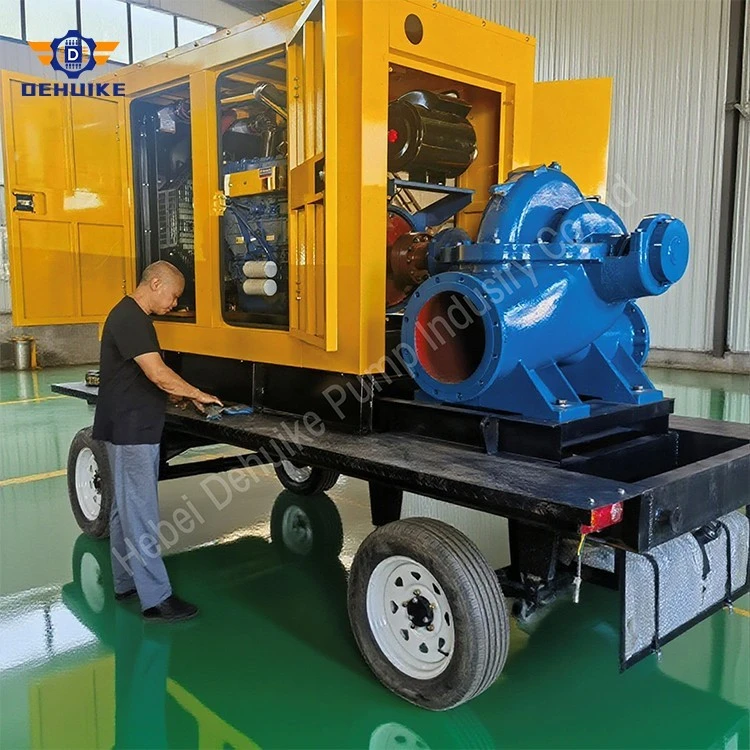
Hebei Dehuike Pump Industry Co., Ltd. is one of the most reliable manufacturers and suppliers of double suction irrigation pump in China. With abundant experience, we are committed to providing high quality customized pumps with competitive price. Welcome to wholesale bulk double suction irrigation pump for sale here from our factory. Also, pricelist is available.
Introduction
A Double Suction Irrigation Pump is intended for agricultural water systems that must deliver a calculated volume through an irrigation mainline, canal transfer route, or reservoir supply station. The impeller receives water through two opposed entry paths before the hydraulic passages direct the flow to the discharge side. This configuration is relevant when an irrigation project needs a single-stage pump arrangement with capacity, suction conditions, motor requirement, and station service access assessed as one system.
Irrigation duty changes with the field layout and water source. Seasonal demand, crop-zone scheduling, canal or reservoir level, pipeline length, elevation, valve losses, filtration losses, and discharge pressure can all shift the system requirement. For that reason, a model should be selected from its full approved curve after the actual system duty has been calculated, rather than from a nominal capacity description alone.
Specifications / Technical Parameters / Technical Data
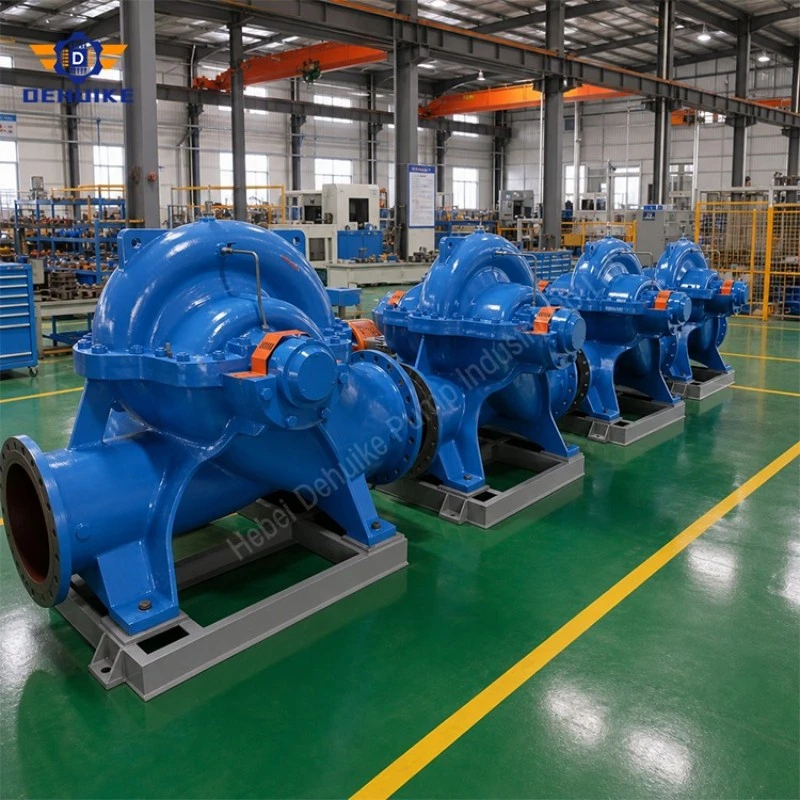
Each table entry is one complete design-rated record from the source worksheet. Keep the capacity, total head, rotational speed, power values, efficiency, NPSHr, impeller diameter, and pump-set weight attached to the same model record during technical evaluation.
Technical data boundary: The values above are transcribed from source-table design-rated rows. They are not product-family limits. Head, absorbed power, efficiency, and NPSHr vary when flow changes. The pump NPSHr must be compared with NPSH available, calculated from the real water level, liquid temperature, elevation, inlet piping, and associated losses.
|
Model |
Capacity (m3/h) |
Capacity (L/s) |
Total Head (m) |
Speed (r/min) |
Shaft Power (kW) |
Motor Power (kW) |
Efficiency (%) |
NPSHr (m) |
Impeller Diameter (mm) |
Pump Set Weight (kg) |
|
8Sh-9A / 200S63A |
270 |
70 |
46 |
2900 |
48.3 |
55 |
70 |
5.0 |
220 |
265 |
|
12Sh-9A / 300S58A |
720 |
200 |
49 |
1450 |
116 |
155 |
83 |
5.5 |
402 |
572 |
|
14Sh-10 / 14Sh-9A / 350S75A |
1170 |
325 |
65 |
1450 |
247 |
300 |
84 |
6.5 |
465 |
1200 |
|
20Sh-9A / 500S59A |
1910 |
530 |
50 |
970 |
347 |
400 |
75 |
6.0 |
640 |
2750 |
|
24SA-10B / 24Sh-9A / 600S75A |
3168 |
880 |
61 |
960 |
585 |
710 |
90 |
8.7 |
710 |
4300 |
Product Details
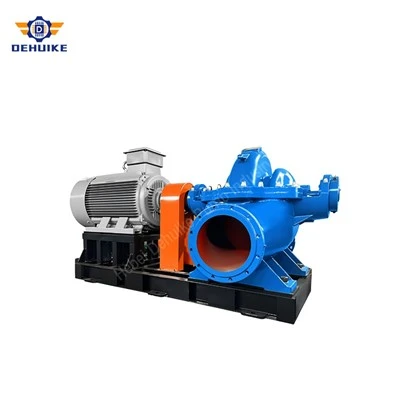
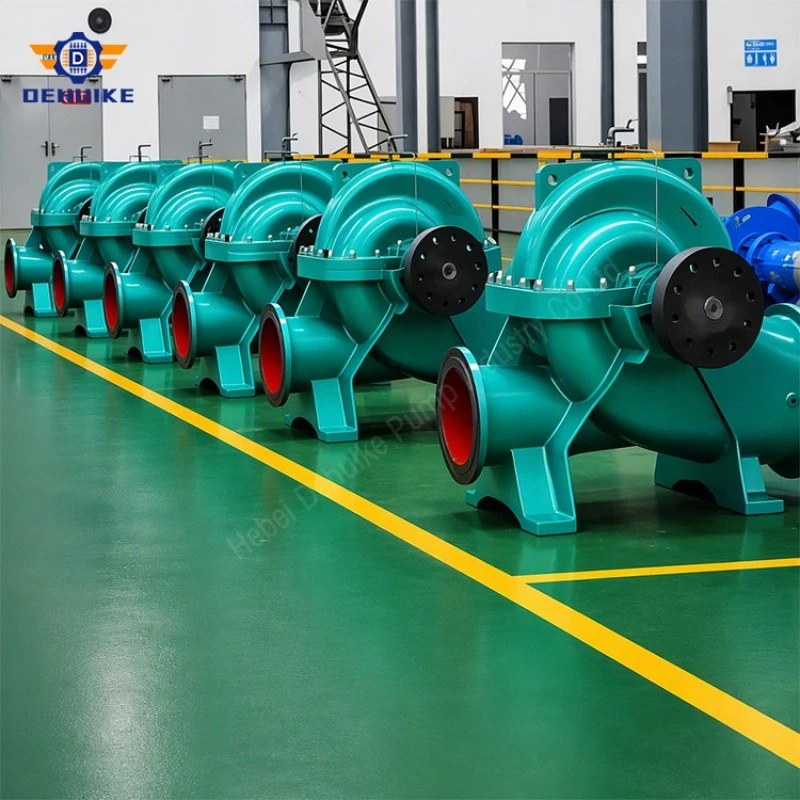
At the inlet, water is guided toward both sides of the impeller. The rotating impeller transfers energy to the irrigation water, and the casing passages collect and route the flow to the outlet. The two-sided inlet arrangement distributes liquid entry across the impeller and causes the hydraulic loading from the liquid to act from opposite directions.
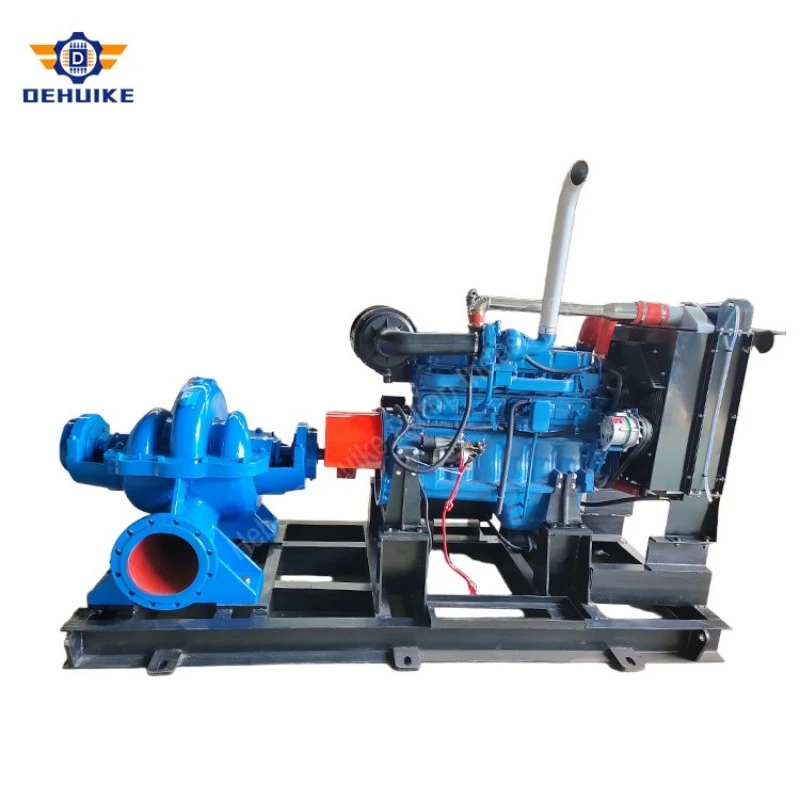
A Double Suction Irrigation Pump is typically installed with a horizontal shaft and a casing divided around the shaft centreline. The upper casing can provide a route to the internal assembly when the pump house has sufficient overhead lifting space and the piping arrangement permits access. The resulting maintenance benefit still depends on correct base support, coupling alignment, pipe restraint, lifting equipment, isolation valves, and a safe maintenance plan.
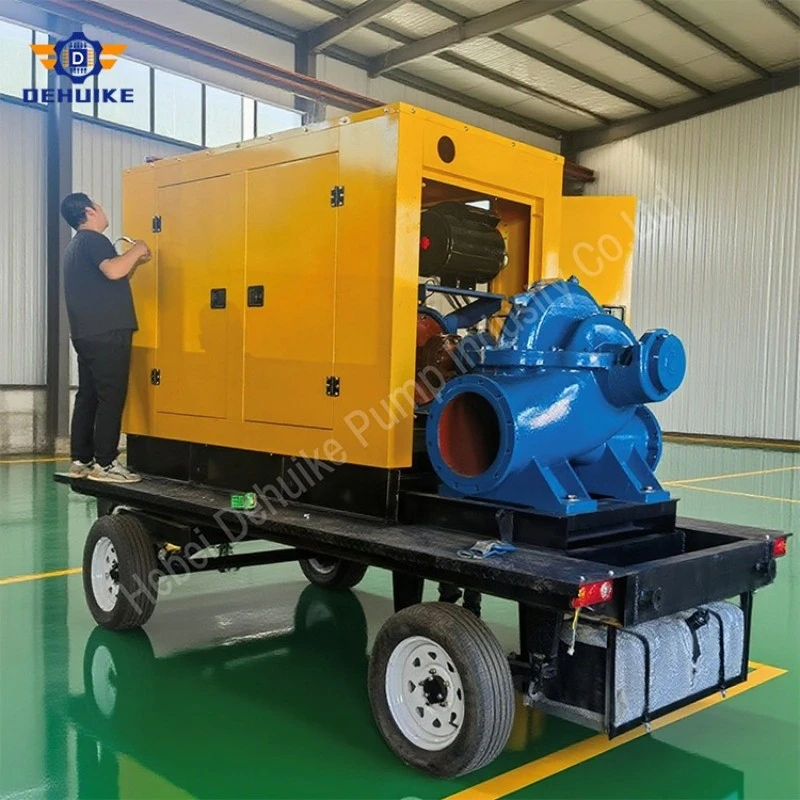
The hydraulic components shown by the product category do not define the entire purchased package. The order documentation should identify the chosen pump model, driver, direction of rotation, coupling and guard, interfaces, instruments, document package, inspection requirements, and any irrigation-station accessories.
Features / Equipment Characteristics
•Irrigation-scale design points: the selected source records range from 270 to 3,168 m3/h.
•Head coverage for mainline assessment: the displayed design points span 46 to 65 m of total head.
•Double-entry impeller flow: water approaches the impeller through two inlet sides, supporting high-volume handling in a single-stage arrangement.
•Duty-specific efficiency: source-table efficiencies are 70% to 90% at the stated operating points; they are not constant over the entire curve.
•Speed options: the selected records operate at 960, 970, 1450, or 2900 r/min, so the motor and starting arrangement must follow the selected model duty.
•Suction assessment data: NPSHr values range from 5.0 to 8.7 m in the table and are inputs to the irrigation-station suction calculation.
•Installation planning reference: listed pump-set weights range from 265 to 4,300 kg and should be reviewed alongside foundation, transport, crane, and service-space requirements.
Application
•Reservoir-to-mainline irrigation transfer.
•Canal-water pumping stations for agricultural distribution networks.
•Farm-cluster supply systems with a calculated pressure and flow requirement.
•Irrigation storage filling and water conveyance between ponds or tanks.
•Water transfer for agricultural infrastructure operating within an approved pump curve.
The supplied performance sheet does not verify use for abrasive water, solids-bearing wastewater, seawater, fertilizer mixtures, chemicals, flammable liquids, or high-temperature media. Where irrigation water contains sediment, chemicals, high salinity, or other non-standard characteristics, the project must separately confirm material, seal, filtration, solids, and safety requirements.
Irrigation System Selection Guidance
Begin with the water demand profile. Identify the required flow for each irrigation zone, whether zones operate simultaneously, desired pressure at the field connection, elevation changes, pipeline friction, filter losses, valve losses, and the lowest expected water level at the source. Those inputs define the total dynamic head and operating range that must be matched to the full performance curve.
The five records illustrate distinct irrigation duties. The 8Sh-9A / 200S63A design point is 270 m3/h at 46 m head, while the 24SA-10B / 24Sh-9A / 600S75A record is 3,168 m3/h at 61 m head. They should not be compared by capacity alone. Their speeds, motor ratings, NPSHr values, impeller diameters, and equipment weights are different and must stay linked to their respective source records.
A working irrigation station also depends on installation details. Review minimum source-water level, suction-pipe geometry, possible air entry, screen or filtration loss, pipe anchors, base level, motor-starting method, electrical supply, discharge control, and service access. A pump curve supports selection, but it does not replace system design.
Our Advantages
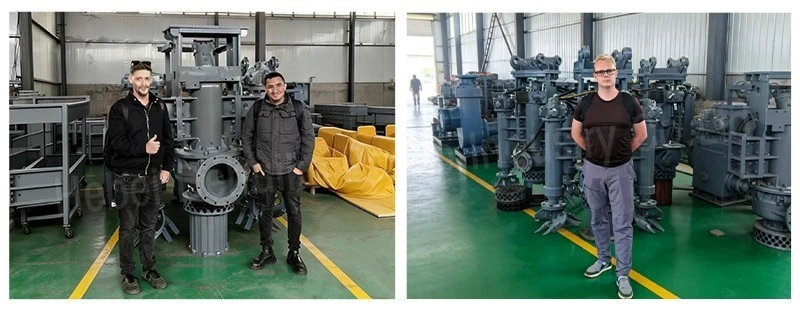
The page presents irrigation pump information with a clear technical boundary. Source-table data is shown as verified design-point information, while items absent from the spreadsheet are reserved for project clarification. This gives both agricultural project teams and procurement personnel a practical basis for a structured enquiry.
•Five source-table design-rated rows presented as independent, complete records.
•Hydraulic data retained with its associated speed, motor, efficiency, NPSHr, impeller diameter, and weight.
•Irrigation selection discussion focused on field demand, water level, pipe losses, and operating-zone logic.
•Transparent handling of unprovided material, sealing, electrical, certification, and test information.
•Enquiry content organized for coordination between farm operators, irrigation designers, contractors, and buyers.
Production Process
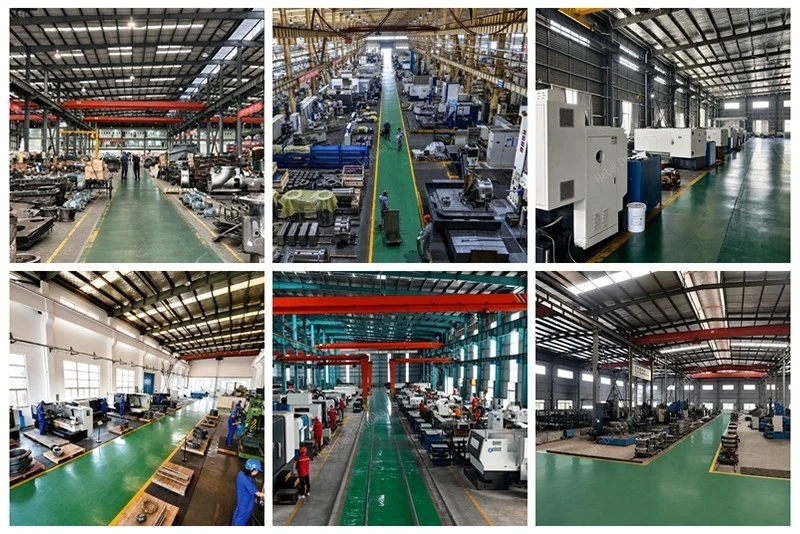
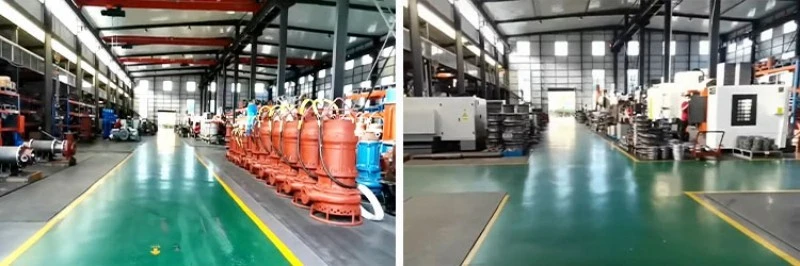
The manufacturing process starts after the approved order identifies the selected model, design duty, driver arrangement, drawings, required components, quality plan, and document list. Components are made and prepared in accordance with the released manufacturing documentation. The casing, impeller, shaft, bearing system, sealing-related components, and drive-side assembly are then built into the specified pump arrangement.
The completed unit follows the inspection and testing process agreed in the contract. Depending on the confirmed scope, this can include dimensional review, rotational-direction check, hydraulic test activity, witness arrangements, documentation, preservation, packing, and dispatch release. The final test method and acceptance criteria come from the approved purchase requirements.
Quality Assurance
For an irrigation station, quality control should be tied to the documented operating duty and delivery checklist. The purchase specification can identify the approved pump and driver combination, the intended rated point, required verification stages, information to be recorded, marking instructions, preservation needs, and the buyer's review points. This establishes a project record from component preparation through final release.
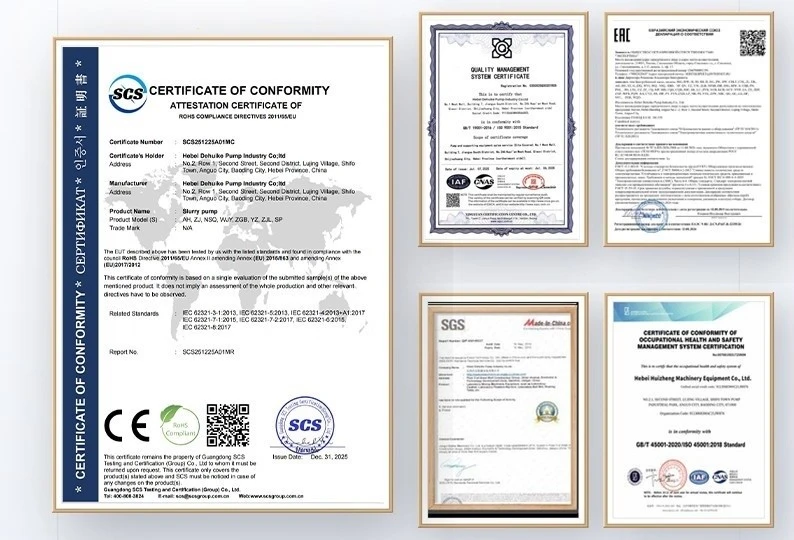
The pre-shipment review should verify that the equipment identity, agreed records, packing condition, and requested technical documents correspond to the approved order. Performance-test evidence, material records, corrosion-protection information, compliance declarations, and external inspection documentation are provided only when the project has requested them. Nothing outside the agreed scope is represented as an automatic deliverable.
Our Service
An irrigation enquiry is most useful when it describes the operating task: field area or zones served, simultaneous water demand, pressure required at the distribution point, seasonal running period, source type, lowest water level, and pipeline route. Add the flow target, total head, water quality, temperature, pipe diameters, elevation, local supply conditions, destination, and required project records. These inputs allow a duty review that relates the pump to the irrigation layout.
During the project discussion, assistance may be organized around matching the listed performance data to the requested duty, identifying missing selection inputs, confirming the equipment boundary, and preparing the agreed technical documentation. Once the pump is supplied, model and serial information can be used for parts identification. Any on-site start-up help, operator instruction, or inspection attendance needs a separately defined service arrangement.
Experience and Markets
Agricultural water projects operate under different regional conditions. Some systems are controlled by seasonal water availability, others by crop schedules, water-allocation rules, local power conditions, or long pipeline profiles. Pump-station design can also be affected by reservoir fluctuation, canal intake arrangements, sediment control, and restricted maintenance windows. These realities make application data more valuable than a one-size-fits-all pump claim.
For cross-border irrigation projects, early technical exchange should include document language, delivery route, lifting limits, destination handling, local electrical conditions, pipe interfaces, and requested inspection arrangements. Addressing these points helps keep the selected **Double Suction Irrigation Pump** connected to the actual agricultural system rather than a generic category label.
Multi-Dimensional Project Content Angles
Reservoir and Canal Intake Stations
Discuss lowest water level, inlet geometry, screen loss, sediment considerations, transfer demand, and the route to the irrigation mainline. The suction calculation must use the actual intake arrangement.
Irrigation Mainline Expansion
Describe zone demand, proposed simultaneous flow, pipe length, friction, elevation, required downstream pressure, and future operating range. The selected pump curve should be checked against every intended operating case.
Farm Water Storage Transfer
Focus on source and destination levels, storage-cycle schedule, pipe routing, valve loss, transfer window, and electrical operating pattern. Capacity should be linked to the available transfer time rather than a nominal description.
Existing Station Upgrade
Collect measured duty data, existing motor information, intake and discharge pipe sizes, foundation dimensions, nozzle directions, lifting capability, control equipment, and service access. A successful upgrade requires both hydraulic matching and mechanical fit.
FAQ
Q: What is a Double Suction Irrigation Pump?
A: It is a centrifugal pump arrangement in which water enters both sides of the impeller. It can be evaluated for irrigation transfer systems when the calculated flow, head, suction conditions, and final equipment scope match the project.
Q: Which models are used in the technical table?
A: The table uses design-rated rows for 8Sh-9A / 200S63A, 12Sh-9A / 300S58A, 14Sh-10 / 14Sh-9A / 350S75A, 20Sh-9A / 500S59A, and 24SA-10B / 24Sh-9A / 600S75A.
Q: What capacity range is represented on this page?
A: The five design-rated examples range from 270 to 3,168 m3/h. The spreadsheet contains additional models and off-design conditions that are not included here.
Q: What total head range is shown?
A: The selected design points are listed from 46 to 65 m total head. Actual head changes as the operating flow and irrigation network resistance change.
Q: Why does irrigation selection require NPSH review?
A: NPSHr is the pump suction requirement at its stated operating condition. The station must provide adequate NPSH available after considering water level, elevation, temperature, intake piping, screens, fittings, and losses.
Q: Can I select a pump from the required flow only?
A: No. The selection also requires total dynamic head, water-source condition, pipe layout, operating-zone schedule, elevation, motor supply, and installation constraints.
Q: Does this page confirm suitability for sediment or fertilizer water?
A: No. The source sheet does not define solids tolerance, material selection, corrosion resistance, seal arrangement, or chemical compatibility. Submit the full water analysis and operating conditions for technical confirmation.
Q: What should be included in an irrigation-pump enquiry?
A: Include required flow, total head, water source, temperature, minimum water level, suction and discharge pipe details, elevation, power supply, operating schedule, requested standards, destination, and document needs.

Hot Tags: double suction irrigation pump, China double suction irrigation pump manufacturers, suppliers, factory