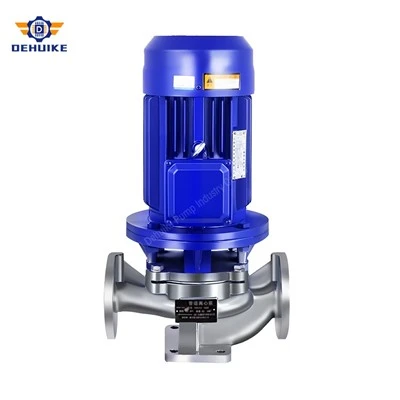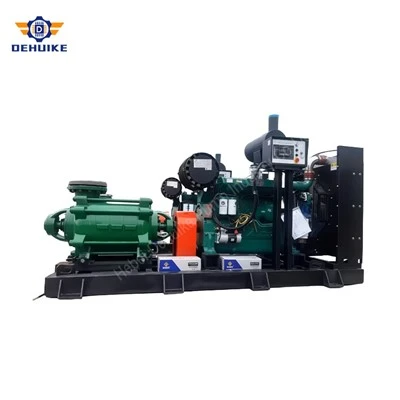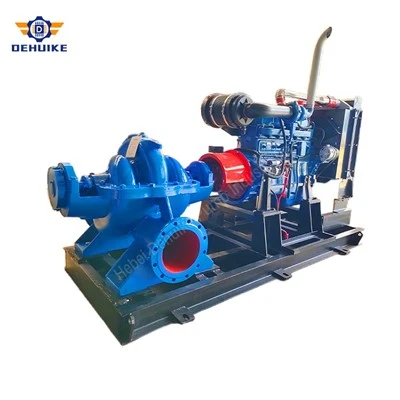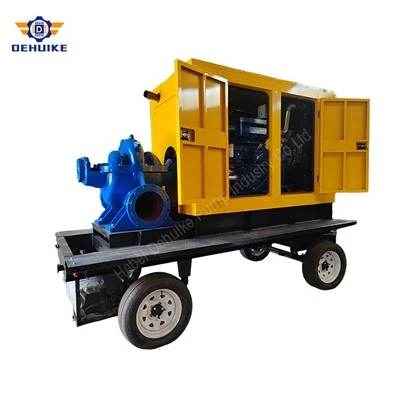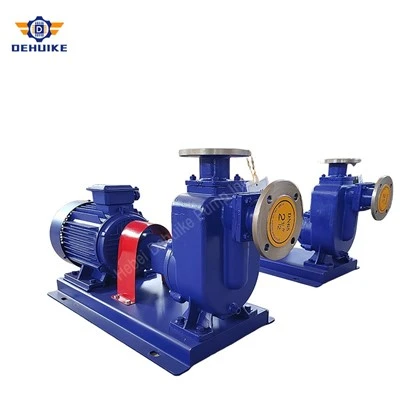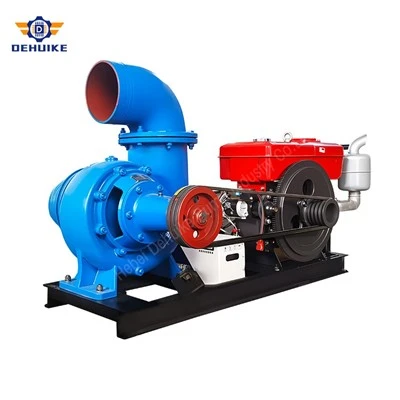

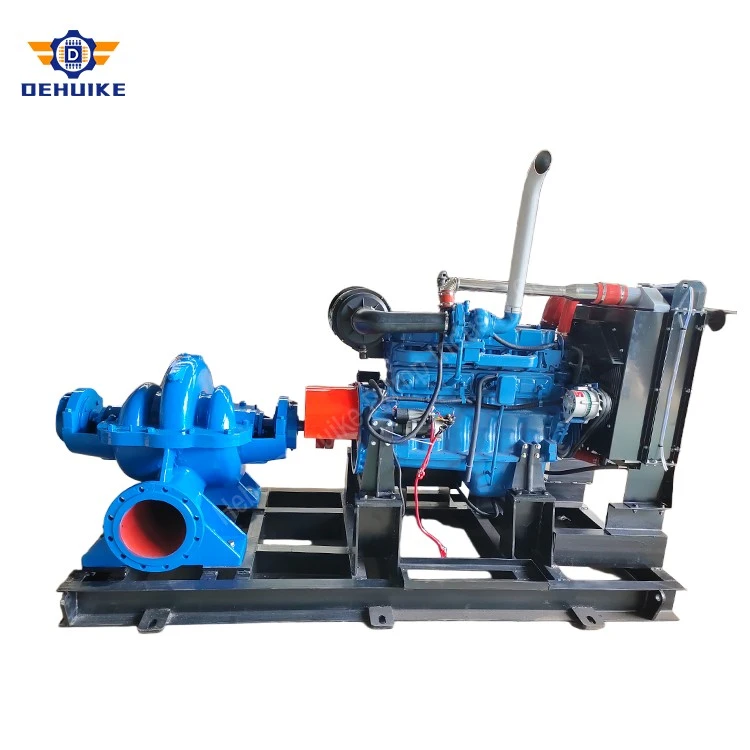
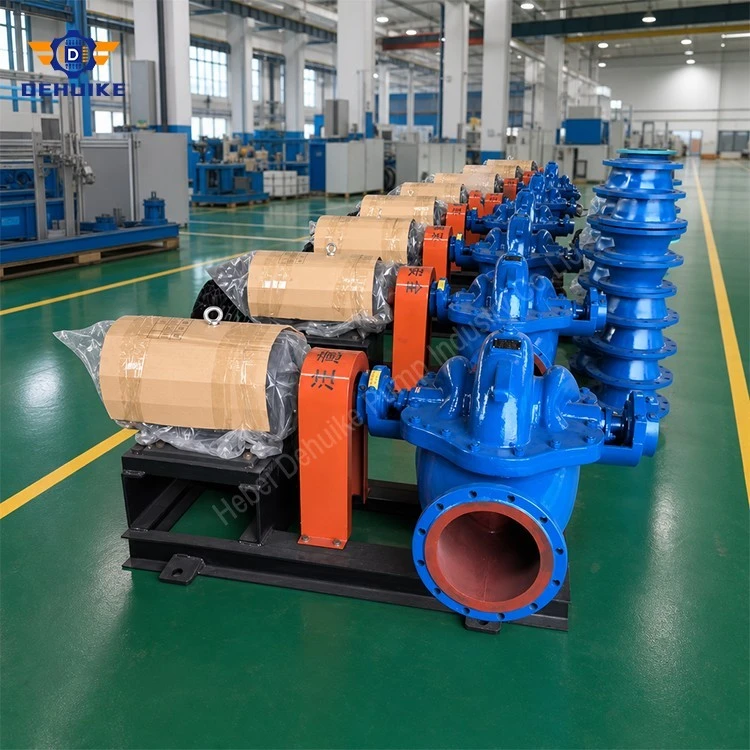
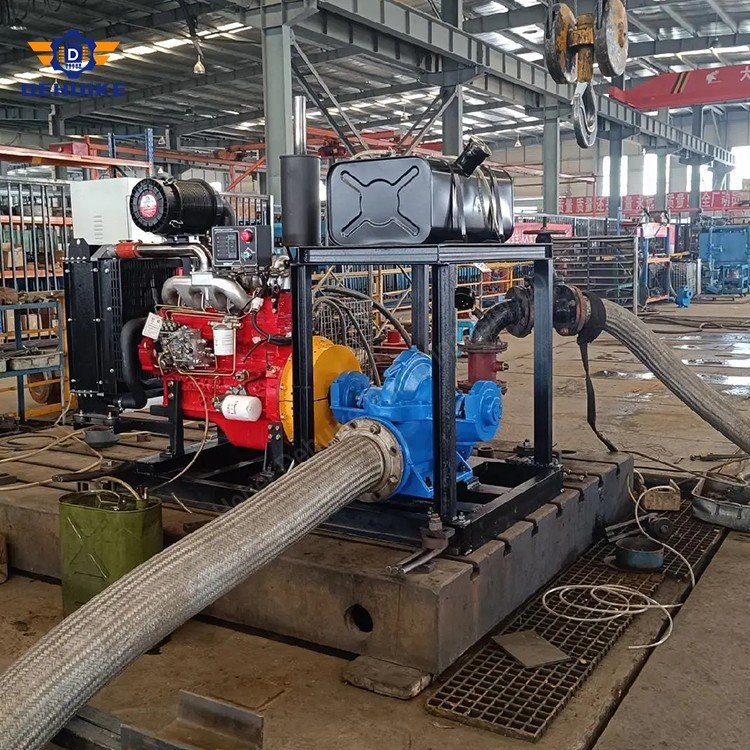
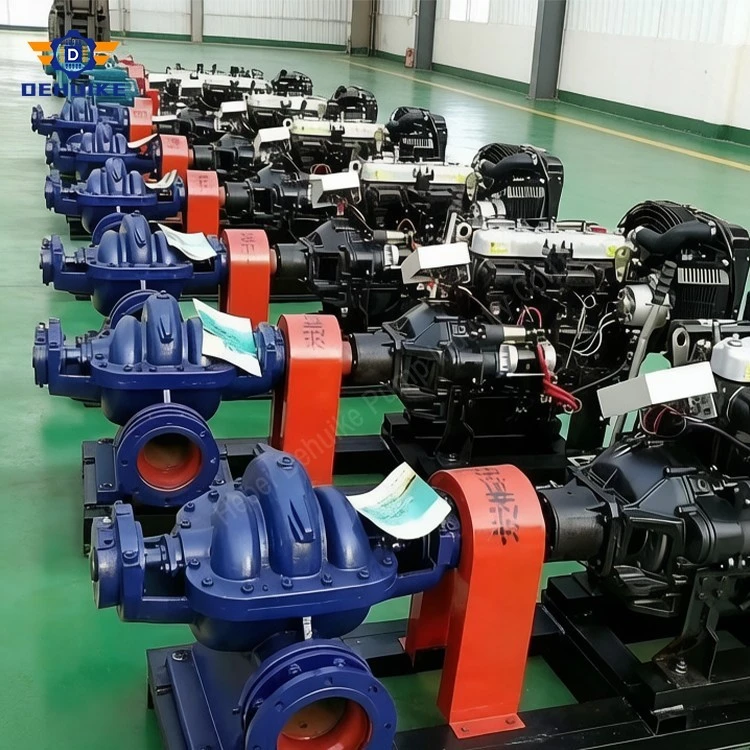
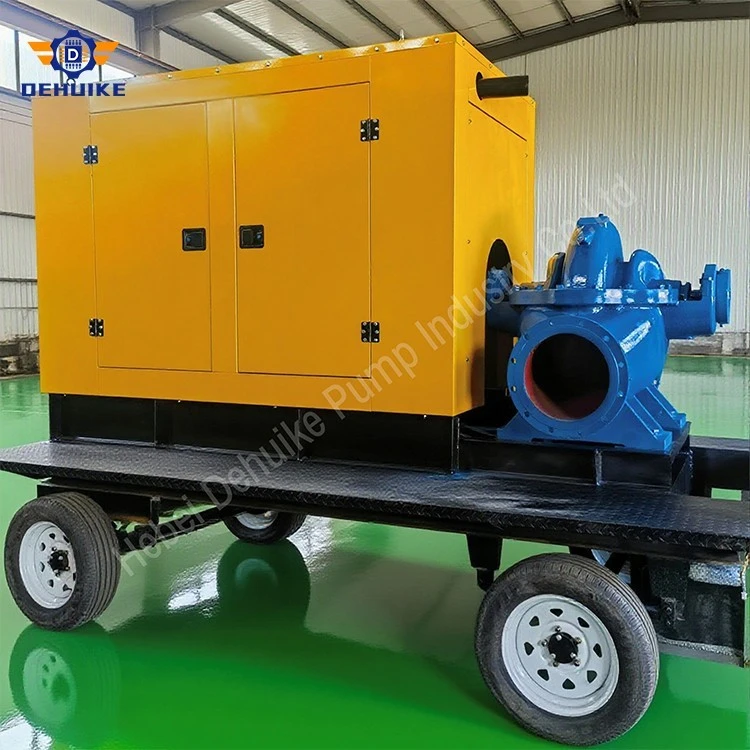
Hebei Dehuike Pump Industry Co., Ltd. is one of the most reliable manufacturers and suppliers of split case water supply pump in China. With abundant experience, we are committed to providing high quality customized pumps with competitive price. Welcome to wholesale bulk split case water supply pump for sale here from our factory. Also, pricelist is available.
Introduction
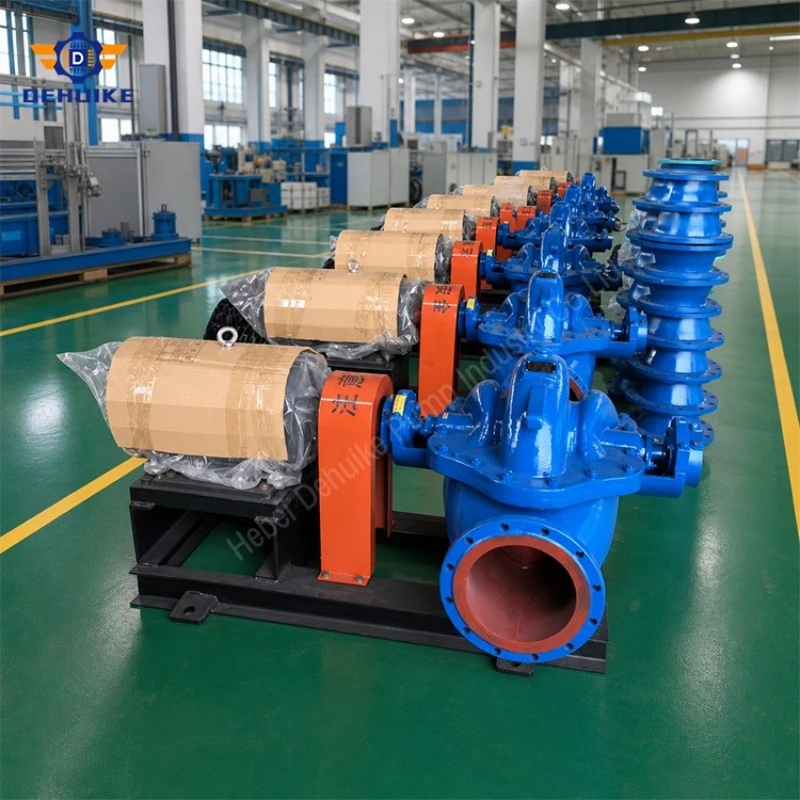
Every quotation for a double suction pump carries two model numbers, and buyers usually pick whichever one looks more familiar. A row reads "6Sh-6 / 150S78", another "10Sh-13 / 250S24", another "32Sh-9 / 800S76". They are not two alternative pumps. They are the same pump described by two different naming conventions, and once that is understood the second half of the number stops looking arbitrary.
The old Sh code names the inlet bore and the class of impeller: 6Sh means a 6-inch inlet, and the figure after the dash identifies the bowl family. The S code names the inlet bore and the rated head: 150S78 is a 150 mm inlet pump rated at 78 m. So 6Sh-6 and 150S78 are one machine seen from two angles. The useful part is that the dash number, ignored by almost every buyer, tells you what shape the impeller is - and that shape governs everything the performance table shows.
What the class number describes
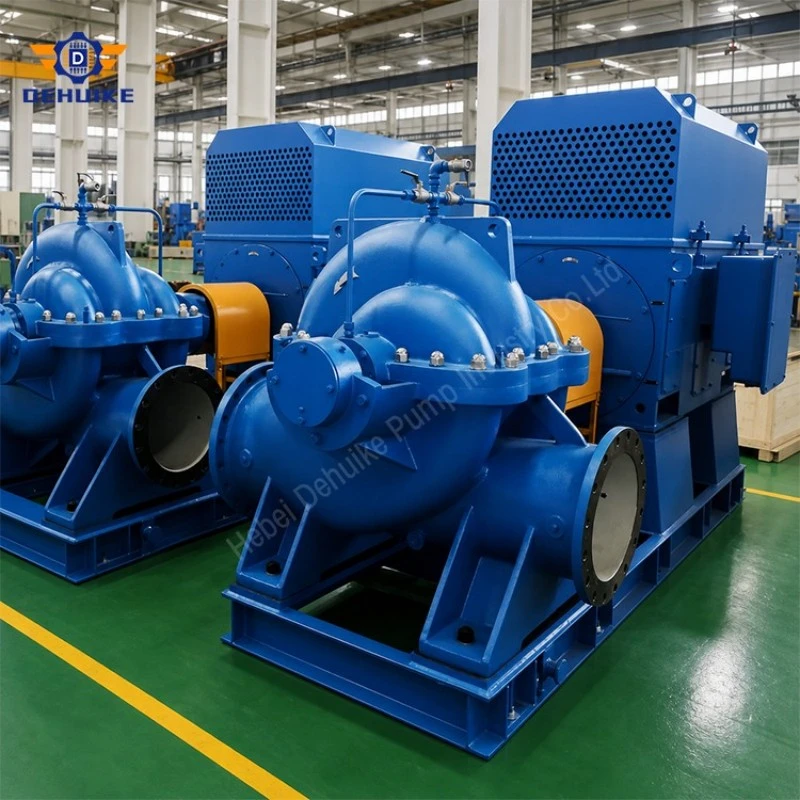
The bowl family is defined by how much head it develops for a given flow and diameter, and that ratio is what hydraulic engineers call specific speed. A low-class bowl is narrow, deep and radial: it takes a small flow and turns it through a long passage into high head. A high-class bowl is wide and open: it takes a large flow through a short passage and develops comparatively little head. Both fit the same inlet bore, and both are "double suction" pumps, but the water inside them travels very differently.
This is why one inlet size appears at several heads. A 6-inch inlet covers 6Sh-6 at 78 m and 6Sh-9 at 47.6 m; a 10-inch inlet covers 10Sh-6 at 65 m, 10Sh-9 at 38.5 m and 10Sh-13 at 23.5 m. The inlet is the same; the bowl is a different design, usually with a different impeller diameter in the same casing. The table below shows that clearly: at 10Sh, 486 m³/h is delivered at three heads by impellers of 460, 367 and 296 mm.
Table 1 One flow, three bowls: 486 m³/h at 10-inch inlet
|
Model |
Head (m) |
Impeller (mm) |
Efficiency |
NPSHr (m) |
Shaft power (kW) |
|
10Sh-6 / 250S65 |
65.1 |
460 |
79% |
4.0 |
109 |
|
10Sh-9 / 250S39 |
38.5 |
367 |
83% |
4.0 |
61.5 |
|
10Sh-13 / 250S24 |
23.5 |
296 |
86% |
4.0 |
36.2 |
Efficiency follows the bowl, not the size
The efficiency column is the part that surprises buyers. Three pumps of the same inlet size, delivering the same 486 m³/h, are quoted at 79, 83 and 86 per cent - a seven-point spread that at 100 kW of shaft power is 7 kW, and at 8,000 hours a year is enough to justify a careful look at the selection.
The reason is the ratio of useful head to lost work. A high-head bowl pushes the water through a long, narrow passage at high velocity, so friction and recirculation losses are a larger share of the energy it adds, and each stage of that passage has to be sealed against leakage across a smaller flow. A low-head bowl moves a large flow through a short, open passage where the velocity is lower and the wetted losses are proportionally smaller. Within the same casing family the low-head bowl is simply a more efficient way to move water, provided the head it develops is the head the system needs.
The corollary is the mistake this table exists to prevent: buying the 65 m bowl for a 24 m duty and throttling the discharge to take up the difference. That converts a 79 per cent machine into a 60-something per cent one running far from its design point, with recirculation in the casing and a valve absorbing the energy the pump just added.
Suction performance is not automatic
The textbook expectation is that a wider, low-head bowl also sucks better, because the water enters the eye at a lower velocity and the blades are less loaded. The catalogue does not always agree, and the honest reading of the data is instructive: the 8-inch models quote 5.0 m NPSHr for 8Sh-9 at 46 m and 6.4 m for 8Sh-13 at 41.3 m, even though the second bowl is the lower-head one. Eye geometry, blade inlet angle and the casing around the eye all move the number, and they do not move it in one direction.
For a buyer the consequence is simple: the NPSHr figure belongs to the specific model, not to the class, and it is quoted at the rated flow. A bowl chosen for its efficiency can still be the wrong choice if the available suction margin is thin, and on a cooling-water or irrigation installation with a long suction line, that is the constraint that decides the model.
The power curve decides the driver
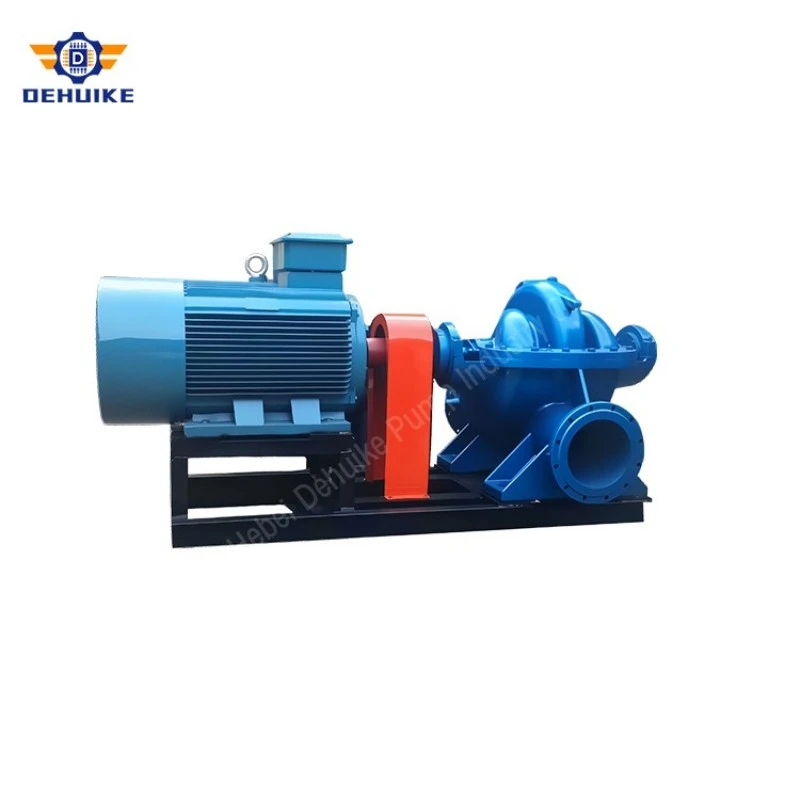
The shape of the bowl also sets what happens to shaft power as flow moves away from the rated point, and this is where a driver gets destroyed. At the high-head end of the family, power tends to flatten or fall as flow increases, so a driver sized for the duty point has margin everywhere on the curve. At the low-head, high-flow end, power keeps rising with flow: the pump absorbs more as it is pushed past its rating, and the driver, the coupling and the motor protection all have to be sized for the maximum flow the system can ask for, not the rated point.
The practical case is a low-head bowl on a system whose static head is lower than assumed, or a discharge valve that is opened further than intended. The pump runs out along its curve, the current climbs, and the overload trips - or worse, the motor runs hot for months without tripping. On a fire or cooling duty where the flow is tested at 150 per cent of rating, this is not a hypothetical: the driver has to be checked at that point, and a low-head bowl with a duty-point-sized motor will fail the check.
Stability at part load
Bowl class also affects how the pump behaves when the demand falls. High-head, narrow bowls have a head-flow curve with a steep rise towards shutoff, which gives good pressure stability but a small stable window: the pump is comfortable near its design flow and increasingly unhappy as it is throttled, with recirculation at the impeller inlet and a rising vibration level. Wide, low-head bowls have a flatter curve, a wider stable band and better tolerance of varying demand, at the price of less pressure rise per unit of flow change.
In a distribution network with varying demand, the flat curve of a high-flow bowl is usually the better match, and it is why so many municipal pumps sit in the 9 to 19 class rather than the 6 class. In a cooling loop with a fixed resistance, either works, and the efficiency argument then dominates. The point is that the curve shape is a design choice already made by the bowl, and the buyer is selecting it along with the pump.
Speed is a fourth lever, and it changes the class
T
The same bowl run at a different speed behaves like a different pump. Flow changes in proportion to speed, head with the square of speed, and shaft power with the cube. Taking a 1,450 r/min machine to 970 r/min halves the head and reduces the power to roughly a third, which is why the tables carry the same nominal model at 2,900, 1,450, 970, 740 and 600 r/min. Slower running also cuts wear, because erosion and clearance growth scale strongly with velocity, so a slow bowl is the right answer for silt-laden irrigation water even when a faster one is cheaper.
What speed does not change is the bowl class: a 10Sh-9 at 970 r/min is still a 90-class bowl, with its efficiency and stability characteristics, just scaled down. If the duty calls for a fundamentally different relationship between flow and head, the bowl has to change, not the speed.
Table 2 What the class number buys and costs
|
Bowl class |
Impeller shape |
Efficiency at a given flow |
Power curve beyond rating |
Best fit |
|
Low class (6) |
Narrow, radial, high head |
Lower |
Flat or falling |
Fixed high-head duties, pressure stability |
|
Middle class (9) |
Balanced |
Good |
Rising slowly |
General water supply, cooling loops |
|
High class (13 to 19) |
Wide, open, low head |
Highest |
Rises with flow |
Variable demand, large flows, low static head |
Reading a quotation with this in mind
When a quotation lists two model numbers, the S code gives the head directly and the Sh code gives the class. Both are useful: the S number tells you whether the rated head matches the duty, and the Sh dash number tells you which bowl family you have been offered and therefore what efficiency and power curve to expect. A quotation that offers a 6-class bowl for a 24 m duty, or a 13-class bowl for a 90 m duty, is telling you something before the price is even read.
The second check is the impeller diameter. If two quotations for the same duty show different diameters in the same casing, one is likely a trimmed version of the other, and the A and B suffixes - 8Sh-6A, 32SA-19B - confirm it. A trim is a legitimate way to fine-tune a duty, but it should be applied to the bowl that is already close to the right class, not used to drag a high-head bowl down to a low-head duty.
Three questions from the quotation stage
Q: Is the higher class always the more efficient choice?
A: Only if the head it develops matches the system. A high-class bowl throttled back to a low head loses most of its advantage and adds recirculation. Efficiency is a property of the pump at its operating point, not of the model number.
Q: Can I compare a 10Sh-9 with a 250S39 directly?
A: They may be the same pump. The 250S39 designation gives a 250 mm inlet and a 39 m rated head, which is close to the 38.5 m of 10Sh-9 at 1,450 r/min. Confirm the rated flow, speed and impeller diameter before treating them as alternatives.
Q: Why does the datasheet NPSHr not follow the class rule?
A: Because the eye and the blade inlet are designed for the bowl, not derived from its class. Two bowls of similar class can differ by a metre, as the 8-inch models in the table do. Use the quoted figure for the exact model and check it at the flow the system will actually run.

Hot Tags: split case water supply pump, China split case water supply pump manufacturers, suppliers, factory