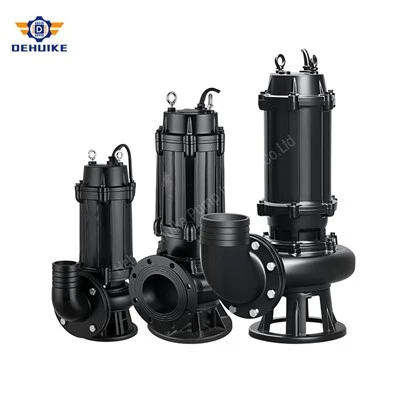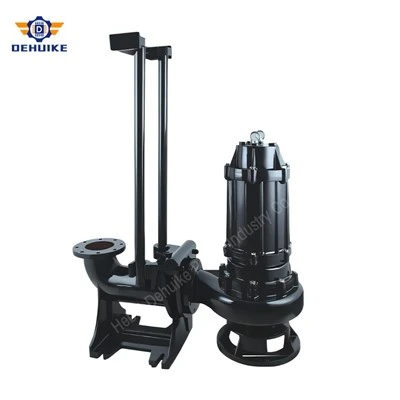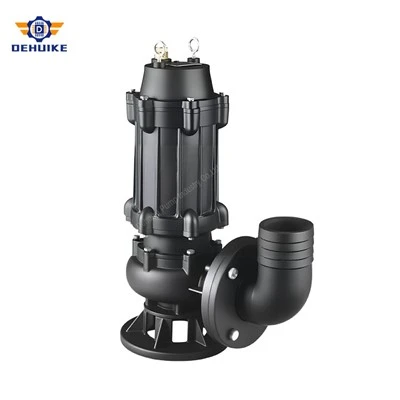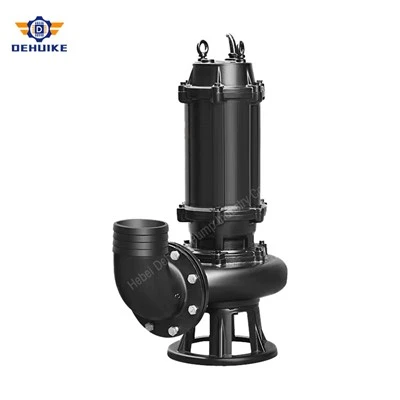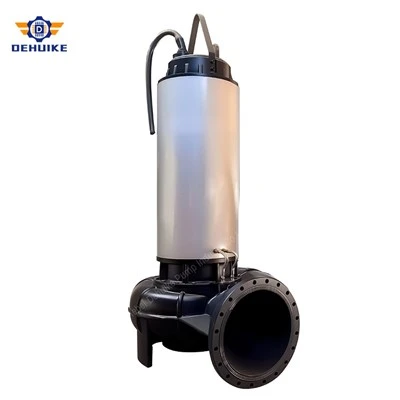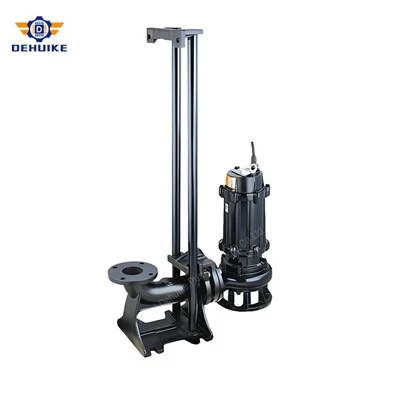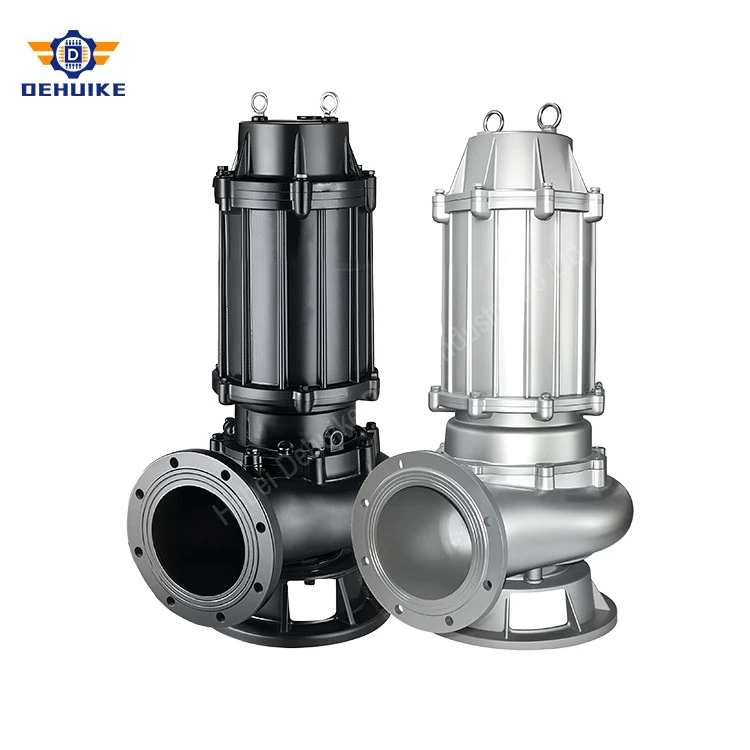
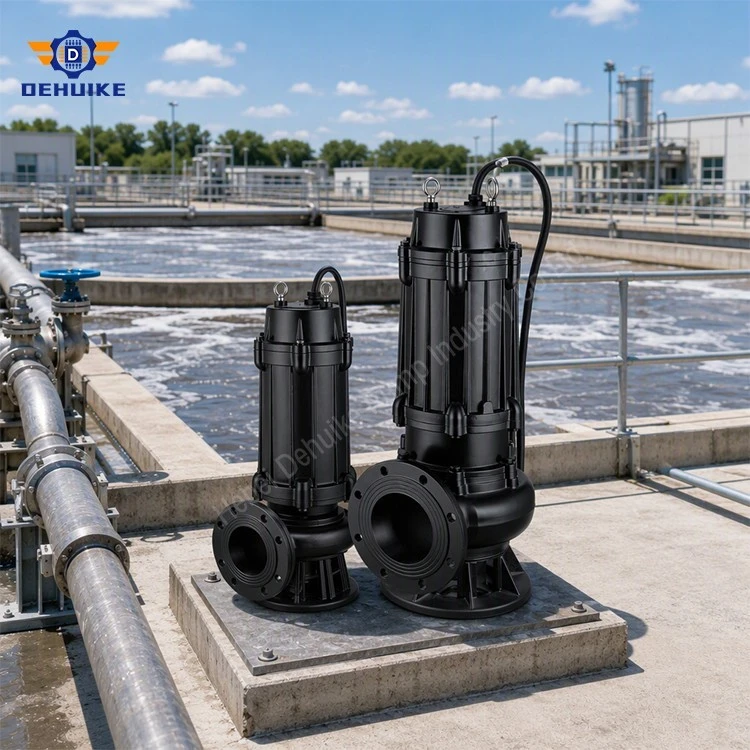
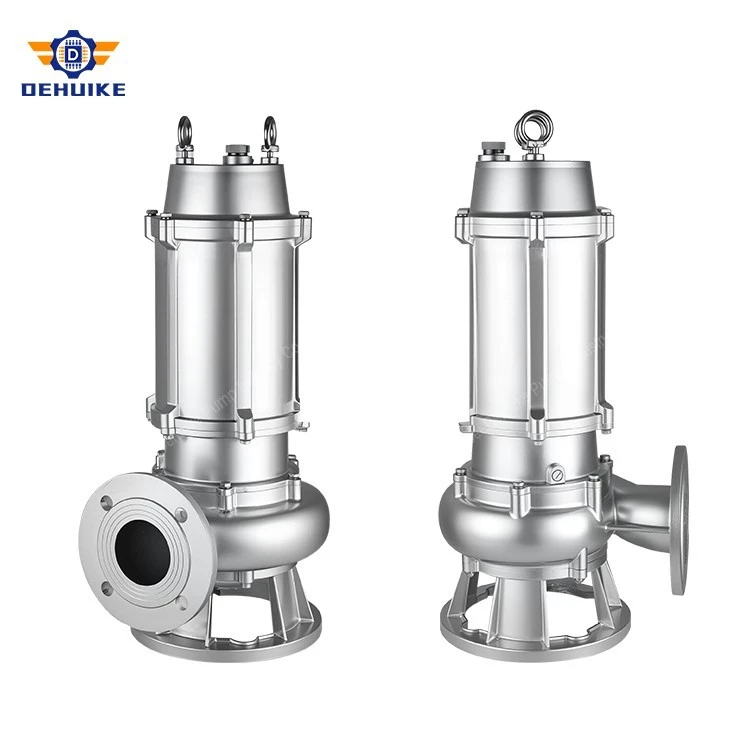
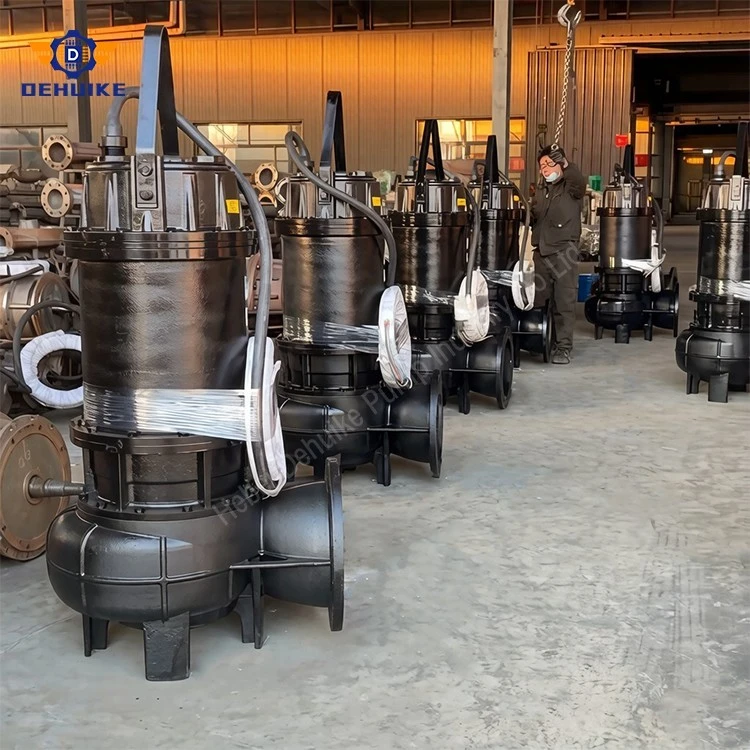
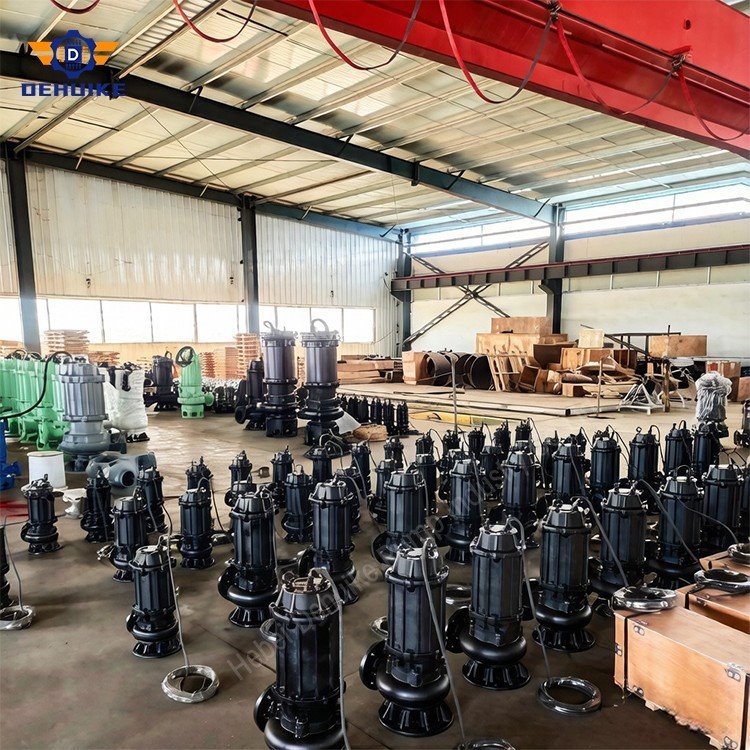
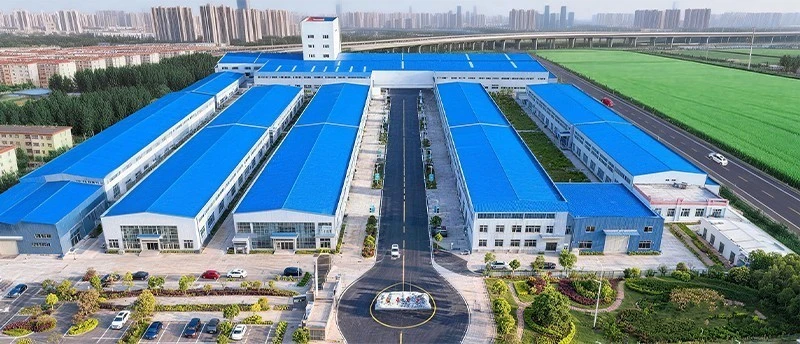
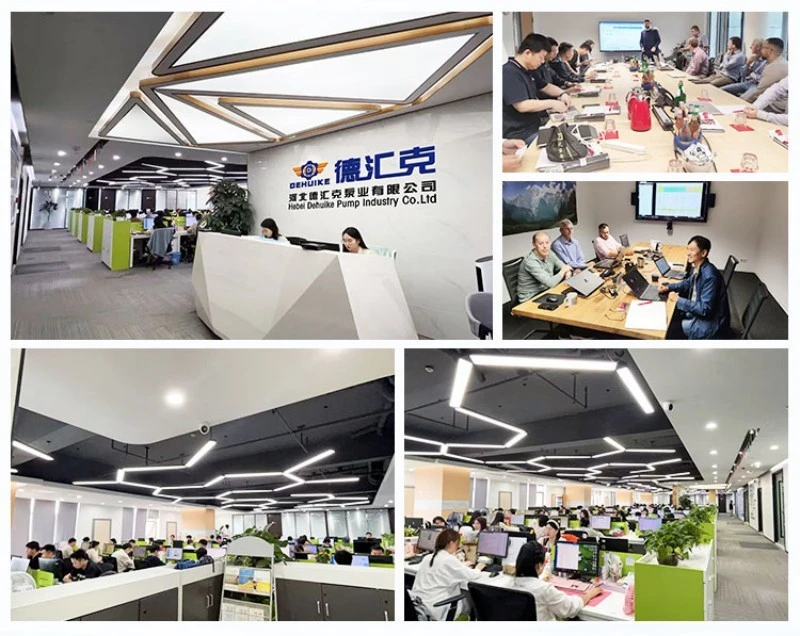
Hebei Dehuike Pump Industry Co., Ltd. is one of the most reliable manufacturers and suppliers of stainless steel submersible sewage pump in China. With abundant experience, we are committed to providing high quality customized pumps with competitive price. Welcome to wholesale bulk stainless steel submersible sewage pump for sale here from our factory. Also, pricelist is available.
Chemical Corrosion Mechanisms and Passive Film Dynamics
A stainless steel submersible sewage pump is engineered for demanding fluid applications where conventional cast iron or carbon steel pumps suffer catastrophic premature degradation from chemical oxidation, localized pitting, acidic attack or caustic decomposition. In severe chemical wastewater sumps, municipal landfill leachate ponds and industrial process washdown pits, standard pearlitic iron dissolves rapidly due to low pH values, concentrated chloride ions or dissolved oxidizers. The core operational advantage of a stainless steel submersible sewage pump lies in its spontaneous metallurgical passivation mechanism.
Passivation occurs when the alloy contains a minimum of 10.5% chromium by mass, allowing oxygen in the fluid to react with chromium atoms at the wet metal boundary to form a microscopically thin, self-healing chromium oxide (Cr2O3) passive barrier. This impermeable oxide film isolates the base iron matrix from direct electrolyte contact, preventing ongoing galvanic ion exchange. If mechanical abrasion from suspended solids scratches this surface, dissolved oxygen in the wastewater immediately re-oxidizes the exposed metal, instantaneously regenerating the barrier film without requiring external chemical inhibitors.
Uniform corrosion barrier. In acidic or alkaline media with uniform pH profiles across the sump volume, the stainless steel submersible sewage pump maintains a low, predictable general corrosion rate, typically measured below 0.05 mm per operating year, preserving casing wall thickness and structural pressure margins.
Pitting resistance in chloride environments. Chloride ions present in coastal sewage, brine or chemical wash water represent an aggressive threat to passive films. By incorporating molybdenum into the alloy matrix (such as in grade 316 and 316L stainless steel), the localized Pitting Resistance Equivalent Number (PREN) rises significantly, preventing destructive pinhole perforations.
Crevice corrosion mitigation. Under stationary O-ring seals, bolt washers and flange gaskets, stagnant fluid can become deoxygenated, inhibiting passive film replenishment. Selecting molybdenum-bearing stainless steel and specifying smooth, precision-machined seal faces prevents localized micro-crevice starvation.
Intergranular corrosion resistance. When standard stainless steels are welded or cast without rapid cooling, chromium carbides precipitate along austenitic grain boundaries, leaving adjacent zones depleted of corrosion-resistant chromium. Utilizing low-carbon variants (designated by the "L" suffix with carbon content below 0.03%) eliminates carbide precipitation, ensuring robust structural integrity along all weld seams and casing junctions.
Analyzing these distinct corrosion modes enables plant chemical engineers to choose an optimized stainless steel submersible sewage pump matched to the chemical concentration, oxidizing potential and operational temperature of their wastewater.
Austenitic and Duplex Stainless Steel Metallurgy Matrix
Selecting the appropriate metallurgical formulation for a stainless steel submersible sewage pump requires careful balancing of chemical resistance, mechanical tensile strength, weldability, erosion resistance and capital expenditure. No single grade of stainless steel serves every industrial environment. Specifying an overly basic alloy leads to early corrosive attack, while over-specifying exotic super-alloys inflates project costs unnecessarily. Plant designers must evaluate fluid chemistry against established metallurgical classifications.
Austenitic stainless steels, characterized by their face-centered cubic (FCC) crystal lattice, represent the most widely deployed alloys for submersible sewage pumping machinery. The inclusion of nickel stabilizes the austenite phase at room temperature, imparting excellent ductile toughness, non-magnetic characteristics and superior fabrication properties. Where high mechanical stress, extreme chloride levels or abrasive sand particles coexist with corrosive acids, duplex stainless steels provide a specialized alternative.
Primary alloy grades utilized in submersible sewage pump construction:
- AISI 304 / CF8 (1.4301 / 1.4308): The standard 18/8 austenitic stainless steel (18% Cr, 8% Ni). Ideal for mildly corrosive commercial effluent, light industrial washdown, commercial kitchens and municipal stormwater containing low chloride concentrations (below 200 ppm at ambient temperature). Offers an economical balance of corrosion resistance and structural strength.
- AISI 316 / CF8M (1.4401 / 1.4408): Molybdenum-enhanced austenitic stainless steel (16-18% Cr, 10-14% Ni, 2-3% Mo). The primary material of choice for industrial chemical sumps, pharmaceutical wastewater, coastal lift stations and municipal wastewater containing chloride levels up to 1000 ppm. The molybdenum addition drastically elevates resistance to pitting and crevice corrosion.
- AISI 316L / CF3M (1.4404 / 1.4409): Extra-low carbon version of grade 316 (carbon limited to max 0.03%). Essential for heavy welded assemblies and precision investment castings subject to thermal stress, preventing sensitisation and intergranular corrosion along wetted fluid paths.
- Duplex 2205 / CD3MN (1.4462): A mixed 50/50 ferritic-austenitic microstructure combining 22% Cr, 5% Ni, 3% Mo and 0.16% N. Delivers nearly double the yield strength of austenitic 316L combined with a PREN rating above 35. Specially specified for mining pit dewatering, seawater desalination reject brine and abrasive slurry containing aggressive chemical compounds.
- Super Austenitic 904L / Alloy 20: High-nickel, high-molybdenum formulations containing added copper. Deployed in extreme chemical environments involving dilute sulfuric acid, phosphoric acid manufacturing and high-temperature organic chemical wastes.
Matching fluid parameters to this metallurgy matrix ensures the stainless steel submersible sewage pump provides decades of continuous service without unpredicted casing thinning or catastrophic impeller blade erosion.
Sanitary, Food-Grade and Chemical Effluent Compliance
Industrial food processing facilities, beverage bottling plants, pharmaceutical manufacturing suites and biotechnology fermentation complexes generate wastewater streams subject to stringent hygiene, regulatory and environmental oversight. In these environments, an ordinary cast iron sewage pump represents a biological and regulatory contamination hazard. Porous cast iron casings harbor bacterial biofilms, while iron oxidation flaking can contaminate clean-in-place (CIP) drainage systems. A stainless steel submersible sewage pump provides an inert, non-reactive fluid transfer interface fully compliant with international sanitary standards.
Food and dairy effluents frequently alternate between hot, greasy organic wastewater and aggressive chemical cleaning cycles. Facilities employ CIP procedures utilizing 2% to 5% hot sodium hydroxide (caustic soda) solutions at 70°C to 85°C to dissolve fats, immediately followed by dilute nitric acid or phosphoric acid flushes to remove mineral scale. A pump deployed in these drain collection basins must withstand alternating high-pH alkaline boiling solutions and low-pH acidic rinses without surface embrittlement or elastomer degradation.
Food safety and hygiene compatibility. Stainless steel is biologically non-porous and easy to sanitize, preventing microbial growth and bacterial colonization in wastewater sumps adjacent to food production zones. Surfaces do not impart metallic odors, tastes or heavy metal ions into the process drainage.
Pharmaceutical washdown resilience. Active pharmaceutical ingredient (API) synthesis generates solvent-laden wastewater containing ethanol, isopropanol, acetone and acidic catalysts. Grade 316L stainless steel provides complete organic solvent compatibility without polymer leaching.
Regulatory compliance alignment. Materials and surface contact integrity align with major food contact and hygiene frameworks, such as US FDA 21 CFR standards for sanitary materials and European Regulation (EC) No 1935/2004 for materials intended to come into contact with food effluents.
Chemical processing effluent handling. In textile dyeing mills, paper pulp bleaching and electroplating rinse tanks, wastewater carries aggressive dyes, chlorine dioxide and metallic salts. The stainless steel submersible sewage pump safely transfers these hazardous mixtures to neutralized treatment ponds.
By specifying certified stainless steel construction, facility managers eliminate regulatory compliance citations while maintaining reliable, highly durable wastewater transfer with extended service intervals under harsh sanitary washdown regimes.
High-Temperature Effluent Handling and Thermal Dissipation
A frequent cause of failure in standard submersible wastewater pumps deployed in industrial washing, brewery brewing and boiler blowdown sumps is high liquid temperature. Standard submersible motors rely on ambient fluid temperatures below 40°C to absorb heat dissipated by the submerged stator. When introduced into industrial wastewater reaching 60°C, 70°C or up to 90°C during boiler drainage or CIP dump events, standard motor insulation degrades exponentially, thermal overload switches trip persistently, and internal bearing lubricants break down prematurely.
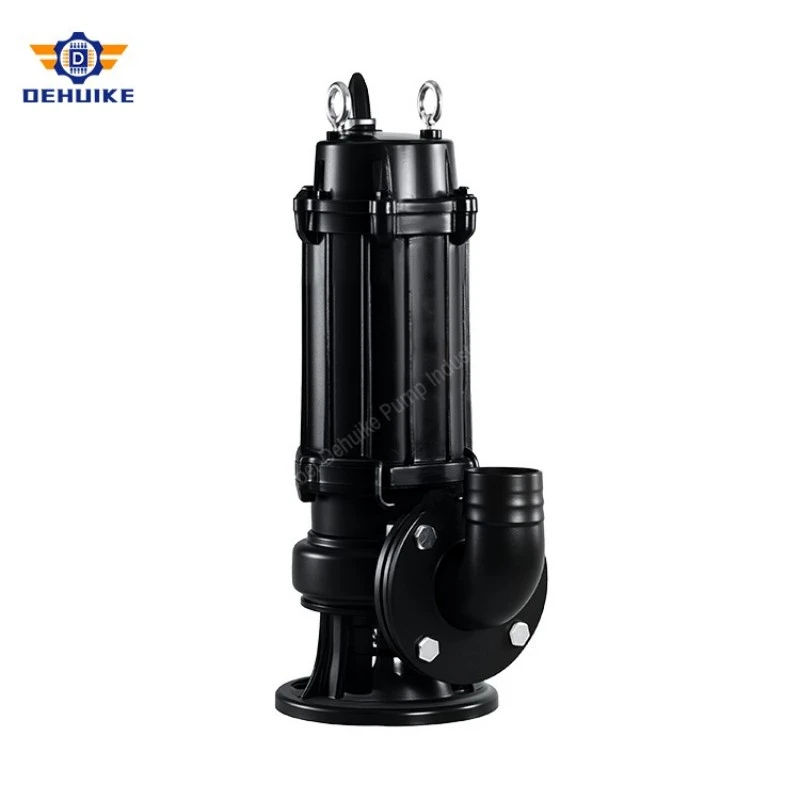
A high-temperature stainless steel submersible sewage pump addresses these thermal stresses through specialized electromechanical engineering. The complete rotating assembly, internal mechanical clearances and motor cooling circuit are re-calibrated to accommodate elevated steady-state temperatures without mechanical binding or insulation breakdown.
Key high-temperature engineering adaptations:
- Stator winding insulation upgrading: The motor stator is rewound using Class H or Class N high-temperature enamelled copper wire and impregnated with high-thermal-index solvent-free silicone or epoxy resins, rated for continuous operation at 180°C to 200°C winding temperatures.
- Differential thermal expansion compensation: Austenitic stainless steels exhibit a coefficient of thermal expansion approximately 30% to 50% higher than carbon steel or cast iron. Precision CNC bearing fits, impeller shroud running clearances and mechanical seal sleeve tolerances are engineered with expanded cold clearances that normalize into optimal running dimensions at 70°C to 90°C fluid temperatures.
- High-temperature bearing lubrication: Standard lithium-based greases liquify and bleed out above 60°C. High-temperature synthetic polyurea or fluorosilicone lubricants, rated for service up to 180°C, ensure continuous hydrodynamic film thickness across all deep-groove ball bearing raceways.
- Internal cooling jacket circuit: For installations where fluid levels drop during pumping cycles, leaving the motor partially exposed in hot steam-filled sumps, an auxiliary internal closed-loop cooling jacket or forced fluid recirculation shroud actively conducts stator core heat outward.
These engineering enhancements allow the stainless steel submersible sewage pump to operate continuously in intermittent boiling or high-heat wastewater sumps without thermal tripping or motor winding failure.
Stainless Steel Investment Casting and Electropolishing
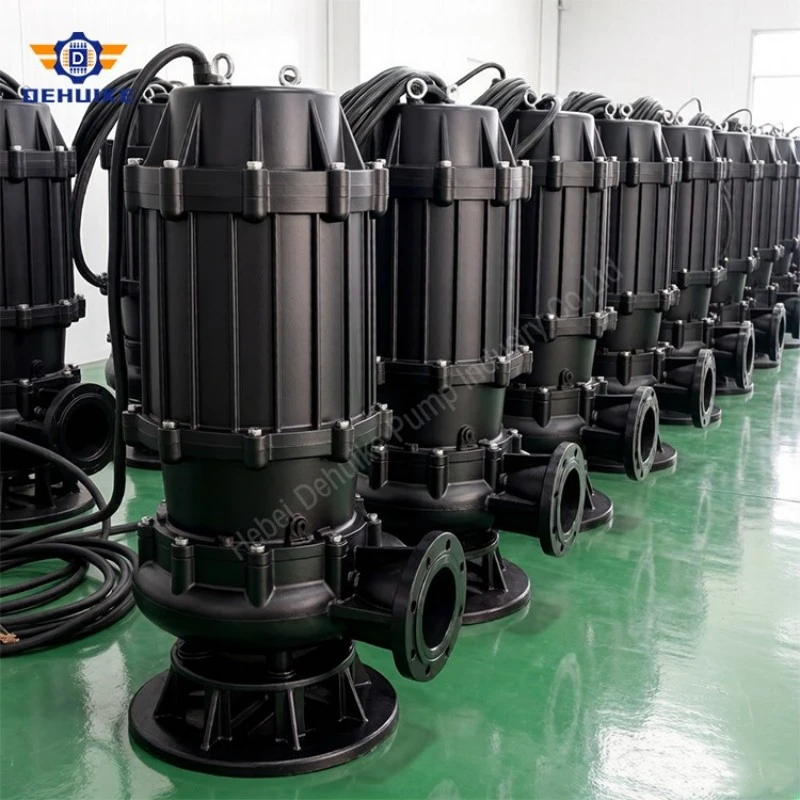
The structural integrity and hydraulic efficiency of a stainless steel submersible sewage pump depend fundamentally on foundry casting quality and metallurgical surface finishing. Unlike soft grey iron that pours easily at relatively low melting temperatures, stainless steel alloys melt between 1400°C and 1450°C and exhibit high molten viscosity, high shrinkage rates and an intense affinity for atmospheric oxygen and nitrogen. Foundry excellence is essential to prevent internal shrinkage cavities, cold shuts and gas porosity.
To produce smooth, hydraulically optimized volute casings and impellers with complex hydrodynamic curvature, modern manufacturing employs silica-sol investment casting (lost-wax precision casting) and precision resin-bonded sand molding. Investment casting produces net-shape components with surface roughness values of Ra 3.2 to Ra 6.3 μm, eliminating rough surface irregularities that induce fluid boundary layer separation and localized turbulence.
De-oxidation and inert gas shielding. Induction melting furnaces utilize argon bottom-stirring and precise de-oxidation additives to eliminate dissolved gases. Pouring under controlled temperature envelopes prevents macroscopic macro-inclusions that could initiate fatigue cracking in pressurized casings.
Solution annealing heat treatment. Following casting, all 304 and 316 series components undergo full solution annealing at 1050°C to 1100°C followed by rapid water quenching. This critical metallurgical process forces all precipitated chromium carbides back into solid solution within the austenite matrix, completely restoring maximum corrosion resistance across all thick and thin casting sections.
Precision CNC multi-axis machining. Annealed casings, motor housings and seal brackets are machined in single-setup computer numerical control (CNC) horizontal machining centers. Bearing journals and mechanical seal bores are held to IT6/IT7 precision with concentricity under 0.015 mm, eliminating shaft deflection.
Electropolishing and chemical pickling. All wetted stainless steel surfaces undergo chemical pickling in hydrofluoric-nitric acid baths to strip high-temperature weld scales, followed by electrochemical electropolishing. Electropolishing microscopically levels the metal surface down to Ra 0.4 to Ra 0.8 μm, removing microscopic micro-crevices and enriching the outer surface layer with chromium, boosting corrosion resistance.
This advanced manufacturing workflow ensures that every stainless steel submersible sewage pump delivers pristine hydraulic surfaces, optimal energy conversion and long-term chemical resilience.
Chemical-Resistant Dual Mechanical Seals and FKM Elastomers
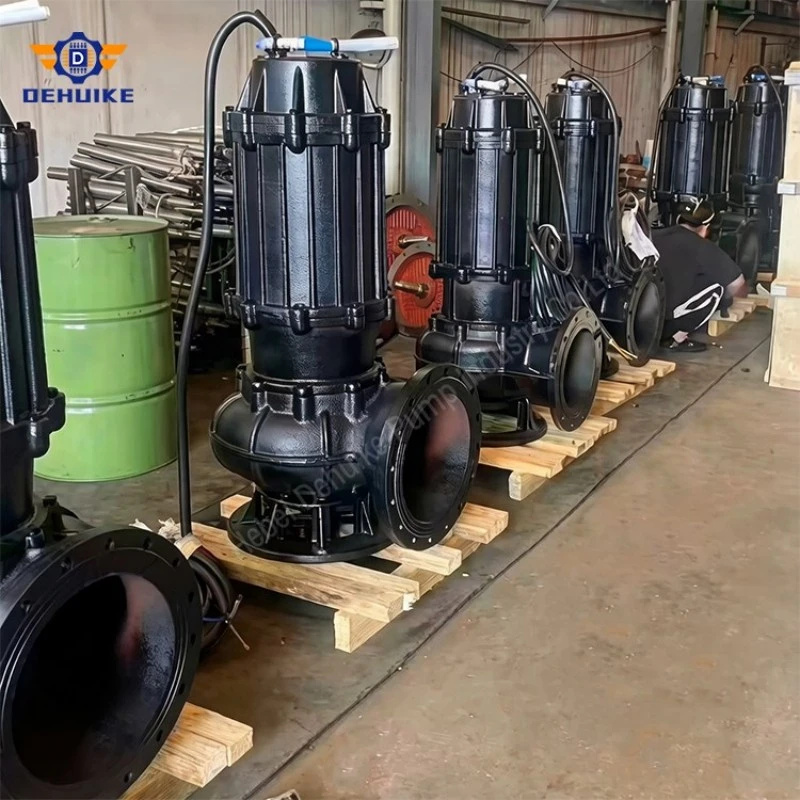
The mechanical shaft seal represents the primary boundary protecting the high-voltage electric motor from the corrosive fluid pumped by a stainless steel submersible sewage pump. If aggressive chemical wastewater penetrates the seal faces, the copper motor windings and carbon steel rotor core will corrode instantly, causing ground faults and total motor destruction. In corrosive applications, standard carbon-versus-ceramic seals and nitrile (NBR) O-rings deteriorate within weeks. A specialized chemical sealing system is mandatory.
A premium stainless steel submersible sewage pump utilizes a dual mechanical seal arrangement installed in tandem inside an independent, barrier-fluid oil chamber. Both the upper and lower seals are engineered with chemically inert friction pairs and high-grade fluororubber elastomers, ensuring total chemical isolation under high pressure.
Key chemical seal design components:
Silicon Carbide vs. Silicon Carbide (SiC/SiC) friction faces: The lower seal, exposed directly to corrosive, abrasive wastewater, features reaction-bonded or sintered silicon carbide against silicon carbide. Silicon carbide exhibits extreme hardness (exceeding 2200 HV) combined with nearly universal chemical inertness across pH 0 to 14, resisting scratching from silica grit and chemical attack from concentrated acids.
Tungsten Carbide vs. Tungsten Carbide (TC/TC) options: For severe slurry applications containing heavy physical solids and chemical effluent, nickel-bound tungsten carbide faces provide high fracture toughness to resist mechanical shock loads.
Fluororubber (FKM / Viton®) elastomeric O-rings: Standard Buna-N rubber degrades rapidly when exposed to hydrocarbons, organic solvents and acidic liquids. FKM elastomers provide superior chemical resistance, thermal stability up to 200°C and low compression set, preserving hermetic joint integrity across all casing split lines and cable glands.
Perfluoroelastomer (FFKM / Kalrez®) custom trims: For extreme chemical applications involving highly oxidizing acids, hot aromatic solvents or aggressive amines, perfluoroelastomer O-rings are available to provide universal chemical resistance.
Dielectric barrier fluid and moisture sensors: The intermediate oil chamber is filled with medical-grade food-safe white mineral oil or synthetic ester fluid that lubricates the seal faces without contaminating process effluent in sanitary facilities. An optical or conductivity moisture probe detects early liquid ingress into the oil chamber, triggering a maintenance alarm before moisture reaches the motor.
This redundant, chemically resistant sealing architecture guarantees that the electric drive unit remains completely isolated from the most aggressive wastewater environments.
Galvanic Corrosion Prevention and High-Salinity Brine
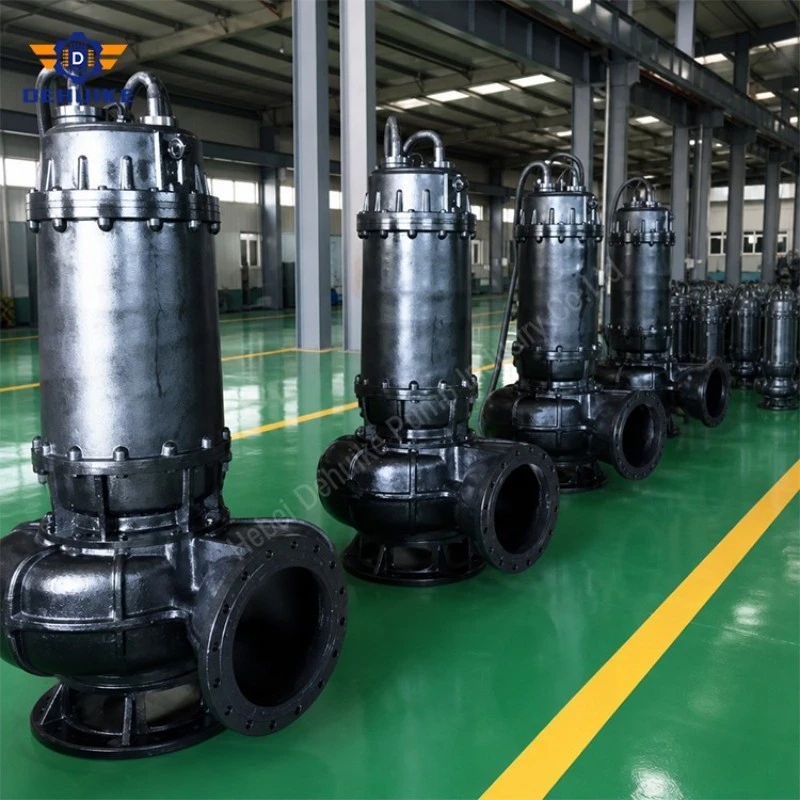
High-salinity wastewater-such as seawater intake streams, reverse osmosis (RO) desalination reject brine, aquaculture drainage and marine port bilge water-presents dual challenges of intense chloride pitting and rapid galvanic corrosion. Salt concentrations ranging from 35,000 ppm (standard seawater) to 70,000 ppm (concentrated RO brine) destroy standard iron machinery through rapid electrochemical cell activity. While a stainless steel submersible sewage pump is naturally suited to these duties, successful long-term installation requires strict control over galvanic potential differences.
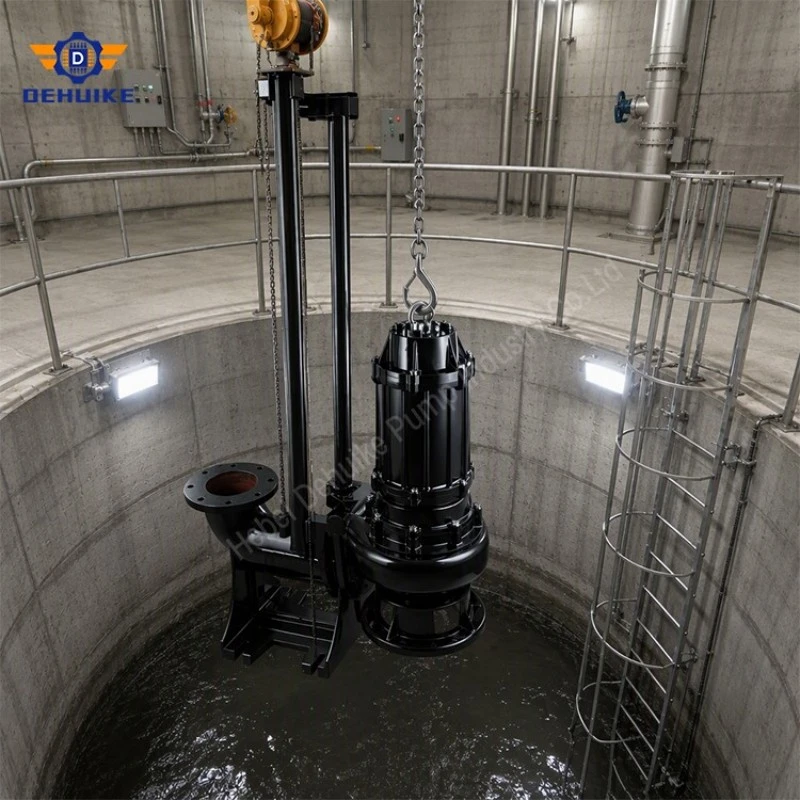
Galvanic corrosion occurs whenever two dissimilar metals are electrically connected in the presence of an electrolyte (such as salt water). If a stainless steel pump (a cathodic, noble metal) is connected to standard mild steel discharge pipes, cast iron duckfoot pedestals or carbon steel guide rails, the less noble carbon steel will act as an anode and corrode at an accelerated rate, causing guide rails to collapse or discharge elbows to perforate.
Total metallurgy isolation. In saline and brine installations, all submerged station components-including the auto-coupling discharge pedestal, guide rail pipes, upper support brackets, lifting chains and mounting fasteners-must be fabricated from the same grade of stainless steel (304, 316 or Duplex) as the pump casing, eliminating galvanic couples.
Dielectric insulation kits. Where the stainless steel pump discharge must connect to existing ductile iron or carbon steel surface piping above the water line, dielectric insulating flange kits (featuring non-conductive phenolic or PTFE gaskets, insulating bolt sleeves and isolation washers) break the electrical circuit between dissimilar metals.
Sacrificial anode cathodic protection. For extreme seawater environments where oxygen levels fluctuate, replaceable zinc or aluminum sacrificial anodes are mounted on the exterior pump housing. The sacrificial anode corrodes preferentially, providing active cathodic protection that maintains passive film stability on the stainless steel casing.
Avoidance of stagnant brine conditions. Stagnant, de-aerated salt water depletes oxygen, creating high vulnerability to crevice corrosion. Sump geometry and control cycling must ensure regular brine turnover and fluid circulation around the pump housing.
Applying these electrochemical mitigation strategies ensures the stainless steel submersible sewage pump operates reliably in high-salinity marine and desalination environments.
Corrosion-Resistant Engineering Checklist and Verified WQ Rated Duty Data
When preparing project specifications, public tenders or commercial procurement requests for a stainless steel submersible sewage pump, mechanical consulting engineers and procurement managers must establish clear technical parameters. Specifying simply "stainless steel pump" without defining metallurgy, fluid chemistry and operating duty invites non-compliant quotations. Procurement teams should complete the following technical checklist to ensure optimal equipment matching:
|
Procurement Parameter |
Technical Specification Requirement |
Engineering Evaluation Focus |
|
Stainless Steel Alloy Grade |
AISI 304 (CF8) / AISI 316 (CF8M) / AISI 316L (CF3M) / Duplex 2205 (CD3MN) |
Match alloy PREN rating to fluid chloride concentration, acid/alkali profile and pH range. |
|
Fluid Temperature & Solids |
Operating temperature (°C), peak temperature, specific gravity, suspended solids % |
Determine if Class H motor rewind, cooling jacket or high-temp synthetic grease is required. |
|
Chemical Fluid Composition |
Full chemical analysis: acid type, dissolved oxidizers, organic solvent %, pH range |
Verify chemical compatibility of wetted metals, mechanical seal faces and O-ring elastomers. |
|
Mechanical Seal Trims |
Silicon Carbide vs. Silicon Carbide (SiC/SiC) or Tungsten Carbide (TC/TC) |
Select chemical-resistant seal friction pairs with FKM (Viton®) or FFKM elastomeric O-rings. |
|
Submerged Hardware Material |
Guide rails, auto-coupling base, lifting chain, bolts in matching 304 or 316 |
Ensure 100% metallurgy compatibility to prevent severe galvanic corrosion. |
|
Electrical Supply & Cables |
Operating voltage, frequency, phase, heavy-duty EPR/CPE chemical-resistant cable |
Verify cable outer jacket material resists swelling or cracking under solvent contact. |
|
Factory Inspection & Testing |
ISO 9906:2012 Grade 2B/1B hydraulic performance test, hydrostatic pressure test |
Request certified Mill Test Certificates (MTC) and liquid penetrant inspection (PT) reports. |
Verified WQ Series rated hydraulic duty models (Base platform for stainless steel fabrication)
The following engineering table features the remaining unused verified models extracted from the official factory technical workbook, representing heavy-duty high-flow and high-head WQ hydraulic platforms available for stainless steel casting and fabrication (including large-diameter 250 mm to 500 mm models, alongside standard small-bore comparison units):
|
Model |
Out. mm |
Q m³/h |
H m |
kW |
r/min |
η % |
kg |
L×W×H mm |
|
50WQ25-10-1.5* |
50 |
25 |
10 |
1.5 |
2900 |
67 |
60 |
300×225×605 |
|
65WQ37-13-3* |
65 |
37 |
13 |
3.0 |
2900 |
60 |
80 |
388×270×710 |
|
80WQ40-15-4* |
80 |
40 |
15 |
4.0 |
2900 |
57 |
90 |
400×268×710 |
|
100WQ100-22-15* |
100 |
100 |
22 |
15.0 |
1450 |
61 |
280 |
630×420×1050 |
|
150WQ140-18-15* |
150 |
140 |
18 |
15.0 |
1450 |
73 |
300 |
575×460×1100 |
|
250WQ600-25-75 |
250 |
600 |
25 |
75.0 |
1450 |
71 |
1500 |
1120×760×1750 |
|
300WQ400-20-45 |
300 |
400 |
20 |
45.0 |
1450 |
74 |
1500 |
1110×900×1770 |
|
300WQ600-20-55 |
300 |
600 |
20 |
55.0 |
1450 |
73 |
1550 |
1110×900×1770 |
|
300WQ800-20-75 |
300 |
800 |
20 |
75.0 |
1450 |
75 |
1600 |
1110×700×1770 |
|
300WQ950-20-90 |
300 |
950 |
20 |
90.0 |
1450 |
76 |
1700 |
1110×700×1770 |
|
350WQ1200-18-90 |
350 |
1200 |
18 |
90.0 |
980 |
82.5 |
2000 |
1240×930×2140 |
|
400WQ1700-22-160 |
400 |
1700 |
22 |
160.0 |
980 |
83 |
2880 |
2130×1260×2620 |
|
500WQ2000-15-110 |
500 |
2000 |
15 |
110.0 |
980 |
83 |
2100 |
1350×990×2500 |
Hot Tags: stainless steel submersible sewage pump, China stainless steel submersible sewage pump manufacturers, suppliers, factory