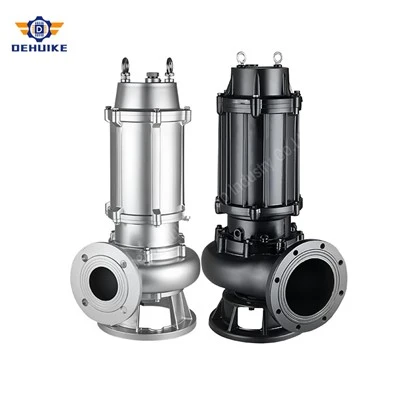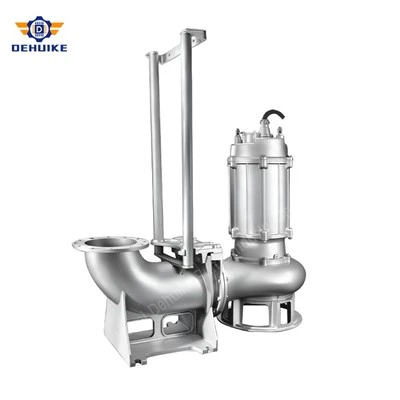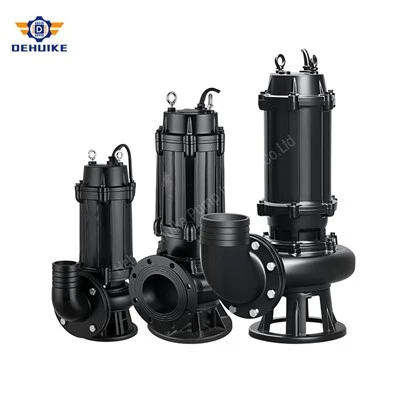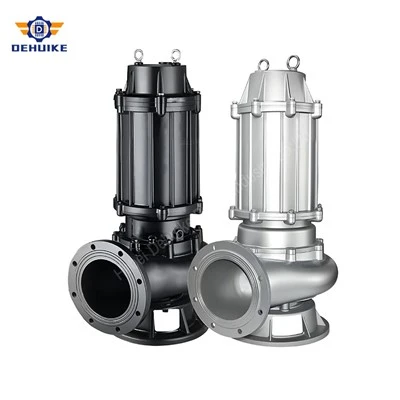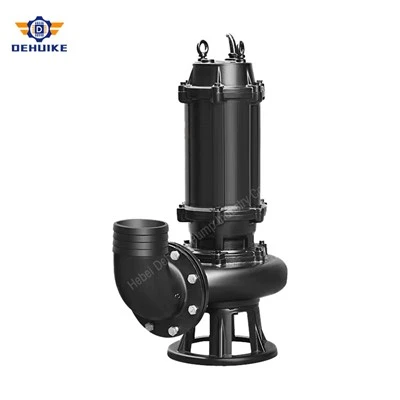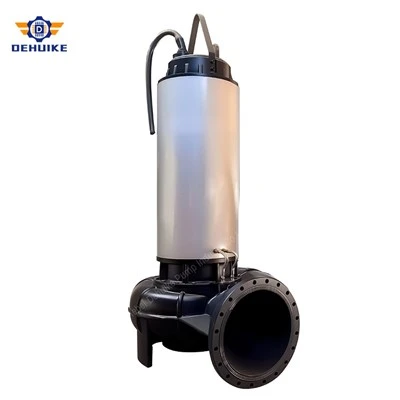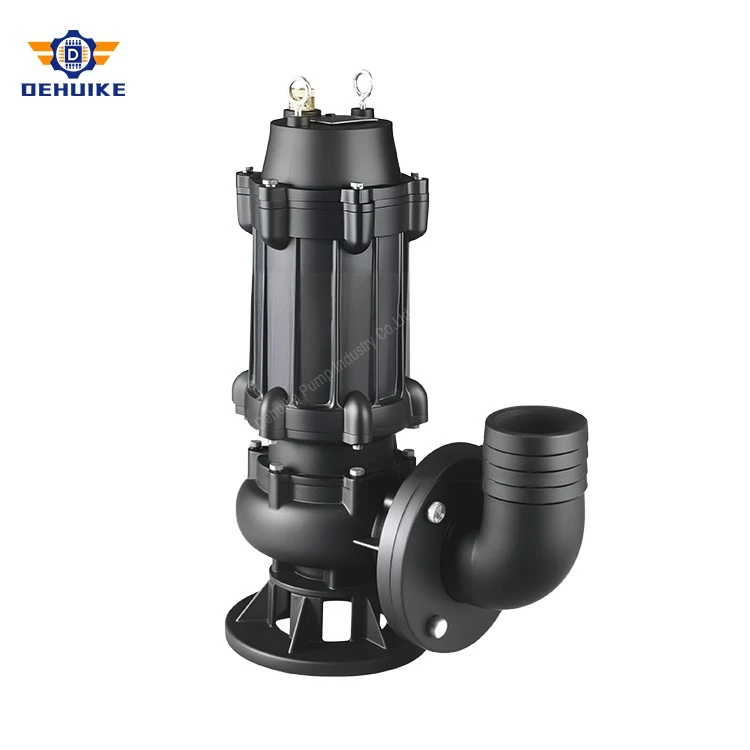
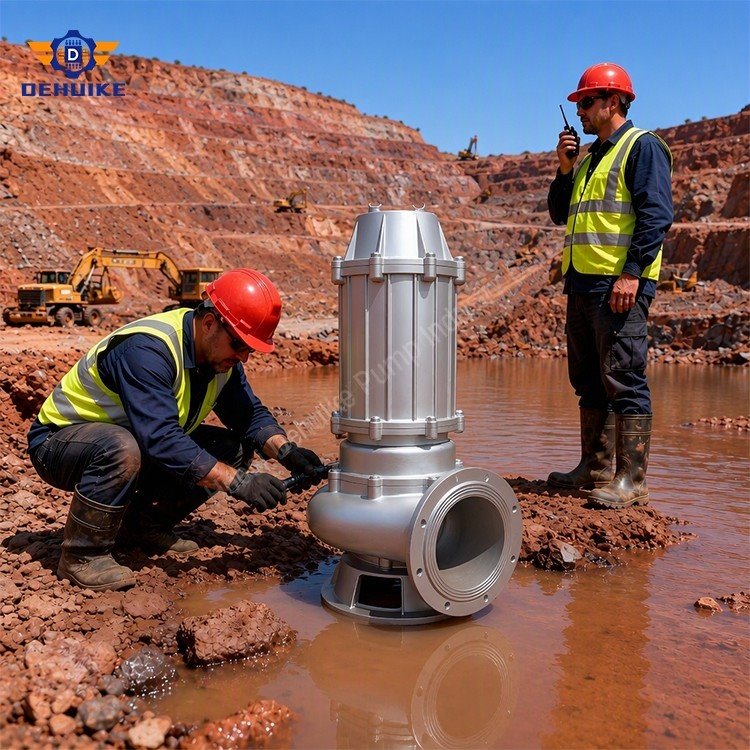
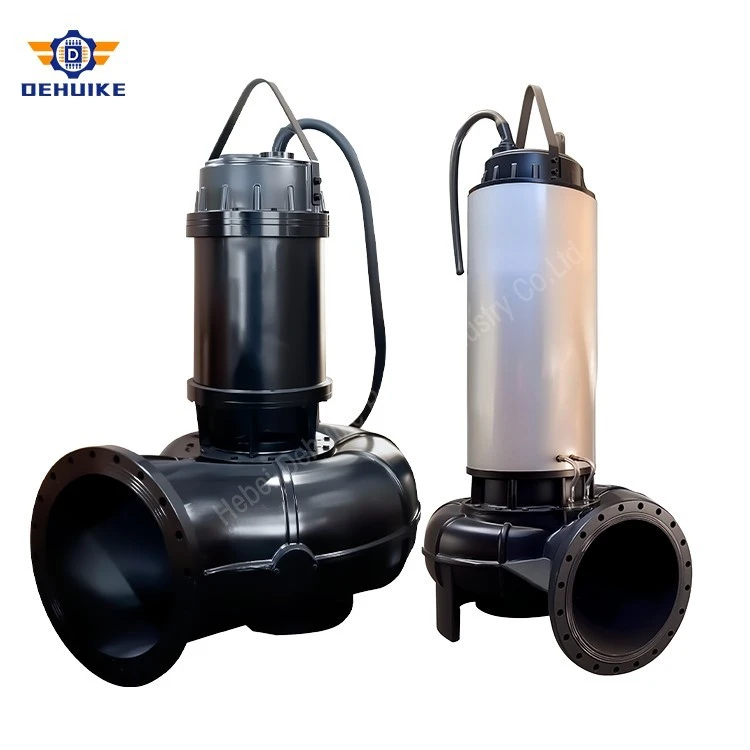
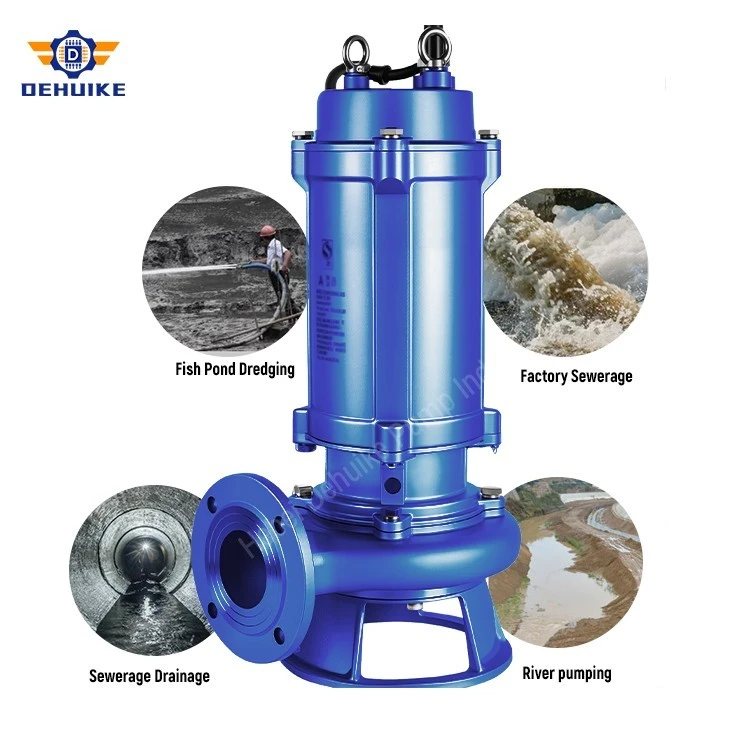
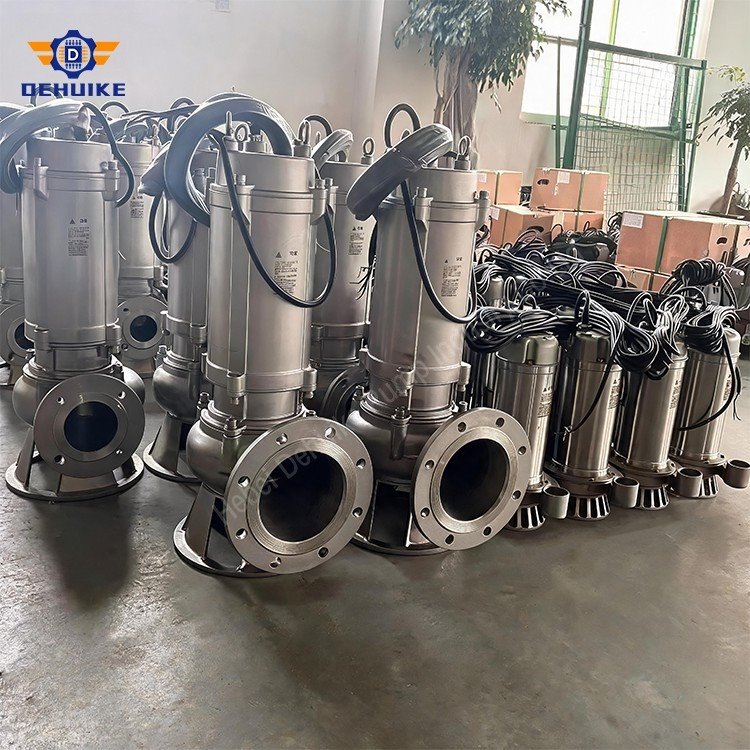
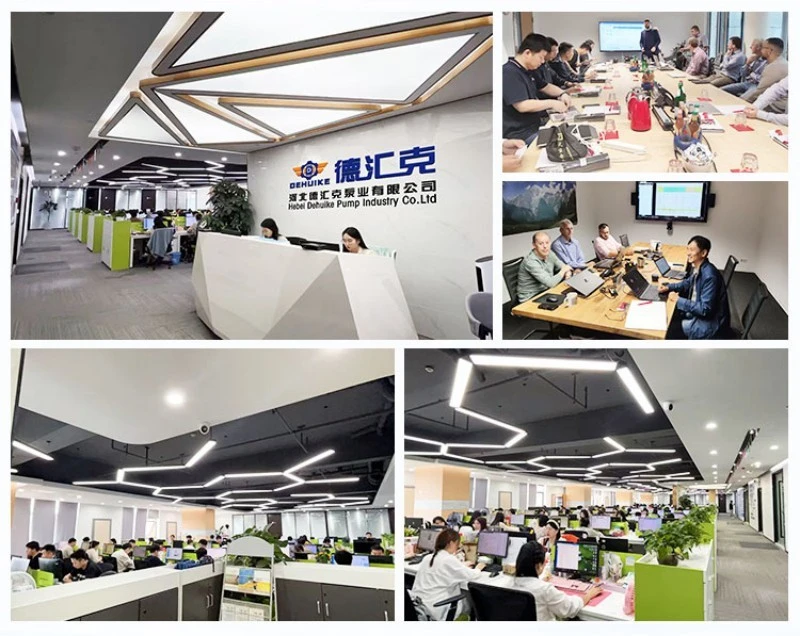
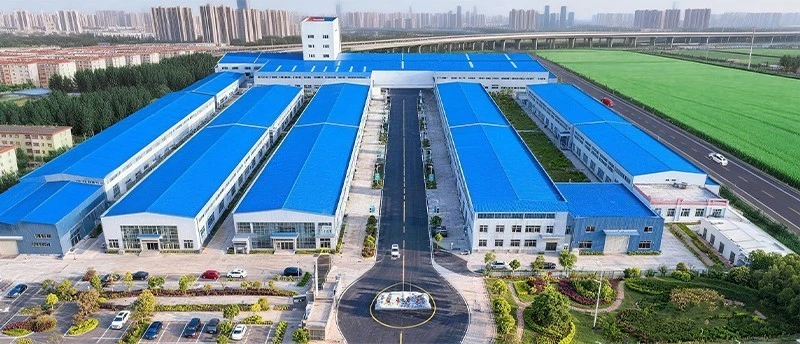
Hebei Dehuike Pump Industry Co., Ltd. is one of the most reliable manufacturers and suppliers of grinder submersible sewage pump in China. With abundant experience, we are committed to providing high quality customized pumps with competitive price. Welcome to wholesale bulk grinder submersible sewage pump for sale here from our factory. Also, pricelist is available.
Maceration Mechanics and Slurry Reduction Engineering
A grinder submersible sewage pump is designed for applications where raw domestic sewage, institutional wastewater or light industrial effluent must be transformed into a finely comminuted slurry before reaching the pump impeller. Unlike conventional non-clogging pumps that rely on large internal passages to pass whole solids intact, a grinder unit utilizes a high-torque rotating cutter working against a stationary shredding ring located immediately upstream of the hydraulic suction entrance. The physical objective of this mechanism is volume reduction and mechanical breakdown, rendering stringy textiles, plastics, wipes and fibrous solids into fine particulates typically below 6 mm to 9 mm in length.
When fibrous materials enter a conventional sewage wet well, their tendency to agglomerate into ropes or blankets presents severe operational risks. In low-flow gravity channels, these aggregates settle and cause localized blockages. When passing through a grinder submersible sewage pump, dynamic shearing forces reduce the macro-structure of the waste into dispersed fragments. These fine particles remain stably suspended in the conveying fluid, behaving rheologically more like a homogenous slurry than a heterogeneous two-phase mixture. This slurry transformation enables long-distance transport through significantly smaller pipe diameters without the risk of immediate gravity settlement.
High-velocity shearing action. The rotating cutter element features radial or spiral slicing edges that pass across corresponding shear slots in the stationary shredder plate. The relative cutting velocity, generated by the direct-coupled motor rotating at 1450 rpm or 2900 rpm, exerts concentrated mechanical shear that slices through synthetic fibers, rags and sanitary debris.
Controlled particle sizing. The radial clearance between the spinning cutter tip and the stationary bedplate determines the maximum fragment dimension that can enter the hydraulic suction eye. By restricting maximum particle size, downstream valves and small-diameter fittings are shielded from bridging.
Fluid mixing and dispersion. Beyond pure mechanical cutting, the rotational turbulence generated by the grinder head creates intense micro-vortices in the immediate suction zone. This hydrodynamic agitation disperses grease conglomerates and prevents fibrous mats from forming across the pump intake screen.
Energy consumption trade-off. Converting solids into fine slurry requires mechanical work. The shaft power demanded by the cutting phase must be factored into motor sizing alongside conventional hydraulic head and flow requirements, ensuring the unit maintains full rotational speed during heavy solids influx.
Understanding this reduction mechanism allows consulting engineers to select a grinder submersible sewage pump specifically for installations where solids breakdown delivers distinct civil and hydraulic advantages, rather than applying it indiscriminately where large-passage non-clog pumps are more cost-effective.
Pressurized Small-Bore Piping Integration
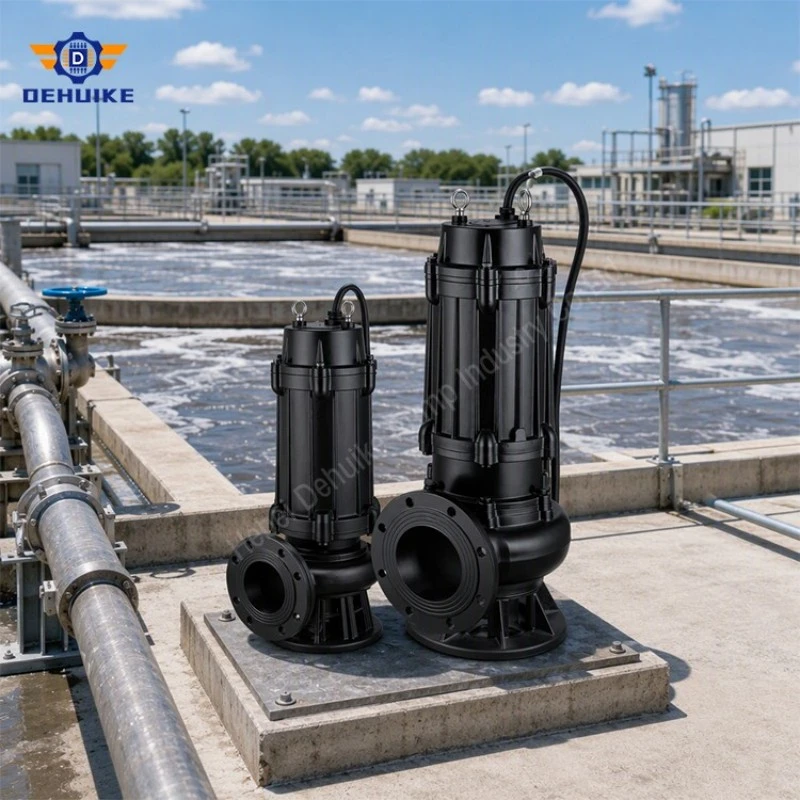
The primary economic and engineering rationale for installing a grinder submersible sewage pump is its ability to discharge into pressurized, small-diameter sewer networks. Conventional municipal gravity sewers require large pipes (typically DN150 to DN300 minimum) installed at precise downward gradients, necessitating deep trenches, extensive excavation and frequent intermediate lift stations. In undulating terrain, rocky ground or high-water-table regions, gravity civil works become prohibitively expensive. A pressurized grinder sewer system offers an efficient alternative by utilizing small-bore pipelines ranging from DN32 up to DN100.
Because the grinder submersible sewage pump macerates all incoming solids into fine slurry, the discharge can pass safely through 1.25-inch, 2-inch or 3-inch pressure mains without clogging valves or pipe transitions. Furthermore, small-diameter pipes maintain higher scouring velocities at lower volumetric flow rates. A scouring velocity of 0.7 m/s to 1.5 m/s can be achieved with modest pumping rates, continuously sweeping pipe walls clean and preventing sediment buildup. This hydraulic characteristic makes grinder pump networks ideal for rural sanitation, lakeside developments, highway service areas and commercial retrofits.
Key considerations in pressurized small-bore network design:
- System friction loss evaluation: Small-diameter pipes exhibit significantly higher friction losses per linear meter than large gravity lines. The grinder submersible sewage pump must be paired with sufficient developed head to overcome total dynamic head, including static elevation and accumulated line resistance.
- Air pocket and high-point venting: Pressurized sewer lines follow surface topography, creating intermediate high points where sewer gases can accumulate. Dedicated air-release valves designed for wastewater service must be installed at all summits to prevent air binding and localized pressure surges.
- Terminal connection and backpressure: When discharging into a regional force main or a municipal interceptor, the local pump must overcome the prevailing pressure of the shared header. Dual check valves and independent isolation must be specified to prevent backflow during idle periods.
- Piping material selection: High-density polyethylene (HDPE) with butt-welded joints is the standard material for pressurized grinder networks. Its smooth internal bore, corrosion resistance and flexibility reduce fitting counts and prevent chemical degradation from septicity.
By designing the piping network around the hydraulic delivery of a grinder submersible sewage pump, municipal authorities and private developers can reduce initial trenching costs while building a sealed, odor-controlled and flood-resilient wastewater infrastructure.
Grinder Radial-Axial Clearances and Self-Sharpening Dynamics
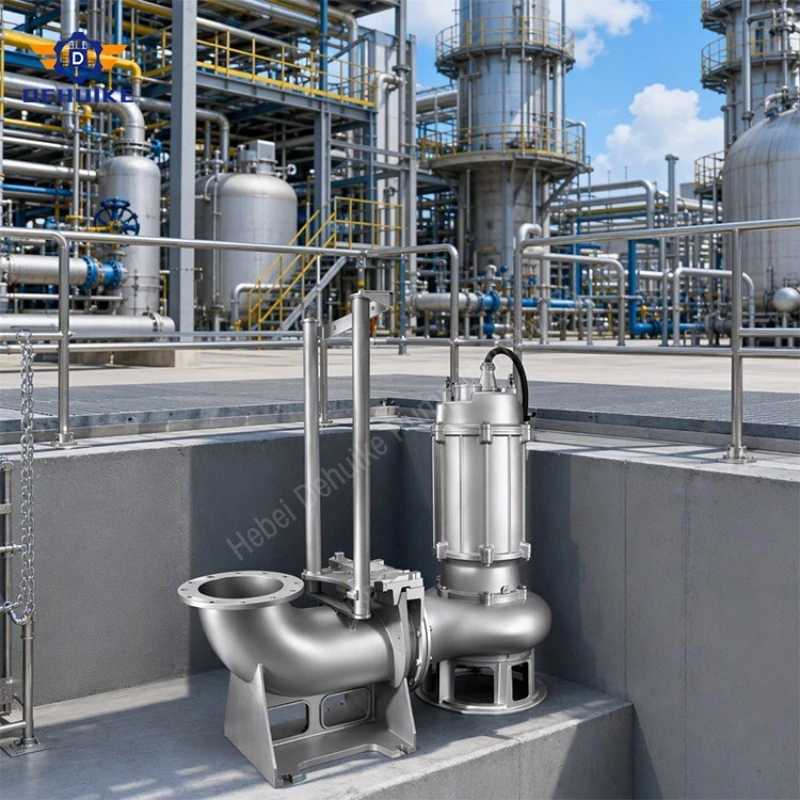
The sustained operational reliability of a grinder submersible sewage pump depends almost entirely on the dimensional precision of its cutter interface. The cutting assembly comprises a rotating cutter and a stationary cutter ring or plate. If the axial and radial clearances between these moving components are too wide, flexible fibers will not shear cleanly; instead, they will wedge into the gap, creating mechanical friction, motor overload and localized thermal buildup. Conversely, if the clearance is set with zero margin, direct metal-to-metal interference will cause immediate galling, accelerated wear and excessive power draw.
In standard engineering practice, the radial clearance between cutting edges is maintained within an exact window, typically between 0.05 mm and 0.15 mm, depending on the cutter diameter and metallurgical thermal expansion coefficients. Maintaining this tight tolerance under continuous submerged duty requires exceptional shaft stiffness, minimal bearing end-play and precise CNC machining of the pump lower housing spigots.
Axial clearance adjustment mechanism. High-performance grinder units incorporate an external or shimming adjustment mechanism that allows field technicians to re-establish the nominal cutting clearance as natural abrasive wear occurs over extended service, eliminating the need for premature component replacement.
Self-sharpening geometry. Advanced cutter designs utilize an angular relief profile on the stationary cutting slots. As the rotating edge shears against the slot perimeter, microscopic abrasive particles in the sewage act as a natural lapping agent, helping maintain sharp edge boundaries rather than rounding the tool faces.
Shaft deflection and bearing rigidity. When the cutter engages an unexpected tough object, it generates significant radial reaction forces. The pump shaft must exhibit high section modulus, supported by heavy-duty double-row angular contact ball bearings located immediately adjacent to the lower seal, keeping shaft deflection under 0.03 mm at the cutter face.
Thermal expansion accommodation. During prolonged continuous duty, motor heat transfer and friction can elevate component temperatures. The cutter metallurgy and clamping geometry must accommodate differential thermal expansion without pinching the running clearance.
Regular inspection of this interface is vital. By documenting clearance growth over scheduled preventive maintenance intervals, maintenance teams can anticipate cutter refurbishment long before the pump experiences an overcurrent trip caused by fibrous material bridging.
High-Inertia Motor Starting Torque and Thermal Sizing
Operating a cutting or grinding mechanism underwater presents unique electrical challenges. Starting a grinder submersible sewage pump under cold conditions or with semi-settled solids in the cutter plate demands substantial starting torque. A standard centrifugal pump motor sized solely for hydraulic fluid acceleration may stall if fibers are resting across the shredder teeth during energization. Consequently, grinder drive motors must be engineered with high breakdown torque and high locked-rotor torque margins, typically exceeding 200% to 280% of full-load torque.
Electrical supply characteristics directly dictate motor reliability in these demanding duties. Voltage drops across extended rural cables can degrade available starting torque exponentially, since induction motor torque varies with the square of the applied terminal voltage. Sizing calculations must confirm that starting voltage at the motor terminals does not dip below 90% of rated voltage during full locked-rotor draw.
Thermal management and protection strategy:
- Stator insulation and temperature rise: The motor winding should employ Class F or Class H insulation materials, designed to withstand continuous winding temperatures of 155°C to 180°C. Designing the motor with a conservative Class B temperature rise under rated load provides thermal buffer during cutting peaks.
- Submerged vs. dry-well cooling: While the pump is fully submerged, the surrounding wastewater acts as an infinite heat sink. However, in shallow wet wells or during low-level drawdown pumping, the upper motor casing may become exposed to air. For intermittent low-level duty, an internal cooling jacket circulating pumped fluid or oil-filled stator housing ensures effective heat dissipation.
- Thermal overload response curves: Thermal protection relays in the control panel must be coordinated with the motor's permissible locked-rotor withstand time (hot and cold). Fast-acting bi-metallic thermal switches or PTC thermistors embedded directly in the winding overhang detect localized hot spots before stator insulation degrades.
- Starting method selection: For units up to 7.5 kW, Direct-On-Line (DOL) starting provides maximum breakaway torque to clear settled debris. For larger motors (11 kW through 55 kW and above), Star-Delta or Soft-Starter configurations reduce line current surges, provided starting torque profiles are verified against cutter breakaway resistance.
Rigorous electrical coordination ensures that the grinder submersible sewage pump powers through transient solids surges without tripping supply breakers or suffering premature motor burnout.
Anti-Wrapping Geometry and Reverse-Pulse De-Strangulation
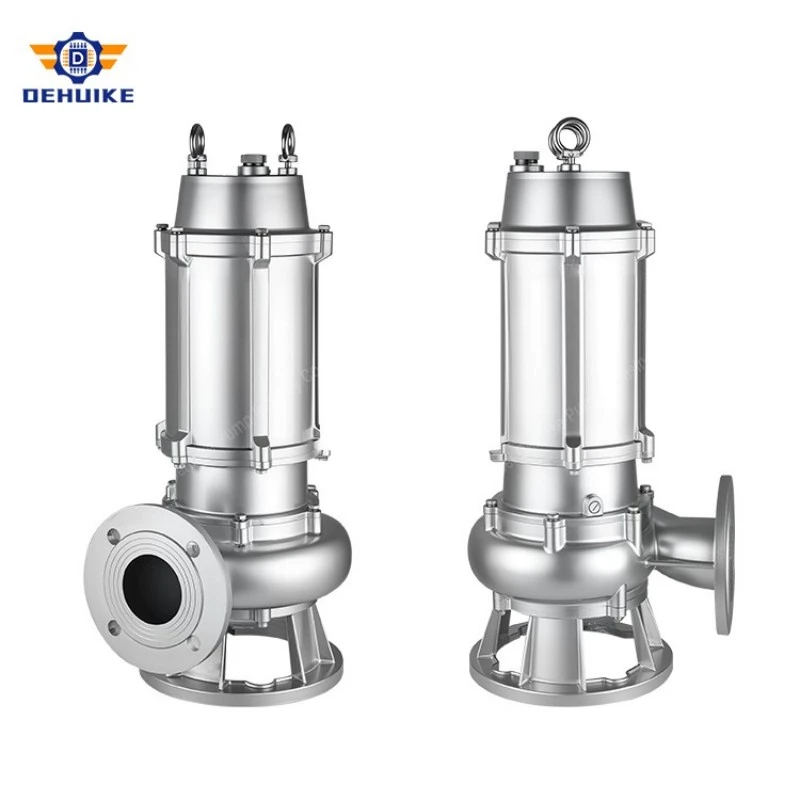
While the cutter shreds the majority of incoming materials, microscopic synthetic threads and elastic polymers can slip past cutting edges and seek rotating shafts, seal covers and impeller hubs. Over months of operation, flexible strands can tightly wrap around the cylindrical shaft sleeve, creating a compressed fibrous band that exerts radial pressure against the mechanical seal faces. This phenomenon, known as fibrous strangulation, is a leading cause of mechanical seal failure in untreated municipal sewage applications.
To combat this mechanism, modern grinder pump hydraulic ends feature anti-wrapping geometries. Shaft sleeves are protected by stationary labyrinth shrouds and radial deflector fins cast directly into the back of the impeller hub. These fins generate secondary outward centrifugal currents that actively flush fibers away from the seal cavity and drive them back into the main volute flow stream.
Stationary deflector grooves. The seal housing cover incorporates circular grooves that break continuous fibers into harmless segments before they can form unbroken loops around the rotating drive shaft.
Automatic reverse-pulse de-strangulation. Advanced intelligent control panels can be programmed with an automated anti-jam reversing cycle. If the motor current exceeds 120% of rated current for longer than two seconds, the control logic pauses the unit for 500 milliseconds and commands a brief reverse rotation for one to three revolutions. This momentary reverse motion unwinds trapped fibers and re-orients debris across the cutting teeth before resuming forward pumping.
Torque-sensing lockout logic. If the reverse-pulse sequence executes three consecutive times without restoring normal operating current, the controller locks out the motor and triggers an alert. This prevents continuous churning of unyielding obstructions that could damage cutter teeth or overheat the motor.
Lifting and cleaning protocol. When a lockout occurs, the guide-rail auto-coupling system allows plant personnel to raise the unit to the wet-well surface in minutes. The cutter assembly can be cleared safely with high-pressure washdown equipment without requiring confined-space entry into the wet well.
Integrating hydraulic anti-wrapping design with intelligent control algorithms ensures the grinder submersible sewage pump delivers maximum continuous availability even in severely fouled sewer sumps.
Cutter Metallurgy Hardness Gradient and Microstructural Abrasion Resistance
The abrasive environment of a sewage wet well requires specialized metallurgical engineering. Raw wastewater carries not only organic and synthetic fibers, but also entrained silica sand, construction grit and microscopic metallic particles. If the cutting components are manufactured from standard stainless steel or untreated carbon steel, the cutting edges will round rapidly, causing loss of shearing efficiency within a few hundred operating hours. To achieve long service life, a grinder submersible sewage pump employs a precise hardness gradient between the stationary and rotating cutting components.
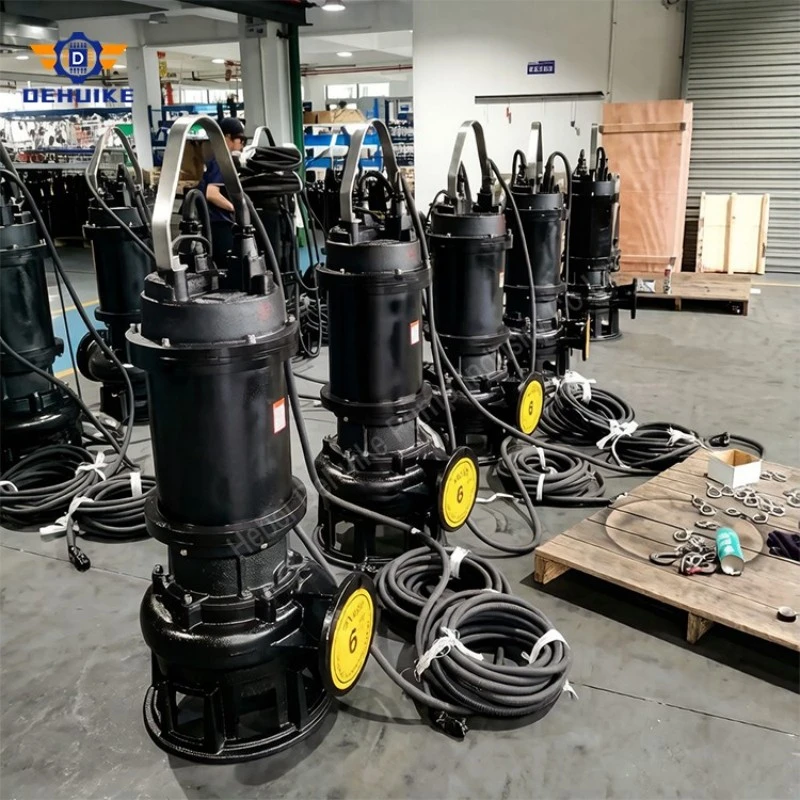
In standard premium construction, the rotating cutter and stationary cutting plate are cast from high-chromium alloy white iron (such as Cr26% high-chrome alloy) or high-speed tool steel (such as AISI 440C or D2 tool steel) subjected to controlled vacuum heat treatment. The rotating element is typically heat-treated to an exceptional hardness of 58 to 62 HRC (Rockwell C scale), while the stationary ring is calibrated to 55 to 58 HRC. Maintaining a 3 to 5 HRC hardness differential between mating surfaces prevents micro-welding and galling during brief contact episodes while concentrating sacrificial wear on the easily replaceable stationary plate.
Wear mechanisms and metallurgical validation:
Micro-abrasion resistance: High-chromium alloys contain hard primary chromium carbides (M7C3 type) embedded in a martensitic matrix. These carbides exhibit micro-hardness values exceeding 1200 to 1600 HV, easily resisting scratching and gouging from silica sand particles (typically 900 to 1100 HV).
Impact toughness considerations: High hardness can correlate with brittleness. If a hard cutter strikes a steel nut or pebble, excessively brittle teeth can fracture. The heat treatment process must include multi-stage tempering to preserve minimum Charpy V-notch impact toughness of 10 to 15 J/cm².
Corrosion-abrasion synergy: Acidic septic sewage accelerates metal removal by stripping passivated oxide layers through abrasive action. The alloy must retain sufficient free chromium in the matrix (above 12%) to resist electrochemical corrosion under hydrogen sulfide attack.
Laboratory abrasive wear testing: Representative cutter coupons are subjected to standardized dry-sand/rubber-wheel abrasion tests (ASTM G65) and submerged slurry erosive wear tests to verify that volumetric metal loss remains within strict engineering limits prior to production release.
By combining rigorous metallurgical selection with documented hardness testing, the grinder submersible sewage pump ensures clean shearing performance over thousands of operational cycles.
Wet-Well Hydrodynamics and Anti-Sedimentation Sump Profiling
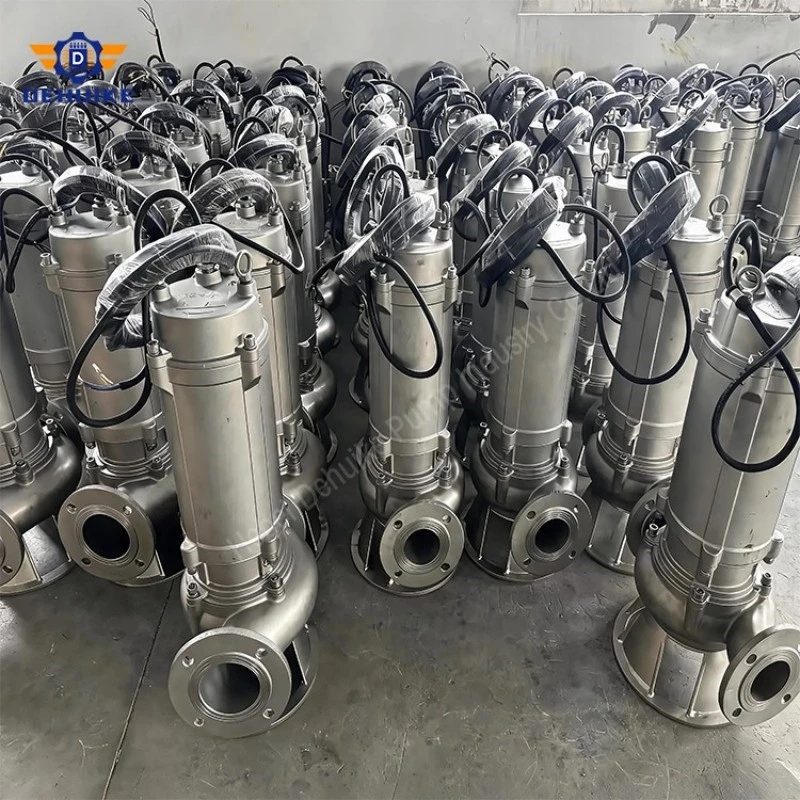
The physical wet well surrounding a grinder submersible sewage pump must be engineered to complement the pump's intake dynamics. In poorly designed square or flat-bottomed wet wells, fluid velocities in corners drop below the settling threshold of organic and mineral solids. Over time, sludge banks accumulate against the walls, digest anaerobically, release noxious hydrogen sulfide gas and reduce the effective storage volume of the station. When sudden storm flows scour these accumulated banks, a massive slug of settled sludge can enter the grinder pump intake simultaneously, triggering severe clogging risks.
To ensure continuous trouble-free operation, modern grinder lift stations utilize self-cleaning, sloping wet-well geometry. The sump floor is profiled with steep slopes (minimum 45° to 60° incline) directing all incoming flow toward a localized low-level suction pocket directly below the grinder intake. By minimizing horizontal floor area, settling solids slide continuously toward the rotating cutter, where they are macerated and expelled before compacting into stubborn deposits.
Anti-vortex baffling. When a high-capacity grinder pump operates in a compact circular basin, fluid rotation can induce air-entraining surface vortices. Installing vertical anti-vortex baffles along the basin wall suppresses rotational swirling and ensures a steady, vortex-free feed into the cutter plate.
Optimized liquid level bands. The pump stop level must maintain minimum submergence to prevent air ingestion while drawing liquid down close to the basin floor to purge floating grease blankets. The difference between start and stop levels should balance cycle frequency against motor cooling requirements.
Inlet drop pipe alignment. The gravity sewer inlet should never cascade directly over the pump motor, as falling liquid entrains air bubbles that enter the impeller eye and cause cavitation-like vibration. An internal baffle or drop pipe should introduce incoming liquid below the water line away from the pump axis.
Prefabricated fiberglass/polyethylene stations. Many grinder installations utilize factory-molded composite sump packages with pre-formed sloping bottoms, pre-installed guide rails and integrated discharge piping. These packaged stations guarantee optimal hydraulic flow geometry without relying on variable on-site concrete craftsmanship.
A well-profiled wet well eliminates dead zones, prevents odor buildup and ensures the grinder submersible sewage pump operates within an aerated, free-flowing wastewater environment.
Grinder Specification Checklist and Verified WQ Rated Hydraulic Data
When issuing project tenders or technical inquiries for a grinder submersible sewage pump, engineering consulting firms and municipal contractors must distinguish between the certified hydraulic base performance of the pump and the specific mechanical features of the grinder attachment. The supplied factory engineering workbook establishes the verified hydraulic parameters for the WQ series-including rated flow, total dynamic head, motor power, efficiency, weight and external physical dimensions. Because grinder mechanisms are engineered to order for specialized fibrous duties, procurement teams should confirm project requirements against the following technical checklist:
|
Specification Parameter |
Project Requirement Description |
Procurement Verification Focus |
|
Hydraulic Base Model |
WQ model designation, rated flow (m³/h), total head (m) and motor power (kW) |
Confirm certified factory pump curve and duty operating region. |
|
Wastewater Slurry Characteristics |
Expected fiber type (textiles, wipes, agricultural), solids % and grit load |
Verify compatibility with macerating tooth geometry and clearances. |
|
Grinder Cutter Metallurgy |
Rotating cutter and stationary ring alloy specification, minimum HRC hardness |
Ensure hardness differential (e.g. 58–62 HRC vs. 55–58 HRC) to prevent galling. |
|
Discharge Piping Diameter |
Pressurized line sizing (e.g., DN50, DN80, DN100) and friction calculations |
Verify pump developed head overcomes static lift plus small-bore friction. |
|
Control Panel Architecture |
DOL / Star-Delta / Soft-Start, auto-reversing pulse logic, thermal sensor inputs |
Ensure anti-stall control logic is supported by control hardware. |
|
Installation Hardware |
Guide-rail auto-coupling pedestal, lifting chain rating, rail material |
Verify 304/316 stainless steel or galvanized steel guide hardware. |
|
Factory Hydrostatic & Test Basis |
ISO 9906:2012 Grade 2B/1B hydraulic test, pressure decay seal test |
Confirm factory test certificate and documentation language. |
Seventh distinct verified sample of WQ rated-duty models
The following engineering table presents a completely fresh, seventh non-repeated selection of standard WQ series models extracted directly from the verified factory technical workbook. These parameters define the rated hydraulic duty points available as the base platform for grinder pump engineering:
|
Model |
Out. mm |
Q m³/h |
H m |
kW |
r/min |
η % |
kg |
L×W×H mm |
|
50WQ20-7-0.75 |
50 |
20 |
7 |
0.75 |
2900 |
62 |
50 |
361×260×580 |
|
50WQ42-9-2.2 |
50 |
42 |
9 |
2.2 |
2900 |
74 |
70 |
420×290×710 |
|
80WQ50-10-3 |
80 |
50 |
10 |
3 |
2900 |
72 |
110 |
410×310×886 |
|
100WQ70-7-3 |
100 |
70 |
7 |
3 |
1450 |
75 |
110 |
410×315×860 |
|
100WQ100-7-4 |
100 |
100 |
7 |
4 |
1450 |
75 |
110 |
480×355×760 |
|
150WQ570-40-18.5 |
150 |
570 |
40 |
18.5 |
1450 |
54 |
520 |
700×480×1080 |
|
150WQ145-9-7.5 |
150 |
145 |
9 |
7.5 |
1450 |
63 |
180 |
600×380×850 |
|
150WQ180-22-18.5 |
150 |
180 |
22 |
18.5 |
1450 |
74 |
400 |
695×485×1050 |
|
200WQ250-15-18.5 |
200 |
250 |
15 |
18.5 |
1450 |
72 |
420 |
660×420×1050 |
|
200WQ350-20-37 |
200 |
350 |
20 |
37 |
1450 |
77.8 |
950 |
990×680×1840 |
|
200WQ400-10-22 |
200 |
400 |
10 |
22 |
1450 |
75 |
450 |
920×590×1060 |
|
200WQ400-30-55 |
200 |
400 |
30 |
55 |
1450 |
72 |
1300 |
1050×740×1550 |
|
250WQ600-9-30 |
250 |
600 |
9 |
30 |
980 |
78 |
850 |
1050×700×1650 |
Hot Tags: grinder submersible sewage pump, China grinder submersible sewage pump manufacturers, suppliers, factory