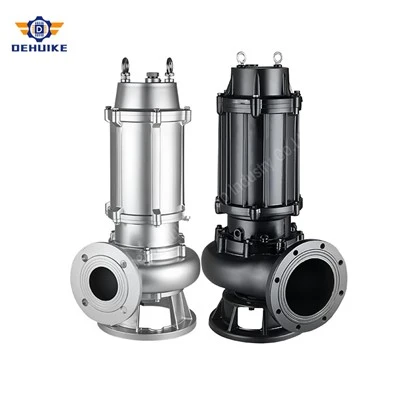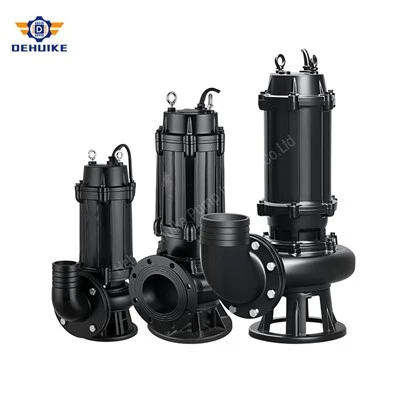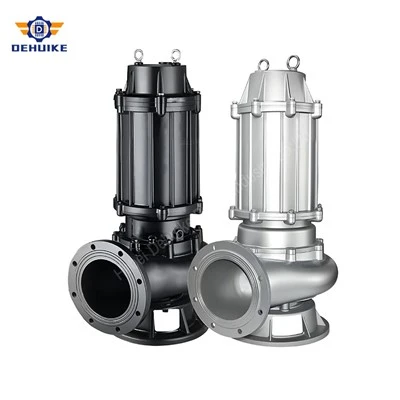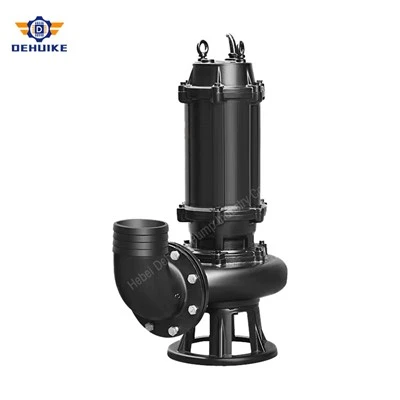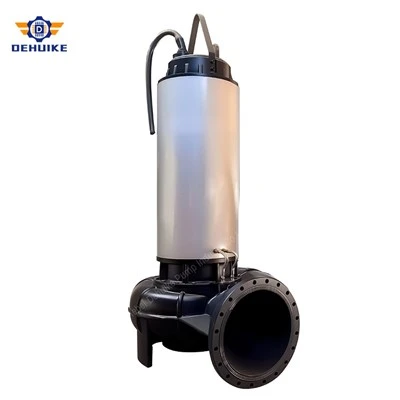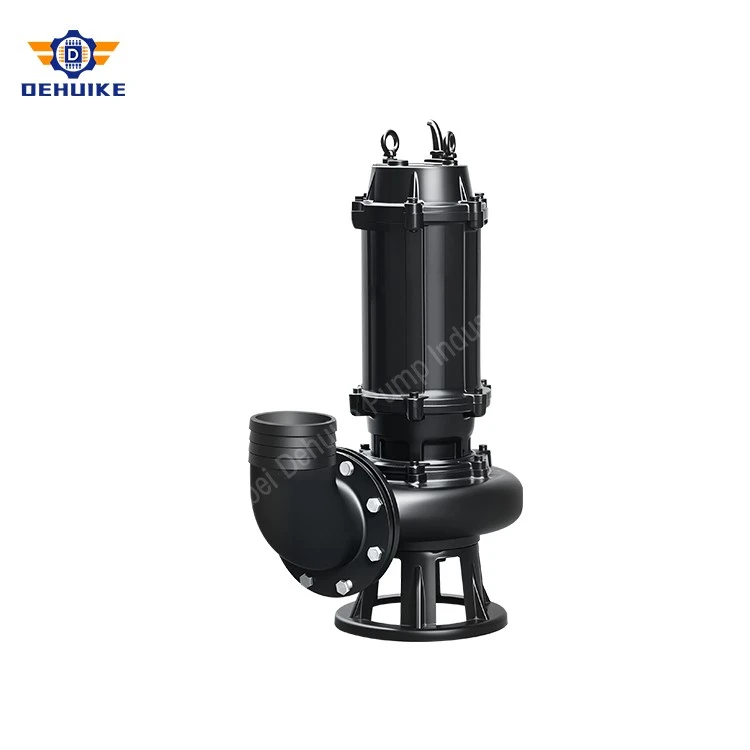
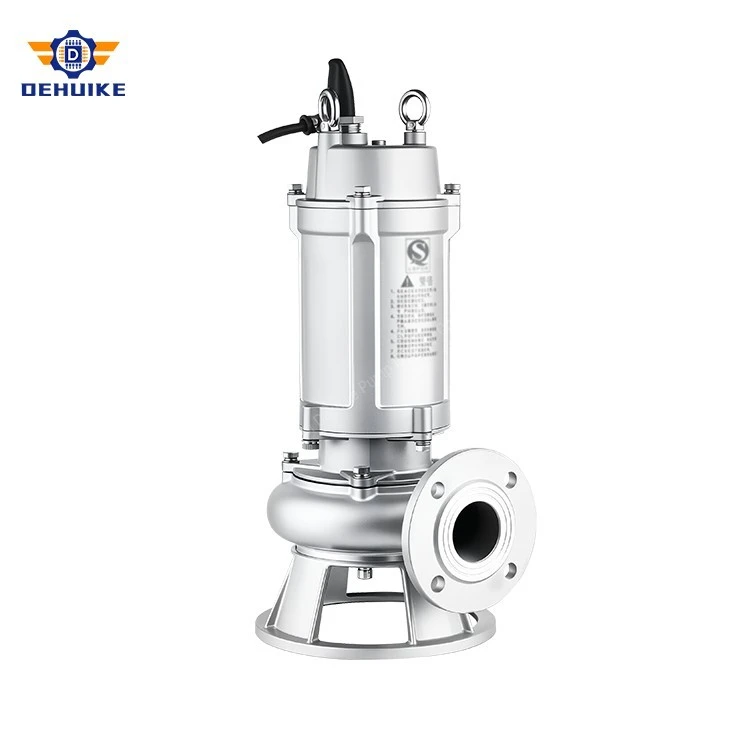
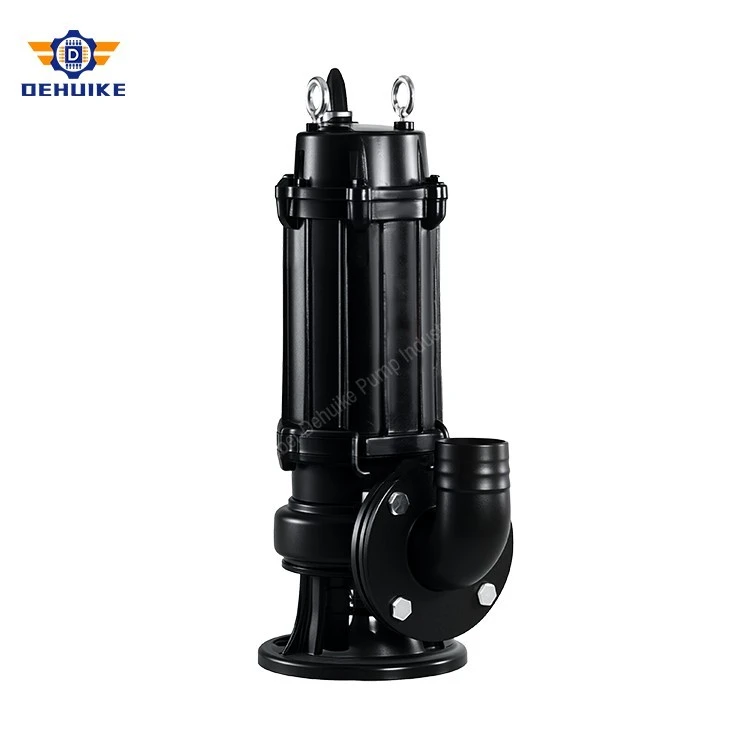
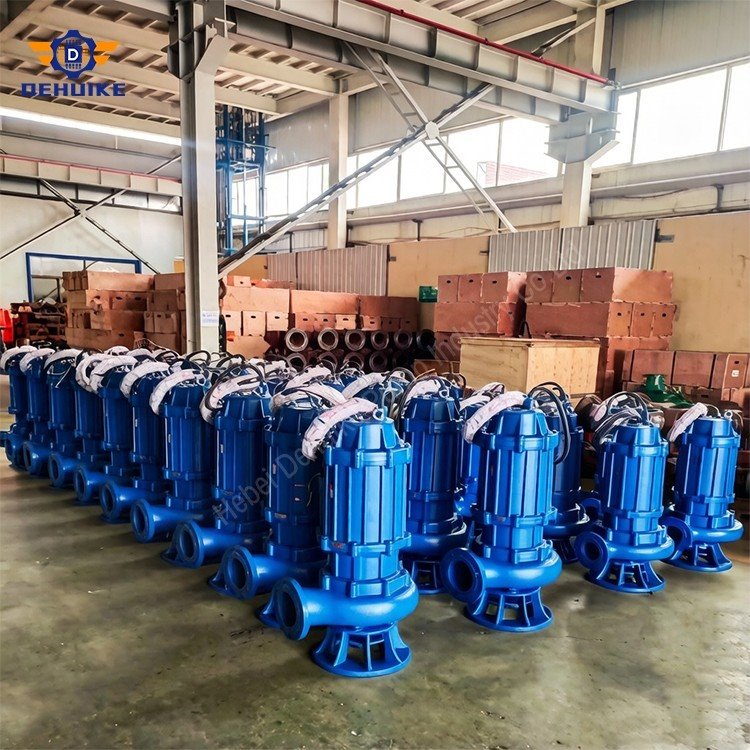
Hebei Dehuike Pump Industry Co., Ltd. is one of the most reliable manufacturers and suppliers of heavy duty submersible sewage pump in China. With abundant experience, we are committed to providing high quality customized pumps with competitive price. Welcome to wholesale bulk heavy duty submersible sewage pump for sale here from our factory. Also, pricelist is available.
Heavy-Duty Mechanical Load Profiles and Fatigue-Resistant Volute Engineering
A heavy duty submersible sewage pump is engineered to withstand violent operational environments where standard commercial sewage pumps suffer rapid structural failure, fatigue cracking or motor housing distortion. In deep municipal pump stations, heavy mining sumps, steel mill settling pits and civil tunneling shafts, wastewater does not arrive as clean, uniform effluent. It carries high-velocity sand slugs, dense settling sludge, heavy organic debris and severe pressure oscillations generated by fluctuating wet-well inflows. To deliver continuous reliability under these demanding conditions, the heavy duty submersible sewage pump incorporates reinforced, fatigue-resistant casting architecture.
The core mechanical distinction of a heavy duty submersible sewage pump begins with its casing wall thickness and structural stress distribution. While standard commercial pumps feature wall thicknesses of 10 mm to 14 mm, heavy-duty industrial volutes are cast with reinforced wall sections measuring 22 mm to 38 mm in critical high-pressure and high-velocity zones. Using high-tensile pearlitic ductile iron (such as QT500-7) or premium gray iron HT250 with high damping capacity, the volute casing absorbs extreme dynamic hydraulic shock waves without transferring bending moments to internal rotating components.
Hydrodynamic shock absorption. Sudden flow cutoffs, check-valve closures and rapid inflow surges induce localized water hammer within the pump casing. Heavy-duty volute profiles incorporate thick external reinforcement ribs along the cutwater perimeter, increasing casing hoop strength and preventing structural fatigue under cyclic hydrostatic loading.
Finite element stress optimization. Using finite element analysis (FEA), the transition junctions between the pump volute and the motor support flange are radiused generously to eliminate stress concentration notches. This prevents crack initiation caused by cantilevered motor vibration in deep installations.
Acoustic and vibration damping. The high structural mass of the heavy duty submersible sewage pump dampens hydraulic resonance caused by blade-pass frequencies. Operating vibration velocity remains strictly below 2.5 mm/s RMS under full rated flow, protecting mechanical seal faces from destructive micro-chatter.
Deep-submergence pressure rating. Standard pump casings are tested to withstand 10 to 15 meters of static liquid submersion. The heavy duty submersible sewage pump features reinforced joint spigots and double O-ring compression seals engineered to maintain hermetic integrity at submerged depths up to 30 meters.
By prioritizing structural mass, casting metallurgy and fatigue resistance, mechanical consulting engineers ensure that the heavy duty submersible sewage pump operates continuously without catastrophic casing rupture in critical public infrastructure.
Extended Bearing Span, Dual Angular-Contact Bearings and Low-Deflection Power Transmission
The mechanical powertrain of a heavy duty submersible sewage pump operates under extreme radial and axial thrust loads. When pumping dense, high-viscosity sludge or handling asymmetric fluid loads caused by passing solids, the rotating impeller experiences violent unsteady hydrodynamic side-forces. If the pump shaft is slender or the bearing span is too narrow, the shaft will deflect dynamically, forcing the mechanical seal faces out of parallel alignment and creating uneven bearing raceway wear. In heavy industrial service, powertrain rigidity is the primary determinant of mean time between failures (MTBF).
A heavy duty submersible sewage pump features an enlarged drive shaft machined from high-yield alloy steel (such as 40Cr or 42CrMo) or martensitic stainless steel (2Cr13/1Cr17Ni2). The shaft diameter at the lower bearing journal is substantially oversized, providing a high area moment of inertia that restricts dynamic shaft deflection at the mechanical seal faces to less than 0.025 mm under maximum radial shock loading.
Heavy-duty powertrain and bearing arrangement:
- Heavy-duty lower bearing assembly: The lower bearing position, situated immediately adjacent to the pump volute, carries the combined radial load and downward hydraulic thrust. It utilizes heavy-duty double-row angular contact ball bearings (such as the 3300 series) or matched back-to-back tapered roller bearings, designed for minimum L10h bearing fatigue life exceeding 50,000 to 100,000 operating hours.
- Upper radial guide bearing: The upper motor bearing comprises a deep-groove ball bearing or cylindrical roller bearing fitted with an axial pre-load spring pack that eliminates internal bearing clearance, dampens thermal expansion drift and prevents rotor wobble during high-inertia starting.
- Extended structural bearing span: The distance between the upper and lower bearing positions is maximized within the motor housing envelope. An extended bearing span substantially reduces the moment reaction forces imposed on the bearings by hydraulic overhung loads from the impeller.
- Dynamic two-plane balancing: Every assembled rotor, including the laminated electric core, shaft, bearing inner rings and impeller, undergoes precision two-plane dynamic balancing in accordance with ISO 1940-1 Grade G2.5, eliminating centrifugal vibration forces at speeds up to 2900 rpm.
This robust powertrain architecture guarantees that the heavy duty submersible sewage pump maintains microscopic mechanical alignment even under violent, unbalanced solids-handling conditions.
Reinforced Heavy-Wall Wet End and Abrasive Slurry Wear-Liner Integration
Pumping wastewater containing high concentrations of abrasive mineral grit, construction sand, tailings silt and dense settleable solids rapidly destroys standard thin-walled centrifugal impellers and casing volutes. In mining pit dewatering, bridge caisson excavations and raw sewage grit chambers, fluid velocities within the pump casing exceed 15 to 25 meters per second. Fine silica particles suspended in the slurry act like an industrial sandblaster, eroding the casing cutwater, scouring the impeller shroud and destroying hydraulic efficiency within a few months of operation.
The heavy duty submersible sewage pump resolves this abrasive wear challenge through heavy-wall fluid passages combined with sacrificial, wear-resistant hydraulic liners. Rather than discarding an entire pump volute when localized scour occurs, the heavy-duty wet end features replaceable wear components engineered from specialized abrasion-resistant metallurgy.
High-chromium alloy wear components. Critical wetted components-including the pump impeller, suction cover wear plate and volute liner-can be cast from 27% high-chromium white cast iron (ASTM A532 Class III Type A). With bulk hardness exceeding 58 to 64 HRC and hard eutectic chromium carbides (M7C3 type), these components exhibit outstanding resistance to high-velocity scouring.
Adjustable front and rear suction liners. As abrasive wear gradually enlarges the clearance between the impeller front shroud and the stationary suction cover, recirculation losses increase, causing total head and flow to degrade. The heavy duty submersible sewage pump incorporates externally adjustable suction liners that permit plant mechanics to re-establish the factory running clearance (0.3 mm to 0.5 mm) in the field without dismantling the pump.
Enlarged spherical solids passage. The internal hydraulic passages of the heavy-duty volute are engineered to pass spherical solids ranging from 50 mm up to 150 mm without bridging or snagging, allowing cobbles, gravel and municipal rags to clear the impeller vanes without mechanical impact.
Polyurethane and elastomeric wear protection. For fine sand slurries where impingement erosion dominates, selected wet-end components can be lined with high-resilience cast polyurethane or vulcanized natural rubber liners, absorbing particle kinetic energy without metal loss.
This modular, wear-resistant wet-end design extends component operating life multi-fold and lowers the total cost of ownership across severe abrasive wastewater installations.
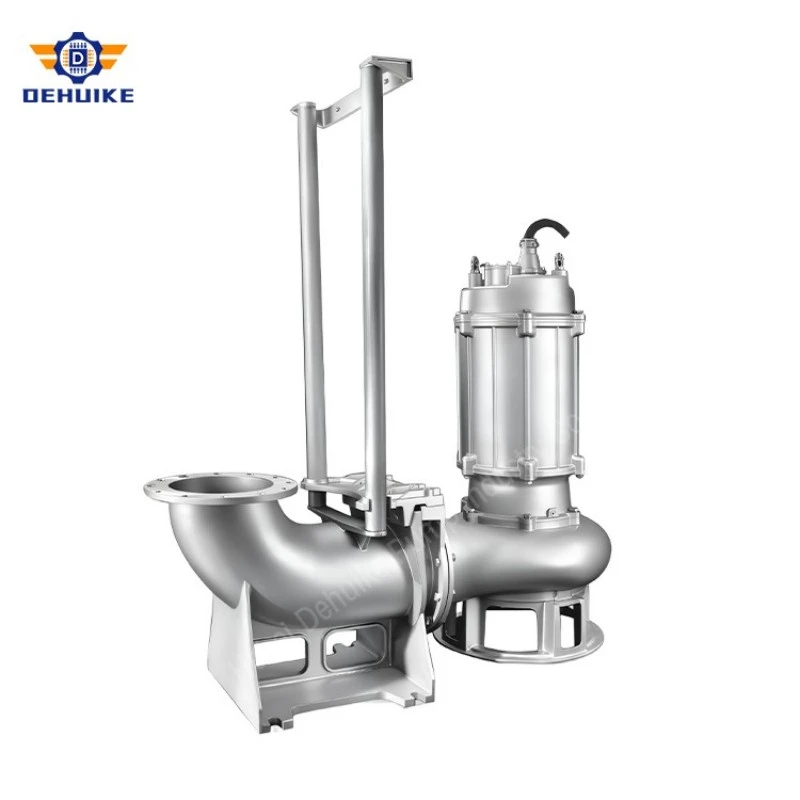
Mine Pit Dewatering, Tunnel Sediment Basins and Continuous Heavy Industrial Service
The engineering pedigree of a heavy duty submersible sewage pump is validated in extreme industrial environments that destroy standard commercial equipment. Municipal lift stations represent only one operational domain; heavy industrial operators deploy these robust pumping units across mining, subterranean tunneling, steel manufacturing, chemical refining and major infrastructure civil engineering.
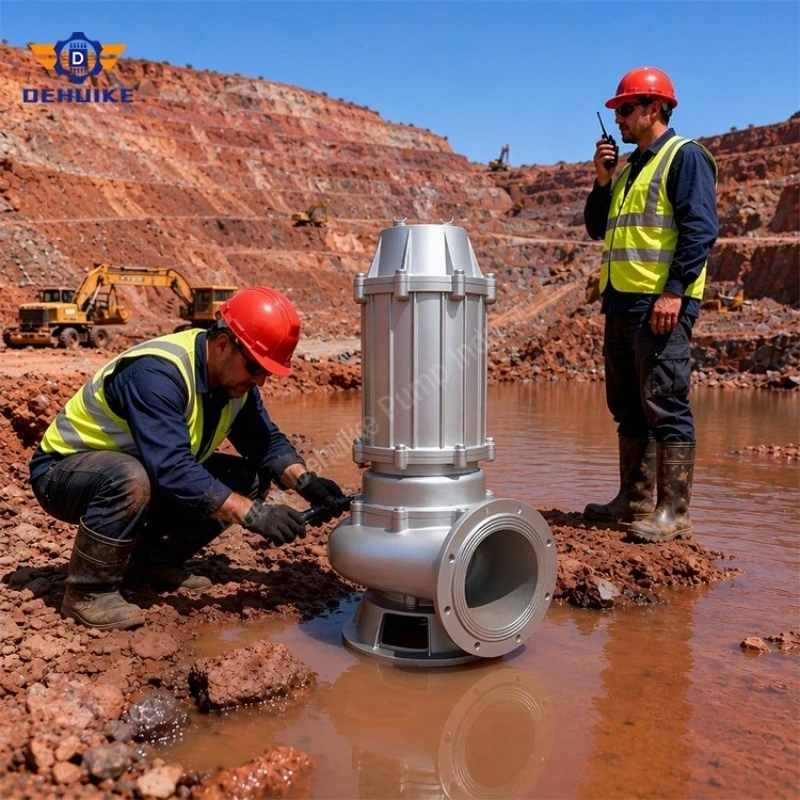
In underground and open-pit mining operations, groundwater accumulating in pit bottoms carries abrasive rock tailings, drilling slurry, high mineral acidity and dissolved metal ions. If dewatering pumps fail during heavy seasonal rains, open-pit benches flood, halting extraction equipment and threatening mine safety. A heavy duty submersible sewage pump operates submerged in these pit sumps, pumping high-density slurry against high static heads (up to 40 meters) to surface retention ponds.
Severe industrial deployment profiles:
Subterranean tunneling and shaft sinking: Tunnel boring machines (TBM) and drill-and-blast operations generate enormous volumes of wash water containing pulverized rock dust, bentonite drilling slurry and cement grout residues. Heavy-duty submersible pumps handle this dense, semi-solid mixture without clogging.
Steel mill scale pits and flume drainage: Rolling mills produce cooling runoff laden with heavy, abrasive iron oxide scale particles and lubricating oil films. Heavy-duty pumps clear settling flumes continuously, operating in hot water laden with sharp metallic grit.
Coal processing and aggregate wash plants: Washing raw coal, gravel and sand produces dense black-water slurries with high specific gravities (up to 1.15 to 1.25). The high-torque drive and open-channel impellers of heavy-duty pumps keep solids in suspension during transfer.
Harbor dredging and maritime dry docks: Marine shipyard basins and dry-dock drainage sumps require high-capacity pumps (up to 1,000 to 2,500 m³/h) to evacuate seawater laden with marine silt, barnacle shells and ship cleaning waste within tight tidal schedules.
Deploying a heavy duty submersible sewage pump in these severe environments protects industrial operations from expensive unplanned downtime and catastrophic flooding risks.
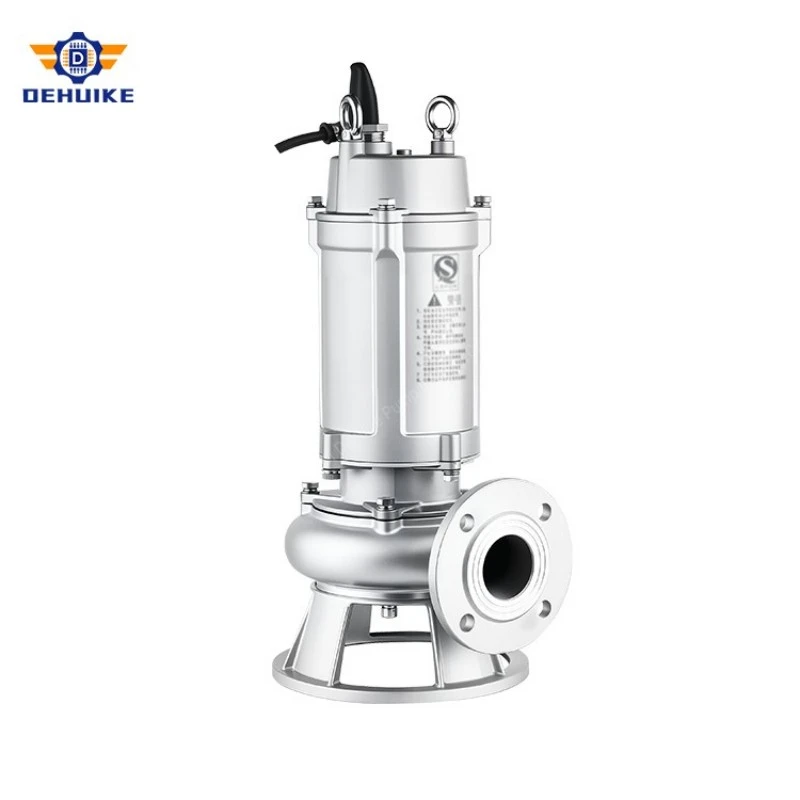
Submerged Hydrostatic Pressure Resistance and Heavy-Load Motor Thermal Headroom
Electric drive reliability in a heavy duty submersible sewage pump requires conservative thermal headroom and robust hydrostatic sealing. Commercial pumps operating near their full-load nameplate limit possess little margin to absorb transient overloads caused by dense sludge slugs or voltage drops. When a heavy-duty pump operates in thick sewage with specific gravities exceeding 1.1, the brake horsepower demanded by the hydraulic impeller increases proportionally, pushing standard motors into dangerous thermal overload territory.
To guarantee operational continuity, heavy-duty submersible electric motors are engineered with significant power service factors (typically 1.15 to 1.25) and conservative electromagnetic core designs. A motor rated for a nominal 55 kW duty point possesses electrical and thermal capacity capable of sustaining 63 kW to 68 kW continuous output during peak solids events without exceeding allowable winding temperature limits.
Class H insulation with Class B thermal rise. The stator windings are constructed using Class H insulated copper conductors and non-hygroscopic slot liners rated for 180°C continuous service. Under rated full-load conditions, the electromagnetic design restricts actual steady-state temperature rise to Class B limits (below 80°C), providing an enormous 100°C thermal safety margin against transient overloads.
Heavy-duty stator potting and VPI encapsulation. The entire stator core undergoes automated Vacuum Pressure Impregnation (VPI) utilizing specialized high-thermal-conductivity resins. This void-free encapsulation rapidly conducts heat from the interior copper coils out to the heavy cast-iron motor shell, optimizing convective cooling into the surrounding fluid.
High-pressure hermetic cable entry. The power and sensor cable entry features an independent compression gland with dual vulcanized rubber bushings, secondary mechanical strain-relief clamps and solid polyurethane epoxy potting. This triple-barrier design prevents capillary water migration along conductor strands even under 3 bar external hydrostatic pressure.
Continuous dry-well operation capabilities. When equipped with an internal closed-loop cooling jacket, the heavy duty submersible sewage pump can operate continuously in dry-pit installations or during extended low-level drawdown cycles where the motor is entirely exposed to air, without suffering thermal cutouts.
This generous electromechanical headroom ensures that the heavy duty submersible sewage pump handles unexpected fluid density spikes and adverse grid conditions without motor burnout.
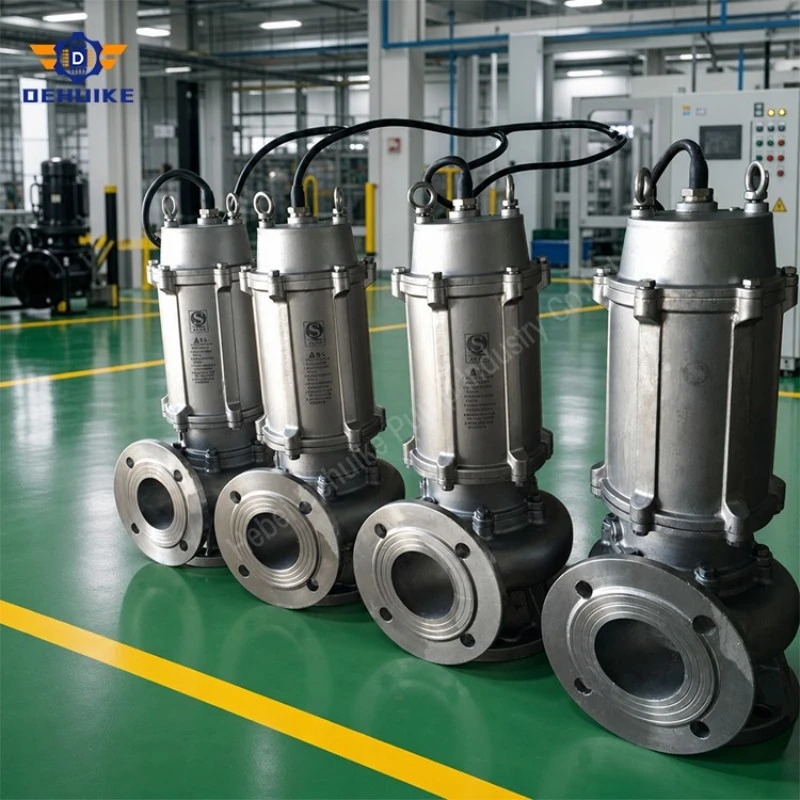
Heavy-Duty Cartridge Mechanical Seals and Centrifugal Grit-Deflection Chambers
The mechanical shaft seal represents the critical boundary that prevents aggressive, gritty wastewater from penetrating into the motor housing. In heavy-duty industrial sumps containing coarse quartz sand and abrasive slurry, standard component mechanical seals fail rapidly due to sand packing, spring clogging and face grooving. When abrasive particles lodge around seal springs, the springs lose their axial flexibility, preventing the seal faces from maintaining microscopic parallel contact as the shaft deflects.
A heavy duty submersible sewage pump incorporates a pre-assembled, heavy-duty cartridge dual mechanical seal housed within an enlarged, oil-filled barrier chamber. Both the lower (process-side) and upper (motor-side) seal faces are fabricated from premium sintered silicon carbide (SiC) or nickel-bonded tungsten carbide (TC), delivering exceptional micro-hardness and wear resistance.
Heavy-duty sealing and grit-deflection features:
- Isolated wave-spring design: Unlike standard multiple-spring seals that clog when exposed to fibrous slurry, the heavy-duty seal utilizes a heavy single-coil spring or an isolated wave spring positioned entirely outside the slurry flow path, ensuring free axial float under all fluid conditions.
- Centrifugal grit-deflection collar: The pump shaft sleeve incorporates an integrated centrifugal flinger disc that rotates within a recessed chamber immediately below the lower seal. Centrifugal force expels dense sand and gravel particles outward, away from the delicate seal face gap.
- Enlarged lubricating oil reservoir: The intermediate barrier chamber holds an expanded volume of high-dielectric, non-toxic lubricating oil. This large oil mass acts as an efficient heat sink, conducting frictional face heat outward into the cool pump volute and providing superior boundary lubrication.
- Conductivity moisture detection probe: A stainless steel sensor probe extends into the lower portion of the oil chamber. If the process-side seal experiences microscopic wear and allows water to enter the barrier oil, the sensor detects changing electrical conductivity and sends an early maintenance alert to the control room before water can reach the motor bearings.
This rugged, multi-barrier sealing architecture protects the electric drive from the harshest abrasive slurries, ensuring years of trouble-free submerged operation.
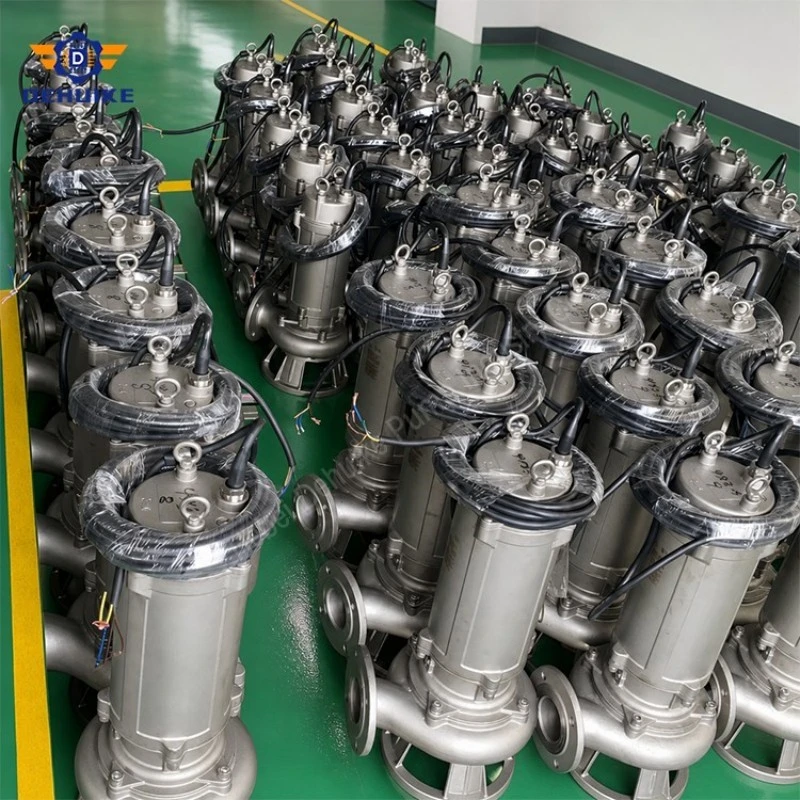
Heavy-Duty Auto-Coupling Pedestals, Anti-Sway Guide Rails and Rigging Standards
The mechanical interface connecting a heavy duty submersible sewage pump to the civil infrastructure must safely support extreme static weights and dynamic reactive thrusts. While lightweight commercial pumps weigh 50 kg to 200 kg and can be supported by simple pipe brackets, heavy-duty industrial pumps weigh between 800 kg and 4,000 kg. When a 200 kW pump starts across the line, it generates massive torsional reactive torque, while discharging 2,000 m³/h creates enormous hydraulic thrust against the discharge piping.
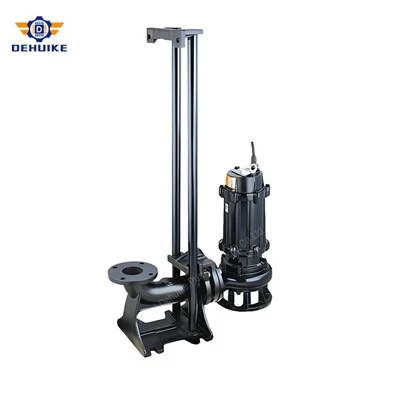
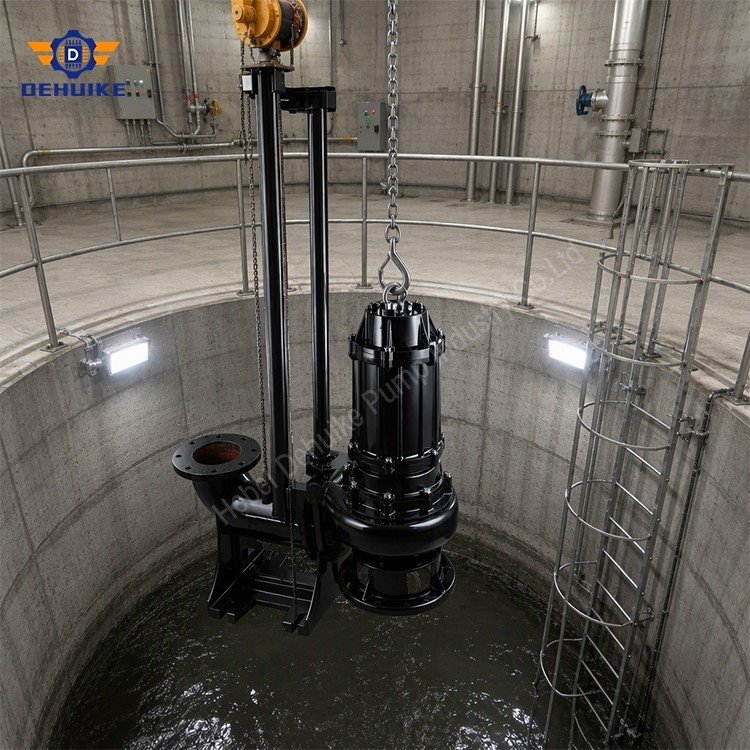
To handle these formidable loads, the heavy-duty installation utilizes a reinforced cast-iron or fabricated ductile-iron duckfoot auto-coupling pedestal anchored into the wet-well concrete foundation using high-tensile epoxy chemical anchor bolts. The mating interface between the pump discharge flange and the pedestal utilizes a precision-machined sliding bracket with a heavy elastomeric profile gasket, forming an airtight, watertight metal-to-metal wedge seal under the pump's own gravitational mass.
Heavy dual guide-pipe system. To ensure smooth retrieval and descent without binding, the pump rides along twin rigid guide pipes manufactured from heavy-wall Schedule 40 or Schedule 80 stainless steel or hot-dip galvanized steel (diameters from 2-inch to 4-inch). In deep sumps exceeding 6 meters, intermediate anti-sway guide brackets prevent rail deflection.
Certified lifting chain and rigging points. Every heavy duty submersible sewage pump features integrated, high-strength cast lifting bails engineered with a minimum 5:1 proof-load safety factor. Certified Grade 80 or Grade 100 alloy steel lifting chains, proof-tested and stamped with certified working load limits (WLL), allow safe crane hoisting from the surface.
Anti-rotation torque lugs. The auto-coupling bracket incorporates cast anti-rotation guide shoes that engage the guide pipes, absorbing motor starting torque pulses and preventing the pump from twisting out of alignment during high-head acceleration.
Safe surface maintenance access. The auto-coupling system allows plant operators to raise the pump to the surface for inspection in minutes using an overhead hoist or mobile crane, completely eliminating the need for personnel to enter hazardous, confined-space wet wells.
Engineering the civil and mechanical mounting interfaces to heavy-duty standards guarantees long-term operational safety during both continuous pumping and routine maintenance hoisting.
Heavy-Industrial Specification Matrix and Verified WQ Rated Hydraulic Data
Selecting the optimal heavy duty submersible sewage pump for severe industrial or municipal duty requires thorough analysis of hydraulic flow curves, static head, slurry specific gravity, particle sizing and civil constraints. Project consulting engineers should verify requirements against the following heavy-duty procurement decision matrix:
|
Procurement Parameter |
Heavy-Duty Engineering Requirement |
Technical Verification Focus |
|
Hydraulic Operating Duty |
Rated design flow (m³/h), total dynamic head (m), and operating range across system curve |
Verify pump duty falls strictly within the Preferred Operating Region (POR) between 70% and 115% BEP. |
|
Slurry Density & Solids % |
Slurry specific gravity (SG 1.05 to 1.3), solids concentration by weight, maximum particle size |
Confirm motor power margin (service factor) and spherical solids passage through the impeller. |
|
Wet-End Metallurgy |
Standard high-strength ductile iron (QT500-7) or abrasive 27% high-chrome white iron (ASTM A532) |
Specify alloy metallurgy based on sand grit concentration and fluid acidity/alkalinity. |
|
Shaft Sealing & Protection |
Dual cartridge mechanical seals with SiC/SiC or TC/TC faces, moisture sensor probe in oil chamber |
Ensure seal chamber oil volume and sensor compatibility with plant monitoring PLC. |
|
Submergence Depth Rating |
Maximum static water head in deep sumps (up to 20m or 30m submersion depth rating) |
Verify casing joint dual O-ring compression seals and cable gland pressure integrity. |
|
Mounting & Rigging Interface |
Auto-coupling duckfoot pedestal, twin Schedule 80 guide rails, Grade 80 certified lifting chain |
Match pedestal flange rating (PN10/PN16/Class 150) to downstream rising main piping. |
|
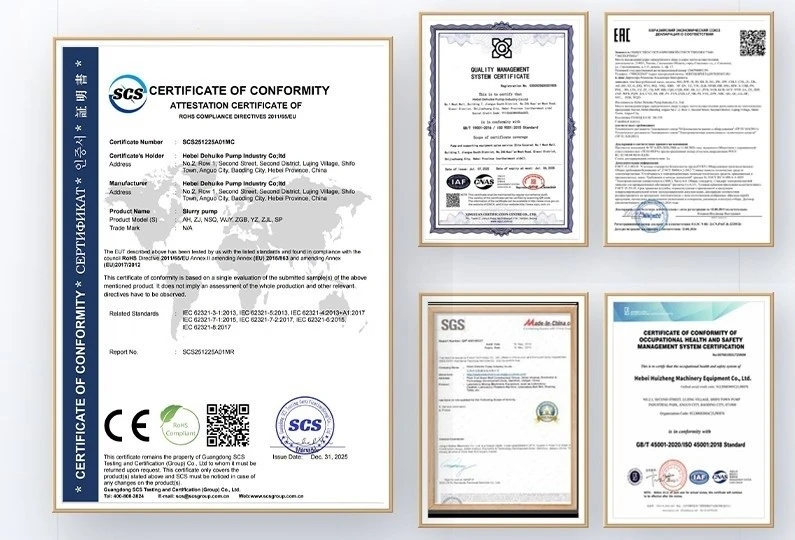
Testing & Quality Certification |
ISO 9906:2012 Grade 2B/1B hydraulic test, hydrostatic casing pressure test, MTC certificates |
Require certified factory performance curve and dimensional submittal package within 24 hours. |
Verified WQ Series heavy-duty high-capacity rated models (Official Factory Data)
The following engineering table features verified heavy-duty, high-capacity and high-head WQ models extracted directly from the official factory engineering workbook, showcasing robust platforms for heavy industrial installations (ranging from 150 mm to 500 mm outlet diameters with power ratings up to 160 kW, alongside standard medium-bore reference units):
|
Model |
Out. mm |
Q m³/h |
H m |
kW |
r/min |
η % |
kg |
L×W×H mm |
|
150WQ140-18-15* |
150 |
140 |
18 |
15.0 |
1450 |
73 |
300 |
575×460×1100 |
|
150WQ200-30-37* |
150 |
200 |
30 |
37.0 |
1450 |
65 |
750 |
960×640×1350 |
|
200WQ250-22-30* |
200 |
250 |
22 |
30.0 |
1450 |
71 |
720 |
915×560×1120 |
|
200WQ350-40-75* |
200 |
350 |
40 |
75.0 |
1450 |
73.2 |
1750 |
1230×990×2100 |
|
250WQ600-20-55* |
250 |
600 |
20 |
55.0 |
1450 |
73 |
1300 |
1070×740×1680 |
|
250WQ600-25-75 |
250 |
600 |
25 |
75.0 |
1450 |
71 |
1500 |
1120×760×1750 |
|
300WQ400-20-45 |
300 |
400 |
20 |
45.0 |
1450 |
74 |
1500 |
1110×900×1770 |
|
300WQ600-20-55 |
300 |
600 |
20 |
55.0 |
1450 |
73 |
1550 |
1110×900×1770 |
|
300WQ800-20-75 |
300 |
800 |
20 |
75.0 |
1450 |
75 |
1600 |
1110×700×1770 |
|
300WQ950-20-90 |
300 |
950 |
20 |
90.0 |
1450 |
76 |
1700 |
1110×700×1770 |
|
350WQ1200-18-90 |
350 |
1200 |
18 |
90.0 |
980 |
82.5 |
2000 |
1240×930×2140 |
|
400WQ1700-22-160 |
400 |
1700 |
22 |
160.0 |
980 |
83 |
2880 |
2130×1260×2620 |
|
500WQ2000-15-110 |
500 |
2000 |
15 |
110.0 |
980 |
83 |
2100 |
1350×990×2500 |
Hot Tags: heavy duty submersible sewage pump, China heavy duty submersible sewage pump manufacturers, suppliers, factory