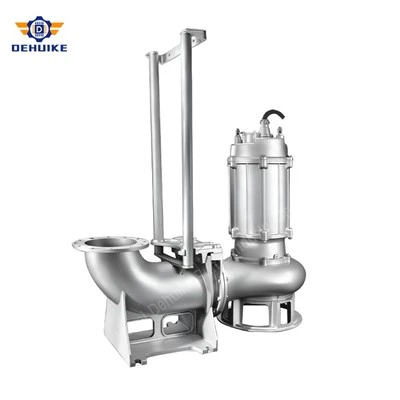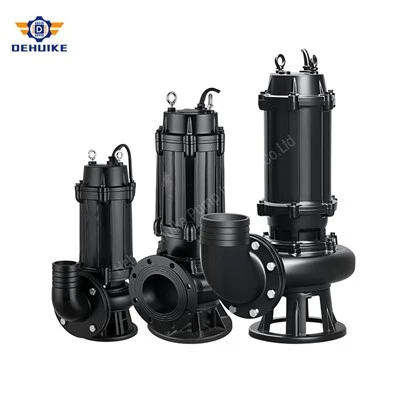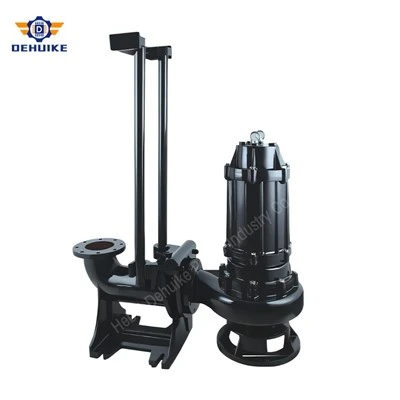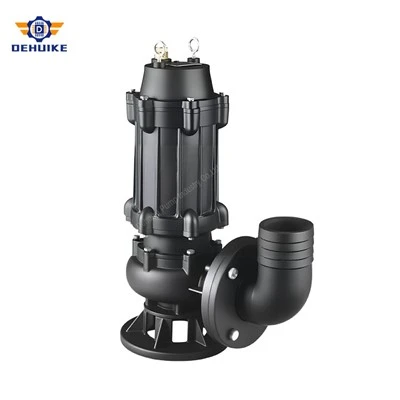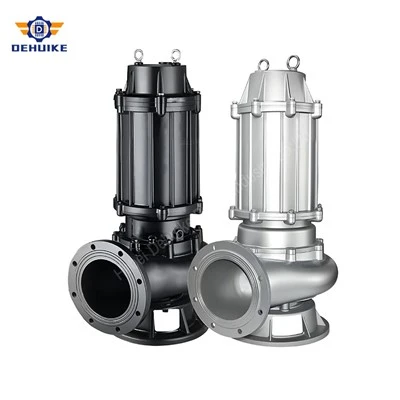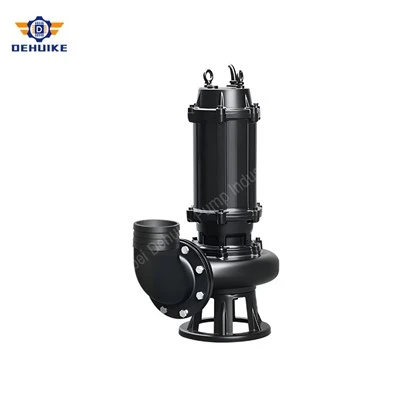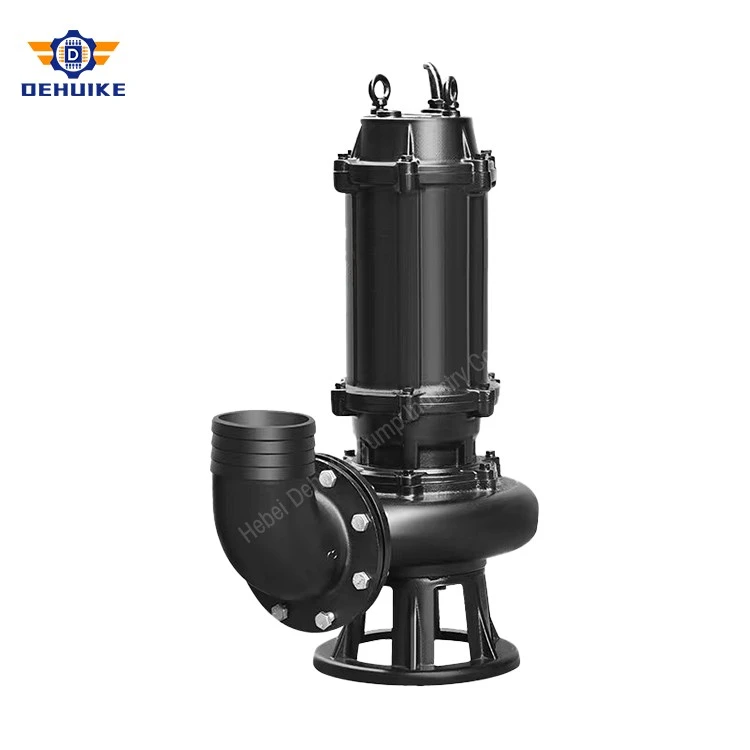
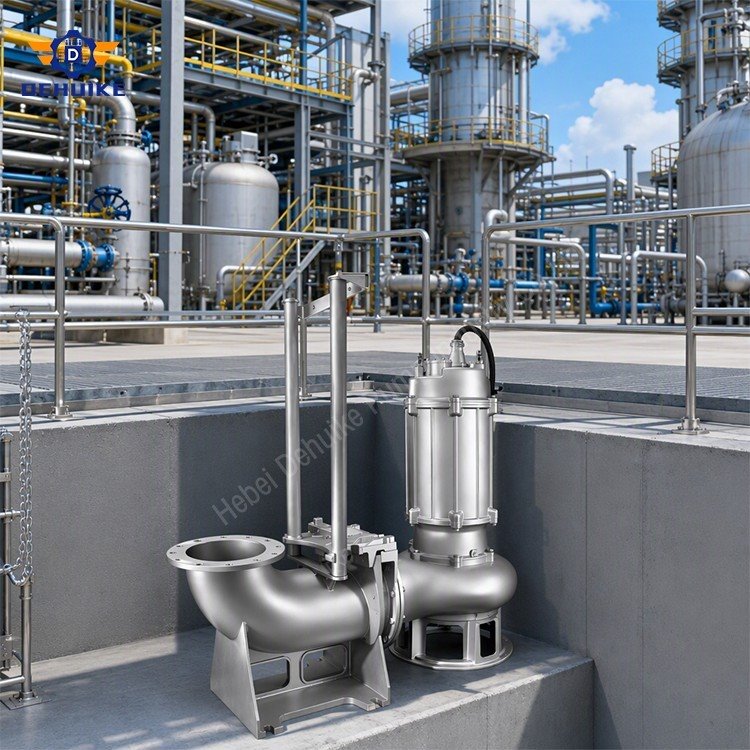
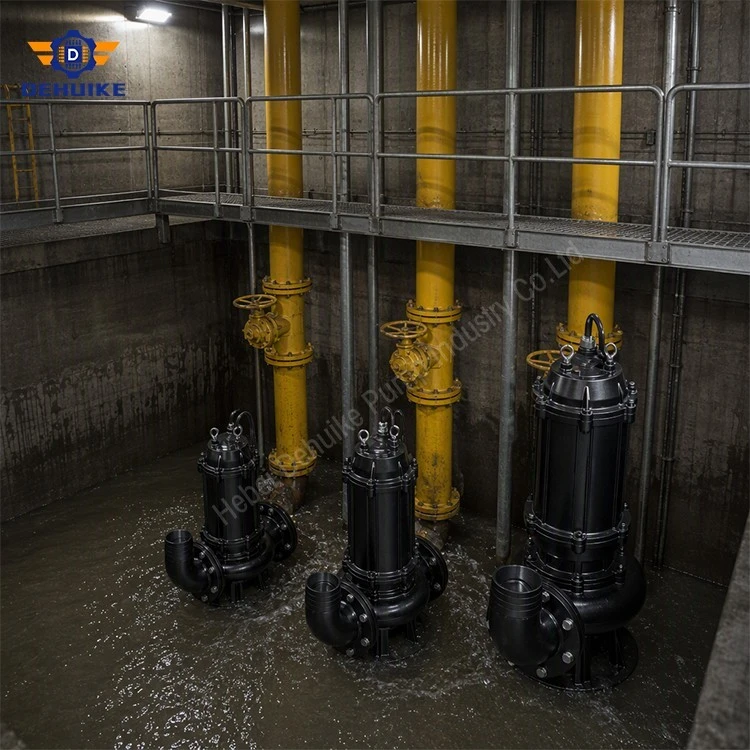
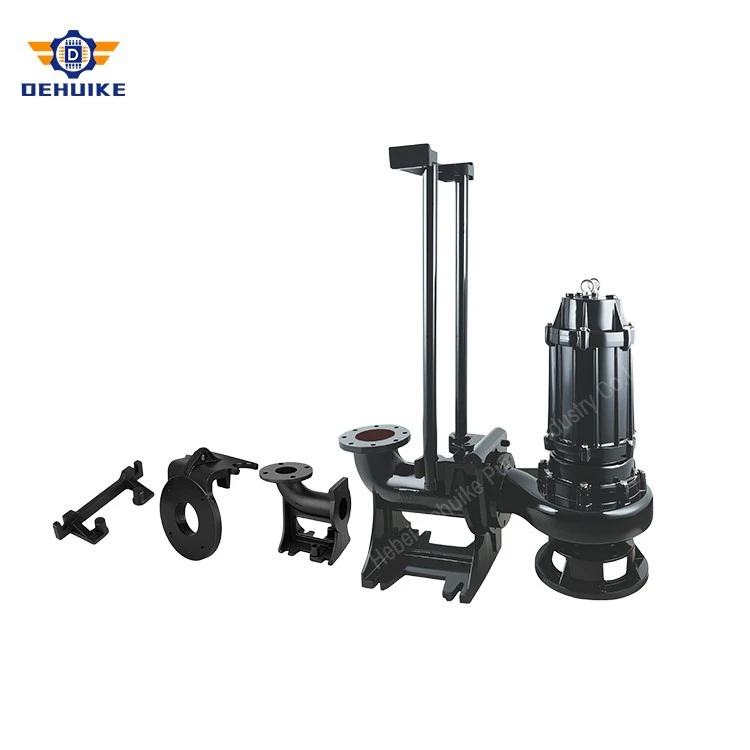
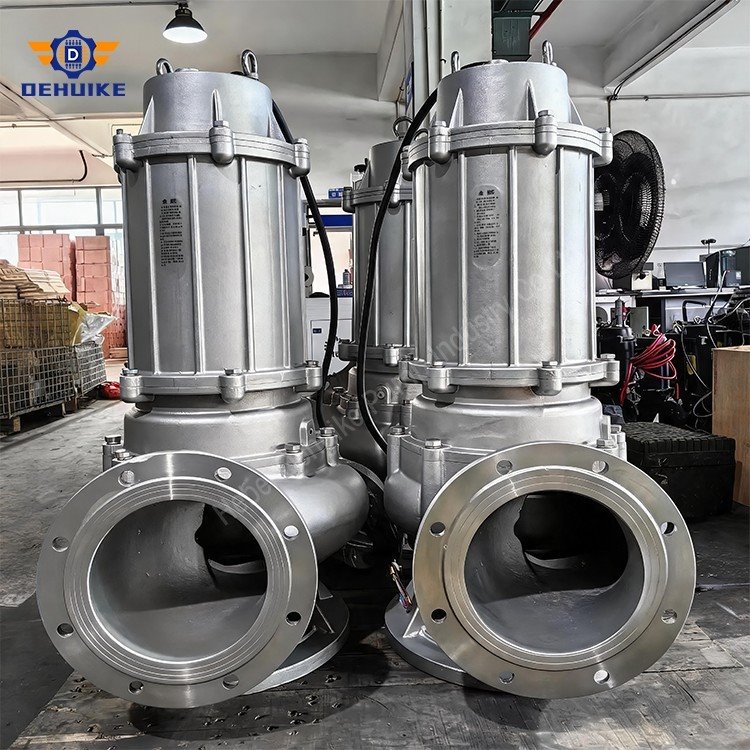
Hebei Dehuike Pump Industry Co., Ltd. is one of the most reliable manufacturers and suppliers of automatic submersible drainage pump in China. With abundant experience, we are committed to providing high quality customized pumps with competitive price. Welcome to wholesale bulk automatic submersible drainage pump for sale here from our factory. Also, pricelist is available.
Multi-Tier Water Level Sensing and Autonomous Control Logic
An automatic submersible drainage pump is engineered for mission-critical wastewater applications where liquid levels fluctuate unpredictably and human intervention is physically impossible or economically unviable. In subterranean parking garages, highway underpasses, automated storm detention vaults and industrial collection pits, water intrusion can surge from zero to peak inflow within minutes. The core functional advantage of an automatic submersible drainage pump lies in its multi-tier water-level sensing architecture that autonomously commands starting, running, modulation and shutdown sequences without manual supervision.
Conventional sump pumps relying on a single mechanical tethered float switch suffer frequent operational failures due to float entanglement, grease fouling, turbulent wave splashing and mechanical micro-switch corrosion. An industrial-grade automatic submersible drainage pump replaces or supplements primitive mechanical floats with redundant, solid-state sensing technologies, creating a dependable fail-safe operational hierarchy.
Electrode and conductivity level probes. Stainless steel (AISI 316L) or titanium conductivity sensing pins detect fluid presence by completing a low-voltage, intrinsically safe electrical circuit through the water. Conductivity probes eliminate mechanical pivot arms, preventing physical jams caused by floating rags or grease build-up.
Hydrostatic pressure level transmitters. Submersible piezoresistive pressure transducers installed at the bottom of the wet well continuously measure static liquid head, converting pressure into a linear 4–20 mA analog signal. This enables continuous proportional water level tracking down to millimeter accuracy rather than coarse step-level detection.
Non-contact ultrasonic / radar sensing interface. For aggressive wastewater sumps containing heavy floating solids or foaming surfactants, overhead ultrasonic or high-frequency radar sensors measure liquid surface position from above the high-water line, eliminating physical immersion and chemical degradation.
Anti-chattering delay algorithms. Turbulence generated by incoming wastewater streams induces rapid wave ripples that can falsely trigger level sensors. The embedded controller incorporates programmable hysteresis and digital dampening filters (typically 3 to 10 seconds delay), preventing rapid cycling and electrical contact chatter.
By decoupling automation from vulnerable mechanical linkages, the automatic submersible drainage pump provides fail-safe, 24/7 autonomous protection against catastrophic basement flooding and industrial sump overflow.
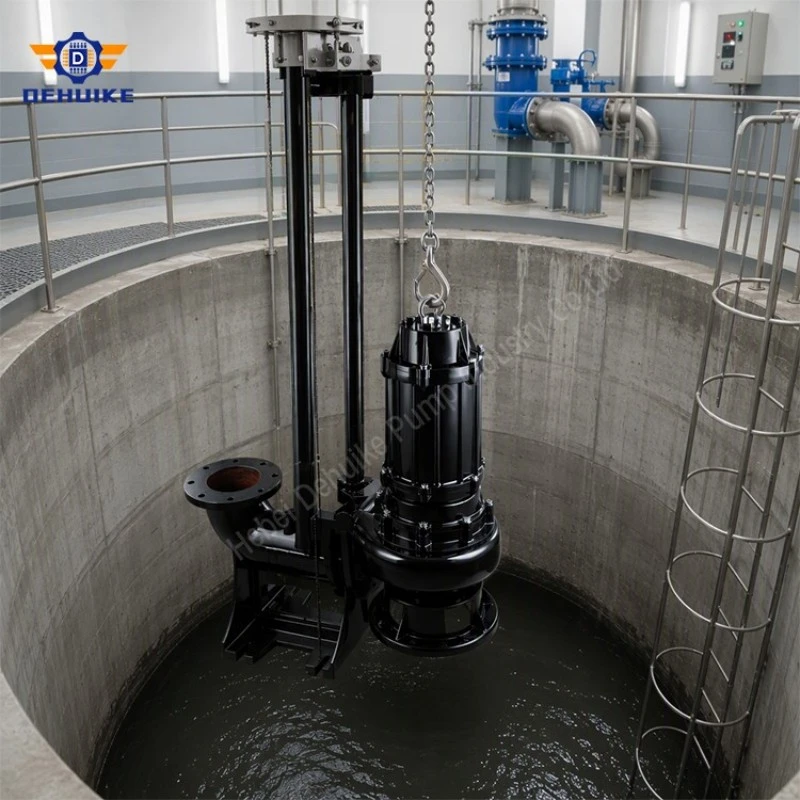
Anti-Cavitation Sumping, Snore Drainage and Automatic Air-Release Dynamics
Submersible drainage machinery operating in shallow sumps or during rapid dewatering cycles frequently encounters severe hydraulic challenges known as "snore conditions"-a phenomenon where the water level drops to the lip of the suction opening, causing the pump to ingest a volatile mixture of water and air. In standard centrifugal pumps, air ingestion causes immediate air binding in the impeller eye, decoupling the hydraulic pressure differential, inducing intense cavitation vibration and destroying mechanical seal lubrication films. An automatic submersible drainage pump resolves this operational hazard through dedicated anti-snore engineering.
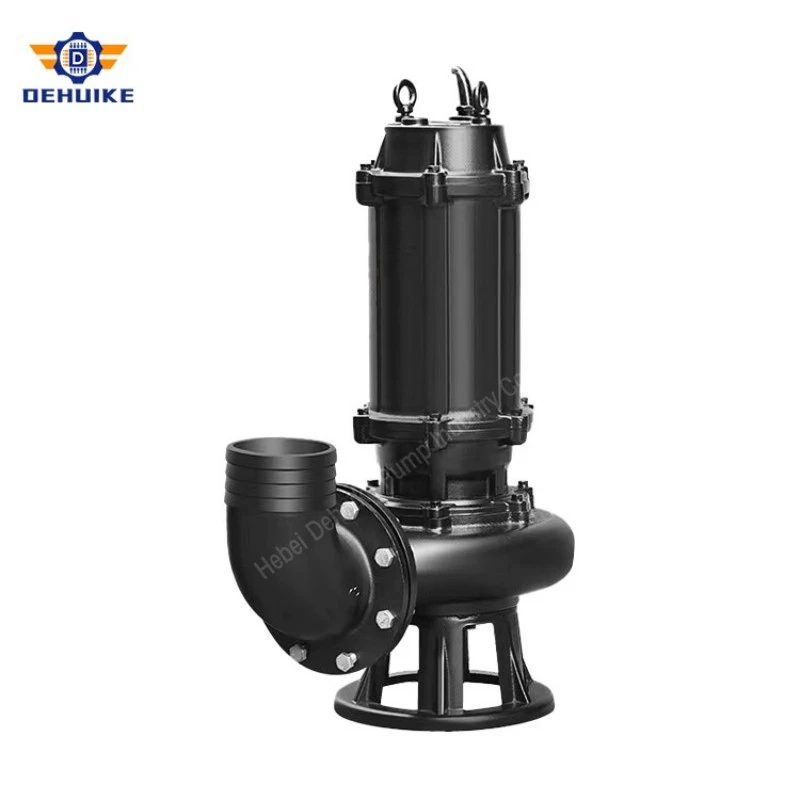
The hydraulic volute and suction plate of an automatic submersible drainage pump are contoured to facilitate continuous air-liquid separation. Rather than allowing an air pocket to stagnate inside the impeller hub, internal vortex geometry channels entrained air upward toward an automatic air-relief bleed valve located in the upper pump casing.
Key low-level dewatering and air management mechanisms:
- Integrated automatic air-release valve: A spring-loaded or ball-float bleed valve installed in the volute casing permits entrapped air to vent freely during dry start-up or snore cycles. Once pressurized water reaches the valve cavity, hydrodynamic pressure seats the valve instantly, preventing fluid leakage during normal pumping.
- Puddle and residual low-level suction design: For basement cleanup and flat-bottom tank drainage, specialized automatic drainage pumps incorporate a bottom strainer plate capable of pumping down to residual water depths of 1 mm to 5 mm, leaving the floor virtually dry without manual vacuuming.
- Anti-vortex suction plate geometry: When a high-flow pump operates with shallow water cover, centrifugal surface vortices form, drawing atmospheric air into the pump intake. Cast anti-vortex ribs positioned radially beneath the suction eye break up rotational swirls, suppressing air-core vortex formation.
- Thermal dissipation during snore cycles: Pumping air-liquid mixtures reduces convective heat transfer from the motor housing. Heavy-duty automatic pumps utilize internal oil barrier chambers and oversized thermal mass to absorb friction heat during snore periods, preventing thermal trip cutouts before the sump is fully evacuated.
These hydrodynamic features ensure that the automatic submersible drainage pump restarts and self-primes instantly after being submerged from a dry state, providing uncompromised flood protection.
Commercial Basements, Stormwater Sump Basins and Unattended Drainage Installations
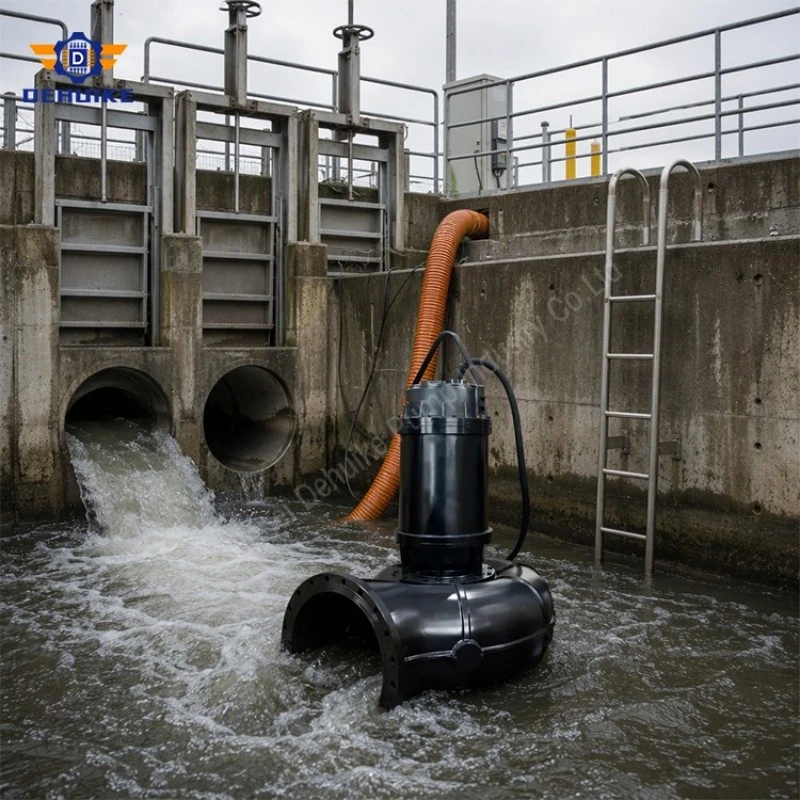
Modern architectural and municipal civil engineering increasingly relies on deep subterranean spaces, including multi-story underground commercial complexes, subway transit concourses, subterranean transformer vaults and low-elevation highway tunnels. These subterranean facilities reside below the municipal gravity sewer invert, rendering gravity wastewater evacuation physically impossible. All sanitary effluent, seepage water, firefighting runoff and stormwater inflow must be collected in localized sump basins and lifted automatically into municipal interceptors. The automatic submersible drainage pump represents the vital heartbeat of subterranean civil drainage.
In unattended commercial basements, equipment failure leads directly to catastrophic financial losses-flooding server rooms, ruining retail inventory and short-circuiting building electrical switchboards. An automatic submersible drainage pump installed in these facilities must operate with absolute autonomy, managing routine low-flow seepage while maintaining standby readiness to evacuate massive firefighting deluge water volumes.
Primary unattended civil deployment sectors:
- Underground transportation tunnels and metro stations: Track-side sump pits collect ground seepage, brake wash water and sudden rainwater ingress from station portals. Heavy-duty automatic drainage pumps cycle autonomously based on track basin water levels, ensuring train operations proceed without waterlogging.
- High-rise building elevator pits and parking vaults: Elevator shafts represent the lowest points in commercial buildings, vulnerable to water intrusion from plumbing leaks or storm ingress. Compact automatic drainage pumps evacuate seepage water automatically, preventing elevator machinery corrosion and electrical faults.
- Highway underpasses and depressed highway interchanges: During sudden summer cloudbursts, depressed roadways accumulate torrential stormwater runoff within minutes. High-capacity automatic submersible drainage pumps start up in cascade arrangements, rapidly clearing roadways and preventing vehicle submergence.
- Industrial wastewater retention and balancing basins: Factories generating intermittent process wash water utilize automatic drainage pumps to transfer neutralised effluent into municipal sewer networks during off-peak electrical tariff periods, maximizing energy economy.
By integrating robust autonomous controls with proven hydraulic capacity, the automatic submersible drainage pump safeguards commercial assets and public infrastructure around the clock.
Integrated Microprocessor Firmware, Self-Test Routines and Anti-Seize Exercise Cycles
The intelligence governing an automatic submersible drainage pump has evolved from crude electromagnetic relays into integrated solid-state microprocessor controllers. Embedded directly inside the terminal chamber or mounted within an adjacent smart control panel, digital microcontroller units (MCUs) monitor electromechanical operating parameters in real time, executing automated diagnostic routines that proactively prevent pump failures before they manifest.
One of the most persistent operational threats to drainage equipment in seasonal sumps is mechanical seizure caused by prolonged standby inactivity. In stormwater retention pits that remain dry for months during drought periods, dissolved minerals, lime scale and rust scale crystallize across the narrow running clearances between the impeller and suction plate. When a sudden storm finally fills the wet well, a standard pump attempts to start against a seized impeller, drawing locked-rotor current and tripping breakers instantly. An intelligent automatic submersible drainage pump eliminates this failure mode through autonomous anti-seize exercise cycles.
Scheduled anti-seize exercise routines. The onboard microprocessor is programmed with an autonomous periodic exercise timer. If the pump remains idle for longer than 72 or 168 continuous hours, the controller energizes the motor for a brief 2-second burst regardless of water level, rotating the impeller just enough to shear away mineral scale without running dry.
Automated anti-jam reverse self-cleaning. If the controller senses an abrupt current spike exceeding 130% of full-load rating during pumping-indicating that a rag, plastic bag or fibrous debris has entered the impeller eye-the microprocessor halts the forward cycle, initiates a brief 1-second reverse pulse to discharge the obstruction, and resumes forward pumping automatically.
Phase loss and unbalanced voltage detection. The smart MCU continuously evaluates three-phase supply symmetry. If supply voltage drops below 15% or a phase conductor fails, the controller locks out the motor within 500 milliseconds, displaying an optical diagnostic code and preventing winding burnout.
Integrated cycle counting and runtime logging. Embedded non-volatile EEPROM memory logs total motor run hours, cumulative start cycles, maximum recorded winding temperatures and historical trip events, providing invaluable baseline telemetry for facility asset management teams.
This integrated electronic intelligence elevates the automatic submersible drainage pump from a passive mechanical component into a self-monitoring, self-protecting electromechanical asset.
Dual-Power Automatic Transfer, Standby Battery Integration and Dry-Run Thermal Cutoff
Severe weather events that create the most urgent drainage demands-such as tropical hurricanes, torrential rainstorms and localized flash floods-are precisely the events most likely to cause catastrophic municipal electrical grid collapse. High winds topple utility power lines, transformer sub-stations flood, and municipal grid power cuts out at the exact moment basement sump inflows reach their maximum volume. An automatic submersible drainage pump system deployed for mission-critical flood defense must therefore be engineered with robust secondary power architectures and dry-run thermal defenses.
Dual-power automatic transfer switch (ATS) integration guarantees that the drainage station switches seamlessly from primary utility power to an on-site diesel generator or high-capacity uninterruptible battery inverter within 5 to 10 seconds of grid failure, maintaining continuous dewatering velocity.
Emergency power resilience and dry-run protection features:
- Automatic Transfer Switch (ATS) coordination: The automatic drainage control panel incorporates electrically and mechanically interlocked contactors connected to primary utility feeders and secondary emergency generator busses, preventing back-feeding while ensuring autonomous switchover.
- DC-battery backup pump integration: For residential basements and telecommunications vaults where installing diesel generators is impractical, a dual-pump station pairs a primary AC automatic submersible drainage pump with a heavy-duty 12V or 24V DC auxiliary submersible pump powered by deep-cycle AGM or lithium iron phosphate (LiFePO4) battery banks.
- Electronic dry-run sensor protection: If a water-level sensor fails in the closed position, a standard pump would continue running indefinitely after the sump is empty, rapidly burning out mechanical seals and motor bearings. The intelligent controller monitors motor active power (cos φ power factor); when the pump runs dry, motor active power drops by 60%, prompting the MCU to shut down the unit within 15 seconds to prevent thermal damage.
- Thermal overload auto-reset switches: Bi-metallic thermal protectors embedded directly inside the motor winding overhang interrupt the control circuit if internal temperatures exceed 130°C. Once the motor cools to safe thresholds (typically 80°C), the controller can execute an automated restart test, provided the fault has cleared.
These protective electrical contingencies ensure that the automatic submersible drainage pump remains fully operational during extreme natural disasters and protects its own mechanical integrity against dry-running.
Portable Ergonomic Architecture, Quick-Coupling Flanges and Mobile Emergency Dewatering
While permanent municipal lift stations utilize heavy, cast-iron pumps weighing hundreds of kilograms installed on fixed guide-rail pedestals, emergency municipal public works, firefighting brigades and civil construction contractors require portable, mobile dewatering equipment. When a utility trench floods, a water main bursts or an excavation pit fills with muddy stormwater, emergency crews must transport, deploy and energize drainage pumps within minutes. An automatic submersible drainage pump engineered for mobile emergency service balances rugged durability with compact, ergonomic transportability.
The structural design of portable automatic drainage pumps utilizes lightweight, high-tensile materials-such as cast aluminum alloy motor shells with anodized anti-corrosion coatings, impact-resistant reinforced polypropylene strainer bases and precision investment-cast stainless steel impellers. This material synergy reduces total pump weight by 40% to 60% compared to conventional gray iron pumps of equivalent hydraulic power, enabling a 1.5 kW to 3 kW pump to be handled safely by a single operator.
Ergonomic reinforced carry handles. Heavy-duty transport handles are integrated directly into the upper motor casing, featuring rubberized, shock-absorbing grip sleeves. The handle geometry is balanced around the pump's center of gravity, preventing awkward swinging during manual transport.
Integrated vertical float switch sleeves. Conventional trailing float switches snag on narrow trench walls and excavation ladders. Portable automatic drainage pumps incorporate a compact vertical float switch enclosed within a protective cylindrical shroud, allowing the pump to fit into cramped 300 mm diameter sumps without float hang-up.
Camlock quick-connect discharge couplings. To eliminate cumbersome flanged bolt-up procedures in flooded trenches, the pump discharge features an aluminum or stainless steel Camlock quick-connect male fitting (sizes from 2-inch to 4-inch). Emergency crews can snap flexible layflat discharge hoses into place in seconds without tools.
Heavy-duty abrasion-resistant power cables. Mobile dewatering cables endure severe physical abuse, including rough concrete dragging and accidental vehicle tire crossing. Heavy-duty chloroprene rubber (H07RN-F grade) or polyurethane sheathed cables provide extreme abrasion resistance, oil resistance and UV stability.
Combining high hydraulic flow rates with true portable ergonomics ensures that the automatic submersible drainage pump serves as an indispensable tool for municipal emergency response units.
Building Automation System (BAS) Interfacing, Modbus Protocol and Remote SCADA Telemetry
In modern smart buildings, industrial IoT facilities and centralized municipal utilities, isolated standalone equipment is no longer acceptable. Facility managers require centralized visibility into equipment status, predictive maintenance metrics and instantaneous alarm notifications transmitted to centralized building management systems (BMS) or cloud-based SCADA dashboards. The automatic submersible drainage pump bridges the gap between field fluid machinery and smart facility networks through comprehensive digital telemetry integration.
The automatic drainage pump control terminal incorporates standard digital communications architectures-including RS-485 serial interfaces running native Modbus-RTU protocols, Ethernet ports supporting Modbus-TCP/IP and optional wireless cellular 4G/NB-IoT telemetry gateways.
Key Building Automation System (BAS) telemetry parameters:
- Volt-free auxiliary alarm contacts (Dry Contacts): The control panel provides isolated dry contact relay outputs for remote signaling: "Pump Running Status", "Pump Trip / Overload Alarm", "High Water Level Warning" and "Power Failure Alarm", allowing seamless hardwired integration into any third-party fire alarm or building monitoring panel.
- Real-time analog operational parameters: Via Modbus register mapping, the central SCADA system reads live operating metrics, including: real-time motor current (Amperes per phase), line voltage, active power (kW), cumulative running hours, wet-well water level (meters) and motor winding temperatures.
- Remote supervisory command capability: Authorized facility operators can initiate remote pump starts, force lead/lag duty rotations, reset minor alarm lockouts or adjust start/stop level thresholds directly from the centralized control room display without visiting wet wells in person.
- Cloud-based SMS / email emergency alerts: When paired with an IoT telemetry module, the automatic pump controller transmits instantaneous push notifications, SMS text messages and automated emails to on-call maintenance engineers the instant an abnormal high-water condition or motor trip occurs.
Integrating the automatic submersible drainage pump into modern building networks transforms reactive emergency responses into predictable, data-driven facility management.
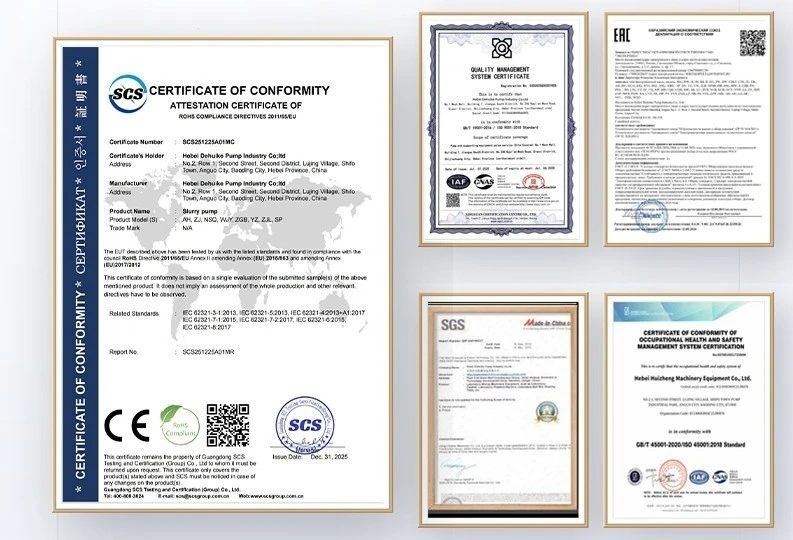
Autonomous Drainage Specification Matrix and Verified WQ Rated Hydraulic Duty Table
Selecting an optimal automatic submersible drainage pump requires matching hydraulic system requirements (flow rate, dynamic head, pipe losses) with the appropriate level sensing technology, electrical starting method and control enclosure rating. Consulting engineers and project procurement officers should verify specifications against the following engineering selection matrix:
|
Specification Parameter |
Autonomous Engineering Requirement Description |
Procurement Verification Focus |
|
Hydraulic Duty & Flow Head |
Design flow rate (m³/h), static lift, dynamic pipe friction losses and system head curve |
Ensure duty point falls within 70% to 115% of the rated peak efficiency point (BEP). |
|
Level Sensing Architecture |
Solid-state conductivity probes, hydrostatic pressure sensor, or vertical enclosed float |
Eliminate mechanical trailing floats in cramped sumps or turbulent wastewater basins. |
|
Dry-Run Protection Method |
Cos φ active power drop sensing, low-level electrode cutoff, or float stop interlock |
Verify automatic motor shutdown within 15 seconds of dry-running condition. |
|
Autonomous Maintenance Logic |
Microprocessor anti-seize periodic exercise timer, anti-jam reverse pulse routine |
Confirm controller supports 72-hour exercise cycles for seasonal stormwater basins. |
|
Emergency Power Provisions |
Dual-power Automatic Transfer Switch (ATS) interface or DC battery backup integration |
Match starting inrush current against standby generator / inverter kVA ratings. |
|
Building Management Telemetry |
Volt-free dry contacts (Run/Fault/High-Level) or RS-485 Modbus-RTU communications |
Ensure seamless data transfer to building SCADA or central automation systems. |
|
Testing & Quality Certification |
ISO 9906:2012 Grade 2B/1B hydraulic performance test, IP68 enclosure hydrostatic test |
Request certified factory test reports, wiring schematics and submittal drawings. |
Verified WQ Series hydraulic platforms (Official Factory Engineering Data)
The following engineering table features verified standard WQ models extracted directly from the official factory engineering workbook, serving as representative hydraulic platforms for automatic drainage pump engineering (covering high-speed 2900 rpm light dewatering units alongside heavy municipal platforms):
|
Model |
Out. mm |
Q m³/h |
H m |
kW |
r/min |
η % |
kg |
L×W×H mm |
|
40WQ12-15-1.5* |
40 |
12 |
15 |
1.5 |
2900 |
48 |
55 |
330×205×506 |
|
50WQ15-20-2.2* |
50 |
15 |
20 |
2.2 |
2900 |
51 |
60 |
315×225×605 |
|
50WQ40-30-7.5* |
50 |
40 |
30 |
7.5 |
2900 |
62 |
180 |
540×420×870 |
|
65WQ25-28-24* |
65 |
25 |
28 |
4.0 |
2900 |
58 |
90 |
388×260×665 |
|
80WQ60-13-4* |
80 |
60 |
13 |
4.0 |
2900 |
72 |
130 |
520×390×750 |
|
100WQ70-22-11* |
100 |
70 |
22 |
11.0 |
1450 |
70 |
260 |
560×410×970 |
|
150WQ140-7-5.5* |
150 |
140 |
7 |
5.5 |
1450 |
79 |
180 |
545×450×830 |
|
200WQ250-11-15* |
200 |
250 |
11 |
15.0 |
1450 |
73 |
350 |
620×380×1050 |
|
250WQ600-15-45* |
250 |
600 |
15 |
45.0 |
1450 |
73 |
950 |
1050×700×1650 |
|
300WQ480-15-45* |
300 |
480 |
15 |
45.0 |
1450 |
76 |
1500 |
1110×900×1770 |
|
350WQ1085-28-132* |
350 |
1085 |
28 |
132.0 |
980 |
83 |
2520 |
1520×1300×2500 |
|
400WQ1500-26-160* |
400 |
1500 |
26 |
160.0 |
980 |
82 |
2880 |
1650×1300×2500 |
|
500WQ2500-12-110* |
500 |
2500 |
12 |
110.0 |
980 |
85 |
2100 |
1580×1050×2200 |
* Models marked with asterisk denote standard hydraulic base platforms available for integrated automatic level control configuration, covering flows from 12 m³/h up to municipal stormwater capacities of 2,500 m³/h.
Hot Tags: automatic submersible drainage pump, China automatic submersible drainage pump manufacturers, suppliers, factory