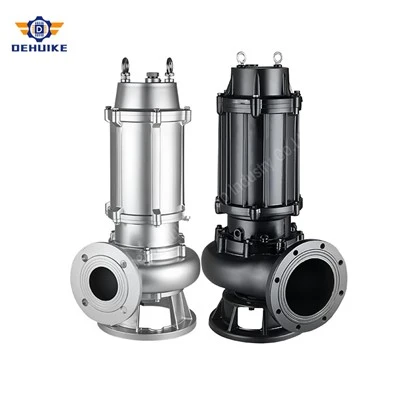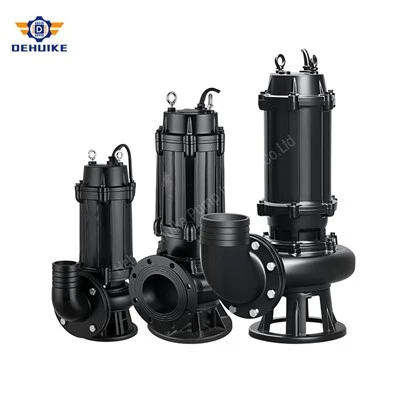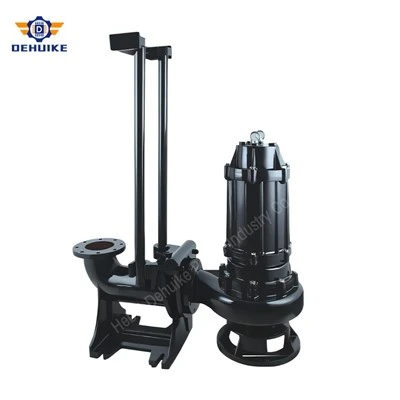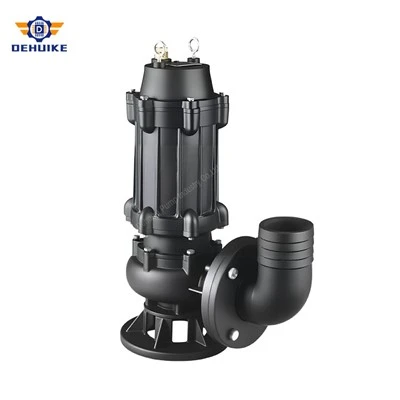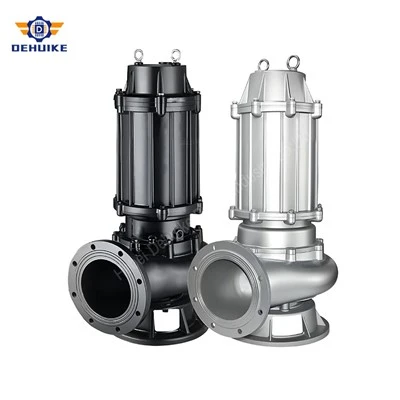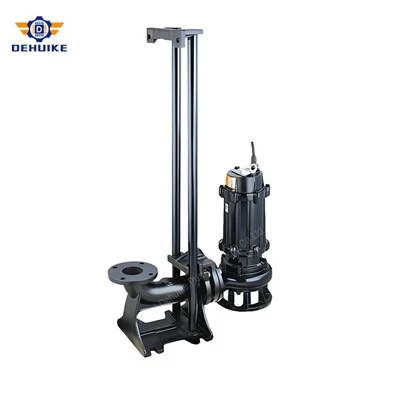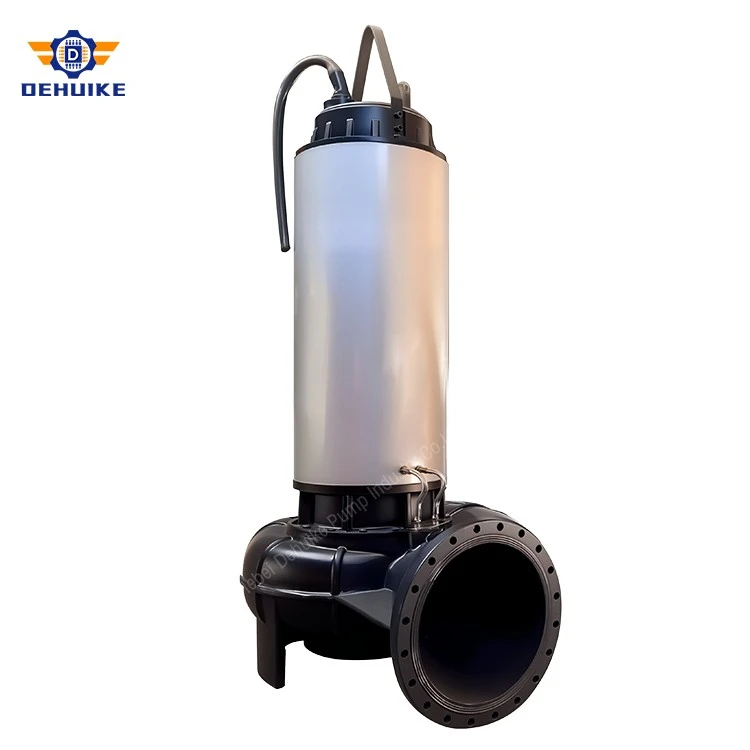
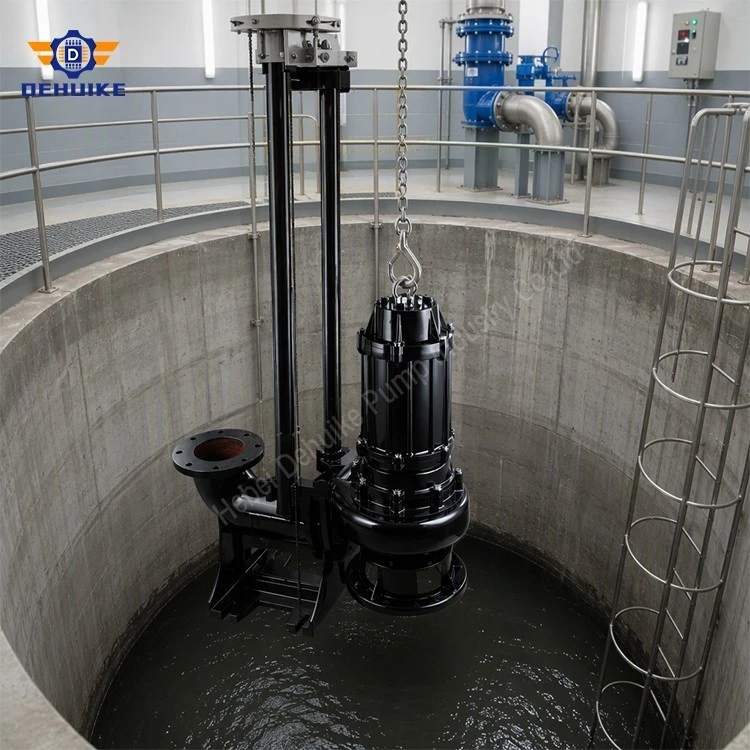
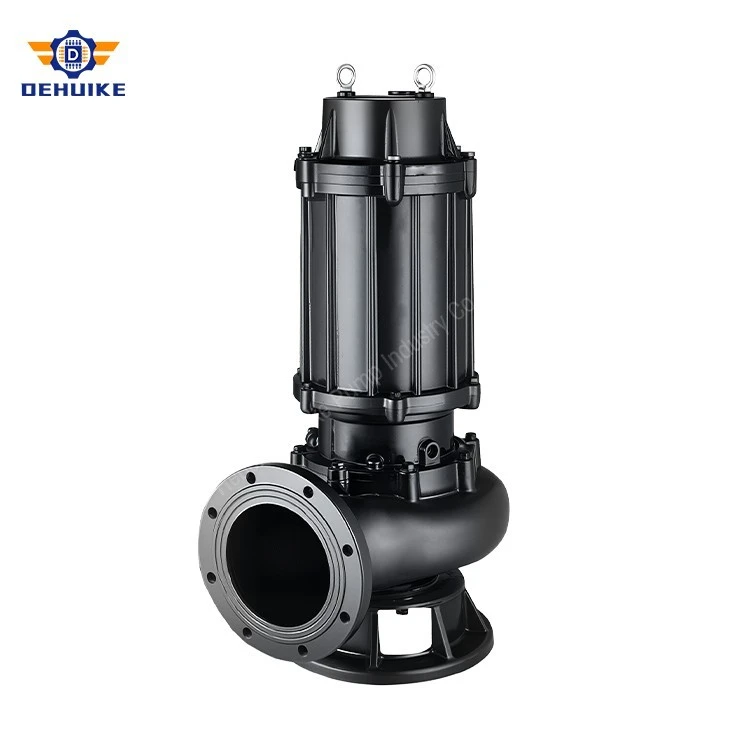
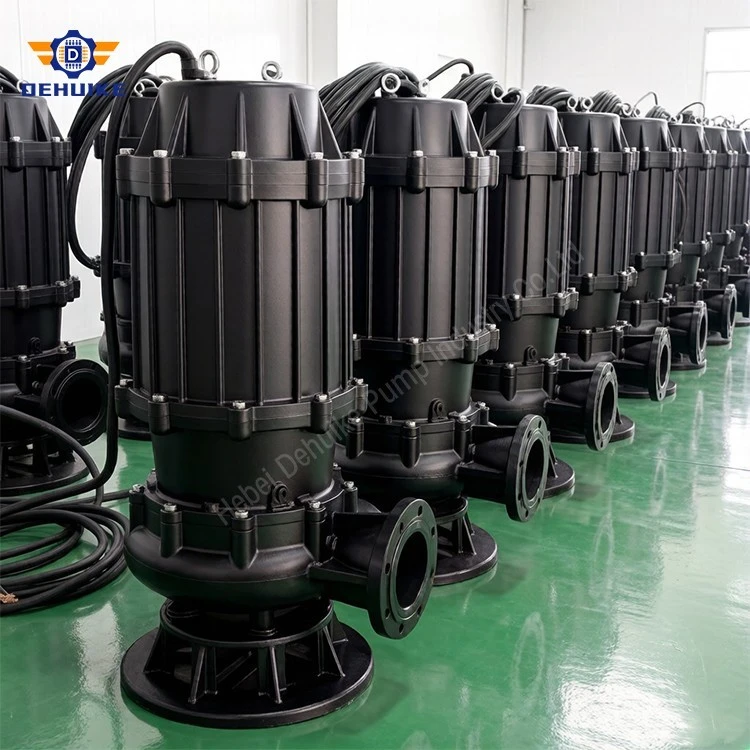
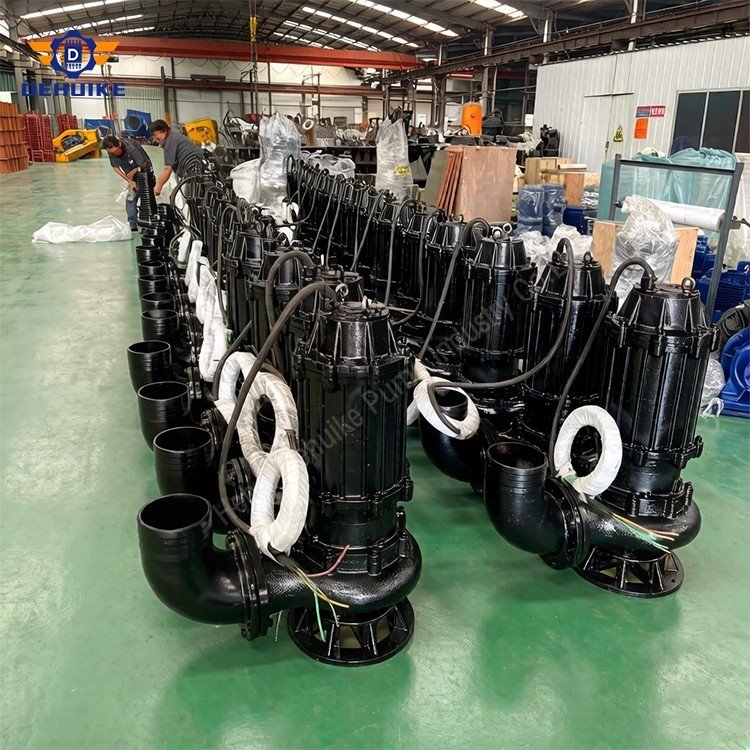
Hebei Dehuike Pump Industry Co., Ltd. is one of the most reliable manufacturers and suppliers of submersible dirty water pump in China. With abundant experience, we are committed to providing high quality customized pumps with competitive price. Welcome to wholesale bulk submersible dirty water pump for sale here from our factory. Also, pricelist is available.
Dirty Water Solid-Liquid Multiphase Dynamics and Sediment Settling
A submersible dirty water pump operates at the demanding interface between clear water hydraulics and heavy mineral slurry pumping. In civil construction sites, aggregate quarries, stormwater desilting basins and agricultural runoff pits, wastewater does not flow as a homogeneous liquid. It carries a dynamic mixture of suspended clay colloids, abrasive quartz sand, decomposed organic silt, pulverized masonry dust and irregular mineral gravel. This solid-liquid multiphase mixture induces intense micro-abrasion, alters fluid apparent viscosity and creates rapid sediment stratification whenever flow velocities decline.
The hydraulic design of a submersible dirty water pump must prevent solid particles from falling out of suspension while traversing internal volute channels. When fluid velocity drops below the critical settling threshold (typically 1.5 to 2.2 meters per second for abrasive silica sand), particles accumulate along the lower casing perimeter, reducing the active cross-sectional area, restricting throughput and forcing the pump to operate far off its rated duty point.
Critical suspension velocity engineering. The internal hydraulic volute of the submersible dirty water pump maintains accelerated fluid velocities throughout the diffusion path, ensuring that mineral grit remains entrained in turbulent suspension from the suction eye straight through the discharge nozzle.
Rheological viscosity compensation. Water laden with fine clay particles exhibits non-Newtonian, Bingham plastic behavior. As solids concentration by volume climbs past 10% to 15%, apparent viscosity increases, steepening frictional head loss across discharge piping. Heavy-duty dirty water hydraulics account for this head penalty during motor sizing.
Particle impingement dynamics. Abrasive wear rate scales exponentially with particle kinetic energy. By optimizing blade entrance angles and smoothing shroud curvature, the submersible dirty water pump minimizes direct 90-degree particle impacts, converting destructive normal impingement into mild tangential sliding abrasion.
Sediment stratification prevention. To prevent heavy sand beds from compacting around the suction bell during pump downtime, the casing base incorporates localized fluid agitation ports that resuspend settled solids upon start-up.
By mastering multiphase solid-liquid dynamics, mechanical engineers ensure that the submersible dirty water pump delivers steady flow without internal settling blockages or sudden capacity degradation.
Semi-Open Self-Cleaning Impellers and Dynamic Expeller Sealing
Impeller configuration is the primary mechanical factor that determines whether a submersible dirty water pump can survive abrasive slurry duty without persistent clogging or premature clearance wear. Conventional enclosed impellers feature narrow front and rear shrouds that are highly vulnerable to abrasive sand wedging. When gritty mineral particles enter the fine running clearance between an enclosed impeller shroud and the stationary casing ring, they grind continuously against the metal faces, rapidly enlarging clearances and inducing massive hydraulic recirculation.
A high-performance submersible dirty water pump utilizes an engineered semi-open or vortex-style impeller cast from high-strength ductile iron or abrasion-resistant alloy. Lacking a front shroud, the semi-open impeller eliminates the annular confinement zone where abrasive sand typically binds, allowing slurry particles to sweep freely across stationary suction wear plates.
Key semi-open hydraulic and dynamic expeller features:
- Integrated rear expeller back-vanes: The rear shroud of the semi-open impeller incorporates cast dynamic expeller vanes that generate a powerful centrifugal counter-pressure field during rotation. This centrifugal pumping action expels abrasive silt and sand outward away from the mechanical seal chamber.
- Shaft seal cavity pressure reduction: By continuously pumping fluid out of the rear cavity, dynamic expeller back-vanes reduce the static pressure acting directly against the primary mechanical seal faces, significantly lowering frictional face heat and extending seal service life.
- Axially adjustable suction wear plate: As abrasive silica sand gradually scours the front vane tips, the clearance between the semi-open impeller and the stationary suction cover enlarges. External adjustment shims allow plant mechanics to restore factory clearances (0.3 mm to 0.5 mm) in minutes without pump disassembly.
- Clog-free flow passages: The wide-vane profile of the semi-open impeller provides generous spherical solids clearance, easily discharging fibrous roots, wood chips, mud clods and gravel without vane bridging.
Combining semi-open vane profiles with dynamic expeller sealing empowers the submersible dirty water pump to handle severe silt concentrations with minimal mechanical friction.
Construction Dewatering, Sand-Washing Slurry and Silt Retention Basins
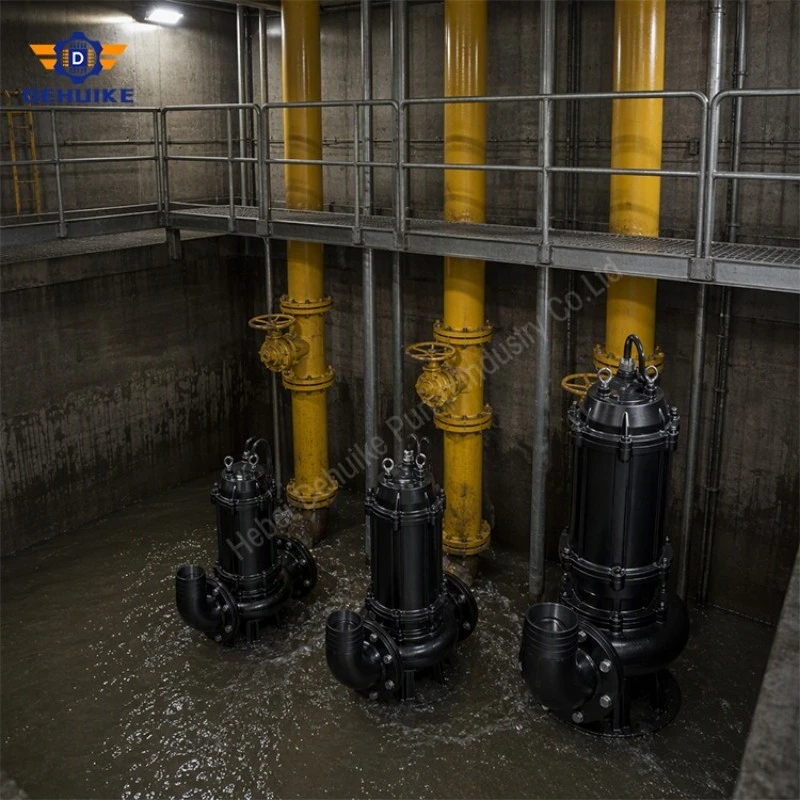
The engineering durability of a submersible dirty water pump is tested daily across demanding civil engineering and heavy infrastructure worksites. When contractors excavate deep building basements, highway bridge piers or utility trenches, groundwater mixed with surface runoff rapidly inundates the work area. This effluent contains pulverized bedrock, cement wash water, bentonite drilling mud and high-density quartz silt that quickly destroys ordinary clear-water utility pumps.
A robust submersible dirty water pump serves as the frontline defense against site flooding, operating submerged in rough excavation sumps to evacuate murky water continuously so construction crews can pour concrete foundations and erect structural steel safely on dry footings.
Primary industrial and civil application domains:
- Civil building foundation and basement caissons: Excavation pits collect rainwater, groundwater seepage and bentonite slurry during piling operations. Submersible dirty water pumps dewater these gritty sumps against static heads up to 30 meters, keeping excavation floors stable.
- Aggregate quarries and sand-washing plants: Sand classification, gravel washing and stone crushing produce thousands of cubic meters of muddy wash water laden with abrasive fines. Dirty water pumps recirculate this slurry to settling lagoons and hydrocyclone clarifiers.
- Highway underpasses and municipal storm desilting pits: Road runoff carries abrasive road dust, tire wear particles, autumn leaves and heavy grit into municipal collection basins. Submersible dirty water pumps clear these silted sumps automatically, preventing highway flash flooding.
- Ready-mix concrete batching plants: Washing concrete truck drums and aggregate delivery hoppers generates high-pH (pH 11 to 12) wash water containing suspended Portland cement and fine sand. Heavy-duty dirty water pumps handle this alkaline slurry without motor overheating.
By surviving the harshest gritty worksites, the submersible dirty water pump protects contractors from catastrophic project delays and structural excavation washouts.
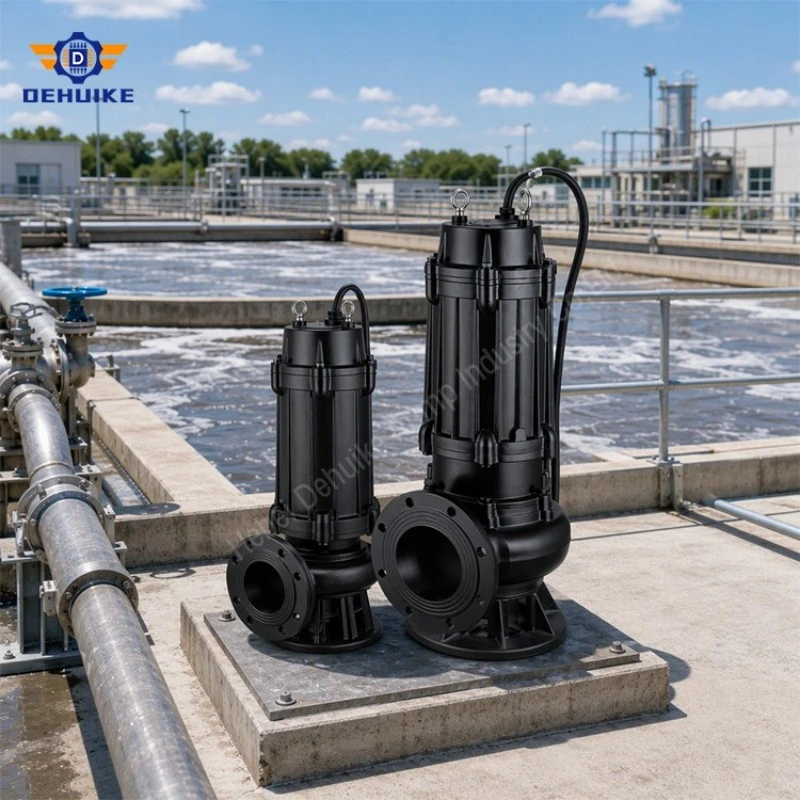
Net Positive Suction Head (NPSH) Margins and Silt-Bed Intake Strainers
Pumping abrasive, aerated dirty water from shallow collection basins introduces severe suction-side hydraulic hazards. When a pump operates near the bottom of an excavation pit, water depth may fluctuate rapidly, reducing available Net Positive Suction Head (NPSHa). If the pump's required Net Positive Suction Head (NPSHr) exceeds available atmospheric and static head, cavitation bubbles form violently within the impeller eye. When these vapor bubbles collapse against the metal surfaces under high discharge pressure, they generate localized micro-jets that pit and erode impeller metallurgy.
Furthermore, in settling sumps with heavy silt beds, a raw pump suction can easily bury itself in soft mud, choking off inflow entirely and causing the motor to draw locked-rotor current. A submersible dirty water pump addresses these suction challenges through optimized low-NPSH impeller inlet geometry and heavy-duty strainer architecture.
Low-NPSHr large-eye impeller design. The impeller inlet eye is generously enlarged and contoured with swept-back leading edges, reducing local entry velocities and minimizing pressure depressions that trigger vapor cavitation.
Heavy-duty cast-iron perforated strainer base. The pump rests on a rugged, wrap-around strainer plate perforated with precision-sized holes (typically 15 mm to 35 mm). This strainer acts as a mechanical screen, stopping boulders, timber offcuts and plastic sheeting from entering the hydraulic chamber while allowing fine silt to pass freely.
Elevated suction clearance plane. The suction opening inside the strainer basket is positioned several inches above the ground contact plane. Even if the outer strainer rests in soft mud, the elevated suction eye draws water from the clearer upper layer, preventing suction choking.
Resilient anti-settling agitation ports. Optional bottom agitator attachments can be fitted directly to the extended motor shaft beneath the strainer, creating localized turbulence that churns settled silt into fluid suspension for easy pumping.
This dual focus on cavitation prevention and mechanical screening allows the submersible dirty water pump to operate reliably in shallow, mud-bottomed sumps.
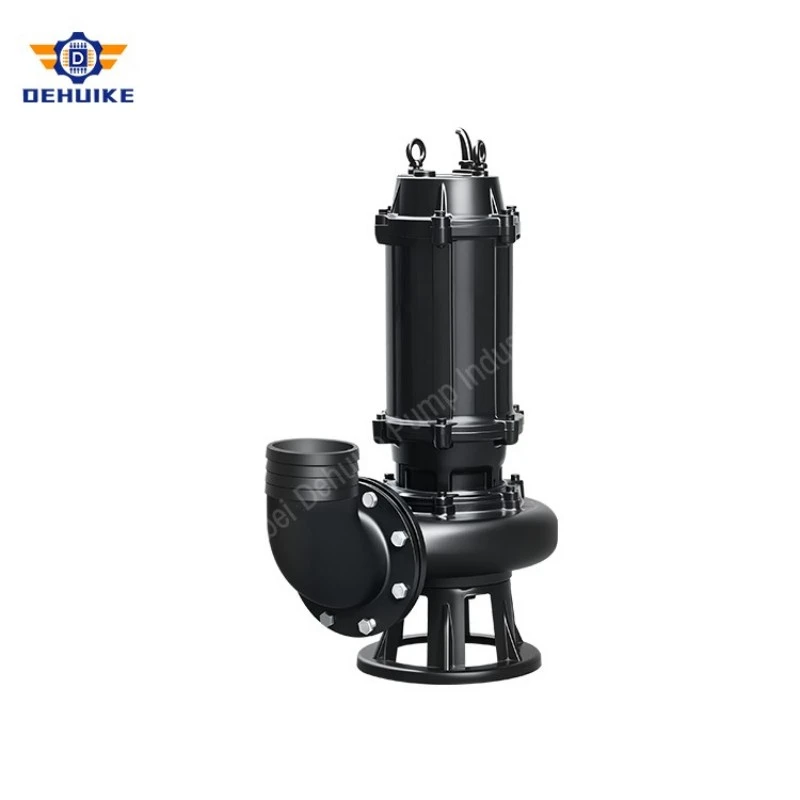
External Cooling Water Jacket and Silt-Induced Thermal Impedance
Electric drive reliability in a submersible dirty water pump is complicated by the thermal insulating properties of thick mud. In clear water pumping, water flowing smoothly past the cast-iron motor frame provides excellent convective heat transfer, keeping stator winding temperatures well below thermal thresholds. However, when wastewater contains high concentrations of clay, silt and oil residues, a dense thermal sludge blanket bakes onto the exterior motor shell, forming an insulating crust that severely impedes heat dissipation into the surrounding pool.
To guarantee continuous motor cooling regardless of exterior mud build-up or shallow liquid submergence, an advanced submersible dirty water pump incorporates an internal or external closed-loop cooling jacket system.
Advanced motor thermal management features:
- Circumferential cooling water jacket: A stainless steel or ductile iron cooling jacket encloses the motor housing. A portion of the pressurized discharge slurry or a separate internal glycol loop is circulated through the annular jacket space, continuously stripping heat from the stator core before exiting through the discharge line.
- Continuous partial-submergence capability: In shallow dewatering sumps, the motor housing is frequently exposed entirely to air. Standard pumps overheat and trip out in minutes under these conditions; a jacket-cooled submersible dirty water pump operates continuously at full rated load in completely dry-pit or un-submerged installations.
- Class H insulation with low thermal rise: Stator windings are wound with premium moisture-resistant copper wire insulated to Class H standards (180°C continuous rating). Conservative electromagnetic sizing restricts steady-state temperature rise to Class B limits (below 80°C), providing a 100°C safety buffer against thermal overload.
- Embedded thermal cut-out switches (PTC): Tri-metallic thermal protectors embedded directly inside each stator phase winding immediately disconnect control contactors if winding temperatures exceed 130°C, preventing catastrophic motor burnout.
This sophisticated cooling architecture ensures that the submersible dirty water pump continues operating reliably even when covered in baking mud or running in shallow drainage trenches.
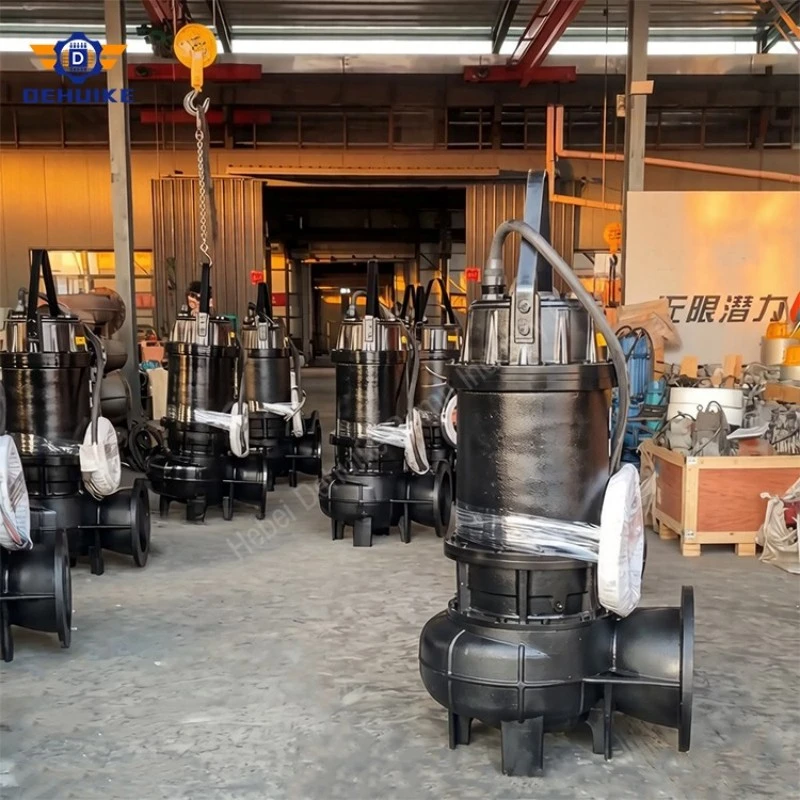
Abrasion-Resistant Silicon Carbide Seals and Labyrinth Sand Excluders
The mechanical shaft seal represents the single most vulnerable component in any pump handling dirty, abrasive wastewater. Fine silica quartz sand possesses extreme micro-hardness (approaching 1,200 Vickers), which rapidly cuts through standard carbon-ceramic or alumina seal faces. If abrasive sand particles migrate into the microscopic liquid film separating the seal faces, they score the polished surfaces, create leakage paths and allow gritty water to invade the motor bearing chamber.
A heavy-duty submersible dirty water pump incorporates a multi-tiered mechanical seal barrier system engineered specifically to repel abrasive particles and withstand severe hydrodynamic vibration.
Dual mechanical seals in isolated oil chamber. The pump features two independent mechanical seals arranged in tandem inside an enlarged, oil-filled barrier chamber. The lower (process-side) seal isolates the gritty wastewater, while the upper (motor-side) seal provides a secondary hermetic barrier separating the lubricating oil from the electric stator.
Ultra-hard sintered silicon carbide (SiC) faces. Both the stationary and rotating faces of the process-side seal are fabricated from premium reaction-bonded or sintered silicon carbide (SiC). With hardness exceeding 2,500 Vickers, silicon carbide easily grinds fine quartz sand without face scratching or grooving.
Centrifugal labyrinth sand excluder. Situated immediately in front of the lower mechanical seal, a rotating labyrinth deflector ring and rubber lip seal create a localized tortuous path. Centrifugal force generated by the spinning shaft continuously throws sand particles outward, preventing abrasive buildup around seal springs.
Optical / conductivity moisture intrusion sensor. A sensitive electrode sensor probe extends into the lower portion of the barrier oil chamber. If the primary seal experiences microscopic wear and allows water ingress into the oil, the sensor signals an early warning to plant operators before moisture can reach motor bearings.
This rugged, multi-layered sealing barrier guarantees that the submersible dirty water pump operates submerged for years without motor contamination.
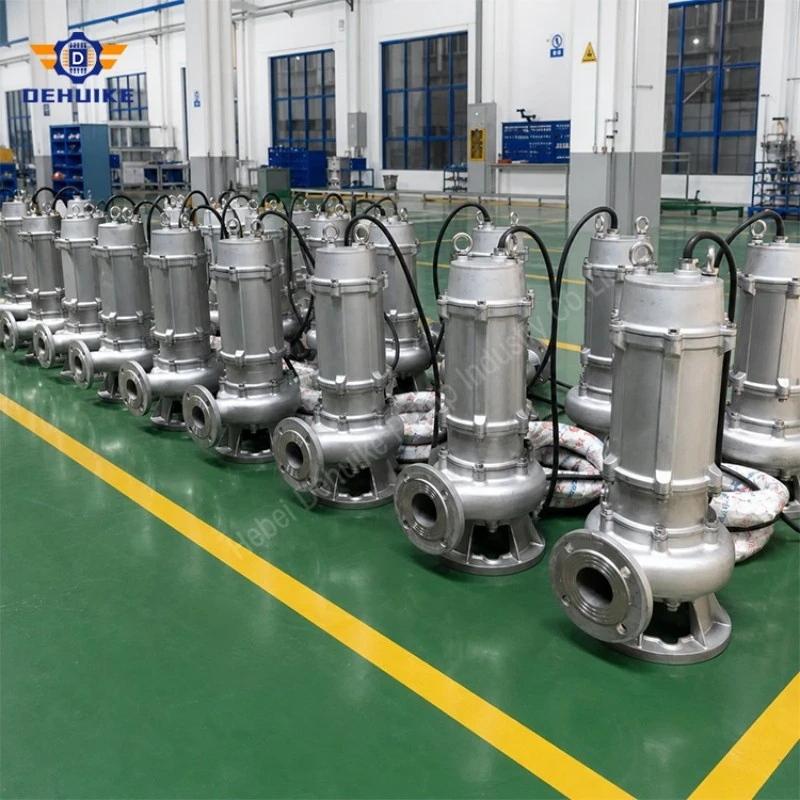
Portable Skid Base, Quick-Clean Strainers and Layflat Hose Deployment
In municipal emergency dewatering, construction site drainage and agricultural washouts, pumping equipment cannot be permanently bolted down. Pumps must be transported rapidly across rugged terrain, positioned on uneven mud banks, connected to flexible discharge piping and brought into operation within minutes. The structural design of a portable submersible dirty water pump prioritizes rapid deployment ergonomics, structural impact resistance and effortless field maintenance.
Rather than relying solely on permanent guide-rail auto-coupling hardware, a versatile submersible dirty water pump incorporates a stable, wide-stance cast-iron or steel skid base that prevents the pump from tipping over or sinking into soft silt beds under the influence of reactive discharge thrust.
Key rapid deployment and field servicing features:
- Heavy-duty tubular transport and protection cage: Selected contractor-grade dirty water pumps feature a wrap-around steel pipe cage that shields the motor housing and cable entry from heavy falling debris, backhoe bucket impacts and rough site handling.
- Camlock and Storz quick-connect hose couplings: The pump discharge nozzle features standardized Camlock, Storz or Bauer quick-connect fittings (sizes from 2-inch to 8-inch). Crews can snap heavy-duty layflat discharge hoses or rigid HDPE lines into place in seconds without threading cumbersome bolts.
- Tool-free quick-clean strainer latches: The bottom intake strainer base is secured via stainless steel heavy-duty toggle clamps or captive thumb bolts. Plant operators can remove the strainer, inspect the impeller eye and flush accumulated debris on site in less than two minutes without tools.
- Reinforced balanced hoisting bails: High-strength cast lifting bails are integrated directly into the upper motor casing. Certified for minimum 5:1 proof-load safety margins, these hoisting points allow safe crane lowering into deep cofferdams, caissons and sheet-piled trenches.
Combining high hydraulic flow rates with true field-ready transportability ensures that the submersible dirty water pump delivers immediate dewatering performance wherever floodwaters rise.
Dirty Water Selection Verification Matrix and Verified WQ Rated Hydraulic Duty Table
Selecting the optimal submersible dirty water pump requires rigorous analysis of fluid solid concentrations, particle abrasiveness, static head, piping friction and electrical power availability. Consulting engineers and civil contractors should verify their project requirements against the following technical selection matrix:
|
Procurement Parameter |
Dirty Water Engineering Requirement |
Technical Verification Focus |
|
Hydraulic Duty & Flow Head |
Rated design flow (m³/h), total dynamic head (m) and operational range across system curve |
Verify pump duty falls strictly within the Preferred Operating Region (POR) between 70% and 115% BEP. |
|
Solids Concentration & Grit % |
Mineral solids by weight (5% to 20%), sand particle size and settleable silt concentration |
Select semi-open impeller with rear expeller vanes and replaceable suction wear liners. |
|
Shaft Sealing Metallurgy |
Dual mechanical seals with sintered silicon carbide (SiC/SiC) process-side faces in oil chamber |
Verify labyrinth sand excluder and moisture leakage detection probe in barrier oil reservoir. |
|
Motor Cooling & Headroom |
Circumferential cooling jacket for continuous operation in un-submerged or snore conditions |
Require Class H insulation with Class B temperature rise (80°C rise limit) and 1.15 service factor. |
|
Suction Protection Architecture |
Perforated wrap-around cast-iron strainer base with elevated suction eye or bottom agitator |
Confirm strainer mesh size matches allowable solids passage through discharge piping. |
|
Field Deployment Hardware |
Cast-iron skid base, Camlock / Storz quick-connect discharge fitting, Grade 80 lifting bail |
Ensure quick-disconnect hose compatibility and certified crane rigging points. |
|
Testing & Quality Certification |
ISO 9906:2012 Grade 2B/1B hydraulic test, casing hydrostatic pressure test, MTC certificates |
Require certified factory performance curve, wiring schematic and submittal drawings. |
Verified WQ Series hydraulic platforms (Official Factory Engineering Data)
The following engineering table features verified standard WQ models extracted directly from the official factory engineering workbook, serving as representative hydraulic platforms for dirty water pumping installations (covering high-speed 2900 rpm contractor dewatering units alongside heavy municipal platforms up to 2,500 m³/h):
|
Model |
Out. mm |
Q m³/h |
H m |
kW |
r/min |
η % |
kg |
L×W×H mm |
|
50WQ10-10-0.75* |
50 |
10 |
10 |
0.75 |
2900 |
54 |
45 |
286×198×550 |
|
50WQ15-15-1.5* |
50 |
15 |
15 |
1.5 |
2900 |
51 |
55 |
291×205×550 |
|
50WQ18-15-1.5* |
50 |
18 |
15 |
1.5 |
2900 |
62 |
60 |
295×228×610 |
|
50WQ27-15-2.2* |
50 |
27 |
15 |
2.2 |
2900 |
70 |
70 |
330×290×680 |
|
65WQ30-10-1.5* |
65 |
30 |
10 |
1.5 |
2900 |
66 |
60 |
330×230×585 |
|
65WQ40-15-4* |
65 |
40 |
15 |
4.0 |
2900 |
68 |
110 |
410×320×740 |
|
80WQ40-7-1.5* |
80 |
40 |
7 |
1.5 |
2900 |
62 |
65 |
390×268×620 |
|
80WQ43-13-3* |
80 |
43 |
13 |
3.0 |
2900 |
68 |
100 |
410×300×710 |
|
100WQ80-9-4* |
100 |
80 |
9 |
4.0 |
1450 |
72 |
120 |
480×355×770 |
|
150WQ180-15-15* |
150 |
180 |
15 |
15.0 |
1450 |
75 |
300 |
650×460×1080 |
|
200WQ300-15-22* |
200 |
300 |
15 |
22.0 |
1450 |
74 |
520 |
780×520×1100 |
|
250WQ500-14-30* |
250 |
500 |
14 |
30.0 |
1450 |
75 |
750 |
960×650×1500 |
|
300WQ700-12-37* |
300 |
700 |
12 |
37.0 |
1450 |
76 |
950 |
1050×700×1650 |
* Models marked with asterisk denote standard hydraulic base platforms available for dirty water configuration, covering flow rates from 10 m³/h up to 700 m³/h with discharge sizes from 50 mm to 300 mm.
Hot Tags: submersible dirty water pump, China submersible dirty water pump manufacturers, suppliers, factory