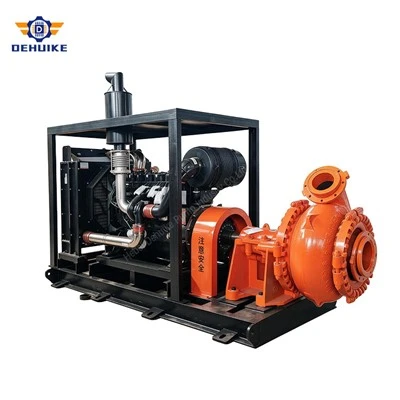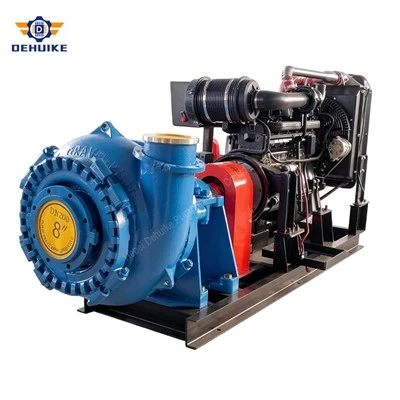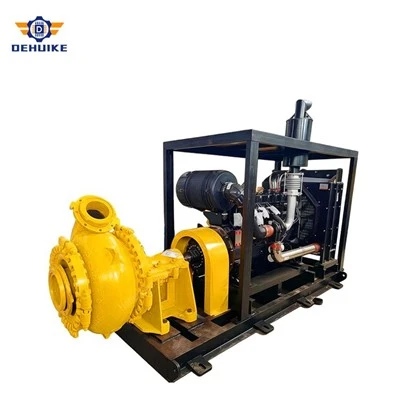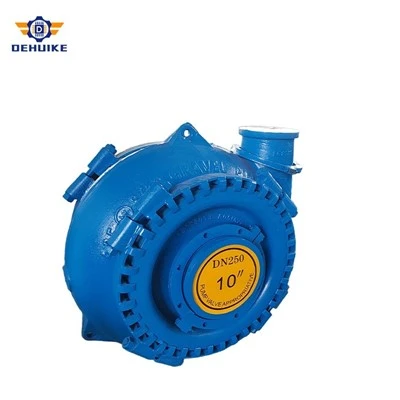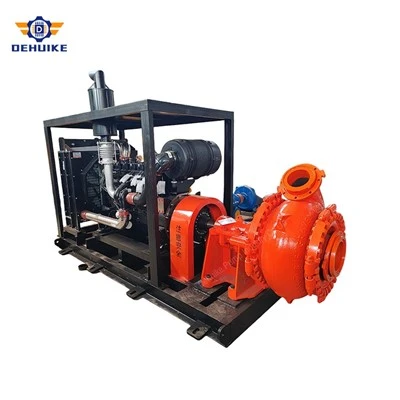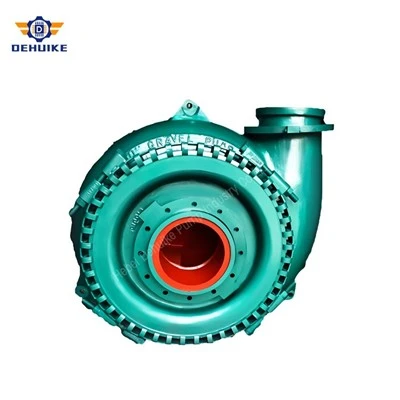

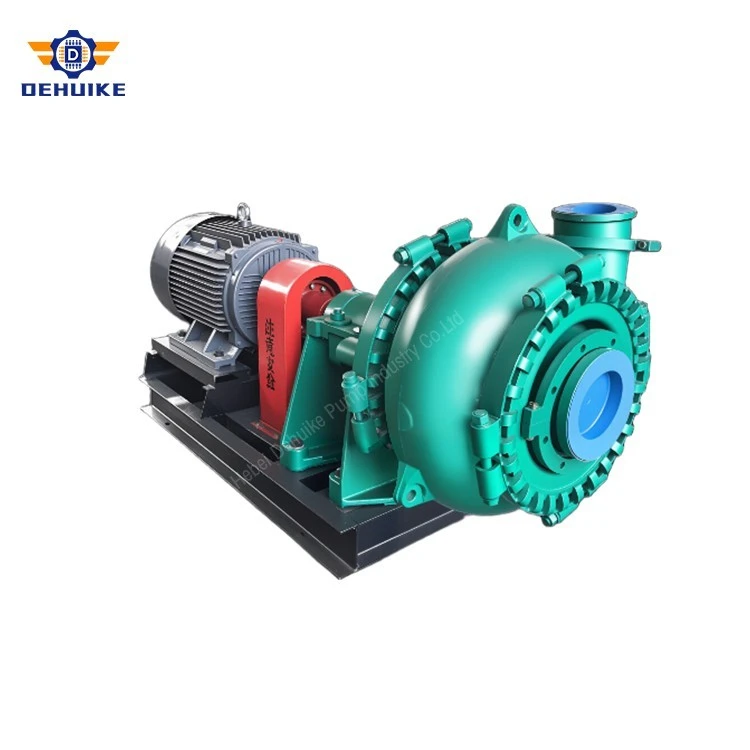
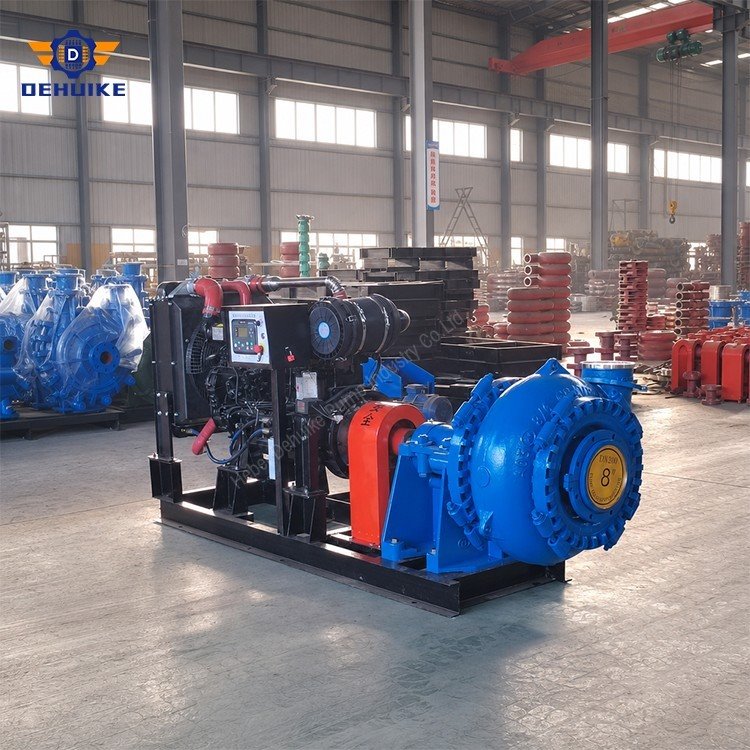
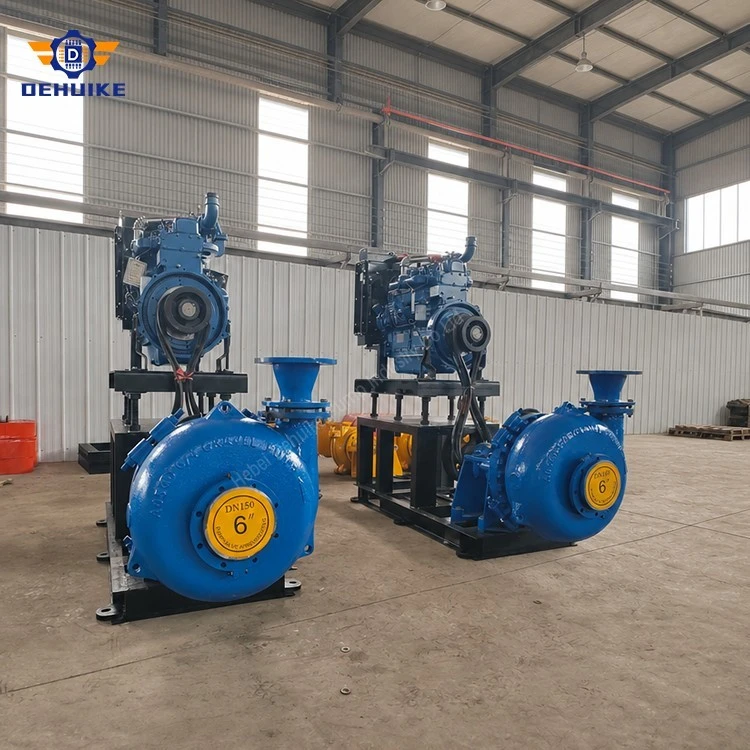
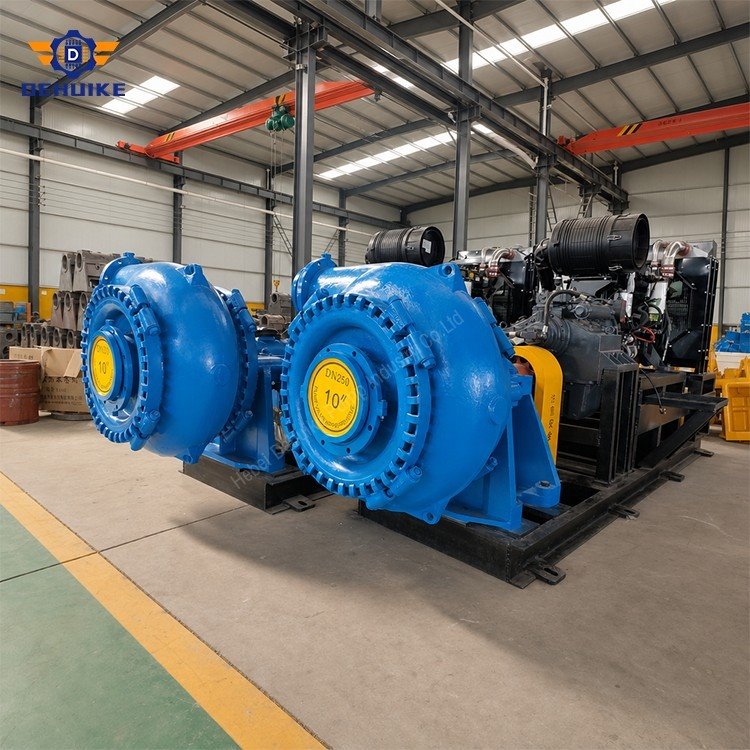
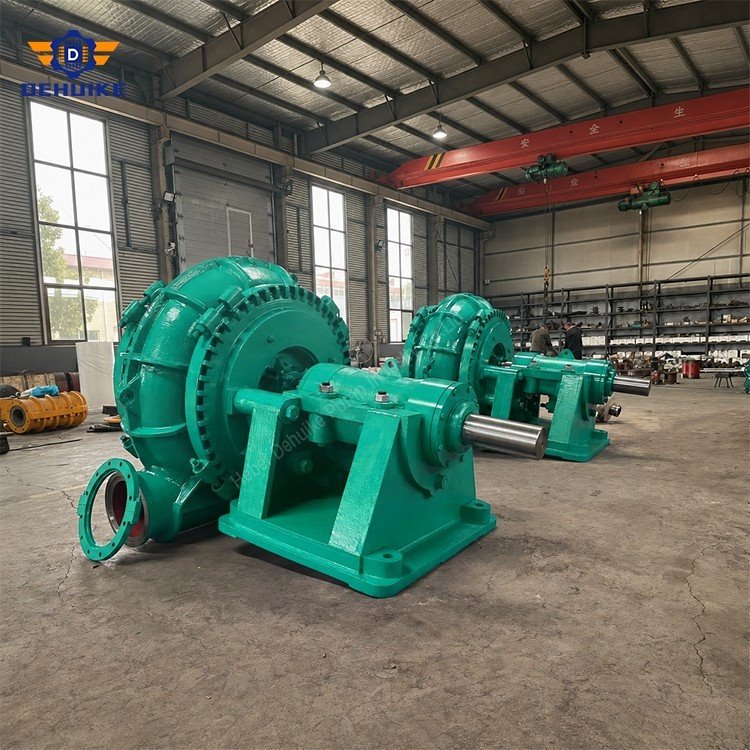
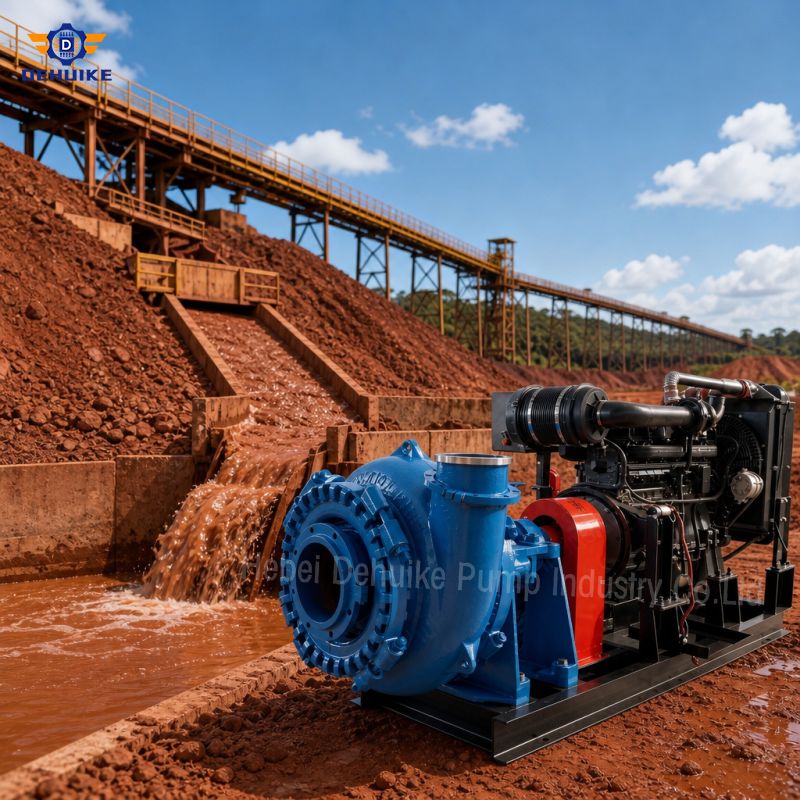
Hebei Dehuike Pump Industry Co., Ltd. is one of the most reliable manufacturers and suppliers of sea sand pump in China. With abundant experience, we are committed to providing high quality customized pumps with competitive price. Welcome to wholesale bulk sea sand pump for sale here from our factory. Also, pricelist is available.
Introduction | Specify The Marine Environment Before The Pump
A Sea Sand Pump moves a water-sand mixture in coastal, nearshore or marine recovery systems. The carrier liquid is not incidental: salinity, suspended fines and biological matter can influence material compatibility, sealing and maintenance. At the same time, tide, wave action and vessel movement may change the relationship between intake, pump and discharge while the equipment is running.
If shell fragments, stones or other coarse objects occur with the seabed sand, a Heavy Duty Gravel Pump may provide the relevant solids-handling category. The acceptable feed still requires a written definition. Saltwater exposure, debris type and suction condition are separate from the maximum-particle number shown in a catalogue table.
Specifications / Technical Data | Review Five Traceable Duty Records
The particle values are technical-data references. They do not describe routine shell content, acceptable debris, or the quantity and shape of coarse material that may enter at once. They also do not prove that another pipeline component has an equal passage. Confirm the complete marine solids envelope before issuing an order.
The Sea Sand Pump duty must be corrected or verified for actual mixture density, particle grading and viscosity where applicable. The displayed cubic metres per hour represent mixture volume, not dry recovered sand. Point efficiency is not wire-to-water efficiency, and motor listings are not measured site demand. Head is not interchangeable with casing pressure rating.
|
G Series model |
Particle reference (mm)* |
Inlet diameter (mm) |
Outlet diameter (mm) |
Bare pump weight (kg) |
|
6/4D-G |
82 |
150 |
100 |
460 |
|
8/6E-G |
127 |
200 |
150 |
1120 |
|
10/8F-G |
178 |
250 |
200 |
2250 |
|
14/12G-G |
241 |
350 |
300 |
5400 |
|
16/14-G |
255 |
400 |
350 |
6950 |
|
G Series model |
Mixture flow (m3/h) |
Head entry (m) |
Listed speed (r/min) |
Point efficiency (%) |
Motor listing (kW) |
|
6/4D-G |
162 |
30 |
1100 |
52 |
45 |
|
8/6E-G |
342 |
29.2 |
1200 |
60.8 |
75 |
|
10/8F-G |
610 |
38.7 |
900 |
49.3 |
185 |
|
14/12G-G |
2419 |
61.1 |
730 |
64.2 |
1250 |
|
16/14-G |
2025 |
33.9 |
450 |
64.5 |
710 |
Product Detail | Recognise The Interaction Of Seawater And Abrasive Solids
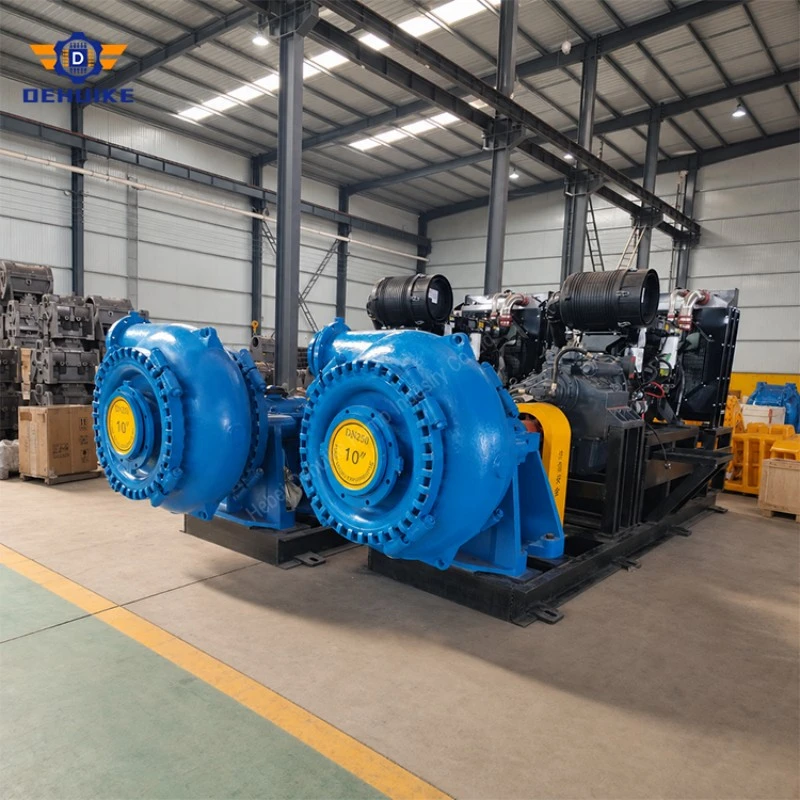
The pump operates centrifugally: the rotating impeller transfers energy to the incoming slurry, and the casing directs the energised mixture to the discharge. Bearings support the shaft, while the selected sealing arrangement controls leakage where the rotating shaft crosses the casing boundary. Those basic functions remain, but marine exposure adds a material-selection problem that fresh-water figures cannot answer.
Sand removes material through sliding and impact; seawater may simultaneously attack a susceptible surface. When corrosion and erosion act together, the resulting loss can differ from either mechanism alone. A hard metal chosen only for abrasion may not be the optimum answer if chloride exposure, pH or stagnant salt deposits are significant.
Features / Equipment Characteristics | Keep Tide And Entrained Air In The Operating Envelope
Tidal range can change static levels and the geometry of floating or submerged hose. Waves and vessel heave can make submergence less steady than a drawing suggests. These changes matter at the inlet, where inadequate available head, vortex formation or air entry can disrupt delivery. The marine operating envelope should therefore identify expected high and low water conditions.
-Define the intake motion. A fixed seabed pickup, ladder-mounted inlet and trailing suction arrangement impose different geometric and mechanical conditions.
-Specify shell and debris content separately from sand grading. Rope, vegetation, refuse and elongated fragments do not behave like rounded mineral grains.
-Assess flexible connections and floating lines for movement, bending and restraint. The Sea Sand Pump nozzle should not carry loads that belong to the pipeline support system.
-Plan around aerated feed. Breaking waves, shallow intake coverage or disturbed seabed gas can produce a mixture whose hydraulic behaviour differs from unaerated slurry.
A Heavy Duty Gravel Pump label does not establish allowable air content, submergence, suction lift, salt concentration or wave condition. Those boundaries must be stated by the responsible system designer and supported by the selected equipment information.
Our Advantages | Select Across Scale Without Hiding Marine Constraints
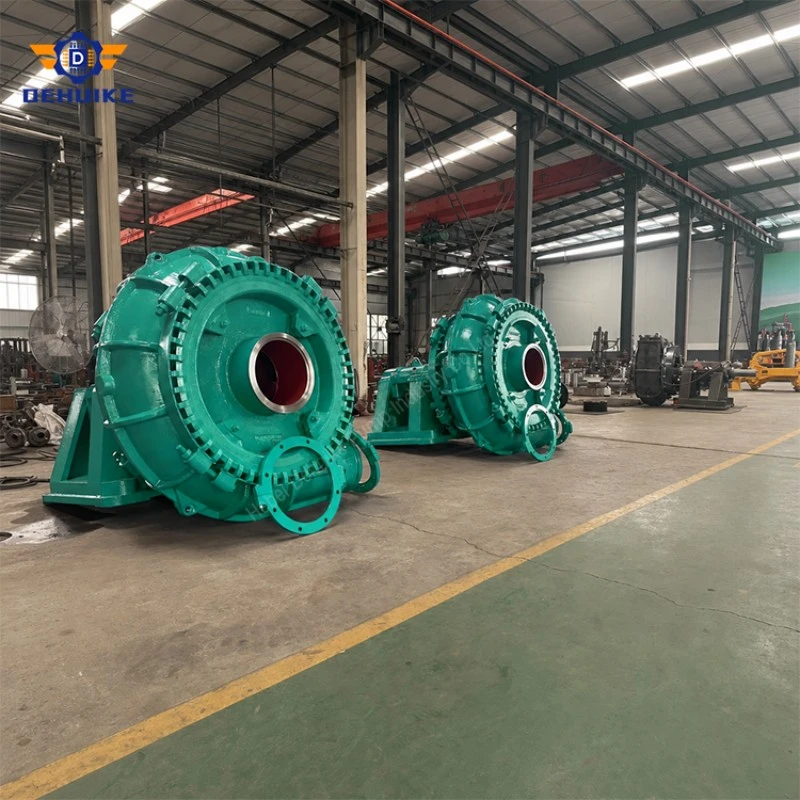
For a Sea Sand Pump purchase, compare useful sand delivered, dilution water, energy, wear-parts usage, corrosion-related inspection and downtime under comparable marine conditions. Include the cost of access to offshore equipment. A catalogue efficiency number cannot represent this complete operating picture.
If an existing Heavy Duty Gravel Pump is being replaced, retain failed and worn components for inspection where practical. Pitting, cutting, impact marks and localised loss can suggest different causes. Use that evidence to question the proposed alloy and operating point instead of promising an unsupported percentage improvement.
Production Process and Quality Assurance | Add Marine Requirements To The Purchase Order
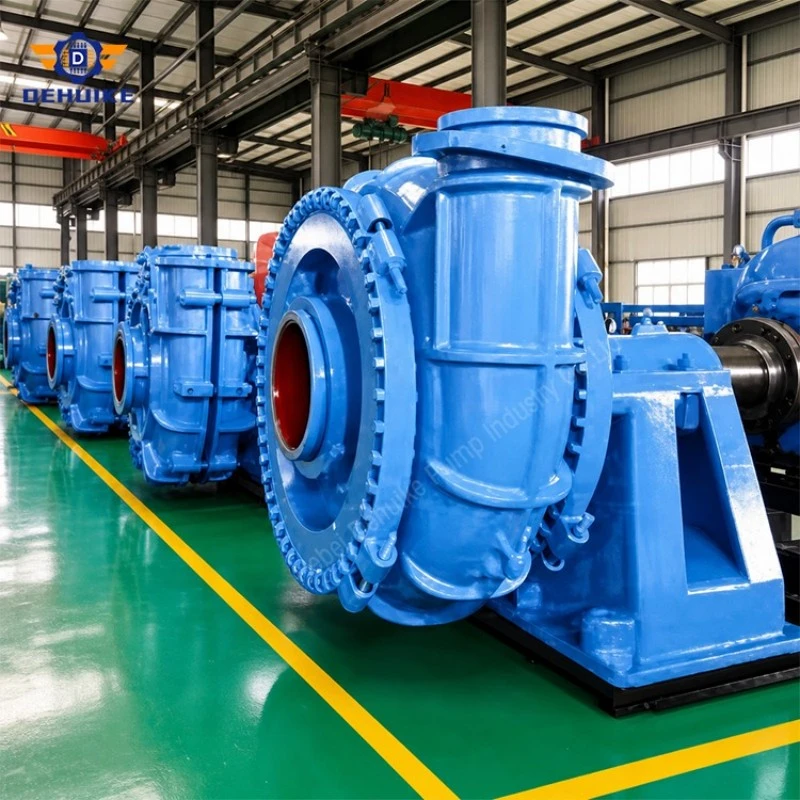
Release the Sea Sand Pump for manufacture only after the material schedule, drive, sealing arrangement and connection drawing are accepted. Identify any required heat-treatment or material-verification record for cast wear parts. Machining and assembly checks should confirm fit at the shaft line, seal interfaces and wet-end joints. These are proposed procurement controls, not statements about an unverified factory routine.
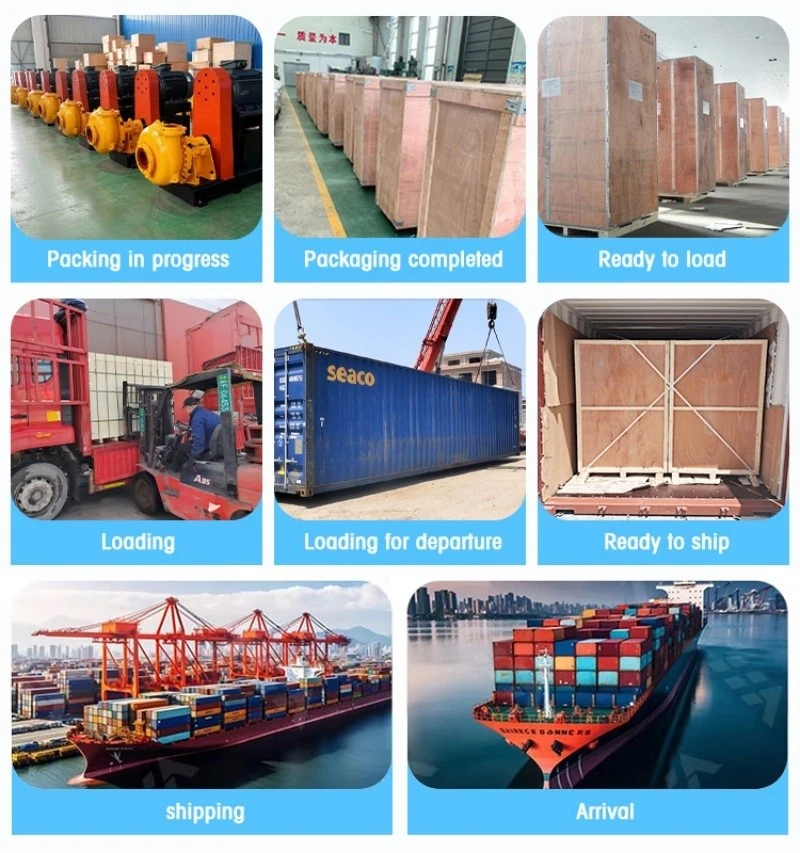
Marine delivery may require preservation beyond ordinary inland storage. Agree protection for machined faces, loose fasteners, electrical items and openings exposed during transport. If the unit will wait on a quay or vessel before installation, specify the storage period and atmosphere. Packing must not be described as seaworthy unless the contracted standard and inspection evidence support that term.
Quality assurance: verify the unit, not a generic brochure
Define the required material certificates, dimensional checks and hydraulic test report in the inspection plan. A clear-water factory test can check an agreed hydraulic condition, but it does not replicate saltwater chemistry, shells or site aeration. Record the actual test speed, arrangement and acceptance tolerance.
Applications | Separate Extraction, Transfer And Placement Duties
A Sea Sand Pump may be assessed for permitted nearshore sand recovery, harbour sediment transfer, beach-nourishment feed or movement of screened marine aggregate. Project suitability depends on local environmental controls and sediment characterization. The examples below demonstrate preliminary data use only; they are not operating references or approval advice.
Compact auxiliary transfer
The 6/4D-G and 8/6E-G selections list 162 m3/h at 30 m head and 342 m3/h at 29.2 m. These points may frame a discussion for smaller processing or transfer circuits. Check whether the inlet is supplied from a controlled sump or directly from a moving marine pickup.
Medium pipeline delivery
The 10/8F-G record combines 610 m3/h with 38.7 m head. Use the full route, tide range and mixture properties to determine whether that point is relevant. The motor entry cannot be adopted until slurry power and the selected transmission have been confirmed.
Larger offshore-to-shore route
For 14/12G-G and 16/14-G, the chosen records are 2419 m3/h at 61.1 m and 2025 m3/h at 33.9 m. The higher capacity and head values refer to specific rows, not guaranteed beach placement rates. A Heavy Duty Gravel Pump at this scale requires a separate review of floating hose, booster need, shore transition and safe maintenance access.
Our Service, Experience And Markets | Prepare A Marine-duty Data Package
Characterise both liquid and solids. Include salinity or chloride data where available, pH, temperature, sand grading, shell fraction, density, fines and known debris. Explain seasonal or location-based variation. For contaminated marine sediment, involve competent environmental and materials specialists rather than relying on ordinary sand-service assumptions.
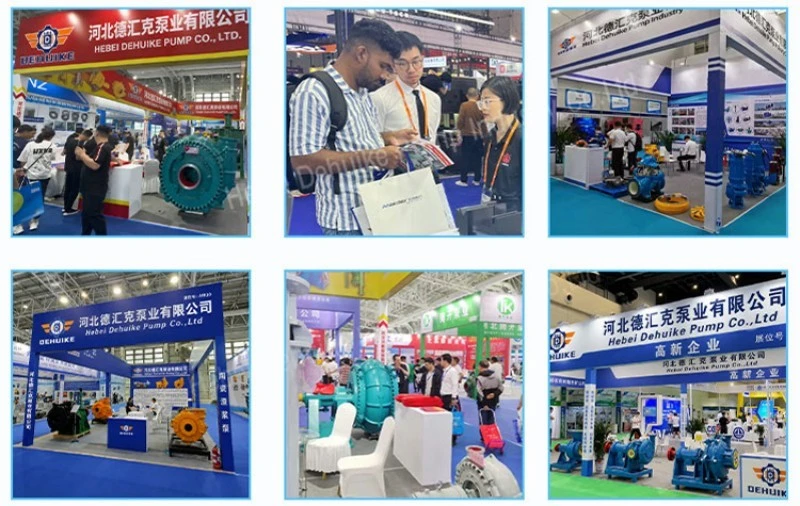
Ask the supplier to identify selection assumptions, included drawings, testing, commissioning support and recommended initial spares. Verify where those services are available. No verified evidence of offshore references, ship-class approval, coastal service centres or installed units in named countries, so no such market claim appears here.
Installation, Operation And Maintenance | Manage Salt, Motion And Lay-up
Install the pump and drive on a structure assessed for the stated mass, dynamic loads and marine environment. Align the shaft train under the installed condition rather than assuming workshop alignment will remain unchanged after vessel loading. Support attached pipes independently and allow the agreed movement at flexible sections without pulling on the pump nozzles.
During commissioning, confirm direction of rotation, lubrication, seal supply and the procedure for filling or priming. Establish baseline motor load, vibration and leakage at the documented duty. For a Sea Sand Pump, also record tide, intake coverage and visible aeration so later changes can be interpreted against the marine conditions.
After shutdown, retained seawater can leave concentrated salts as water evaporates. Follow the approved flushing, drainage and preservation procedure for the supplied materials. Do not invent fresh-water volume or chemical treatment without the manufacturer's instructions. Before opening a Heavy Duty Gravel Pump, isolate energy, secure the moving platform, close the pipeline and relieve trapped pressure.
Inspect for both abrasive thinning and corrosion features. Record the location and geometry of damage, exposure time, liquid chemistry and sediment type. A repeatable inspection map supports better material and maintenance decisions than a single overall weight measurement. Review intervals should be adjusted from evidence, not claimed as universal.
Faq | Buy A Sea Sand Pump With Fewer Unverified Assumptions
1. Is every gravel pump suitable for seawater?
No. Hydraulic suitability and seawater material compatibility are separate decisions. Request the wetted-parts, seal, fastener and coating specifications, then review them against the actual chloride level, pH, temperature and abrasion conditions.
2. Can seawater be treated like fresh water in the pump curve?
A curve may be based on clear water, but the proposed duty involves solids and a different liquid composition. Obtain the manufacturer's slurry corrections and power calculation. Do not claim field capacity from the selected duty point without those checks.
3. How do tides affect pump selection?
Tides can alter static levels, submergence and flexible-pipe geometry. Evaluate the least favourable operating water level as well as the normal condition. The control method must keep the equipment within its permitted inlet and speed range.
4. Will the pump pass shells?
Possibly, but shell size, shape, strength and frequency need definition. The listed particle field is not a shell-passage test. Check every restriction in the intake, wet end, valves and discharge line, and obtain a written feed acceptance.
5. What causes combined erosion and corrosion?
Moving mineral particles can remove protective surface layers while the carrier liquid attacks newly exposed material. The interaction depends on alloy, chemistry and operating conditions. Material selection should address both mechanisms rather than simply choosing the hardest option.
6. Is the largest listed model automatically best for offshore work?
No. Model selection depends on flow, total head, inlet condition, route and sediment. A larger machine can be inappropriate for the available duty, support structure or power supply. Compare specific operating points instead of frame size alone.
7. Does a marine project require flushing after every stop?
Use the shutdown and preservation instructions approved for the actual system. The need, liquid quality, sequence and duration depend on the process, line layout and materials. No universal universal flushing rule.
8. Are dredging and discharge permits included?
No permits are evidenced by the equipment data. Marine excavation, transport and placement can be regulated separately. The project owner must identify applicable approvals and communicate their operating restrictions to the system designer and supplier.

Submit A Marine Sand-transfer Enquiry
Request a Sea Sand Pump review with sediment grading, water chemistry, tidal levels, suction layout and the entire discharge profile. When a Heavy Duty Gravel Pump is proposed, ask for the exact hydraulic curve, slurry power basis, material compatibility statement, particle definition and itemised scope before placing the order.
Hot Tags: sea sand pump, China sea sand pump manufacturers, suppliers, factory