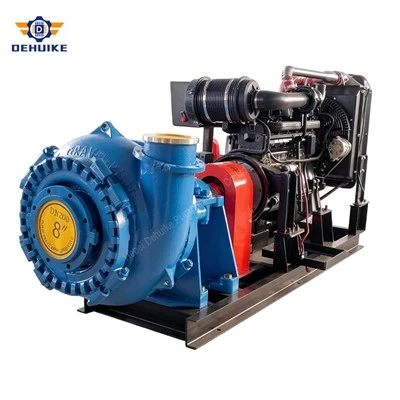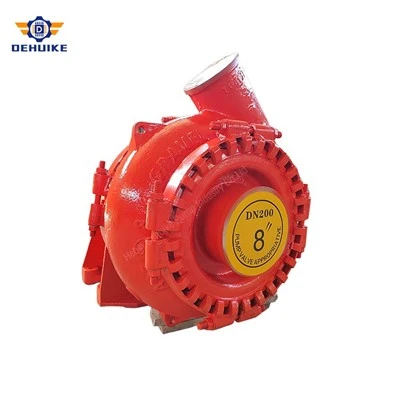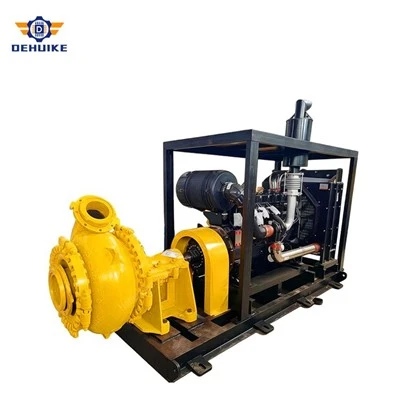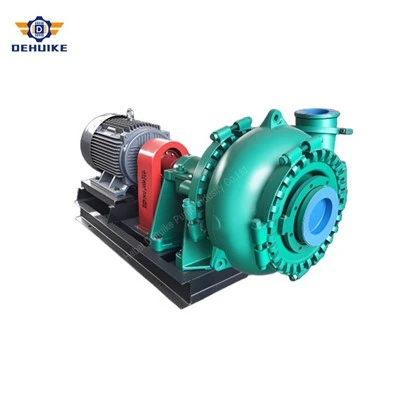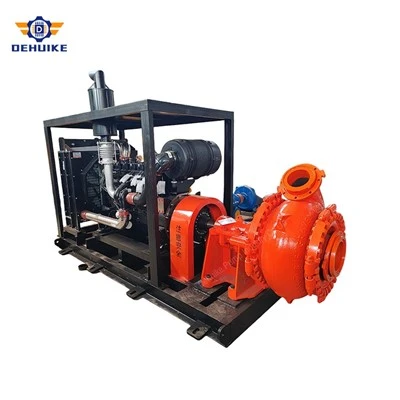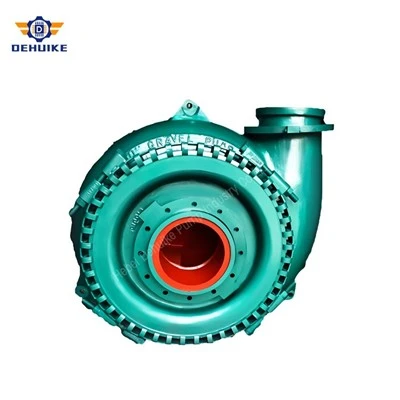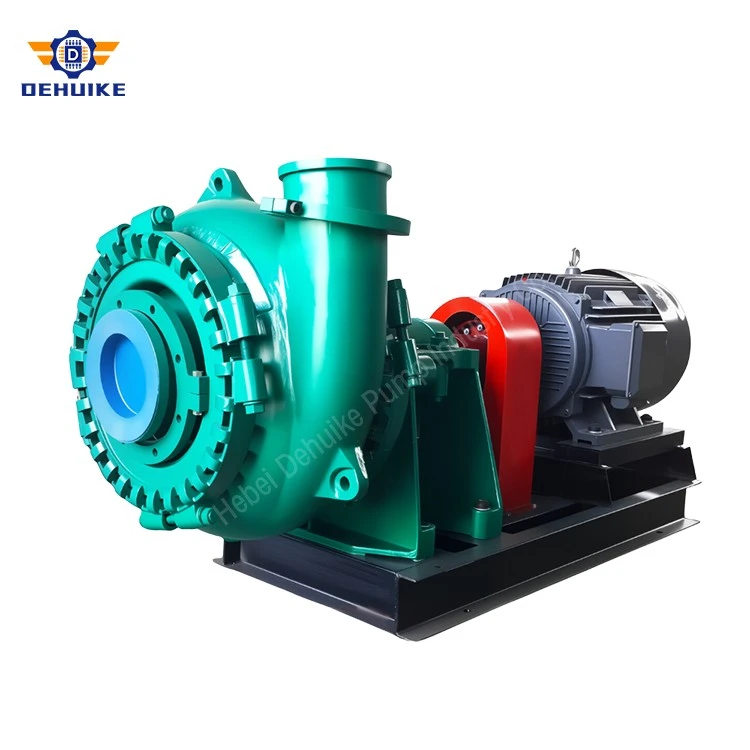
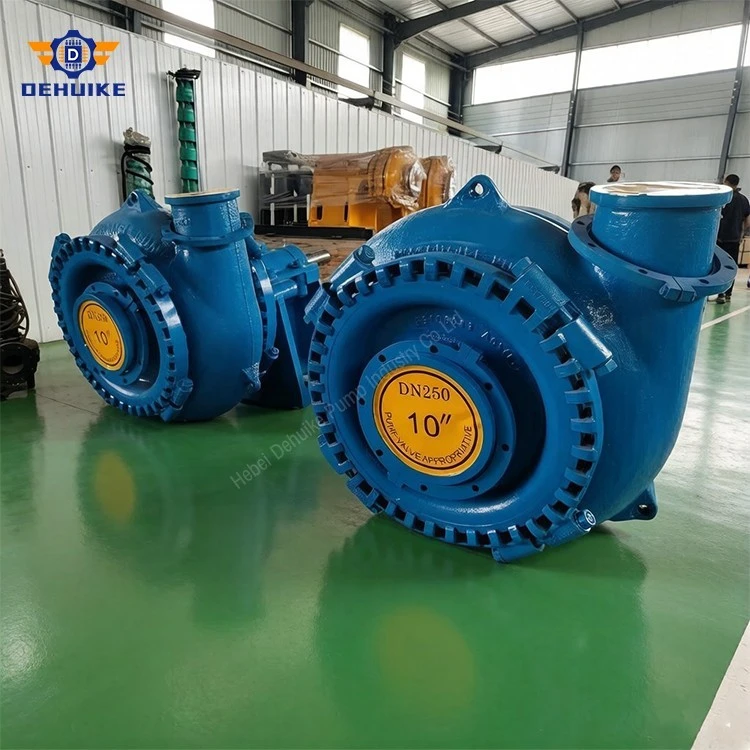
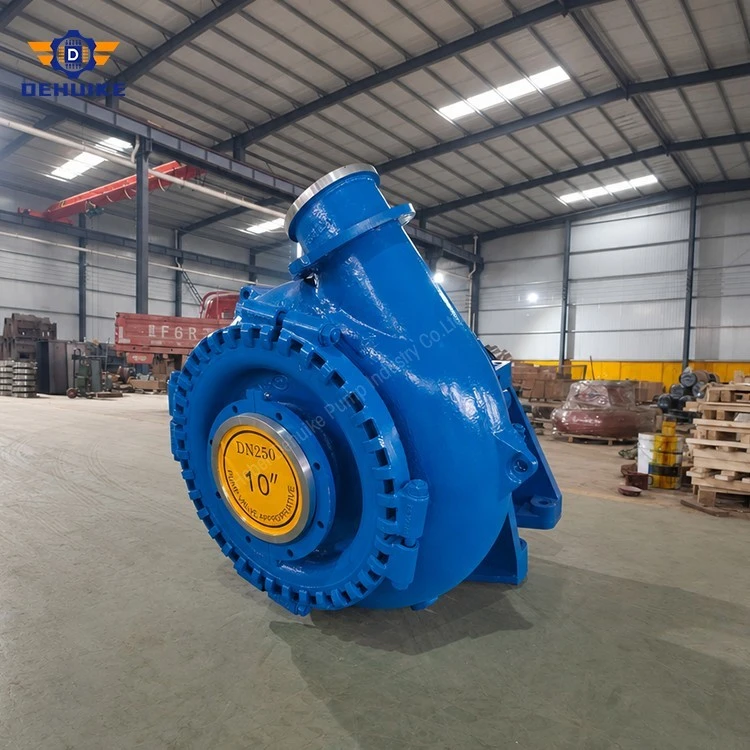
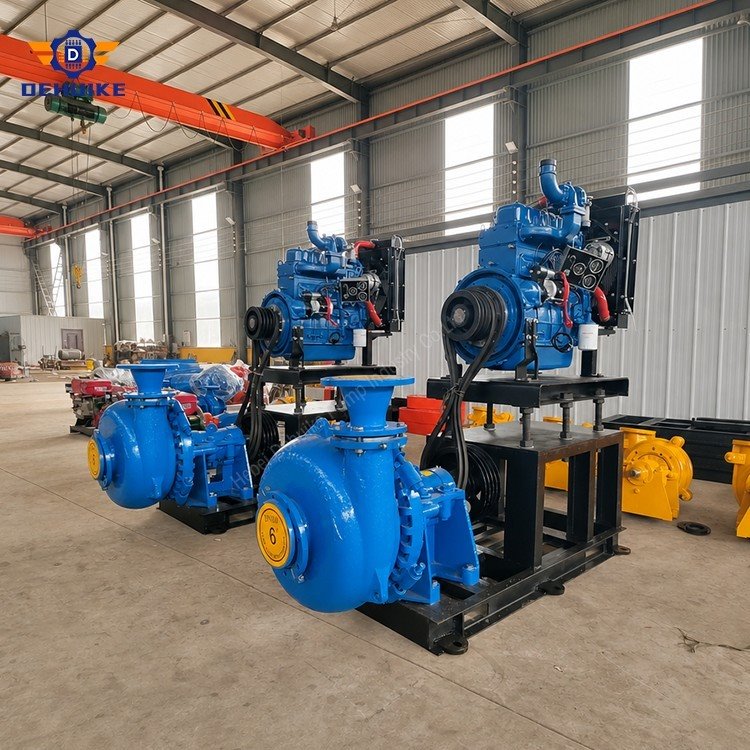
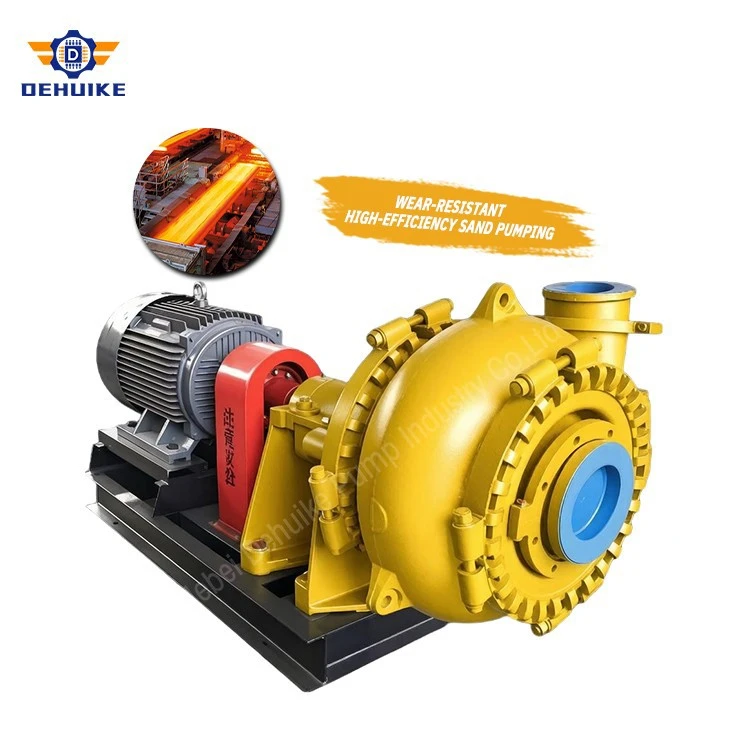
Hebei Dehuike Pump Industry Co., Ltd. is one of the most reliable manufacturers and suppliers of river sand pump in China. With abundant experience, we are committed to providing high quality customized pumps with competitive price. Welcome to wholesale bulk river sand pump for sale here from our factory. Also, pricelist is available.
Introduction | Treat The Riverbed As A Changing Feed Technical Data
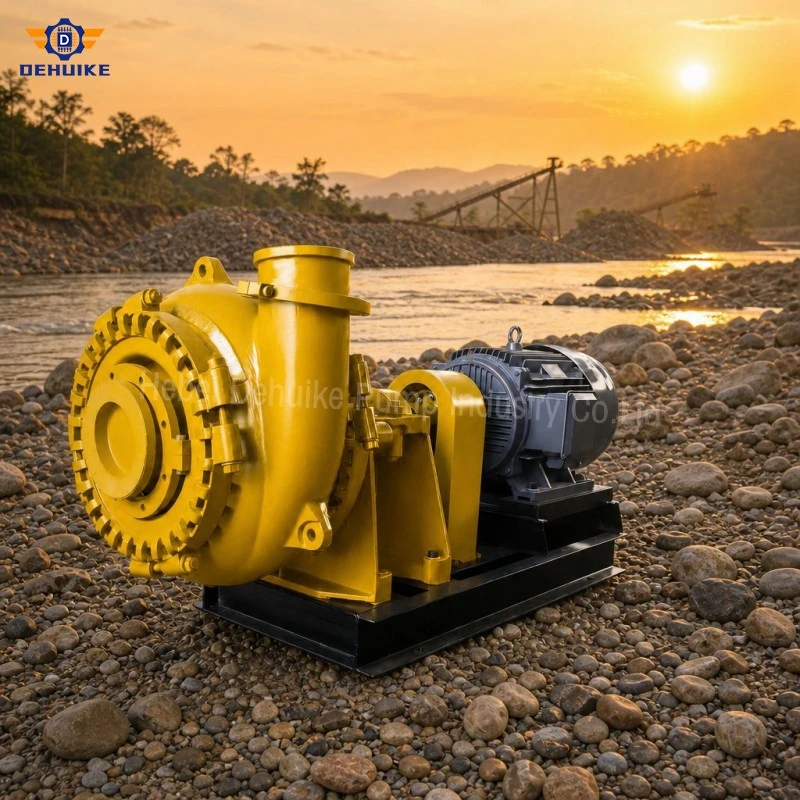
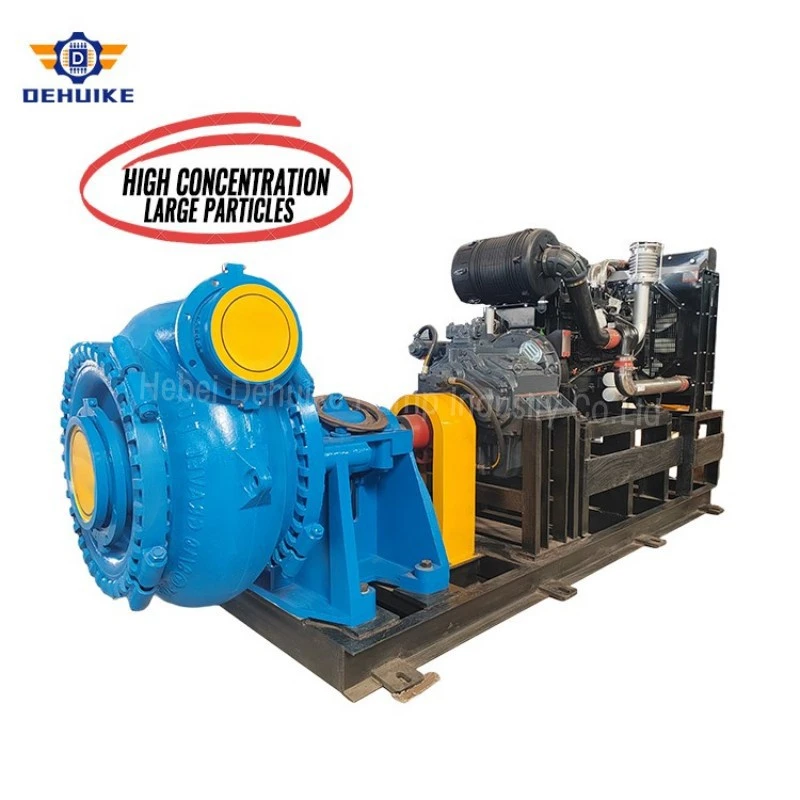
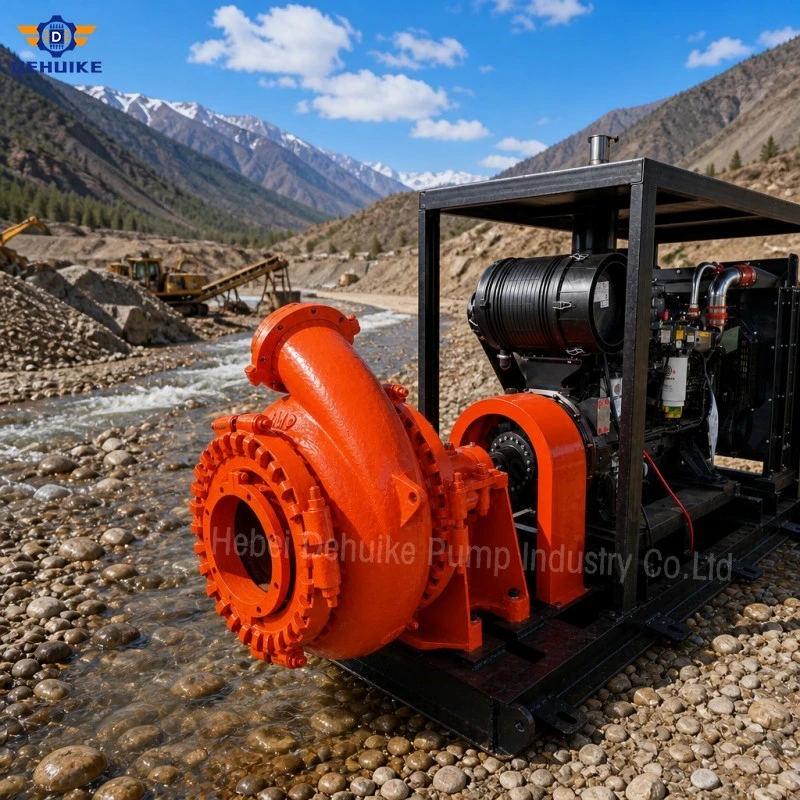
A River Sand Pump is used in a hydraulic circuit that lifts a water-sediment mixture and sends it toward a barge, screening plant, stockpile or approved placement area. River work is not a fixed-tank duty. Water level, digging depth, current, sediment layers and floating debris can alter what reaches the intake from one cut to the next.
The G Series examples below give five equipment sizes for preliminary review. Their individual flow and head records range from compact sand recovery to larger pipeline delivery. A River Sand Pump must still be checked against the complete arrangement: intake elevation, suction line, pump location, discharge route, solids content and the method used to loosen or collect the bed material.
Where cobbles, shells or intermittent gravel accompany the sand, a Heavy Duty Gravel Pump may be the relevant equipment class. That description does not remove the need to sample the deposit or control foreign material. Selection should reflect the least favourable credible zone, not a single clean surface sample.
Specifications / Technical Parameters | Compare Five Unflagged Records
The maximum-particle field is reproduced exactly as a reference. It does not define the permissible percentage, shape or frequency of stones entering a river-sand circuit. Verify the passage claim and acceptable feed envelope with the manufacturer before specifying a River Sand Pump.
The tabulated flow is mixture volume, not dry-sand production. Converting it into tonnes of saleable sand requires solids concentration, mineral density, recovery losses and operating time. Likewise, total head is a hydraulic energy term, not an allowable casing pressure. No slurry correction factor or motor-service margin has been supplied.
|
Model |
Particle entry (mm)* |
Inlet (mm) |
Outlet (mm) |
Pump weight (kg) |
|
6/4D-G |
82 |
150 |
100 |
460 |
|
8/6E-G |
127 |
200 |
150 |
1120 |
|
10/8F-G |
178 |
250 |
200 |
2250 |
|
14/12G-G |
241 |
350 |
300 |
5400 |
|
16/14-G |
255 |
400 |
350 |
6950 |
|
Model |
Flow (m3/h) |
Total head (m) |
Speed (r/min) |
Efficiency (%) |
Motor record (kW) |
|
6/4D-G |
151.2 |
23.5 |
980 |
52 |
45 |
|
8/6E-G |
285 |
19.2 |
980 |
60.8 |
55 |
|
10/8F-G |
650 |
41.8 |
950 |
49.3 |
220 |
|
14/12G-G |
2320 |
56.5 |
700 |
64.2 |
900 |
|
16/14-G |
2249 |
40.4 |
500 |
64.5 |
800 |
Product Detail | Follow The Material From Intake To Discharge
A hydraulic river-sand system first loosens or admits sediment into an intake. The mixture then travels through suction piping to the centrifugal pump. Inside the wet end, the impeller adds energy; the casing guides the mixture toward the outlet. The discharge line carries it to the next process or placement point. Each stage can limit production, so the pump cannot be assessed in isolation.
A conventional deck-mounted pump relies on the pressure available at the suction side to deliver mixture to its inlet. Greater digging depth and suction losses can reduce that margin. Raising speed indiscriminately may move more water without increasing the useful solids payload. The correct River Sand Pump duty therefore depends on suction conditions as well as the required discharge head.
River deposits may contain rounded sand, angular fragments, mud pockets, organic matter, shells and man-made debris. These materials do not create identical wear or blockage risks. The supplied sheet does not identify impeller style, alloy, seal arrangement or allowable suction condition. Obtain the approved drawing and material schedule for the selected unit instead of borrowing construction claims from another pump brand.
Features / Equipment Characteristics | Plan For Variation Along The Cut
A useful river-sand selection is built around a range of conditions. Surface sampling can miss deeper layers, while one bank may contain finer or denser material than another. Map the likely zones before establishing the normal duty and the upset cases that the equipment must survive.
-Track water-level and digging-depth changes. A movable ladder or intake can alter the suction geometry even when the shore pipeline remains unchanged.
-Separate process water from solids output. A high indicated flow may represent dilution rather than a larger recovered sand tonnage.
-Account for debris interception. Timber, wire and refuse require a safe control method; particle-passage data for a Heavy Duty Gravel Pump is not a debris-handling guarantee.
-Include pipeline movement. Floating sections, flexible connections, anchors and shore transitions can change alignment and resistance during operation.
The River Sand Pump should operate within a documented range for speed, power and inlet conditions. No universal suction depth, solids percentage, dry-running tolerance or minimum transport velocity is stated, so none is added to this page as a marketing claim.
Our Advantages | Use A Model Range Instead Of One Oversized Answer
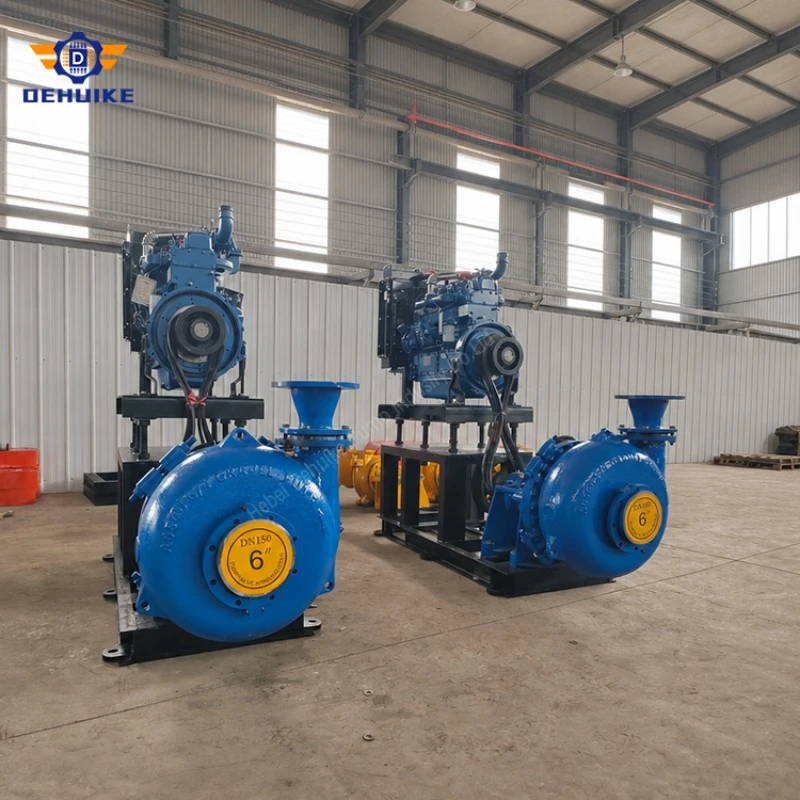
A River Sand Pump comparison should report useful material delivered per operating period, energy use, wear-part consumption, cleaning time and the effect of changing river conditions. Compare equipment on the same route and deposit characteristics. Catalogue efficiency alone does not predict the cost per tonne of recovered sand.
For a replacement Heavy Duty Gravel Pump, provide the old curve, operating speed, intake depth, pipeline layout and wear observations. This exposes changes that a model name cannot show. The proposed unit should have a documented reason for its hydraulic and material selection; no guaranteed saving or service-life multiplier is claimed here.
Production Process And Quality Assurance | Define The Supply Evidence
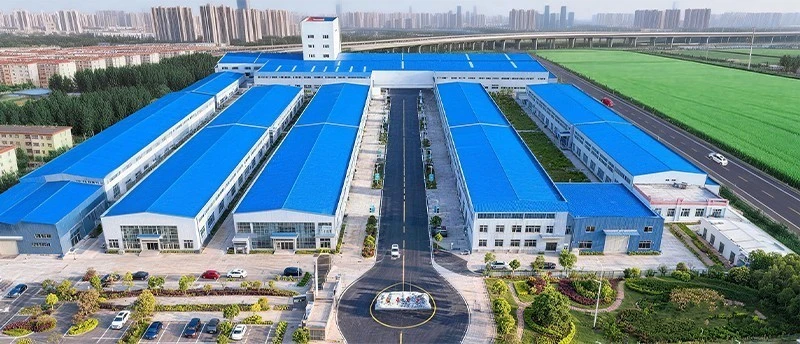
Production process: confirm the actual configuration
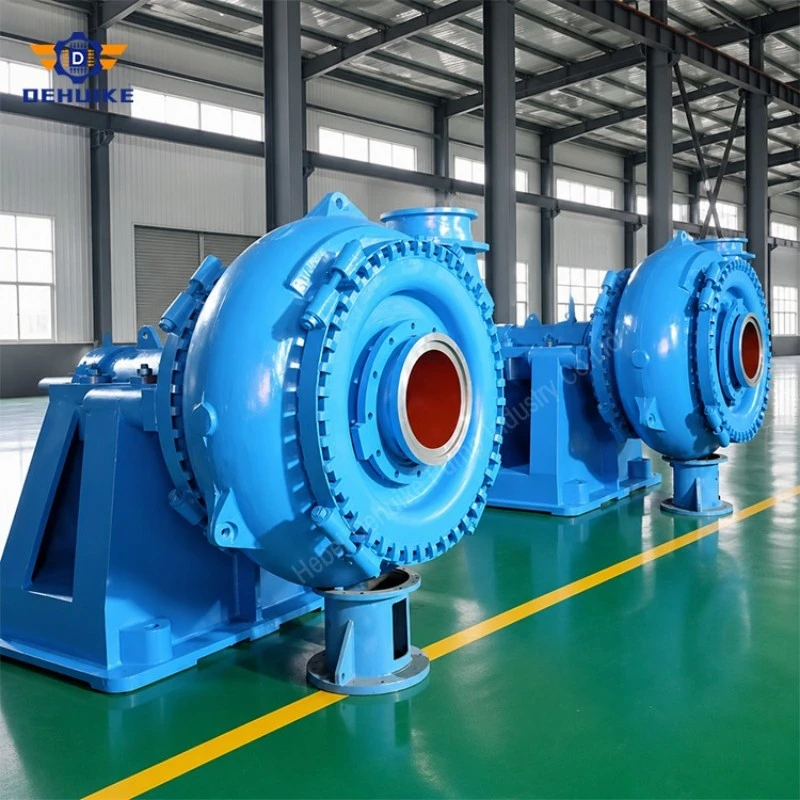
Before manufacture, release an agreed bill of materials, drive arrangement and dimensional drawing. If cast metal wet-end parts are selected, specify the required alloy grade and any material verification. Follow machining and assembly records for the interfaces that locate the rotating unit, seal and connections. These are recommended procurement controls, not a claim that an unseen factory already follows a particular procedure.
Before dispatch, match the nameplate and parts list to the approved River Sand Pump configuration. Protect machined surfaces and open nozzles for the planned transport route. Identify loose accessories and provide lifting information for the supplied mass. The listed weights support preliminary logistics only; a certified drawing is needed for final lifting and foundation design.
Quality assurance: specify test conditions clearly
If a hydraulic test is required, agree its procedure, tolerances, test liquid, speed and reporting format. A clean-water result is not direct proof of field output in a variable river-sand mixture. Request dimensional records or material certificates only where they answer a defined acceptance requirement.
Certification, pressure class, seal-water demand, voltage, protection grade and hazardous-area suitability are absent from the project specification. Confirm them for the actual package wherever applicable. Approval should rest on verifiable documents, not an unsupported quality slogan.
Application Scenarios | Match The Duty To The River Operation
A River Sand Pump can be evaluated for authorised hydraulic recovery, channel maintenance or transfer of excavated alluvial material. The cases below show how to frame a preliminary discussion. They are not customer installations, legal approvals or promises of production.
Smaller mobile recovery circuit
The selected 6/4D-G record pairs 151.2 m3/h with 23.5 m head, while the 8/6E-G record pairs 285 m3/h with 19.2 m. Compare both with the intake depth, hose route and desired mixture delivery. A compact installation may still have demanding suction losses.
Intermediate shore delivery
The selected 10/8F-G point gives 650 m3/h at 41.8 m head. It can anchor an initial review where the pipeline climbs from the river to a processing or stockpile area. Confirm the actual resistance, sand grading and water-to-solids ratio before selecting motor or speed.
Larger dredging pipeline
The selected 14/12G-G and 16/14-G points are 2320 m3/h at 56.5 m and 2249 m3/h at 40.4 m respectively. They represent different operating requirements. A Heavy Duty Gravel Pump for this scale also needs engineered floating and land-pipeline transitions, access for wear inspection and a defined response to debris.
Our Service, Experience And Markets | Build A Complete River-duty Enquiry
Describe the deposit using representative samples from relevant depths and locations. Report grain distribution, expected gravel or shell fraction, mud content, mineral density and known debris. Include the required output and how it is measured. This lets a supplier separate hydraulic capacity from saleable-sand production rather than promising both from one catalogue number.
Request an itemised technical and commercial scope for selection assistance, drawings, test documentation, commissioning input and spare parts. Confirm each service and its location. No worldwide network, installed base or named river project can be established from the supplied sheet, so those claims are intentionally omitted.
Installation, Operation And Maintenance | Prepare For Movement And Interruption
Monitor more than discharge flow. Record water level, intake depth, speed, motor load, mixture density and any visible change in the recovered material. When output falls, distinguish a lean mixture from a hydraulic restriction or wear condition. Increasing River Sand Pump speed without that diagnosis can add water and wear without solving the solids-production problem.
Plan the response to an unplanned stop. Sand may settle in hoses or low points while power is unavailable. Use an approved clearing or flushing procedure and verify that the route can accept the displaced mixture. Do not restart repeatedly against a suspected blockage. Isolate the Heavy Duty Gravel Pump, relieve pressure and secure moving or floating equipment before inspection.
Base inspection intervals on observed wear and operating hours under the actual deposit. Compare changes by location on the component, not only by total mass lost. If the river cut enters a different sediment layer, shorten the review interval until the new wear pattern is understood.
Faq | Specify A River Sand Pump Without Hidden Assumptions
1. Is a river-sand pump the same as a complete dredger?
No. The pump is one component in a hydraulic excavation and transport system. Intake or cutter equipment, drive, floating or shore pipeline, instrumentation, controls and placement arrangements must be specified separately unless they are explicitly included in the supplier's scope.
2. Can catalogue flow be used as hourly sand production?
No. Catalogue flow is mixture volume. Dry-sand output also depends on solids concentration, density, recovery efficiency, interruptions and the measurement method. Request a calculation with assumptions stated and do not publish mixture flow as guaranteed saleable tonnage.
3. How should riverbed material be sampled?
Use a sampling plan suited to the project and cover relevant locations and depths. Surface grabs may not reveal deeper layers or isolated coarse zones. Where debris, cobbles or contamination is possible, involve competent dredging and environmental professionals.
4. Does a deeper intake always require more pump speed?
No. A deeper intake changes suction conditions, and additional speed can increase water flow without improving the useful solids payload. Calculate suction losses and available inlet conditions before adjusting speed or drive power.
5. Can the 255 mm particle entry be treated as a normal river feed?
No. It is a listed technical reference associated with 16/14-G, not a recommended everyday feed size. Confirm how the figure is defined and specify the expected frequency, shape and composition of coarse objects.
6. Can one model cover changing pipeline lengths?
Only within an approved operating arrangement. Adding pipe changes system resistance, and removing sections changes the operating point again. Review the expected configurations on the curve and define how speed or other controls will be managed.
7. What environmental approvals are included with the pump?
None are established by the product data. Dredging, water intake, discharge and sediment placement can require project-specific permits and controls. The owner should obtain applicable approvals and provide their operating constraints to the equipment supplier.

Request A River-duty Selection Review
For a River Sand Pump proposal, submit sediment data, water-level and digging-depth ranges, pipeline profiles and the required mixture duty. If a Heavy Duty Gravel Pump is proposed, request the matching curve, material schedule, passage definition, motor calculation and documented supply boundary before commercial approval.
Hot Tags: river sand pump, China river sand pump manufacturers, suppliers, factory