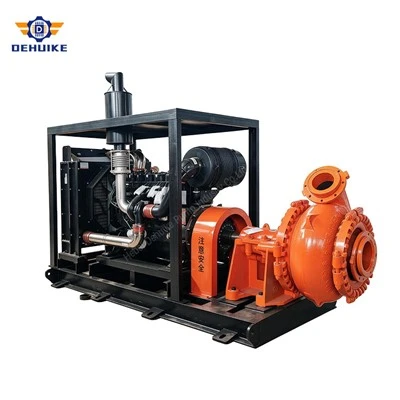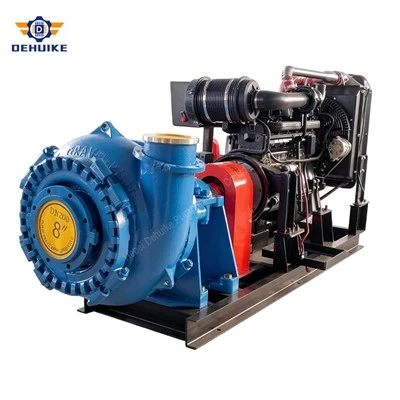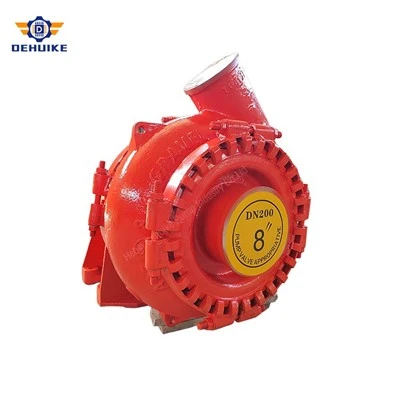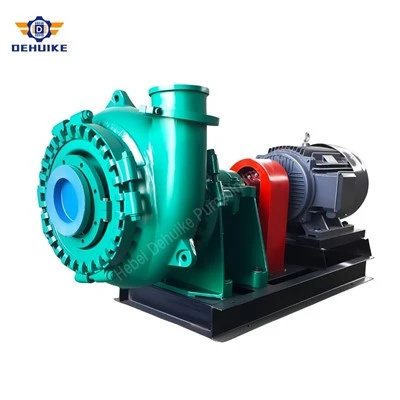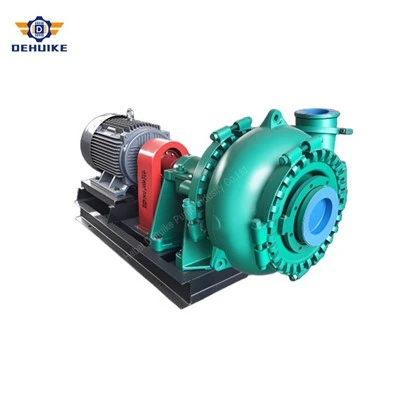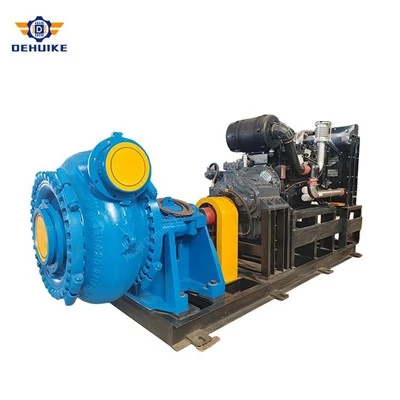

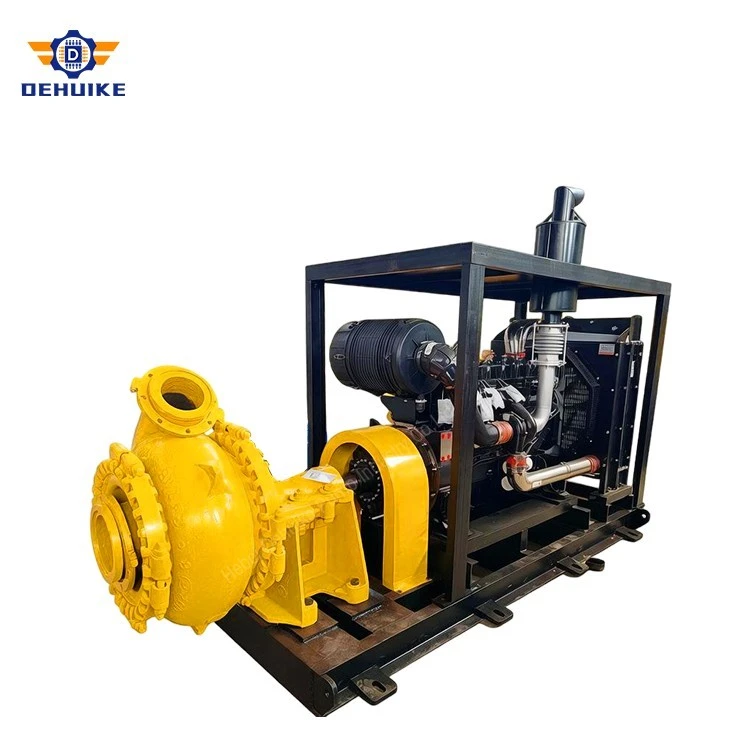
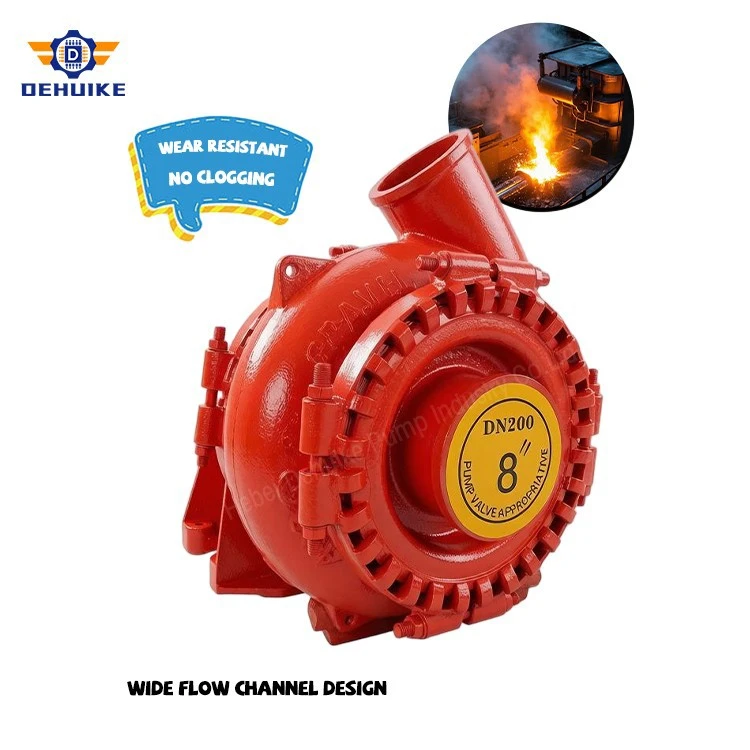
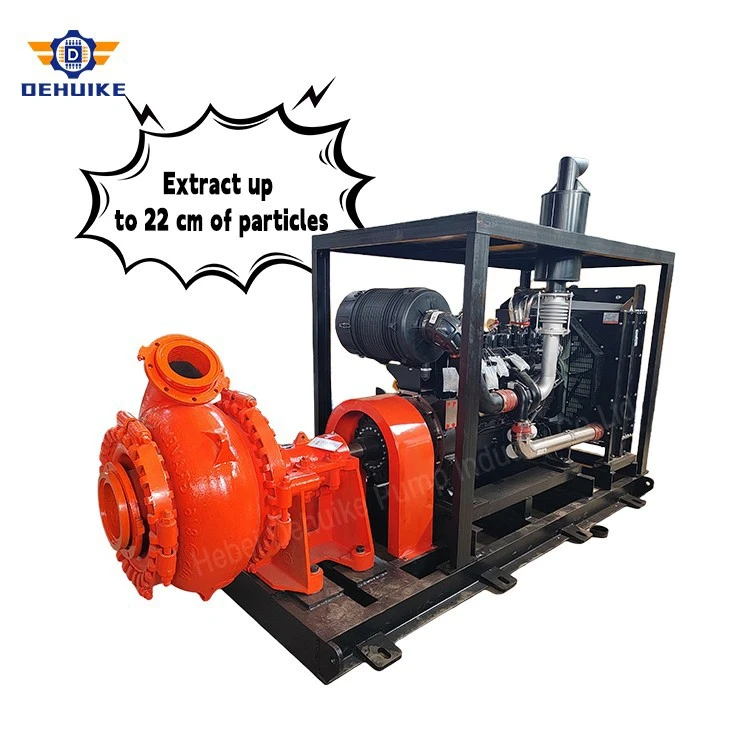
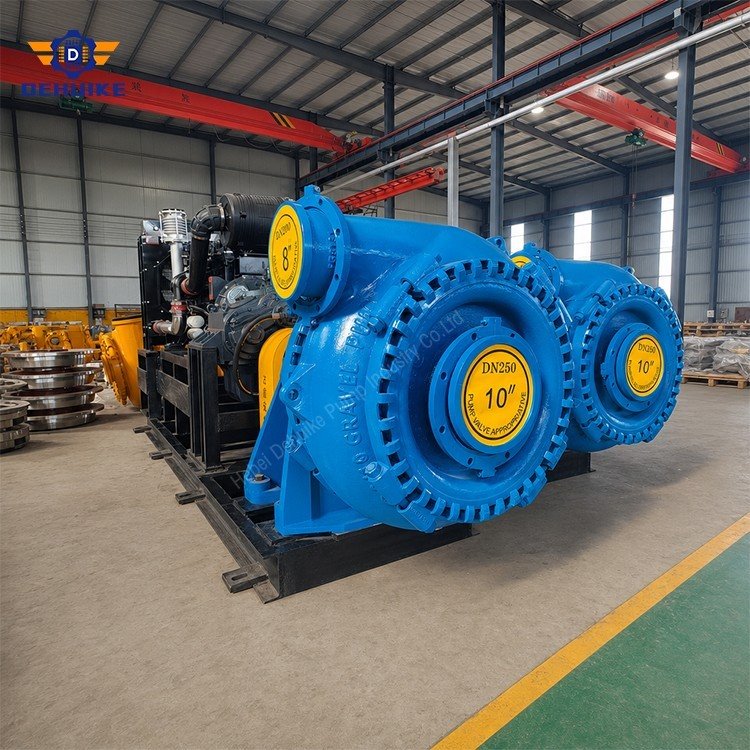
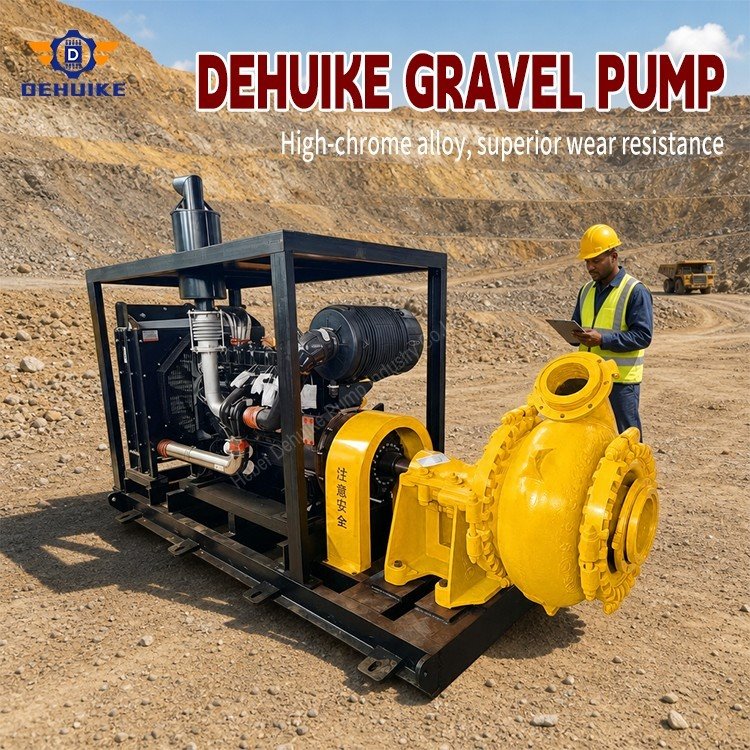
Hebei Dehuike Pump Industry Co., Ltd. is one of the most reliable manufacturers and suppliers of large particle gravel pump in China. With abundant experience, we are committed to providing high quality customized pumps with competitive price. Welcome to wholesale bulk large particle gravel pump for sale here from our factory. Also, pricelist is available.
Introduction | Keep the coarse fraction moving
A Large Particle Gravel Pump handles waterborne gravel where the size of individual stones matters as much as the quantity of liquid. Its job is to carry the accepted solid fraction through the pumping circuit, not grind oversized material into smaller pieces. For aggregate recovery, excavation slurry and dredged deposits, selection starts with what actually reaches the intake.
The G Series selection below offers five documented particle-size references: 82, 127, 178, 241 and 255 mm. Each belongs to a particular pump size. They are not interchangeable limits, and none establishes an acceptable stone size for every installation. A Heavy Duty Gravel Pump needs a feed specification that distinguishes normal gravel from occasional oversize, scrap and fibrous debris.
Choose this page when your first question is whether the solids can travel through the equipment. Hydraulic capacity remains essential, but increasing pressure cannot compensate for an object that does not fit. Begin with a representative material sample, then match the accepted feed to the pump and the rest of the line.
Specifications | Compare particle size with hydraulic duty
Maximum particle values are quoted as recorded. The listed technical data does not define a sphere-passage test or demonstrate transport at the limit under every feed condition. Confirm the accepted particle envelope before specifying a Large Particle Gravel Pump. No allowance for particle shape or simultaneous passage of several stones has been inferred.
Capacity describes mixture volume per hour, not dry gravel tonnage. Total head expresses energy added per unit weight; it is not a casing pressure rating. Listed efficiency must not be read as guaranteed overall electrical efficiency. Likewise, the motor entry is not a measured power bill. Slurry properties and the chosen transmission still need engineering review.
|
Pump model |
Max. particle (mm)* |
Inlet (mm) |
Outlet (mm) |
Listed weight (kg) |
|
6/4D-G |
82 |
150 |
100 |
460 |
|
8/6E-G |
127 |
200 |
150 |
1120 |
|
10/8F-G |
178 |
250 |
200 |
2250 |
|
14/12G-G |
241 |
350 |
300 |
5400 |
|
16/14-G |
255 |
400 |
350 |
6950 |
|
Pump model |
Capacity (m3/h) |
Total head (m) |
Speed (r/min) |
Efficiency (%) |
Listed motor (kW) |
|
6/4D-G |
151.2 |
23.5 |
980 |
52 |
45 |
|
8/6E-G |
285 |
19.2 |
980 |
60.8 |
55 |
|
10/8F-G |
780 |
27.5 |
800 |
62.2 |
160 |
|
14/12G-G |
2337 |
49.5 |
650 |
64.2 |
710 |
|
16/14-G |
2249 |
40.4 |
500 |
64.5 |
800 |
Product Detail | Follow the solids through the wet end
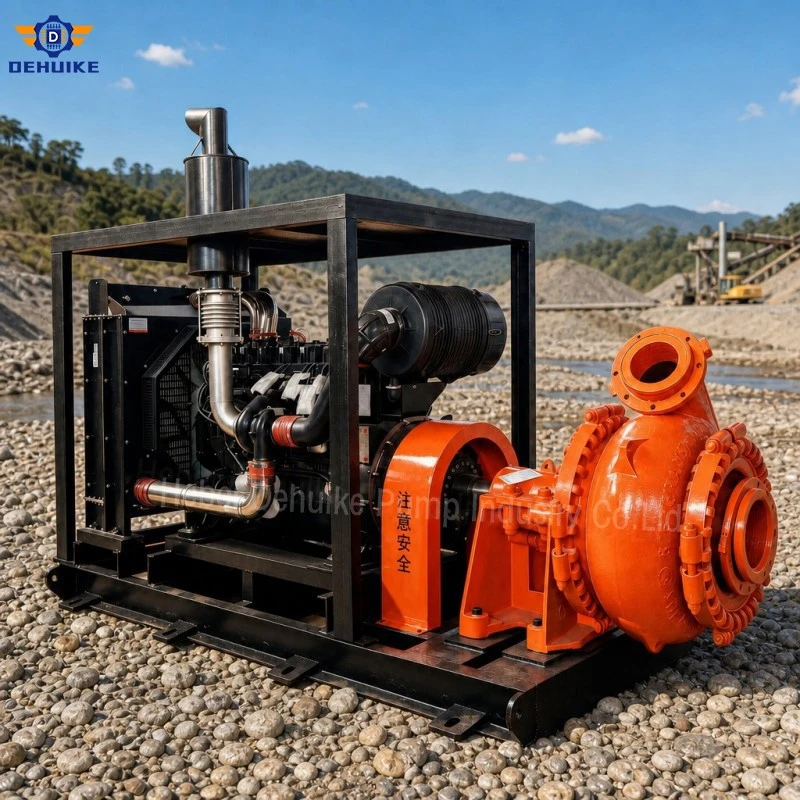
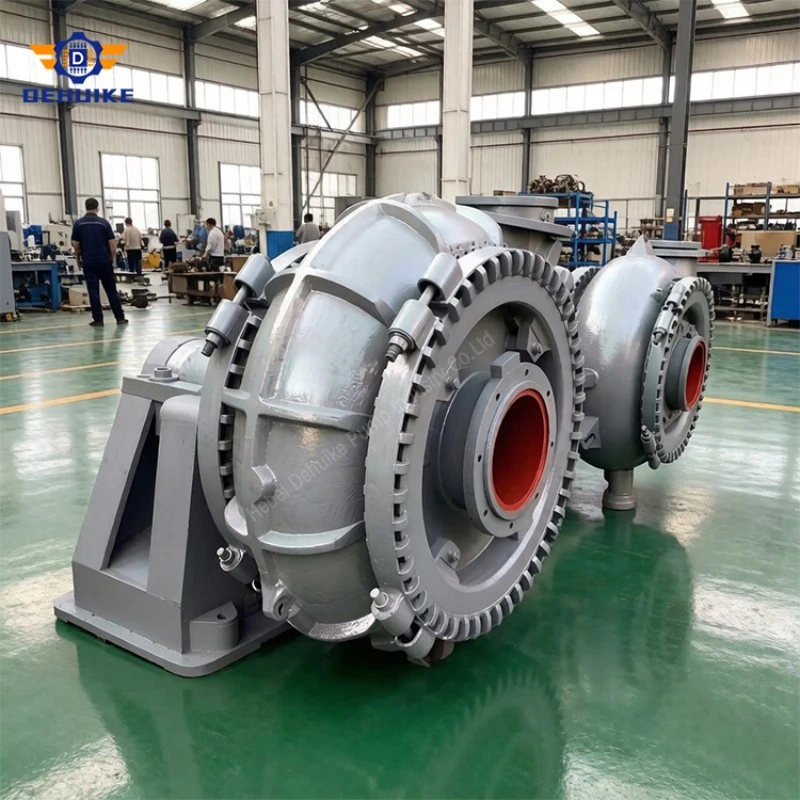
In a centrifugal gravel pump, the rotating impeller supplies energy to the mixture entering its eye. Slurry moves through the vane passages into the surrounding casing and leaves through the discharge connection. The shaft transmits drive torque, bearings support the rotating assembly, and the shaft seal limits leakage where the shaft enters the wet end. These component roles describe the pumping principle, not an unverified assembly drawing for an individual unit.
For a Large Particle Gravel Pump, every restriction deserves attention: the intake, the impeller passage, discharge fittings and downstream valves. A generous inlet connection alone proves very little. A flatter stone may enter in one orientation and lodge farther along; a screen that controls the feed can therefore be as important as the selected pump size.
Wear-material selection also belongs here. Industry gravel-pump designs use abrasion-oriented metal wet ends, but the supplied project specification does not identify this range's alloy grade, hardness or heat treatment. Specify those properties in the purchase enquiry rather than assuming that an alloy used by another manufacturer is included. Resistance to abrasive contact is not evidence of resistance to acidic or saline liquid.
Features and Our Advantages | Match the machine to the feed
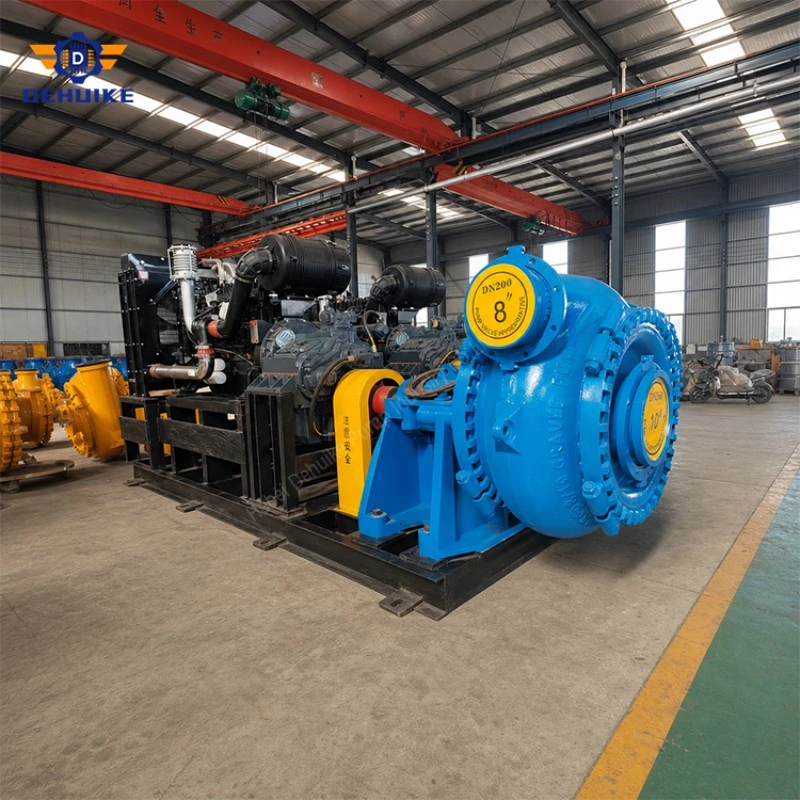
The useful advantage of this G Series comparison is a choice of particle-size references without losing sight of hydraulic demand. Moving to a larger physical size is a decision about the feed and installation, not an automatic improvement in energy use. The 16/14-G has the largest listed particle value here, while the selected 14/12G-G record has the greater capacity. Those are different attributes.
-Separate size from throughput. Assess the largest credible object independently of the normal volume of slurry; average particle size cannot describe an occasional oversized stone.
-Check the accepted feed, not just the pump label. A Heavy Duty Gravel Pump still needs control of foreign objects and sudden changes in the coarse fraction.
-Plan the whole passage. Compare reducer bores and valve openings with the accepted material so the outlet does not simply move the blockage to another component.
-Keep maintenance access in the layout. Space for opening the wet end and handling worn components belongs in the installation plan before pipework is fixed.
A Large Particle Gravel Pump earns its place when its solids-handling envelope and hydraulic curve suit the same job. Claims of lower downtime or longer wear life need field evidence under comparable conditions; they should not be inferred from a larger casting or motor.
Production Process | Define the build around the accepted material
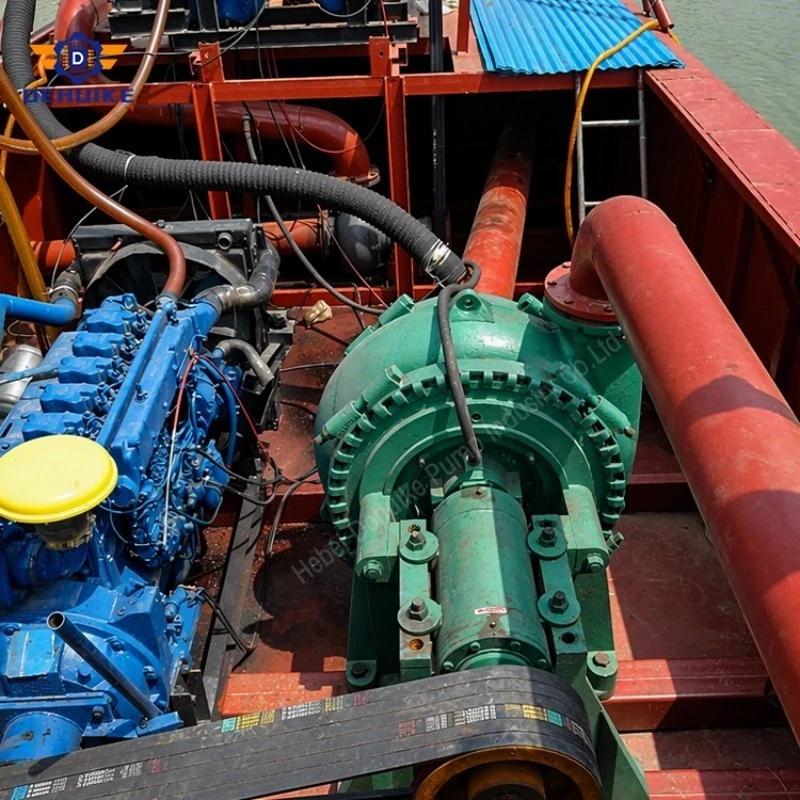
Machining checks should then address the interfaces that locate the wet end, shaft assembly and seal. During assembly, component identification matters: an apparently similar replacement impeller can change both clearance and hydraulic behaviour. The released build record should identify the actual parts installed, not only a generic family name.
Finish with the inspection scope agreed in the order and the packing arrangements needed for transport. Request protection of exposed machined surfaces and open connections. For a Large Particle Gravel Pump, preserving the specified passage geometry and retaining traceable component records are more useful than a broad claim of premium workmanship.
Quality Assurance | Ask for evidence tied to the supplied unit
Inspection of a Heavy Duty Gravel Pump should also distinguish abrasion-related wear allowance from pressure containment. Neither a maximum-particle entry nor a head value establishes the allowable casing pressure. Obtain the pressure limit and test basis separately if the installation has a pressurised inlet or could experience transient loading.
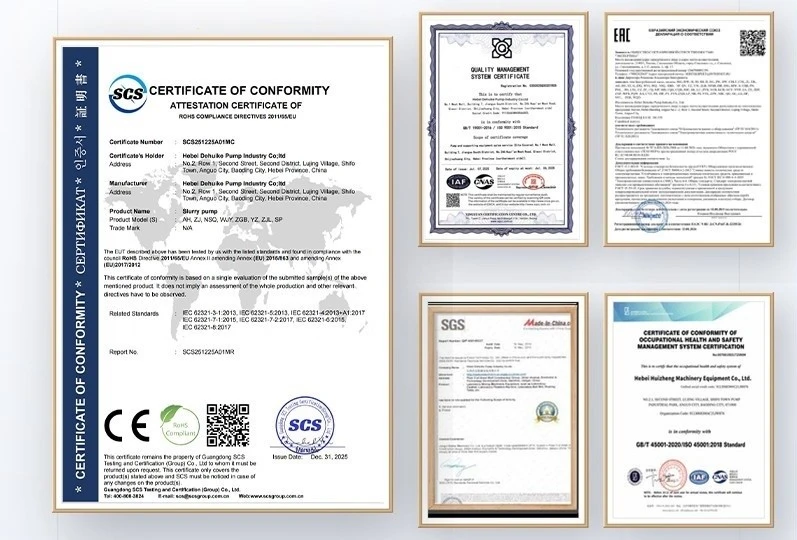
Electrical protection, voltage, frequency and hazardous-area suitability are not stated. Treat them as project requirements awaiting confirmation. No certification mark, guaranteed service interval or customer acceptance record is implied by the figures on this page.
Applications | Consider how the coarse fraction reaches the pump
A Large Particle Gravel Pump can be evaluated for gravel recovery, dredged sediment and coarse mineral transfer. The examples below are engineering scenarios, not reported customer installations. Each describes the feed question that should be resolved before selecting equipment.
Washed aggregate with occasional stones
A wash-water stream may look consistent until a screen is damaged or feed composition changes. Compare the retained coarse fraction with the 82 mm reference for 6/4D-G and the 127 mm reference for 8/6E-G. The decision is not simply which size passes the largest object: the required mixture flow must also suit the selected hydraulic curve.
Excavated gravel entering a recovery circuit
For material approaching the size envelope of the 10/8F-G, inspect stone shape and any pieces of metal or timber carried with the gravel. Its listed 178 mm particle value does not make it a shredder. Agree an oversize rejection method that does not create an unacceptable suction restriction.
Dredged deposits with a larger coarse fraction
The 241 mm and 255 mm references for 14/12G-G and 16/14-G may be relevant when screening larger material. Compare both machines against the desired transport duty rather than ranking them by particle size alone. A Heavy Duty Gravel Pump cannot compensate for inconsistent feed preparation or an obstructed downstream fitting.
Our Service, Experience and Markets | Build an Enquiry That Can be Answered
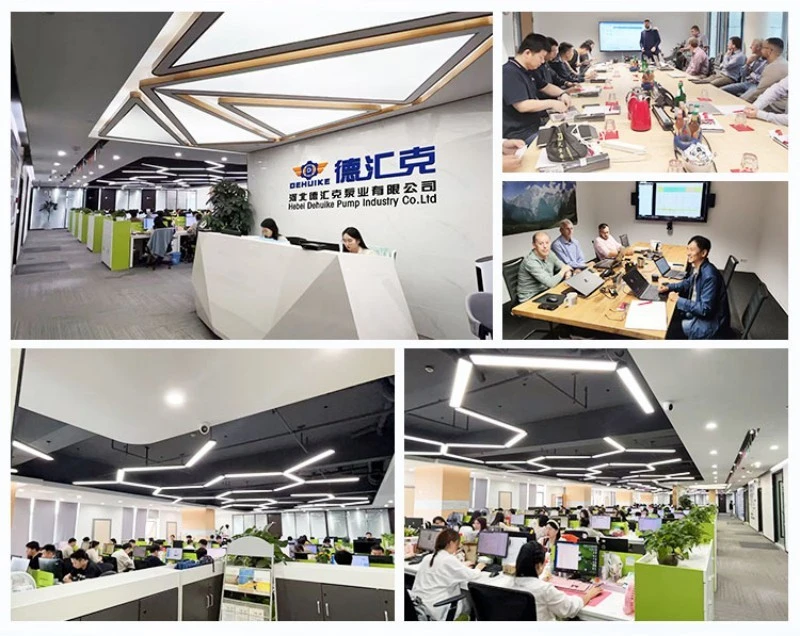
Request a written scope covering selection assistance, installation information, spare-part identification and any commissioning support required. Confirm availability and commercial terms for each item. For replacement orders, supply the component drawing or part identification as well as the pump model; similarity of names does not establish interchangeability.
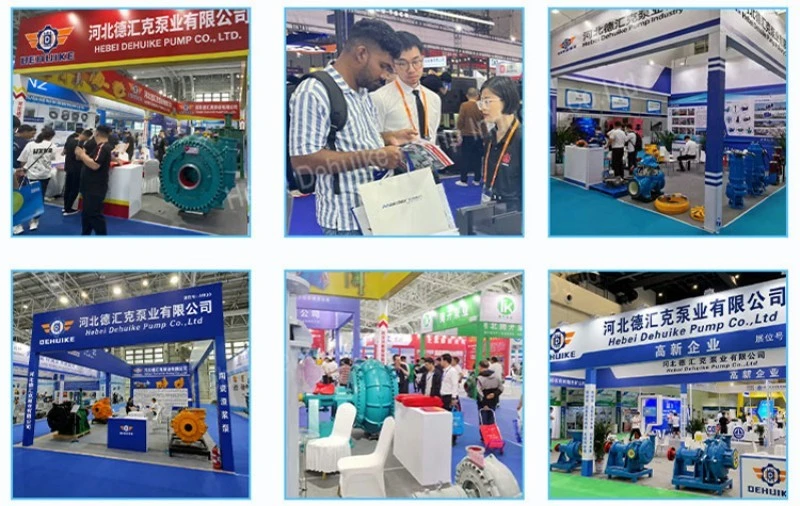
For overseas projects, identify the destination and site constraints rather than assuming a standard export package. Local electrical supply, language of manuals, lifting arrangements and access to replacement parts can change the required scope. The information supplied for this page contains no verified export history or customer references; comparable project evidence can be requested during supplier qualification.
Installation and Care | Protect the passage after commissioning
Commission the Large Particle Gravel Pump under its model-specific manual. Confirm lubrication, rotation, alignment and the required liquid supply to the pump and seal before admitting solids. Do not assume self-priming, dry-running capability or submerged motor operation from the gravel-pump description.
During service, record changes in delivery, vibration, motor load and leakage alongside changes in the feed. A sudden deterioration may indicate an obstruction, while a gradual trend can justify a wear inspection. Follow the approved shutdown and flushing procedure to limit settled material. Before opening any Heavy Duty Gravel Pump, isolate its energy sources, relieve trapped pressure and secure the connected pipeline. Never reach into the intake of energised equipment.
FAQ | Specify a Large Particle Gravel Pump with fewer assumptions
1. Is the maximum particle figure a recommended everyday feed size?
No. It is a recorded size reference, not a recommended normal feed specification. Establish a suitable allowance for the actual material and obtain supplier confirmation. Frequent near-limit stones, irregular shapes and several particles entering together require particular attention.
2. Can the pump break stones that are too large?
No crushing function is documented. Treat oversize as a feed-preparation problem requiring rejection or suitable upstream processing. Trying to force it through can obstruct the passage or damage components.
3. Does a bigger suction connection guarantee a bigger solids passage?
No. The controlling restriction may be inside the wet end or farther along the discharge route. Connection diameter, internal passage and accepted particle shape must be assessed separately.
4. Which listed model has the largest particle-size reference?
The 16/14-G record gives 255 mm. The 14/12G-G record gives 241 mm. These figures alone do not determine which machine will satisfy the required delivery or which material can be transported reliably.
5. Can a Large Particle Gravel Pump eliminate screening?
Not as a blanket promise. Screening requirements depend on the feed and all equipment downstream. A verified large passage may change the screening requirement, but unwanted scrap and uncontrolled oversize still need a defined handling method.
6. Are alloy grade and corrosion resistance included in the table?
No. Request a material schedule for the wetted components and review it against the liquid chemistry and abrasive solids. Do not substitute a general wear-resistant description for a confirmed alloy specification.
7. Can the listed cubic metres per hour be quoted as tonnes of gravel?
No. Converting mixture volume to dry-solids mass requires solids concentration and density, with their measurement basis stated. The capacity figures must not be presented as a guaranteed gravel production rate.
8. What helps investigate a recurring blockage?
Record where the blockage occurs and retain representative samples or photographs from a safely isolated system. Compare actual feed with the accepted specification, then inspect upstream screening and downstream restrictions before assuming the pump is undersized.

Hot Tags: large particle gravel pump, China large particle gravel pump manufacturers, suppliers, factory