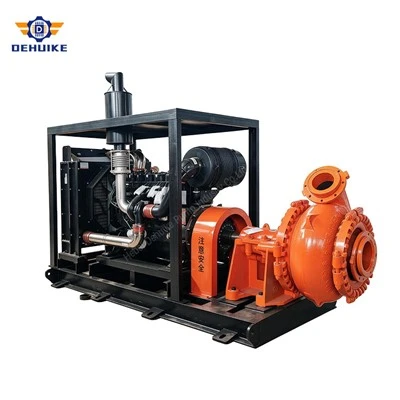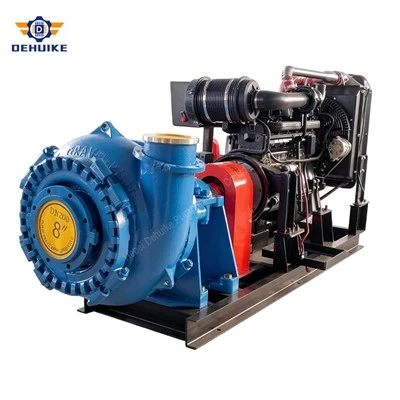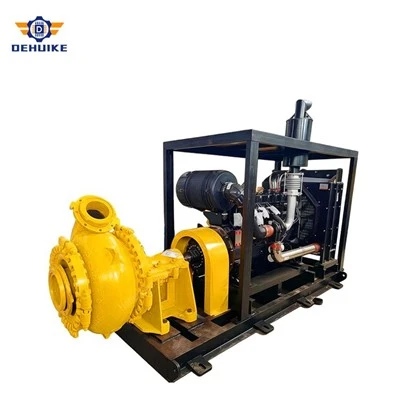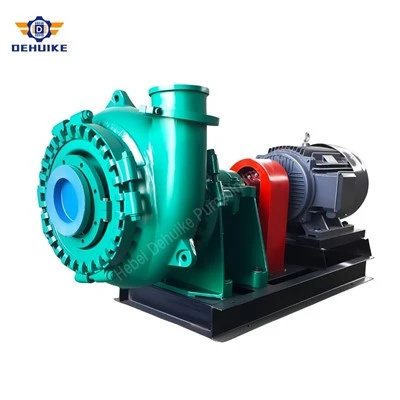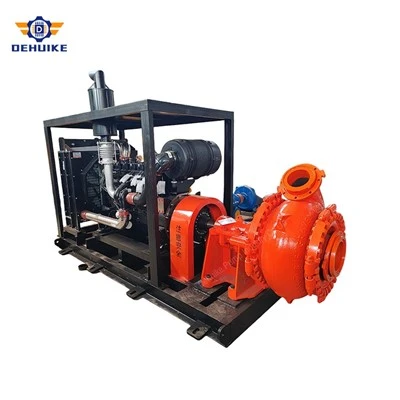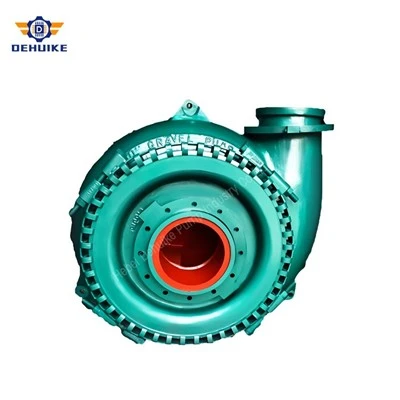

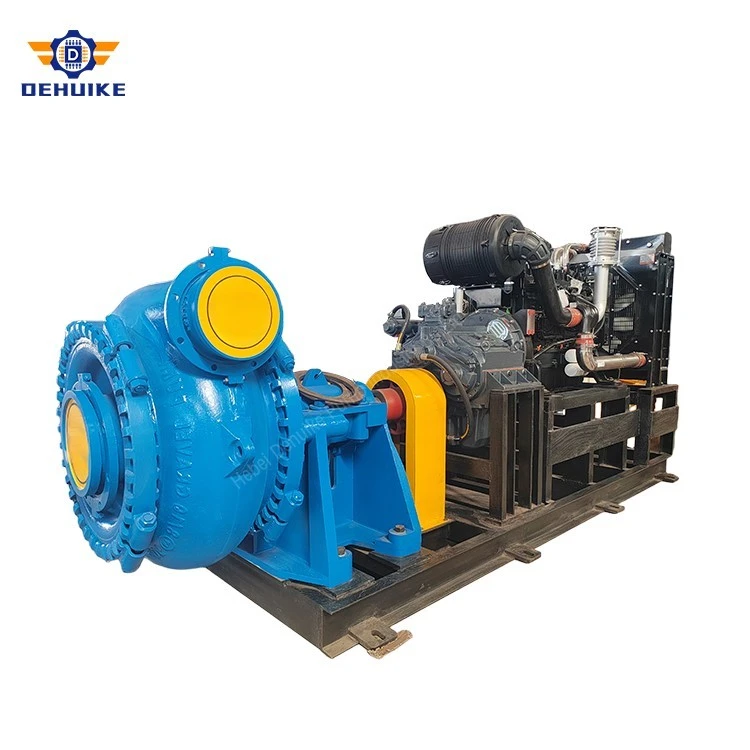
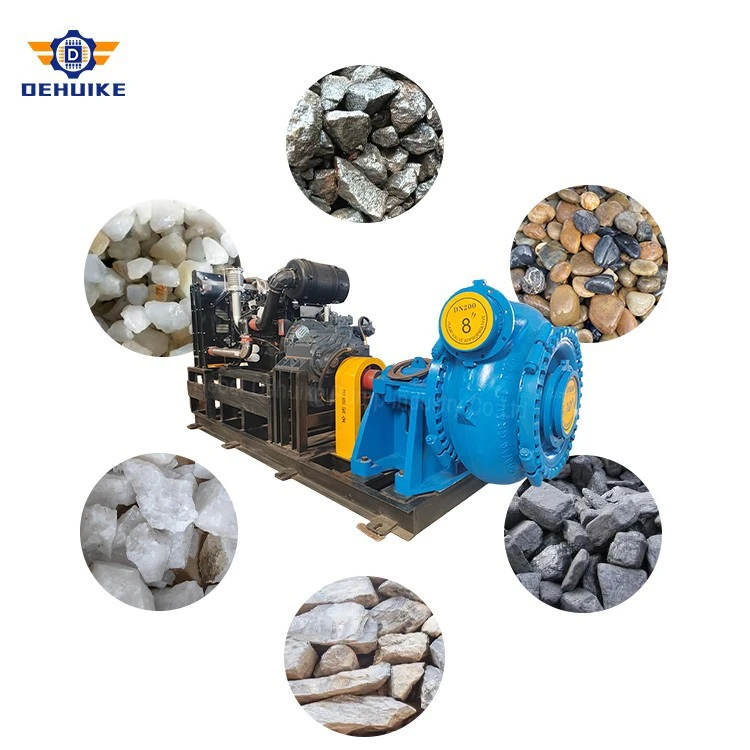
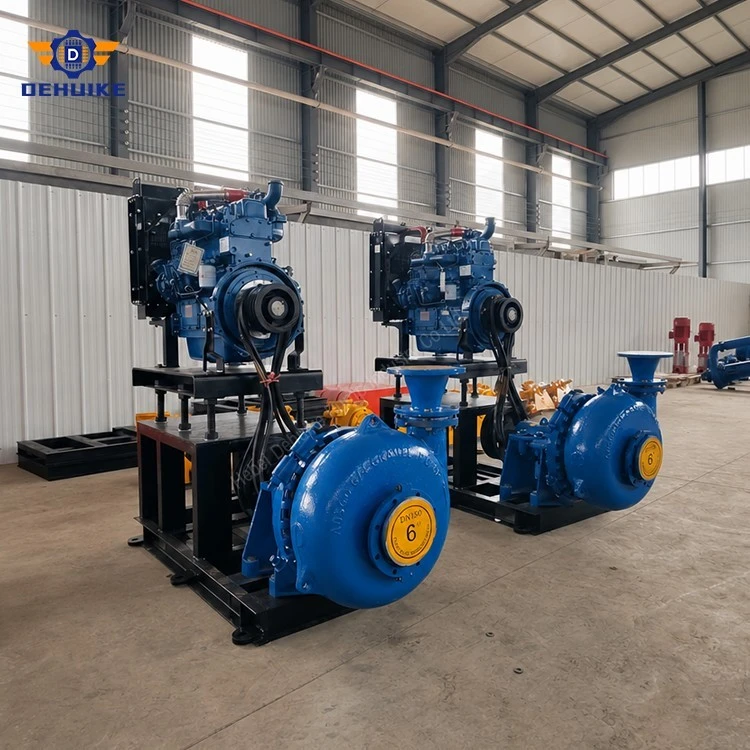
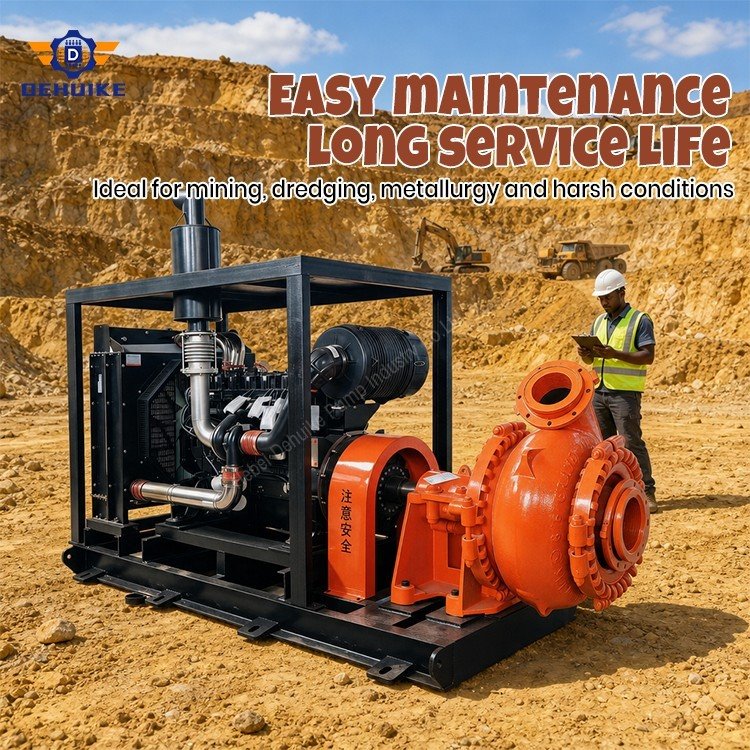
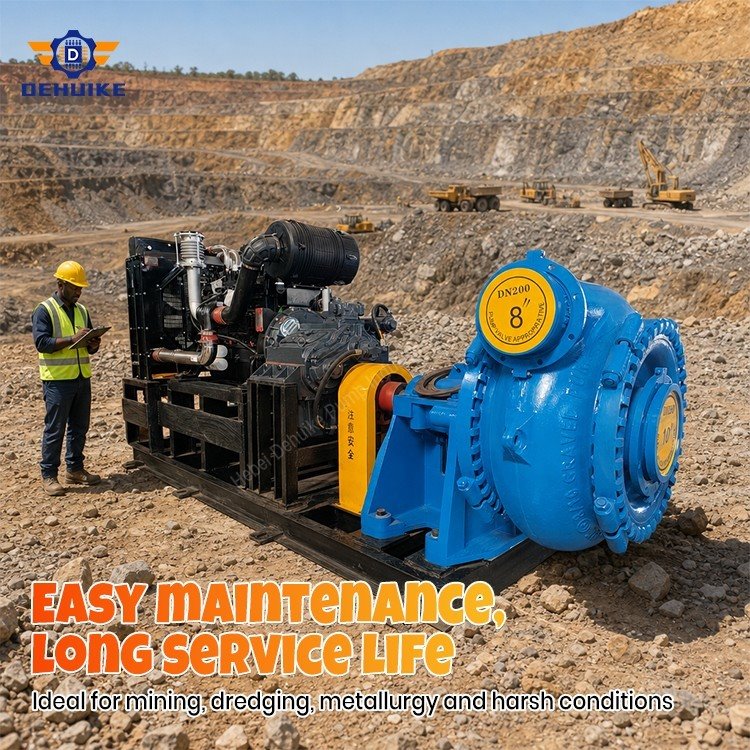
Hebei Dehuike Pump Industry Co., Ltd. is one of the most reliable manufacturers and suppliers of wear resistant gravel pump in China. With abundant experience, we are committed to providing high quality customized pumps with competitive price. Welcome to wholesale bulk wear resistant gravel pump for sale here from our factory. Also, pricelist is available.
Introduction | Define Wear Resistance By The Actual Slurry
A Wear Resistant Gravel Pump is specified for abrasive mixtures that can remove material from the impeller, casing and other wetted components. The phrase does not identify one universal alloy or a guaranteed service interval. Wear depends on what is pumped, how fast particles strike or slide across a surface, and whether the carrier liquid also attacks the material chemically.
In coarse-solids work, a Heavy Duty Gravel Pump may combine large passage with replaceable metal wet-end parts. Passage and wear resistance are not the same property. A component can pass the solids and still lose thickness rapidly if mineral hardness, concentration, velocity or impact conditions differ from the design assumptions.
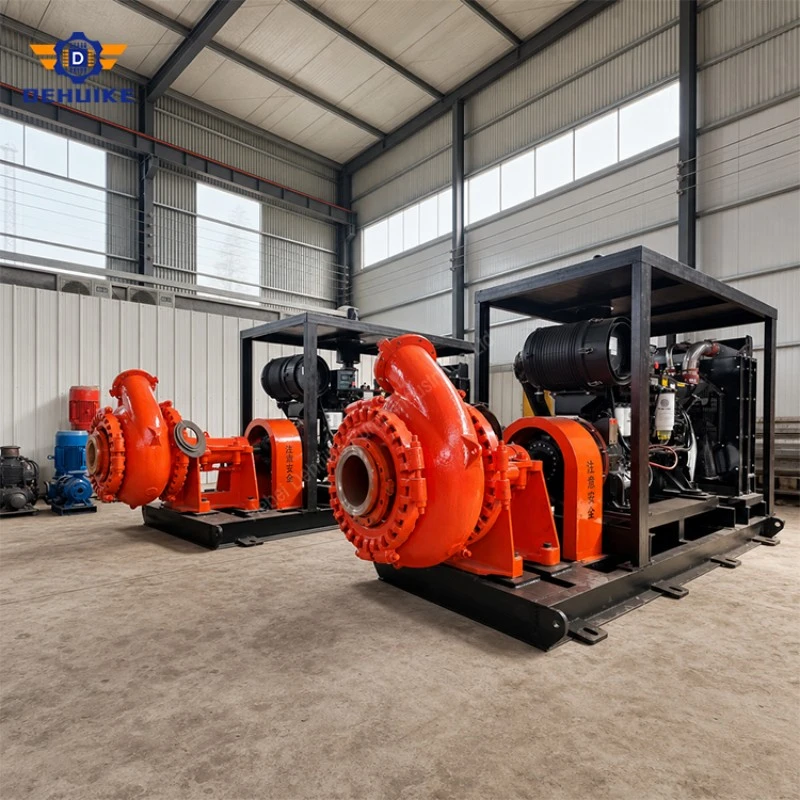
Specifications / Technical Data | Use Traceable Points Without Implying Wear Life
Particle values are technical references, not recommended continuous feed limits. The listed technical data does not define particle shape, proportion at the upper size, or a passage-test method. Ask for the applicable definition before using these values in a Wear Resistant Gravel Pump specification.
The tabulated capacity is mixture volume. Head is a hydraulic value, not casing pressure class; efficiency refers to the stated duty point, not total electrical efficiency. Motor power still requires slurry-density and performance corrections. None of these fields measures abrasion rate, and no wear ranking between the five models can be calculated from them.
For tender comparison, place wear evidence in a separate schedule beside the hydraulic table. That schedule can identify each wetted component, proposed material designation, required certificate, replaceable or structural status, inspection method and acceptance criterion. If a supplier offers estimated life, require the reference slurry, operating speed, component limit and calculation basis. This prevents a predicted number from being mistaken for a value measured by the performance data.
A practical bid matrix may also reserve columns for initial wall allowance, designated measurement zones, retirement rule and quoted replacement lead time. Keeping these commercial and condition-monitoring fields visible helps engineering and maintenance teams evaluate proposals on the same basis without altering the source performance figures.
|
Model |
Particle reference (mm)* |
Suction diameter (mm) |
Discharge diameter (mm) |
Pump weight (kg) |
|
6/4D-G |
82 |
150 |
100 |
460 |
|
8/6E-G |
127 |
200 |
150 |
1120 |
|
10/8F-G |
178 |
250 |
200 |
2250 |
|
14/12G-G |
241 |
350 |
300 |
5400 |
|
16/14-G |
255 |
400 |
350 |
6950 |
|
Model |
Flow (m3/h) |
Head (m) |
Speed (r/min) |
Efficiency (%) |
Motor entry (kW) |
|
6/4D-G |
285 |
46 |
1400 |
58 |
75 |
|
8/6E-G |
605 |
35.3 |
1470 |
58.5 |
132 |
|
10/8F-G |
950 |
37.3 |
980 |
62.2 |
220 |
|
14/12G-G |
3194 |
44.1 |
650 |
66.8 |
800 |
|
16/14-G |
2988 |
38.2 |
500 |
67.6 |
800 |
Product Detail | Distinguish Sliding Abrasion, Impact And Corrosion
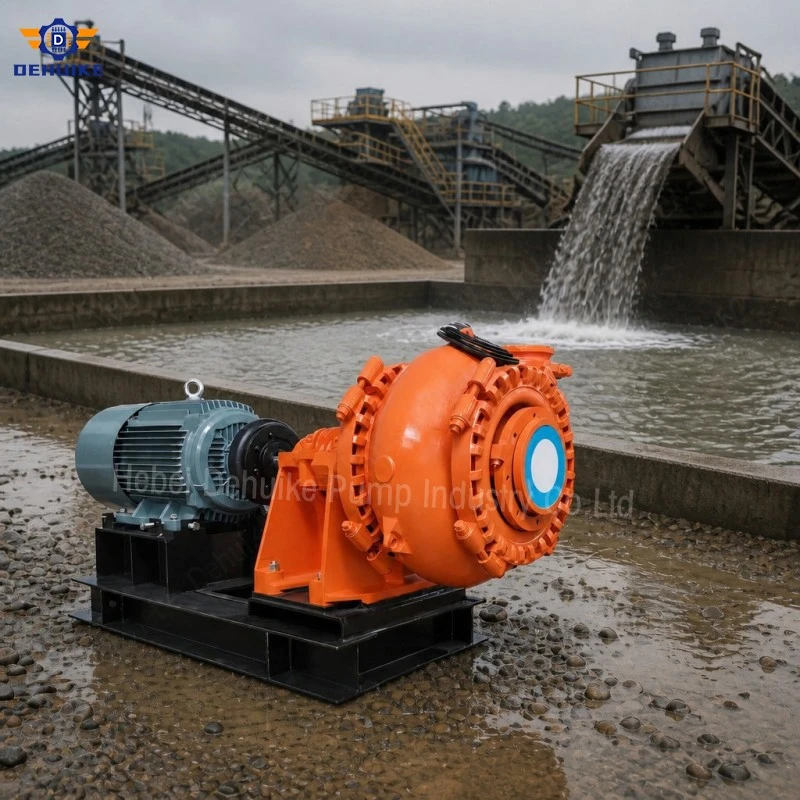
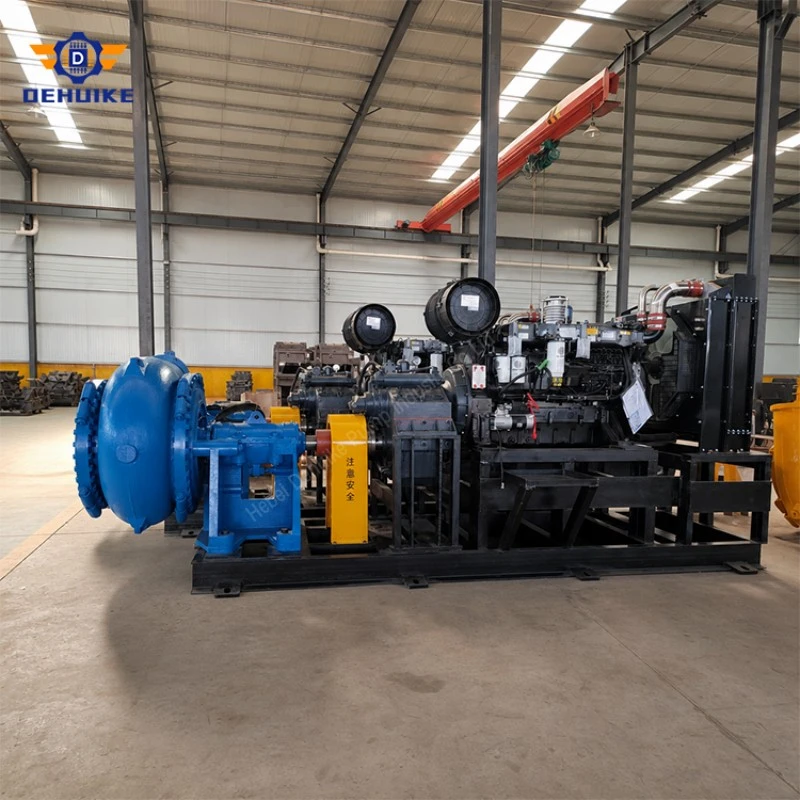
The impeller of a centrifugal gravel pump transfers energy to the mixture, and the casing guides that mixture toward the outlet. As solids move through the wet end, some follow the liquid stream while others contact surfaces. Fine particles can produce repeated sliding abrasion; larger angular fragments may cause impact and local gouging. Damage pattern varies across the component because velocity and incidence angle are not uniform.
Material choice is a balance. Hard metals can resist cutting and abrasion, while adequate toughness is needed where impacts might initiate cracking. Elastomeric materials can dissipate some particle energy but may be vulnerable to sharp or oversized fragments. Corrosive liquid can remove or weaken protective surfaces and change the combined erosion-corrosion result.
Features / Equipment Characteristics | Control The Variables That Drive Wear
Wear resistance begins with application data rather than component thickness alone. Two slurries with the same maximum stone size can produce different damage if their mineral hardness, angularity, concentration or chemistry differs. The duty review should distinguish normal feed from short periods of unusually dense or coarse material.
-Record particle grading, including a representative median size and credible top size. A single maximum value cannot describe the population that repeatedly contacts the wet end.
-Identify mineral type and hardness. Quartz-rich aggregate may create a different abrasion demand from softer sediment even at similar flow.
-State concentration and carrier chemistry. Solids loading affects contacts and power, while pH and dissolved salts may alter the corrosion component.
-Review speed and operating point with the supplier. A Heavy Duty Gravel Pump run outside its intended region can experience different internal flow and wear distribution.
A Wear Resistant Gravel Pump cannot make an abrasive process wear-free. Its practical objective is controlled, inspectable consumption of suitable replaceable parts while the machine delivers the required duty. Claims such as maintenance-free operation or fixed multi-year life are excluded unless supported by equivalent field conditions and a written guarantee.
Our Advantages | Build The Selection Around Measurable Consumption
For a Wear Resistant Gravel Pump, the strongest operating evidence is repeatable measurement. Record component thickness at named locations, hours run, mixture volume, estimated solids handled and feed changes. These records show whether wear is distributed or concentrated and allow the next inspection interval to be based on trend rather than guesswork.
Lifecycle evaluation should include initial equipment, energy, consumed parts, labour, lifting equipment and lost production. A replacement Heavy Duty Gravel Pump should not be promoted through an unsupported claim of longer life. Instead, require the supplier to explain how the proposed material and duty point address the damage observed on the previous installation.
Production Process And Quality Assurance | Make Material Claims Auditable
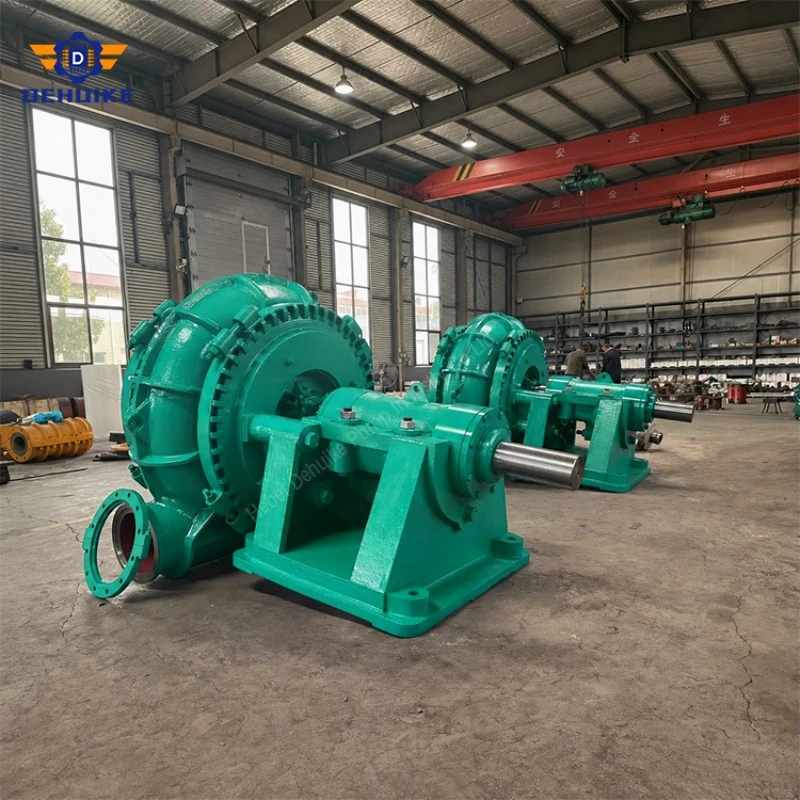
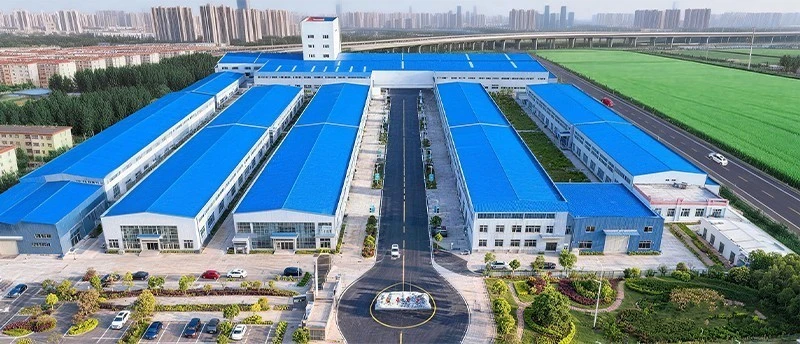
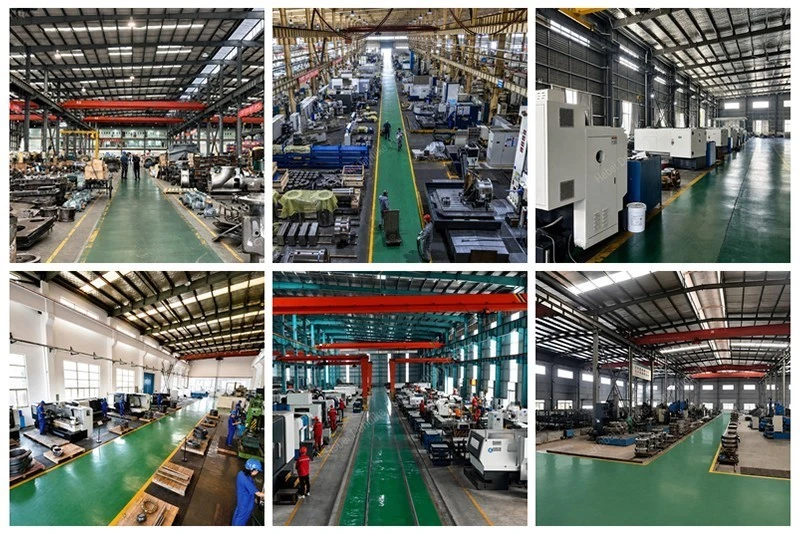
Before manufacture, approve the component drawing, material designation and any heat-treatment or hardness requirements. For cast wet-end parts, define the evidence needed to link the finished component to the agreed specification. Machining and assembly should preserve fit, clearances and alignment relevant to the released configuration. These are buyer-side control points, not a statement that an unseen factory has already performed them.
Identify each replacement part by drawing or controlled part number. Similar external dimensions do not prove matching passage, balance or material. Packaging should protect machined interfaces and keep loose Wear Resistant Gravel Pump components traceable to the delivered assembly.
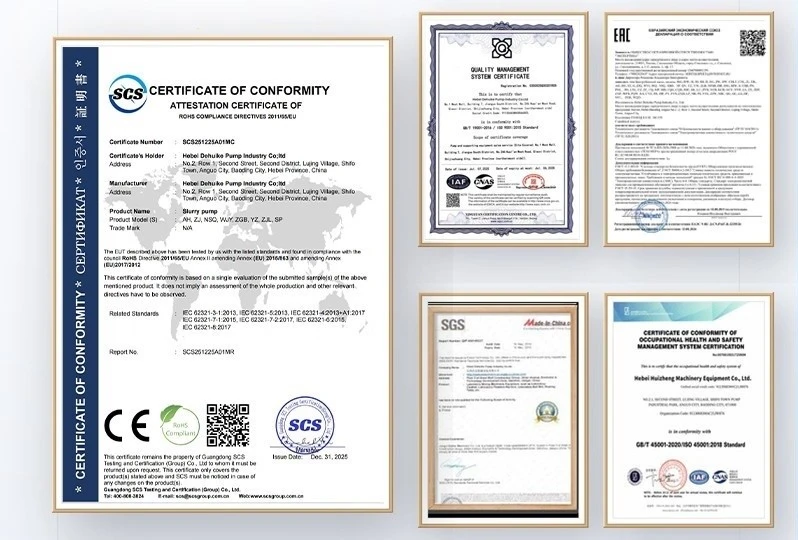
Quality assurance: verify different claims with different records
A chemical certificate addresses composition; hardness readings address a particular material property; dimensions confirm geometry; a hydraulic test addresses agreed performance. None alone proves wear life. Where inspection or third-party witnessing is required, state the sampling plan, acceptance criteria and report format before production.
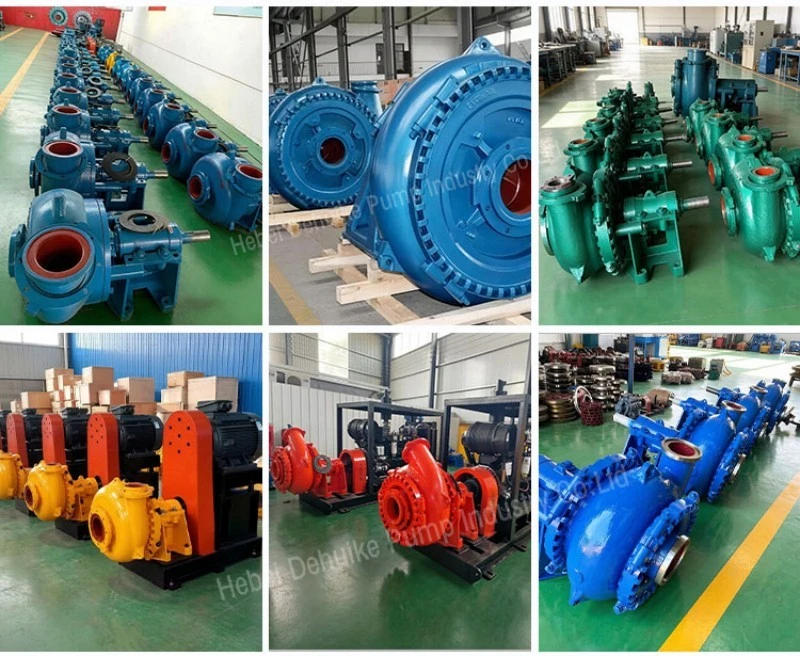
Applications | Match The Damage Mechanism To The Process
A Wear Resistant Gravel Pump may be evaluated for suitable aggregate, dredging, quarry, mineral-recovery and coarse process-transfer duties. These examples show how to frame selection, not documented customer cases or guaranteed outcomes. The dominant wear mechanism and hydraulic requirement must be established for each project.
Smaller high-speed gravel transfer
The chosen 6/4D-G and 8/6E-G points operate at 1400 and 1470 r/min. They list 285 m3/h at 46 m and 605 m3/h at 35.3 m. For preliminary review, relate those speeds to the actual particle grading and material proposal rather than assuming that smaller equipment wears at a fixed rate.
Intermediate abrasive-slurry duty
The 10/8F-G row gives 950 m3/h at 37.3 m and 980 r/min. It may support discussion of an intermediate transfer system, but wear resistance still depends on mineral properties, internal flow and chemistry. The 220 kW motor record is not a final power selection for dense slurry.
Large-volume gravel delivery
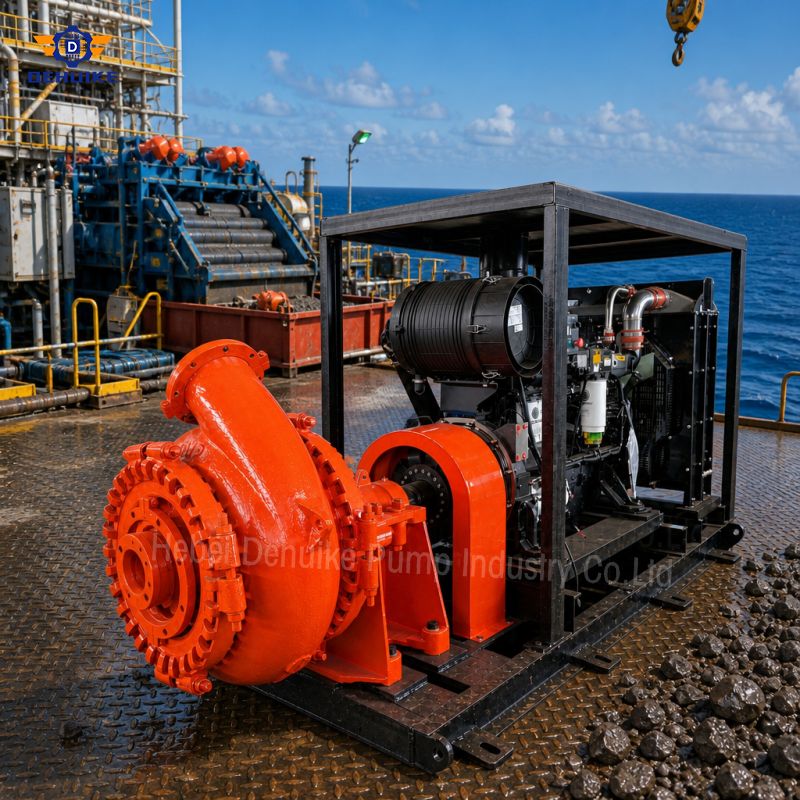
The selected 14/12G-G and 16/14-G rows list 3194 m3/h at 44.1 m and 2988 m3/h at 38.2 m. Both include an 800 kW motor entry. A Heavy Duty Gravel Pump at this scale requires planned lifting, wear-part handling and inspection access as well as hydraulic confirmation.
Our Service, Experience And Markets | Supply Evidence For A Wear Review
A useful enquiry includes flow, total head, pipe profile, suction condition, solids concentration and density. Add sieve results, mineral identification or hardness information, pH, temperature and dissolved salts where available. Photographs should include a scale and show representative feed, not only the clean liquid above a sump.
For a replacement Wear Resistant Gravel Pump, provide marked photographs or a thickness map of used parts. Note which side faced the inlet and how long the component operated. Changes in ore source, screen aperture, production rate or speed should be recorded because they can invalidate a simple before-and-after comparison.
Ask the supplier to itemise selection support, drawing approval, material records, inspection, commissioning input and recommended initial spares. Confirm which services are available in the destination market. No verified verified customer history, country coverage, stock level or response-time commitment, so none is claimed here.
Installation And Maintenance | Turn Wear Into A Planned Condition
Commission the Wear Resistant Gravel Pump with baseline records for speed, motor load, vibration, flow, pressure, leakage and slurry condition. These references help separate progressive hydraulic wear from a sudden obstruction or feed change. Do not increase speed merely to recover lost output before the cause has been identified.
Inspect consistent locations using the same method and instrument. Trend minimum remaining thickness as well as the pattern of loss. Replace parts before the approved limit is breached, using the manufacturer's criteria and the site's risk assessment. A universal millimetre limit cannot be derived from the parameter table.
Before opening a Heavy Duty Gravel Pump, isolate the drive, prevent automatic start, relieve pressure and secure connected pipework. Flush or drain only by the approved procedure. After assembly, verify clearances, fasteners, guards and rotation before returning the unit to service.
Faq | Specify A Wear Resistant Gravel Pump Without Vague Promises
1. What makes a gravel pump wear resistant?
It is a combination of suitable hydraulic design, compatible wetted materials, replaceable components and operation within an approved range. The exact answer depends on particle properties, concentration, velocity, impact and carrier-liquid chemistry.
2. Does harder material always last longer?
No. Hardness can improve abrasion resistance, but impact may require toughness and corrosive liquid may require another material balance. Sharp large particles can also cut or tear some resilient materials. Match the material to the damage mechanism.
3. Can service life be calculated from the Excel parameters?
No. Flow, head, speed and size do not provide an abrasion rate. A defensible life estimate needs equivalent field data, confirmed material, slurry characterization and an agreed operating envelope. Even then, state assumptions and uncertainty.
4. Which components normally require wear inspection?
Inspect the actual wetted parts and clearances identified in the supplied manual, commonly including impeller and casing regions. The exact parts, limits and sequence depend on the selected configuration and must come from its documentation.
5. Does lower speed always reduce wear?
Not automatically. Changing speed alters hydraulic duty and may move the system into an unsuitable region or reduce solids transport. Review speed, pipeline behaviour, production requirement and power together before making an adjustment.
6. Can a Wear Resistant Gravel Pump handle corrosive slurry?
Only when the specified wetted materials and seals are compatible with both corrosion and erosion. Declare pH, chlorides, reagents and temperature. An abrasion-resistant description alone is not evidence of corrosion suitability.
7. How should spare quantities be determined?
Use observed consumption, inspection trend, lead time, shutdown opportunity and process criticality. New installations need a risk-based initial holding that is revised after real wear data becomes available. Confirm exact part numbers and configuration.
8. What should a material proposal contain?
Request component-by-component material designations, relevant processing or hardness requirements, compatibility rationale and the documents supplied with the order. Avoid accepting one generic material statement for every wetted and structural part.

Request A Wear-led Technical Selection
For a Wear Resistant Gravel Pump proposal, send the hydraulic duty, particle grading, mineral properties, concentration and chemistry, together with any previous wear map. If a Heavy Duty Gravel Pump is recommended, require an identified material schedule, selected curve, slurry power basis and replaceable-parts plan before approval.
Hot Tags: wear resistant gravel pump, China wear resistant gravel pump manufacturers, suppliers, factory