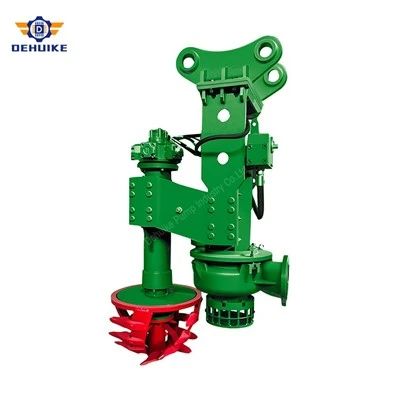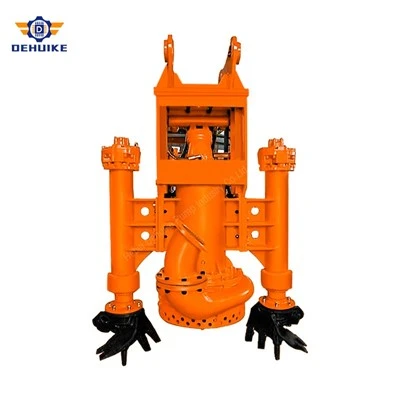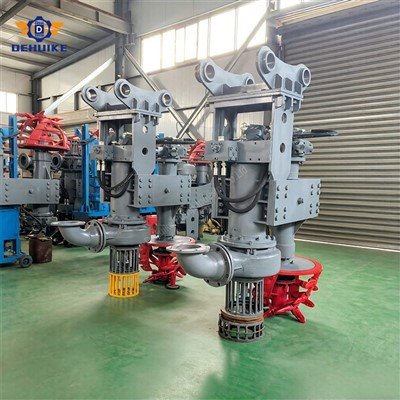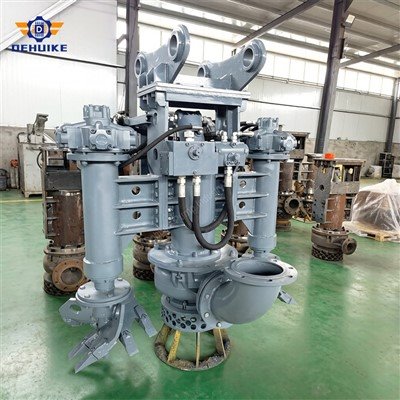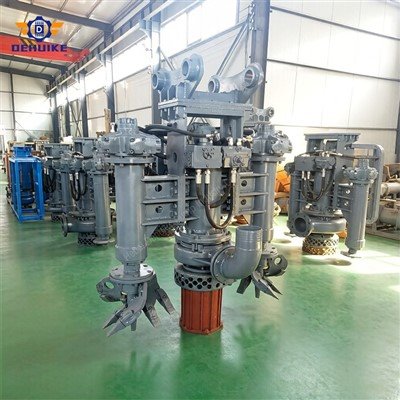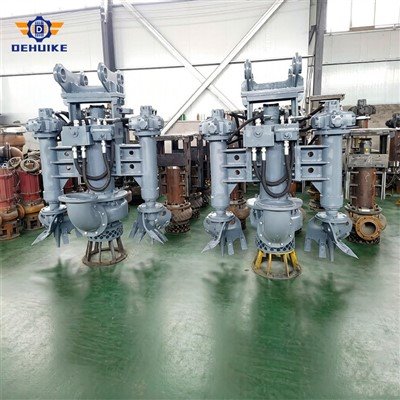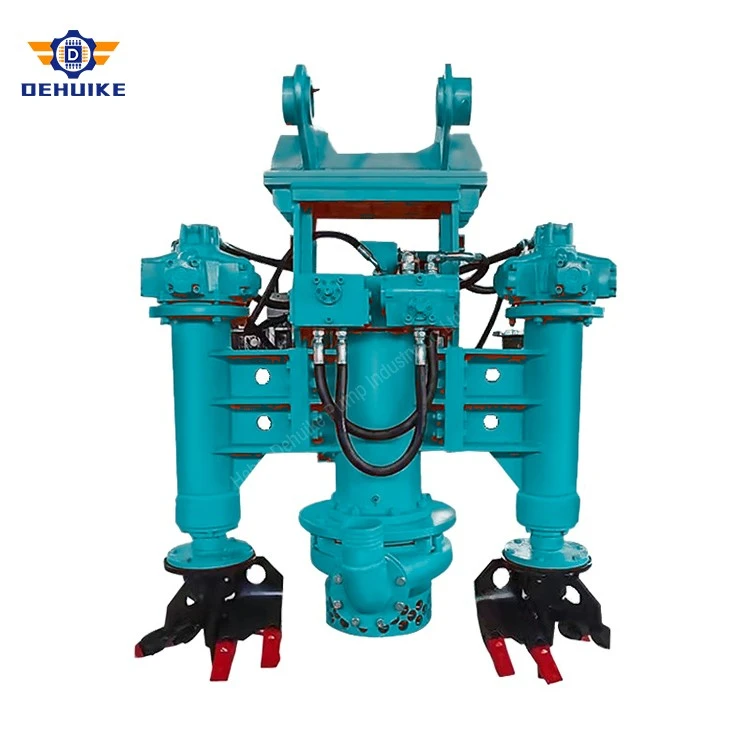
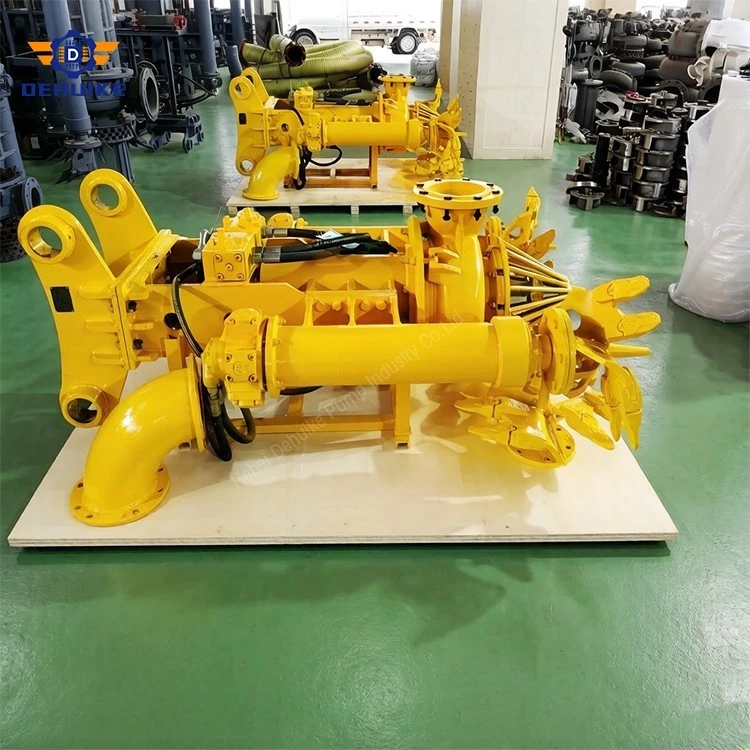
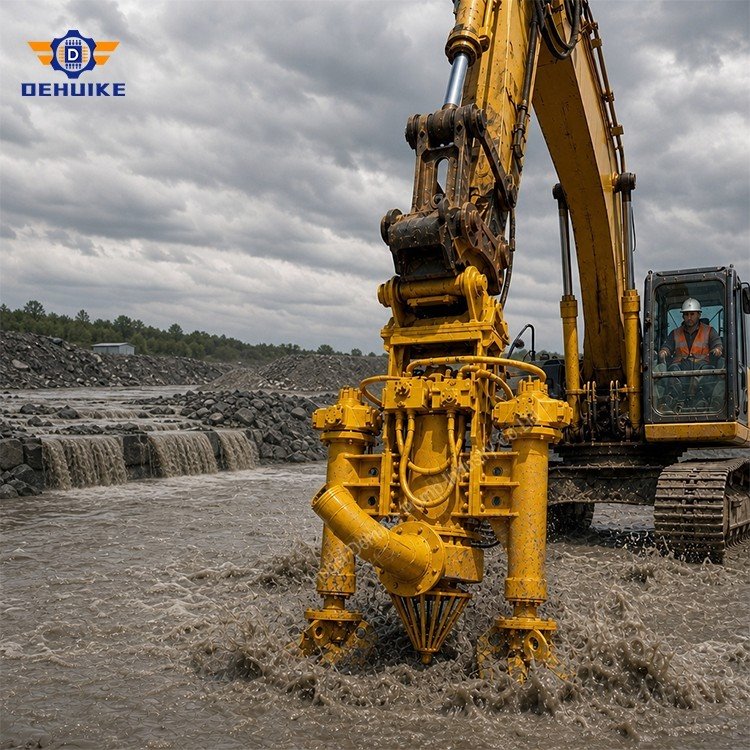
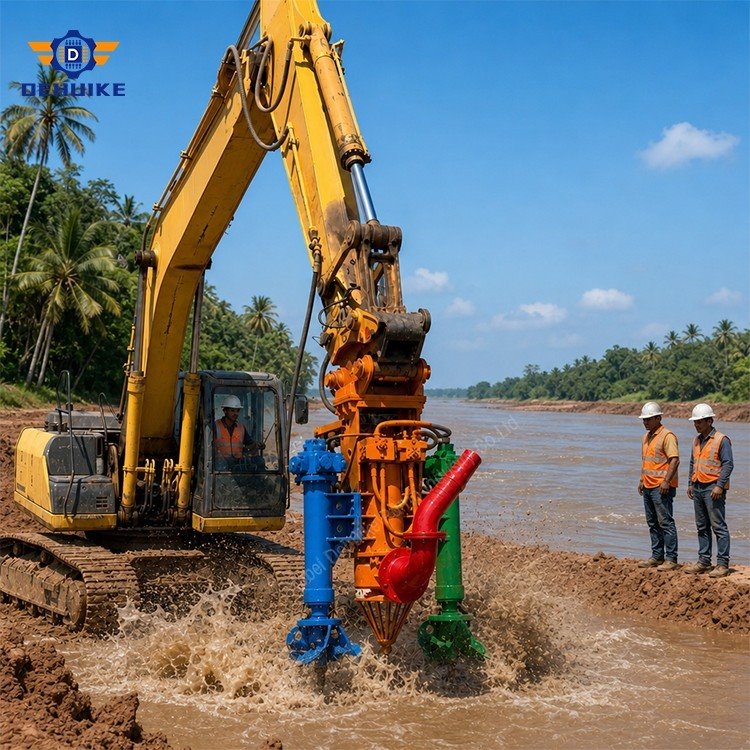
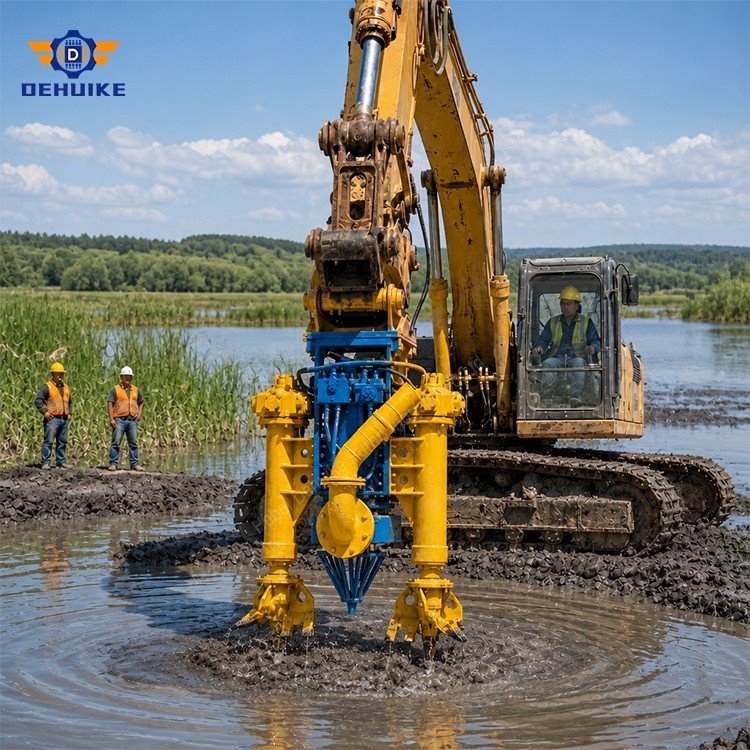
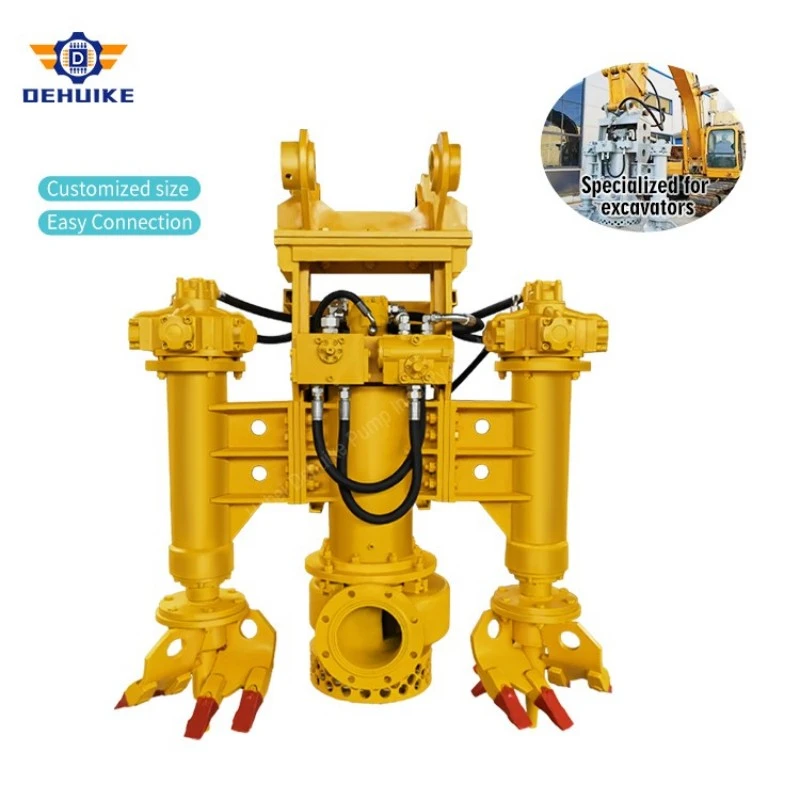
Hebei Dehuike Pump Industry Co., Ltd. is one of the most reliable manufacturers and suppliers of hydraulic submersible dredge pump in China. With abundant experience, we are committed to providing high quality customized pumps with competitive price. Welcome to wholesale bulk hydraulic submersible dredge pump for sale here from our factory. Also, pricelist is available.
Subaqueous Soil Geotechnics and Benthic Excavation Hydraulics
Marine navigation authorities, harbor deepening contractors, and offshore civil teams continually confront dense sediment strata that resist standard extraction machinery. Historically, project teams attempted seabed excavation through wire-operated drag buckets, pontoon-supported backhoes, or vessel-mounted suction equipment. In deep saltwater columns, however, mechanical grab buckets suffer from severe hydrodynamic losses. A heavy open bucket moving through twenty or thirty meters of seawater wastes massive mechanical horsepower merely pushing against turbulent water drag rather than dislodging seabed alluvium.
When the bucket is retrieved to the water surface, ambient maritime cross-currents wash through unsealed grab doors, releasing dense suspended silt plumes that cause widespread environmental violations and deposit up to forty percent of loosened material back into adjoining navigation channels. Conversely, surface-mounted centrifugal pumping installations face severe physical limits set by barometric pressure thresholds. Elevating dense gravel-sand mixtures through floating pipe strings requires large inlet suction depressions that exceed local atmospheric capabilities. Whenever slurry specific gravities climb beyond 1.45, available suction inlet head falls below water vapor pressure. Catastrophic acoustic cavitation instantly develops within the suction eye, eroding impeller vanes and collapsing pumping prime.
Submerged geotechnical engineering overcomes these physical boundaries by locating the rotating pumping wet section and hermetic drive unit directly on the seabed bed. Operating directly on the sea floor, this Hydraulic Submersible Dredge Pump benefits from continuous hydrostatic submersion pressure. Natural water depth continuously pressurizes heavy slurry straight into the revolving impeller eye, completely bypassing atmospheric suction limits across working depths from ten meters to fifty meters.
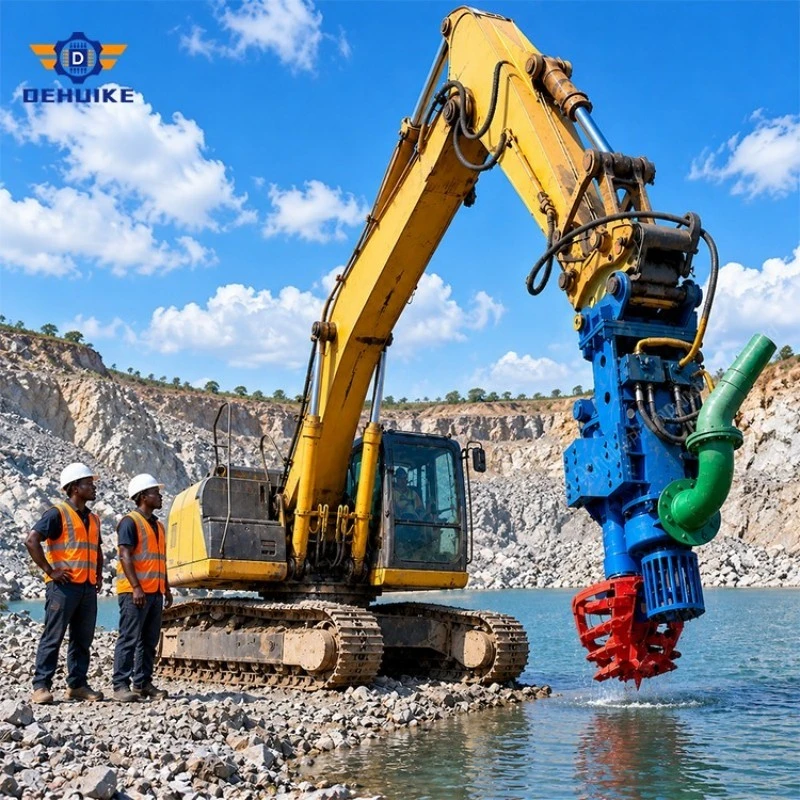
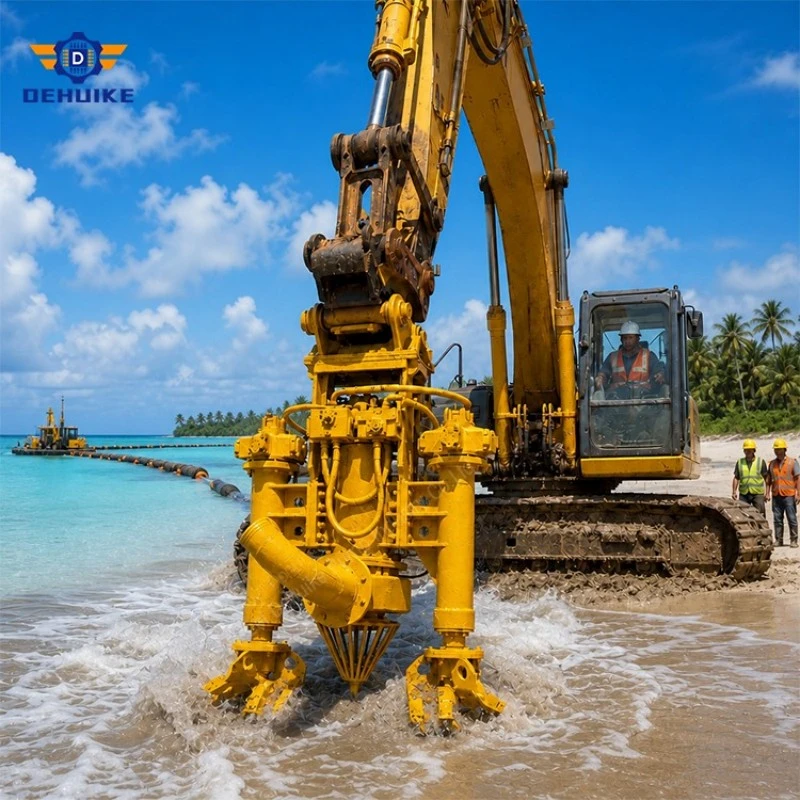
Furthermore, closed-circuit fluid power provides immense safety and flexibility advantages over rigid drive shafts or underwater high-voltage electric lines. Supplying pressurized mineral oil or non-toxic synthetic fluid through flexible wire-braided hoses isolates operating personnel from electrical hazards while preventing shaft binding during barge movement. Hitched to an excavator arm, crawler crane hoist, or modular spud barge, this Hydraulic Submersible Dredge Pump provides deep rotary mechanical cutting coupled with continuous high-density slurry transport right at the seabed interface, maximizing dry solids excavation without ecological plume dispersion.
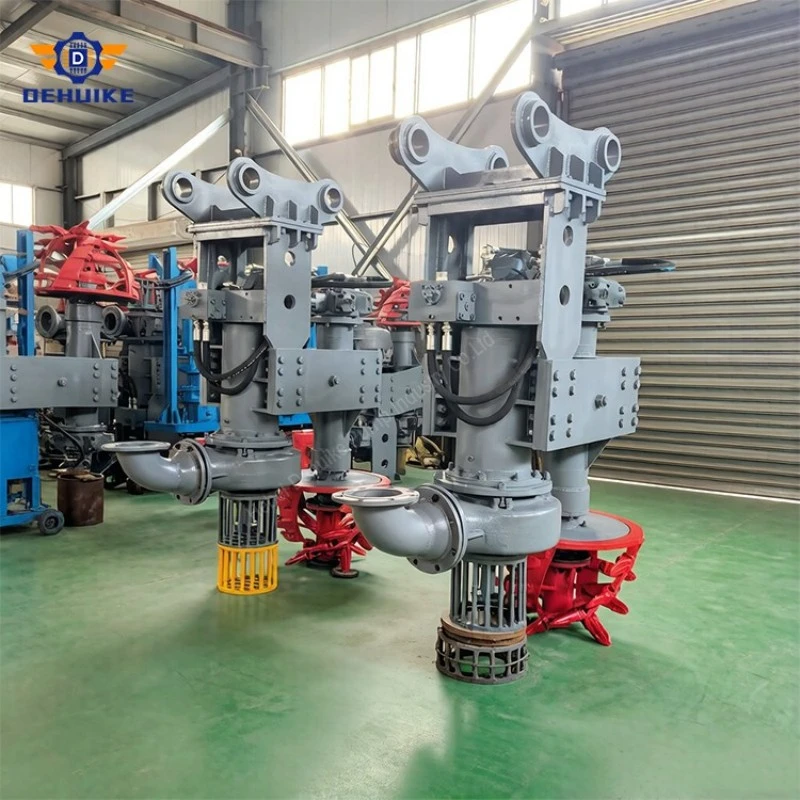
Rotodynamic Slurry Hydraulics, Bingham Fluid Models & Baseline Ratings
Accurately sizing subaqueous dredging units demands analyzing non-Newtonian two-phase slurry rheology rather than consulting standard clean-water performance charts. Dense underwater sand-gravel mixtures exhibit unique Bingham yield stresses, turbulent wall friction profiles, and particle settling boundaries governed by Durand and Wilson-GIW transport models.
The engineering ratings documented in Table 1 outline verified hydrodynamic parameters for the WJY dredge product range, specified for continuous 1,450 RPM shaft rotation.
Table 1: Certified Engineering Performance Profile for Submerged Slurry Dredging Units
|
Model Reference |
Discharge Caliber (mm) |
Nominal Flow (m3/h) |
Rated Head (m) |
Operating Speed (r/min) |
|
WJY50-20 |
80 |
50 |
20 |
1450 |
|
WJY150-25 |
100 |
150 |
25 |
1450 |
|
WJY300-25 |
150 |
300 |
25 |
1450 |
|
WJY500-40 |
200 |
500 |
40 |
1450 |
|
WJY800-22 |
300 |
800 |
22 |
1450 |
Wet-End Metallurgical Engineering & Submerged Drive Sealing Integrity
Pumping angular quartz grains, fractured rock fragments, and abrasive mineral residue under continuous deep-water immersion subjects wet-end surfaces to destructive micro-cutting abrasion and sharp hydraulic shock loads. Standard municipal drainage pumps fail rapidly under such arduous conditions. The rotating wet end of this dredging equipment is engineered from specialized high-alloy materials designed to protect mechanical drive components while providing robust sacrificial wear armor throughout all flow channels.
Eutectic White Iron Castings with 27% Chromium Alloy Fraction:
All primary slurry-contacting components-such as the single-volute casing, intake throat plate, and wide-vane slurry impeller-are manufactured from abrasion-resistant cast alloy featuring twenty-seven percent minimum Cr additions. Following electric induction furnace melting and secondary thermal tempering, the solidified matrix develops dense networks of microscopic M7C3 carbides embedded within an hardened martensite crystal lattice. These carbide structures attain micro-hardness values exceeding 1,200 through 1,800 on the Vickers scale, shielding wet-end surfaces against cutting quartz sand with hardness values near 900–1100 Vickers. Macro-hardness is held consistently at 58 to 62 Rockwell C across wear faces, giving strong resistance against scouring erosion while keeping adequate fracture toughness against heavy rock impacts entering the inlet.
Direct Agitator Drive for Excavating Highly Cohesive Sediment:
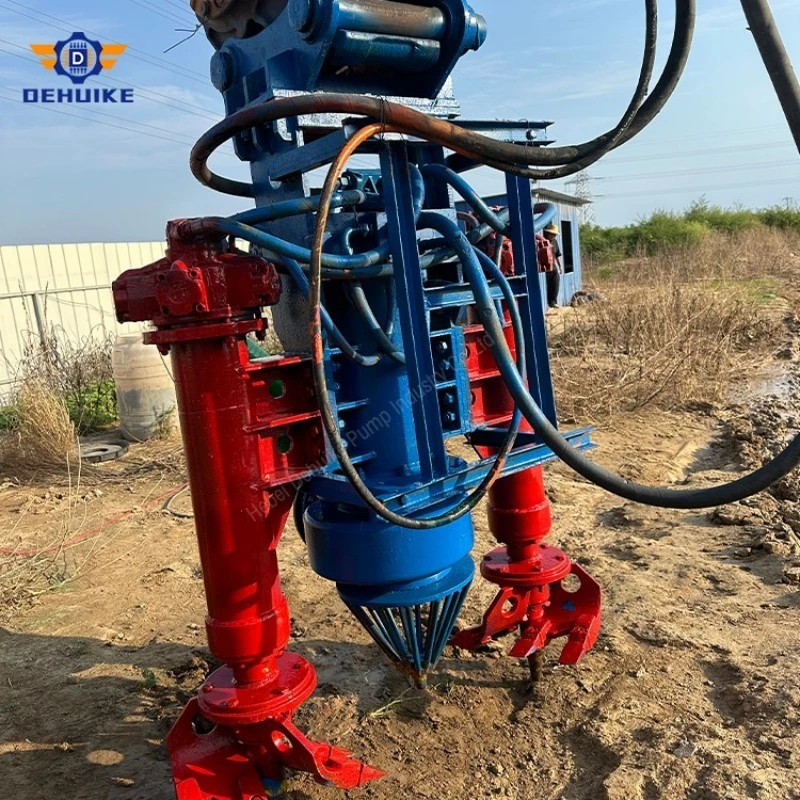
In natural aquatic environments, consolidated silts and marine clays settle into dense, interlocking strata that cannot be mobilized by suction alone. To conquer this cohesive resistance, the central alloy drive shaft projects through the intake throat to drive a monolithic cutting agitator poured in wear-resistant alloy. Spinning at full rotational speed, its sculpted leading edges deliver mechanical cutting action into consolidated banks, dislodging packed clay and churning particles into a highly turbulent mixture whirlpool that flows readily into the impeller. Where operations encounter stiff over-consolidated marl or fibrous vegetative beds, auxiliary hydraulic ports on the casing allow contractors to install auxiliary hydraulic cutter attachments or pressurized water jetting nozzles.
Closed-Circuit Fluid Power: Subsea Electrical Safety & Overload Immunity
In underwater earthmoving, operational longevity depends as heavily on the driving mechanism as on wear metallurgy. Electric submersible pumps commonly suffer high failure rates in marine service due to cable shearing by moving barges, water moisture creeping into junction housings, and rapid motor burnout during sudden mechanical blockages. Employing closed-loop fluid power to drive the Hydraulic Submersible Dredge Pump provides unique mechanical and operational advantages.
Eliminating High-Voltage Hazards in Maritime Operations:
Using pressurized fluid circuits entirely removes live electrical cords from underwater work sites. Closed-loop fluid transmission entirely avoids shock hazards for marine personnel and prevents short circuits caused by sharp riprap, broken pilings, or metal debris severing subsea insulation. If a hydraulic line is accidentally pinched or damaged by an excavator bucket, the system simply loses operating pressure and halts safely without creating electrical sparks, ignition hazards, or underwater ground faults.
Spacious Single-Volute Internal Passages for Large Spherical Solids:
Unlike multi-stage clean-water pumps restricted by narrow internal diffusers, dredging wet ends feature expansive single-volute casings paired with wide-passage open-vane impellers. Generous internal cross-sections permit the free movement of large spherical solids matching discharge pipe diameter ratings (from eighty millimeters up to three hundred millimeters across the WJY line). Coarse gravel, river cobbles, dense clay lumps, or intertwined vegetative matter pass cleanly through the volute without catching against the cutwater, preventing frequent downtime for manual clearing.
Torsional Load Absorption and High-Pressure Relief Protection:
When dredging riverbeds or industrial dump sites, the intake frequently encounters rigid obstacles including submerged tree trunks, abandoned wire ropes, or massive ballast stones. When an electric motor encounters such an unyielding object, current spikes instantaneously, often snapping central drive shafts or burning out motor stator windings. A hydraulic motor, however, exhibits smooth fluid dampening: the carrier's primary proportional relief valve cracks open within milliseconds, routing hydraulic oil back to the reservoir and shielding the drive shaft and impeller keys from destructive torsional shock.
In-Situ Fluid Reversal for Clearing Wedged Intake Debris:
When oversized boulders or timber chunks wedge into the intake, work crews bypass lengthy delays associated with crane retrieval or dispatching dive teams into zero-visibility water. Actuating the cabin directional spool valve instantly reverses motor rotation. Counter-turning the agitator blades unseats lodged obstructions and discharges them from the suction mouth, returning to active excavation in seconds.
Specialized Civil, Marine & Heavy Industrial Deployment Environments
Versatile mounting configurations permit this subaqueous dredging platform to excel across diverse civil, maritime, and resource extraction sectors where conventional earthmoving equipment cannot operate.
Subsea Soil Plug Evacuation Inside Offshore Wind Monopiles:
During deep offshore wind farm foundation construction, heavy steel monopiles measuring up to eight meters across are hammer-driven into maritime clay. Internal seabed soil forms dense compacted plugs that resist full structural seating. Traditional mechanical drilling tools struggle within narrow interior pile ladders. Suspended from auxiliary crane hoists on installation jack-up vessels, specialized hydraulic dredge units descend directly inside the steel casing, fluidizing deep internal clay plugs and discharging slurry over fifty meters of vertical lift, clearing the hollow so foundation grouting or drilling can reach bedrock refusal.
Precision Trenching and Subsea Bedding for Immersed Highway Tunnels:
Constructing cross-harbor immersed tube highway tunnels demands cutting smooth, level seabed trenches across active shipping waterways. Large trailing suction hopper vessels leave uneven undulating trenches that fail tight bedding tolerances for pre-cast concrete tunnel elements. Mobile excavator attachments mounted with submerged dredge units working from anchored spud barges skim along the trench invert, vacuuming loose silt and leveling gravel foundation beds to exact design elevations without disrupting harbor surface navigation.
Coastal Nuclear and Thermal Power Plant Cooling Forebay Desilting:
Coastal thermal generating facilities and nuclear power stations draw vast volumes of seawater cooling flows through shoreline canal structures. Major coastal storms push marine sand bars into forebay intake channels, threatening to choke circulating water pump intakes and force emergency reactor trips. Submerged dredging units mounted to traveling gantry carriages operate in high-current tidal zones, fluidizing accumulating sandbars and pumping slurry offshore to preserve cooling water flow without interrupting plant operations.
Deep Caisson Sinking and Underwater Cofferdam Foundation Clearing:
In deep marine bridge pier construction, large circular reinforced concrete caissons must be sunk through water-saturated sand and coarse cobbles. Heavy internal structural cross-bracing severely restricts mechanical clamshell bucket access, leading to uneven perimeter excavation and dangerous structural tilting. Lowered by crane hoists, subsea hydraulic dredging units work along the caisson cutting shoe, fluidizing dense sediments and pumping slurry straight out of the excavation pit, enabling smooth, controlled downward sinking.
Hydroelectric Penstock and Tailrace Silt Evacuation Under Pressure:
Mountain hydroelectric storage facilities accumulate dense deposits of decomposed granite and abrasive alluvium in intake forebays and tailrace channels, threatening catastrophic turbine runner erosion. Deep-submersible hydraulic dredge packages suspended from mobile shore cranes or modular pontoon barges descend 30–50 meters depth subsea, fluidizing consolidated sediment deposits and discharging slurry over spillway walls without requiring reservoir dewatering or interrupting municipal power generation.
Foundry Quality Control, Hydrostatic Integrity & Dynamic Balance Protocols
Operating equipment reliably underwater demands rigorous quality assurance across every manufacturing step, from raw metal melting through final pressure verification.
Spectrographic Melt Screening and Metallographic Phase Evaluation:
Before pouring wear parts, optical emission spectrometers confirm elemental ratios of carbon, chromium (held above twenty-seven percent), molybdenum, and nickel per ASTM A532 Class III specifications. Following preliminary rough shaping, castings enter computer-controlled thermal cycles for controlled solutionizing and sub-critical tempering cycles. Microscopic inspection confirms austenite transforms fully into martensite with finely dispersed M7C3 carbides to keep macro-hardness within HRC 58 to 62 throughout the metal thickness.
Volumetric NDT Screening and Pressure Containment Verification:
Unfinished volute casings and front liners undergo magnetic particle and ultrasonic angle-beam testing across critical fillets to ensure complete freedom from subsurface shrinkage voids or micro-cracks. Finish-machined finished volute casings and spool pieces are secured on hydrostatic test benches and pressurized to one-and-a-half times working design rating over a thirty-minute holding interval to verify zero case weeping or loss of pressure.
High-Speed Dynamic Balancing of Hydraulic Rotating Assemblies:
Running in heavy slurry mixtures magnifies dynamic shaking if rotating parts have minor mass eccentricity. All cast dredging impellers and bottom agitator hubs undergo two-plane dynamic balancing on sensor-driven balancing stands, satisfying ISO 1940 balance Grade G2.5 at service velocity. Balancing corrections are carried out through precision material removal on non-wearing shroud faces, minimizing shaft runout and protecting mechanical seal faces from destructive radial vibration.
Pressurized Wet-Basin Simulation and Complete Hydraulic Verification:
Before export crating, completed dredging units are placed in an enclosed submerged testing tank. Both the mechanical seal reservoir and the hydraulic motor mounting bell housing are inspected under water to verify fluid-tight containment. Connected to an instrumented diesel-hydraulic power unit, the pump undergoes complete performance profiling across its full head-capacity range. Calibrated transducers continuously track circuit pressure, fluid flow rates, casing vibration spectra, and bearing operating temperatures to confirm full alignment with rated specifications.
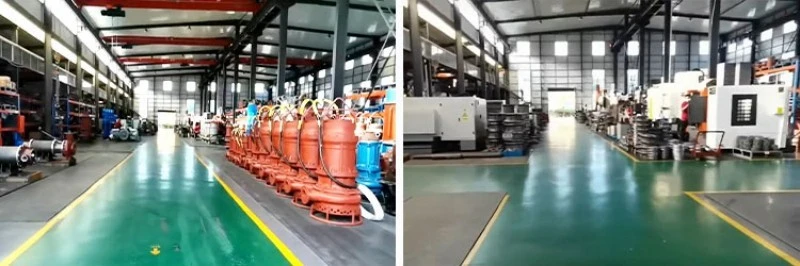
Heavy Machinery Heritage: Three Decades of Manufacturing Integrity at Dehuike
Selecting industrial subsea slurry machinery requires evaluating foundry capabilities, metallurgical precision, and long-term aftermarket technical backing. Dehuike Fluid Machinery Group (web portal: dhkpump.com), located in Hebei Province, brings more than thirty continuous years of specialized manufacturing experience dedicated to heavy-duty slurry transport equipment and subaqueous excavation machinery. Spanning an integrated heavy industrial campus exceeding 6,200 square meters, Dehuike executes all manufacturing stages on-site. The facility houses vacuum electric induction melting units, vertical multi-axis CNC turning stations, balancing test stands, and an instrumented water test flume designed to validate hydraulic performance under load.
Industrial Supply Network and International Export Footprint:
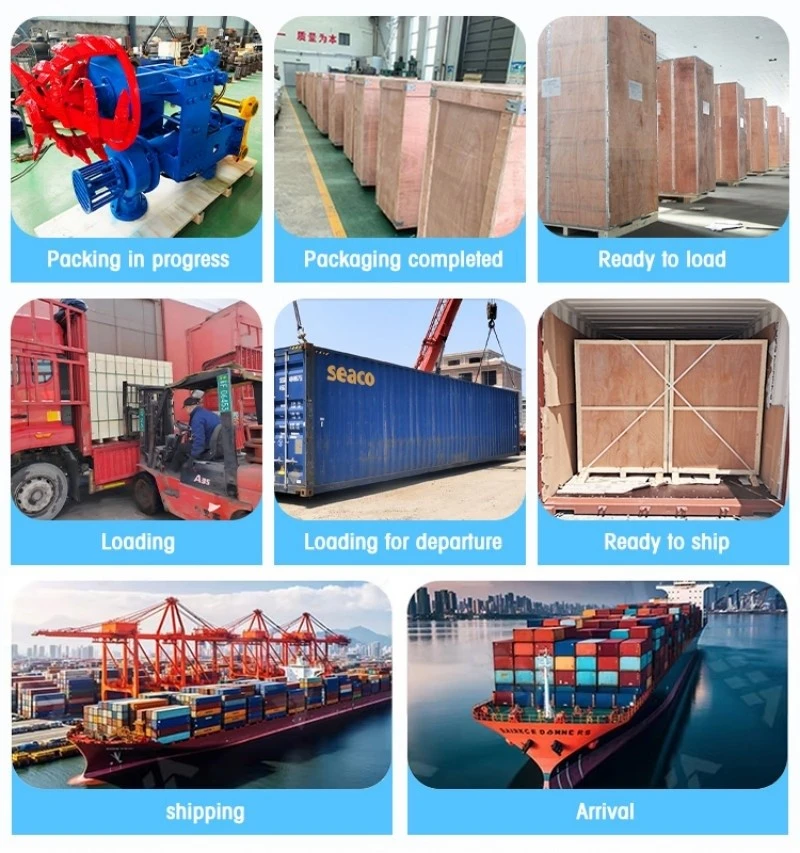
To ensure fast spare component fulfillment worldwide, Dehuike maintains partnerships with over 900 qualified industrial suppliers providing precision hydraulic motors, mechanical seal assemblies, heavy bearings, and certified alloy materials. Over three decades, our pumping equipment has been deployed across over fifty global territories spanning Asia, Africa, and the Americas, supporting port maintenance in ASEAN coastal territories, river dredging in West Africa, and tailings reclamation in South America. Manufacturing processes comply with ISO 9001 quality management benchmarks, Eurasian EAC technical regulations, and European RoHS compliance rules. We back our equipment with a two-year (24-month) factory mechanical warranty guarding the complete pump and drive interface (wet-end parts subject to natural wear excluded). International cargo dispatches move through air freight for rapid dispatches weighing 50–500 kg, while bulk orders above 500 kg ship by sea in reinforced marine crates under standard FOB departure or CIF arrival agreements.
Field Engineering Guidelines: Circuit Interfacing, Pipeline Sizing, and Maintenance
When site engineers integrate a Hydraulic Submersible Dredge Pump into an active marine or industrial worksite, successful subaqueous excavation depends on correct hydraulic interfacing, proper velocity monitoring, and disciplined maintenance procedures. The following technical recommendations address critical site operations.
Hydraulic Circuit Sizing and Excavator Integration:
Delivering rated impeller speed and pressure head requires aligning the subsea motor with carrier fluid output. Compact dredging heads like the WJY50-20 work reliably on oil supplies of forty to sixty liters per minute with circuit pressures around sixteen to twenty megapascal limits, an operational envelope readily supported by breaker circuits on excavators weighing between 12 and 18 tons. Mid-capacity platforms such as WJY150-25 and WJY300-25 need ninety to one hundred sixty liters per minute under 180 to 240 bar pressure, aligning with auxiliary lines on 20-to-30-ton carrier machines. Heavy-duty units including models WJY500-40 and WJY800-22 call for 200–320 L/min at 280 bar, fed by high-flow carrier dual pumps or diesel power modules generating 160 to 250 kW. Hose diameters should be selected carefully to minimize hydraulic friction over long excavator boom runs.
Sediment Bed Disintegration via Mechanical Agitation:
Submerged clays and consolidated alluvium withstand unassisted fluid suction. An integral high-alloy churning rotor mounted on the central shaft extension rotates at 1,450 RPM, applying aggressive mechanical cutting action across settled seabed formations. Its sculpted blades break up cohesive particle bonds, generating an intense turbulent vortex that blends incoming water with dense silt to produce high-density slurries (commonly carrying between a quarter and two-fifths solids by volume) that enters the impeller intake freely without cavitating.
Corrosion Protection in Marine Ports and Acidic Mining Sumps:
Standard twenty-seven percent high-chromium white iron provides dependable service across river desilting and neutral water bodies. However, in warm, high-salinity harbor basins or acidic tailings sumps with slurry pH drops under 4.5, localized galvanic wear can degrade the metallic binder holding carbide structures. Under these aggressive chemistries, Dehuike manufactures specialized hypereutectic castings enhanced with two to three percent molybdenum, alongside cast duplex stainless alloys such as CD4MCu or 2205 grade duplex stainless. Non-wetted structural steel frames receive protective multi-coat marine epoxy finishes, and sacrificial zinc rings can be secured to the casing for cathodic protection.
Routine Inspection and Impeller Shimming Procedures:
Field maintenance focuses on monitoring the mechanical seal oil reservoir and bearing housing. Following each 250–300 hours of runtime, service technicians should extract a small fluid sample from the seal reservoir drain plug. Translucent oil confirms intact seal rings, whereas a cloudy or milky appearance warns of water ingress, indicating that primary seals must be renewed. Heavy-duty bearing assemblies require grease replenishment with water-resistant synthetic lubricant after every 500 operating hours. Furthermore, as slurry scouring gradually widens the front impeller clearance, maintenance staff should reposition external shimming spacers to re-establish a 0.5 to 1.0 millimeter range, safeguarding design hydraulic output and eliminating internal fluid recirculation.
Hot Tags: hydraulic submersible dredge pump, China hydraulic submersible dredge pump manufacturers, suppliers, factory