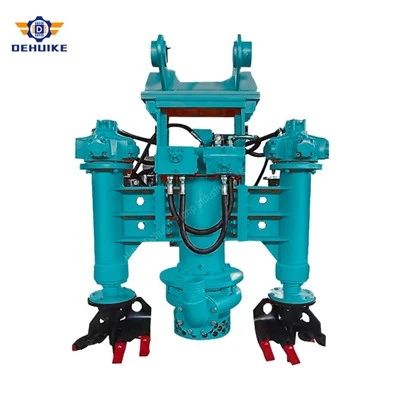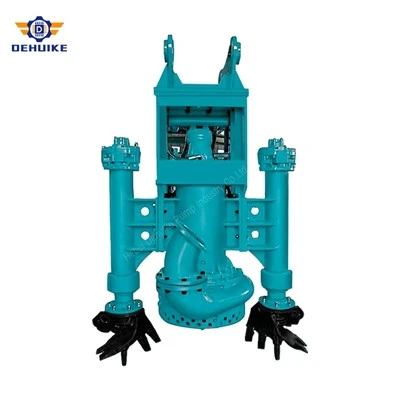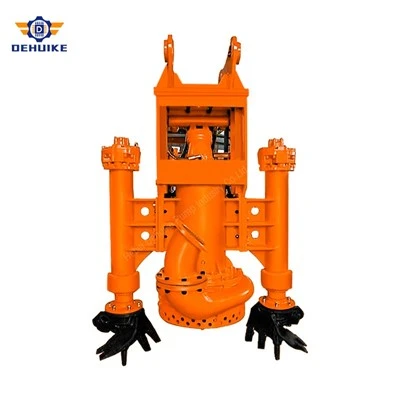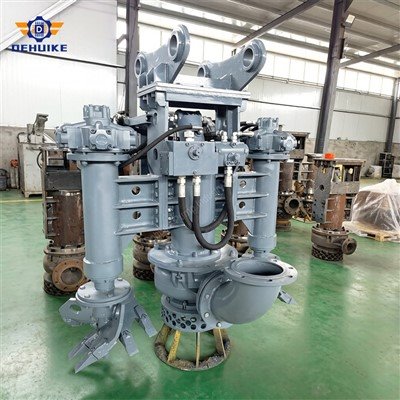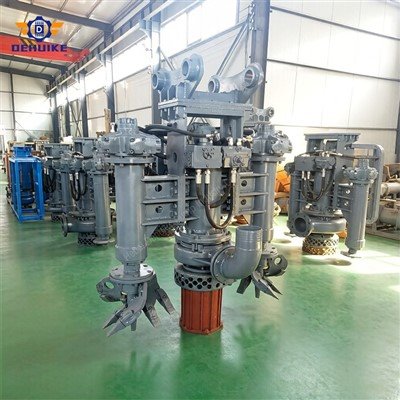
Hebei Dehuike Pump Industry Co., Ltd. is one of the most reliable manufacturers and suppliers of hydraulic sand and gravel pump in China. With abundant experience, we are committed to providing high quality customized pumps with competitive price. Welcome to wholesale bulk hydraulic sand and gravel pump for sale here from our factory. Also, pricelist is available.
Operational Dynamics of Fluid-Driven Heavy Solids Pumping
Aggressive Slurry Realities: Commercial quarry washing circuits, alluvial gravel extraction operations, harbor dredging projects, and civil sedimentation basins face continuous operational hurdles when transporting high-density mixtures of mineral solids, sharp river sand, and coarse pebble gravel. In contrast to homogeneous liquids, coarse two-phase slurries are defined by rapid gravitational particle settling and aggressive abrasive impingement. Moving such heavy mineral mixtures through stationary flumes or flexible pipeline routes demands dedicated fluid machinery capable of generating immense driving torque while withstanding direct impact wear. The Hydraulic Sand And Gravel Pump addresses these severe engineering duties by coupling robust, open-flow slurry hydraulics directly with fluid-powered displacement motors.
Hydraulic Power Advantages over Electrical Drives: Standard electric submersible slurry pumps frequently encounter severe operational bottlenecks in rough field environments. Trailing electric cables suffer mechanical lacerations from excavator crawler tracks or jagged rock edges, while submerged electrical windings risk catastrophic moisture contamination. More critically, electric induction motors develop constant speed characteristics that cannot modulate torque when dense slurry slumps into the intake, leading to thermal overload tripping or locked-rotor failure. Conversely, deploying a purpose-built Hydraulic Sand And Gravel Pump connected to an excavator auxiliary circuit or stationary diesel power pack provides continuous variable speed regulation. Operators adjust hydraulic oil flow and pressure on the fly, tailoring impeller tip velocities to exact pipeline deposition thresholds.
System Dynamics across Aggregate Circuits: Every aggregate washing facility exhibits fluctuating slurry conditions throughout a typical working shift. Initial wash-screen underflow may consist predominantly of fine silica sand and suspended silt fractions, whereas subsequent screen discharge or aggregate stockpile washdown introduces irregular gravel pebbles, heavy sand bars, and high solids concentrations. Successful equipment sizing requires a comprehensive understanding of the complete liquid-solids transport circuit: identifying material entry points, total delivery elevation, pipeline friction losses, and carrier oil capabilities. Relying strictly on a nominal flow figure without examining mixture grading often results in line plugging or premature throat wear.
Two-Phase Slurry Rheology and Density Surges: Transporting coarse sand and gravel involves heterogeneous slurry mechanics where solids velocity differs markedly from carrier water velocity. As solid particles settle downward, higher energy is required to maintain turbulent suspension across long transport conduits. Carrier pump systems must be designed to withstand rapid specific gravity variations, often swinging from 1.05 to over 1.45 kg/dm³ within minutes. With the Hydraulic Sand And Gravel Pump, the hydraulic motor delivers flat high-torque output across varying speeds, ensuring the impeller maintains rotation even during dense slurry surges.
Manufacturing Heritage and Engineering Foundation: With more than three decades of specialized manufacturing heritage in heavy slurry machinery, Hebei Dehuike Pump Industry Co., Ltd. (DHK Pump) develops rugged hydraulic slurry equipment designed for global earthmoving contractors and mining operators. The standardized WJY product platform offers modular fluid-driven configurations engineered for excavator boom suspension, crane cable hoisting, or barge-mounted dewatering frames across international markets.
Specifications Technical Data
Standardized WJY Platform Selection: The technical matrix of the WJY series establishes an empirical engineering baseline for selecting appropriate extraction models. Standard ratings reflect verified factory water calibrations at standard barometric intake conditions. When transporting coarse aggregate slurries, site engineers must account for slurry specific gravity, particle size distribution curves, and equivalent friction head across discharge flexible hoses.
50 to 200 m³/h Low-Volume Duty Band: Suited for compact drainage trenches, narrow excavation caissons, and pilot washing flumes where localized solids accumulation requires controlled slurry removal without overwhelming downstream dewatering screens.
260 to 400 m³/h Intermediate Processing Band: Serves as the core workhorse capacity for vibratory screen underflow, cyclone feed sumps, and aggregate processing lines operating with consistent solids concentrations.
450 to 600 m³/h Elevated Head Transfer Band: Engineered for heavy processing installations requiring elevated discharge heads up to 30 or 40 meters (such as models WJY200-40 and WJY500-40), transporting slurry over significant vertical climbs or across multi-deck sorting towers.
700 to 1,000 m³/h Bulk Reclamation Band: Designed for river canal widening, harbor deepening, and major gravel reclamation pits requiring maximum solids movement across expansive sedimentation ponds (including models WJY1000-18 and WJY1000-20).
Friction Loss and Hydraulic Head Compensation: In addition to velocity management, head loss in slurry lines increases noticeably when flexible rubber hoses or corrugated suction conduits are deployed. While steel piping has predictable friction factors, rubber hoses with internal helical reinforcement introduce localized turbulence. Sizing calculations must factor in extra equivalent length for hose bends, discharge reducers, and static delivery elevation to maintain the pump within 80% to 110% of its Rated Optimal Efficiency Point.
Product Details - Subassembly Metallurgy, Drive Interface, and Hydraulic Wear Architecture
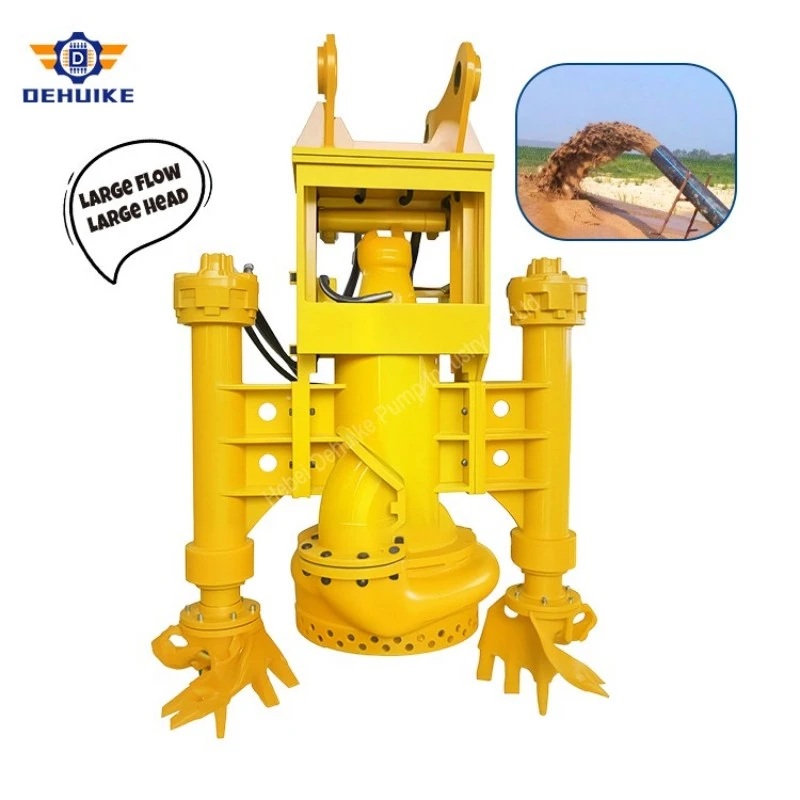
Subassembly Overview: The durability of a heavy-duty Hydraulic Sand And Gravel Pump relies upon mechanical subassemblies built specifically for submerged service under constant particle abrasion. Each mechanical interface is designed to withstand shock loads from tumbling gravel without cracking.
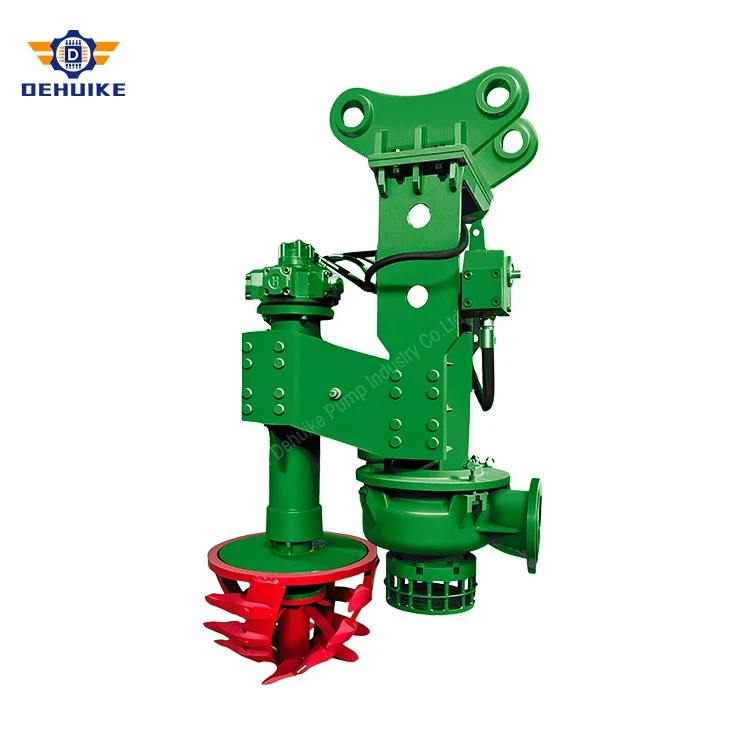
Wide-Passage Non-Clog Hydraulic Impeller: The rotating impeller incorporates generous internal vane channels that permit the passage of coarse spherical pebbles, fragmented rock, and compacted clay clods without clogging the intake. Integrated back-clearing vanes cast onto both shrouds produce a secondary centrifugal vortex that purges dense abrasive particles away from the mechanical seal cavity, balancing axial hydraulic thrust forces.
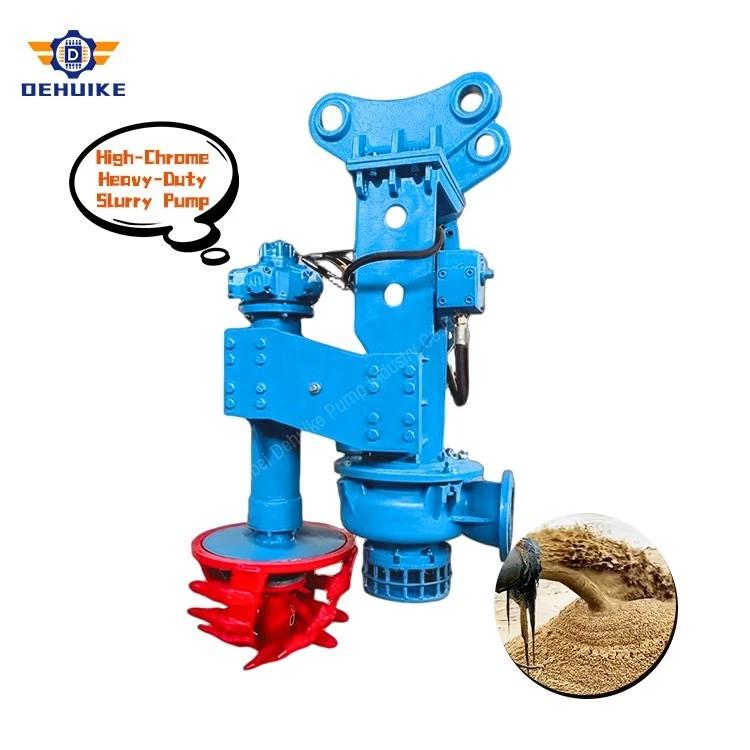
Heavy-Duty Hydraulic Displacement Motor: Mechanical drive power is supplied by an integrated bent-axis or radial-piston hydraulic motor housed inside a sealed protective casing. The motor utilizes standard SAE two-bolt or four-bolt flange mountings, allowing seamless coupling to carrier hydraulic circuits. A bidirectional internal relief valve cushions pressure surges during sudden blockages, protecting drive splines and hydraulic lines.
External Case Drain Line Protection Circuit: A dedicated low-pressure case drain port is integrated into the motor adapter housing. Connecting this line directly back to the carrier hydraulic reservoir bypasses return line backpressure, protecting the motor shaft seal from pressure spikes when rapid valve closures occur in the carrier circuit.
Features / Equipment Characteristics
Operational Highlights: The engineering features of the Hydraulic Sand And Gravel Pump provide dredging operators and aggregate processing plants with versatile field capabilities that standalone electrical units cannot replicate.
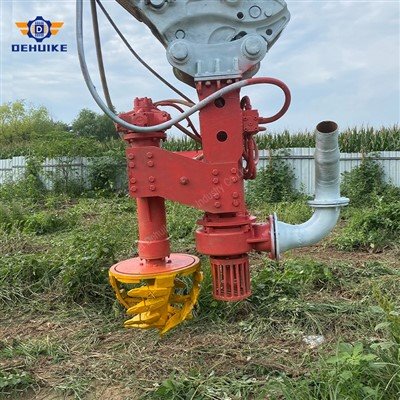
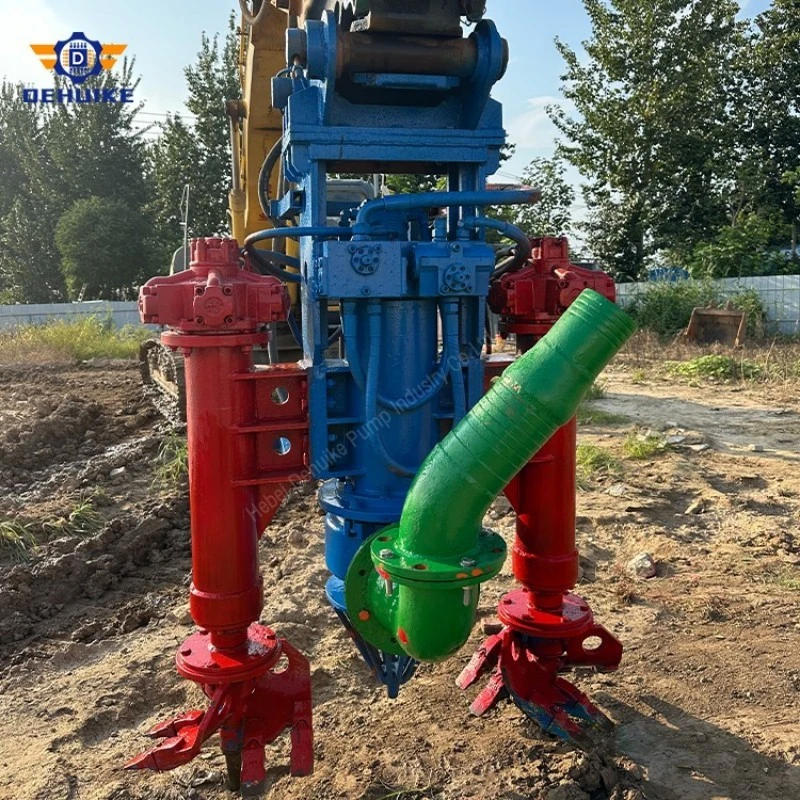
Mechanical Agitator and Auxiliary Side Cutters: A primary cause of slurry pump choking is the accumulation of consolidated sand beds around the suction nozzle. The pump can be equipped with an integral bottom agitator or auxiliary hydraulic side cutters. These mechanical cutter heads rotate directly through hydraulic drive gearing, churning compacted gravel banks and blending them into a fluid slurry before entering the impeller eye.
Stepless Hydraulic Variable Speed Governance: By modulating auxiliary hydraulic flow from the carrier machine, equipment operators achieve infinite stepless speed regulation between 800 and 1,600 RPM. This allows operators to run slowly during light washdown or accelerate during dense gravel dredging, keeping line velocity above critical deposition thresholds while avoiding excessive cavitation wear.
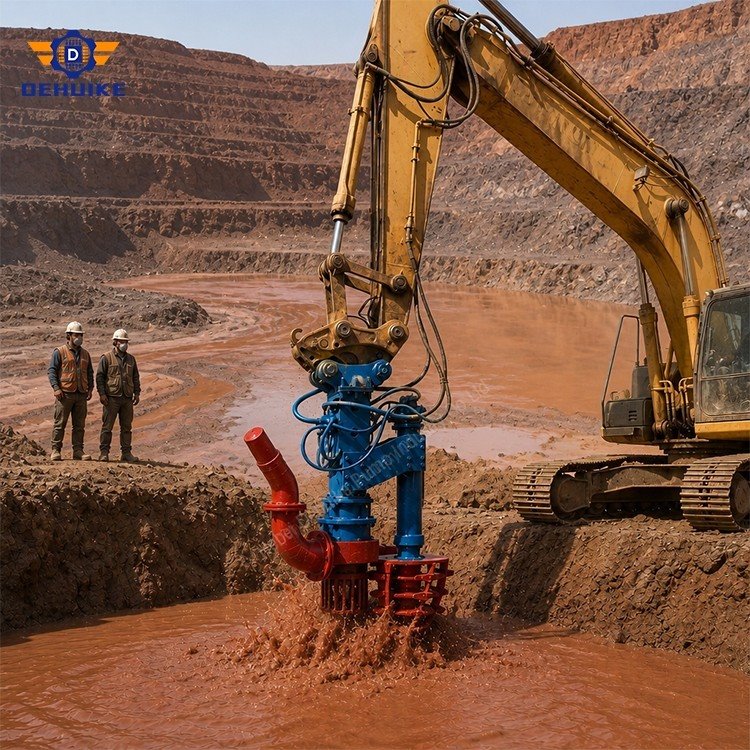
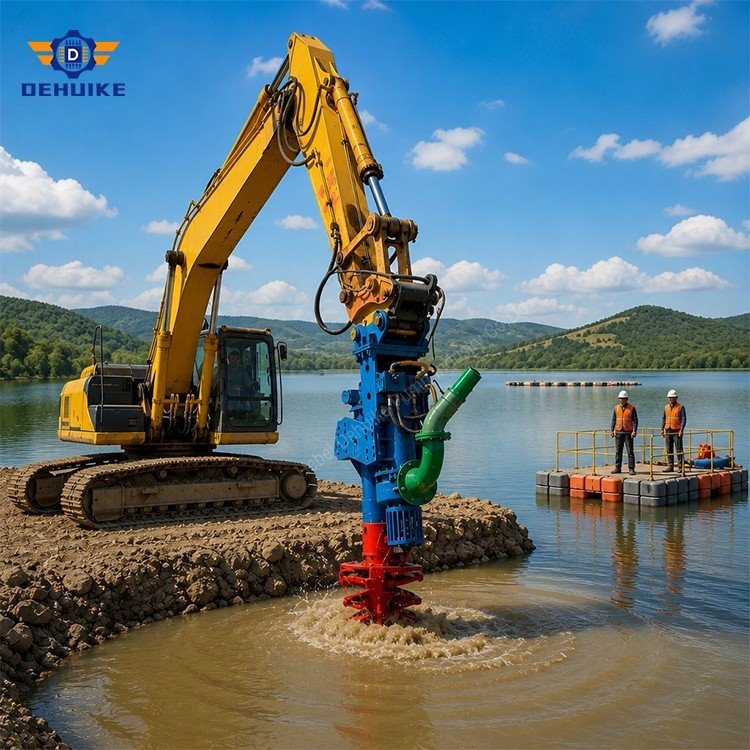
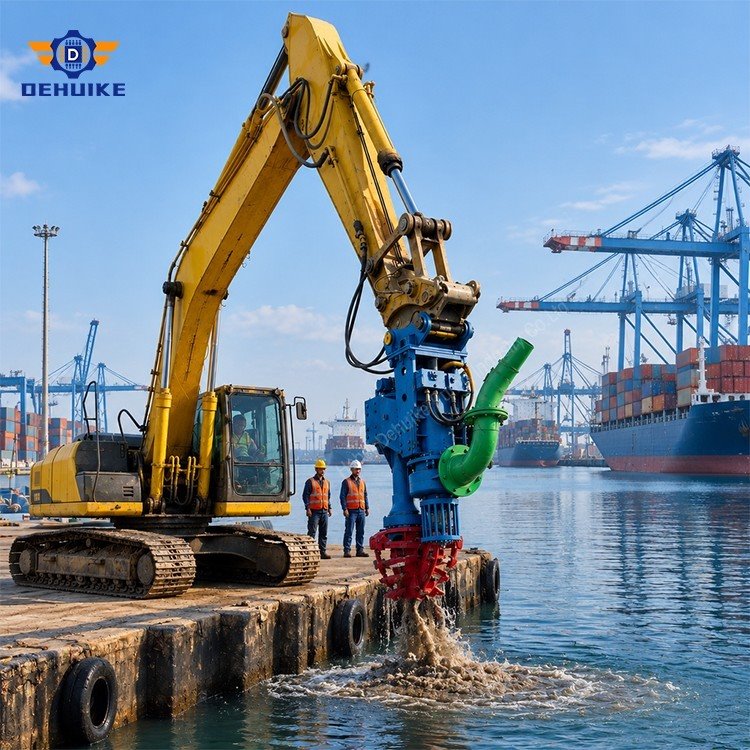
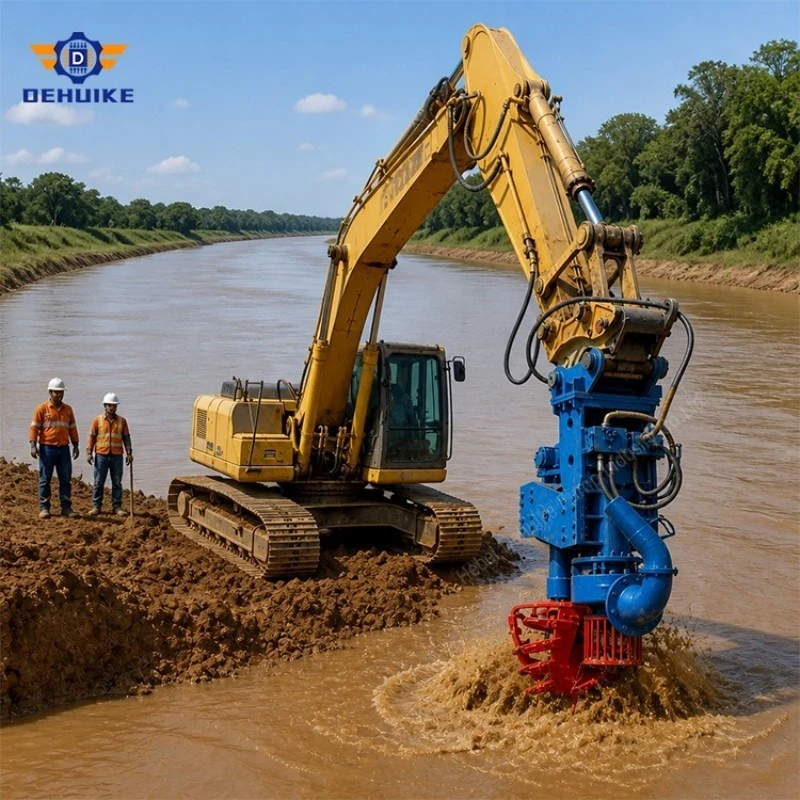
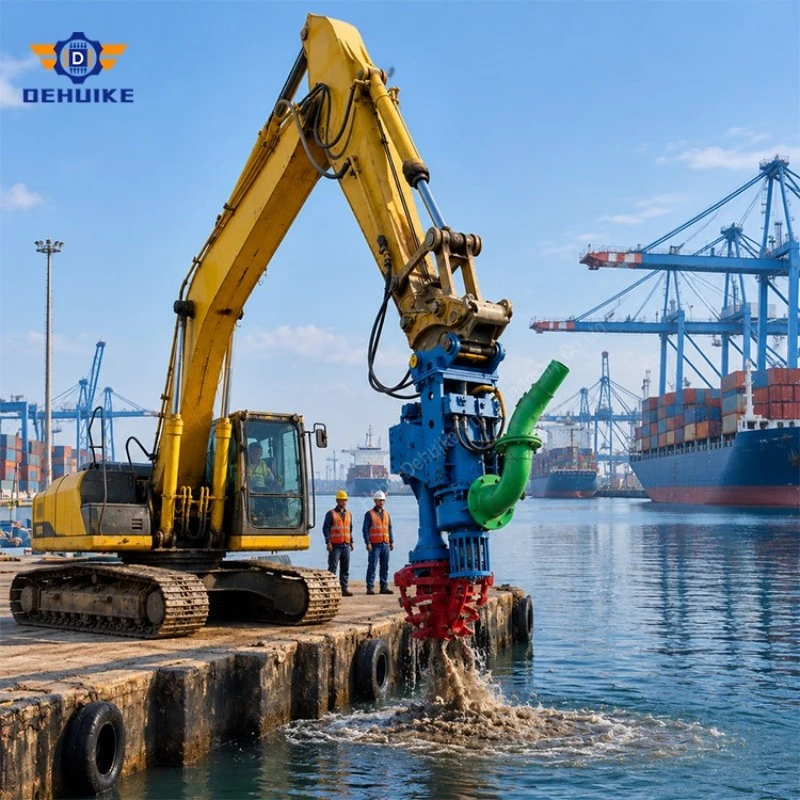
Excavator Boom Integration and Articulated Positioning: A dedicated mounting bracket enables rapid pinned connection to the boom arm of standard 15-ton to 45-ton crawler excavators. The excavator operator maneuvers the pump directly into sandbars, slurry settling ponds, or barge holds using standard joystick controls, eliminating manual winch rigging.
Multi-Carrier Deployment Flexibility: Unlike fixed suction sumps, the unit operates in varied configurations: hanging freely from a crane hoist cable, mounted on a flotation pontoon, or bolted to an amphibious dredging carrier. This structural adaptability accommodates shifting water levels and varying deposit profiles.
High-Pressure Water Jet Ring Fluidization System: For dense, dry, or sticky clay banks where mechanical cutting alone is insufficient, the intake shroud can be fitted with a high-pressure water jetting ring. High-velocity water jets disintegrate hardened sediment cakes, creating an easily ingestible slurry.
Application - Industrial Wash Plants, Sediment Recovery, and Civil Dredging Operations
Installation Scenarios: The wide operational envelope of the Hydraulic Sand And Gravel Pump permits dependable deployment across diverse mineral processing, civil construction, and marine dredging applications.
Process Integration: Across all applications, matching pump performance to actual grain grading remains critical. Deploying a Hydraulic Sand And Gravel Pump ensures that coarse fractions are transferred without line sedimentation, preserving continuous plant productivity.
Closed-Loop Water Recirculation in Quarry Plants: In sand processing facilities, wash water recovery is vital for sustainable site operations. Pumping silt and sand fines directly from settling basins back into hydrocyclones or dewatering screens enables closed-loop water recirculation. The high wear resistance of the Cr27 components allows round-the-clock slurry transfer without frequent overhaul stops, maximizing plant uptime.
Production Process & Quality Assurance - Metallurgy Control, Hydrostatic Integrity, and Dynamic Balancing
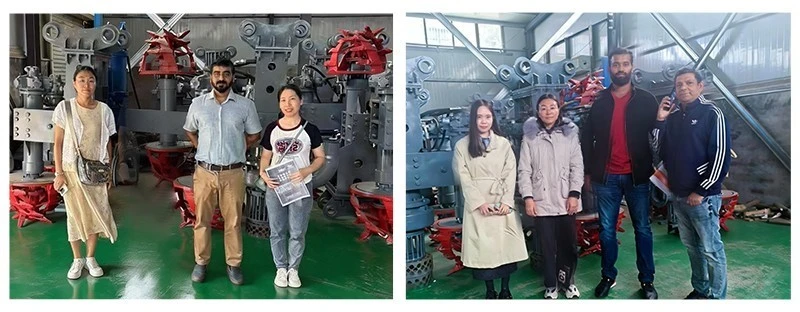
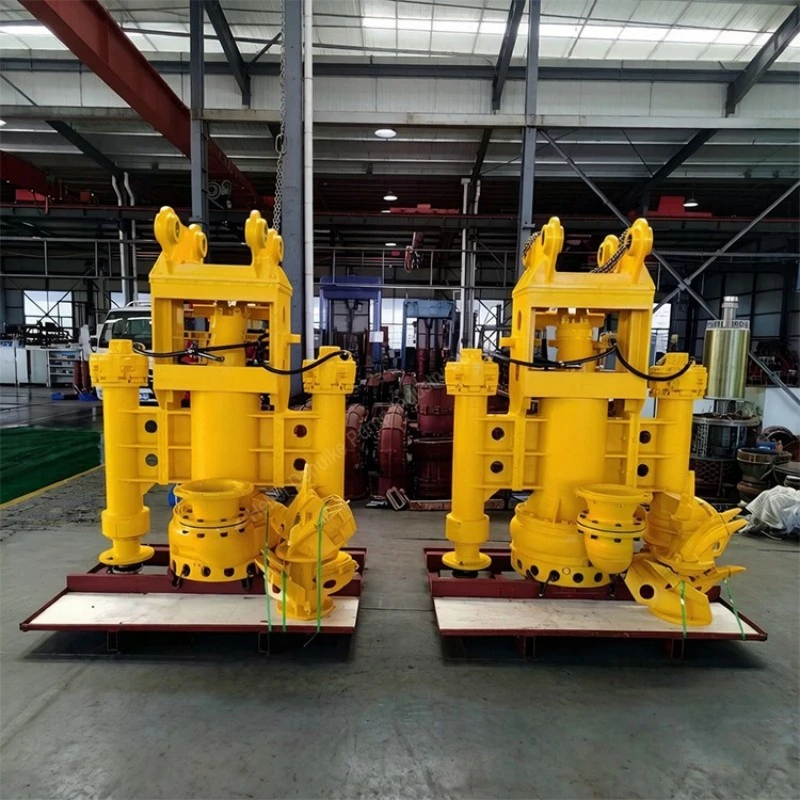
Stringent Factory Quality Protocol: Manufacturing quality at Hebei Dehuike Pump Industry Co., Ltd. is governed by certified quality management systems from raw furnace melt through final hydraulic testing.
Rigid Resin Sand Molding for Uniform Wall Section: Molds for pump casings and heavy impellers are produced using automated furan resin sand molding. Chemically bonded sand cores provide high structural rigidity and surface finish, resisting molten iron wash and producing cast waterways with tight dimensional consistency.
Controlled Thermal Hardening and Tempering Cycles: After knockout and shot blasting, all wear castings undergo controlled thermal annealing and air-quench hardening cycles in automated heat-treatment furnaces. This process transforms austenitic structures into hardened martensite containing dispersed chromium carbides, guaranteeing consistent hardness between 58 and 62 HRC.
Multi-Axis CNC Precision Machining: Critical mounting registers, seal sleeve fits, and hydraulic motor adaptor flanges are finish-machined on multi-axis CNC horizontal boring centers. Shaft concentricity and flange perpendicularity are verified within ±0.015 mm, ensuring smooth motor engagement.
Our Service
A useful request starts with how sand and gravel enter, travel through and leave the system.
Feed condition: provide the approximate grading, water proportion, stockpile or screen source and whether the particles are sharp, rounded or mixed.
Transport path: show pipe length, elevation, bends, flexible segments, branches, isolation points and final receiving area.
Duty request: state the desired mixture flow, delivery elevation, scheduled operating time and expected stops.
Hydraulic interface: include available oil-circuit or power-unit details where hydraulic drive is part of the scope.
Supply boundary: identify pump, motor, support, intake, discharge hardware, spares, documentation and packing expectations.
This route-first description enables the supplier to distinguish published WJY values from the details needed to configure a complete transfer arrangement.
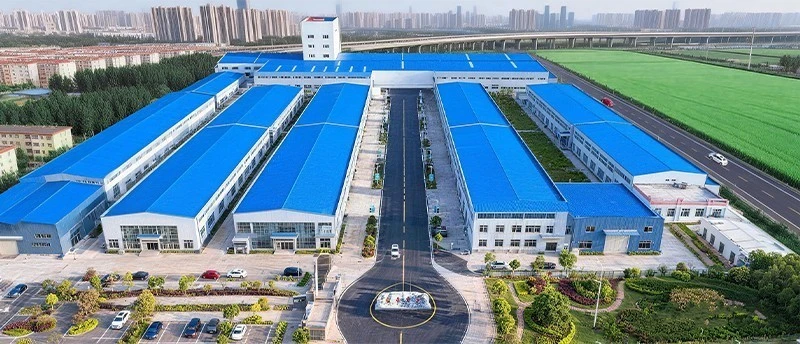
Installation, Maintenance and Precautions
Before the first run, check the intake location, material feed path, pipe restraint, valve orientation and the planned cleanout sequence. Where the mixture can settle during a wash-cycle pause, define the response before the system is commissioned.
During work, observe actual delivery, vibration, leakage, flexible-line movement, hydraulic temperature, noise and any segregation or deposits in the route. A change in the ratio of fines to gravel can change the transfer condition even where the chosen model remains the same.
Set maintenance triggers around accessible joints, high-turn sections, intake components and cleanout points. Isolate energy before servicing. Do not operate against an obstruction, unknown oversize feed, reverse direction or unapproved fluid condition without supplier instruction.
Hot Tags: hydraulic sand and gravel pump, China hydraulic sand and gravel pump manufacturers, suppliers, factory