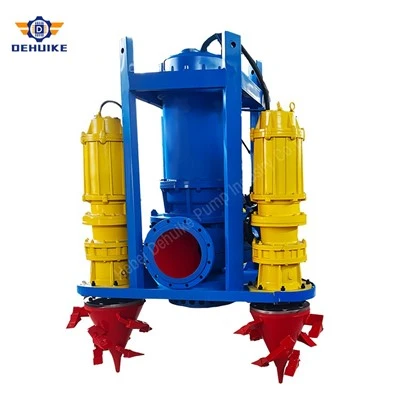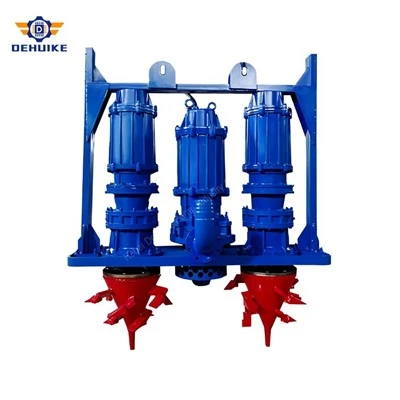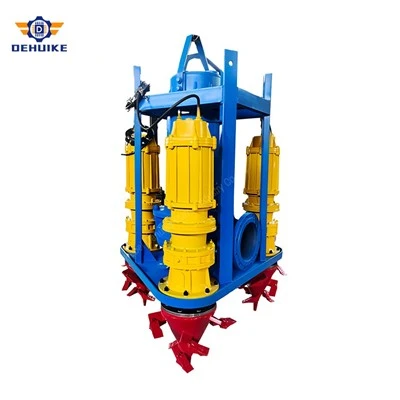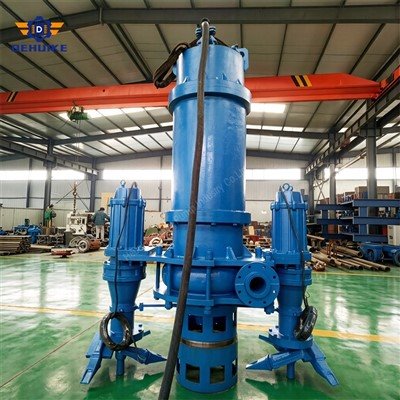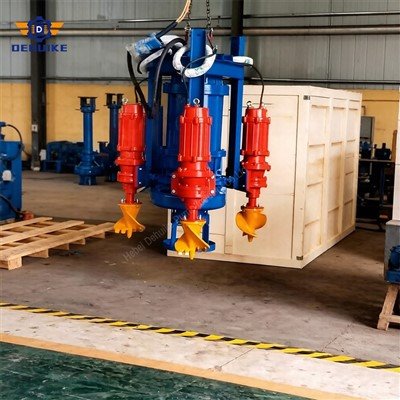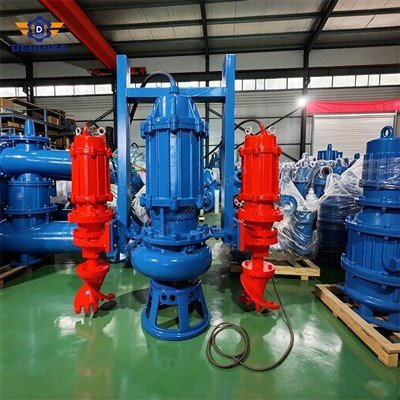

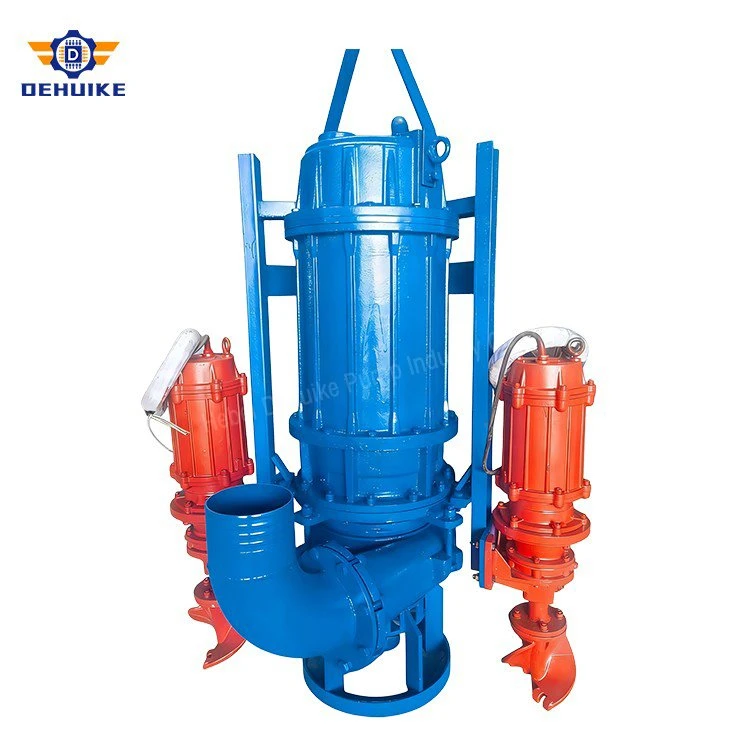
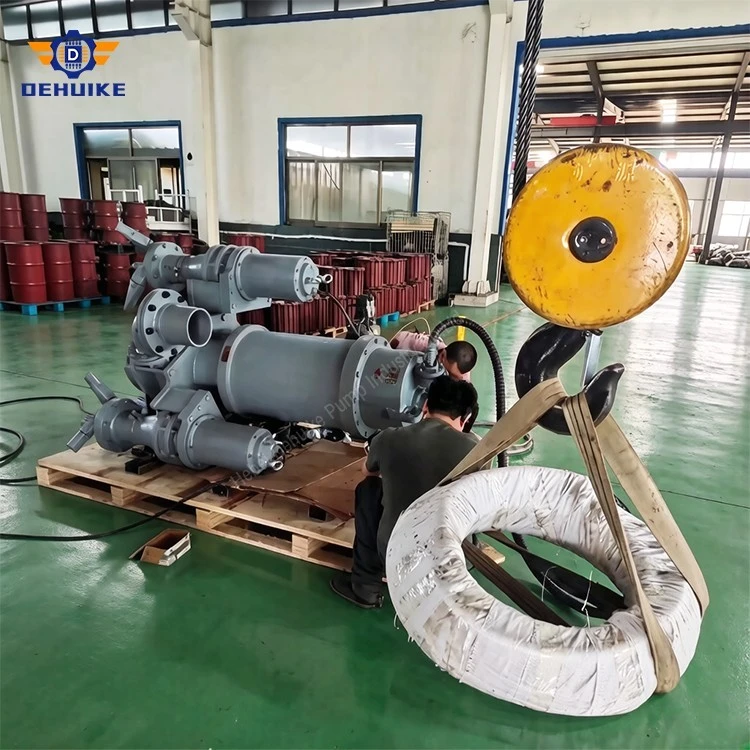
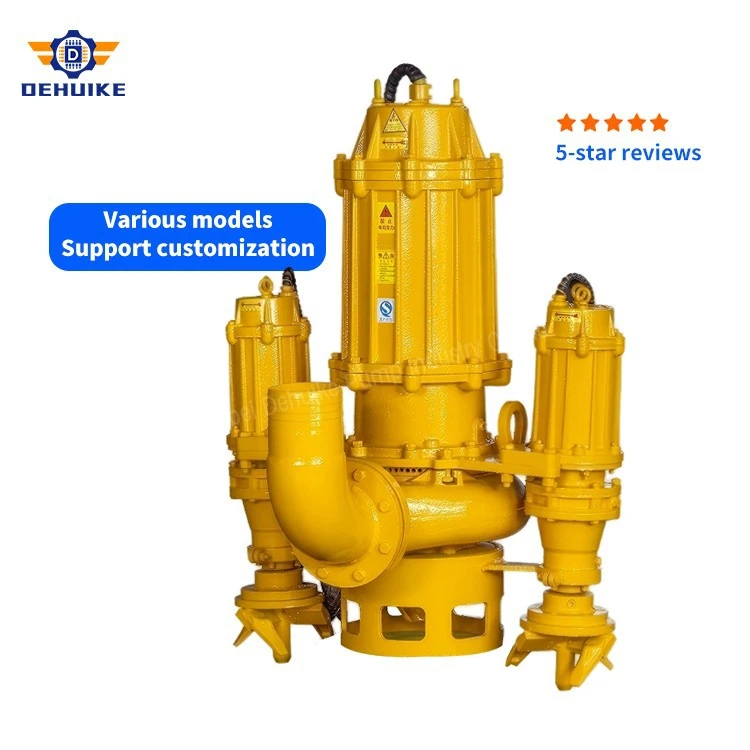
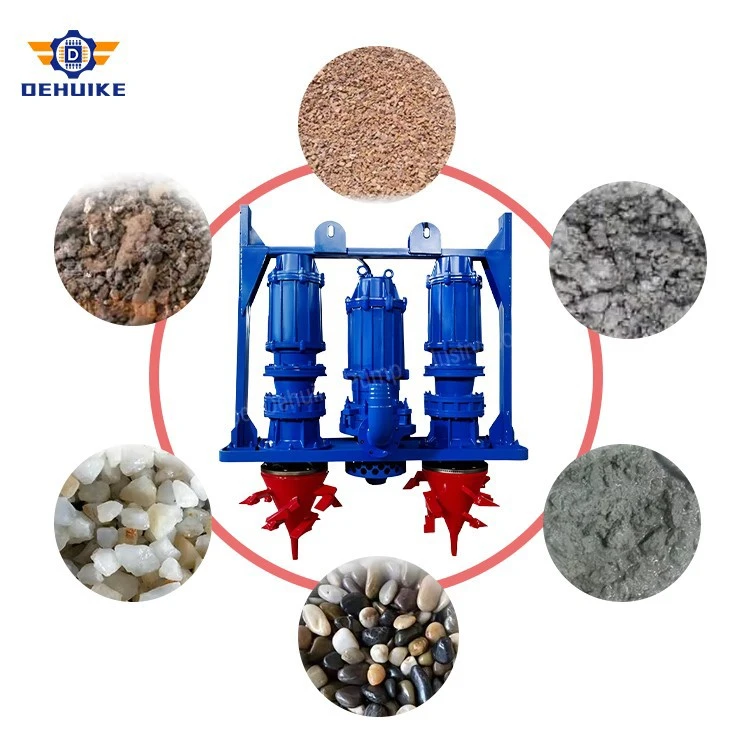
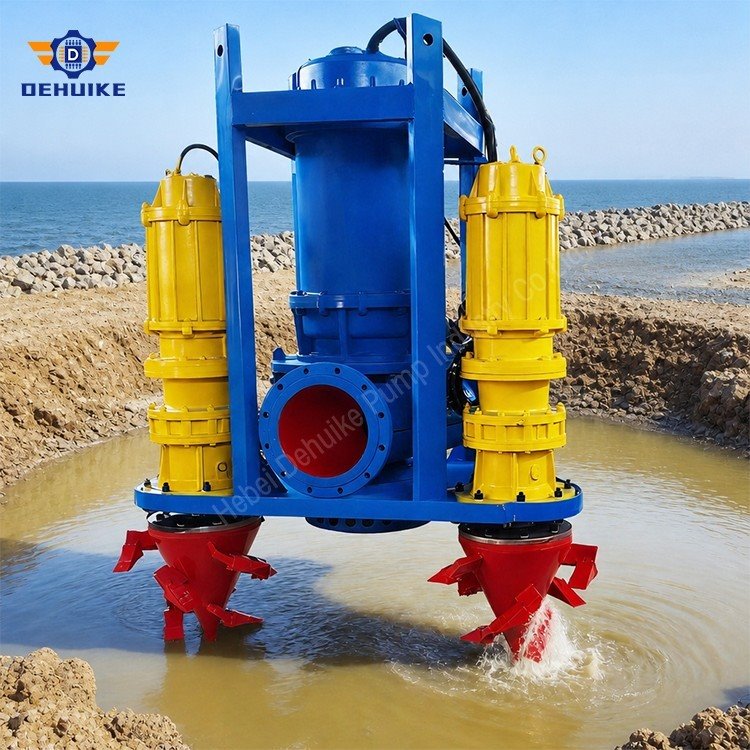
Hebei Dehuike Pump Industry Co., Ltd. is one of the most reliable manufacturers and suppliers of submersible dredging pump in China. With abundant experience, we are committed to providing high quality customized pumps with competitive price. Welcome to wholesale bulk submersible dredging pump for sale here from our factory. Also, pricelist is available.
Submerged Sediment Extraction Principles
Commercial sand reclamation, coastal harbor navigation maintenance, tailings dam desilting, and riverbed floodway clearance present punishing fluid-mechanical challenges. Conventional surface-mounted dredging methods depend on long, atmospheric suction pipelines that suffer acute thermodynamic limitations: vacuum suction lift ceilings restrict intake depths to less than 4 to 6 meters, while entrained air or cavitation quickly disrupts slurry flow. Furthermore, surface dredging vessels face significant energy losses as atmospheric pressure struggles to lift dense, settling sand mixtures up through long underwater pipes into surface-mounted pump houses.
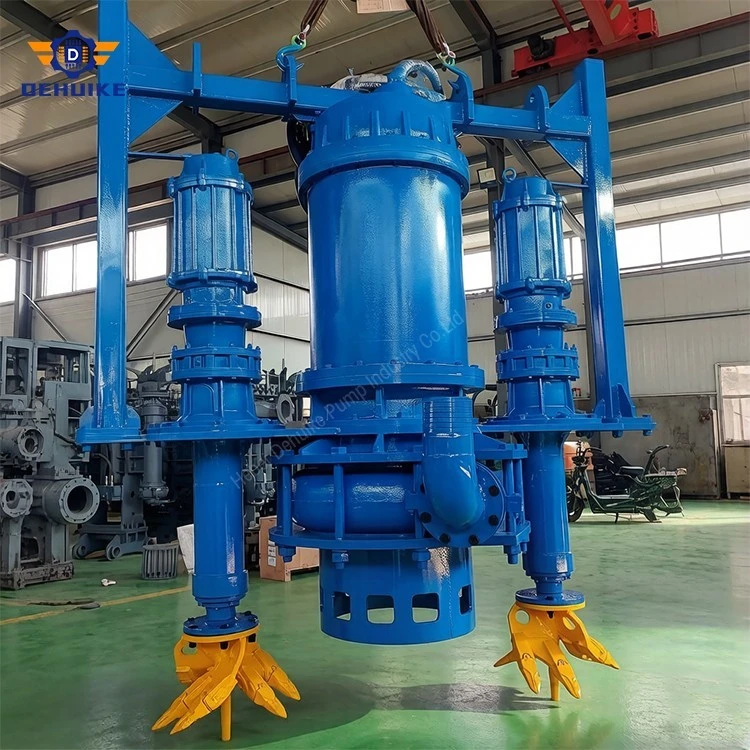
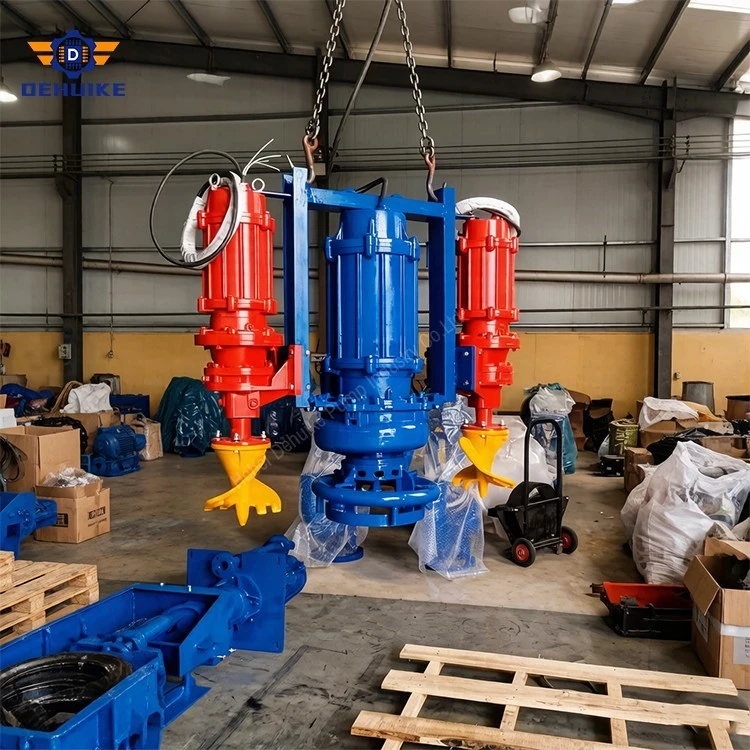
The heavy-duty Submersible Dredging Pump circumvents these physical suction barriers by positioning the entire hydraulic wet end and encapsulated electric driver directly inside the submerged sediment layer. Operating entirely underwater at depths reaching 20 to 30 meters, the pump eliminates negative suction lift completely. An auxiliary mechanical agitator mounted directly on the extended motor shaft rotates ahead of the main intake, continuously disintegrating compacted sand bars and churning consolidated silt into a fluid, high-density slurry. The main impeller then immediately pressurizes and propels this fluidized mixture through a flexible discharge pipeline to surface reclamation barges or onshore dewatering facilities, achieving solids concentrations up to 60% by weight.
Manufactured by Hebei Dehuike Pump Industry Co., Ltd. (operating in global export markets under the DHK Pump mark), our heavy-duty submersible slurry and dredging pump series embodies over 30 years of specialized metallurgical casting, precision machining, and electric prime mover packaging. Operating from an integrated modern manufacturing campus exceeding 8,000 m² and reinforced by an audited cooperative supply chain of 900+ certified industrial suppliers, Dehuike delivers high-durability underwater dredging equipment to marine contractors, mineral concentrators, and municipal port authorities across 50+ countries worldwide.
Equipment Characteristics
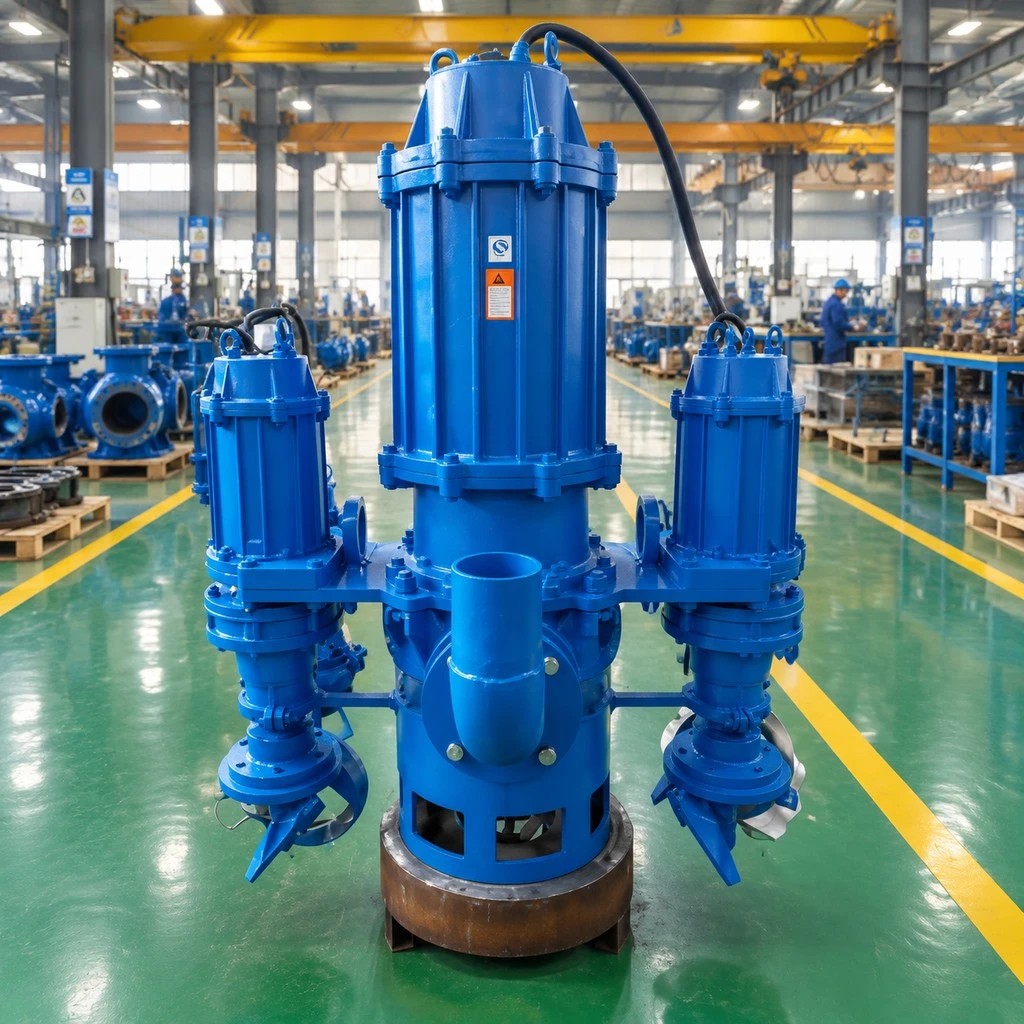
A rigorous engineering evaluation of our Submersible Dredging Pump highlights the heavy structural protection and hydraulic features required to sustain continuous underwater operation in abrasive mineral slurries. Key mechanical subsystems are engineered for maximum reliability under high hydrostatic pressures:
Integrated Bottom Mechanical Agitator & High-Shear Cutter Blades: To tackle hard-packed sediment beds that would starve standard suction bellmouths, our pumps incorporate an auxiliary mechanical agitator cast from wear-hardened high-chromium alloy. Driven directly by the motor shaft, the agitator rotates at full pump speed, using aggressive helical chopping vanes to churn settled silt, break up clay lumps, and create a homogenized slurry directly at the intake screen.
ASTM A532 Class III Type A (A05) High-Chromium Metallurgy: All wetted components exposed to severe particulate impact-including the semi-open slurry impeller, volute casing, front wear plate, and auxiliary agitator-are cast from premium A05 high-chromium white cast iron (containing 27% Cr, heat-treated to 58–62 HRC). This ultra-hard metallurgical microstructure provides exceptional resistance against micro-cutting abrasion, gouging, and erosion caused by sharp quartz sands, gravel fragments, and mineral gangue.
IP68 Encapsulated Heavy-Duty Submersible Motor: The driving heart utilizes a heavy-duty three-phase induction motor engineered for continuous S1 submerged service. Built inside a thick ductile iron motor casing, the stator is insulated with Class F or Class H materials and sealed to IP68 standards. The motor operates with conservative Class B temperature rise, ensuring deep thermal reserves when pumping dense, high-temperature industrial effluents.
Tandem Mechanical Face Seals in Independent Oil Barrier Chamber: To guarantee absolute motor protection against high-pressure water and abrasive silt ingress, the rotor shaft features two independent mechanical seals arranged in tandem inside an oil-filled buffer chamber. The lower seal facing the abrasive slurry employs ultra-hard silicon carbide against tungsten carbide friction pairs, while the upper seal operates in clean oil to protect the motor cavity. An internal moisture sensor continuously monitors the oil chamber, triggering an early alarm if seal wear occurs.
Heavy-Gauge Submersible Power Cable with Anti-Wicking Potting: Power is supplied through heavy-duty chloroprene-sheathed submersible EPR cables designed to withstand water immersion, oil contact, and abrasion. The cable entry head utilizes an epoxy-potted and vulcanized compression gland that prevents water from wicking into the motor stator housing even if the outer cable jacket sustains mechanical laceration.
Versatile Rigging Options (Excavator Boom, Pontoon Hoist, Crane Cable): The pump casing is equipped with heavy structural lifting lugs and mounting brackets, allowing seamless deployment via cable cranes, floating pontoon winches, or direct bracket mounting on hydraulic excavator boom arms for precision dredging control.
Duty-Point Engineering Selection
Selecting an optimal Submersible Dredging Pump requires matching target dredging slurry specific gravities, static discharge elevation heights, pipeline friction lengths, and solid particle size distributions against certified hydraulic performance envelopes. Dehuike Machinery manufactures standard submersible dredging pump series covering discharge calibers from DN50 to DN400, supporting flow capacities up to 1,500 m³/h and dynamic heads up to 50 meters.
The technical parameter table below summarizes standardized operational performance data across representative submersible dredging pump frame sizes running at 980 and 1450 RPM low-speed designs:
|
Model Frame |
Discharge Caliber |
Pumping Delivery |
Dynamic Head |
Motor Power Rating |
Operating Velocity |
Max Solid Sphere |
Bare Pump Mass |
|
SS50-15-7.5 |
DN 50 mm (2 Inch) |
25.0 m³/h (6.9 L/s) |
15 m Lift |
7.5 kW Drive |
1,450 RPM |
15 mm Sphere |
185 kg Mass |
|
SS80-20-11 |
DN 80 mm (3 Inch) |
45.0 m³/h (12.5 L/s) |
20 m Lift |
11.0 kW Drive |
1,450 RPM |
20 mm Sphere |
260 kg Mass |
|
SS100-25-15 |
DN 100 mm (4 Inch) |
80.0 m³/h (22.2 L/s) |
25 m Lift |
15.0 kW Drive |
1,450 RPM |
25 mm Sphere |
340 kg Mass |
|
SS150-30-30 |
DN 150 mm (6 Inch) |
150.0 m³/h (41.7 L/s) |
30 m Lift |
30.0 kW Drive |
1,450 RPM |
35 mm Sphere |
580 kg Mass |
|
SS200-20-45 |
DN 200 mm (8 Inch) |
250.0 m³/h (69.4 L/s) |
20 m Lift |
45.0 kW Drive |
980 RPM |
45 mm Sphere |
890 kg Mass |
|
SS250-30-75 |
DN 250 mm (10 Inch) |
400.0 m³/h (111.1 L/s) |
30 m Lift |
75.0 kW Drive |
980 RPM |
50 mm Sphere |
1,450 kg Mass |
|
SS300-35-110 |
DN 300 mm (12 Inch) |
700.0 m³/h (194.4 L/s) |
35 m Lift |
110.0 kW Drive |
980 RPM |
55 mm Sphere |
2,200 kg Mass |
|
SS400-40-220 |
DN 400 mm (16 Inch) |
1,200.0 m³/h (333.3 L/s) |
40 m Lift |
220.0 kW Drive |
980 RPM |
60 mm Sphere |
3,850 kg Mass |
Critical Slurry Density & Settling Velocity Sizing Protocol: When dredging heavy mineral sands, the absorbed brake horsepower scales proportionally with slurry specific gravity ($P_{slurry} = P_{water} \times SG$). Sizing drive motors requires adding a minimum 15% to 20% power reserve margin above calculated load to prevent overload tripping during dense silt surges. Furthermore, pipeline slurry velocity must exceed the critical deposition threshold (typically 2.0 to 2.5 meters per second in horizontal discharge pipes) to prevent coarse sand from settling into stationary bed banks that choke pipeline flow. Maintaining operating points within 80% to 110% of the Rated Optimal Efficiency Point (BEP) minimizes internal hydraulic turbulence and suppresses localized casing scouring.
Heavy-Duty Submersible Assembly
Manufacturing a reliable Submersible Dredging Pump capable of enduring underwater abrasion and high hydrostatic pressure demands uncompromised metallurgical standards, precision multi-axis CNC machining, and rigorous electrical insulation processing. At Dehuike, every submersible dredging unit progresses through an ISO-certified production sequence:
Alloy Smelting & Optical Emission Spectrography: Wear-resistant castings are smelted in medium-frequency electric induction furnaces using high-purity virgin pig iron, refined steel scrap, and high-carbon ferrochrome. Prior to pouring, melt heats are analyzed via vacuum optical emission spectrometry (OES) to guarantee elemental compliance: Chromium strictly between 26.0% and 28.0%, Carbon held at 2.8% to 3.2%, and trace Molybdenum additions, eliminating boundary graphite and guaranteeing dense primary carbide formation.
Furan Resin Sand Molding & Hydraulic Smoothing: Heavy casing wear liners and impellers are formed in rigid furan-bonded resin sand molds. This precision foundry method yields smooth internal hydraulic waterways, minimizing boundary layer frictional drag and eliminating casting surface porosity or micro-voids that could accelerate cavitation wear.
High-Temperature Solution Heat Treatment & Quenching: Following casting knockout, high-chrome wear components undergo an automated computer-controlled thermal cycle. Castings are austenitized at 1,020°C to dissolve secondary carbides into solid solution, followed by controlled forced-air quenching and subcritical stress-relieving tempering, yielding a resilient martensitic matrix fortified with eutectic M7C3 carbides that consistently achieves 58 to 62 HRC hardness.
Precision Multi-Axis CNC Machining of Stator & Seal Registers: Ductile iron motor frames, end bells, bearing brackets, and seal chambers are machined on multi-axis CNC horizontal boring centers. Concentricity and perpendicularity of mechanical seal bores and bearing journals are held within ±0.012 mm tolerances, preventing seal face angular misalignment under deep underwater hydrostatic pressure.
Class H Vacuum Pressure Impregnation (VPI) Stator Processing: Motor stators are wound with high-purity dual-coated copper magnet wire and insulated with Class H composite sheet. Stator assemblies undergo automated pre-heating followed by total immersion in solventless epoxy resin within vacuum-pressure impregnation chambers, eliminating air voids and sealing windings against thermal and moisture breakdown.
Two-Plane Dynamic Balancing (ISO 1940 Grade G2.5): Every cast impeller and mechanical agitator undergoes precision face milling and computerized dual-plane dynamic balancing adhering strictly to ISO 1940 Grade G2.5 standards, eliminating harmonic unbalance forces that could induce shaft deflection at full operating speed.
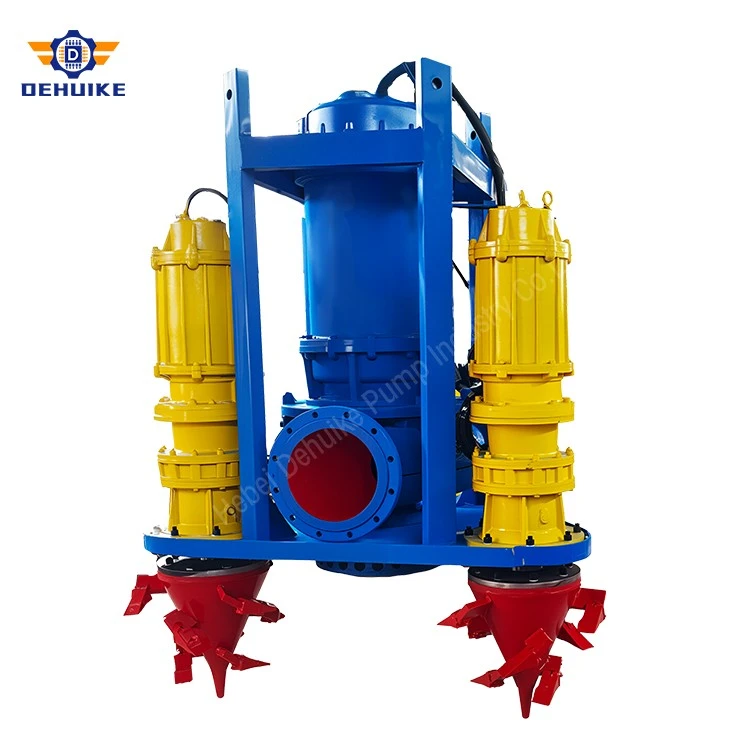
Quality Assurance & Submerged Testing Protocols
Because dredging pumps operate completely submerged where in-situ inspection is impossible, Dehuike enforces strict non-destructive quality testing under accredited ISO 9001 governance, supported by international EAC and RoHS product certifications:
Motor Insulation Resistance & Hi-Pot Dielectric Testing: Every wound motor stator undergoes automated high-potential (Hi-Pot) dielectric testing at 2,500V AC for 60 seconds between winding leads and the grounded metal frame, followed by digital megohmmeter insulation resistance verification (confirming cold insulation exceeding 50 Megohms).
Pneumatic Seal Chamber Pressure Decay Leak Testing: Prior to oil filling, the mechanical seal buffer chamber and motor housing are pressurized with dry compressed air to 0.4 MPa (4 bar) and submerged in an inspection tank for 15 minutes. High-precision pressure transducers confirm zero pressure decay, verifying absolute hermetic integrity across all mechanical seal faces and O-ring joints.
Closed-Loop Submerged Hydraulic Performance Testing (ISO 9906 Grade 2B): Every completed unit is submerged in our factory computerized closed-loop deep-water test basin. Calibrated electromagnetic flowmeters, digital pressure transmitters, and torque analyzers record flow, total head, absorbed power, and hydraulic efficiency across multiple throttling points, verifying compliance with catalog performance curves.
Continuous Submerged Thermal & Vibration Run-In: Units undergo full-load submerged run-in testing to verify thermal equilibrium. Embedded stator thermal switches and moisture leakage probes are actively audited through the automated control console, while three-axis vibration sensors verify smooth mechanical rotation.
Our Advantages & Manufacturing Pedigree
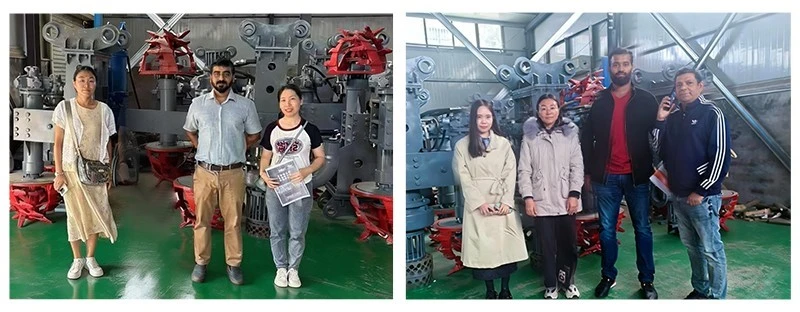
Procuring heavy-duty underwater dredging machinery requires selecting an established manufacturer with deep metallurgical mastery, precision machining capacity, and responsive international commercial support. DHK Pump provides decisive competitive advantages for dredging contractors and mine operators:
Over Three Decades of Heavy Slurry Machinery Excellence: Backed by over 30 years of continuous specialized engineering experience, Hebei Dehuike Pump Industry Co., Ltd. has perfected solids-handling hydraulic models using advanced Computational Fluid Dynamics (CFD). Our designs optimize large solids transit without sacrificing high hydraulic energy efficiency.
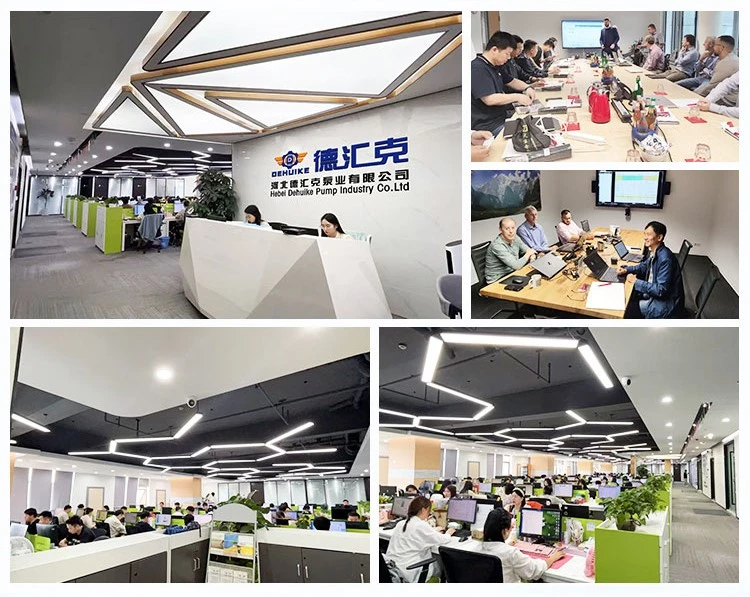
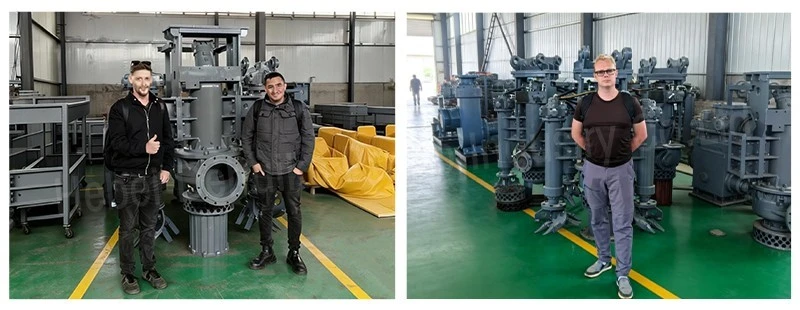
8,000+ m² Modern Integrated Heavy Manufacturing Facility: Our specialized industrial complex houses resin sand molding lines, medium-frequency electric melting furnaces, multi-axis horizontal boring machines, dynamic balancing stations, and automated test bays under one roof, providing complete quality traceability across every production step.
Audited Supply Chain Network (900+ Certified Partners): Leveraging an established cooperative network of 900+ vetted industrial component partners across China, we maintain robust stocks of premium electric motors, heavy-duty mechanical seals, trailer axles, and certified alloy ingots, ensuring reliable production schedules and expedited deliveries.
Comprehensive 24-Month Factory Warranty Commitment: Every complete Submersible Dredging Pump manufactured by our works carries an official 24-month (two-year) comprehensive factory warranty covering the motor casing, rotor assembly, bearing bracket, and baseplate against defects in materials and craftsmanship (excluding sacrificial consumable wear parts).
Turnkey Mobile Deployment Skid Packages: Beyond stationary bare-shaft pumps, we engineer fully autonomous, skid-mounted or trailer-towable pump packages equipped with high-efficiency electric motors (IP55/IP66, Class F/H insulation) or diesel engines with automated start controllers for standalone emergency service.
Our Service & Worldwide Procurement Support
Dehuike delivers end-to-end commercial transparency, hydraulic engineering support, and dependable global logistics to streamline equipment procurement for international EPC contractors, mining enterprises, and dredging operators:
Pre-Purchase Slurry Rheology & Hydraulic Sizing Support: Our applications engineering department provides complimentary technical evaluations for prospective installations. By reviewing slurry specific gravity, particle size distribution (d50 / d90), pH, temperature, and piping friction curves, our engineers calculate critical settling velocities, recommend optimal pump models, and provide customized 2D/3D CAD dimensional models within 2 hours of inquiry.
Custom Flange Standards & Drive Transmissions: We accommodate international jobsite standards, machining connection flanges to ANSI/ASME B16.5 Class 150/300, European EN 1092-1 PN16/25, or Japanese JIS standards. We supply complete drive packages including direct flexible couplings or heavy-duty V-belt drives.
Standardized International Multimodal Logistics: We manage international shipments strictly via maritime container shipping (>500 kg heavy pump skids) and dedicated air transport (50–500 kg for urgent maintenance spares). Commercial contracts are quoted under transparent international trade terms, offering FOB and CIF destination port agreements without hidden port handling fees. All units are secured inside heavy-duty, seaworthy non-fumigation plywood crates with internal vapor-corrosion-inhibitor wrapping.
Frequently Asked Questions (FAQ)
The following engineering evaluations address the most common technical questions submitted by marine dredging contractors, civil site managers, and mining superintendents regarding the selection, deployment, and operation of our Submersible Dredging Pump:
Q: How does the bottom mechanical agitator loosen compacted sand and silt beds before suction intake?
A: Standard submerged pumps rely solely on fluid suction velocity, which is ineffective at lifting consolidated sediment beds; solid particles remain compacted on the reservoir floor, causing the pump to draw dilute water or starve. Our submersible dredging pump features a heavy-duty auxiliary mechanical agitator cast from 27% chrome white iron, mounted directly on the lower rotor shaft extension. As the agitator spins at full motor speed ahead of the intake, its contoured chopping blades create intense mechanical shearing and turbulent vortex currents. This mechanical action fluidizes packed sand, breaks up clay clods, and churns solids into a continuous, high-concentration slurry mixture immediately adjacent to the suction eye, maximizing solids extraction rates.
Q: What electrical and thermal safeguards protect the IP68 submersible motor during continuous underwater operation?
A: The IP68 submersible motor is safeguarded by an integrated triple-protection monitoring system. First, dual thermal overload protector switches are embedded directly into each stator winding phase, tripping the control panel if motor temperatures exceed Class B limits. Second, an electrode moisture leakage probe is installed inside the intermediate oil barrier chamber, alerting operators immediately if the primary mechanical seal experiences wear before water can enter the motor housing. Third, heavy-duty float level switches or electronic level sensors ensure the pump is automatically de-energized if water levels fall below the minimum allowable submergence depth, preventing dry-run stator overheating.
Q: When should a dredging contractor equip the pump with an external cooling jacket for shallow water pumping?
A: In standard deep-submergence operations, ambient water surrounding the motor frame absorbs stator heat dissipation naturally. However, in shallow water dredging, settling lagoon cleanout, or continuous pit dewatering where water levels frequently drop below the motor housing top, the motor loses ambient cooling and can overheat. In these operating regimes, our pumps can be fitted with an optional stainless steel cooling jacket. A small, regulated slipstream of pressurized water from the pump discharge is diverted through the annular space between the motor frame and outer jacket, cooling the motor continuously even when operating fully exposed in air.
Q: What discharge pipeline velocity and slope guidelines prevent sediment sanding and pipeline plugging?
A: Pumping dense sand slurries requires maintaining discharge flow velocity strictly above the critical deposition threshold. In horizontal pipelines, slurry velocity should be maintained between 2.2 and 2.8 m/s; velocities below 2.0 m/s allow heavy quartz sand grains to fall out of suspension, forming stationary dunes that restrict pipe cross-section and eventually plug the line. Discharge piping should avoid sharp 90-degree elbows, utilizing long-radius bends (radius ≥ 3 to 5 times pipe diameter) and flexible heavy-wall rubber dredging hoses to accommodate pump movement without kink blockages.
Q: What field maintenance checks ensure reliable sealing integrity when relocating the pump between dredging sites?
A: Prior to relocating or re-deploying a submersible dredging pump, technicians should conduct three essential field checks. First, inspect the oil barrier chamber by cracking the oil inspection plug: if the oil is clear or amber, the seals are intact; if the oil appears milky or white, moisture has bypassed the primary seal and the oil and mechanical seal should be replaced immediately. Second, check stator winding insulation resistance using a 1,000V megohmmeter (confirming resistance exceeds 20 Megohms). Third, examine the submersible power cable jacket for cuts, severe chafing, or strain at the cable entry gland, ensuring the anti-wicking seal remains completely watertight.

Hot Tags: submersible dredging pump, China submersible dredging pump manufacturers, suppliers, factory