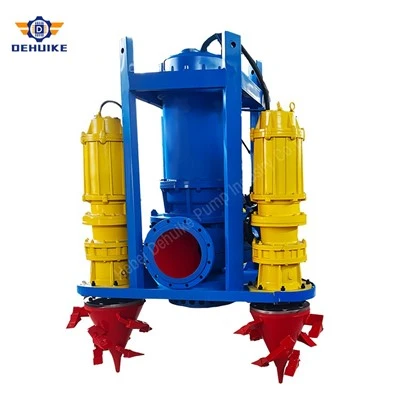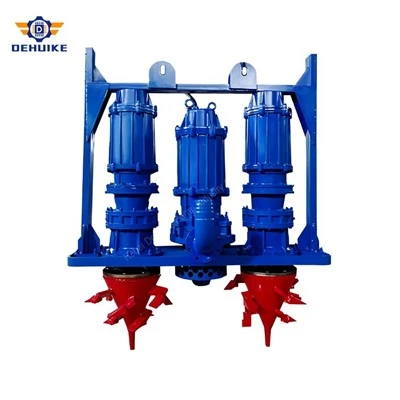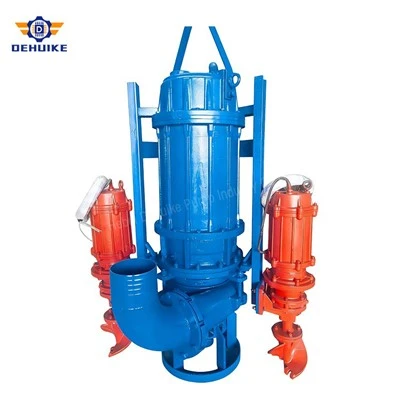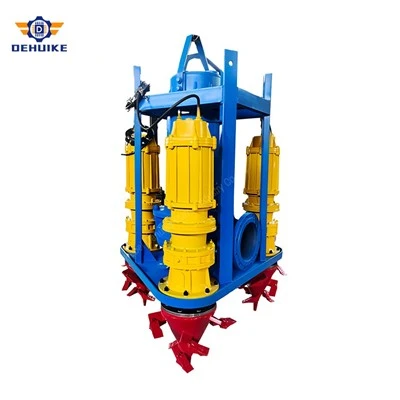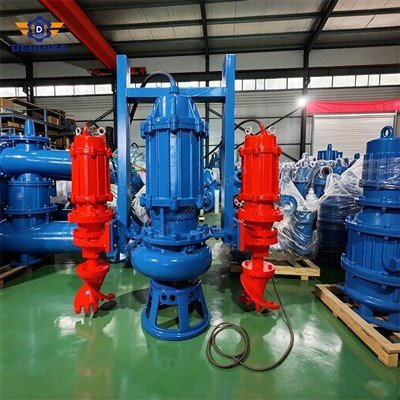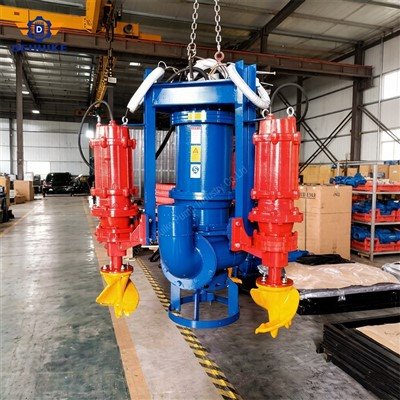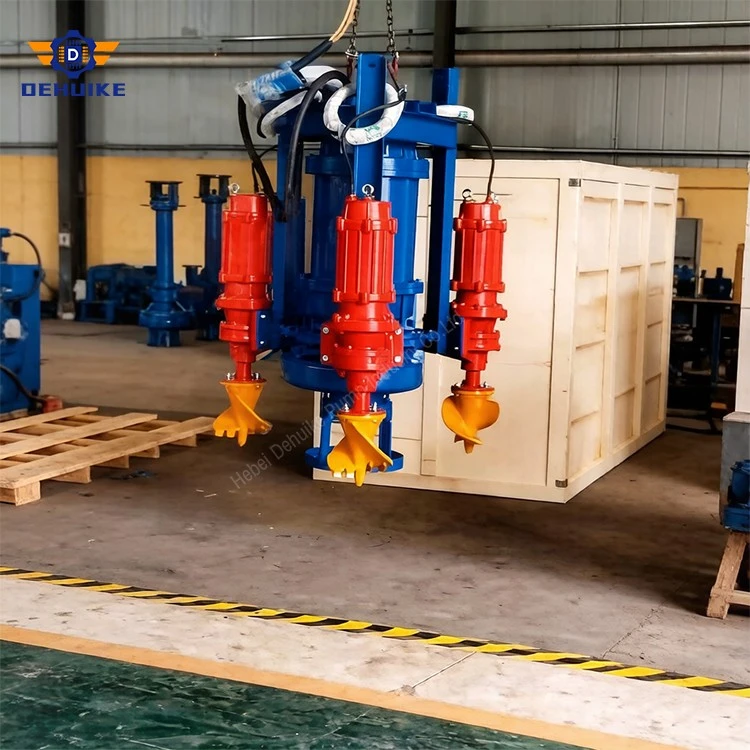
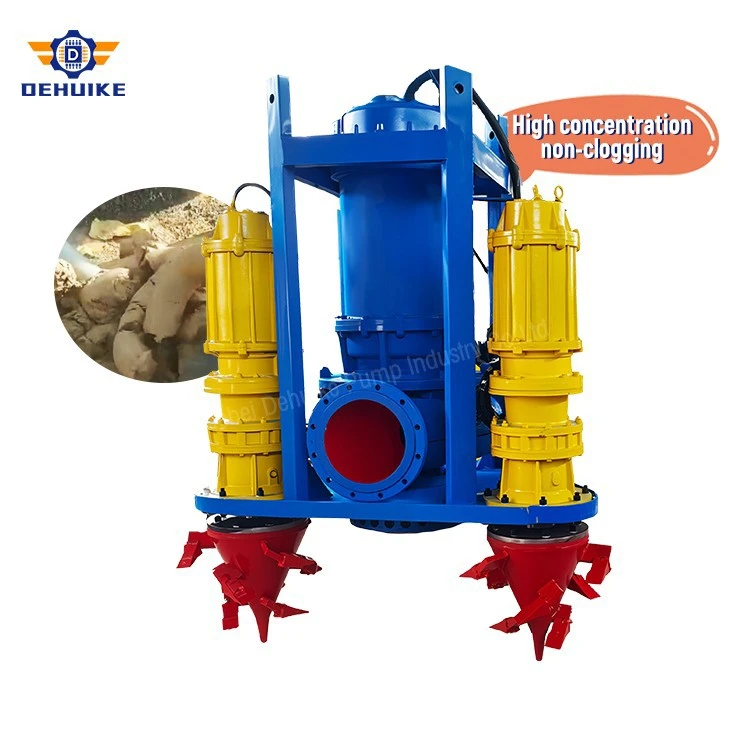
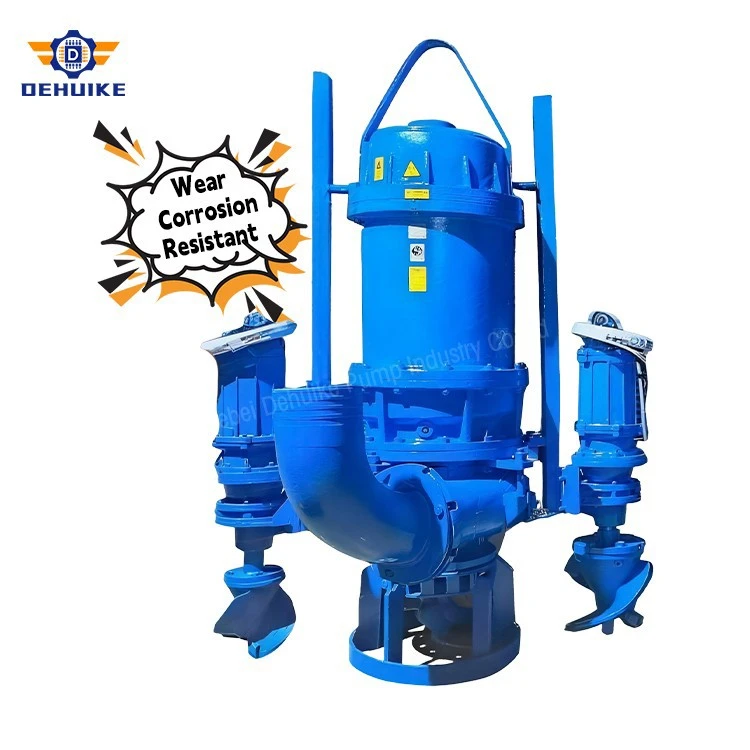
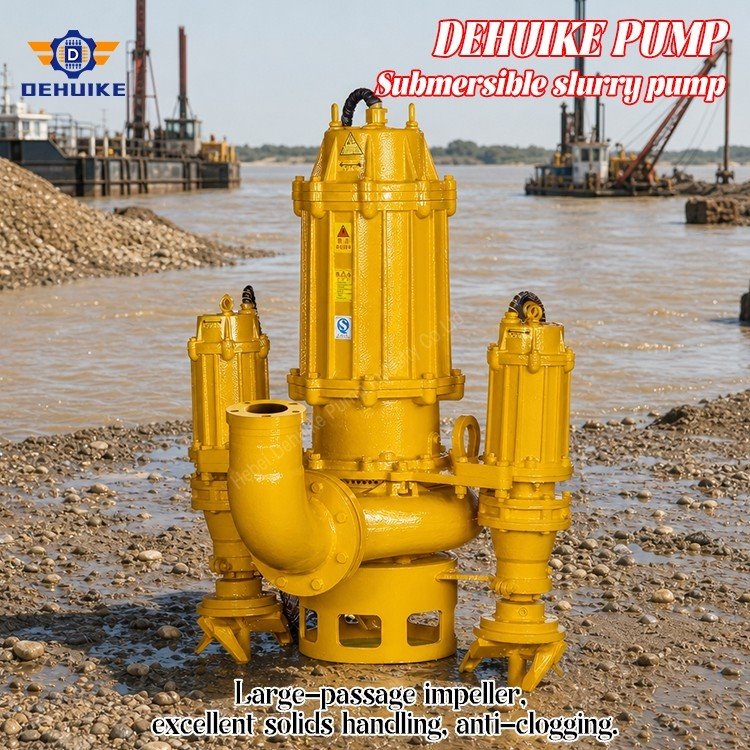
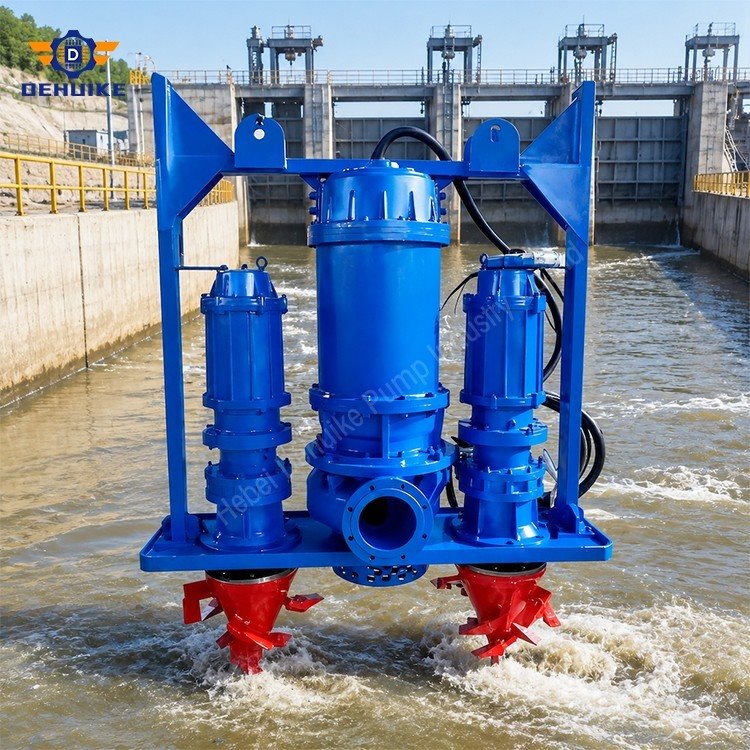
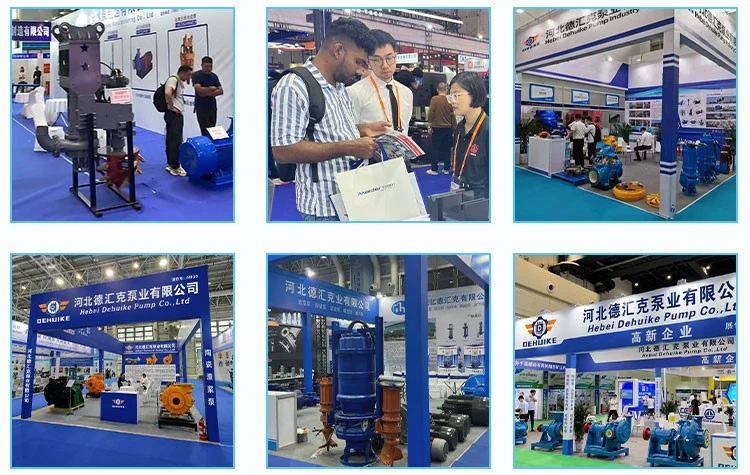
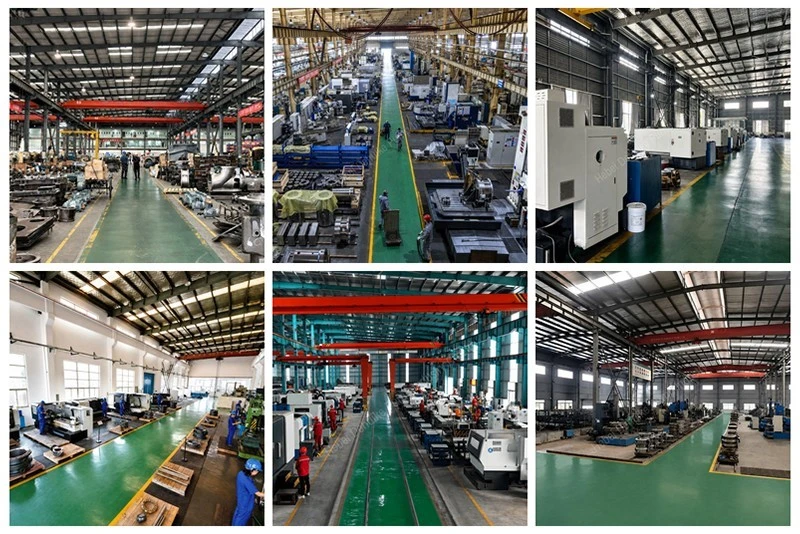
Hebei Dehuike Pump Industry Co., Ltd. is one of the most reliable manufacturers and suppliers of submersible abrasive slurry pump in China. With abundant experience, we are committed to providing high quality customized pumps with competitive price. Welcome to wholesale bulk submersible abrasive slurry pump for sale here from our factory. Also, pricelist is available.
Operational Mandate: Overcoming High-Solid Erosion and Settlement Dynamics in Submerged Sumps
Industrial sump evacuation, mineral tailings reclamation, and marine dredging routinely handle dense multiphase mixtures that defeat conventional drainage equipment. When carrier liquid carries abrasive particulates-including quartz sand, crushed granite, iron ore tailings, ash residue, or chemical process grit-standard drainage units suffer rapid mechanical seal blowout and casing perforation within hours.
A heavy-duty Submersible Abrasive Slurry Pump is engineered specifically to operate directly submerged within settling basins, excavation pits, or lagoon floors. Unlike dry-mounted horizontal centrifugal pumps that require prolonged suction piping and external vacuum priming systems, submerged placement positions the impeller below the fluid plane. This configuration eliminates suction lift constraints, overcomes Net Positive Suction Head available (NPSHa) limitations, and prevents cavitation caused by high slurry specific gravity.
In severe slurry transport, solid particles do not behave as homogeneous liquids. Fluid behavior inside deep sumps is governed by particle settling velocity, carrier fluid viscosity, and localized turbulence. When process slurry reaches specific gravities between 1.2 and 1.8, with dry solids concentrations of 30% to 60% by weight, heavy grains settle toward the basin floor, forming compacted sediment beds. Standard pumps evacuate only the diluted surface water, leaving compacted solids untouched.
To overcome this operating bottleneck, heavy-duty abrasive slurry pumps integrate three coordinated physical features:
Flooded hydraulic submersion to maintain continuous positive suction pressure under fluctuating water levels.
Heavy-section, high-hardness alloy wet-end castings capable of resisting continuous kinetic particle bombardment.
Active mechanical agitation at the suction perimeter to re-suspend settled bed solids into a fluid, pumpable consistency before entering the primary impeller eye.
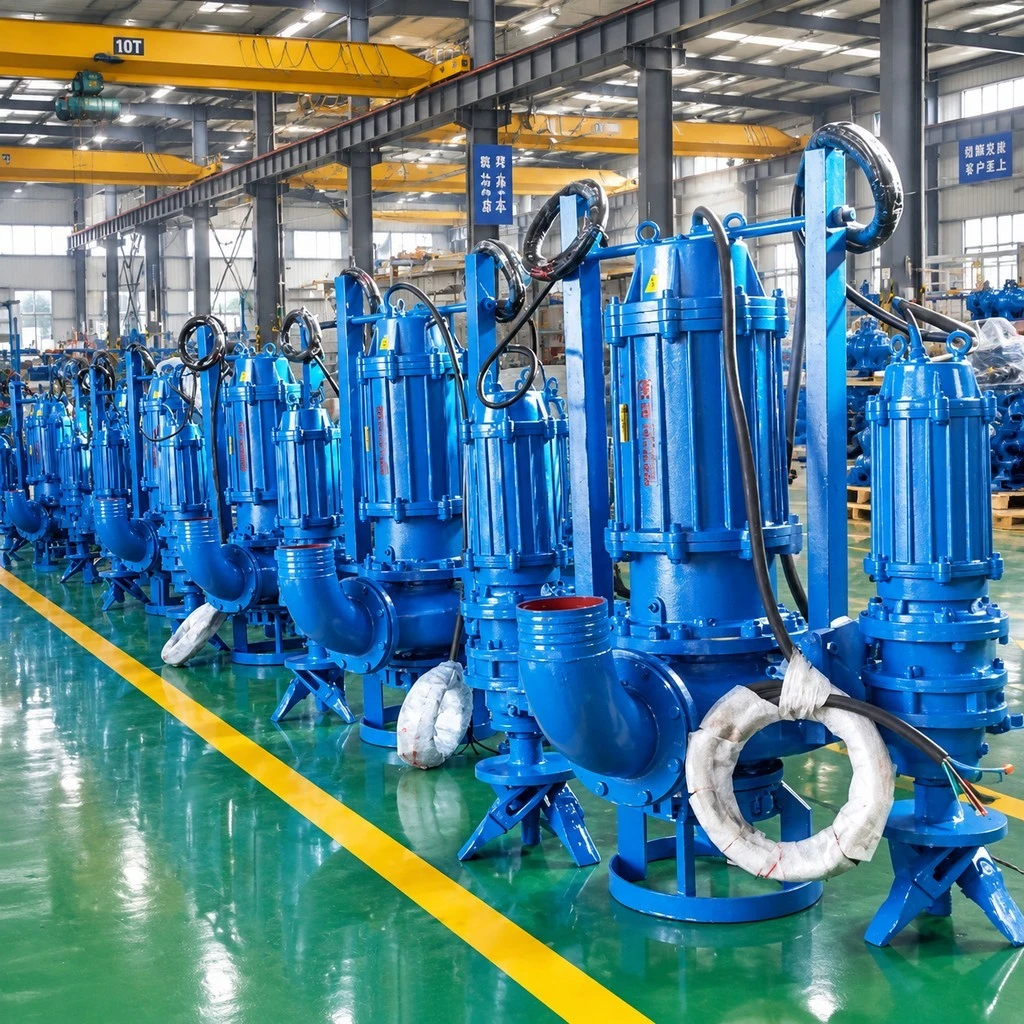
Dual Drive Topologies: Submersible Electric Motors vs. Excavator Hydraulic Drive Heads
Submersible abrasive slurry pumps are deployed in two distinct drive configurations based on site power availability, mounting options, and mobility requirements: direct-coupled electric submersible units and auxiliary hydraulic motor drive systems.
Electric Submersible Drive Configuration
Electric units house an integral, three-phase squirrel-cage induction motor sealed within an IP68 watertight enclosure above the wet end. Operating from industrial utility grids or site generator sets (380V, 415V, 460V, or 690V at 50/60 Hz), these units deliver high continuous electrical efficiency.
Thermal Dissipation: Stators feature Class H insulation windings rated for high temperature rises, cooled by internal cooling jackets or direct convective heat transfer into the surrounding slurry.
Automation Integration: Electric units pair seamlessly with variable frequency drives (VFD) and programmable logic controller (PLC) soft-starters, enabling automated start-stop sequencing governed by ultrasonic sump level sensors or line pressure transducers.
Typical Deployment: Fixed industrial sumps, thickener underflow pits, coal wash plants, steel mill scale troughs, and stormwater silt basins.
Hydraulic Drive Configuration (Excavator Boom & Power Pack Mounting)
For mobile dredging, canal desilting, tailings pond remediation, and marine construction, hydraulic submersible slurry pumps offer exceptional mechanical power density and operational agility. The electric motor is replaced by a high-torque variable displacement axial piston hydraulic motor, connected via flexible high-pressure hoses to an excavator auxiliary breaker circuit or a diesel hydraulic power pack.
Variable Speed & Torque Modulation: Hydraulic flow and pressure dictate rotational speed and shaft torque independently. When encountering ultra-dense sediment deposits, the hydraulic system delivers peak torque at reduced rotational speed, preventing motor stall without thermal overload.
Bi-Directional Rotation: If oversized debris or root fragments lodge within the suction strainer, the operator can reverse rotation from the excavator cab to purge the blockage safely without manual rigging extraction.
Electrical Safety in Waterway Operations: Hydraulic drive heads eliminate electrical shock hazards when submerged in riverbeds, saltwater harbors, or flooded mine shafts, ensuring safe operation during sudden water level surges.
Wet-End Metallurgy & Wear Mechanics: High-Chrome White Iron and Particle Velocity Attenuation
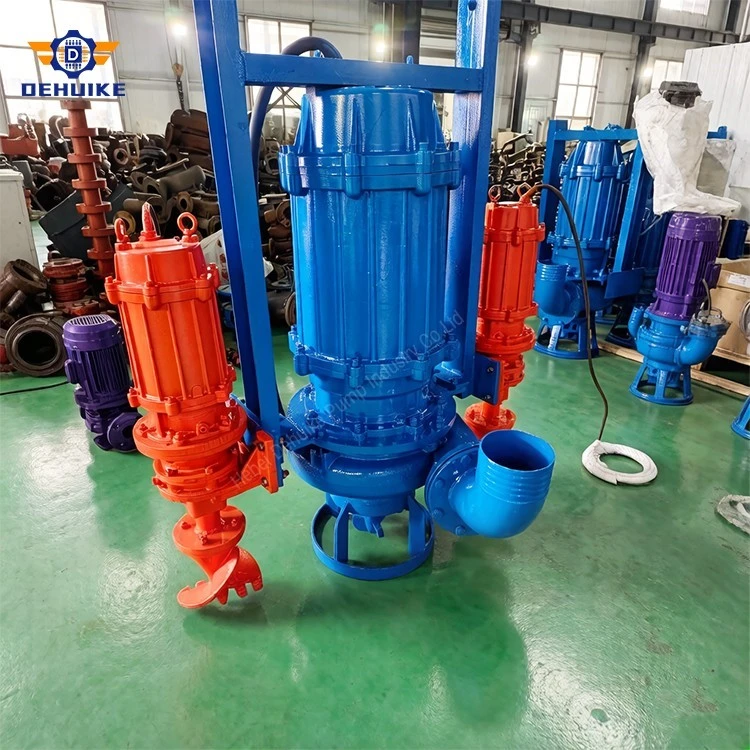
Slurry pump operating lifespan is fundamentally determined by metallurgy and internal fluid velocity control. Solid particles erode wet-end surfaces through high-angle impact gouging at vane leading edges, low-stress sliding abrasion along the volute cutwater, and micro-machining erosion caused by internal eddies.
Hypereutectic High-Chrome White Iron (ASTM A532 Class III Type A)
Sacrificial wet-end components-including the primary closed impeller, heavy-wall volute casing, backplate, and suction wear plate-are cast from high-chromium white cast iron (alloy A05 / Cr27).
Chemical Formulation: Containing 26% to 28% chromium with balanced carbon, the casting undergoes vacuum heat treatment and controlled high-temperature air quenching.
Corrosive-Abrasive Duty (Alloy A49): For fertilizer gypsum slurries, chemical processing, and acidic mine drainage (pH 4 to 6), components can be specified in low-carbon high-molybdenum chrome alloy (A49), providing dual resistance against pitting corrosion and mechanical abrasion.
Mechanical Agitation & Slurry Fluidization at the Suction Boundary
Transferring settled solids requires active mechanical disruption. When a standard pump operates over stationary sand, hydraulic suction shear alone cannot dislodge interlocked granular particles.
Integrated High-Chrome Agitator Architecture
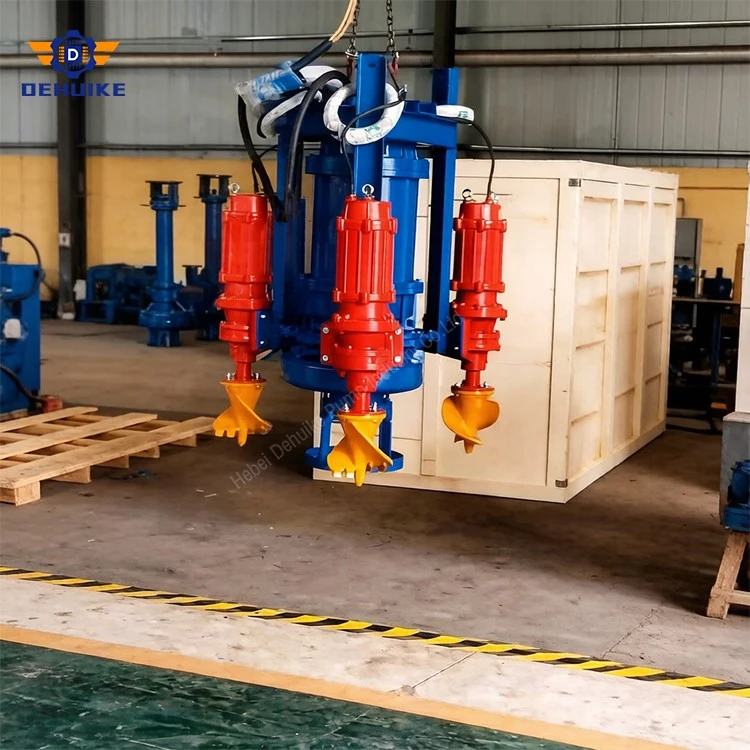
To establish high-density slurry intake, the pump drive shaft extends below the lower suction cover plate, driving a dedicated mechanical agitator cast from the same high-chrome alloy.
Rotational Fluidization Dynamics: As the drive shaft rotates at operational speed, angled agitator blades penetrate settled sediment beds. The rotating blades impart mechanical shear, lifting packed particles and creating an upward vortex of forced turbulence.
Intake Protection and Jetting Assist
A heavy-duty steel intake strainer shields the impeller eye against oversized rock fragments or timber exceeding the pump's solid-passing diameter. For cohesive clay deposits or hard-packed river silt, peripheral high-pressure water jetting rings can be mounted to the casing base. Pressurized clean water nozzles blast into compacted strata, fracturing dense clay structures and assisting mechanical agitation.
Subsurface Hermetic Sealing Architecture & Ingress Defense
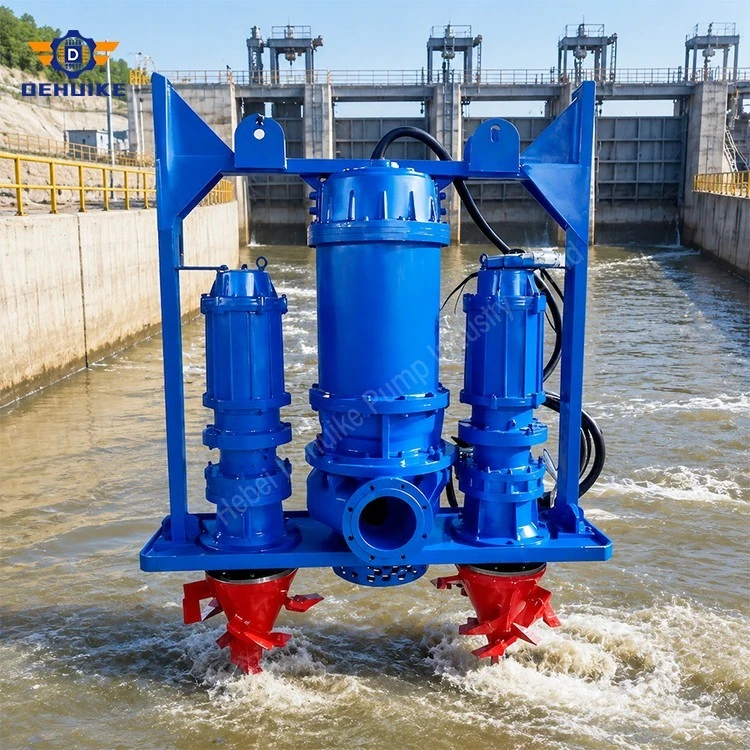
Submerged operation beneath abrasive slurries creates severe mechanical pressure gradients across the rotating shaft. Fine suspended grit threatens to infiltrate shaft seal faces and contaminate bearing lubrication oil.
Dual Independent Mechanical Seal Arrangement
The sealing interface employs an in-line tandem dual mechanical seal configuration isolated within an oil containment chamber:
Upper Motor-Side Seal: Enclosed within the oil reservoir away from slurry, the secondary seal features Carbon versus Ceramic or Silicon Carbide faces, maintaining a hermetic barrier between lubricating oil and the dry motor stator cavity.
Shaft Sleeve Protection: Hardened stainless steel or chrome-plated shaft sleeves shield the alloy drive shaft against fretting wear and chemical oxidation, allowing economical sleeve replacement during overhauls.
Integral Sensor Monitoring & Early Ingress Warning
Moisture Leakage Probes: Conductive float or resistivity probes inside the seal oil chamber detect moisture accumulation before water crosses the secondary seal.
Thermal Protection Thermistors: Bimetallic switches and Pt100 RTD sensors inside stator winding heads trip alarm circuits if internal temperatures exceed safety margins, protecting against phase overload.
Heavy-Duty Double-Row Bearings: Robust angular contact thrust ball bearings and cylindrical roller bearings handle axial down-thrust and radial agitator shock loads, maintaining dynamic shaft runout below 0.05 mm to preserve seal face alignment.
Hydraulic Sizing Protocol: Calculating Deposition Velocity and Total Dynamic Head
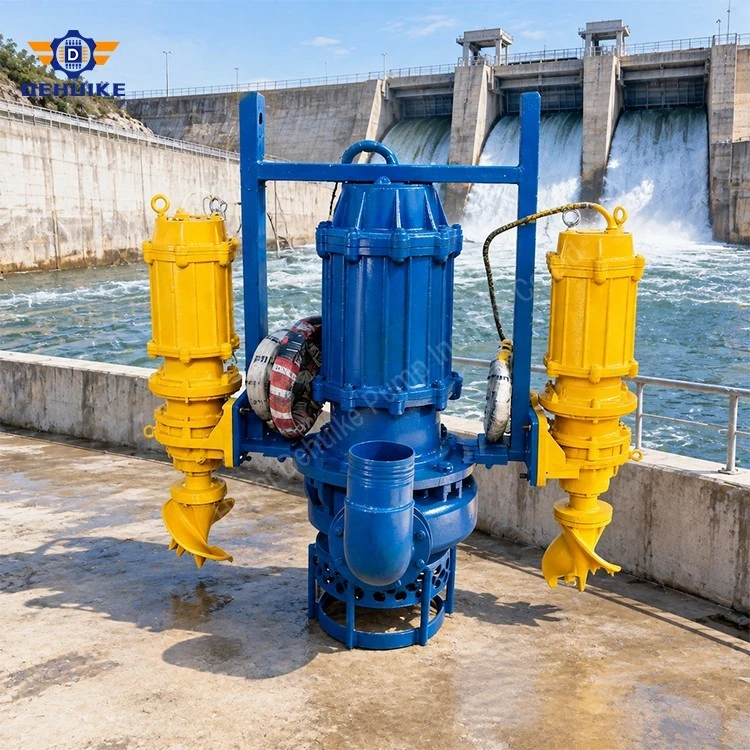
Sizing an abrasive slurry pump requires specialized hydraulic calculations differing substantially from clean water pump selection. Solids increase pipeline friction, derate hydraulic head, and alter critical transport velocity thresholds.
Field Deployment, Rigging, and Operational Purging Protocols
Proper physical installation and operating routines determine whether a submersible slurry pump achieves its multi-year design life or suffers premature outage.
Physical Suspension & Rigging Methods
Chain & Wire Rope Sling Suspension: In open sumps or retention ponds, the pump must be suspended from its dedicated lifting bail using rated galvanized or stainless steel rigging slings. The unit must never be supported by electrical power cables or hydraulic hose bundles.
Excavator Arm Mounting Brackets: In mobile desilting projects, structural adapter plates bolt directly to the excavator stick using standard boom pins. This rigid mounting allows the operator to apply hydraulic downforce, positioning the agitator directly against compacted silt banks.
Guide Rail System Installation: In permanent concrete sump stations, dual stainless steel guide rails and automatic duckfoot discharge couplings permit lifting the pump for inspection without personnel entering hazardous sumps.
Discharge Piping & System Layout
Slurry transfer pipelines should incorporate flexible wire-reinforced rubber slurry hoses near the pump discharge nozzle to isolate pump vibration from rigid surface lines. All pipe bends along the discharge route should maintain a centerline radius of at least five times the pipe diameter ($R \ge 5D$) to avoid localized erosive gouging common in sharp 90-degree elbows.
Post-Shift Clean Water Purge Sequence
A fundamental operational rule in slurry pumping is never shutting down with heavy solids resting inside the system. Upon completing pumping duties, operators should run the unit in clean surface water or supply flush water through the discharge line for 3 to 5 minutes. This purging cycle clears suspended particles out of the volute and discharge column, preventing solids from packing around the impeller during idle periods.
Frequently Asked Questions (Technical & Procurement Insights)
Q1: When should an engineering team specify a hydraulic drive submersible slurry pump instead of an electric submersible unit?
A: Hydraulic drive units are optimal for mobile applications where electrical utility grid connections are unavailable, such as barge-mounted dredging, excavator boom desilting, and remote river canal clearing. They provide infinite torque and speed modulation, robust resistance to motor stall, instantaneous reverse rotation to clear blockages, and zero electrical hazard in flooded marine environments. Electric units remain preferred for fixed industrial plants, permanent sumps, and continuous operations where utility power is steady and automated VFD/PLC control is prioritized.
Q2: What is the primary operational advantage of an integrated bottom agitator over a standard suction strainer?
A:standard suction strainer can only intake particles already suspended in the entering fluid stream. In high-density slurry applications, heavy sand, gravel, and tailings settle into compacted, interlocked sediment beds. A high-chrome mechanical agitator extends below the suction plate and rotates at full shaft speed, mechanically breaking compacted solids and generating high localized turbulence. This re-suspends settled particles into a dense, homogeneous slurry mixture directly at the intake, preventing pump cavitation and ensuring high continuous dry solids transport.
Q3: How do operators determine when wet-end components (impeller, casing, suction plate) require replacement?
A: Wet-end wear is evaluated by monitoring hydraulic discharge performance, operating motor amperage, and physical inspection during scheduled shutdowns. When internal clearances between the impeller and front suction plate exceed 1.5 mm due to abrasive erosion, hydraulic recirculation occurs, leading to reduced discharge pressure and decreased volumetric flow. If adjusting the external clearance plate can no longer restore rated head and capacity, or when ultrasonic casing thickness measurements show wall loss approaching 50% of original casting thickness, sacrificial wear parts should be replaced to prevent casing breakthrough.
Q4: Can submersible abrasive slurry pumps handle acidic or chemically aggressive mining slurries?
A: Standard wet-end components are cast from high-chromium alloy (A05 / Cr27), which performs reliably in pH environments between 5.5 and 11.5. For acidic mine drainage, gold cyanidation tailings, phosphoric acid gypsum slurry, or chemical effluent where pH drops below 5.0, Dehuike supplies specialized hypereutectic low-carbon alloys such as A49 or customized duplex stainless steels (such as CD4MCu). These alloys provide an enhanced passive chromium oxide surface layer that resists chemical acid attack while maintaining superior resistance against particle abrasion.
Q5:What safety interlocks must be connected in the electrical control panel prior to startup?
A: To ensure complete motor protection, the control cabinet must incorporate dual thermal and moisture monitoring relays connected to the pump's internal sensory wires. The thermal sensor lines (bimetallic switches or Pt100 RTDs) must be wired into the control circuit to trip power if stator windings overheat due to phase imbalance or restricted cooling. Additionally, the conductive moisture leakage sensor within the oil reservoir must be linked to an automatic alarm or trip relay to isolate power immediately if lower mechanical seal wear permits moisture intrusion into the oil chamber.
Q6:What spare parts inventory is recommended to support continuous 24/7 industrial dewatering or dredging operations?
A: For continuous industrial operations, maintenance departments should maintain a tiered inventory of critical spares:
Tier 1 (Routine Maintenance / 6-Month Cycle): Mechanical seal kits (upper and lower seals), complete O-ring and gasket replacement sets, oil chamber lubricant, and sacrificial shaft sleeves.
Tier 2 (Wet-End Wear Components / 12-Month Cycle): One set of high-chrome impellers, front suction wear plates, and mechanical bottom agitator blades.
Tier 3 (Capital Standby Components): One complete bare-shaft replacement wet-end assembly and dynamic bearing set, allowing immediate modular swap-out to eliminate plant production downtime during major scheduled overhauls.

Hot Tags: submersible abrasive slurry pump, China submersible abrasive slurry pump manufacturers, suppliers, factory