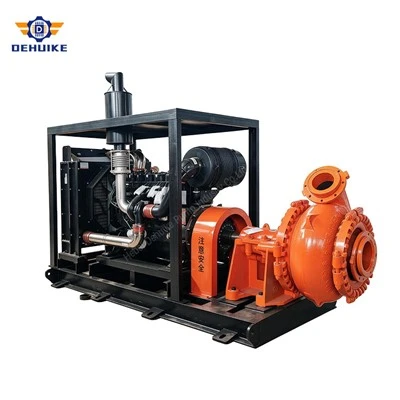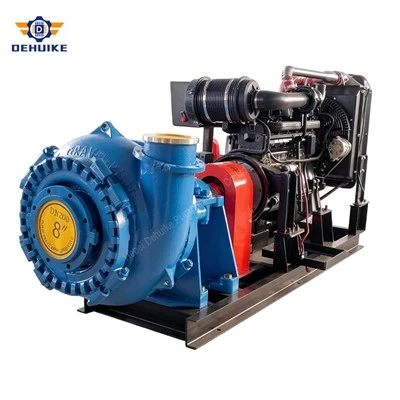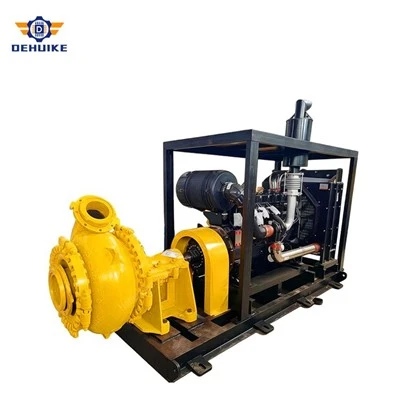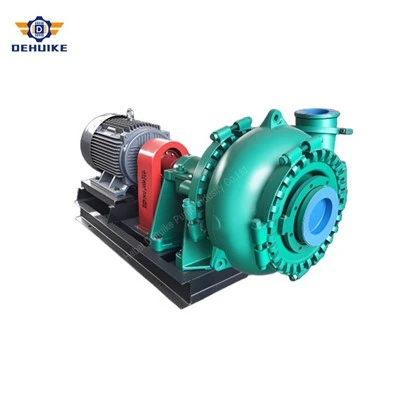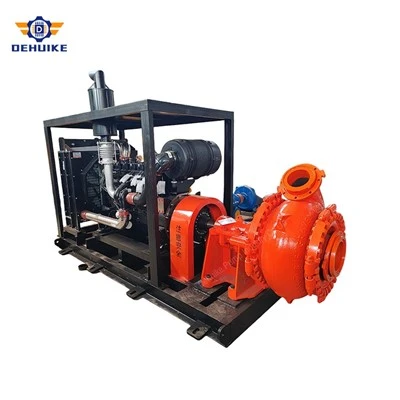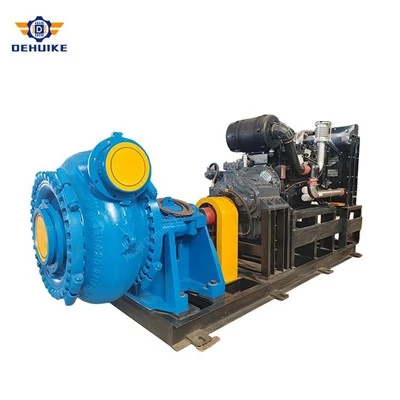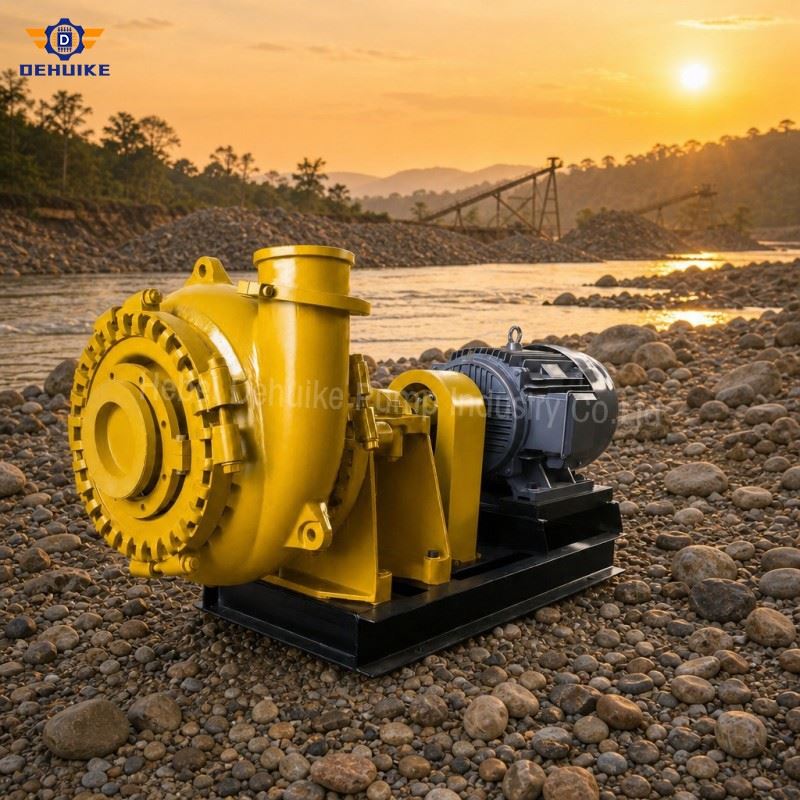
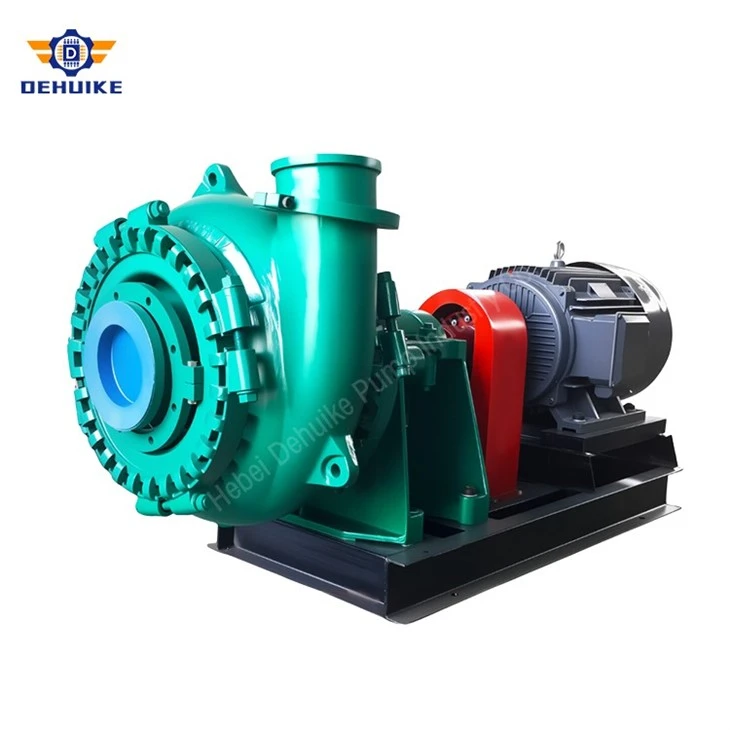
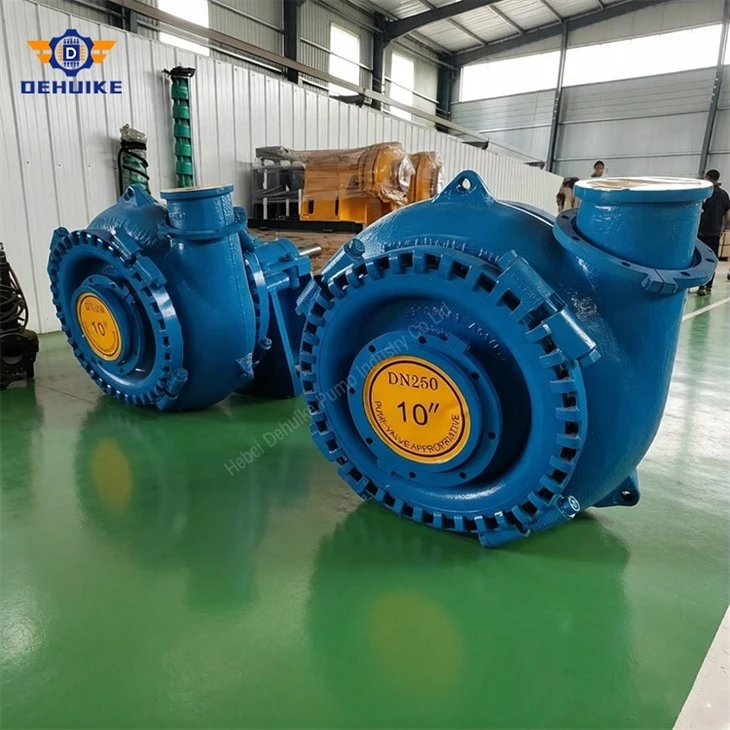
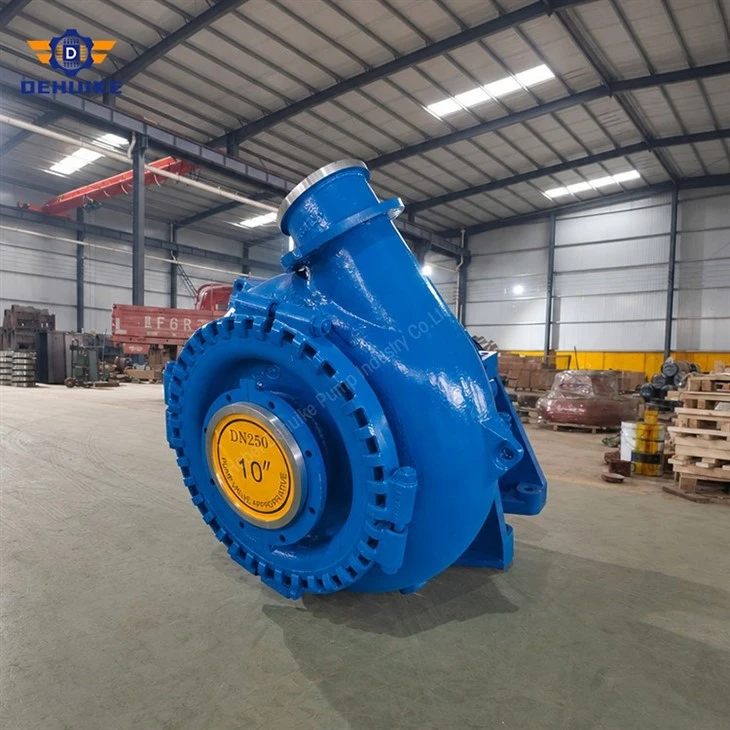
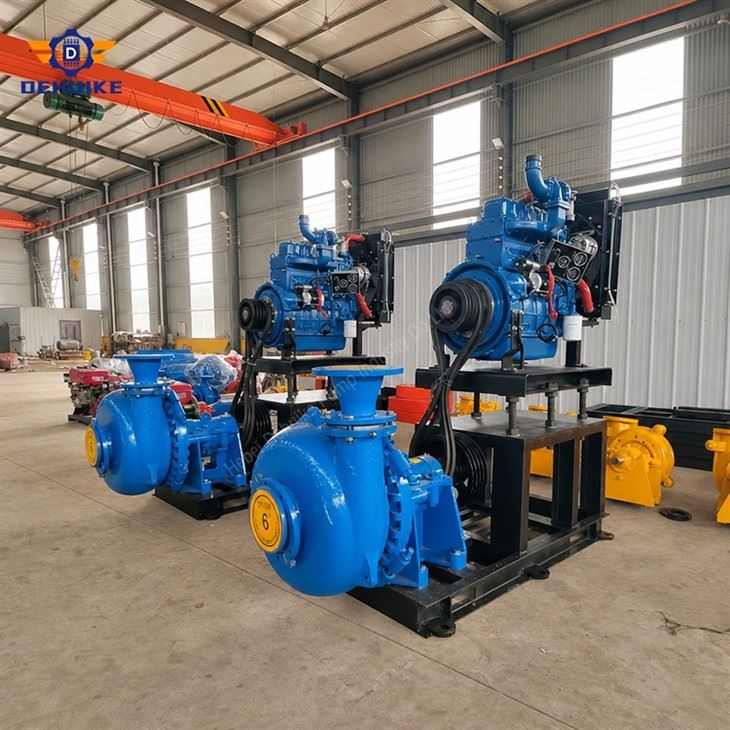
Hebei Dehuike Pump Industry Co., Ltd. is one of the most reliable manufacturers and suppliers of heavy duty abrasion resistant gravel pump in China. With abundant experience, we are committed to providing high quality customized pumps with competitive price. Welcome to wholesale bulk heavy duty abrasion resistant gravel pump for sale here from our factory. Also, pricelist is available.
Engineering Foundations and Fluid Dynamics of Heavy Duty Abrasion Resistant Gravel Pump
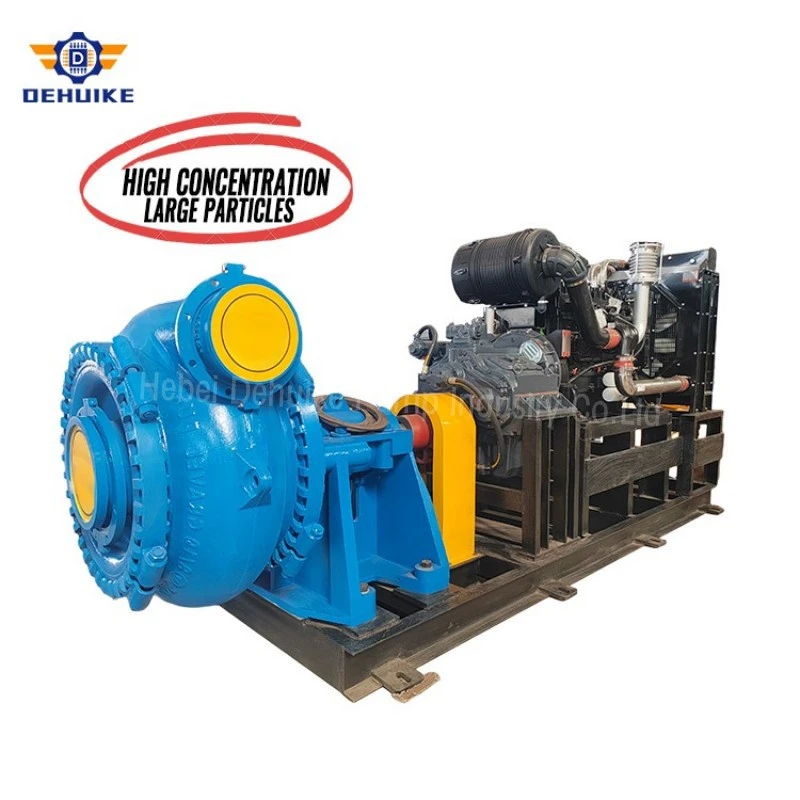
Transporting high-density solid-liquid mixtures containing large gravel, coarse aggregate, and riverbed boulders presents one of the most demanding fluid handling challenges in industrial slurry engineering. Conventional double-casing slurry pumps, while effective for fine-tailings flotation and moderate silt handling, frequently encounter geometric and mechanical bottlenecks when continuous particle sizes exceed several inches. In deep-cut dredging, open-pit gravel extraction, and hard-rock hydraulic mining, passing large, sharp solids demands an entirely distinct casing architecture, expanded internal clearances, and massive structural cross-sections.
The Heavy Duty Abrasion Resistant Gravel Pump is specifically designed to eliminate internal slurry throttling while sustaining stable hydraulic output across fluctuating dredging cuts. Operating within heavy solid-liquid circuits, fluid movement cannot be modeled as single-phase Newtonian flow. Instead, fluid mechanics within the pump casing are governed by high-momentum solid inertia, where abrasive pebbles and dense sand grains decouple from streamlines, impinging directly against the wet-end boundary surfaces. This dynamic manifests in two destructive phenomena: high-velocity sliding bed abrasion along the volute cutwater and violent localized gouging impact against the impeller leading edges.
To withstand these continuous mechanical stresses, the hydraulic design of the Heavy Duty Abrasion Resistant Gravel Pump integrates a wide-throat, single-casing architecture coupled with large-diameter, multi-vane closed impellers. By minimizing boundary layer recirculations and expanding the minimum internal spherical passage, the system significantly suppresses hydraulic turbulence and localized eddy cavitation. Operators achieve reliable solids transport with reduced downtime, avoiding premature shell perforation and catastrophic casing fracture even when handling highly abrasive alluvial deposits with fluctuating specific gravity.
Furthermore, changing water levels, fluctuating suction depths, and variable discharge pipeline distances require robust operational latitude. Whether deployed on floating pontoon barges, integrated into cutter suction dredger hulls, or mounted ashore as dedicated booster units, the Heavy Duty Abrasion Resistant Gravel Pump provides the hydraulic authority needed to maintain slurry velocity above the critical deposition threshold, ensuring continuous production without pipe siltation.
Specifications / Technical Parameters: Certified Hydrosizing Data & Operational Benchmarks
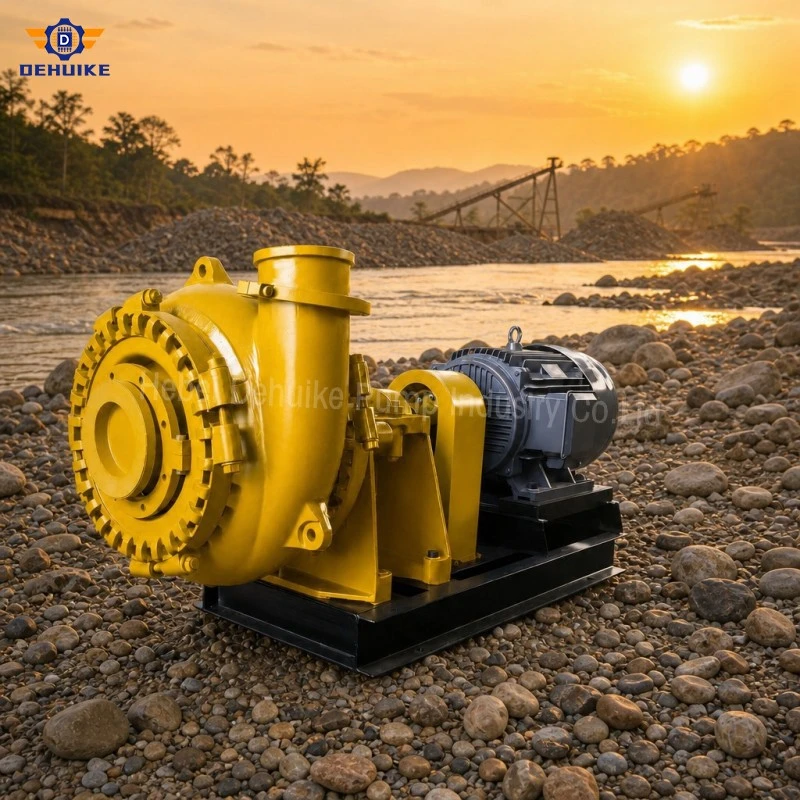
Accurate hydraulic selection forms the cornerstone of dependable dredging and aggregate processing systems. The table below delineates five certified engineering frame sizes within this specialized gravel pump series, capturing critical physical boundary dimensions, structural weights, and maximum allowable spherical particle entries. All dimensional benchmarks represent standard bare-shaft configurations.
Table 1: Frame Sizes, Flange Dimensions, Particle Passage, and Bare Pump Weights
|
Model |
Particle Entry (mm)* |
Inlet Diameter (mm) |
Outlet Diameter (mm) |
Bare Pump Weight (kg) |
|
6/4D-G |
82 |
150 |
100 |
460 |
|
8/6E-G |
127 |
200 |
150 |
1120 |
|
10/8F-G |
178 |
250 |
200 |
2250 |
|
14/12G-G |
241 |
350 |
300 |
5400 |
|
16/14-G |
255 |
400 |
350 |
6950 |
*Note: The maximum particle entry values represent certified spherical passage thresholds through the internal hydraulic channels under stable flow conditions. Field application sizing must incorporate adequate particle size distribution margins and suction screening to mitigate structural choking from non-spherical, elongated riverbed fragments.
Hydraulic performance mapping across dredging slurries requires reconciling clean-water test data with actual slurry density, settling characteristics, and solids volumetric concentration. The baseline hydro-performance metrics tabulated below establish nominal duty points at certified rotational speeds under standard atmospheric conditions.
Table 2: Rated Hydrodynamic Performance Parameters at Certified Speeds
|
Model |
Flow Rate (m³/h) |
Total Head (m) |
Rotational Speed (r/min) |
Hydraulic Efficiency (%) |
Motor Rating Record (kW) |
|
6/4D-G |
151.2 |
23.5 |
980 |
52.0 |
45 |
|
8/6E-G |
285.0 |
19.2 |
980 |
60.8 |
55 |
|
10/8F-G |
650.0 |
41.8 |
950 |
49.3 |
220 |
|
14/12G-G |
2320.0 |
56.5 |
700 |
64.2 |
900 |
|
16/14-G |
2249.0 |
40.4 |
500 |
64.5 |
800 |
Technical Interpretation of Hydrosizing Metrics
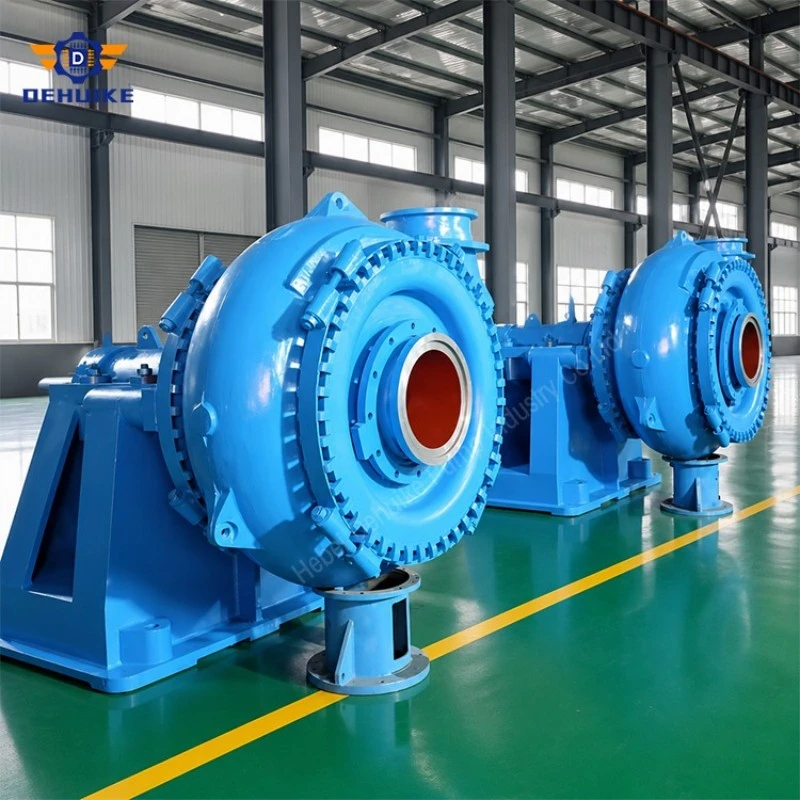
1. Volumetric Capability vs. Solids Ratio: The baseline flow rates ranging from 151.2 m³/h on the compact 6/4D-G up to 2320 m³/h on the heavy 14/12G-G reflect clean-water hydraulic throughput. When pumping saturated gravel slurries where specific gravity reaches 1.35 to 1.60, system brake horsepower must be adjusted using verified slurry density multipliers and head-ratio derating coefficients.
2. Dynamic Head Envelopes: Total head figures between 19.2 m and 56.5 m illustrate the dual-purpose flexibility of this series, accommodating both direct barge loading and elevated booster overland pipeline discharge.
3. Rotational Speed Regimes: Controlled operating speeds (500 r/min on the massive 16/14-G to 980 r/min on the 6/4D-G) deliberately limit impeller peripheral tip velocity. Restricting circumferential tip speed directly suppresses hydrodynamic abrasion intensity, which typically scales with the third power of slurry velocity.
Product Details: Component Metallurgy, Casing Geometry & Bearing Dynamics
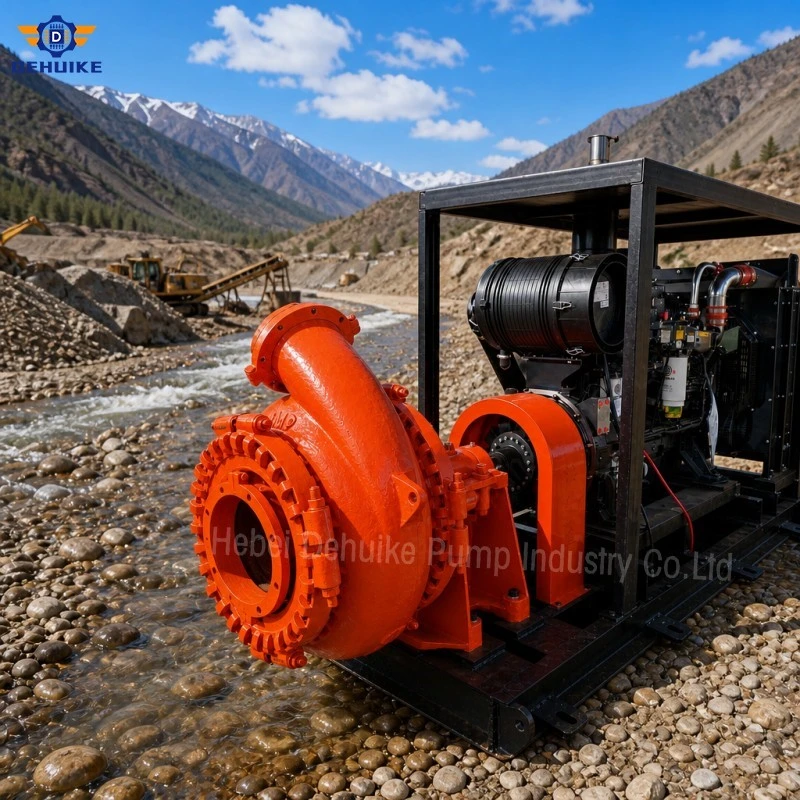
The structural longevity of a Heavy Duty Abrasion Resistant Gravel Pump relies on metallurgical excellence and mechanical robustness across every constituent component. Unlike standard industrial pumps assembled with thin stamped or modular ductile iron components, heavy-duty gravel handling machinery utilizes massive, thick-section alloy castings designed to endure relentless erosion-corrosion cycles.
Single-Casing Volute Architecture & Clamp Ring Mechanism
The pump utilizes a specialized single-casing volute layout without an external split frame. The primary casing volute incorporates an exceptionally thick sacrificial wear section, eliminating internal dead zones where recirculating gravel might cause localized abrasive gouging. A robust one-piece casing is secured to the frame plate and intake cover via heavy-duty forged-steel split clamp rings. This circumferential clamp structure permits full 360-degree rotational positioning of the discharge nozzle, facilitating custom alignment with pontoon pipes, deck flanged risers, or shorelines at 45-degree increments without requiring secondary piping elbows. Furthermore, the clamp assembly drastically accelerates wet-end disassembly during scheduled maintenance shutdowns, eliminating stripped casing studs often encountered in abrasive environments.
Impeller Geometry & High-Chrome Metallurgy
The heart of the hydraulic assembly is an extra-wide, large-diameter closed impeller featuring three or four wide-contoured vanes. The vanes incorporate broad inlet eye profiles and smoothly curved parabolic exit profiles, maintaining consistent hydraulic passage area across the entire fluid vector.
Shaft stability is maintained through a combination of heavy-duty spherical roller bearings at the drive end and heavy-duty double-row tapered roller bearings at the wet end. The entire bearing cartridge is protected by precision labyrinth ring seals and grease purges, preventing slurry ingress and environmental moisture contamination. External jacking bolts on the bearing cartridge allow precise axial repositioning of the entire rotating element, enabling operators to restore tight mechanical clearances between the front impeller shroud and intake throat without dismantling piping flanges.
Features / Equipment Characteristics: Operational Reliability Under Severe Abrasion
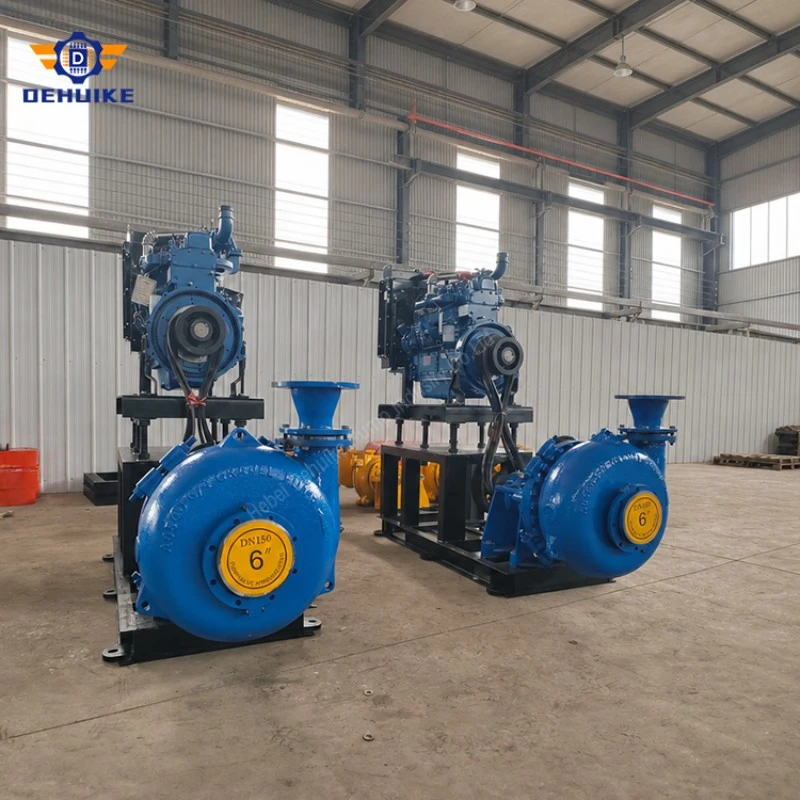
Industrial pumping installations operating in gravel extraction and reclamation environments must sustain continuous duty without unplanned interruptions. The Heavy Duty Abrasion Resistant Gravel Pump incorporates several mechanical and hydrodynamic attributes engineered directly to address harsh abrasive field conditions.
Unobstructed Solid Passage Efficiency
The defining characteristic of this gravel equipment series is its oversized internal cross-sectional passage. While standard slurry impellers feature narrow multi-vane designs that easily lodge oversized stones, the wide-throat gravel geometry allows stones measuring up to 255 mm (on the 16/14-G model) to navigate through the casing without wedging between the impeller vanes or jamming across the cutwater lip. This unobstructed passage minimizes hydraulic shock, avoids sudden motor overload tripping, and preserves uninterrupted slurry flow across shifting riverbed profiles.
Sustained Hydraulic Performance via External Axial Adjustment
In conventional centrifugal pumps, wear-induced clearance enlargement between the rotating impeller and stationary suction throat causes severe internal recirculation, accelerating localized casing erosion and precipitating a rapid drop in pump discharge pressure. The Heavy Duty Abrasion Resistant Gravel Pump overcomes this through an external bearing cartridge micro-adjustment mechanism. Maintenance crews can easily loosen the pedestal clamp bolts and turn the axial adjustment screws to restore the impeller-to-throatplate gap to its optimal clearance (0.5 mm to 1.0 mm). This quick field adjustment instantly re-establishes the Rated Optimal Efficiency Point (BEP) and prolongs wear-component operational lifespan without taking the pump offline for overhaul.
Application: Heavy Industrial, Dredging & Mineral Reclamation Scenarios
The operational versatility of the Heavy Duty Abrasion Resistant Gravel Pump enables seamless integration across demanding mining, marine, and construction infrastructure projects. Where aggressive solids concentration and large particle profiles quickly destroy standard pumps, this heavy-duty unit delivers predictable, high-volume production.
Navigational River Dredging and Port Deepening
In busy river channels and ocean harbor approaches, continuous sediment accumulation creates navigational hazards that require routine mechanical clearance. Cutter suction and trailing suction dredgers deployed in these waterways frequently encounter mixed layers of compact silt, heavy sand, and jagged riprap gravel. Installed as the primary inboard dredge pump or ladder-mounted sub-surface unit, the equipment delivers massive vacuum suction to lift dense slurry from depths down to 30 meters, pumping the mixture through floating discharge pipelines directly into disposal barges or shoreline reclamation zones.
Aggregate Quarrying and Sand Washing Plants
Commercial concrete batching, asphalt production, and railway ballast preparation demand consistent supplies of graded natural sand and crushed stone. In wet pit extraction, hydraulic monitors wash down pit faces, funneling stone slurries into central catchment sumps. The gravel pump lifts this abrasive raw slurry directly into vibrating sizing screens and hydrocyclone battery banks. The equipment's robust high-chromium wet-end components resist the relentless sliding wear caused by high-quartz sand particles, ensuring uninterrupted 24/7 quarry throughput.
Hard-Rock Mining and Coarse Tailings Pipeline Disposal
Base and precious metal concentrators generate millions of tons of crushed ore slurries annually. Following secondary crushing and autogenous grinding stages, hydrocyclone underflow lines and dense tailings slurries carry sharp, highly abrasive quartzite and iron ore particles. Pumping these abrasive streams over long overland distances to tailings management facilities demands dependable discharge head and thick wear-resistant casing walls capable of enduring abrasive gouging without catastrophic breach.
Land Reclamation and Island Construction Infrastructure
Coastal reclamation, airport runway expansions on reclaimed shorelines, and coastal defense barrier construction require pumping millions of cubic meters of ocean-floor gravel and coarse sea sand across multi-kilometer distances. Working in series with multi-stage booster pump stations, this pump series sustains the necessary hydraulic gradient, handling abrasive shells, coral fragments, and coarse gravel without choking pipeline circuits.
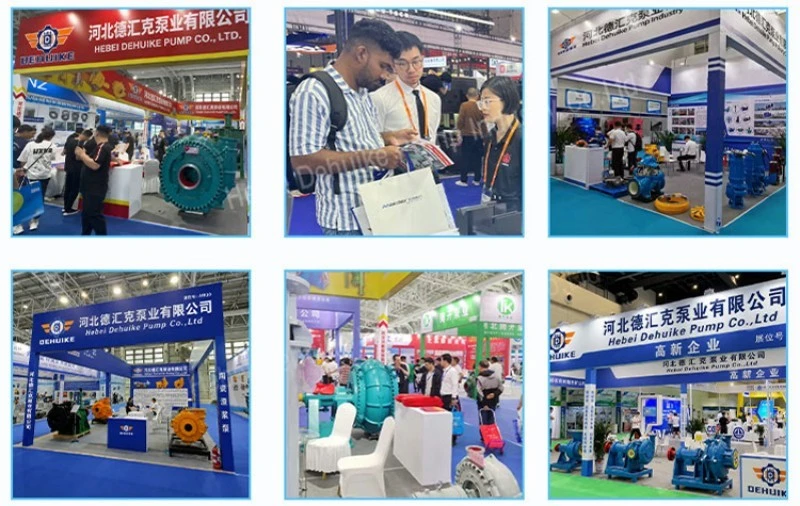
ProdProduction Process & Quality Assurance: Foundry Rigor and Verification Standards
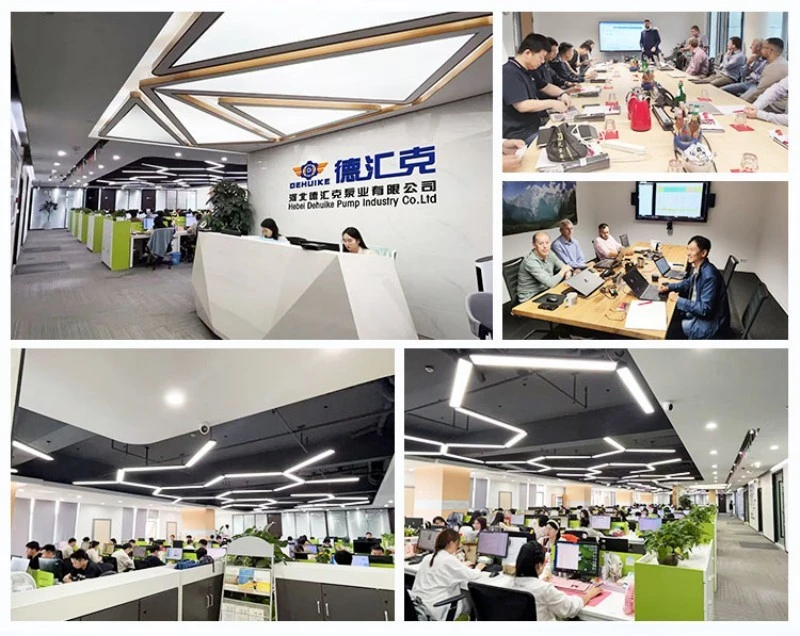
Producing reliable heavy-duty slurry machinery capable of withstanding extreme mechanical erosion demands rigorous metallurgical governance and precision manufacturing controls across every phase of fabrication. Our modern casting and machining facilities operate under strict ISO 9001:2015 quality management standards, ensuring full traceability from raw alloy melt to final mechanical testing.
Metallurgical Control and Precision Alloy Foundry
1. Raw Material Preparation: High-purity scrap steel, low-carbon ferrochrome, and selected alloying elements (Mo, Ni, Cu) are charged into medium-frequency induction melting furnaces.
2. Real-Time Spectrometric Chemistry Verification: Direct-reading optical emission spectrometers (OES) analyze molten bath samples both before tapping and during pouring. Strict chemistry limits ensure the chromium content remains reliably within the certified 27% target range, controlling carbon and trace impurities to prevent premature brittle microcracking.
3. Resin-Sand Molding: Precision wooden and aluminum patterns form rigid resin-bonded sand molds, ensuring tight dimensional tolerances, smooth interior hydraulic passages, and excellent surface finishes that reduce boundary skin-friction losses.
Specialized Thermal Treatment Cycle
High-chromium white iron castings in their as-cast state contain high amounts of retained austenite and unstable pearlite, which lack optimum wear resistance. To achieve peak mechanical toughness and wear hardness:
• Castings undergo a specialized high-temperature destabilization cycle at 950°C to 1020°C in programmable heat treatment furnaces.
• Forced air-quenching rapidly transforms the matrix into tough martensite while precipitating dense secondary chromium carbides.
• Subsequent sub-critical tempering at 250°C to 300°C relieves internal casting stresses while stabilizing bulk hardness firmly between 58 and 62 HRC.
Company Advantages & Global Engineering Support: Manufacturing Scale, Logistics & Lifecycle Service
Sourcing mission-critical industrial pumping infrastructure requires an experienced manufacturing partner with deep engineering domain expertise, certified production scalability, and dependable global aftermarket support. Hebei Dehuike Pump Industry Co., Ltd. represents an established manufacturing enterprise dedicated to heavy-duty fluid handling equipment.
Key Manufacturing Capabilities and Supply Ecosystem
• Three Decades of Manufacturing Heritage: With over 30 years of continuous specialized manufacturing experience in heavy industrial slurry and gravel pumps, our design teams bring deep empirical engineering knowledge to global fluid handling challenges.
• Expansive Production Facilities: Our centralized manufacturing plant and modern machining workshops cover an area exceeding 6,000 square meters, housing advanced electric melting furnaces, automated heat treatment bays, heavy CNC vertical lathes, and computerized hydraulic testing flow-loops.
• Extensive Industrial Supply Network: Backed by an integrated supply ecosystem of over 900 certified industrial partners, we maintain immediate access to premium forgings, certified high-tensile fasteners, premium motor drives, and specialized marine-grade coatings.
Commercial Warranties and Global Project Footprint
• 24-Month Comprehensive Machine Warranty: We provide a solid 24-month comprehensive equipment warranty covering the entire pump unit (excluding normal wear parts such as impellers, liners, and throatplates), reflecting absolute confidence in our structural metallurgy and assembly standards.
• Proven Field Experience in Over 50 Countries: Our heavy gravel and slurry pump installations operate dependably across more than 50 countries and regions worldwide, supporting major river dredging projects in Southeast Asia, aggregate extraction across North America, coastal reclamation in the Middle East, and mineral tailings operations across Latin America and Africa.
Technical FAQ: Practical Dredging Engineering & Maintenance Diagnostics
FAQ

01.How does slurry specific gravity and coarse particle size distribution affect total dynamic head and motor selectio
Pumping abrasive solid-liquid mixtures requires correcting clean-water performance curves. As slurry specific gravity increases from 1.0 to 1.5 or higher, the brake horsepower (BHP) required by the pump rises linearly with the slurry mixture density:
$$P_m = \frac{Q \cdot H_m \cdot S_m}{367 \cdot \eta_m}$$
Where $Q$ is slurry flow rate in m³/h, $H_m$ is developed slurry head in meters, $S_m$ is slurry specific gravity, and $\eta_m$ is the pump's operating efficiency on slurry. Furthermore, coarse solid particles do not accelerate at the same rate as the carrier water inside the impeller channels, causing solid slip and frictional energy dissipation that slightly reduces effective developed head ($H_m / H_w < 1.0$). Drive motors must therefore be sized with a minimum 15% to 25% safety margin above the calculated operating power to accommodate sudden surges in solids intake.
02.What are the fundamental engineering differences between a single-casing gravel pump and a conventional double-casing slurry pump?
03.Why is periodic impeller clearance adjustment critical, and how is it executed in the field?
04.How does chemical pH and brackish water affect high-chromium 27% Cr alloy performance?
Standard high-chromium white cast iron (27% Cr) performs exceptionally well in neutral and mildly alkaline slurry environments (pH 6 to 11). The high chromium content forms a continuous, self-passivating chromium oxide film that shields the underlying iron matrix from chemical attack. However, when dredging in highly acidic mining drainages (pH < 4.5) or hypersaline coastal estuaries, localized pitting can compromise this passive layer. In such specialized environments, our engineering foundry adjusts molybdenum and nickel content or recommends specialized stainless-grade duplex alloys to resist synergistic erosion-corrosion.
05.What precautions should be implemented in suction pipeline geometry to avoid cavitation when dredging coarse gravel?
Cavitation in gravel pumps severely accelerates metal erosion and can induce catastrophic mechanical vibration. To ensure adequate Net Positive Suction Head Available (NPSHa):
• Suction pipeline diameter should equal or exceed the pump suction inlet diameter (e.g., at least 250 mm for model 10/8F-G).
• Suction pipes should remain as short and straight as possible, avoiding abrupt 90-degree elbows or unvented high spots where air pockets can form.
• The suction intake must incorporate an appropriately sized stone box or intake grid designed to exclude foreign tramp iron, logs, or stones larger than the certified spherical passage limit.
06.Which shaft sealing arrangement is recommended for variable river gravel dredging cuts?
Hot Tags: heavy duty abrasion resistant gravel pump, China heavy duty abrasion resistant gravel pump manufacturers, suppliers, factory