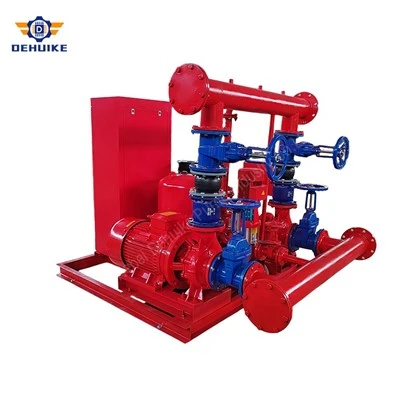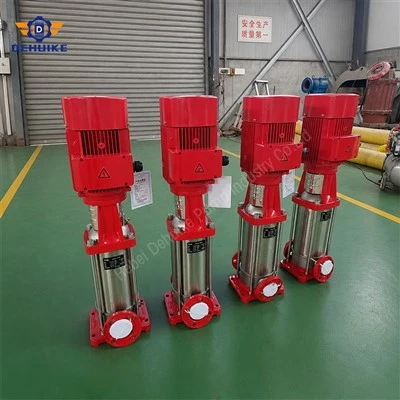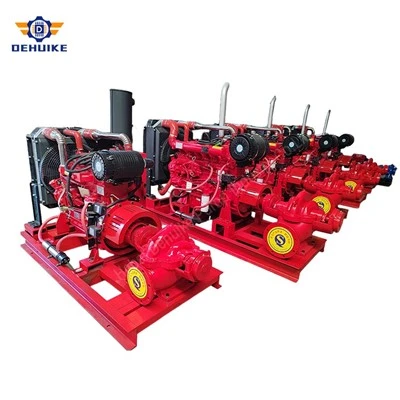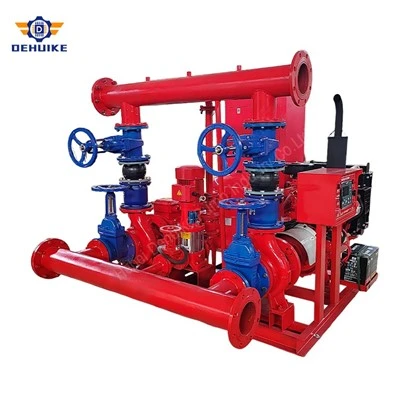
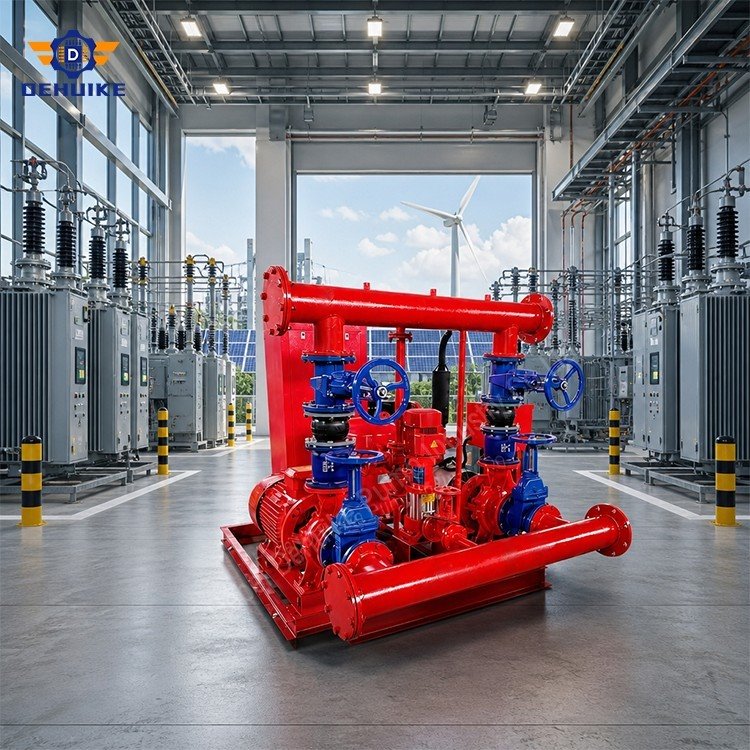
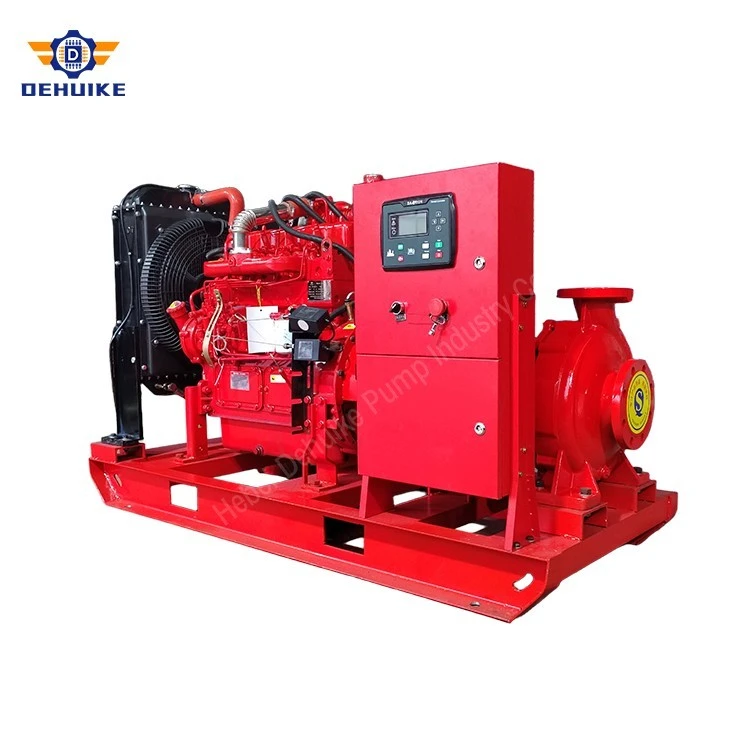
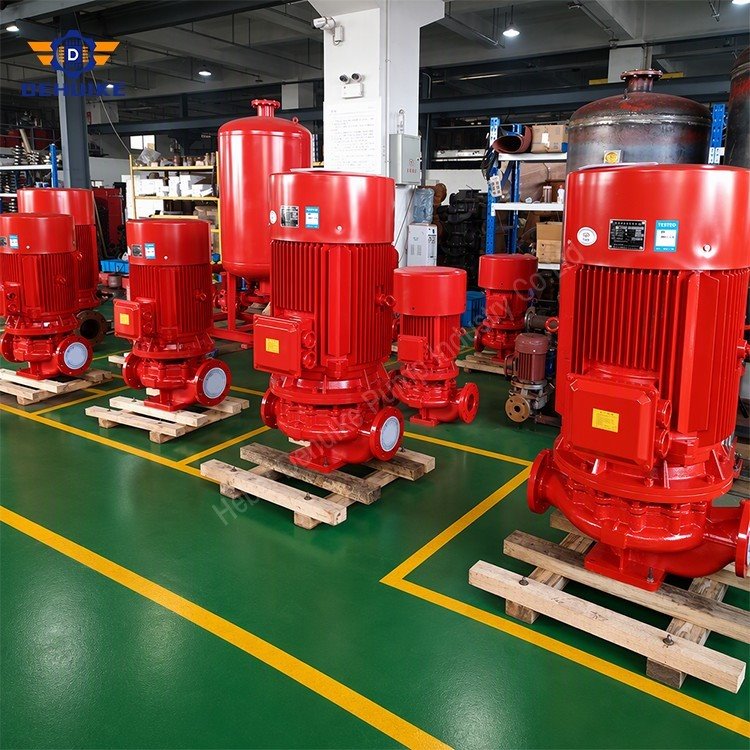
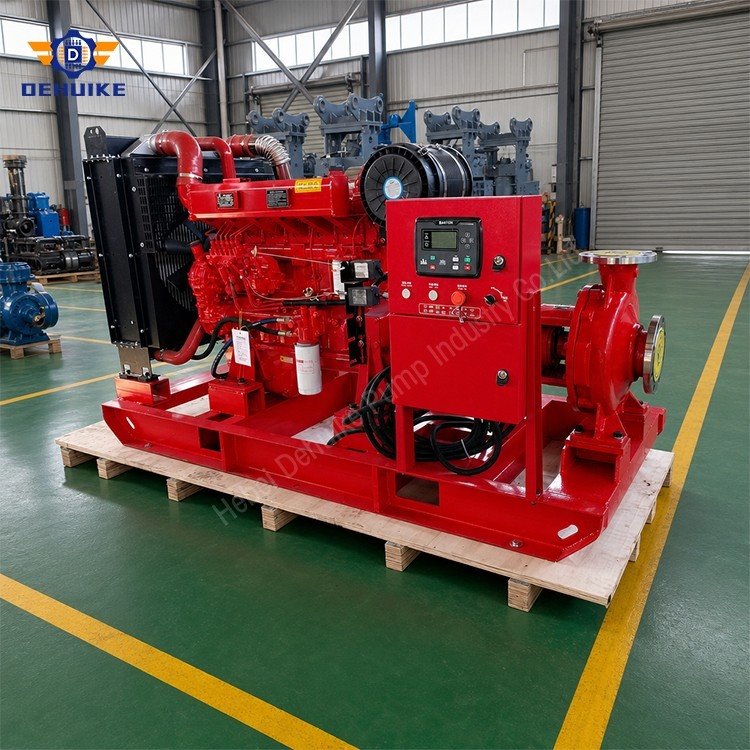
Hebei Dehuike Pump Industry Co., Ltd. is one of the most reliable manufacturers and suppliers of diesel engine driven fire pump set in China. With abundant experience, we are committed to providing high quality customized pumps with competitive price. Welcome to wholesale bulk diesel engine driven fire pump set for sale here from our factory. Also, pricelist is available.
Power-Autonomous Emergency Hydraulic Response
Life safety, structural asset preservation, and regulatory compliance in heavy industrial plants, petrochemical storage terminals, logistics hubs, and commercial high-rises hinge upon uninterrupted fire-suppression water availability. During major structural blazes, electrical substations, municipal transmission lines, and local transformer switchboards are frequently de-energized-either directly destroyed by thermal damage or deliberately cut by emergency first responders to prevent electrical arc fires and personnel electrocution. If an emergency fire protection system depends exclusively on electric motor-driven pumps, complete loss of line voltage causes immediate pressure collapse across deluge grids, standpipe risers, and automatic sprinkler nozzles.
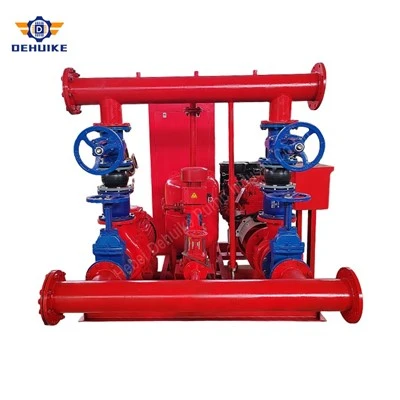
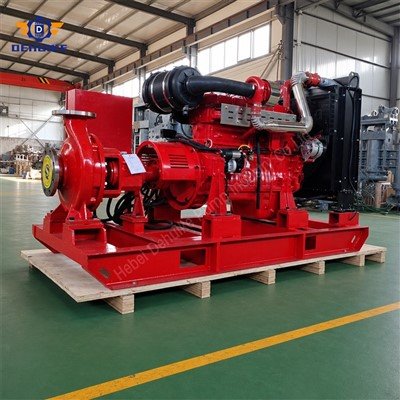
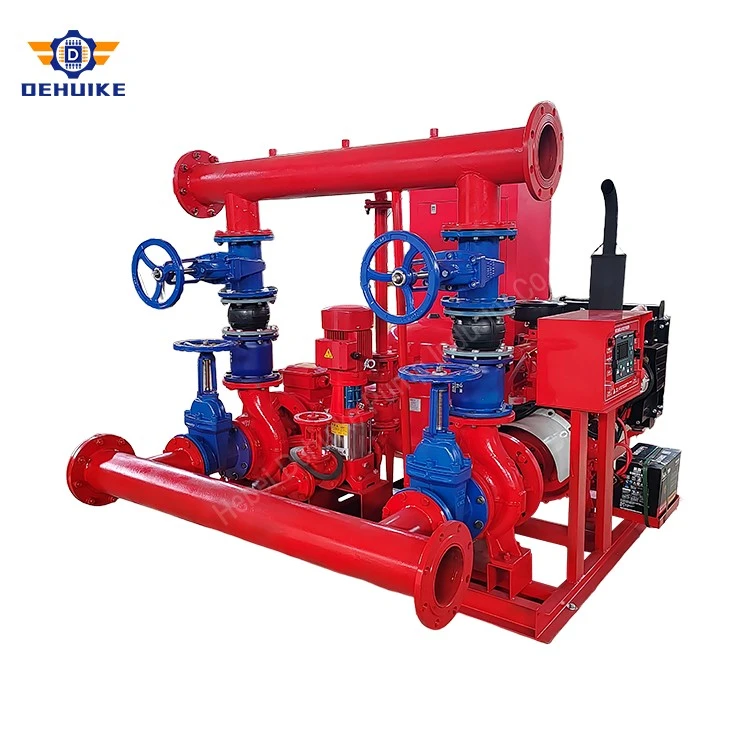
The Diesel Engine Driven Fire Pump Set represents the primary autonomous safeguard against electrical blackout failures. Designed as a self-contained, mechanical prime-mover skid, this equipment combines an industrial compression-ignition diesel engine, a high-pressure centrifugal fire pump, dedicated 24V DC starting batteries, an automatic digital management console, and an integral fuel storage reservoir onto a rigid structural baseframe. When main electrical power is disrupted or when hydraulic header pressure drops below pre-set actuation thresholds, the diesel pump set starts automatically within 15 seconds, delivering rated flow and dynamic pressure to fire suppression networks without drawing a single watt from external utility grids.
Engineered and fabricated by Hebei Dehuike Pump Industry Co., Ltd. (operating in global export markets under the DHK Pump mark), our XBC series diesel fire pump sets leverage over 30 years of specialized metallurgical casting, precision machining, and fluid machinery packaging. Operating from an integrated modern campus exceeding 8,000 m² and reinforced by an audited industrial supply network of 900+ certified component suppliers, Dehuike delivers high-reliability emergency pumping solutions to municipal infrastructure projects, mining facilities, petrochemical plants, and commercial buildings across 50+ countries worldwide.
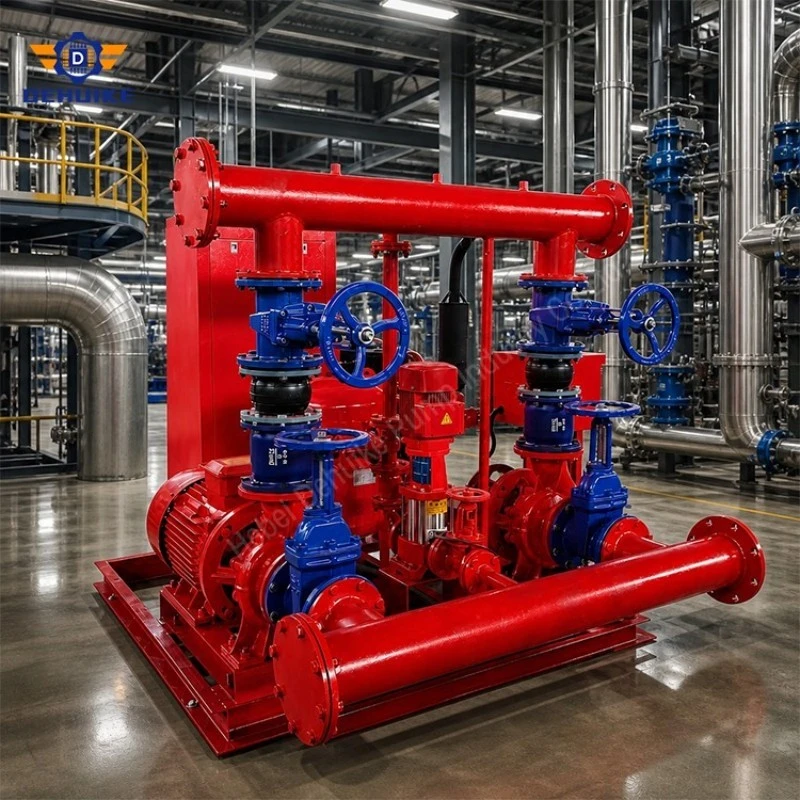
Equipment Characteristics
A detailed mechanical breakdown reveals why the Diesel Engine Driven Fire Pump Set delivers uncompromising operational readiness under severe emergency conditions. Every mechanical and electrical subsystem is engineered to comply with strict fire protection standards and withstand extended standby periods followed by immediate full-load acceleration:
Heavy-Duty Industrial Compression-Ignition Prime Mover: The driving heart of the package utilizes a multi-cylinder, four-stroke direct-injection industrial diesel engine. Sized with generous mechanical power reserves, the engine provides rapid torque response to overcome pump rotational inertia and hydraulic backpressure without stalling. Equipped with a mechanical or electronic isochronous governor, the engine maintains rated rotational speed (1500 to 2400 RPM) within ±2% from zero discharge up to 150% peak hydraulic flow demand.
Redundant Dual-Battery Starting Architecture (24V DC): To eliminate single-point starting failure, the engine incorporates dual independent heavy-duty starter batteries wired through an automated dual-battery selector contactor. During an emergency call to start, the controller automatically alternates between Battery Bank 1 and Battery Bank 2 across six successive cranking cycles. Both battery sets are continually maintained at full float charge via dual regulated trickle chargers powered by auxiliary station power during standby.
Dual Engine Cooling Methodologies (Heat Exchanger vs. Heavy Radiator): To adapt to diverse pump room ventilation constraints, our diesel fire sets are available in two cooling configurations. For compact indoor pump rooms with limited airflow, an engine-driven raw-water heat exchanger utilizes a small slipstream from the main pump discharge to cool engine jacket coolant. For remote, outdoor, or containerized installations, a heavy-duty tropical-rated pusher radiator with an engine-driven cooling fan dissipates thermal rejection directly into the ambient exhaust airstream.
High-Elasticity Torsional Drive Coupling & Alignment Integrity: The diesel engine flywheel is coupled to the pump input shaft via a highly flexible torsional rubber coupling. This specialized coupling absorbs torsional harmonic vibrations generated by cylinder combustion pulses, accommodates minor thermal expansion misalignment, and cushions the pump rotating assembly against sudden torque shock upon emergency start.
Integrated Sub-Base Fuel Storage Reservoir: Mounted directly within the heavy channel steel skid base, an integrated double-walled steel fuel tank provides sufficient diesel fuel capacity for a minimum of 4 to 8 hours of continuous full-load fire pumping duty. The tank features a calibrated mechanical level sight gauge, low-fuel level alarm contacts wired to the central fire console, and a flame-arrested breather vent.
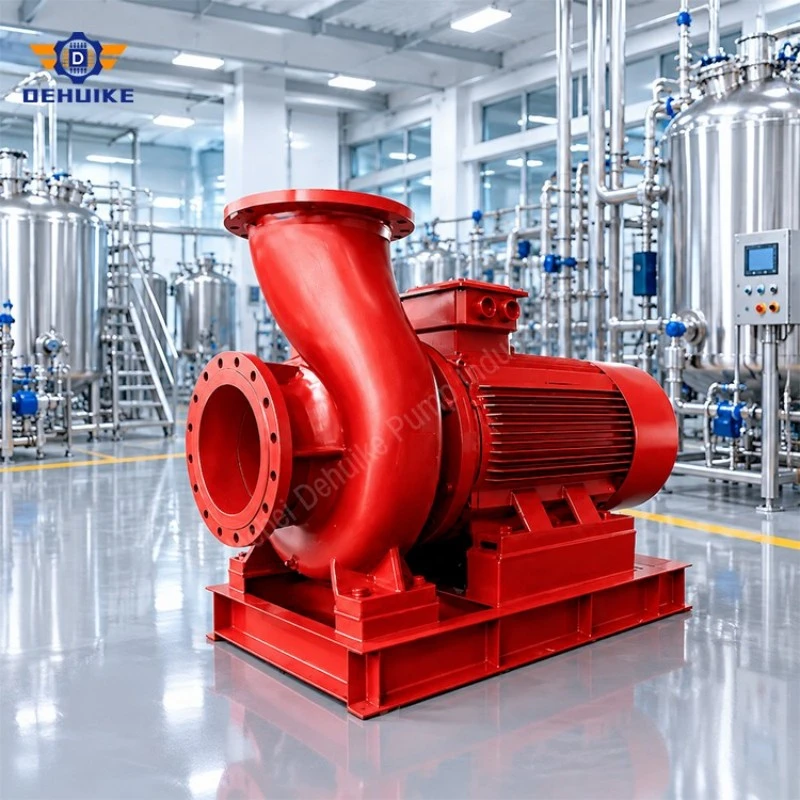
Technical Parameters
Precise sizing of a Diesel Engine Driven Fire Pump Set requires matching fire hazard classifications, total water demand volumes, required nozzle operating pressures, and pipeline elevation losses against certified pump curves. Dehuike Machinery manufactures the XBC series covering flow rates from 10 L/s to 25 L/s (36 m³/h to 90 m³/h) and discharge pressures from 0.20 MPa to 1.62 MPa (equivalent to 20 m to 162 m dynamic water head).
The engineering parameter matrix below details standardized operational performance data for representative XBC series diesel fire pump models, highlighting matched shaft power, engine ratings, and operating velocities:
To assist consulting engineers and MEP designers with pump room civil layout, foundation loading, and crane handling planning, the dimensional and physical envelope summary below details standardized skid footprints and operational masses:
Engineering Power Derating Protocol: Fire protection equipment must perform under adverse atmospheric conditions. Diesel engine mechanical output derates at approximately 1% per 100 meters elevation above 300 meters sea level, and approximately 1% per 5.5°C ambient temperature rise above 25°C. To ensure that the diesel engine never lugs down or stalls under maximum hydraulic draw, Dehuike matches engine continuous power with a minimum 15% to 20% safety margin above peak pump shaft horsepower across the entire curve. Operating the hydraulic unit near its Rated Optimal Efficiency Point (BEP) ensures maximum pressure stability while minimizing casing recirculation turbulence.
Heavy Skid Assembly
Manufacturing a dependable Diesel Engine Driven Fire Pump Set requires combining precision foundry casting, heavy structural steel fabrication, micron-tolerance CNC machining, and rigorous dynamic alignment. At Dehuike, every emergency fire set progresses through a controlled, ISO-audited production flow:
Hydraulic Casting Foundry Metallurgy: Pump volutes, discharge heads, and suction covers are cast in our dedicated foundry using high-grade ductile iron (QT450-10) or high-tensile cast steel. Melt chemistry is verified prior to pouring using laboratory optical emission spectrometry (OES) to guarantee dense grain structure, high tensile strength, and total absence of shrinkage porosity capable of weeping under high pressure.
Heavy Channel Steel Baseframe Fabrication & Stress Relief: The common skid base is welded from heavy structural I-beam and channel steel sections, reinforced by internal cross-gussets to withstand engine vibration and pipe reaction loads. Following welding, bases undergo thermal stress relief and precision surface planing on our 6-meter gantry milling machine to create coplanar mounting pads for both the pump and engine.
Precision Multi-Axis CNC Machining: Pump volutes, stuffing boxes, and bronze/stainless steel impellers are machined on multi-axis CNC horizontal boring mills and vertical turning centers. Impeller hydraulic flow passages are polished to mirror smoothness, eliminating surface friction and guaranteeing repeatable head-flow performance curves.
Dual-Laser Torsional Drive Alignment: During assembly, the diesel engine flywheel and pump input shaft are aligned using precision dual-laser geometric instruments. Technicians adjust stainless steel leveling shims beneath the engine feet until radial and angular misalignment are verified strictly within 0.05 mm, preventing premature bearing fatigue, coupling failure, and operational vibration.
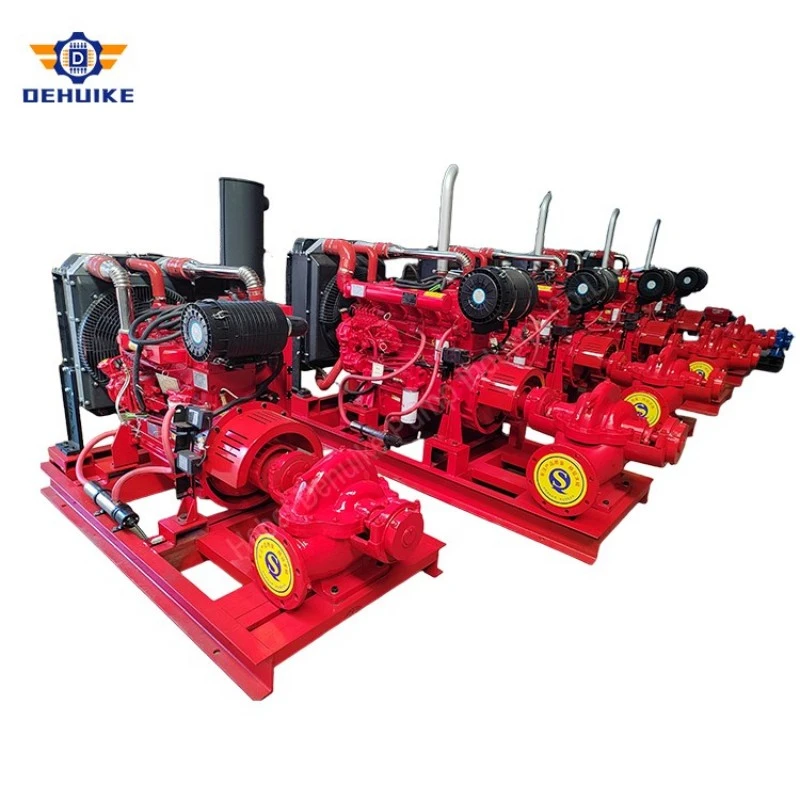
Global Deployment Footprint
With over 30 years of continuous specialized engineering experience in industrial fluid machinery and emergency pumping equipment, Hebei Dehuike Pump Industry Co., Ltd. has established a formidable global footprint. Our heavy Diesel Engine Driven Fire Pump Set packages protect critical infrastructure and industrial assets across more than 50 countries:
Southeast Asian Power & Logistics Infrastructure (Philippines, Indonesia, Malaysia): Deployed across coal-fired power stations, island container ports, and palm oil processing refineries to provide autonomous fire sprinkler and hydrant pressure where local electrical grids experience frequent seasonal brownouts and grid instability.
Middle East Petrochemical & Bulk Fuel Terminals (Saudi Arabia, UAE, Oman): Installed in coastal fuel tank farms, refinery off-site utilities, and industrial pipeline manifolds, operating reliably in ambient desert temperatures reaching 50°C and corrosive marine atmospheres.
South American Mining Processing Facilities (Chile, Peru): Stationed at high-altitude copper concentrators, gold leach pads, and remote pit equipment maintenance workshops where independent diesel drive is mandatory for facility safety compliance.
African Mineral Extraction & Commercial Hubs (Zambia, Ghana, Nigeria): Providing dedicated standby emergency fire water pumping for open-cast mine facilities, industrial manufacturing zones, and large commercial warehousing complexes.
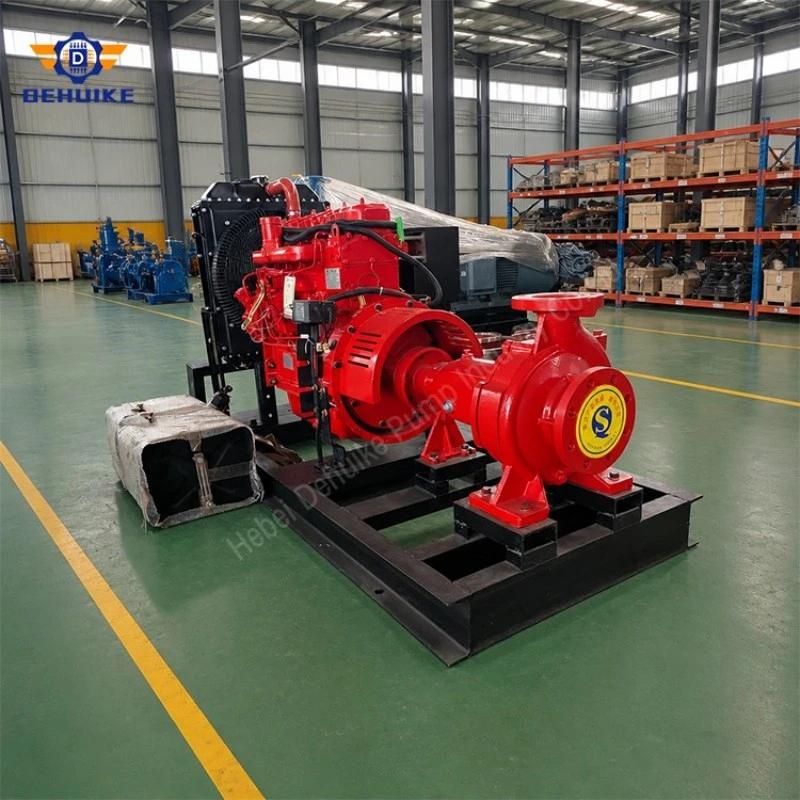
Testing Protocols
Because emergency fire fighting equipment must start instantly after months of static standby, Dehuike enforces strict quality verification protocols under accredited ISO 9001 governance, supported by international EAC and RoHS certifications:
100% Cold-Start Actuation & Acceleration Verification: Every completed diesel fire set undergoes unassisted cold-start testing on our shop floor. The automatic control console receives a simulated pressure drop signal; the system must execute automatic cranking, start firing, and accelerate to full rated operational RPM within 15 seconds.
Closed-Loop Full-Speed Hydraulic Bench Validation: The pump assembly is connected to our computerized closed-loop hydraulic testing station. Calibrated electromagnetic flowmeters, high-frequency pressure transducers, and digital speed sensors record flow, pressure, shaft power, and efficiency across multiple throttle points, verifying full compliance with ISO 9906 Grade 2B standards.
Hydrostatic Casing Proof Containment Test: Every pump volute and discharge head is subjected to a hydrostatic pressure containment test at 150% of the maximum rated working pressure (minimum 2.4 MPa) for a continuous 30-minute hold window, confirming zero casting deflection, weeping, or gasket bypass.
Extended Full-Load Thermal & Vibration Run-In: The diesel set operates under full continuous load for four hours. Technicians monitor bearing temperatures via infrared thermography, verify lube oil pressure stability, and record three-axis vibration velocity against ISO 10816-3 criteria (maintaining overall RMS vibration strictly under 2.8 mm/s).
Turnkey Engineering Lifecycle
Hebei Dehuike Pump Industry Co., Ltd. delivers comprehensive pre-purchase engineering support, custom skid packaging, and dependable international logistics to ensure seamless procurement for EPC contractors, fire protection installers, and project engineers:
Pre-Purchase Hydraulic Sizing & Pump Room CAD Layouts: Our specialized fire applications engineering team reviews project specifications, hydraulic friction calculations, and site elevations. We provide tailored equipment matching, pump room 3D CAD models, exhaust ducting recommendations, and detailed commercial bids within 2 hours of inquiry receipt.
Turnkey Custom Packaging & Enclosure Engineering: Beyond standard open skids, we engineer custom weather-protective canopies, sound-attenuated acoustic enclosures (reducing noise levels below 75 dB(A) at 7 meters), and containerized mobile fire pump stations complete with internal lighting, heaters, and fire detection.
Standardized International Multimodal Logistics: We manage international shipments strictly via maritime container shipping (>500 kg heavy skid assemblies) and dedicated air transport (50–500 kg for urgent maintenance spares). Commercial contracts are quoted under transparent international trade terms, offering FOB and CIF destination port agreements without hidden port handling fees. All units are secured inside heavy-duty, seaworthy non-fumigation plywood crates with internal vapor-corrosion-inhibitor wrapping.
Two-Year Comprehensive Mechanical Warranty: Every complete Diesel Engine Driven Fire Pump Set manufactured by our works carries an official 24-month (two-year) comprehensive factory warranty covering the pump, engine, control panel, and structural base against defects in materials and craftsmanship.
Frequently Asked Questions (FAQ)
The following engineering evaluations address the most common technical questions submitted by fire protection consultants, facility managers, and mechanical contractors regarding the selection, installation, and maintenance of the Diesel Engine Driven Fire Pump Set:
1. Why must the diesel engine rated power exceed the pump's nominal shaft power by a designated safety margin?
Fire protection centrifugal pumps exhibit non-overloading power curves that demand progressively higher shaft power as flow increases beyond the rated duty point. Under catastrophic fire scenarios where multiple hydrants open or sprinkler pipework fractures, the pump operates far out on its curve (up to 150% of rated flow). If the diesel engine is sized only to match the rated design flow point, the surge in mechanical power demand will cause the engine to lug down, drop speed, lose pressure, or stall entirely. To guarantee hydraulic stability under runaway flow conditions, engineering standards dictate that the engine continuous power rating must exceed the pump's maximum potential brake horsepower across the entire curve by at least 10% to 15%, after accounting for site altitude and temperature derating.
2. How does the dual-battery automatic starting system ensure start reliability in emergency events?
In emergency fire water supply, starting reliability is the single most critical performance metric. A single weak lead-acid cell or loose cable terminal could prevent an engine from cranking. Our diesel sets incorporate two completely isolated battery banks connected to an automated cranking controller. Upon receiving a start command, the controller initiates a structured cranking sequence: Cranking Attempt 1 on Battery Bank 1 for 15 seconds; if the engine does not catch, the system pauses for 10 seconds and automatically shifts to Battery Bank 2 for Cranking Attempt 2. This alternating cycle repeats through six full attempts before triggering a failure-to-start alarm, ensuring virtually 100% starting certainty.
3. What ventilation and exhaust gas piping criteria must be satisfied in an enclosed fire pump room?
Diesel engines consume immense volumes of fresh air for cylinder combustion and generate substantial radiant heat from the engine block and exhaust manifold. An enclosed pump room requires motorized intake air louvers sized to supply combustion air plus radiator cooling air, paired with an exhaust discharge duct facing downwind. The exhaust piping must be fitted with an industrial silencer, insulated with thermal blankets to keep room temperatures below 40°C, and sloped away from the engine with a condensation drain trap to prevent rainwater from draining into the turbocharger turbine.
4.What is the functional distinction between radiator cooling and heat exchanger cooling for stationary fire pump engines?
A radiator-cooled engine utilizes an engine-driven fan to push room air through an automotive-style finned core; this requires large exterior wall louvers and robust air handling to exhaust hot air outdoors. In contrast, a heat exchanger cooling system circulates closed-loop engine coolant through a shell-and-tube heat exchanger cooled by a regulated slipstream from the main fire pump discharge. Heat exchanger cooling eliminates massive room ventilation ducts, making it ideal for compact indoor basements or underground pump rooms, provided the fire water source is free from heavy fouling.
5. What routine weekly and monthly preventative maintenance routines are essential to guarantee emergency readiness?
Preventative maintenance must be structured and documented. Weekly routines include checking engine lube oil level, coolant level, fuel tank volume, battery electrolyte specific gravity, and float charger voltage. Crucially, the diesel set should undergo an automatic weekly test run: starting the engine via the control panel timer and running it under no-load or churn pressure for 30 minutes to circulate lubricating oil, charge batteries, and evaporate moisture from the crankcase. Monthly maintenance includes inspecting flexible hoses, cleaning raw water strainers on heat-exchanger

Hot Tags: diesel engine driven fire pump set, China diesel engine driven fire pump set manufacturers, suppliers, factory