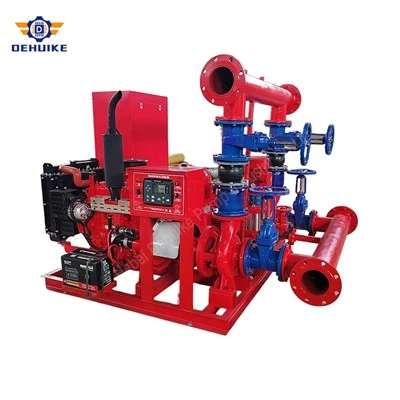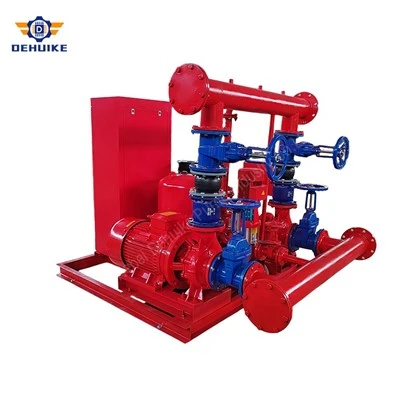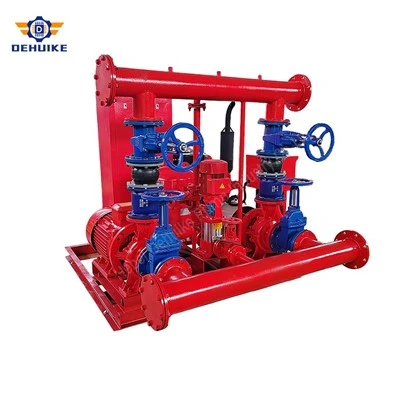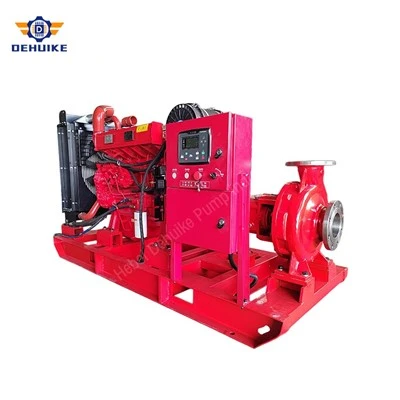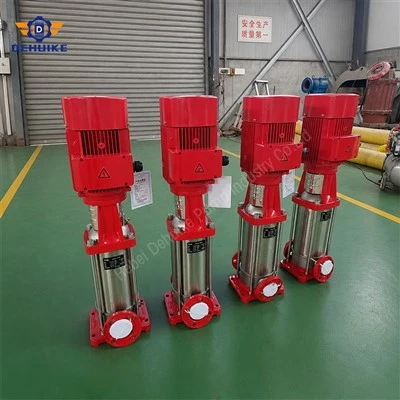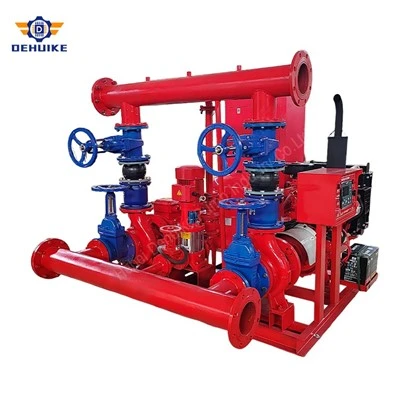

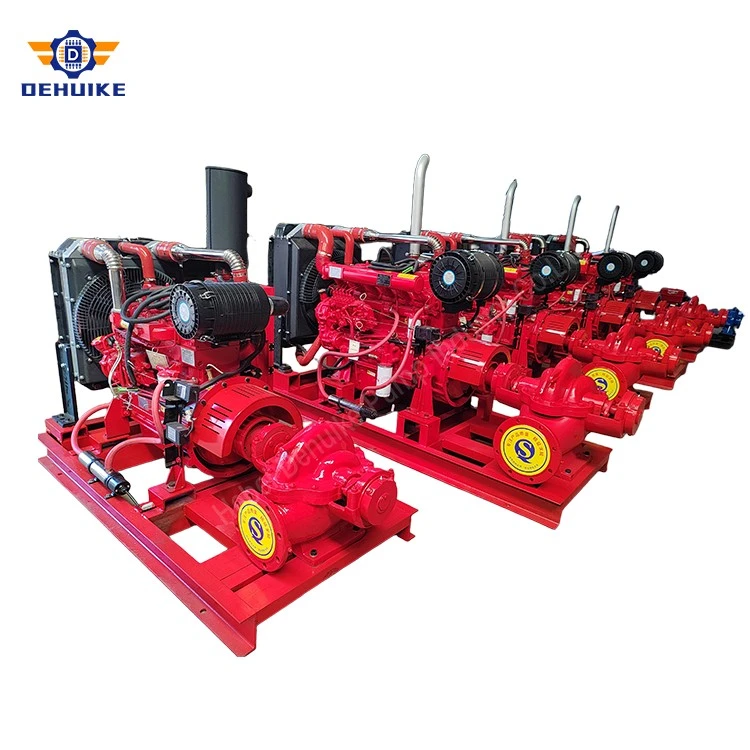
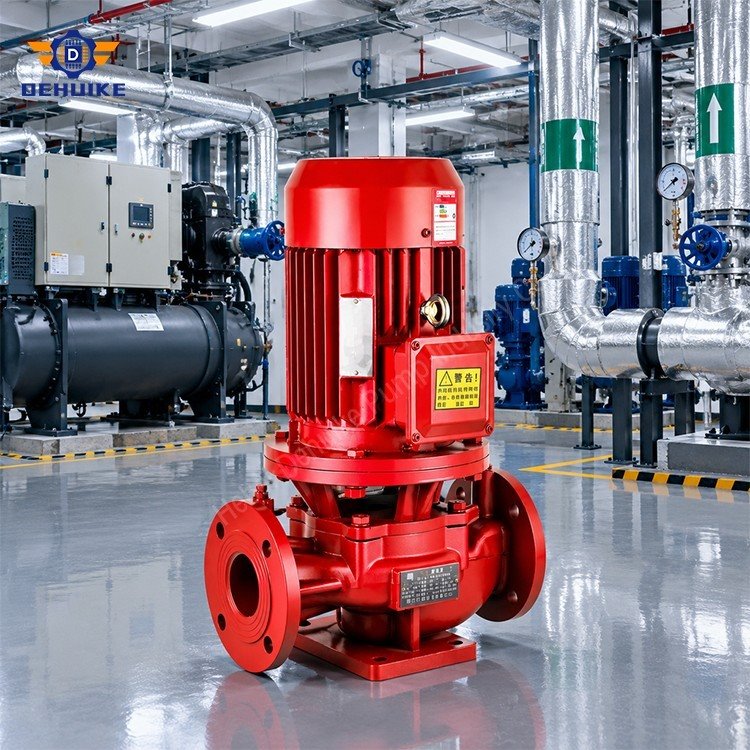
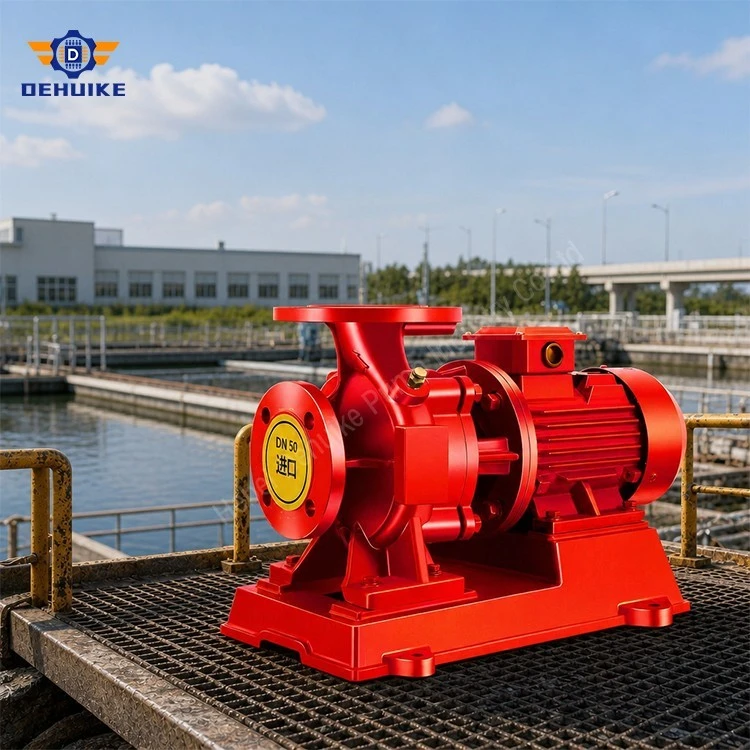
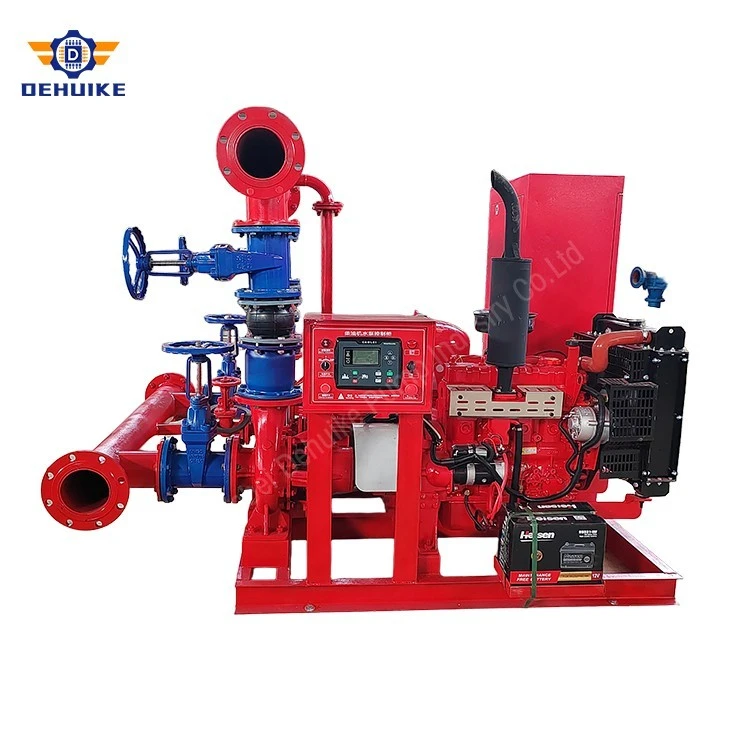
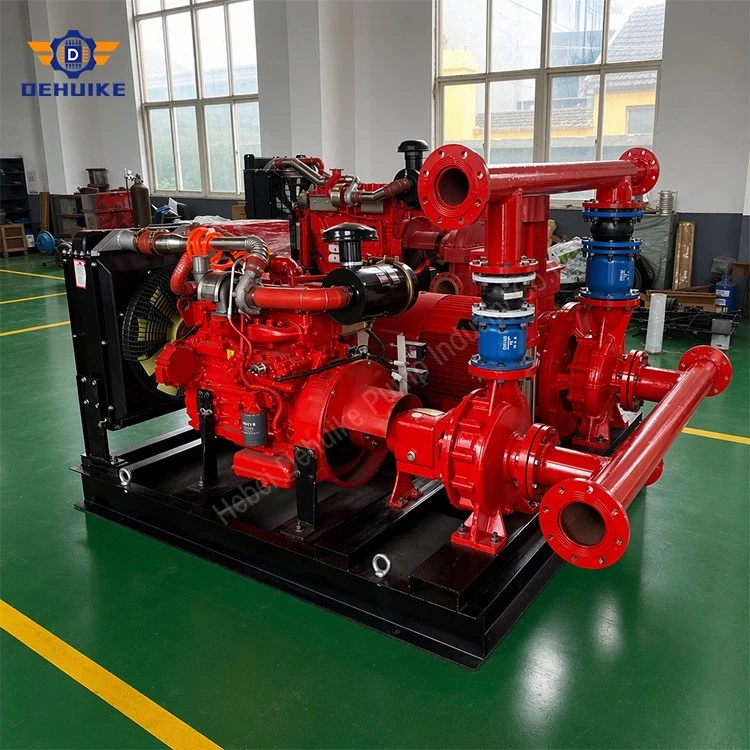
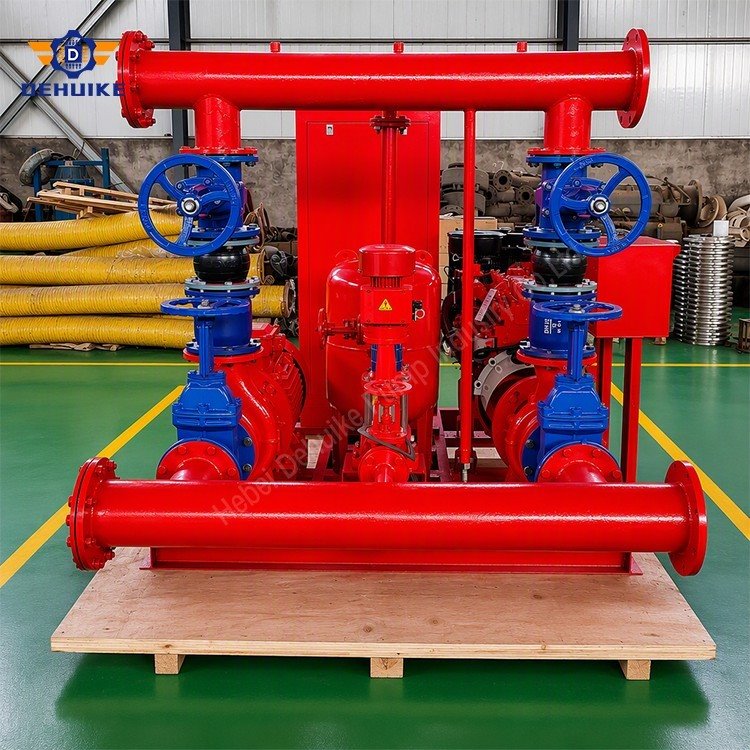
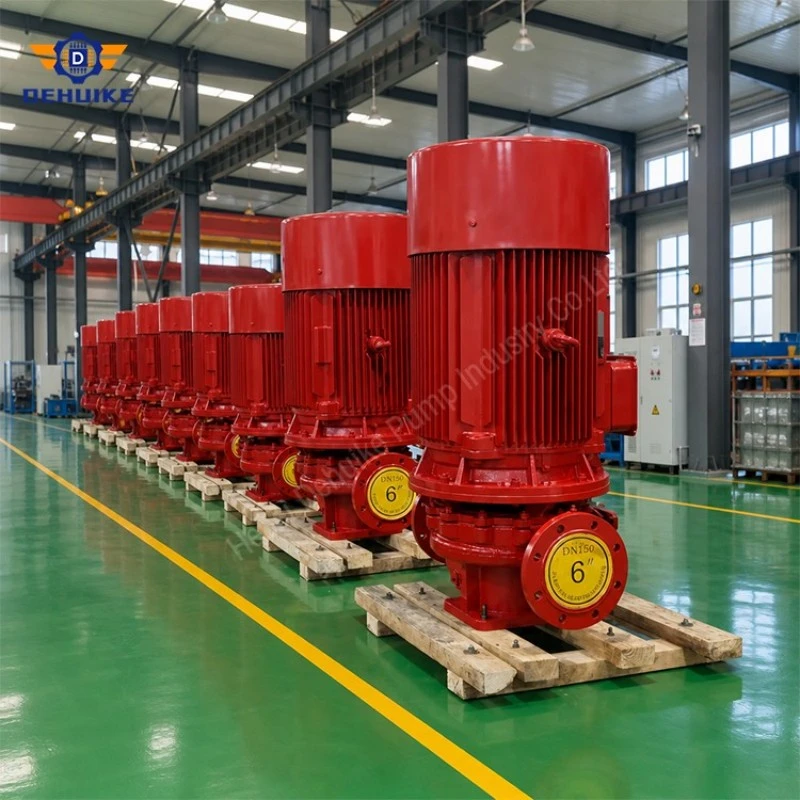
Hebei Dehuike Pump Industry Co., Ltd. is one of the most reliable manufacturers and suppliers of vertical turbine fire pump set in China. With abundant experience, we are committed to providing high quality customized pumps with competitive price. Welcome to wholesale bulk vertical turbine fire pump set for sale here from our factory. Also, pricelist is available.
How Many Fire Pumps Does the Station Actually Need
The first question in a fire pump room is not which pump. It is how many, and in what arrangement. A station with one machine and no standby, a station with two machines of which one is a spare, a station with three machines split across zones, and a station with two machines running together are four different designs, four different hydraulic results and four very different bills.
Most of the arguments that stall a fire pump package are actually arguments about that arrangement, disguised as arguments about model numbers. A buyer asks for a 60 L/s set, the engineer offers a 60 L/s set, and nobody has said whether the 60 L/s is a single unit or the sum of two, or whether either can carry the whole building alone.
Start from one demand figure, not from a pump
A protected building usually has more than one fire system: hydrants on the lower floors and stair cores, sprinklers through the occupied areas, sometimes a deluge system on a specific hazard. Each has its own design density and its own calculation, and each produces its own flow and pressure.
The pump station is normally sized on the largest of those demands, not on their sum, unless the code or the fire strategy requires simultaneity. That single decision changes the size of everything downstream: a building where the hydrant demand governs at 40 L/s and the sprinkler demand at 55 L/s needs a set built around 55 L/s, with the hydrant network served from the same set through a common header. A building where both must operate at once needs 95 L/s, which is a different station entirely.
This is the point at which a pump supplier should stop and ask, because the code requirement is the client's to state and not the supplier's to guess. A supplier who quotes a set without knowing whether the demands are simultaneous has quoted a hydraulic number with no system behind it.
Duty and standby: what the second pump is for
Once the demand figure exists, the next question is availability. Three arrangements cover nearly every project.
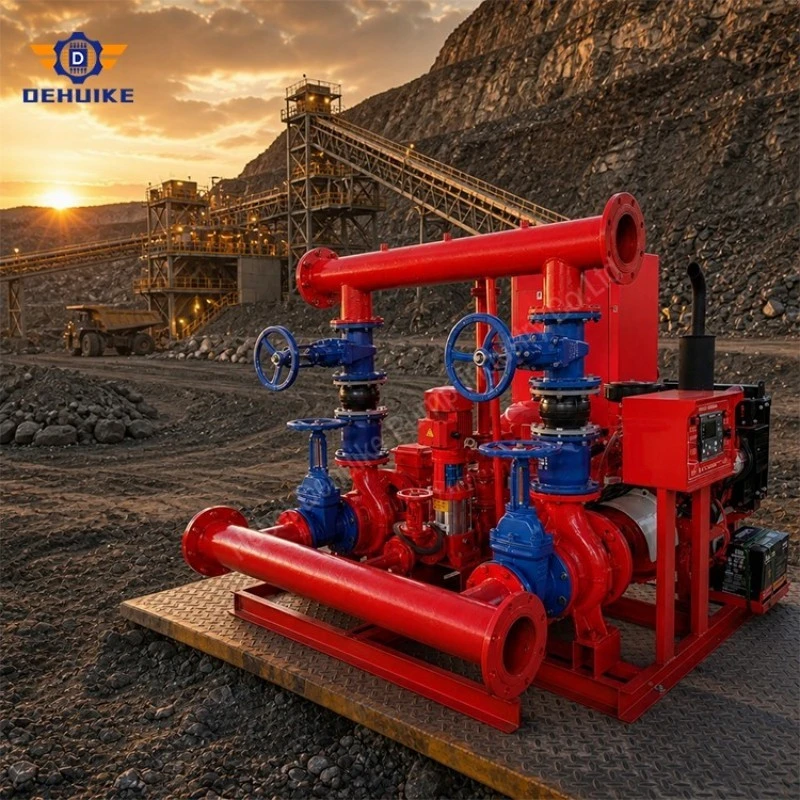
Full-duty standby. Two identical sets, each capable of the whole demand alone, with one running and one waiting. Anything that fails - pump, driver, controller, supply - is answered by the other unit. This is the arrangement most codes and most insurers expect in buildings where the fire load or the occupancy justifies it, and it is what buyers usually mean when they say a system is protected.
Duty and assist. Two smaller sets that run together to meet the demand, with no full-capacity spare. Cheaper at the pump, more complicated at the controller, and the station loses a large part of its capacity when either unit is out of service. It is a reasonable arrangement where the design accepts a reduced level of protection during maintenance, and a poor one where it does not.
Single set. One pump, no standby, usually on smaller or lower-risk occupancies. Honest when the risk is genuinely low, dangerous when it is chosen to save money on a building that later changes use.
The commercial consequence is worth stating plainly: a full-duty standby station costs roughly two pumps, two controllers, a shared header with non-return valves, and a room big enough for both, with space to work on either. Buyers who compare a standby station against a single-pump quote and conclude they are being overcharged have usually compared two different levels of protection. That comparison should be made on the fire strategy, before the quotation, and not afterwards on the invoice.
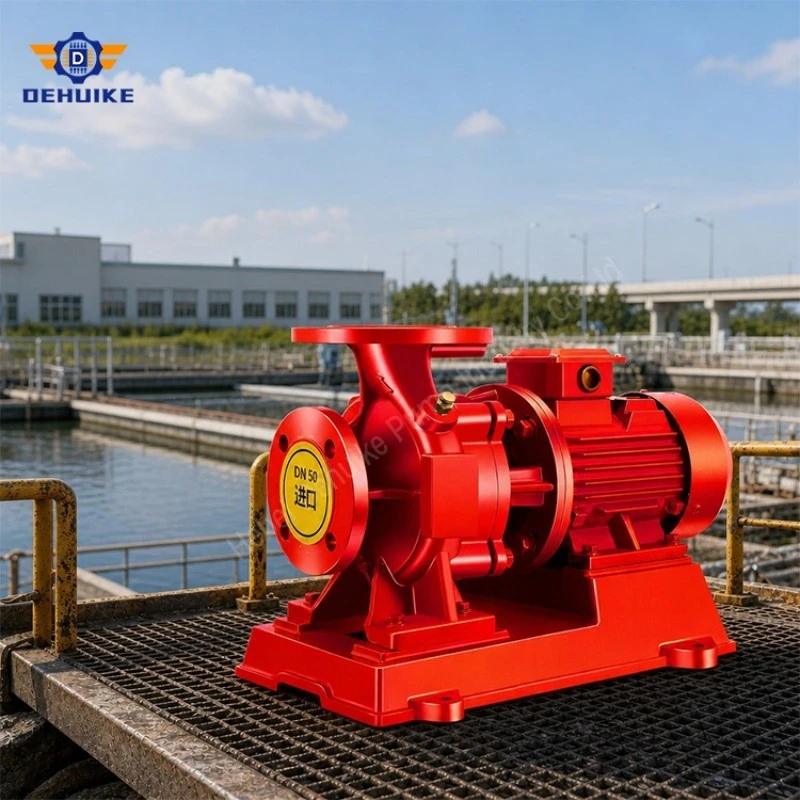
Table 1 Arrangements, and what each buys
|
Arrangement |
Flow at the header |
What it protects against |
What it costs |
|
Single set |
One unit output |
Nothing beyond its own reliability |
Lowest first cost, no redundancy |
|
Two sets in parallel, duty plus standby |
One unit output; two units if both run |
Failure of any one unit |
Two pumps, two controllers, larger room |
|
Two sets in series |
One unit flow, sum of heads |
Head the single unit cannot reach |
Higher casing pressures, relief review |
|
Main pump plus jockey |
Main output only |
Small standby pressure loss |
Small pump, small controller, less wear on the main unit |
Series and parallel, and the arithmetic that decides between them
Two identical centrifugal pumps run in parallel do not double the head, and two in series do not double the flow. The reason is the shape of the curve rather than the arrangement.
In parallel, both machines see the same discharge pressure, so their flows add at that pressure. The combined curve is the single curve with the flow doubled at every head, and the operating point slides along the system curve to a higher flow and a lower head than either pump would reach alone. In practice, two identical units give you roughly 1.8 times the flow of one and a modestly lower head - not 2.0 times, because the system resistance grows as flow rises.
Parallel operation has its own detail that gets skipped. Each unit needs its own non-return valve so that a running pump cannot push water backwards through a stopped one, and each needs its own flow-measuring or pressure indication, otherwise nobody can tell which machine is carrying the station during a test. Two pumps feeding one header with a single gauge is a station that cannot be diagnosed, only repaired.
In series, the second pump receives the discharge of the first, so the heads add at the same flow. That doubles the pressure at the second casing, which is why series arrangements are treated carefully in fire service: the downstream pump, its seal, its casing and the relief setting all have to be rated for the sum, and the suction side of the second machine must tolerate the first machine's discharge pressure. For a tall building needing 200 m of head, series is often the only way to stay inside a familiar pump family; it is also the arrangement most likely to produce a component that was selected on the wrong pressure rating.
Tall buildings: zones, not one very strong pump
A 40-storey building needs a great deal of pressure at the top, and a single set providing it would put that pressure on every fitting and hose connection at the bottom. That is not a pump problem, it is a pressure problem, and the answer is zoning.
Each zone gets its own set, or is fed from a transfer arrangement, so that the pressure at the lowest outlet in the zone stays within what the fittings and the fire-fighting equipment can take. The upper zones need more head; the lower zones need less. A station designed on one pressure figure for the whole height either over-pressurises the base or under-supplies the top, and the correction is usually a pressure-reducing arrangement that adds another failure point.
Zoning also changes the pump count, which is why the question at the head of this article matters so much in tall buildings. A tower with four zones and full-duty standby in each zone has eight pumps before anyone has discussed jockey units. That number should be reached by design, deliberately, and the pump room should be laid out for it.
Where the diesel goes
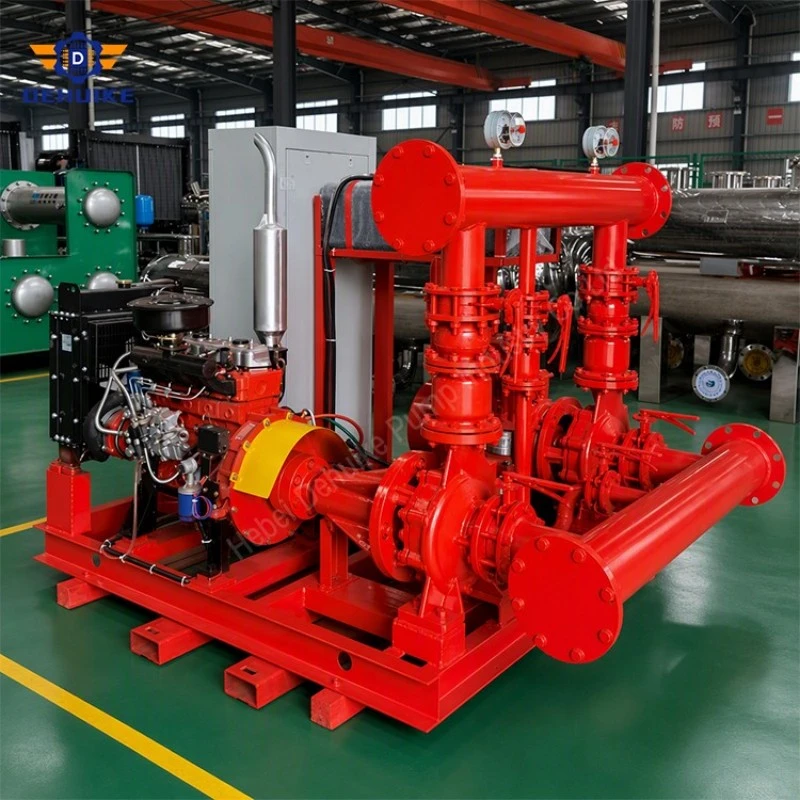
Diesel sets belong in the architecture as the standby unit, not as a separate project. The usual arrangement pairs an electric main pump with a diesel standby of the same duty, so that a failure of the electrical supply, the controller or the electric motor itself still leaves a full-capacity path to water.
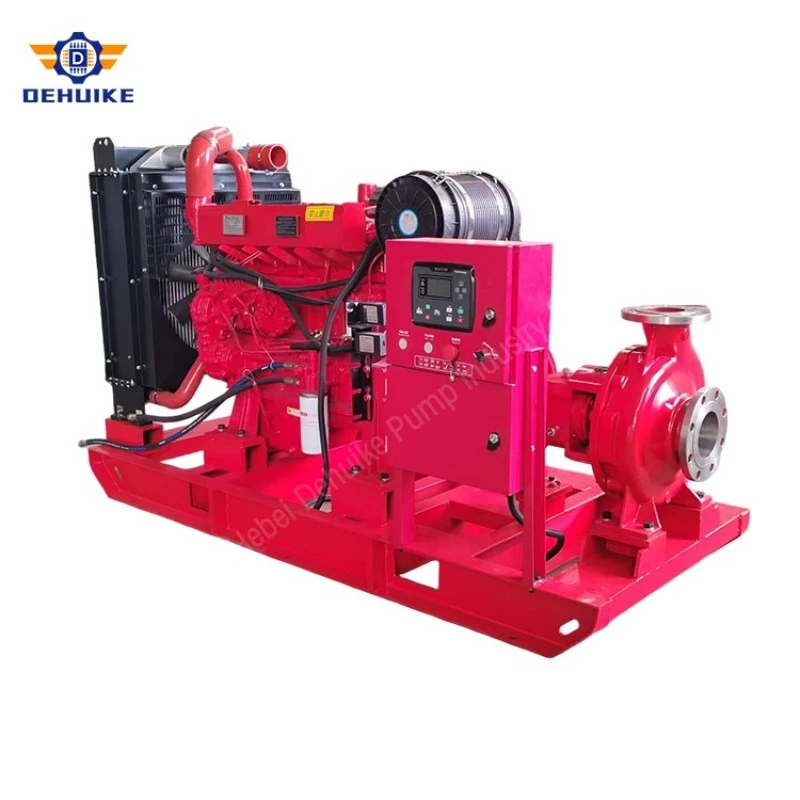
Two details decide whether that works in practice. The diesel unit must be sized for the whole demand on its own, not for a fraction of it; a 10 L/s diesel behind an 80 L/s electric pump is a gesture rather than a standby. And both units must share a common discharge header with non-return valves arranged so that either can run alone without circulating through the other. Available diesel data in this range runs from 10 to 25 L/s per unit with pressures from 0.20 to 1.62 MPa, which is a reminder that diesel standby often means a station built around several smaller units rather than one large one.
FAQ: Vertical Turbine Fire Pump Set
1. Is a standby pump required by code in every building?
No, and the requirement varies by occupancy, height and jurisdiction. The answer comes from the fire strategy and the authority that approves it. What a supplier can do is make the cost of standby visible in the proposal so the decision is made knowingly.
2. Can two different pumps run in parallel?
They can, but the result is not simply the sum of their curves. Two different machines share the flow according to their individual curves, and one may run far from its efficient point or approach shut-off while the other carries the load. Identical units are the practical arrangement where parallel operation is required.
3. Can one pump serve hydrants and sprinklers together?
Where the code permits a combined demand and the larger figure governs the selection, yes, through a common header with the appropriate valves. Where simultaneity is required, the flows add and the set is sized accordingly. Confirm which applies before the pump is chosen.
4. Does a bigger single pump beat two smaller ones?
For first cost, usually. For availability, almost never: a single machine has no answer to its own failure, and maintenance means the building is unprotected for the duration. The comparison belongs in the fire strategy, not in the purchase order.
Dehuike Pump Industry supplies fire pump sets built around the XBD-W end suction range from 5 to 80 L/s and 0.18 to 2.61 MPa, alongside the vertical single-stage and vertical multistage families for layouts where a horizontal set does not fit. Production runs under ISO quality management system certification, with more than forty years of pump manufacturing, over thirty product series and customers in more than ninety countries. Send the duty and the room, and the proposal will include the spares list that fits the model.

Hot Tags: vertical turbine fire pump set, China vertical turbine fire pump set manufacturers, suppliers, factory