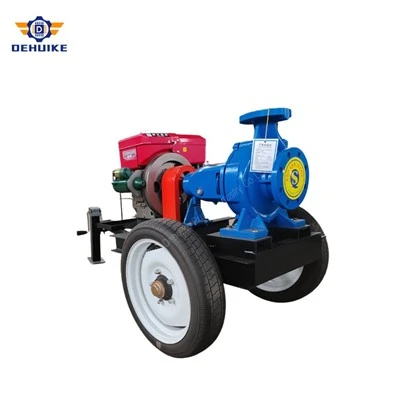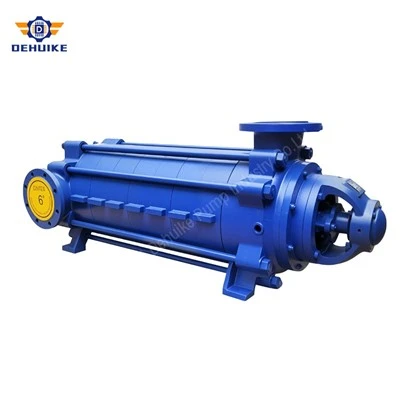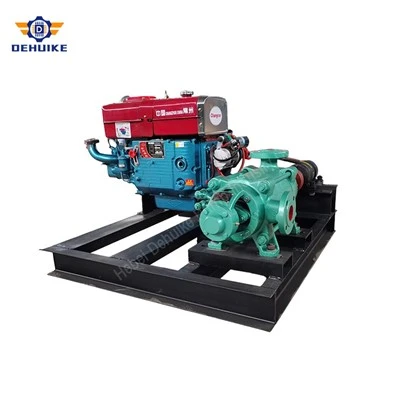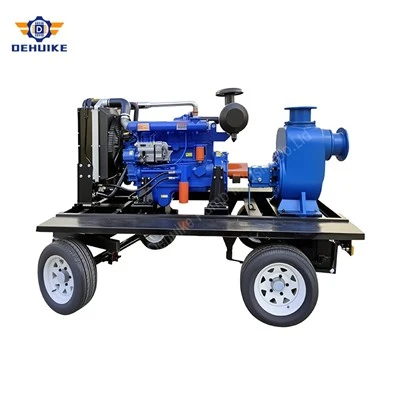
Hebei Dehuike Pump Industry Co., Ltd. is one of the most reliable manufacturers and suppliers of end suction inline pump in China. With abundant experience, we are committed to providing high quality customized pumps with competitive price. Welcome to wholesale bulk end suction inline pump for sale here from our factory. Also, pricelist is available.
Introduction - The Geometry That Defined an Industry
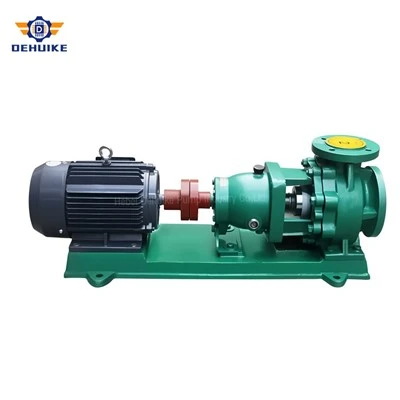
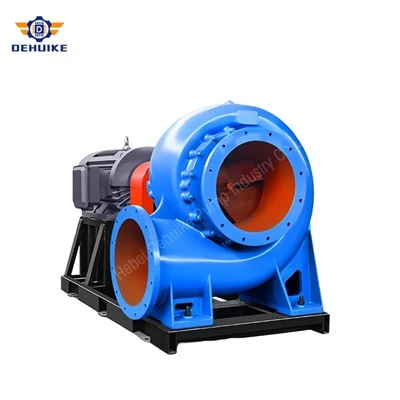
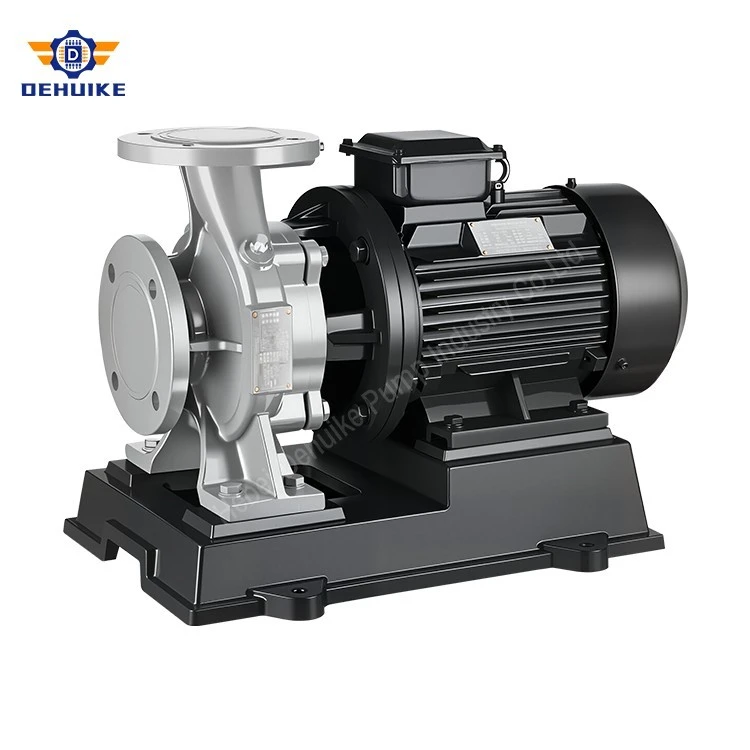
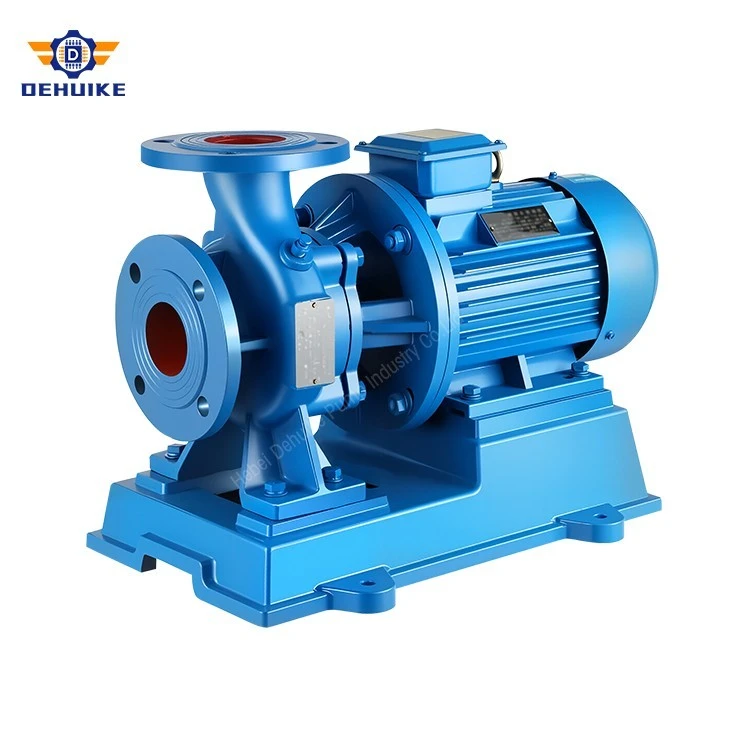
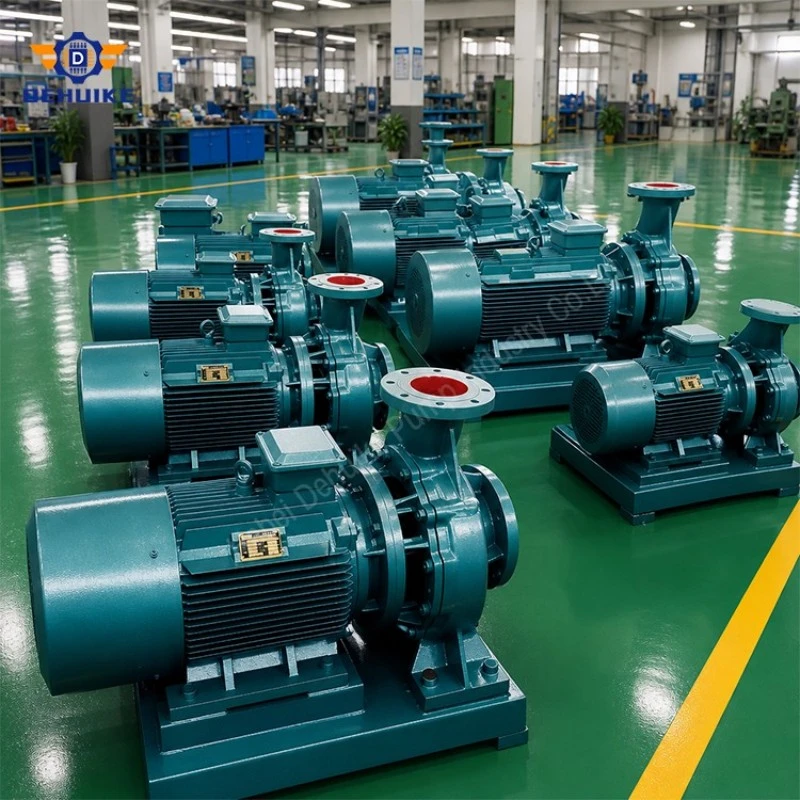
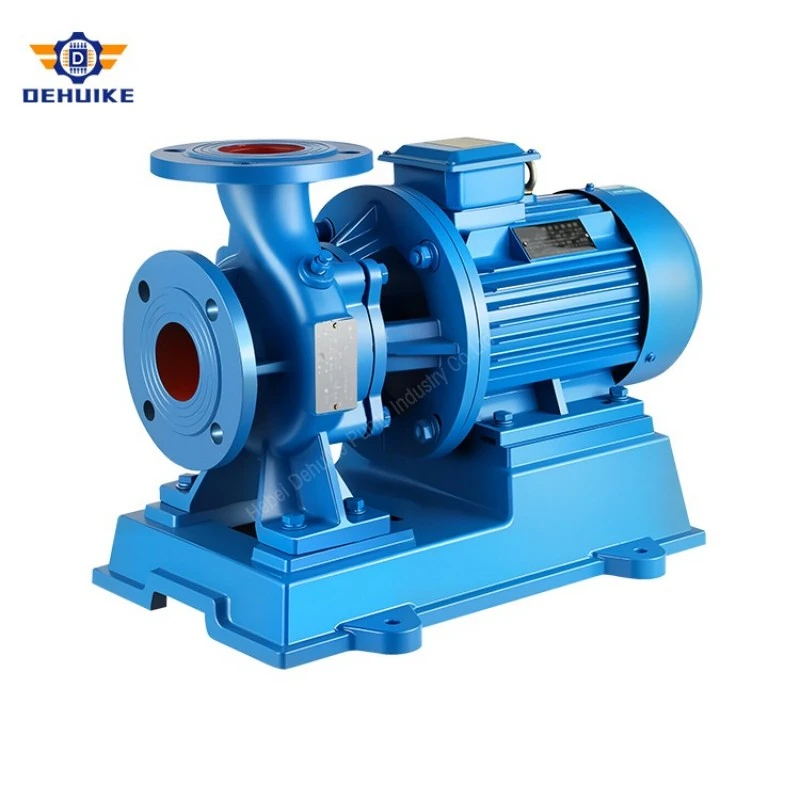
Defining Geometry: An end suction inline pump is a single-stage, single-suction centrifugal machine in which fluid enters the impeller eye axially through a horizontal suction nozzle on one side of the casing, and exits the volute vertically upward through a discharge nozzle oriented ninety degrees to the suction axis. This axial-in, radial-out geometry - known throughout the industry as end-suction configuration - is the foundational pump architecture of modern water engineering: the geometry from which the international dimensional standards ISO 2858 and DIN EN 733 were derived, and the geometry that more industrial water systems have relied on over the past half-century than any other pump type.
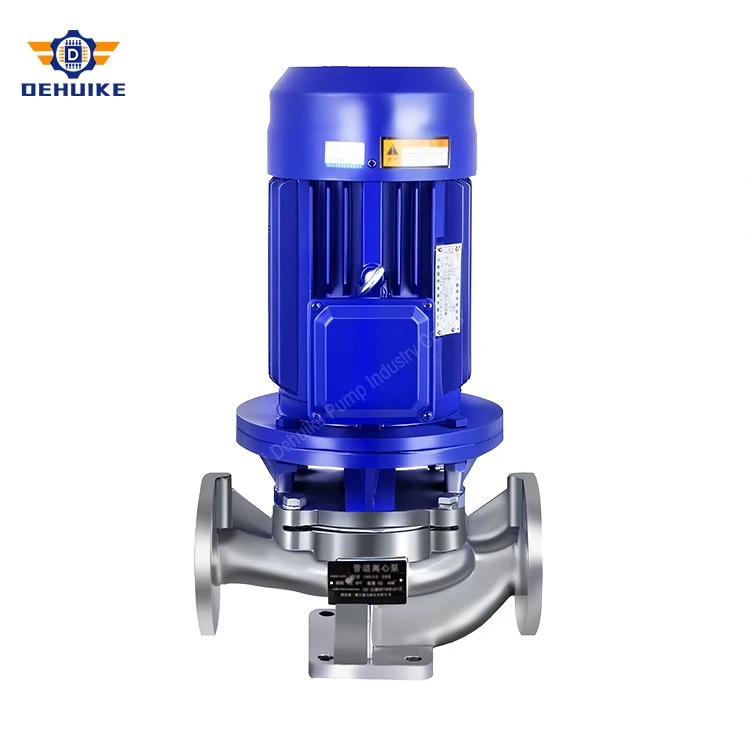
The relationship between 'end suction' and 'inline' in this product's name is a deliberate engineering positioning. Traditional end-suction pumps - the familiar baseplate-mounted, coupling-driven, horizontally-split machines - have served industry for generations. The end suction inline pump adapts that proven axial-suction hydraulic geometry into the close-coupled, pipeline-integrated format of the inline pump family: the motor is flange-mounted directly to the pump bracket without a flexible coupling, and the suction and discharge nozzles are positioned for direct pipeline connection. The result is a machine that carries the hydraulic authority of the end-suction tradition in a footprint and serviceability profile closer to the inline pump family - occupying the space between a full baseplate pump and a compact close-coupled pipeline pump.
The DHK Pump end suction inline pump program covers the full general-duty water service range: rated flows from 4.4 m3/h for small transfer and circulation tasks up to 192 m3/h for substantial industrial distribution. Single-stage heads reach from 12.5 meters on low-lift transfer duties to 87 meters on moderate-pressure circulation, with motor ratings spanning 0.75 kW to 55 kW at 2900 r/min or 1450 r/min. Standard cast iron casings contain working pressure to 1.6 MPa, and the standard fluid window runs from -10C to +80C in clean water service - with stainless steel wet-end executions available for chemically aggressive or purity-critical duties.
Hydraulic Geometry - Axial Suction & Radial Discharge Flow Path
The Axial-to-Radial Turn: The end suction inline pump's hydraulic personality flows directly from its flow-path geometry: fluid enters the impeller in the same axial direction as the shaft, accelerates radially outward through the impeller blade passages, and exits the volute at a ninety-degree angle to the incoming flow. This axial-to-radial turn is the defining hydraulic event of the architecture, and its engineering determines both the pump's strengths and its limitations relative to coaxial in-line alternatives.
Suction Approach Hydrodynamics
In the end suction configuration, the suction nozzle delivers water directly into the impeller eye along the shaft axis. This direct axial approach is hydraulically cleaner than the ninety-degree entry required by inline pump volutes, where fluid must turn from the horizontal pipe into the vertical impeller eye. The axial approach produces a more uniform velocity profile at the impeller inlet, reduces pre-rotation, and generally delivers a slightly lower NPSHr for a given impeller diameter - which is why end suction pumps are traditionally favored in applications with marginal suction conditions.
Single-Volute Asymmetry and Radial Thrust
The discharge side of the end suction pump features a single-volute casing - a spiral channel of increasing cross-section that collects the impeller's radial outflow and converts velocity head to pressure head. Unlike the symmetric double-volute or annular diffuser designs used on larger or higher-pressure pumps, the single volute is hydraulically asymmetric: the pressure distribution around the impeller periphery is not uniform except at the best efficiency point (BEP). At flows above or below BEP, this asymmetry generates a radial thrust load on the impeller and shaft - a force vector that pushes the rotating assembly sideways within the casing. The end suction inline pump is engineered with a shaft diameter and bearing arrangement sized to carry this radial thrust without excessive deflection, but the phenomenon is inherent to the architecture and is the reason that extended operation far from BEP is discouraged on single-volute end-suction pumps of any manufacture.
Discharge Nozzle Geometry and Piping Integration
The vertical-upward discharge nozzle of the end suction inline pump is both its most recognizable visual feature and its most practical piping constraint. The vertical discharge simplifies air venting (air naturally rises to the highest point, which is the discharge pipe), but it requires a ninety-degree elbow at the pump exit to return to horizontal piping - unless the system design intentionally uses vertical riser piping. For installations where the distribution main runs horizontally at pump-centerline elevation, the discharge elbow is a standard accessory. This geometric requirement is the primary reason why the close-coupled inline pump family - with its coaxial horizontal discharge - was developed as a space-saving alternative; the end suction inline pump accepts the discharge elbow as the cost of its cleaner suction hydraulics.
Back-Pull-Out Serviceability Architecture
The Back-Pull-Out Principle: The defining maintenance advantage of the end suction inline pump is its back-pull-out rotating assembly - a design feature that allows the entire power end (motor, coupling or motor bracket, shaft, seal, and impeller) to be withdrawn from the rear of the casing without disconnecting the pump volute from the system piping. This single design decision is the reason end-suction pumps have dominated industrial water duty for decades: maintenance is fast, piping stays intact, and the volute remains undisturbed.
How Back-Pull-Out Works
The pump volute casing is bolted to the system piping at its suction and discharge flanges and remains permanently fixed. The rotating assembly - consisting of the motor, the motor bracket (or bearing housing on long-coupled versions), the shaft with impeller and mechanical seal - is fastened to the volute casing by a ring of casing-cover bolts. To service the pump, the mechanic removes these casing-cover bolts, withdraws the entire rotating assembly backward along the shaft axis, and gains full access to the impeller, wear rings, shaft sleeve, and mechanical seal. The suction and discharge flanges, the volute, and the foundation are never touched. On close-coupled executions, the motor lifts directly off its spigot register; on long-coupled executions, the coupling spacer is removed first, then the motor is withdrawn, then the bearing bracket and impeller assembly follows. Either way, the piping stays put.
Maintenance Time and Labor Economics
The economic value of back-pull-out serviceability is measured in maintenance hours and system downtime. On a pump where the volute must be disconnected from piping to access the impeller - as is the case with many close-coupled inline pump designs - a routine seal replacement can consume a full day: drain the casing, break suction and discharge flanges, withdraw the volute, replace the seal, re-align the volute to the piping, re-torque the flanges, refill and vent. On a back-pull-out end suction pump, the same seal replacement takes under two hours: loosen casing-cover bolts, withdraw the rotating assembly, swap the cartridge seal, re-insert the assembly, re-torque the cover bolts. For plants with multiple pumps, this time difference compounds across annual maintenance schedules - and for critical single-pump installations where downtime means production loss, the back-pull-out architecture is not merely a convenience, it is a reliability investment.
Spare Parts Interchangeability and Stock Standardization
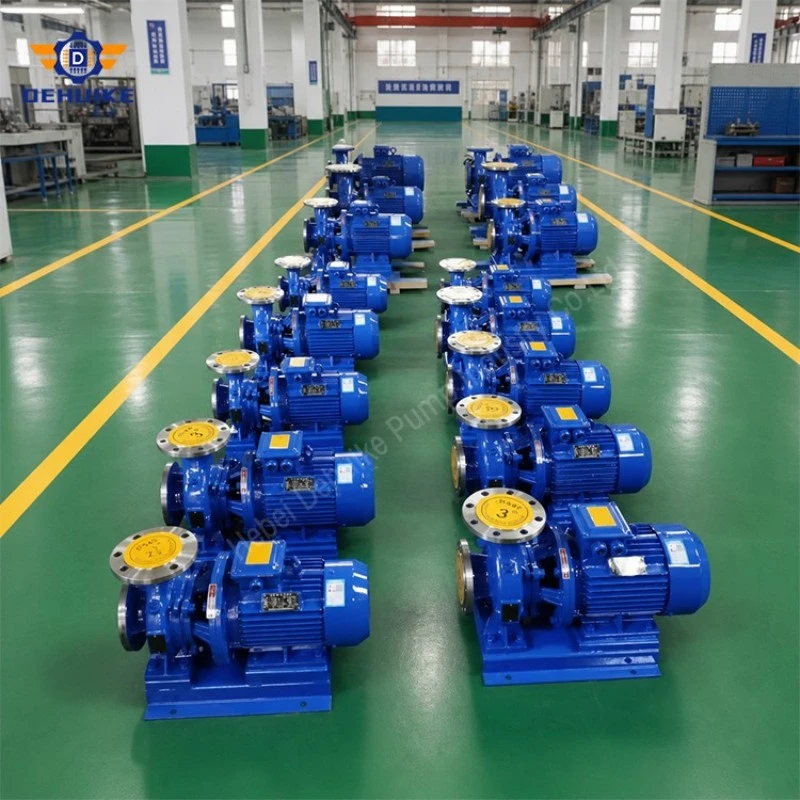
Because the end suction inline pump conforms to ISO 2858 and DIN EN 733 dimensional standards, the casing-cover bolt circle, the shaft extension, the impeller mounting register, and the seal chamber dimensions are standardized across the entire industry. Wear rings, mechanical seals, shaft sleeves, and impellers from one manufacturer fit the casing of another - not as a courtesy, but because the dimensional standards mandate it. This interchangeability is a procurement advantage unique to the end-suction family: a plant that standardizes on ISO 2855 / DIN EN 733 end suction pumps can stock one set of spare seals, one set of wear rings, and one set of bearings across pumps of different sizes and different manufactures, because the seal chamber and bearing interfaces are standardized. The end suction inline pump is the most interchangeable pump architecture in the world.
Specifications & Technical Data
The duty ratings below are drawn from factory hydraulic test records for the end suction inline pump program, verified to ISO 9906:2012 Grade 2B acceptance. The tables below focus on the mid-range and large-bore models most commonly deployed in industrial water transfer, process supply, and distribution service - selecting duty points across the efficiency island of each frame, with A and B trim variants noted where they offer precise duty matching.
Program envelope for specifiers: flows 4.4 to 192 m3/h per unit; single-stage heads 12.5 to 87 m; flange drilling DN40 through DN125 to DIN EN 1092 or ANSI patterns; casing containment certified at 1.6 MPa standard (ductile iron executions available for higher pressures); standard water window -10C to +80C. Every model available with A and B trim impellers for precise duty-point matching, and the entire program conforms to ISO 2858 / DIN EN 733 dimensional interchangeability - meaning replacement parts, seal cartridges, and impellers are cross-compatible with any manufacturer's equivalent frame.
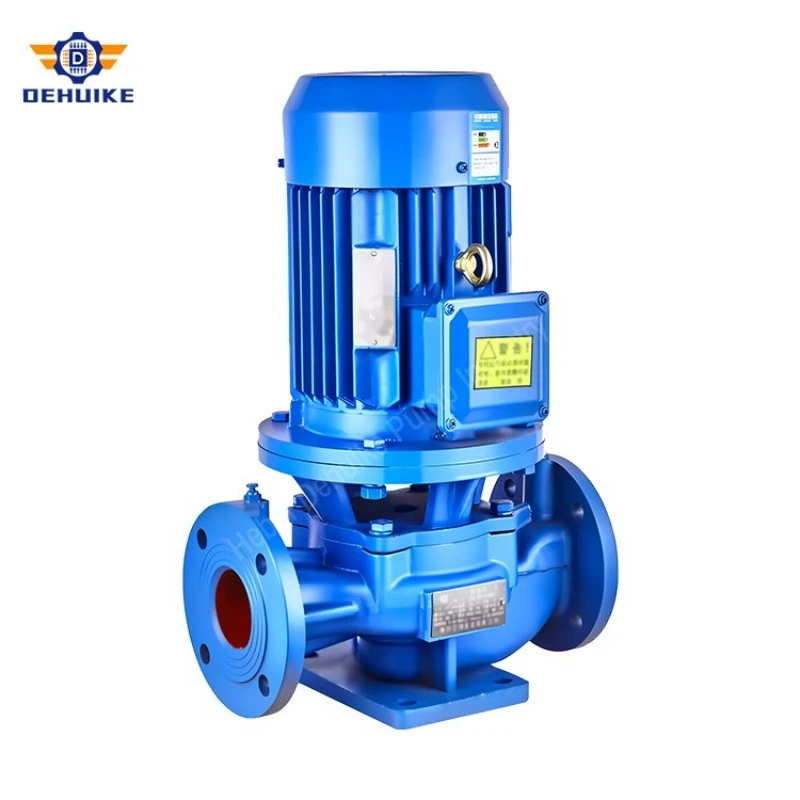
Table 1: Compact & Mid-Range End Suction Duties (DN40 to DN65, 2900 r/min)
|
Model |
Rated Flow (m3/h) |
Head (m) |
Efficiency (%) |
Speed (r/min) |
Motor (kW) |
NPSHr (m) |
|
IS 40-125 |
6.3 |
20.0 |
46 |
2900 |
1.1 |
2.3 |
|
IS 40-160 |
6.3 |
32.0 |
40 |
2900 |
2.2 |
2.3 |
|
IS 40-200 |
6.3 |
50.0 |
33 |
2900 |
4.0 |
2.3 |
|
IS 50-125 |
12.5 |
20.0 |
58 |
2900 |
1.5 |
2.5 |
|
IS 50-160 |
12.5 |
32.0 |
54 |
2900 |
3.0 |
2.5 |
|
IS 65-125 |
25.0 |
20.0 |
68 |
2900 |
3.0 |
2.5 |
|
IS 65-160 |
25.0 |
32.0 |
63 |
2900 |
4.0 |
2.5 |
|
IS 65-200 |
25.0 |
50.0 |
58 |
2900 |
7.5 |
2.5 |
|
IS 65-200A |
23.4 |
44.0 |
57 |
2900 |
5.5 |
2.5 |
|
IS 65-250 |
25.0 |
80.0 |
50 |
2900 |
15.0 |
2.5 |
Table 2: Large-Bore Industrial Duties (DN80 to DN125, 2900 r/min)
|
Model |
Rated Flow (m3/h) |
Head (m) |
Efficiency (%) |
Speed (r/min) |
Motor (kW) |
Weight (kg) |
|
IS 80-125 |
50.0 |
20.0 |
72.5 |
2900 |
5.5 |
99 |
|
IS 80-160 |
50.0 |
32.0 |
71 |
2900 |
7.5 |
105 |
|
IS 80-200 |
50.0 |
50.0 |
67 |
2900 |
15.0 |
175 |
|
IS 100-125 |
100.0 |
20.0 |
76 |
2900 |
11.0 |
169 |
|
IS 100-160 |
100.0 |
32.0 |
76 |
2900 |
15.0 |
191 |
|
IS 100-200 |
100.0 |
50.0 |
74 |
2900 |
22.0 |
245 |
|
IS 100-250 |
100.0 |
80.0 |
69 |
2900 |
37.0 |
345 |
|
IS 125-200 |
160.0 |
50.0 |
77 |
2900 |
37.0 |
395 |
|
IS 125-200A |
150.0 |
44.0 |
76 |
2900 |
30.0 |
380 |
|
IS 125-250 |
160.0 |
80.0 |
75 |
2900 |
55.0 |
580 |
Baseplate Engineering, Grouting & Field Alignment
The Structural Triangle: The end suction inline pump in its long-coupled execution is mounted on a structural steel baseplate that supports both the pump and the electric motor, and the baseplate in turn is anchored to a concrete foundation pad. This three-element installation system - pump, baseplate, foundation - is the structural backbone of the pump's long-term reliability. A baseplate that is improperly leveled, inadequately grouted, or poorly aligned will transmit stress into the pump casing and motor, shortening seal, bearing, and coupling life regardless of how well the pump itself was engineered.
Baseplate Selection and Structural Design
The baseplate is not a passive platform - it is an engineered structural member that maintains pump-to-motor alignment under the static weight of both machines, the dynamic torque of the motor, the thermal expansion of connected piping, and the vibration of the rotating assembly. DHK Pump supplies baseplates fabricated from heavy-section structural steel channel or I-beam, continuously welded, with machined mounting pads for both the pump casing feet and the motor feet. The baseplate is sized so that its natural frequency stays well below the pump's rotational frequency - preventing resonance amplification of vibration - and its stiffness is sufficient to maintain motor-to-pump alignment within 0.05 mm under all load conditions.
Epoxy Grouting: The Critical Installation Step
The single most important installation step for a baseplate-mounted end suction pump is grouting - filling the void between the baseplate's underside and the concrete foundation with a non-shrink epoxy or cementitious grout. A properly grouted baseplate is monolithically bonded to the foundation, distributing dynamic loads across the full foundation area, preventing baseplate flexing under vibration, and locking the alignment established during commissioning. An improperly grouted or ungrouted baseplate will flex under load, gradually losing alignment, causing coupling wear, shaft deflection, and premature seal failure. The grouting procedure requires: cleaning the concrete surface to remove laitance and oil, forming a dam around the baseplate perimeter, pouring non-shrink epoxy grout through the grout holes cast into the baseplate top, ensuring complete void filling by venting air through all holes, and allowing full cure (typically 24 to 72 hours) before tightening anchor bolts or connecting piping.
Coupling Alignment: The Final Commissioning Gate
After grouting cures and the baseplate is anchored, the pump-to-motor coupling must be aligned - and this alignment is the final gate the installation must pass before commissioning. The industry-standard alignment tolerance for flexible couplings on end suction pumps is 0.05 mm angular misalignment and 0.05 mm parallel offset, verified by dial indicators or laser alignment systems. The alignment must be checked in both the vertical and horizontal planes, with the piping connected and under pressurization, because pipe forces distort the alignment after the system is filled. Re-check alignment after the system has been thermally cycled - heating or cooling the piping shifts the alignment, and a pump aligned cold may be misaligned hot. The close-coupled execution of the end suction inline pump eliminates this step entirely by removing the coupling; the motor pilots directly into the pump bracket, and alignment is factory-set. This is the trade-off between the two executions: the long-coupled version offers easier motor replacement (the motor lifts off without disturbing the pump) but requires field alignment; the close-coupled version eliminates alignment but requires motor access from above for removal.
Application Environments & Duty Classification
General-Duty Classification: The end suction inline pump is the general-purpose workhorse of the water-pump world - specified not for a single specialized duty but for the broad population of clean-water transfer, circulation, and distribution tasks that define industrial, agricultural, and municipal water infrastructure. The application profiles below classify the service environments where this architecture is the standard choice.
1. Industrial Process Water Supply & Transfer
Manufacturing plants require a reliable supply of clean process water for cooling, rinsing, dilution, and general plant service. The end suction inline pump transfers water from storage tanks, wells, or municipal mains to point-of-use stations throughout the facility - operating against moderate heads (20 to 50 meters) at moderate to high flows (25 to 100 m3/h). The back-pull-out serviceability is valued here: process plants run continuously, and a seal replacement that takes two hours rather than a full shift is a measurable production saving.
2. Agricultural Irrigation & Water Distribution
Irrigation networks - from field-level drip systems to large-scale distribution mains - rely on end suction pumps to move water from reservoirs, rivers, or wells through the distribution network to the point of application. The vertical discharge simplifies connection to overhead distribution piping or riser pipes, and the standardized dimensional envelope means that irrigation systems designed around ISO 2858 pumps can be serviced with replacement equipment from any global manufacturer without redesigning the piping.
3. Municipal Water Supply & Booster Station Duty
Municipal water utilities deploy end suction pumps in distribution booster stations, storage tank fill-and-draw systems, and treatment-plant process water transfer. The architecture's universal standardization simplifies public-tender procurement: a municipal specification written around ISO 2858 dimensional envelopes receives competitive bids from multiple manufacturers, and replacement equipment remains available across decades of plant service life. For municipal duties involving chlorinated potable water, standard cast iron executions with appropriate coating systems are the norm; stainless executions are specified where water chemistry or treatment processes require them.
4. Cooling Tower Make-Up & Condenser Water Service
Industrial cooling systems transfer heat from process equipment to cooling towers, evaporative condensers, or heat exchangers through circulating water loops. The end suction inline pump handles the make-up water supply (replacing evaporative losses), the condenser water circulation (between chiller condensers and cooling towers), and the auxiliary process cooling water distribution throughout the plant. These duties involve near-ambient temperatures and clean, treated water - squarely within the end suction pump's comfort zone.
Quality Assurance & Manufacturing Standards
Standardized Quality Protocol: The end suction inline pump program is manufactured under an ISO 9001:2015 quality management system, with every unit passing through a structured sequence of dimensional, metallurgical, hydraulic, and mechanical verification before dispatch. The program's quality protocol is built on the principle that standardization does not mean simplified - a pump that is expected to serve for decades must be verified to the same standard regardless of how many identical units have been produced before it.
Dimensional Conformance to ISO 2858 / DIN EN 733
Every pump casing, bracket, and impeller is dimensionally verified against the applicable ISO 2858 (back-pull-out) or DIN EN 733 dimensional standard. Casing-cover bolt circles, spigot register diameters, shaft extension dimensions, and seal-chamber bore specifications are checked on coordinate measuring machines to ensure interchangeability: a replacement impeller from any manufacturer must fit; a standard mechanical seal must seat; a replacement motor must pilot into the bracket register. This conformance is the value of standardization - and it is verified, not assumed.
Hydraulic Performance Verification
Every assembled unit undergoes a five-point hydraulic performance test on a closed-loop dynamometer to ISO 9906:2012 Grade 2B acceptance. Flow, head, efficiency, shaft power, and NPSH are measured at five operating points across the performance curve, and the certified curve is issued with the unit. Multi-channel vibration screening (to ISO 10816-3 acceptance limits) and acoustic verification accompany the hydraulic test. Additional witness testing to higher acceptance grades (Grade 1B or Grade 1E) is available for project-specific requirements.
Material Certification & Documentation
Every unit ships with a documentation dossier that includes: EN 10204 3.1 material certificates for all pressure-containing castings; hydrostatic proof test records (tested at 1.5 times rated working pressure); certified ISO 9906 performance curves; vibration and acoustic test data; and a Certificate of Conformity under CE, EAC, and RoHS directives. The dossier supports tender-submittal requirements, insurance verification, and the 24-month mechanical warranty that accompanies every unit.
Commercial Procurement & Global Engineering Support
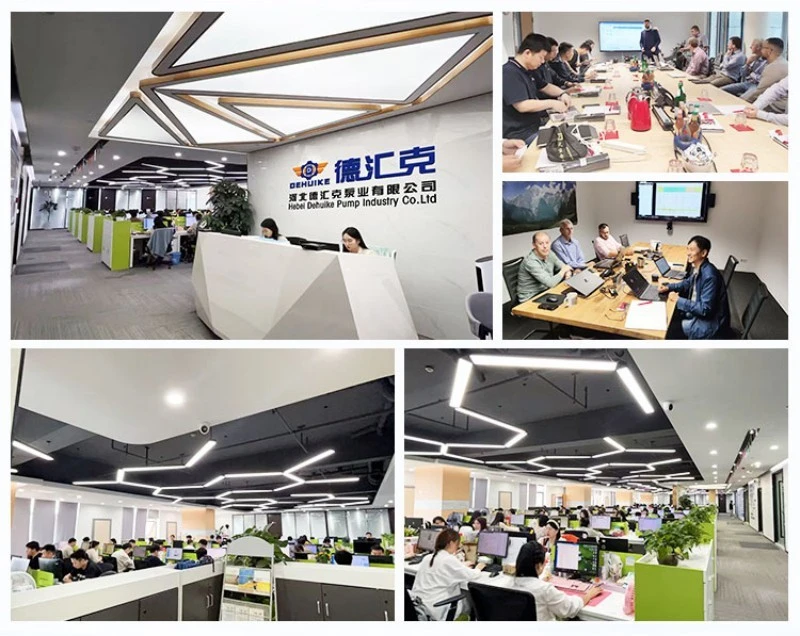
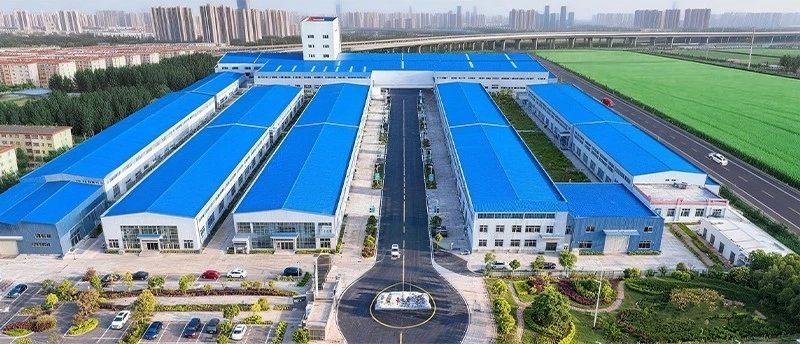
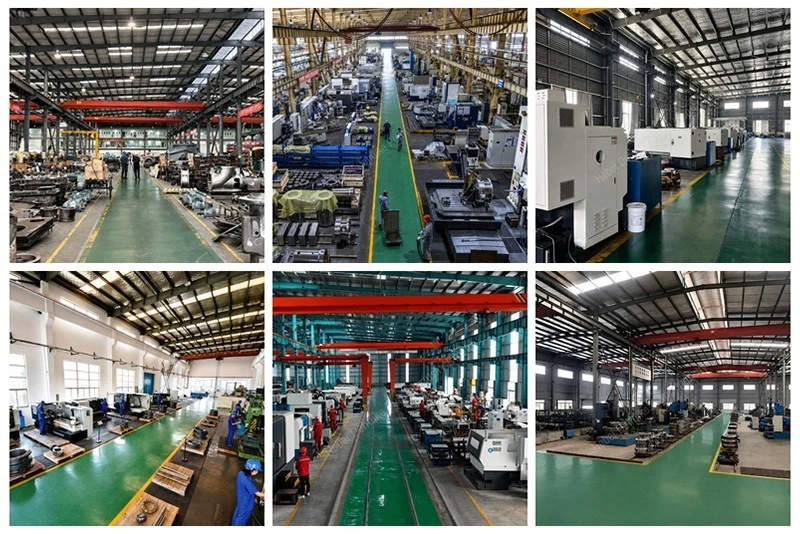
Manufacturer Profile: Hebei Dehuike Pump Industry Co., Ltd. (DHK Pump) has specialized in industrial fluid machinery manufacturing for more than 30 years. From a 8,000+ m2 production campus equipped with precision CNC machining centers, automated hydraulic test stands, and dedicated assembly lines - supported by 900+ qualified supply partners - our end suction inline pumps serve industrial plants, irrigation networks, municipal water utilities, and commercial building systems across more than 50 countries.
- Warranty & Certification: Each end suction inline pump carries a 24-month (two-year) mechanical warranty covering materials and factory workmanship (wear parts excluded per industry practice), with ISO 9906 Grade 2B hydraulic test certification per unit.
- Commercial Terms: Export quotations follow Incoterms 2020 - FOB or CIF to the destination port - supported by EN 10204 3.1 material certification, hydrostatic proof test records, certified performance curves, and ISO 2858 / DIN EN 733 dimensional conformance documentation.
- Logistics: Freight moves by air for urgent consignments in the 50-500 kg range, and by ocean for volume orders above 500 kg, crated to ISPM 15 standard with VCI moisture-barrier protection.
FAQ - End Suction Selection & Operational Questions
The questions below reflect the recurring specification and operational inquiries the engineering desk receives from mechanical contractors, plant engineers, and procurement teams when selecting and deploying end suction inline pumps.
Q1 - Architecture Selection | When should I specify an end suction pump instead of a close-coupled inline pump?
Specify end suction when the duty requires moderate-to-high flow at moderate head, the piping layout accommodates a vertical discharge (or a discharge elbow is acceptable), and the back-pull-out serviceability matters - particularly on critical single-pump installations or in plants with multiple pumps where maintenance scheduling is a factor. Specify close-coupled inline when footprint is the primary constraint, the piping must be straight-through horizontal, and field coupling alignment is to be eliminated. Each architecture has its comfort zone; neither is universally superior.
Q2 - Coupled vs. Close-Coupled | What is the difference between close-coupled and long-coupled end suction executions?
In the close-coupled execution, the motor flange-mounts directly to the pump bracket and drives the impeller through an extended motor shaft or rigid sleeve - no flexible coupling, no field alignment, compact footprint. In the long-coupled execution, the pump and motor are separate units mounted on a shared baseplate, connected by a flexible coupling with a spacer - the motor can be removed without disturbing the pump, but coupling alignment is required. Close-coupled suits compact installations; long-coupled suits larger motors (above roughly 18.5 kW) where motor weight and thermal growth make rigid mounting impractical.
Q3 - Operating Range | How far from the best efficiency point can the pump operate safely?
The recommended operating range for a single-volute end suction pump is 70 percent to 120 percent of best-efficiency-point (BEP) flow. Below 70 percent, the radial thrust generated by the asymmetric volute pressure distribution rises sharply, deflecting the shaft and accelerating bearing and seal wear. Above 120 percent, motor overload and NPSH margin erosion become concerns. For duties that require operation across a wider flow range - particularly variable-flow systems with turn-down - a variable-frequency drive modulates the pump's speed and shifts the operating point along the system curve, keeping the pump near its BEP at each speed rather than running at fixed speed far from BEP.
Q4 - Replacement & Interchangeability | Can I replace an existing end suction pump from another manufacturer with a DHK Pump unit?
Yes - this is precisely what the ISO 2858 / DIN EN 733 dimensional standards exist to enable. The casing-cover bolt circle, the suction and discharge flange dimensions and drilling, the shaft extension, and the seal chamber dimensions are all standardized. Provide the existing pump's nameplate data (model designation, flow, head, motor power, and speed), and the engineering desk will confirm the exact replacement frame. In many cases, the existing piping, foundation, and even the coupling can be retained - the replacement is a drop-in swap.
Q5 - Wear Ring Service | What is the role of the wear rings, and when should they be replaced?
Casing and impeller wear rings are replaceable sealing elements that maintain the close running clearance between the impeller and the volute. As the pump operates, these clearances gradually widen through erosion, abrasion, or contact - and each millimeter of clearance growth costs roughly 1 to 2 percent of pump efficiency through internal recirculation. Wear ring replacement is indicated when measured clearance exceeds the initial clearance by 0.5 mm (on smaller frames) or 0.8 mm (on larger frames), or when a 3 to 5 percent efficiency drop is observed relative to the baseline performance curve. Replacing wear rings restores both efficiency and NPSH margin.
Q6 - VFD Compatibility | Is a VFD compatible with the end suction inline pump?
Yes - all models in the program are VFD-compatible from the factory, with inverter-duty motors (IE3 efficiency, insulated bearings to prevent shaft-current damage, and Class F insulation with thermal margin). VFD control is recommended for any duty with variable demand, as the affinity-law energy savings at part-speed are substantial. The minimum-speed floor is 30 Hz (60 percent of rated speed) to maintain bearing lubrication and seal flush flow; below this speed, staging (stopping one pump in a parallel set) is preferred over further single-pump turn-down.

Hot Tags: end suction inline pump, China end suction inline pump manufacturers, suppliers, factory