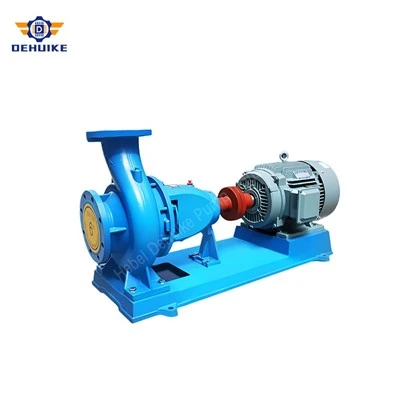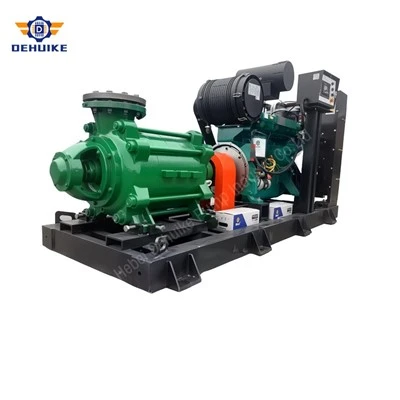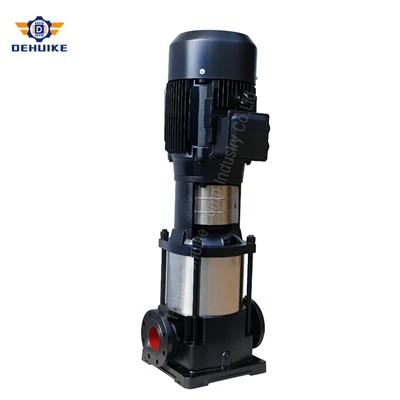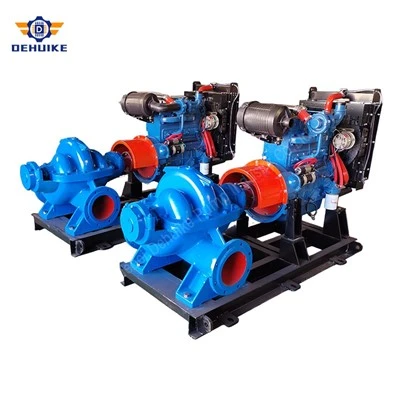
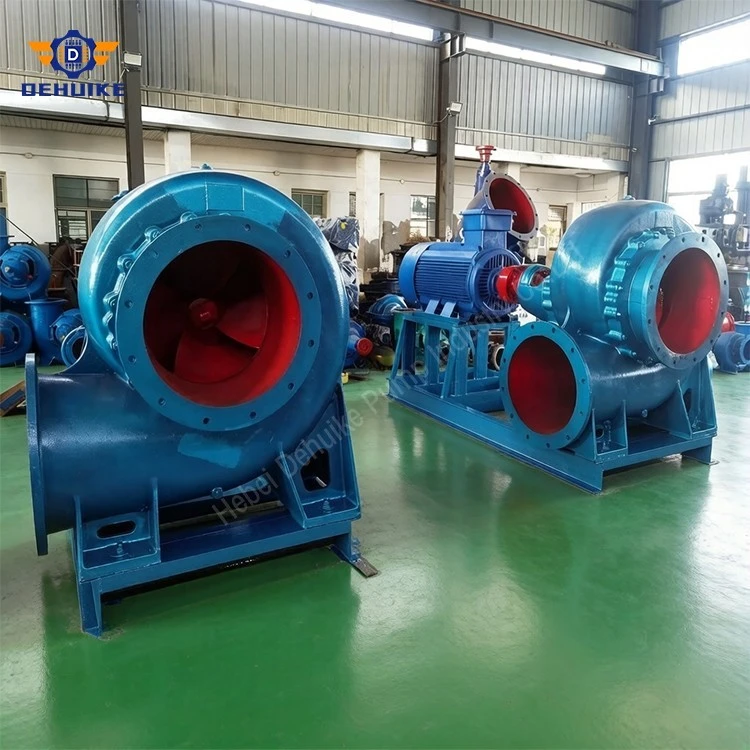
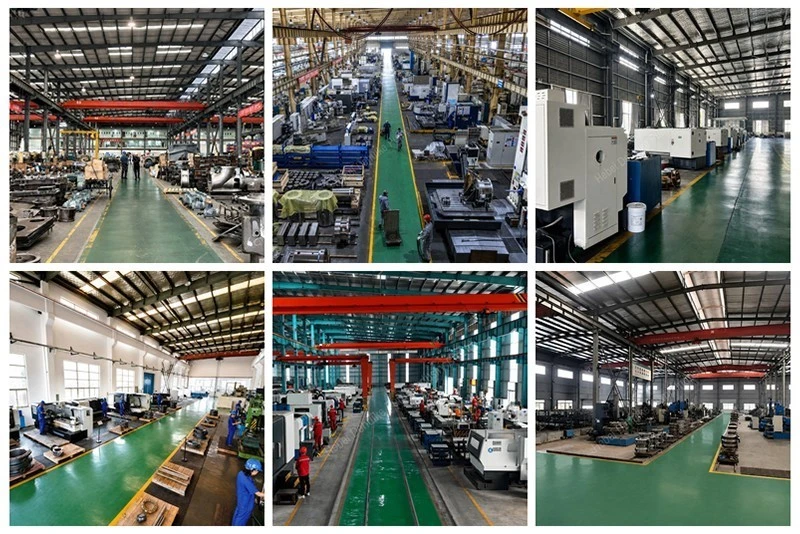
Hebei Dehuike Pump Industry Co., Ltd. is one of the most reliable manufacturers and suppliers of horizontal mixed flow pump in China. With abundant experience, we are committed to providing high quality customized pumps with competitive price. Welcome to wholesale bulk horizontal mixed flow pump for sale here from our factory. Also, pricelist is available.
Product Introduction
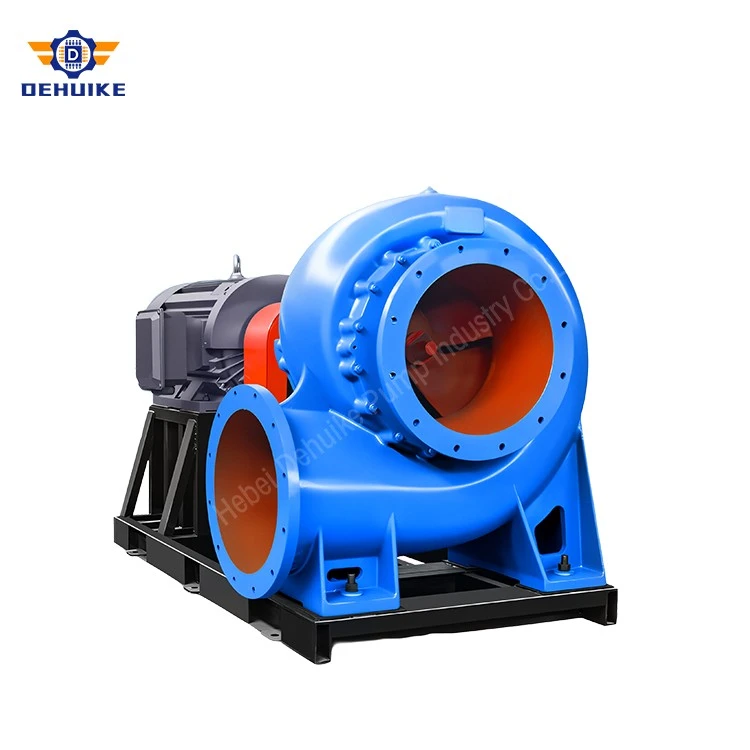
A Horizontal Mixed Flow Pump is designed for projects where the duty point requires more capacity than a conventional end-suction centrifugal pump can move efficiently, but more head stability than a simple axial propeller pump can provide. This operating zone is common in irrigation intake stations, canal transfer lines, aquaculture water exchange, stormwater bypass systems and industrial raw water supply. The pump uses a semi-axial impeller inside a horizontal volute casing, so water receives both outward centrifugal energy and forward axial momentum in one compact machine.
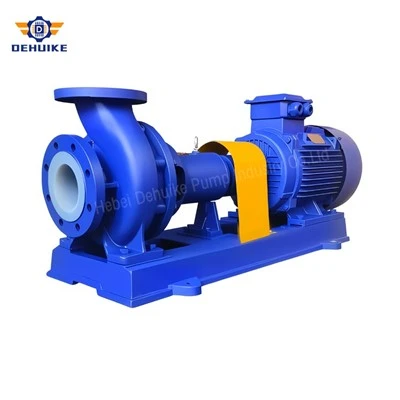
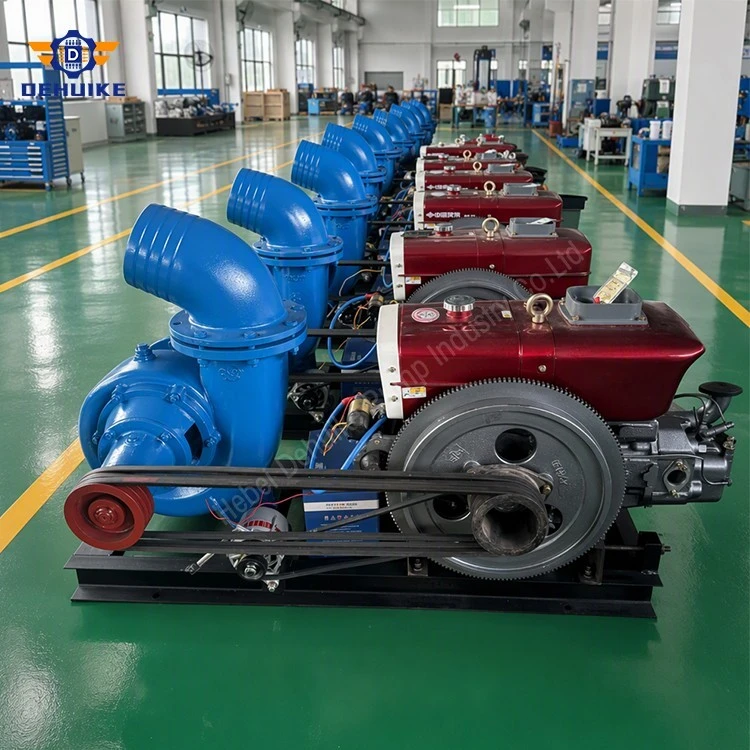
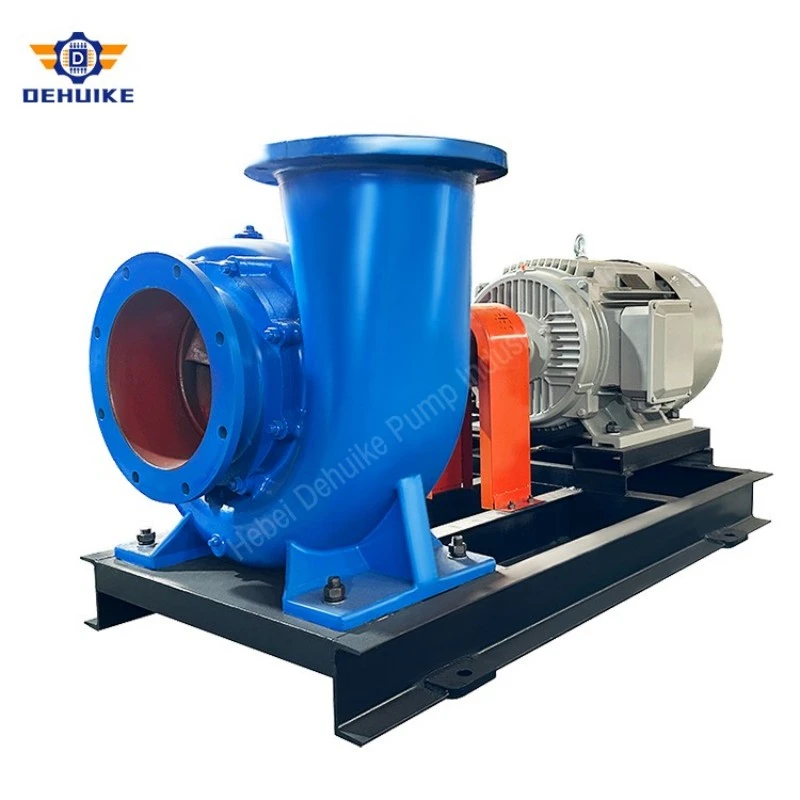
For buyers comparing water-moving equipment, the horizontal arrangement offers a practical advantage: the pump, coupling, driver and baseplate are all accessible at floor level. Operators can inspect bearings, adjust gland packing, align the coupling and service the diesel engine or electric motor without lifting a submerged unit from a pit. The DHW horizontal mixed-flow range from Hebei Dehuike Pump Industry Co., Ltd. is built for high-volume transfer at a rated 20 m head, with standard models covering 250 m3/h to 580 m3/h and a proven 1450 r/min speed platform.
Working Principle and Hydraulic Positioning
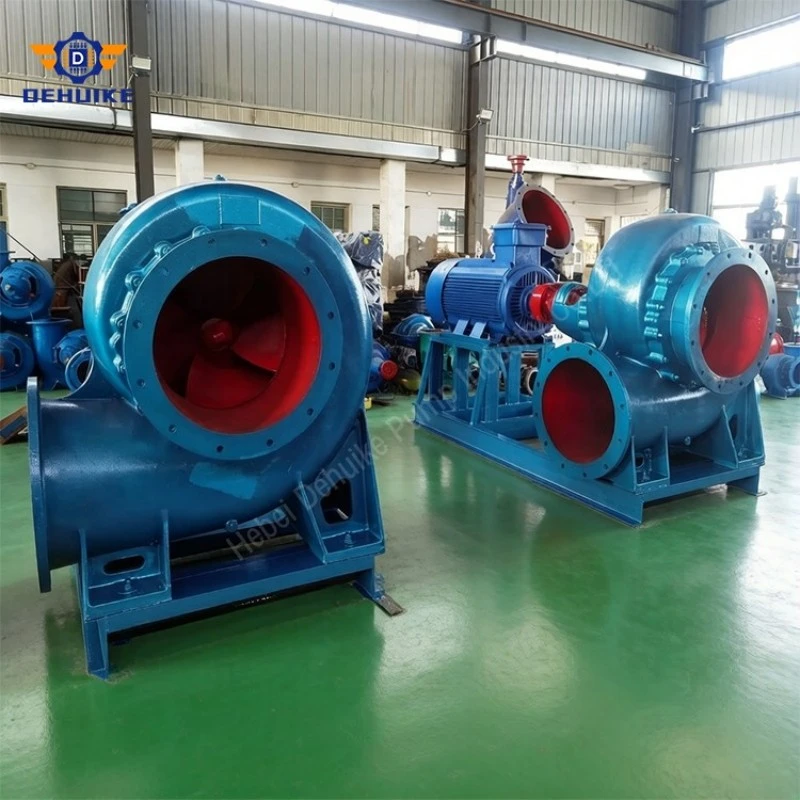
The hydraulic core of a Horizontal Mixed Flow Pump is its diagonal impeller. Incoming water enters through the suction side along the shaft centerline, then meets broad curved vanes that guide the flow on an inclined path. Unlike a radial impeller, which turns water sharply toward the casing wall, a mixed-flow runner moves water outward and forward at the same time. This reduces violent turning losses and gives the pump a large internal waterway for raw surface water containing silt or small organic debris.
The surrounding volute casing collects the flow leaving the impeller and converts part of its velocity into useful discharge head. Because the impeller and casing are matched for medium specific-speed operation, the pump is especially effective for duties around 10 to 25 m total dynamic head. In this range, it can deliver large quantities of water with a flatter power curve than many axial-flow machines and lower energy waste than high-head centrifugal units oversized for volume transfer.
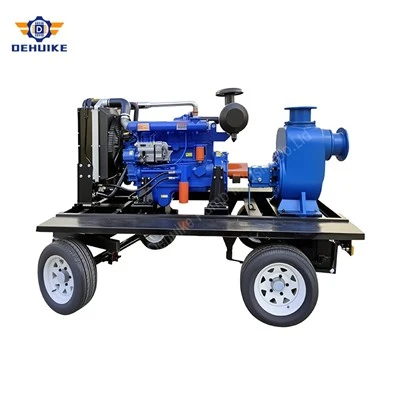
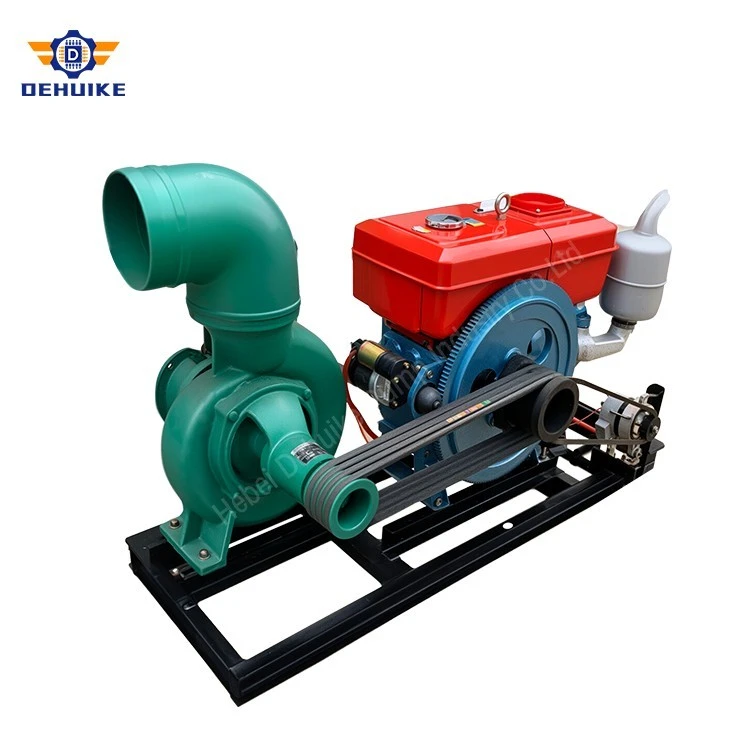
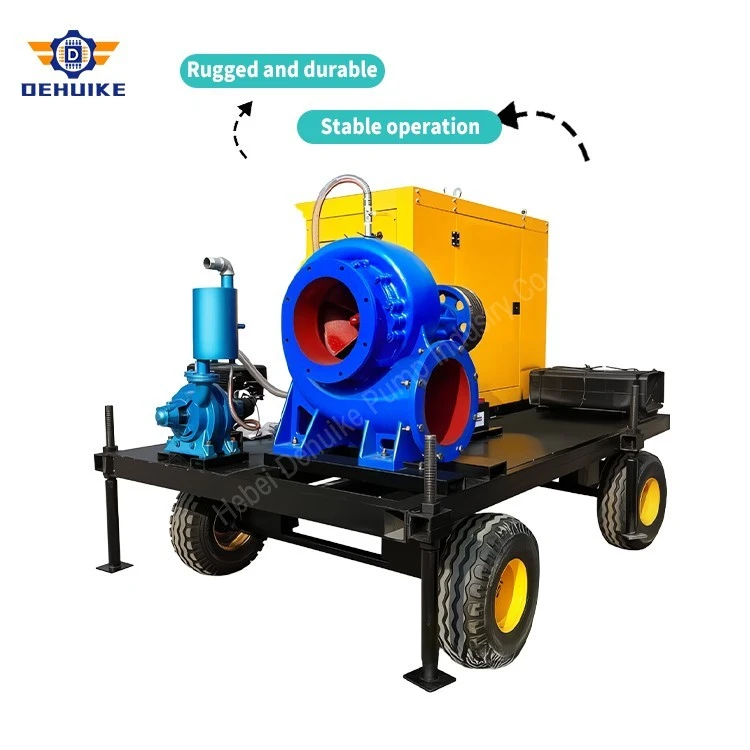
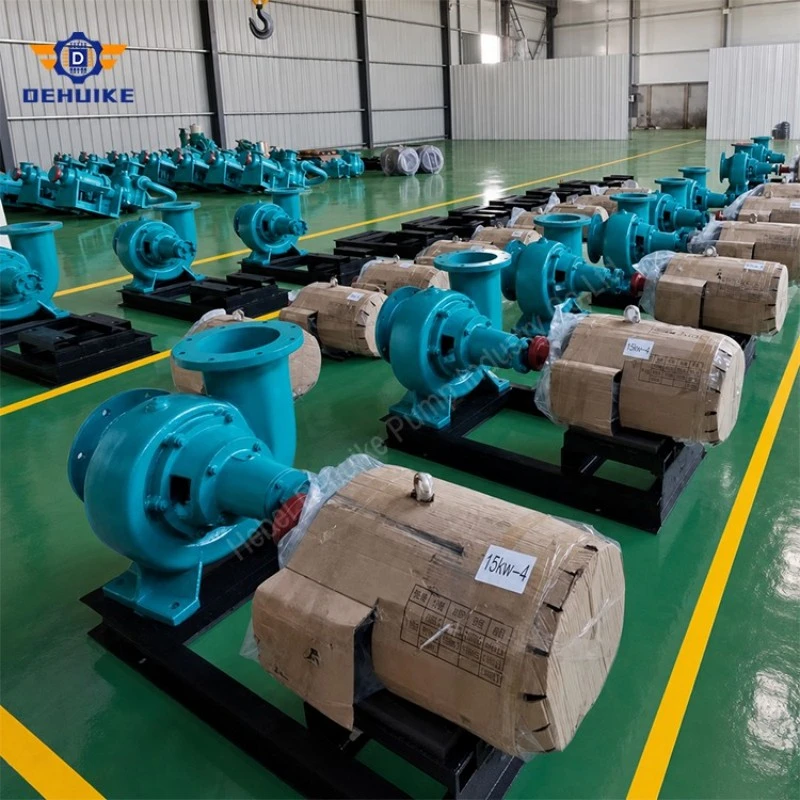
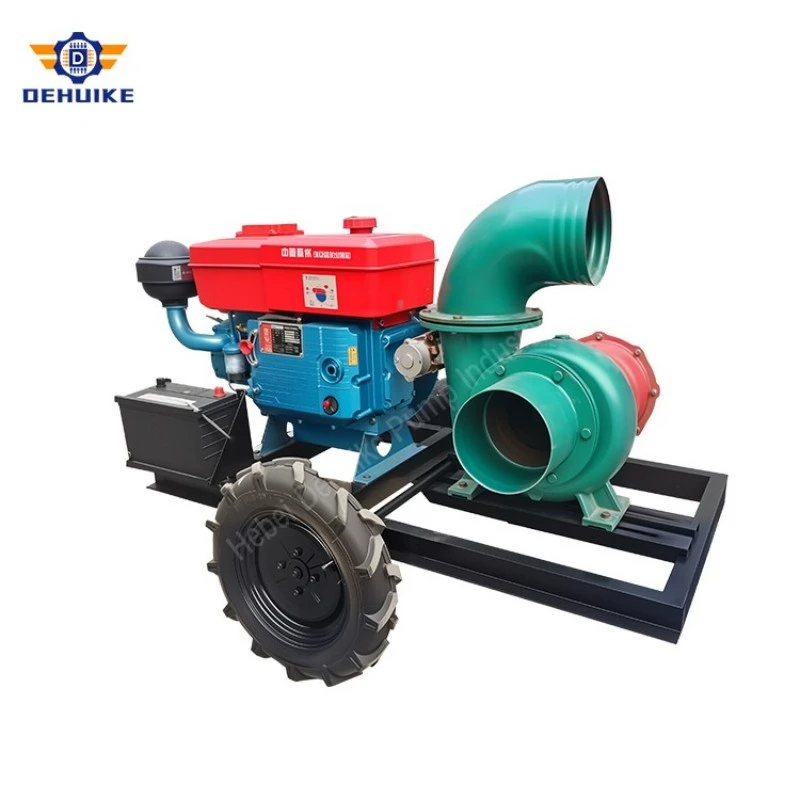
The horizontal layout also simplifies system integration. It can be mounted on a fixed concrete foundation for permanent stations, on a steel skid for seasonal farm work, or on a mobile trailer for drainage response. Depending on site power availability, the pump can be supplied with a diesel engine, an electric motor or a tractor PTO transmission.
Standard Model Range and Performance Data
The DHW horizontal mixed-flow series is organized around practical discharge sizes rather than vague capacity claims. Each model keeps flow, head, speed and drive rating in one consistent duty point, helping engineers avoid the common mistake of mixing parameters from different pump sizes.
|
Model |
Discharge Port |
Rated Flow |
Rated Head |
Rated Speed |
Diesel Engine |
Typical Drive Options |
|
DHW250-20 |
100 mm |
250 m3/h |
20 m |
1450 r/min |
8 HP |
Diesel engine / Electric motor / Tractor PTO |
|
DHW280-20 |
125 mm |
280 m3/h |
20 m |
1450 r/min |
8 HP |
Diesel engine / Electric motor / Tractor PTO |
|
DHW300-20 |
150 mm |
300 m3/h |
20 m |
1450 r/min |
15 HP |
Diesel engine / Electric motor / Tractor PTO |
|
DHW580-20 |
200 mm |
580 m3/h |
20 m |
1450 r/min |
22 HP |
Diesel engine / Electric motor / Tractor PTO |
DHW250-20 is suited to mobile field water transfer, small riverbank abstraction and temporary construction dewatering. DHW280-20 and DHW300-20 serve mid-scale canal feeding and farm distribution systems where the discharge line is longer or the water must cross a raised bank. DHW580-20 is the high-capacity option for large drainage basins, main irrigation headers and industrial raw water intake duties.
All listed values should be confirmed against the final project curve, suction condition, pipe length and liquid characteristics before purchase. For long pipelines, friction loss may become the deciding factor, so discharge pipe diameter and valve layout should be checked together with the pump model.
Construction Features for Horizontal Installation
A reliable horizontal pump depends on casing rigidity, shaft alignment and bearing support. The DHW design uses a foot-mounted volute casing cast from gray iron or optional ductile iron. The integral feet transfer hydraulic load into the baseplate, reducing the risk of casing movement caused by pipe stress. Standard flange drilling allows connection to steel, HDPE or ductile iron pipelines used in irrigation and drainage works.
The diagonal impeller has wide passages that are more forgiving than narrow high-head channels when handling river water, canal water or drainage runoff. Replaceable wear rings help control internal leakage between the high-pressure and low-pressure zones. When normal abrasive wear increases clearances, operators can restore efficiency by renewing the wear parts instead of replacing the full casing.
The shaft is supported by a heavy bearing bracket and protected in the sealing area by a renewable sleeve. Gland packing is suitable for most agricultural and drainage sites because it tolerates raw water and can be adjusted in the field. For cleaner municipal or industrial systems where leakage control is required, a mechanical seal can be selected during configuration.
Operational Advantages for Buyers and Engineers
High-volume delivery at moderate head: The pump covers a common project range where water volume matters more than extreme pressure.
Low-speed service life: The 1450 r/min platform reduces impeller tip velocity compared with high-speed pumps, helping limit abrasive wear in silt-bearing water.
Stable driver loading: The mixed-flow curve is suitable for diesel, electric or PTO operation because power demand remains manageable across normal system variation.
Accessible maintenance: The horizontal base-mounted structure keeps seals, bearings, coupling and driver parts reachable without removing a submerged bowl assembly.
Flexible installation: The same hydraulic platform can be adapted for fixed pump houses, field skids, two-wheel mobility packages or larger trailer assemblies.
Practical raw-water tolerance: Wide impeller waterways allow the pump to handle clean water, river intake water and ordinary canal sediment when properly screened.
Main Application Scenarios
Agricultural irrigation is one of the strongest use cases for a Horizontal Mixed Flow Pump. Farms and cooperatives often need to lift river or canal water into open channels, flumes or reservoirs without creating excessive pressure. DHW250-20 and DHW280-20 support smaller and medium blocks, while DHW300-20 and DHW580-20 are better matched to larger acreage, raised canal banks and wider distribution networks.
For drainage and flood relief, the horizontal mixed-flow layout allows rapid deployment with diesel power and flexible suction hoses. A mobile DHW580-20 set can remove large volumes from a retention basin, road underpass, polder or construction site where grid power may not be available. The moderate 20 m head rating is useful for pumping over embankments or into nearby discharge channels.
Aquaculture ponds and hatcheries also benefit from the gentle, high-volume transfer characteristic. The pump can exchange brackish or fresh water through pond gates while avoiding the intense shear commonly associated with very high-speed pumps. Industrial users apply the same principle for raw water supply to clarifiers, cooling ponds, washing systems and process water storage.
Selection Notes for a Correct Pump Match
Confirm total dynamic head, not only vertical lift. Include pipe friction, bends, valves, intake screens and discharge elevation.
Keep suction piping short, straight and adequately sized. A restricted suction line can cause cavitation even when the pump model is correctly selected.
Use a screened intake when pumping from rivers or canals. The pump can tolerate ordinary suspended solids, but large stones, branches and fabric should be excluded.
Select the drive according to site reality. Diesel suits off-grid locations, electric motors suit permanent stations, and tractor PTO works well for seasonal farm use.
Match the discharge pipe to the model outlet. Undersized pipe increases friction loss and may move the duty point away from the efficient range.
Discuss material upgrades when water contains high abrasive sand, corrosive content or unusual temperature conditions.
Maintenance and Daily Operation
Routine care is straightforward. Before startup, check that the suction line is filled or properly primed, all flange bolts are tight, the driver rotates in the correct direction and the discharge valve is ready for gradual opening. During operation, observe bearing temperature, vibration, packing leakage and engine or motor load. Stable sound and steady discharge usually indicate a healthy operating point.
Packing should not be tightened to completely dry operation. A small controlled drip lubricates and cools the sleeve. Bearing housings should be greased according to the service interval recommended for the supplied bearing arrangement, and the volute drain should be opened before long storage or freezing weather. After pumping muddy water, flushing with cleaner water helps reduce sediment settlement inside the casing.
FAQ
Q1: What is the main difference between a Horizontal Mixed Flow Pump and a standard centrifugal pump?
A standard centrifugal pump mainly produces pressure through radial flow. A Horizontal Mixed Flow Pump uses a diagonal impeller, so it produces both axial movement and centrifugal pressure. This makes it better for large flow at moderate head.
Q2: Which model should I choose for a small farm intake?
For portable irrigation or small canal transfer, DHW250-20 is usually the first model to evaluate because it offers 250 m3/h at 20 m head with an 8 HP diesel engine. Final selection should still consider pipe length and suction condition.
Q3: Can the pump work with a diesel engine?
Yes. The standard range can be configured with diesel drive. Electric motor and tractor PTO options are also available depending on site power and operating method.
Q4: Is the pump suitable for river water with sediment?
It is suitable for ordinary river or canal water containing suspended silt when the intake is properly screened. For highly abrasive sand or special water chemistry, material and wear-part options should be confirmed before ordering.
Q5: Why is 1450 r/min important?
A 1450 r/min operating speed reduces tip velocity compared with high-speed designs. This can lower abrasive wear, vibration and noise while supporting stable continuous service.
Q6: Can the pump be used for emergency drainage?
Yes. Larger configurations, especially DHW580-20, are commonly evaluated for flood relief, polder drainage and construction dewatering where high flow and independent diesel power are needed.
Q7: What information is needed for quotation?
Provide required flow, total head, suction source, pipe length and diameter, water quality, power source, installation type and destination port. Photos or drawings of the intake area are helpful.
Q8: What maintenance is required?
Operators should monitor priming, packing leakage, bearing temperature, vibration, engine or motor condition, and casing drainage before storage. Wear rings, shaft sleeves, packing and bearings should be inspected during scheduled service.
Hot Tags: horizontal mixed flow pump, China horizontal mixed flow pump manufacturers, suppliers, factory