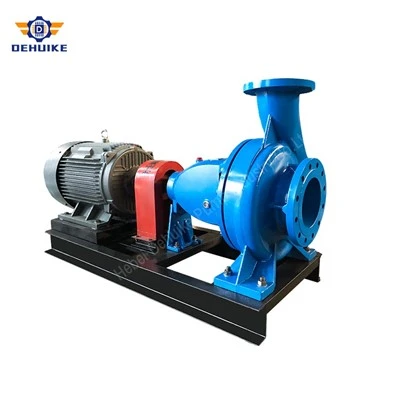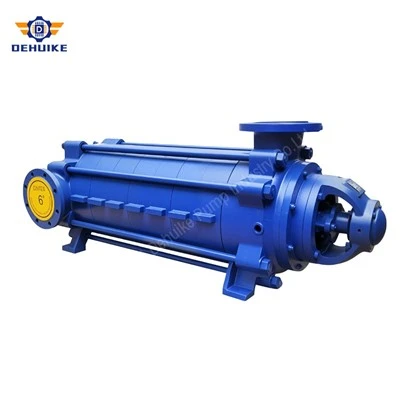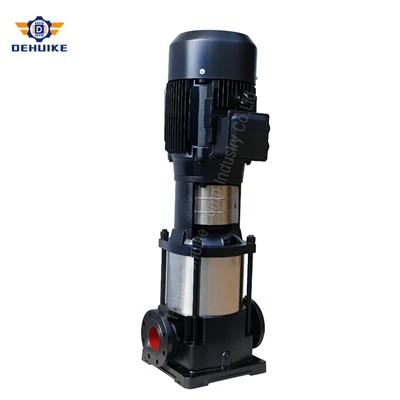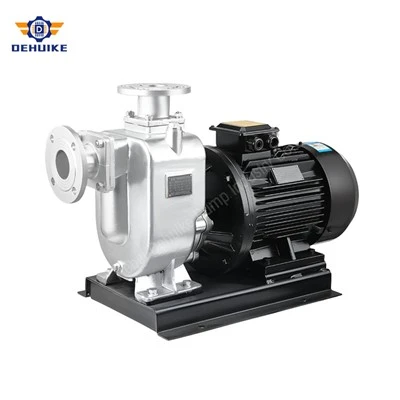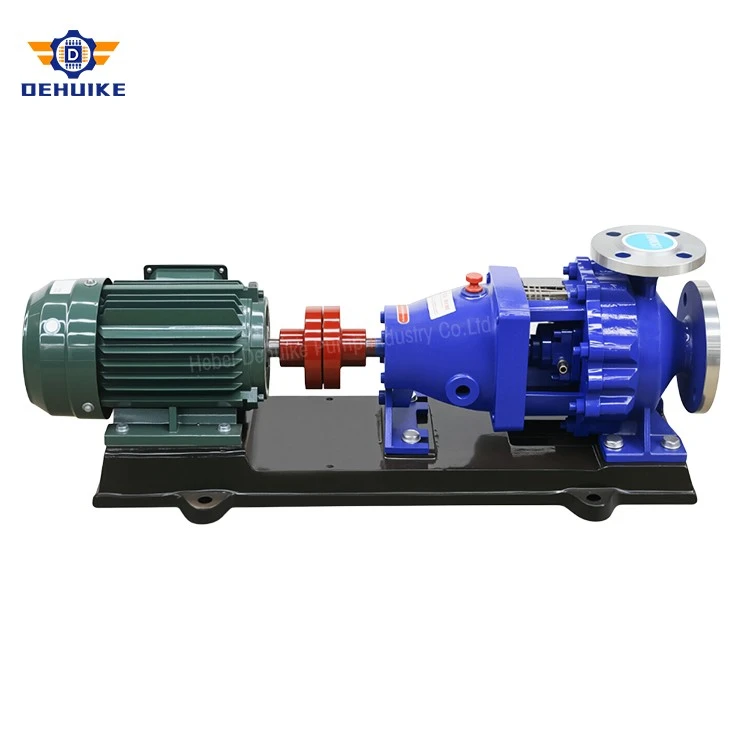
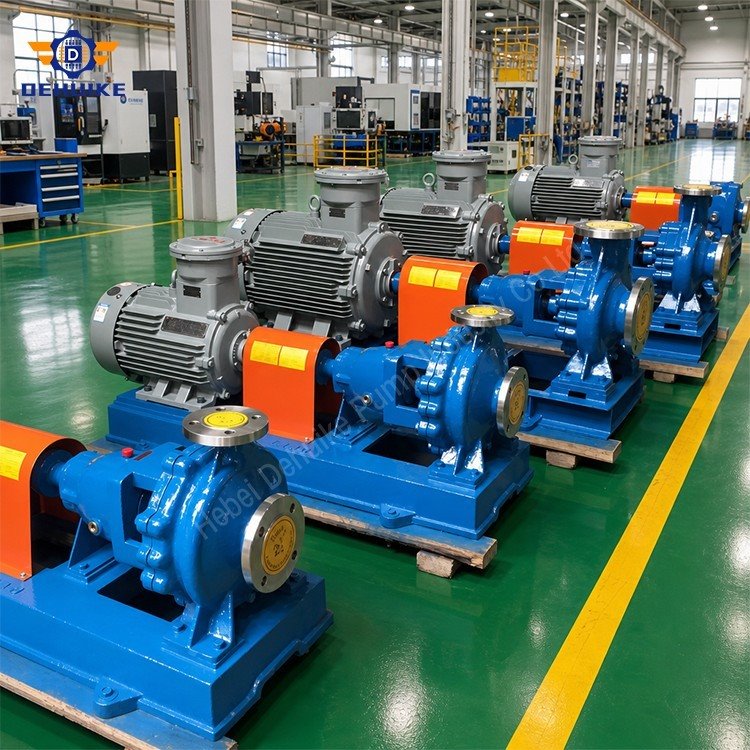
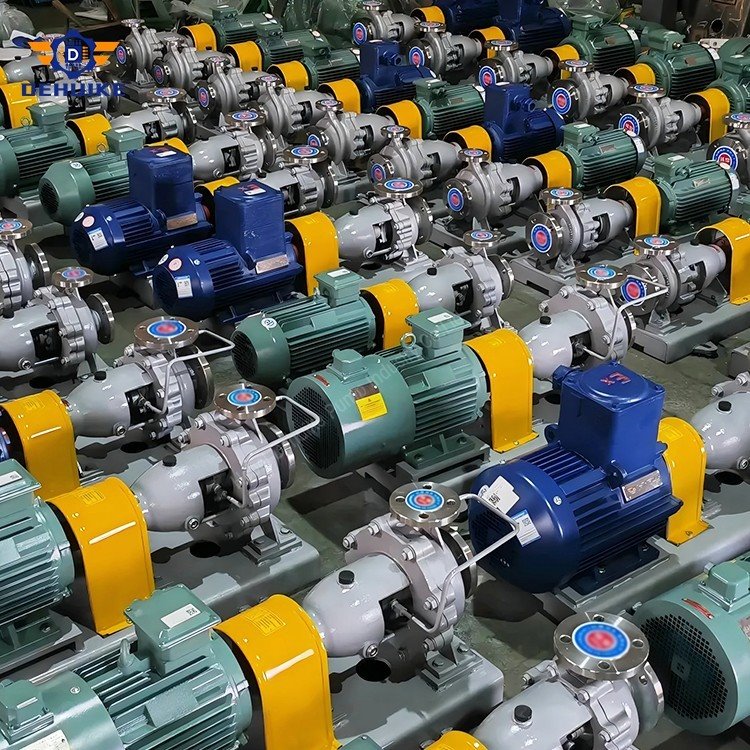
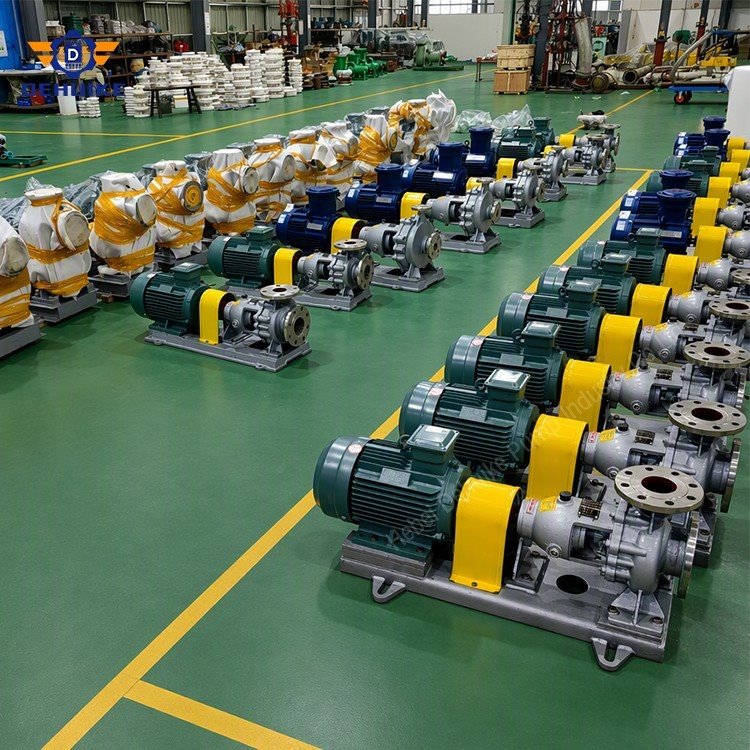
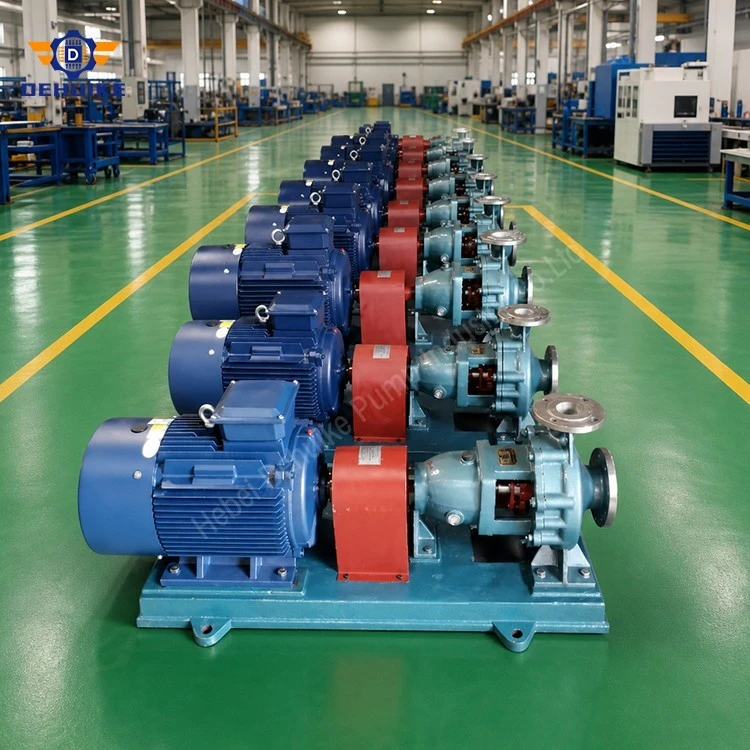
Hebei Dehuike Pump Industry Co., Ltd. is one of the most reliable manufacturers and suppliers of horizontal chemical centrifugal pump in China. With abundant experience, we are committed to providing high quality customized pumps with competitive price. Welcome to wholesale bulk horizontal chemical centrifugal pump for sale here from our factory. Also, pricelist is available.
Horizontal Foot-Mounted Architecture, Rotodynamic Foundation Stability, and Hydraulic Centerline Alignment
Continuous fluid processing across oil refineries, petrochemical complexes, chlor-alkali installations, and fine chemical plants depends heavily on rotodynamic equipment that maintains mechanical rigidity under harsh thermal, hydraulic, and environmental loads. In horizontal end-suction installations, mechanical stability is governed by the structural interaction between the pump casing, support feet, bedplate, and civil foundation. Inadequate structural support or poor centerline alignment rapidly results in excessive shaft deflection, bearing overheating, dynamic seal face distortion, and catastrophic mechanical breakdown.
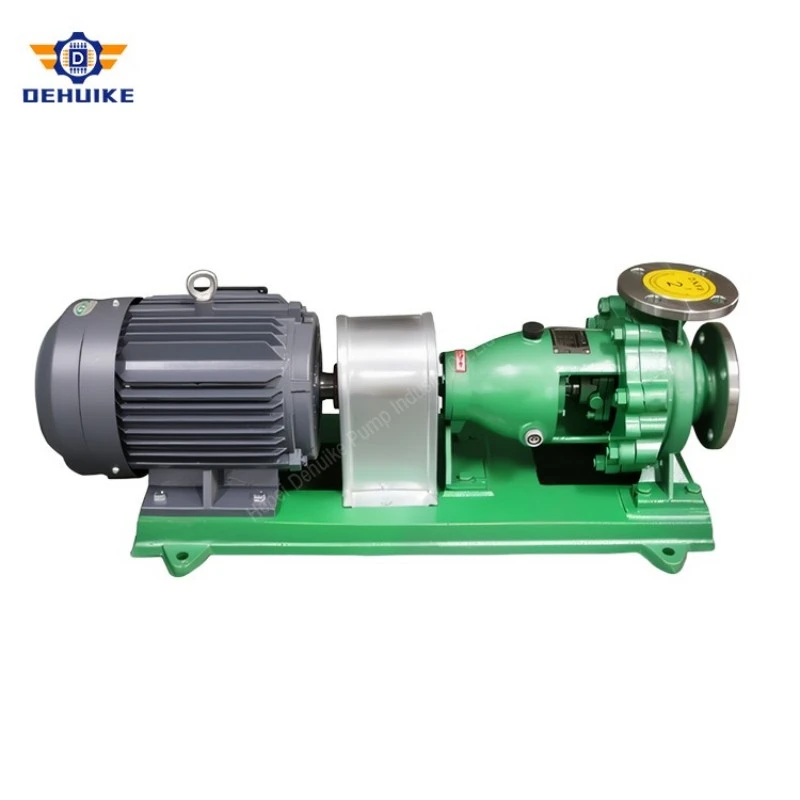
The Horizontal Chemical Centrifugal Pump delivers an engineered rotodynamic solution founded on heavy foot-mounted casing architecture, low-center-of-gravity design, and precision hydraulic centerline alignment, ensuring uninterrupted fluid circulation across critical chemical operations.
The mechanical integrity of the horizontal chemical process pump begins with its low-profile foot-supported casing configuration. Designed in strict compliance with ISO 2858 and ISO 5199 engineering standards, the casing incorporates integrated, heavy-section mounting feet cast directly beneath the volute. This low-center-of-gravity geometry routes hydraulic discharge thrust and external piping moments straight into the structural bedplate and reinforced concrete foundation. By isolating dynamic forces from the rotating shaft, this foot-mounted architecture prevents housing distortion and preserves internal running clearances even under elevated system pressures reaching 2.4 MPa.
Thermal expansion dynamics represent another primary design consideration in continuous chemical plants. Conveying chemical streams from ambient conditions up to 105°C causes thermal growth in wetted volute casings. In a poorly designed pump, this thermal displacement causes angular misalignment between pump and motor shafts, inducing destructive radial vibration. This horizontal chemical pumping unit overcomes this thermal stress through balanced casing symmetry and specialized spacer-type flexible couplings that absorb axial and angular thermal movements without transferring bending stress to driver bearings.
Maximizing unit uptime requires efficient, non-invasive maintenance workflows. Built around a standardized back-pull-out geometry, the Horizontal Chemical Centrifugal Pump permits complete extraction of the rotating cartridge-including the enclosed impeller, shaft, seal chamber, and bearing frame-toward the motor side without breaking suction or discharge pipe joints, and without unbolting casing feet from the baseplate. When installed with spacer couplings, overhauls require no motor unbolting or laser realignment, shrinking routine turnaround time to under ninety minutes.
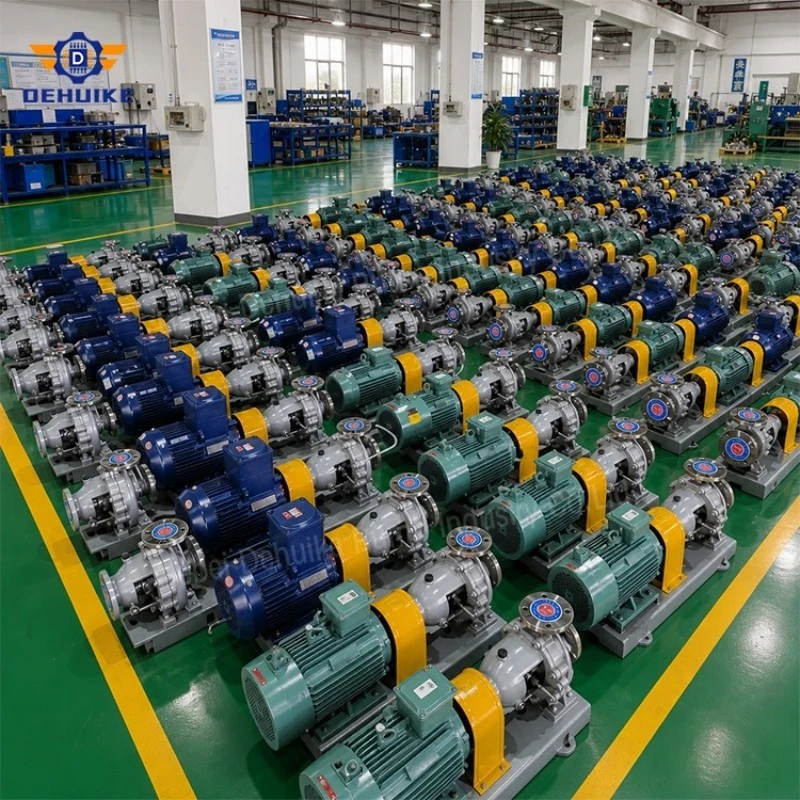
Technical Specifications & Tri-Series Parametric Envelopes
Rigid horizontal chemical pumping trains require precision hydraulic sizing to protect shaft alignment and prevent premature bearing wear. To provide exact process matching across diverse chemical circuit pressures, the Horizontal Chemical Centrifugal Pump platform is structured into three distinct hydraulic series, derived directly from factory dynamometer testing records.
2.1 Series 1: Standard 2-Pole High-Head Horizontal Series (2900 r/min Baseline)
High-velocity fluid circulation across Series 1 employs two-pole induction motors rotating at 2900 rpm. This rotodynamic configuration delivers vertical pressure lifts reaching 125 meters and volume capacities between 12.5 m³/h and 100 m³/h at rated efficiency points, supplying vigorous hydraulic energy for high-elevation absorption scrubbers and reactor charging headers.
With full-diameter untrimmed impellers running at 2900 rpm, Series 1 achieves hydraulic efficiencies up to 76% in large frames, holding net positive suction head thresholds between 2.0 and 3.6 meters. Below are verified baseline ratings for primary Series 1 models:
|
Model |
Suct. DN1 |
Disch. DN2 |
Speed (rpm) |
Flow (m³/h) |
Head (m) |
Eff. (%) |
Shaft P (kW) |
Motor P (kW) |
NPSH (m) |
|
IH50-32-200 |
50 |
32 |
2900 |
12.5 |
50 |
48 |
3.54 |
5.5 |
2 |
|
IH50-32-250 |
50 |
32 |
2900 |
12.5 |
80 |
38 |
7.16 |
11 |
2 |
|
IH65-40-200 |
65 |
40 |
2900 |
25 |
50 |
60 |
5.67 |
7.5 |
2 |
|
IH65-40-315 |
65 |
40 |
2900 |
25 |
125 |
40 |
21.3 |
30 |
2.5 |
|
IH80-50-200 |
80 |
50 |
2900 |
50 |
50 |
59 |
9.87 |
15 |
2.5 |
|
IH80-50-250 |
80 |
50 |
2900 |
30 |
84 |
52 |
13.2 |
22 |
2.5 |
|
IH100-65-200 |
100 |
65 |
2900 |
100 |
50 |
76 |
17.9 |
22 |
3.6 |
|
IH100-65-315 |
100 |
65 |
2900 |
100 |
125 |
66 |
51.6 |
75 |
3.6 |
2.2 Series 2: Hydraulic Trimming Energy-Optimization Series (A/B Trims at 2900 r/min)
When piping engineering calculations include excessive friction safety factors, horizontal units operate far to the left of their Peak Efficiency Point (BEP), inducing radial shaft unbalance and wasting electricity across discharge valves. Series 2 eliminates this parasitic load via calibrated outer impeller diameter trimming (denoted by suffixes A and B).
Trimming the impeller outer diameter lowers centrifugal velocity while preserving blade profile curvature. For instance, trimming model IH65-40-200 to trim 'A' reduces head from 50 m to 45 m and moderates required shaft input from 5.67 kW to 4.83 kW. This allows pairing with a standard 5.5 kW motor frame while maintaining 60% hydraulic efficiency, lowering cumulative electrical expenditure across multi-shift chemical manufacturing.
|
Model |
Suct. DN1 |
Disch. DN2 |
Speed (rpm) |
Flow (m³/h) |
Head (m) |
Eff. (%) |
Shaft P (kW) |
Motor P (kW) |
NPSH (m) |
|
IH50-32-200A |
50 |
32 |
2900 |
11.85 |
45 |
48 |
3.07 |
4 |
2 |
|
IH50-32-200B |
50 |
32 |
2900 |
11.18 |
40 |
48 |
2.54 |
3 |
2 |
|
IH65-40-200A |
65 |
40 |
2900 |
23.7 |
45 |
60 |
4.83 |
5.5 |
2 |
|
IH65-40-250A |
65 |
40 |
2900 |
24.2 |
75 |
50 |
8.87 |
11 |
2 |
|
IH80-50-200A |
80 |
50 |
2900 |
46.8 |
44 |
69 |
8.14 |
11 |
2.5 |
|
IH80-50-250A |
80 |
50 |
2900 |
46.81 |
70 |
63 |
14.18 |
18.5 |
2.5 |
|
IH100-65-200A |
100 |
65 |
2900 |
95 |
45 |
76 |
15.35 |
18.5 |
3.6 |
|
IH100-65-315A |
100 |
65 |
2900 |
95.5 |
114 |
66 |
45.03 |
55 |
3.6 |
2.3 Series 3: 4-Pole Low-Speed Low-Vibration Horizontal Series (1450 r/min J/JA Trims)
Handling boiling volatile solvents, viscous chemicals near their flash point, or crystallizing solutions at 2900 rpm generates severe fluid turbulence, rapid seal face heating, and acoustic vibration. Series 3 resolves these vulnerabilities by utilizing four-pole electric drives operating at 1450 rpm (indicated by suffix J).
Reducing rotational speed by half lowers peripheral vane tip velocity by 50%, reducing mechanical seal face friction and hydraulic vibration by more than seventy percent. Suction head requirements remain benign, holding NPSHr between 2.0 and 2.5 meters. Shaft power demands stay modest (0.36 kW to 6.92 kW), establishing Series 3 as a dependable choice for continuous heavy-duty chemical service.
|
Model |
Suct. DN1 |
Disch. DN2 |
Speed (rpm) |
Flow (m³/h) |
Head (m) |
Eff. (%) |
Shaft P (kW) |
Motor P (kW) |
NPSH (m) |
|
IH50-32-200J |
50 |
32 |
1450 |
6.3 |
12.5 |
42 |
0.51 |
0.75 |
2 |
|
IH50-32-200JA |
50 |
32 |
1450 |
5.9 |
11 |
43 |
0.36 |
0.55 |
2 |
|
IH65-40-200J |
65 |
40 |
1450 |
12.5 |
12.5 |
55 |
0.77 |
1.1 |
2 |
|
IH65-40-315J |
65 |
40 |
1450 |
12.5 |
32 |
37 |
2.94 |
4 |
2.5 |
|
IH80-50-200J |
80 |
50 |
1450 |
25 |
12.5 |
65 |
1.31 |
2.2 |
2.5 |
|
IH80-50-250J |
80 |
50 |
1450 |
25 |
20 |
60 |
2.27 |
3 |
2.5 |
|
IH100-65-200J |
100 |
65 |
1450 |
50 |
12.5 |
73 |
2.33 |
4 |
2 |
|
IH100-65-315J |
100 |
65 |
1450 |
50 |
32 |
63 |
6.92 |
11 |
2 |
Heavy Foot-Mounted Casing, Rigid Bearing Housing, and API Cartridge Mechanical Sealing
The operational durability of the Horizontal Chemical Centrifugal Pump stems from heavy-duty mechanical engineering and robust pressure-containment geometry. Every structural element is engineered to resist chemical degradation while maintaining absolute mechanical precision under cyclic hydraulic loads:
- Integrated Heavy Foot-Mounted Volute: Cast with robust structural mounting feet positioned directly beneath the pump volute centerline. Thick sacrificial casing wall sections provide generous corrosion allowances against aggressive chemical thinning, while top-centerline self-venting discharge geometry facilitates seamless bubble expulsion.
- CFD-Optimized Closed Impeller Geometry: Features backward-swept 3D fluid vanes balanced dynamically to ISO 1940 Grade G2.5. Precision-machined back shroud rings vent discharge head into the suction eye through calibrated balance ports, minimizing net axial thrust against horizontal bearing assemblies.
- Rigid Stepped Alloy Drive Shaft: Engineered with an enlarged shaft core beneath the sleeve to resist cyclic bending moments, keeping dynamic runout within 0.03 mm at mechanical seal faces during sudden valve shutoffs.
- Universal Sealing Chamber Supporting API 682 Formats: The enlarged bore seal cavity promotes convective fluid circulation around dynamic faces, supporting single and dual cartridge mechanical seals (API Plan 52/53A) with silicon carbide against diamond-like carbon faces.
- Heavy-Duty Cast Bearing Housing with Oil-Mist Lubrication: Heavy cast bearing carriers house matched angular contact ball bearings and cylindrical roller bearings, isolated from chemical vapors by dual non-contact deflector flingers and labyrinth isolators.
Foot-Mounted Casing Rigidity, Spacer-Coupling Decoupling, and Anti-Vibration Heavy Baseplates
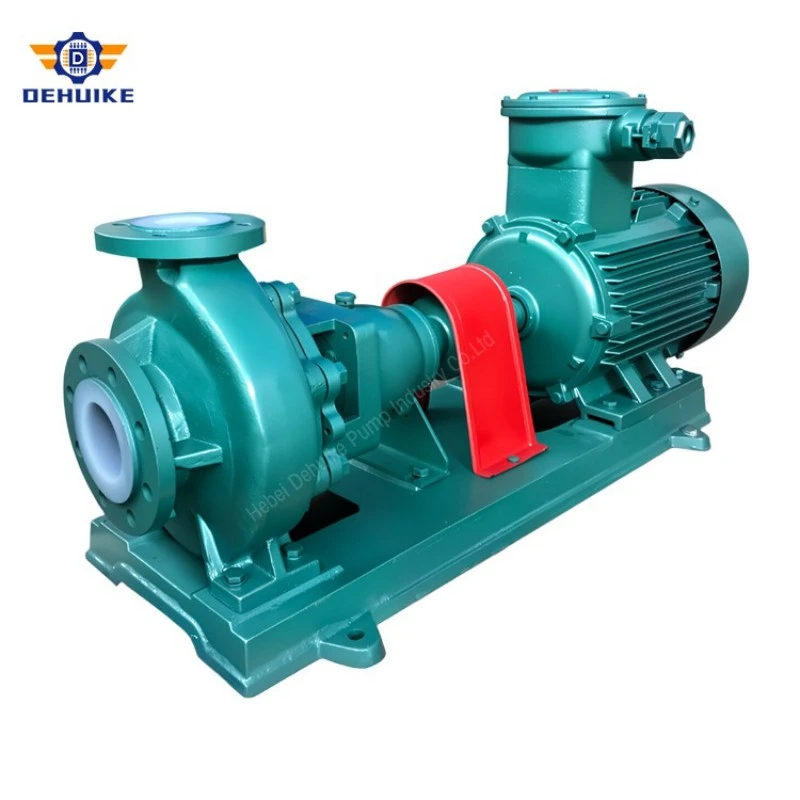
Operating in high-vibration chemical processing environments demands specialized mechanical construction that shields the rotodynamic train from structural misalignment. The Horizontal Chemical Centrifugal Pump incorporates several distinct structural features:
- Low-Center-of-Gravity Bedplate Mounting: The entire motor and pump assembly mounts onto a heavy fabricated steel or cast iron baseplate engineered with internal structural stiffeners. The wide footprint provides excellent resistance to overturning moments caused by pipe thermal loads.
- True Back-Pull-Out Serviceability: By utilizing a spacer-type flexible coupling, technicians can remove the entire rotating element rearward without disturbing the driver, motor shims, or suction and discharge piping manifolds.
- Low Dynamic Vibration Profile (ISO 10816-3): Precision dynamic rotor balancing combined with rigid footing ensures overall vibration velocity remains below 1.8 mm/s RMS, dramatically reducing acoustic noise and extending bearing fatigue life.
- External Flange Moment Resistance: Reinforced suction and discharge nozzle flanges feature heavy gusseting that absorbs external pipeline forces and moments exceeding ISO 5199 Table 4 criteria without casing misalignment.
- Interchangeable Component Modular Architecture: Multiple casing sizes utilize standardized bearing housings, shafts, and shaft sleeves. This modular design lowers plant spare parts capital inventory commitments by more than thirty percent.
Foundation Grouting Guidance, Laser Coupling Alignment & Dynamic Balancing Support
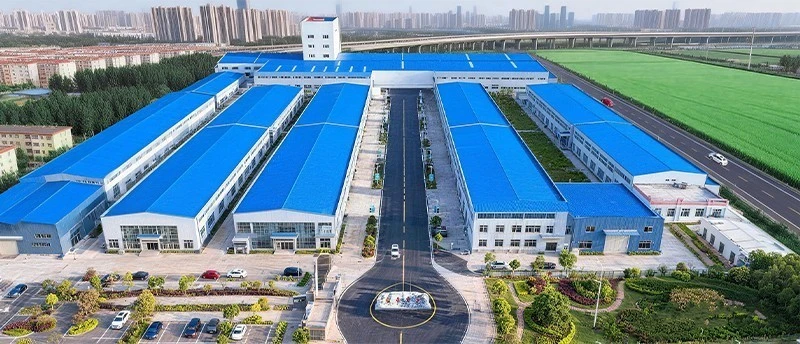
Beyond hardware manufacturing, Hebei Dehuike Pump Industry Co., Ltd. provides comprehensive technical application support to ensure safe and dependable pump deployment across challenging chemical duties:
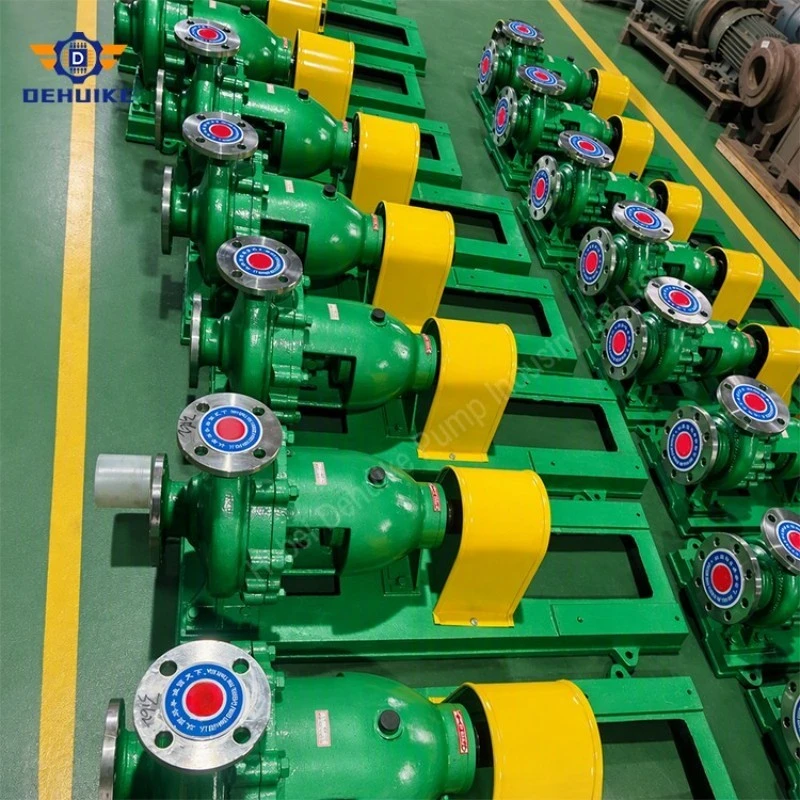
- Laser Shaft Alignment & Tolerance Verification: We provide precision laser alignment guidelines for cold and hot running conditions, verifying that angular and radial shaft offsets remain within 0.05 mm to prevent premature coupling and bearing fatigue.
- Baseplate Grouting Engineering Protocols: Our field engineering team supplies detailed epoxy and cementitious non-shrink grouting procedures, ensuring void-free installation that dampens resonant vibrations across civil foundations.
- Comprehensive Piping Strain Mitigation Audits: We evaluate customer suction and discharge piping configurations, expansion joints, and pipe hanger layouts to ensure external nozzle forces stay well within ISO 5199 allowable limits.
- Lifecycle Technical Engineering Assistance: We provide complete seal flush recommendations, motor drive sizing, and spare parts support, maintaining dedicated stocks of replacement impellers, sleeves, and mechanical seal assemblies.
100% Hydrostatic Proof Testing, Vibration FFT Spectrum Analysis, and Factory Hydraulic Mapping
Every Horizontal Chemical Centrifugal Pump undergoes comprehensive quality validation before customer dispatch, ensuring leak-free pressure containment and verified hydraulic performance:
- Cold-Water Hydrostatic Proof Testing: Every wetted casing undergoes hydrostatic testing at 150% of design pressure (2.4 MPa for standard 1.6 MPa casings) held for thirty minutes, monitored by calibrated digital gauges to certify zero casing weeping or flange seepage.
- Full-Spectrum Vibration FFT Diagnostics: Assembled horizontal pump sets undergo baseline vibration FFT spectrum analysis at operating speed, confirming overall vibration levels remain below 1.8 mm/s RMS in full compliance with ISO 10816-3 Class 1 standards.
- Dual-Plane Computerized Rotor Balancing: Impellers and rotating shaft assemblies undergo precision dynamic balancing on digital balancing benches, ensuring residual unbalance satisfies ISO 1940 Grade G2.5 thresholds to protect bearings from cyclic fatigue.
- Automated Closed-Loop Hydraulic Testing: Finished units undergo performance testing across five distinct flow rates on computerized test stands, verifying total head, power consumption, and NPSH curves in conformity with ISO 9906 Grade 2B standards.
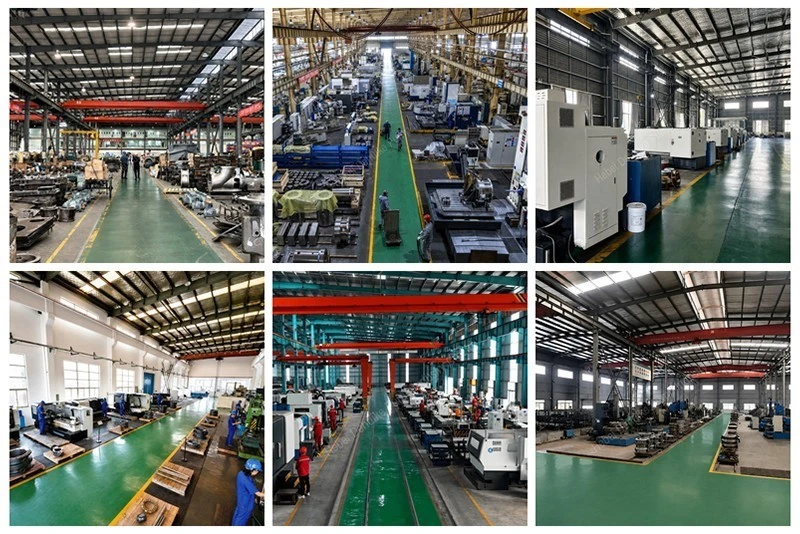
Petrochemical Process Circulation, Boiler Feed Auxiliary Systems, Brine Refining, and Industrial Effluent Pumping
Horizontal Chemical Centrifugal Pump is deployed across six primary industrial fluid handling sectors:
- Petrochemical Distillation & Reflux Systems: Circulating light hydrocarbons, benzene fractions, aromatic solvents, and wash oils in continuous petroleum refining columns.
- Chlor-Alkali & Brine Purification Circuits: Transferring saturated sodium chloride brines, caustic soda solutions, and chlorinated chemical intermediates across electrochemical cell rooms.
- Chemical Fertilizer & Acid Neutralization: Circulating ammonium phosphate slurries, dilute sulfuric acid streams, and nitric acid reagents in high-volume fertilizer manufacturing lines.
- Boiler Feed Auxiliary & Condensate Recovery: Pumping hot demineralized water, boiler blowdown liquids, and thermal utility condensates at operating temperatures reaching 105°C.
- Industrial Wastewater Treatment & Neutralization: Delivering corrosive acid-alkali waste streams, neutralization basin liquors, and clarification feeds to industrial effluent plants.
- Pulp, Paper & Textile Bleaching Loops: Pumping chlorine dioxide solutions, caustic extraction liquors, and sodium hypochlorite bleach in pulp digestion and bleaching mills.
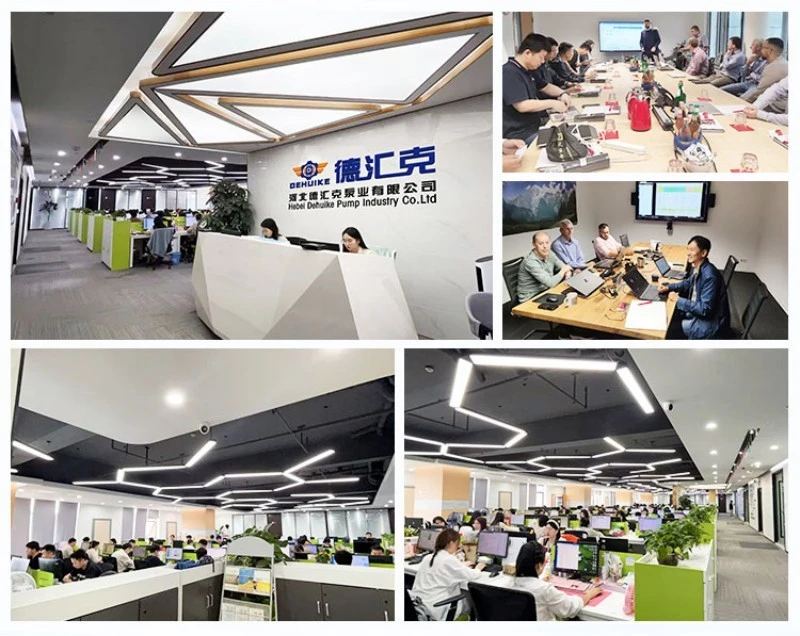
Corporate Manufacturing Pedigree, Commercial Standards, and Direct Engineering Contacts
Hebei Dehuike Pump Industry Co., Ltd. is a specialized manufacturer focused on heavy-duty horizontal chemical fluid machinery. Drawing upon over three decades of focused engineering innovation, our production facilities deliver reliable pumping equipment to processing complexes across more than 90 countries worldwide.
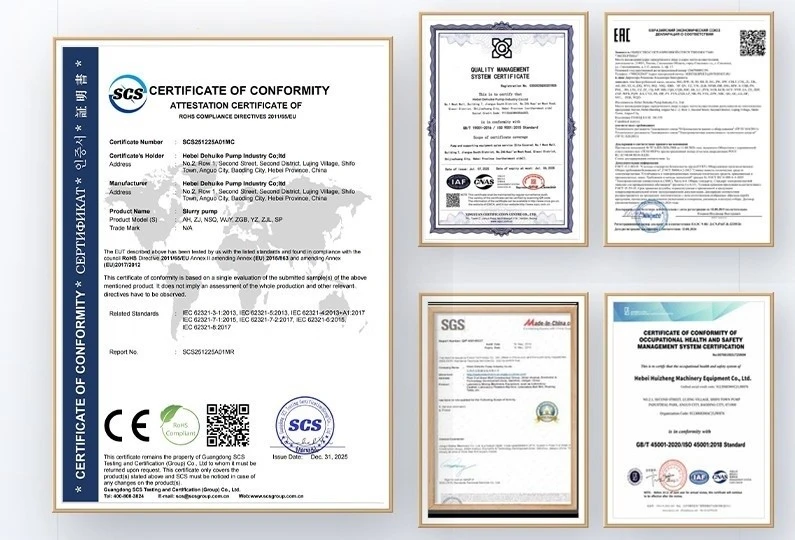
Our factory engineering staff conducts detailed pre-purchase hydraulic reviews, assessing liquid concentration charts, saturation pressures, piping resistance losses, and chemical compatibility to configure tailored pump models, impeller trims, and seal plans. Plant operations comply rigorously with certified ISO 9001 quality guidelines, supported by EAC certification and RoHS environmental directives. Global shipments are managed under FOB and CIF destination port trade terms, utilizing air cargo (50 kg to 500 kg) and maritime container freight (500 kg and higher).
Technical Decision Guide: Materials, Hydraulic Integrity, and Global Supply FAQ
Q1: Why is horizontal foot-mounted installation preferred over close-coupled mono-block designs for chemical process duties?
A: Close-coupled mono-block pumps mount the hydraulic impeller directly onto extended electric motor shafts. When chemical mechanical seals leak in mono-block designs, corrosive fluids spray directly into motor bearings and electrical windings, causing motor burnouts. In contrast, the Horizontal Chemical Centrifugal Pump utilizes a frame-mounted architecture where the pump bearing housing is separated from the motor by a flexible coupling. Any seal weepage drains harmlessly into a collection trough, protecting the electric driver and permitting independent maintenance of pump or motor components.
Q2: How does the spacer-type flexible coupling eliminate pipeline alignment disturbance during maintenance?
A: A spacer-type flexible coupling incorporates a removable center spacer section between pump and motor shaft hubs. During overhaul, removing this spacer creates an open axial gap equal to the length of the rotating cartridge. Maintenance personnel can withdraw the entire bearing frame, seal cartridge, and impeller through this gap without unbolting process piping flanges and without loosening motor mounting bolts, completely avoiding time-consuming laser realignment upon reassembly.
Q3: When should chemical plant designers specify a 1450 r/min four-pole drive rather than a two-pole 2900 r/min motor?
A: While 2900 rpm two-pole motors minimize footprint for clean, high-head duties, running at 1450 rpm four-pole speeds (J-series) cuts peripheral tip speed in half. This reduces dynamic seal face friction, lowers hydrodynamic turbulence, and substantially dampens mechanical vibration transmitted into the baseplate. Four-pole configurations are strongly indicated when handling liquids above 30 cSt, warm volatile chemicals, or fluids with crystalline precipitates.
Q4: How does proper foundation grouting prevent vibration resonance in horizontal chemical pumps?
A: Hollow cavities beneath fabricated baseplates can resonate at motor rotational frequencies, amplifying operating vibrations. High-performance non-shrink epoxy grouting fills the entire volume between the baseplate and concrete foundation, bonding the metal bedplate to the concrete mass. This monolithic structure increases dynamic stiffness, dampens high-frequency hydraulic vibrations, and prevents baseplate warping that causes shaft misalignment.
Q5: How should piping designers calculate suction line losses to safeguard required NPSH?
A: Preventing cavitation in horizontal process pumps requires maintaining intake pressure safely above liquid vapor pressure. Designers must ensure Net Positive Suction Head available (NPSHa) exceeds pump threshold (NPSHr) by a margin of 0.6 to 1.0 meter. To avoid vapor entrapment, suction piping should be one nominal size larger than the pump inlet, include straight piping of at least 5 pipe diameters upstream of the suction flange, and install eccentric reducers with the flat side facing upward.
Q6: What manufacturer warranty terms cover horizontal chemical pump installations?
A: All units carry our standard 24-month (two-year) comprehensive factory warranty covering casting soundness, bedplate alignment rigidity, and shaft endurance against manufacturing faults (standard sacrificial consumables like dynamic seal rings excluded). To prevent unexpected downtime, standard replacement parts-including balanced impellers, ground sleeves, and cartridge seals-are stocked in our warehouse for priority international air freight dispatch.
Q7: What export packaging and international trade terms govern overseas deliveries?
A: Standard production fabrication requires 15 to 25 business days for standard stainless steel models, and 30 to 45 business days for custom duplex configurations. Assembled units receive internal moisture-inhibiting oil treatment, vapor-barrier foil sealing, and blind flange covers prior to crating in ISPM-15 certified plywood export boxes. Commercial contracts follow Incoterms 2020 on FOB and CIF destination port agreements, supported by air freight (for urgent replacement assemblies between 50 kg and 500 kg) and ocean container shipping (for project shipments exceeding 500 kg).

Hot Tags: horizontal chemical centrifugal pump, China horizontal chemical centrifugal pump manufacturers, suppliers, factory