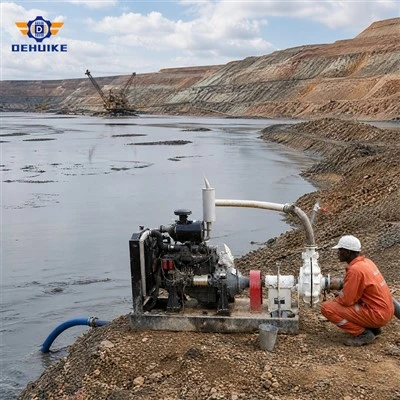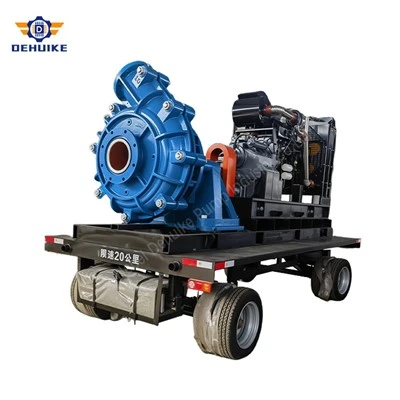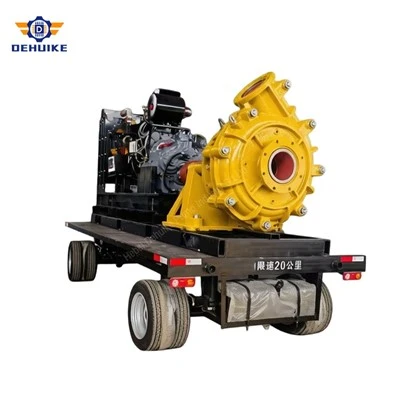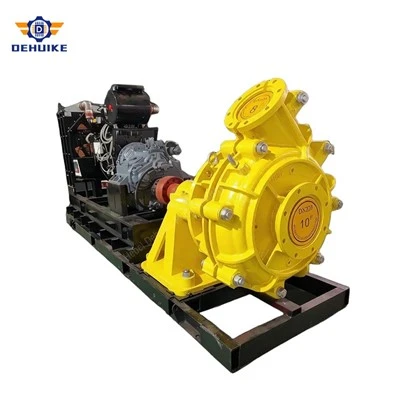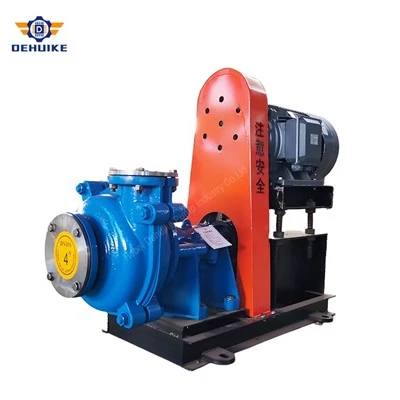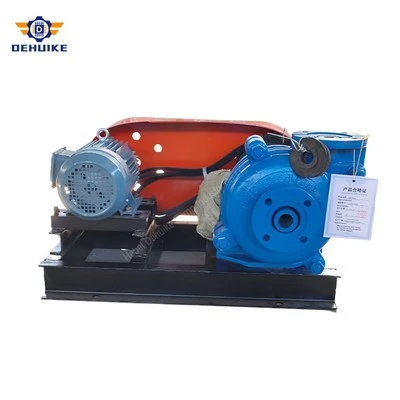

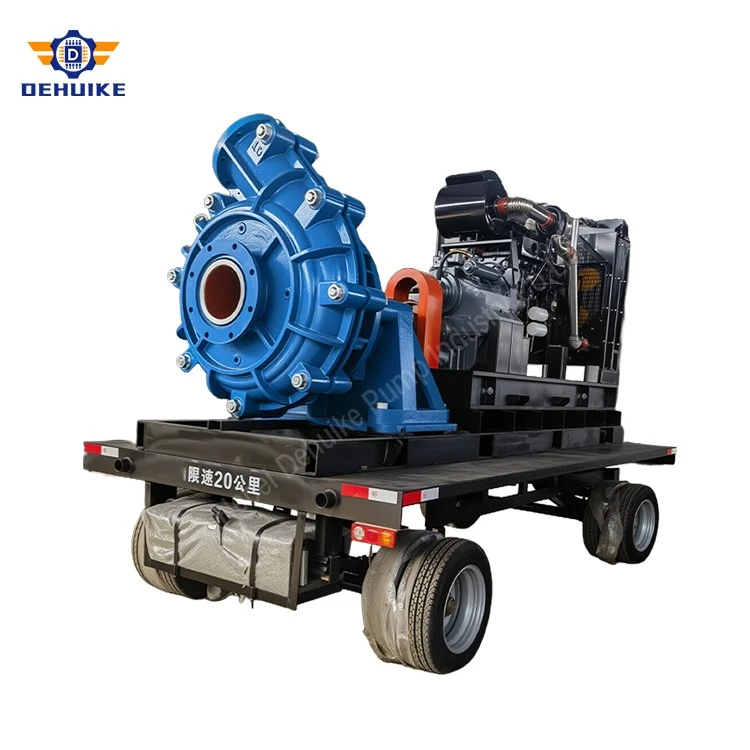
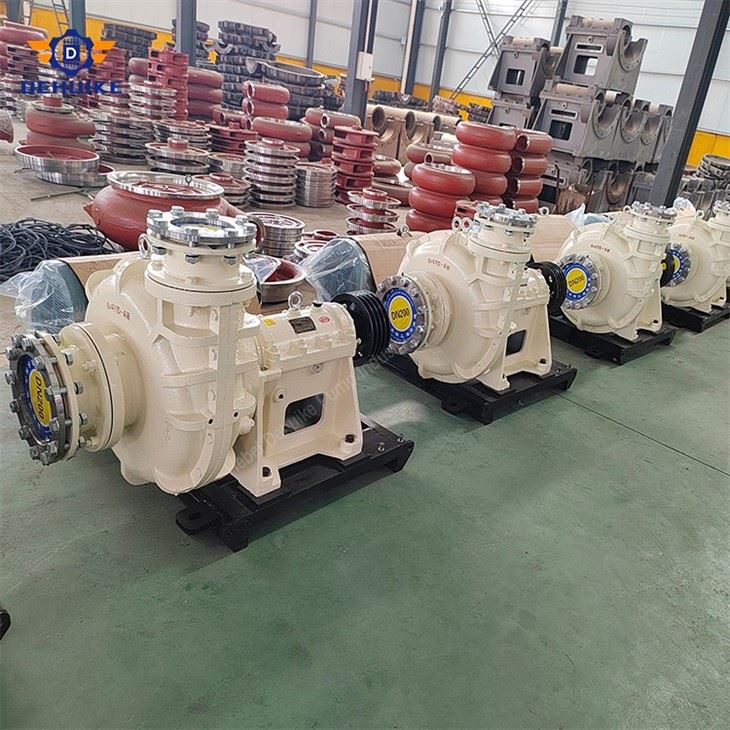
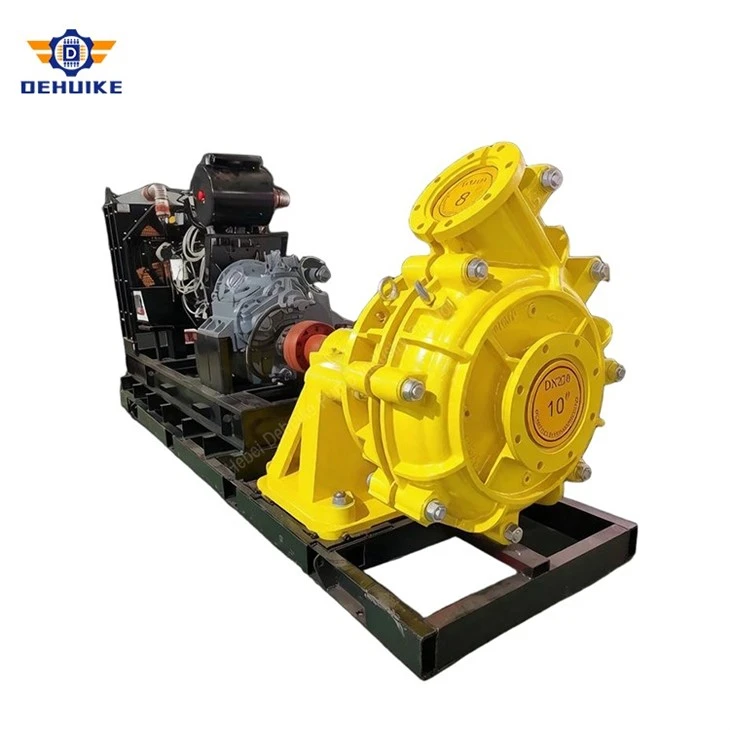
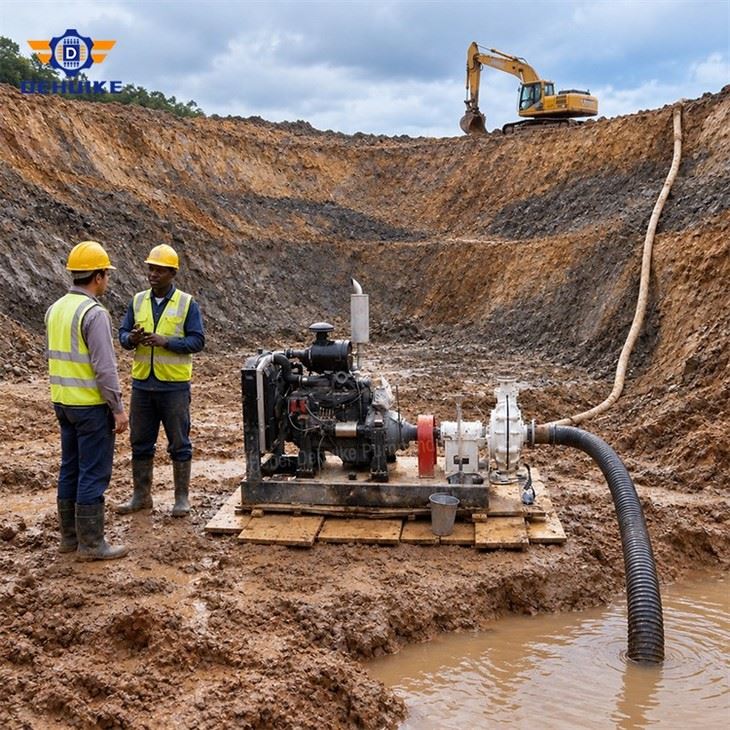
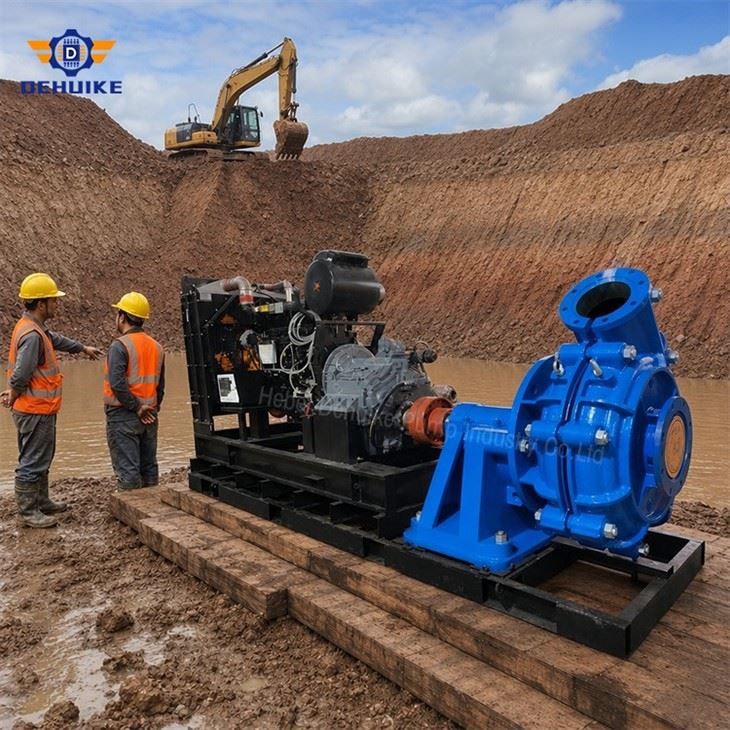
Hebei Dehuike Pump Industry Co., Ltd. is one of the most reliable manufacturers and suppliers of wear resistant horizontal slurry pump in China. With abundant experience, we are committed to providing high quality customized pumps with competitive price. Welcome to wholesale bulk wear resistant horizontal slurry pump for sale here from our factory. Also, pricelist is available.
Introduction: Operating Environments and Mechanics of Abrasive Wear in Slurry Systems
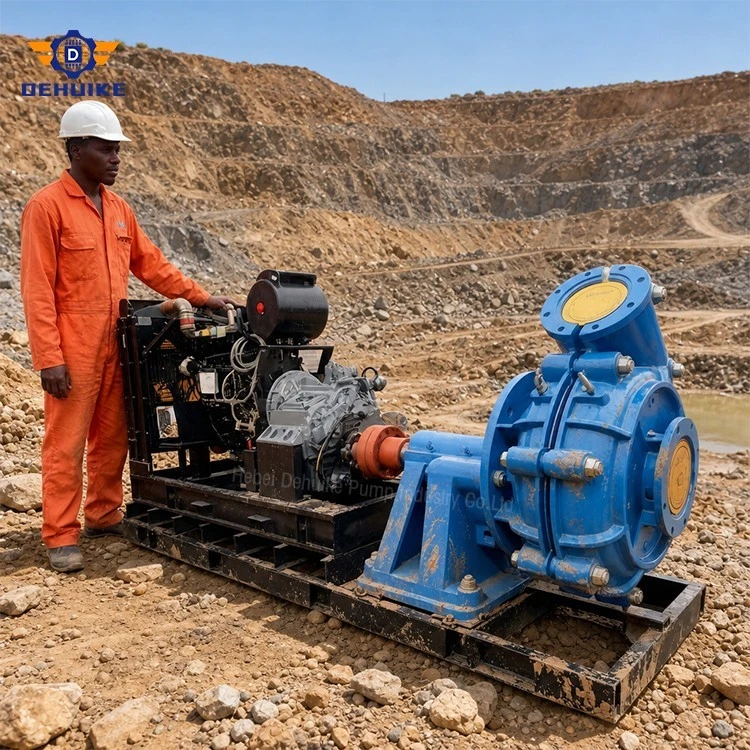
Handling aggressive, solid-laden slurries in industrial processing facilities presents severe engineering challenges that quickly destroy standard centrifugal machinery. A Wear Resistant Horizontal Slurry Pump functions as the primary mechanical driver across mineral beneficiation plants, coal preparation facilities, aggregate washing operations, and industrial effluent circuits. Within these circuits, fluids are not pure liquids; they carry dense concentrations of hard, angular mineral particles such as quartz, silica, iron ore, and corundum suspended in carrier water.
When abrasive mixtures pass through a pump at substantial velocities, internal surfaces experience continuous mechanical degradation. Slurry wear manifests primarily through three interactive wear mechanisms:
Low-Stress Scratching Abrasion: Fine abrasive particles drag along internal flow channels under moderate contact pressures, gradually plowing microscopic grooves into metallic surfaces.
High-Stress Gouging and Impact Abrasion: Coarse, heavy particulates strike leading impeller edges and volute cutwaters at steep impingement angles, causing micro-fracturing, surface spalling, and severe plastic deformation.
Erosion-Corrosion Synergy: In mineral processing circuits containing acidic process water, dissolved chlorides, or cyanide reagents, mechanical impact continuously strips away protective passive oxide films, exposing fresh metal to accelerated electrochemical corrosion.
Standard industrial pumps fabricated from generic gray cast iron or standard stainless steels frequently fail within hundreds of operating hours under these conditions. Selecting a specialized Wear Resistant Horizontal Slurry Pump engineered with extra-heavy section thicknesses, sacrificial wear liners, and optimized hydraulic velocity profiles is critical to curtailing unplanned production shutdowns, stabilizing plant throughput, and achieving acceptable life-cycle ownership costs.
Features and Equipment Characteristics: Structural Engineering and Anti-Wear Mechanics
The DAH series wear-resistant platform incorporates decades of practical metallurgical advancements and fluid machinery engineering. Designed specifically to endure punishing slurry transport duties, the equipment provides decisive operational advantages over conventional single-skin pumps.
Dual-Casing Pressure Armor and Structural Containment
The hydraulic unit utilizes an advanced double-casing architecture. The external pressure-containing shell is cast from high-tensile ductile iron, engineered with reinforced radial ribs capable of sustaining elevated static heads and sudden system pressure surges up to high working limits. Contained securely within this ductile armor is an independent, fully replaceable wear-resistant liner assembly. This design ensures that abrasive wear remains entirely confined to sacrificial interior components. Plant operators benefit from maximum workplace safety, as the exterior ductile casing provides structural containment that prevents catastrophic slurry release even if internal liners experience localized wear-through during extended operating campaigns.
Hydrodynamically Balanced Impeller Geometry
Impeller design directly governs hydraulic efficiency and component wear life. The closed impeller architecture features expansive internal flow passages that reduce relative fluid velocities and allow large solid fragments to transit without causing blockage:
Auxiliary Expelling Vanes: Heavy-duty radial clearing vanes are precision-molded onto both the front shroud and rear hub shroud. During operation, these back and front vanes generate counter-centrifugal fluid pressure fields that actively repel abrasive solids away from the suction throatbush gap and rear stuffing box cavity.
Axial Thrust Mitigation: In addition to repelling grit, the expelling vanes balance axial hydraulic forces exerted on the rotating assembly, decreasing axial loads transferred to the thrust bearing and dramatically extending bearing operational lifespans.
Modular Material Flexibility and Liner Interchangeability
Process conditions in industrial plants frequently evolve due to ore body transitions, chemical reagent modifications, or seasonal flow variations. A key characteristic of the DAH horizontal chassis is complete dimensional interchangeability between high-chromium white cast iron components and molded synthetic elastomeric liners. Plant engineers can alternate between hard metal wet ends for coarse, sharp slurries and elastomeric rubber liners for fine, acidic tailings without modifying external piping connections, foundation baseplates, or the bearing frame.
Heavy-Duty Cartridge Bearing Assembly with Labyrinth Protection
Smooth mechanical rotation is sustained by a robust bearing cartridge assembly housed within a one-piece cast iron bracket. A large-diameter forged alloy shaft is supported by heavy-duty taper roller bearings positioned to absorb heavy radial and reversing axial thrust loads. Dual-stage labyrinth rings combined with grease-purged piston rings hermetically seal both ends of the bearing housing, preventing the ingress of splashing slurry, fine airborne dust, or wash-down moisture. An external axial adjustment screw allows maintenance personnel to recalibrate impeller-to-throatbush running clearances from outside the pump, rapidly restoring hydraulic efficiency without dismantling piping.
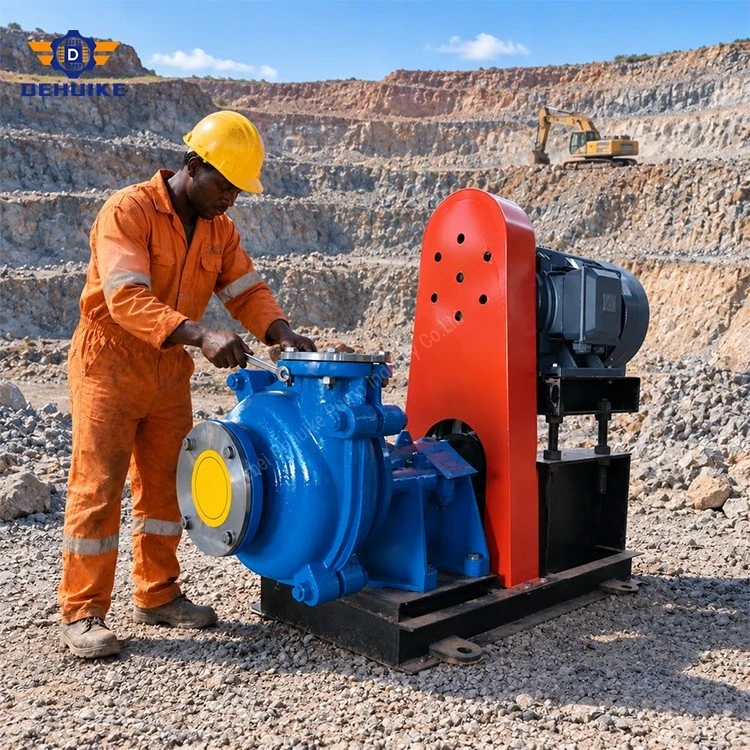
Specifications/Technical Parameters/Technical Data: Performance Boundaries and Standard Ratings
Precise equipment sizing is essential to match pump performance with pipeline friction losses and static elevation requirements. Evaluating a Wear Resistant Horizontal Slurry Pump involves reviewing key hydraulic parameters, material options, and certified performance curves.
Engineering Parameters and Operating Boundaries
|
Engineering Parameter |
Certified Operational Boundary / Technical Rating |
|
Equipment Series / Model Line |
DAH Heavy Duty Wear Resistant Series |
|
Pump Architecture |
Horizontal, single-stage, end-suction, overhung cantilever centrifugal layout |
|
Volumetric Throughput Range |
Continuous operating flow capacities up to 5,400 m³/h |
|
Total Dynamic Discharge Head (H) |
Developed discharge heads up to 120 meters |
|
Rotational Speed Spectrum |
Variable operating speeds spanning 370 to 3,500 RPM |
|
Suction / Discharge Flange Sizes |
Standard nominal diameters from 25 mm to 500 mm (1 to 20 inches) |
|
Slurry Operating Temperature Limits |
Standard limits from 1°C to 90°C (High-temperature options up to 110°C) |
|
Outer Structural Armor Metallurgy |
High-grade ductile iron with external structural stiffening ribs |
|
Metallic Wet-End Liner Alloy |
Hypereutectic 27% Chromium white cast iron (Hardness: 58-62 HRC) |
|
Elastomeric Wet-End Alternative |
Molded natural rubber / specialized synthetic polyurethane liners |
|
Shaft Sealing Configurations |
Hydrodynamic expeller dynamic seal; gland packing; heavy-duty mechanical seal |
|
Drive Transmission Options |
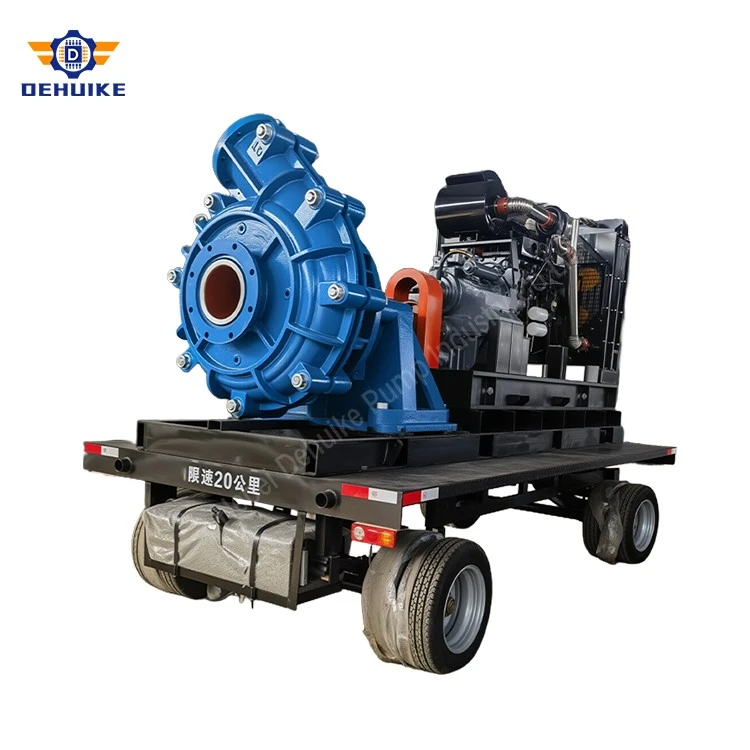
Direct-coupled electric motor (DC), variable V-belt drives (CRz, CLz, ZV, CV), or diesel engines |
|
Engineering Adaptation Scope |
Custom impeller trimming, specialized baseplates, motor voltage/frequency options |
Standard Model Performance Matrix across Typical Process Sizes
The following engineering reference table presents verified performance ratings for representative DAH slurry models operating on ambient clear-water test loops, detailing volumetric capacities, operating heads, motor ratings, and impeller configurations:
|
Model Identification |
Discharge Size (Inches / mm) |
Practical Slurry Duty |
Flow Capacity Band (m³/h) |
Operating Head Band (m) |
Rotational Speed Band (RPM) |
Maximum Permissible Power (kW) |
Wet-End Metallurgy |
Impeller Diameter (mm) |
Test Curve Index |
|
Model 6/4D-HH |
4" (100 mm) |
High-pressure multi-stage lift |
162 to 360 m³/h |
12 to 56 m |
800 - 1550 RPM |
60 kW |
27% High-Cr Alloy |
365 mm (5 Vanes) |
WPA64A01 |
|
Model 6/4E-DAH |
4" (100 mm) |
Grinding mill discharge |
180 to 396 m³/h |
7 to 60 m |
600 - 1600 RPM |
120 kW |
27% High-Cr Alloy |
372 mm (4 Vanes) |
WPA64F02 |
|
Model 6/4D-DAH (RU) |
4" (100 mm) |
Acidic flotation concentrate |
144 to 324 m³/h |
12 to 45 m |
800 - 1350 RPM |
60 kW |
Premium Natural Rubber |
365 mm (5 Vanes) |
WPA64A03A |
|
Model 6/4E-DAH (2V) |
4" (100 mm) |
Unclassified coarse gravel |
144 to 324 m³/h |
10 to 52 m |
800 - 1600 RPM |
120 kW |
27% High-Cr Alloy |
371 mm (2 Vanes) |
WPA64A04 |
|
Model 6/4S-HH |
4" (100 mm) |
Severe deep-shaft mine dewatering |
324 to 720 m³/h |
30 to 118 m |
600 - 1000 RPM |
560 kW |
27% High-Cr Alloy |
711 mm (5 Vanes) |
WPA64BDLM |
|
Model 6S-H |
6" (150 mm) |
Primary hydrocyclone feed |
468 to 1008 m³/h |
20 to 94 m |
500 - 1000 RPM |
560 kW |
27% High-Cr Alloy |
711 mm (5 Vanes) |
WPA66A9I |
|
Model 8/6E-DAH |
6" (150 mm) |
Plant tailings transfer line |
360 to 828 m³/h |
10 to 61 m |
500 - 1140 RPM |
120 kW |
27% High-Cr Alloy |
510 mm (5 Vanes) |
WPA86A0 |
|
Model 8/6R-DAH |
6" (150 mm) |
Heavy-density mineral slurry |
360 to 828 m³/h |
7 to 70 m |
400 - 1140 RPM |
300 kW |
27% High-Cr Alloy |
536 mm (8 Vanes) |
WPA86A02 |
|
Model 8/6E-DAH (RU) |
6" (150 mm) |
Corrosive silica sand washing |
360 to 828 m³/h |
7 to 52 m |
400 - 1000 RPM |
120 kW |
Premium Natural Rubber |
536 mm (4 Vanes) |
WPA86A03 |
|
Model 8/6T-HH |
6" (150 mm) |
High-head tailings overland route |
576 to 1152 m³/h |
32 to 95 m |
450 - 725 RPM |
1200 kW |
27% High-Cr Alloy |
965 mm (5 Vanes) |
WPA86E0 |
|
Model 10/8E-M |
8" (200 mm) |
Large-volume tailings disposal |
540 to 1228 m³/h |
15 to 61 m |
600 - 1100 RPM |
120 kW |
27% High-Cr Alloy |
549 mm (4 Vanes) |
WPA108B0 |
|
Model 10/8R-M |
8" (200 mm) |
Dredge sludge & thickener feed |
666 to 1440 m³/h |
14 to 60 m |
600 - 1100 RPM |
300 kW |
27% High-Cr Alloy |
549 mm (5 Vanes) |
WPA108B03 |
|
Model 10/8R-M (RU) |
8" (200 mm) |
Fine chemical tailings transfer |
540 to 1188 m³/h |
10 to 42 m |
500 - 900 RPM |
300 kW |
Premium Natural Rubber |
549 mm (5 Vanes) |
WPA108B0SA |
Experience and Markets: Proven Deployment Across International Mining and Processing Basins
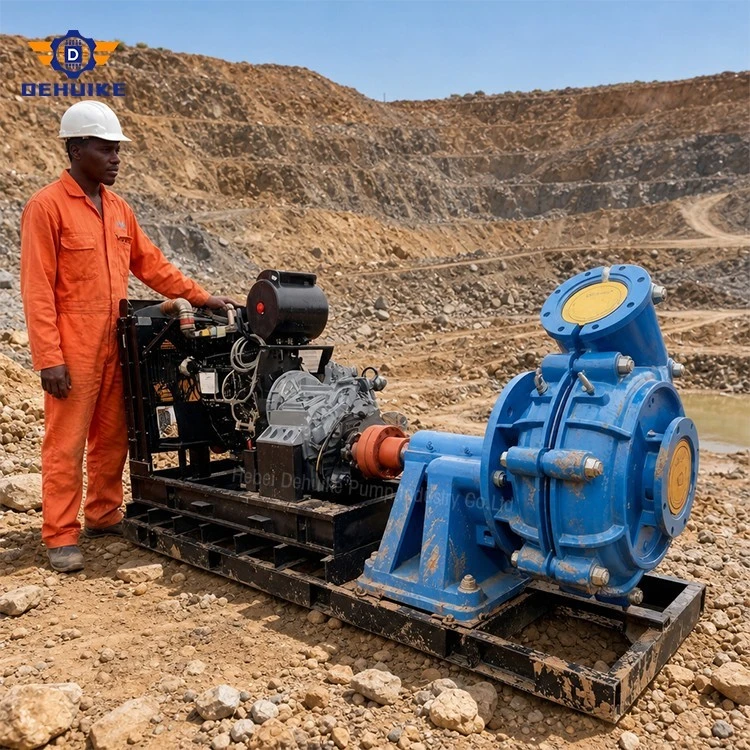
Real-world reliability is validated in demanding field operating conditions. Over more than three decades of specialized fluid machinery engineering, our slurry pumping equipment has achieved an established international footprint across more than 50 countries.
North and South American Mining Operations
In the expansive copper and gold mining belts of Chile, Peru, and Mexico, mineral processing plants operate massive grinding circuits handling highly abrasive quartz ores. DAH pumps serve on primary cyclone feed and rougher flotation feed circuits, maintaining continuous operation under abrasive slurry gravities exceeding 1.45. In North American aggregate and industrial sand facilities, our rubber-lined and high-chrome units handle high-tonnage silica sand washing with exceptional wear life, significantly reducing maintenance frequency compared to standard commercial alternatives.
Asia-Pacific and Central Asian Beneficiation Projects
Across copper-gold deposits in Central Asia and major coal processing corridors in Southeast Asia, our equipment operates in remote installations subject to extreme ambient temperatures ranging from -30°C in winter to +45°C in summer. These installations demonstrate the durability of the cartridge bearing design and thermal stability of our high-chromium casting metallurgy. In coal preparation facilities, our heavy-medium pumps circulate dense magnetite suspensions continuously, preserving precise specific gravity separation cutoffs with minimal hydraulic pulsation.
African Metallurgical and Dredging Corridors
Across phosphate mining in North Africa, gold processing in West Africa, and mineral sands dredging along coastal deposits, our slurry pumps deliver dependable hydraulic transport under difficult logistical conditions. By maintaining high interchangeability across wear components and providing standardized component identification, remote mine sites minimize parts inventories while ensuring rapid turnaround during scheduled maintenance shutdowns.
Application: Demanding Industrial Processing Duties
Industrial operating facilities present diverse slurry conditions ranging from coarse gouging slurries to chemical slurries containing fine suspended particles. Installing an engineered Wear Resistant Horizontal Slurry Pump ensures process stability across key plant operations:
Hard Rock Mineral Processing Circuits
Primary Ball Mill and Rod Mill Discharge: Mill discharge slurries contain unclassified crushed rock fragments up to 6 mm in size with sharp fracture planes. High-chrome DAH pumps provide the necessary abrasion resistance and throat clearances to convey dense, high-velocity slurries directly to classification cyclones.
Flotation Bank Feed and Tailings Disposal: Flotation circuits require continuous, non-pulsating volumetric throughput to maintain optimum chemical residence times. DAH units transport ground mineral slurries through conditioning tanks and deliver final tailings over multi-kilometer overland pipelines to retention facilities.
Leach Residue and Acid Mine Effluent: Where process liquors contain dilute acids combined with fine abrasive residue, rubber-lined DAH pumps deliver dual protection against aggressive chemical attack and abrasive erosive scouring.
Coal Preparation and Heavy Media Washing
Dense Medium Cyclone Feed: Dense media circuits use fine magnetite suspensions to separate clean coal from rock reject based on specific gravity differentials. Stable, non-surging delivery from DAH pumps maintains constant pressure at cyclone inlets, maximizing coal yield.
Refuse Thickener Underflow: Settled coal reject drawn from thickener cones exhibits non-Newtonian flow behavior with high apparent viscosities. Heavy cantilever shaft designs easily manage the high starting torque and continuous mechanical loads imposed by thick underflow pastes.
Sand, Gravel, and Marine Dredging
Aggregate Classification and Sand Dewatering: Quarry wash plants use horizontal slurry pumps to elevate dredged gravel and sand mixtures to vibrating dewatering screens and classification cyclones. Large internal clearances prevent tramp stone jamming.
Harbor and Sump Dredging: Industrial sumps, settling lagoons, and process drainage pits accumulate heavy sediments that must be periodically evacuated. DAH units efficiently pump high-density silt and sediment mixtures to dewatering presses or disposal areas.
Thermal Energy and Flue Gas Treatment
Boiler Bottom Ash Sluicing: Coal-fired thermal generation stations require reliable hydraulic removal of heavy bottom ash clinkers. High-chrome DAH pumps handle the thermal shock and sharp particle impingement generated during boiler ash dumping.
Flue Gas Desulfurization (FGD) Limestone Slurry: Scrubbing sulfur dioxide from combustion exhaust gases involves circulating abrasive limestone slurries. DAH pumps equipped with specialized alloy or elastomer wet ends maintain continuous recirculation in absorber towers without premature erosion.
Quality Assurance: Inspection Protocols, Non-Destructive Testing, and Performance Benchmarking
Plant availability depends on uncompromised manufacturing standards. Guaranteeing the operating longevity of every Wear Resistant Horizontal Slurry Pump requires comprehensive non-destructive testing and empirical bench validation. Our rigorous quality framework enforces systematic controls across each conversion stage from molten furnace charge to finished crate assembly.
Metallurgical Validation and Melt Chemistry Control
Optical Emission Spectrometric Assay: Before tapping electric induction melts, technicians extract chilled spoon samples for direct-reading optical emission spectrometry (OES). The quantitative analysis confirms precise proportions of carbon, chromium (stabilized at 27%), molybdenum, manganese, and nickel within strict metallographic tolerances.
Indentation Hardness Mapping: Subsequent to controlled austenitizing and forced-draft air quench cycles, each individual wear casting undergoes multi-point Rockwell C testing across high-impingement zones, ensuring uniform structural hardness strictly between 58 and 62 HRC.
Microstructural Carbide Characterization: Polished specimen cross-sections are subjected to metallurgical microscopic inspection to confirm a dense, discontinuous distribution of wear-resistant primary M7C3 carbides thoroughly embedded in an abrasion-resistant martensitic matrix.
Structural Integrity and Non-Destructive Flaw Detection (NDT)
Pulse-Echo Ultrasonic Examination: Structural ductile iron armor castings and forged alloy drive shafts undergo 100% pulse-echo ultrasonic testing (UT) adhering to ASTM specifications, confirming absolute freedom from hidden subsurface voids, hot tears, or internal inclusions.
Magnetic Particle Crack Detection: Highly stressed fillet transitions, bearing fit journals, and flange bolt patterns receive comprehensive magnetic particle inspection (MT) to intercept micro-discontinuities prior to final machining.
Hydrostatic Shell Proof Testing: Fully assembled ductile iron outer casings undergo hydrostatic pressure proof testing at 150% of maximum rated working pressure, sustained under continuous gauge monitoring for 30 minutes to verify total structural containment.
Closed-Loop Hydrodynamic Testing and Instrumentation
Every pump assembly undergoes dynamic verification on our computerized closed-loop hydraulic testing station prior to final customer acceptance:
Hydraulic Curve Logging: Calibrated electromagnetic meters, piezoresistive pressure transmitters, and digital torque transducers accurately plot flow rates (Q), developed heads (H), power inputs (P), and hydraulic efficiencies (η) across the operational envelope.
Triaxial Vibration Analysis: Multi-channel accelerometers attached to bearing housings measure vibration velocities (RMS, mm/s) and peak-to-peak displacements to guarantee full compliance with ISO 10816-3 Grade A/B vibration limits.
Continuous Thermal Profiling: Infrared thermography and embedded temperature probes track bearing lubrication dynamics under full continuous operating speed, confirming operating equilibrium well beneath critical thermal boundaries.
Certified Quality Dossier: Each delivered unit is accompanied by full manufacturing provenance documentation, comprising ISO 9001 compliance records, certified FAT hydraulic test curves, material mill sheets, hydrostatic inspection certificates, and serialized operating manuals.
Frequently Asked Questions (FAQ)
FAQ

01.When configuring a Wear Resistant Horizontal Slurry Pump, how should plant operators choose between high-chromium alloy and molded rubber liners?
The choice depends primarily on slurry particle size, particle angularity, and process chemistry:
High-Chromium Alloy (27% Cr): Ideally engineered for slurries containing coarse, sharp particles larger than 5 mm (such as ball mill discharge, gravel, and heavy mineral ores) where high-stress impact and cutting abrasion predominate. It also withstands elevated operating temperatures up to 90°C (or 110°C with thermal configurations).
Molded Natural Rubber / Elastomers: Highly effective for fine-particle slurries (typically particle sizes below 5 mm, such as flotation tailings and fine sand) where elastic resilience absorbs particle impact without surface cutting. Rubber also offers superior chemical resistance against moderate acids, alkalis, and corrosive brine solutions.
02.What causes accelerated throatbush wear, and how is it corrected in the field?
Throatbush wear typically accelerates when the axial clearance between the rotating impeller front shroud and the stationary throatbush widens due to ongoing particle erosion. As this running gap enlarges, high-pressure slurry recirculates back into the low-pressure suction eye, creating localized high-velocity eddy currents that rapidly scour the throatbush face.
Field Adjustment Procedure: The DAH series features an external bearing cartridge adjustment mechanism. By loosening the clamp bolts and turning the calibrated rear jacking screw, maintenance personnel can move the entire rotating assembly forward, restoring optimal operating clearance (typically 0.5 to 1.0 mm) without opening the casing or disconnecting piping.
03.Can the centrifugal expeller dynamic seal operate without clean gland seal water?
Yes. The centrifugal expeller seal is specifically designed for dry or semi-dry dynamic operation where external gland sealing water is unavailable, costly, or where process dilution must be avoided:
Operating Principle: During shaft rotation, the auxiliary expeller disc generates a counter-centrifugal pressure field that exceeds the slurry pressure behind the impeller, forming a liquid-free dynamic pressure barrier that prevents slurry from reaching the shaft sleeve.
Static Sealing: Soft packing rings or grease-lubricated elastomer lip seals provide reliable static sealing when the pump stops rotating. Grease lubrication via an external grease cup maintains seal flexibility during shutdowns.
04.How does slurry density and particle size affect motor selection and pump head?
Pumping solids-bearing mixtures requires calculating the slurry's specific gravity (Sm) and volumetric solids concentration (Cv):
Motor Power Requirement: Brake horsepower increases directly with slurry specific gravity ($P_{slurry} = P_{water} imes S_m$). Adequate motor power margins (typically 15% to 25% safety factor) must be selected to prevent motor overload during transient slurry density spikes.
Hydraulic Head Derating: Solid particles do not store or transmit pressure energy as efficiently as carrier liquids. For heavy slurries, hydraulic derating factors for head ($H_r$) and efficiency ($\eta_r$) must be applied to clear-water performance curves to ensure the pump develops sufficient dynamic head to overcome pipeline friction and avoid line settling.
05.What preventive maintenance routines reliably optimize bearing assembly lifespan?
To ensure dependable bearing performance under continuous heavy-duty service:
Lubrication Maintenance: Maintain strict grease replenishment intervals using high-grade lithium-complex extreme-pressure (EP) greases. Avoid over-greasing, which can cause excessive churning heat and seal displacement.
Vibration and Temperature Monitoring: Perform regular vibration spectrum checks and bearing housing temperature logs. Baseline shifts often provide early warnings of misalignment, unbalance, or initial bearing fatigue.
Labyrinth Seal Integrity: Ensure grease purge channels on bearing cover labyrinths remain clear and pressurized, preventing slurry splashes and environmental moisture from contaminating bearing cavities.
Hot Tags: wear resistant horizontal slurry pump, China wear resistant horizontal slurry pump manufacturers, suppliers, factory