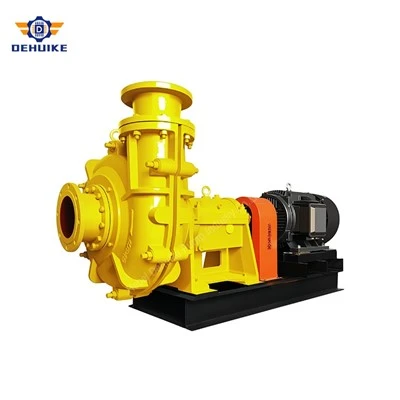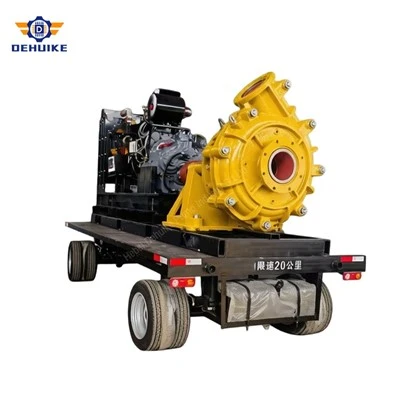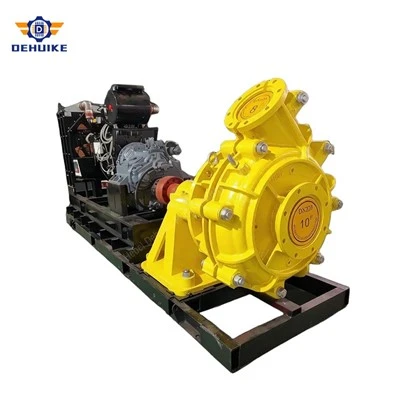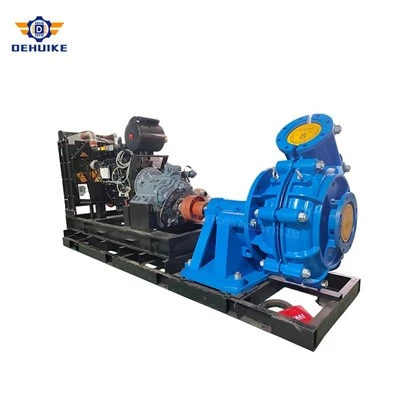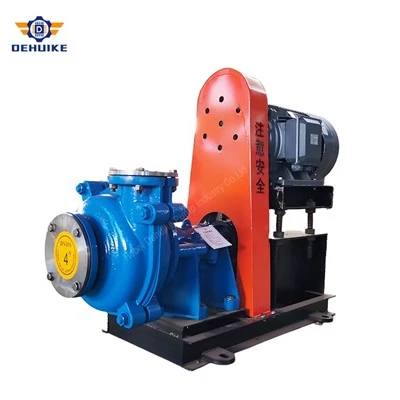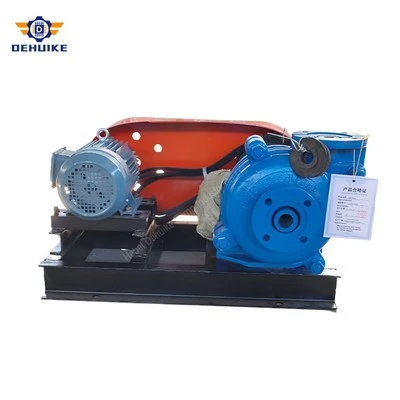

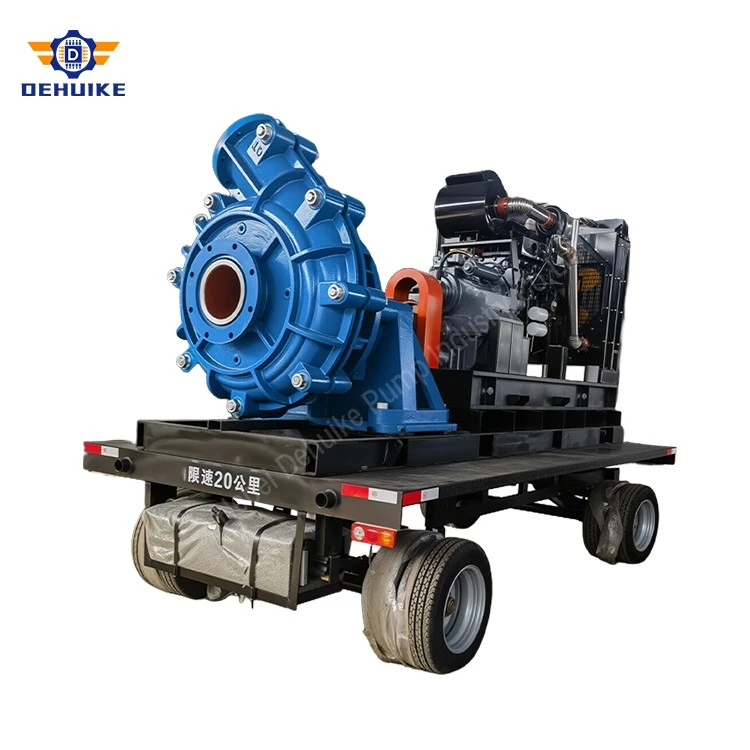
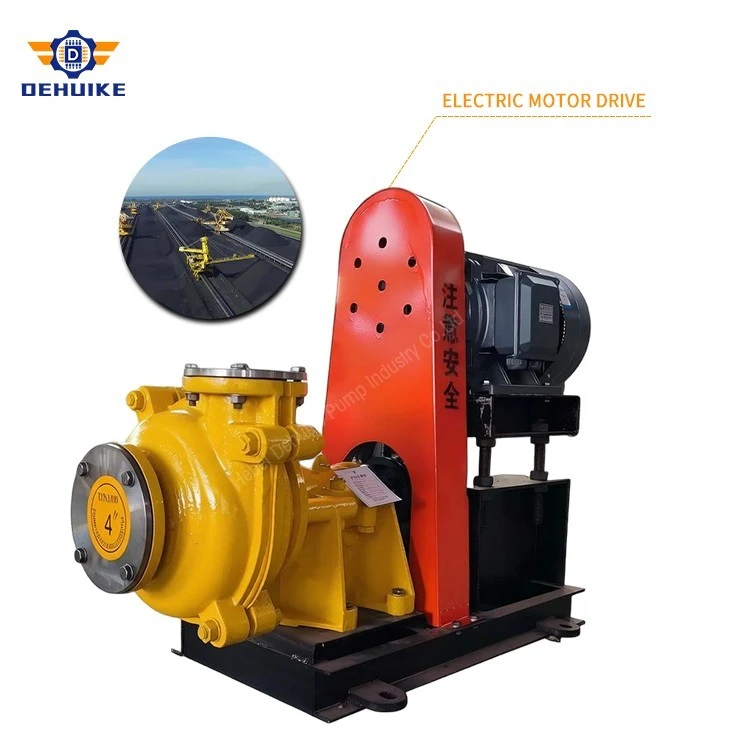
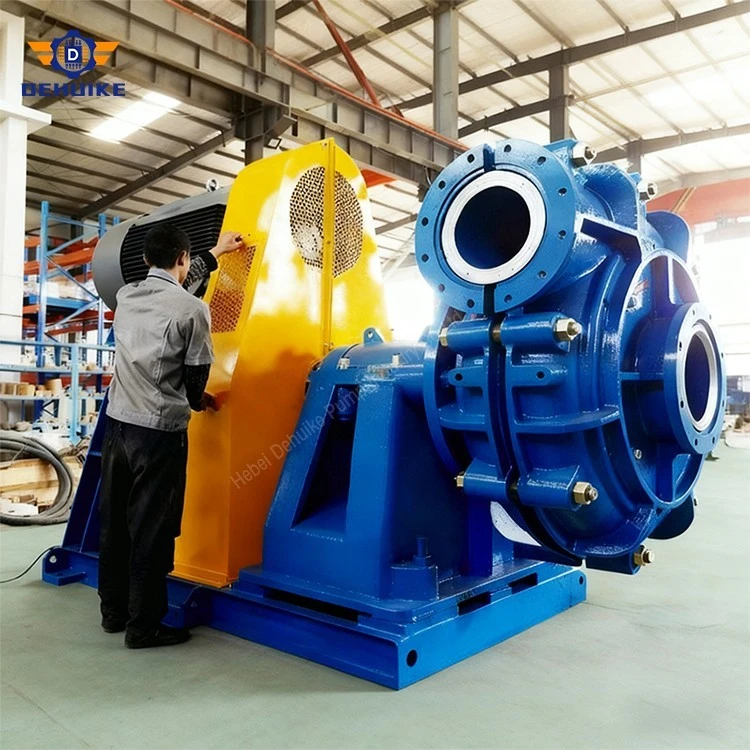
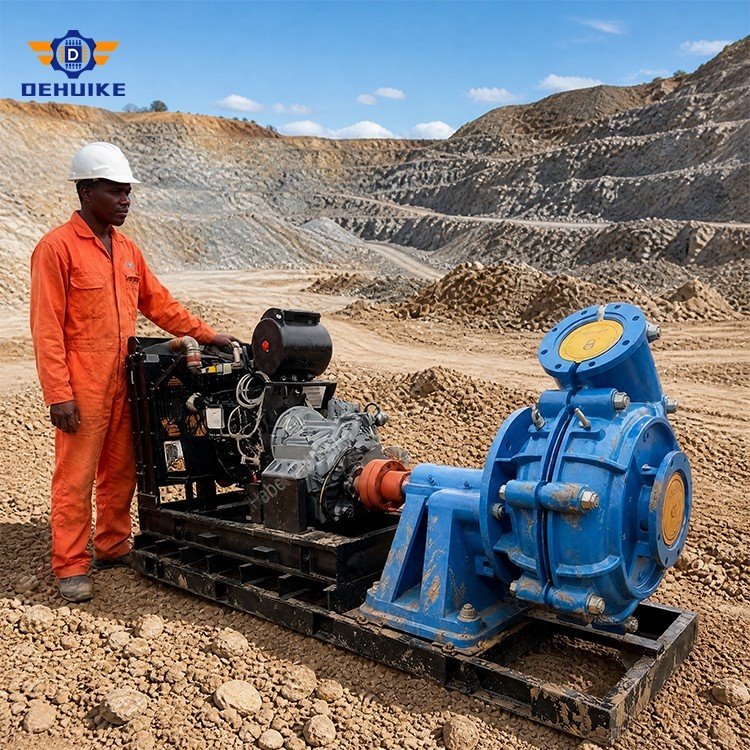
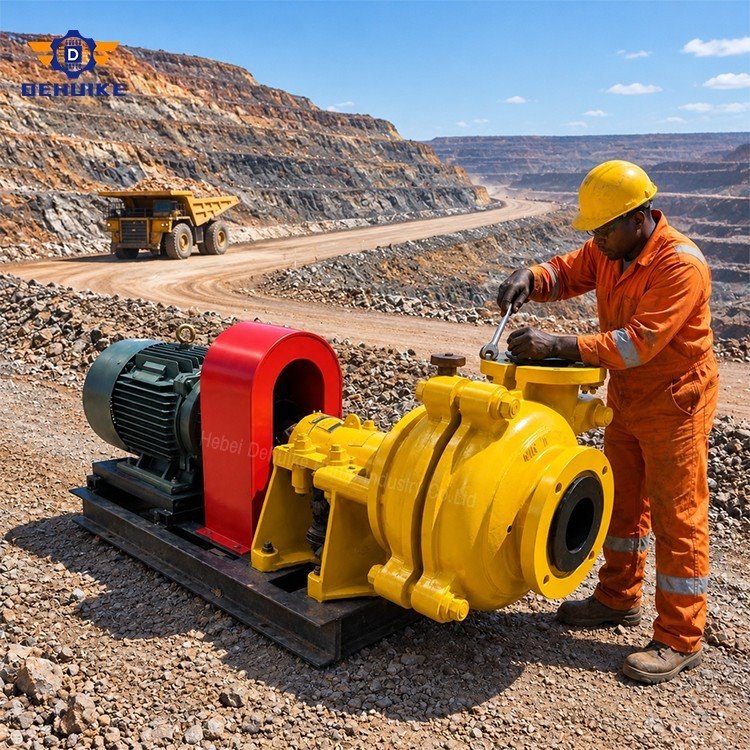
Hebei Dehuike Pump Industry Co., Ltd. is one of the most reliable manufacturers and suppliers of mining slurry pump in China. With abundant experience, we are committed to providing high quality customized pumps with competitive price. Welcome to wholesale bulk mining slurry pump for sale here from our factory. Also, pricelist is available.
Introduction
Mining Slurry Pump for Mineral Processing Lines
A Mining Slurry Pump is selected for the point in a mine or mineral-processing plant where water carries ore particles, concentrate, fines or tailings from one process stage to another. The pump is not simply a larger water pump. Its internal passage, wet-end materials, sealing arrangement and operating point must be considered together because solids change both the hydraulic load and the wear pattern.
The equipment may be installed in a mill discharge line, cyclone feed circuit, flotation section, concentrate transfer line, dewatering system or tailings pipeline. Each duty creates a different combination of particle size, solids concentration, density, temperature and suction condition. A pump that works acceptably with dilute process water may be unsuitable for dense mill discharge. For this reason, the Mining Slurry Pump should be specified against an actual duty point and a complete slurry description.
A practical product detail review normally covers the pump casing, impeller, frame, shaft, bearings, seal chamber, liners and connection arrangement. It should also clarify whether the pump will be driven by an electric motor, a variable-speed arrangement or another approved drive. The selected configuration must be checked against the process drawing before it is released for production.
The buyer's application may require a metal wet end, an elastomer-lined wet end or another material combination. No single material is correct for every mine. Hard, coarse particles can create impact and sliding abrasion, while fine particles and chemical additives may create a different wear or compatibility problem. Material selection should therefore use slurry test data, operating history or a documented process estimate rather than a general label such as "ore slurry."
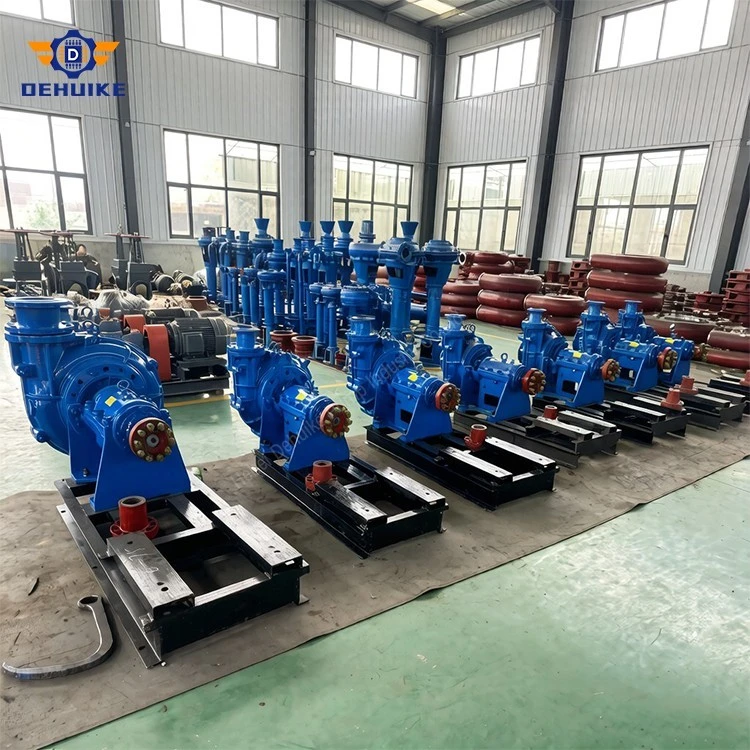
Production Process
The manufacturing route for a Mining Slurry Pump should be controlled around the parts that influence hydraulic fit, wear life and mechanical alignment. The exact route varies with the confirmed pump series and material specification, but a project review can normally follow these stages:
1. Technical review and configuration confirmation
The flow, total head, slurry density, solids concentration, particle size, temperature and chemical conditions are reviewed first. The pump model, impeller option, wet-end material, seal arrangement and drive details are then matched to the approved duty point.
2. Material preparation and casting or forming
Casing parts, impellers and liners are produced according to the selected material route. Material identification and dimensional allowances should be maintained through the process. If a lined construction is selected, the liner geometry and bonding or fitting requirements must follow the approved design.
3. Machining of hydraulic and rotating parts
Connection faces, bearing seats, shaft locations and other critical surfaces are machined to the drawing. The impeller and casing fit must be checked because excessive clearance can affect efficiency, recirculation and wear, while insufficient clearance may create interference during operation.
4. Shaft, bearing and seal-area assembly
The shaft assembly, bearings, seal chamber and frame components are assembled according to the selected arrangement. Packing, mechanical seal or another sealing method should not be substituted without confirming compatibility with the medium and the pump design.
5. Alignment, inspection and performance confirmation
The coupling, base and rotating assembly are checked for alignment and free movement. Where the supply scope includes a performance test, the test method, acceptance point and recorded values should be agreed before testing. The final records should correspond to the ordered model, not to a different pump in the same family.
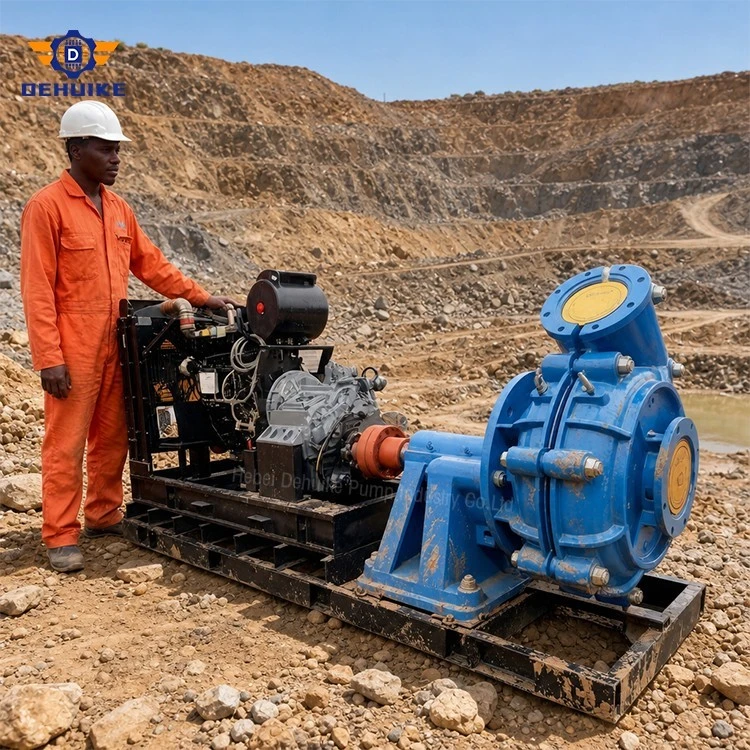
A transparent production process helps the buyer understand which information is fixed by the design and which items remain configuration-dependent. It also creates a clearer basis for spare-parts identification when the mine later needs an impeller, liner or sealing component.
|
MODEL |
Maximum |
Material |
Fresh Water Performance |
Curve |
||||||||
|
Sheath |
Impeller |
Flow Q |
Flow Q |
LIFT |
Rotation |
Maximum |
Corrosion |
Blade |
Impellers |
|||
|
8/6E-DAH |
120 |
M |
M |
324~720 |
90~200 |
7~49 |
400~1000 |
65 |
5~10 |
5 |
510 |
WPA86A01B |
|
8/6R-DAH |
300 |
M |
M |
324~720 |
90~200 |
7~49 |
400~1000 |
65 |
5~10 |
5 |
510 |
WPA86A01B |
|
8/6E-DAH |
120 |
M |
M |
360~828 |
100~230 |
7~70 |
400~1140 |
70 |
3~6 |
8 |
536 |
WPA86A02 |
|
8/6R-DAH |
300 |
M |
M |
360~828 |
100~230 |
7~70 |
400~1140 |
70 |
3~6 |
8 |
536 |
WPA86A02 |
|
8/6E-DAH |
120 |
RU |
RU |
360~828 |
100~230 |
7~52 |
400~1000 |
70 |
2.5~6 |
4 |
536 |
WPA86A03 |
|
8/6R-DAH |
300 |
RU |
RU |
360~828 |
100~230 |
7~52 |
400~1000 |
70 |
2.5~6 |
4 |
536 |
WPA86F03 |
|
8/6E-DAH |
120 |
M |
M |
288~648 |
80~180 |
5~47 |
400~1100 |
60 |
3~6 |
2 |
510 |
ESY7998 |
|
8/6R-DAH |
300 |
M |
M |
288~648 |
80~180 |
5~47 |
400~1100 |
60 |
3~6 |
2 |
510 |
ESY7998 |
|
8/6T-HH |
1200 |
M |
M |
576~1152 |
160~320 |
32~95 |
450~725 |
65 |
6~10 |
5 |
965 |
WPA86E0 |
|
10/8E-M |
120 |
M |
M |
540~1228 |
150~340 |
15~61 |
600~1100 |
70 |
4.5~8 |
4 |
549 |
WPA108B0 |
|
10/8R-M |
300 |
M |
M |
540~1228 |
150~340 |
15~61 |
600~1100 |
70 |
4.5~8 |
4 |
549 |
WPA108B0 |
|
10/8E-M |
120 |
M |
M |
504~108 |
140~300 |
18~66 |
700~1100 |
62 |
4.5~7.5 |
4 |
549 |
WPA108B02 |
|
10/8R-M |
300 |
M |
M |
504~108 |
140~300 |
18~66 |
700~1100 |
62 |
4.5~7.5 |
4 |
549 |
WPA108B02 |
|
10/8E-M |
120 |
M |
M |
666~144 |
185~400 |
14~60 |
600~1100 |
73 |
4~10 |
5 |
549 |
WPA108B03 |
|
10/8R-M |
300 |
M |
M |
666~144 |
185~400 |
14~60 |
600~1100 |
73 |
4~10 |
5 |
549 |
WPA108B03 |
|
10/8E-M |
120 |
RU |
RU |
540~1188 |
150~330 |
10~42 |
500~900 |
79 |
5~9 |
5 |
549 |
WPA108B0SA |
|
10/8R-M |
300 |
RU |
RU |
540~1188 |
150~330 |
10~42 |
500~900 |
79 |
5~9 |
5 |
549 |
WPA108B0SA |
Our Service
For an engineering buyer, service begins before the quotation. The useful first step is to place the slurry data into a selection record rather than asking the buyer to choose a pump by diameter alone. The record can include the required flow, total head, slurry specific gravity, solids concentration, maximum particle size, pH, temperature, suction condition, pipeline length and motor power supply.
After the duty is clarified, the available service scope may include model comparison, outline-drawing review, wet-end material discussion, drive selection, spare-parts planning and documentation coordination. These items depend on the confirmed supply scope and should be listed in the quotation so both sides understand what is included.
During order execution, the buyer may need confirmation of nameplate data, coupling dimensions, base arrangement, seal-water requirements, lubrication points and recommended commissioning checks. A practical service package should answer these questions with the ordered configuration in mind rather than sending a generic pump manual.
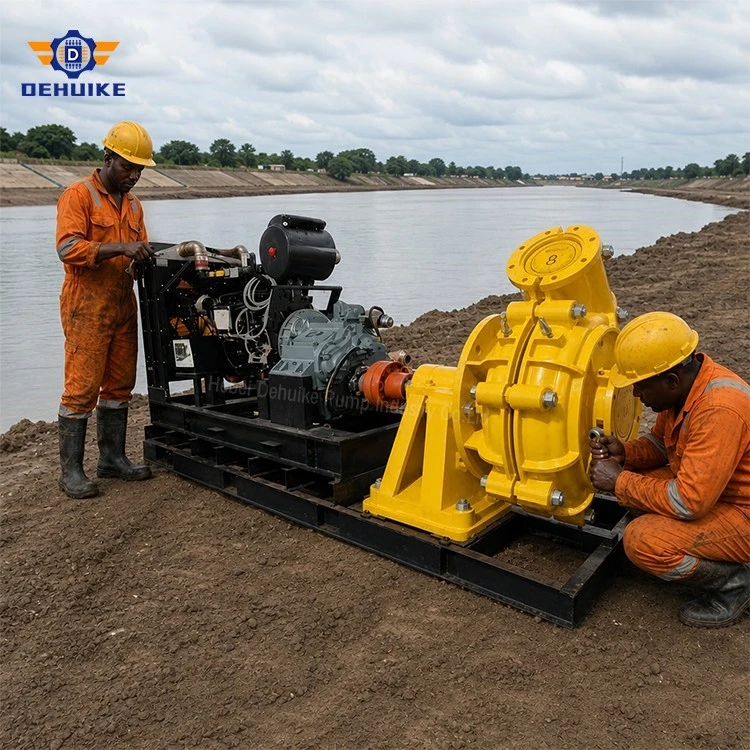
After delivery, installation guidance can cover foundation preparation, pipe support, alignment, rotation direction, priming or filling, start-up observations and initial inspection. Remote technical communication may be arranged when included in the agreed service scope. Replacement parts should be identified by model, drawing reference or part number; photographs alone are not always sufficient for a slurry pump because similar-looking liners may have different dimensions or materials.
Experience and Markets
The Mining Slurry Pump is relevant to several purchasing environments, but each market has its own operating priorities. A mine operator usually focuses on wear-part life, stable transfer and the effect of the pump on plant availability. An engineering contractor may give greater attention to curve data, dimensions, motor selection, interfaces and documentation. A distributor often needs a clear model range, spare-parts logic and a practical way to collect end-user duty information.
For hard-rock mining, coarse particles and high solids can make impact and abrasion the main concerns. In concentrator circuits, the pump may be connected to classification, flotation or concentrate duties where the density and particle distribution change during operation. In tailings service, settling behavior and pipeline resistance become important. Sand and aggregate plants may require a different balance between particle passage, wear control and water content.
These market situations should not be treated as interchangeable applications. The term "mining pump" describes a field, not a complete duty specification. A reliable selection conversation should identify the process stage, medium condition and operating pattern for the buyer's site. That information supports a more useful comparison between pump options and reduces the risk of copying a previous installation without checking the current slurry.
Quality Assurance
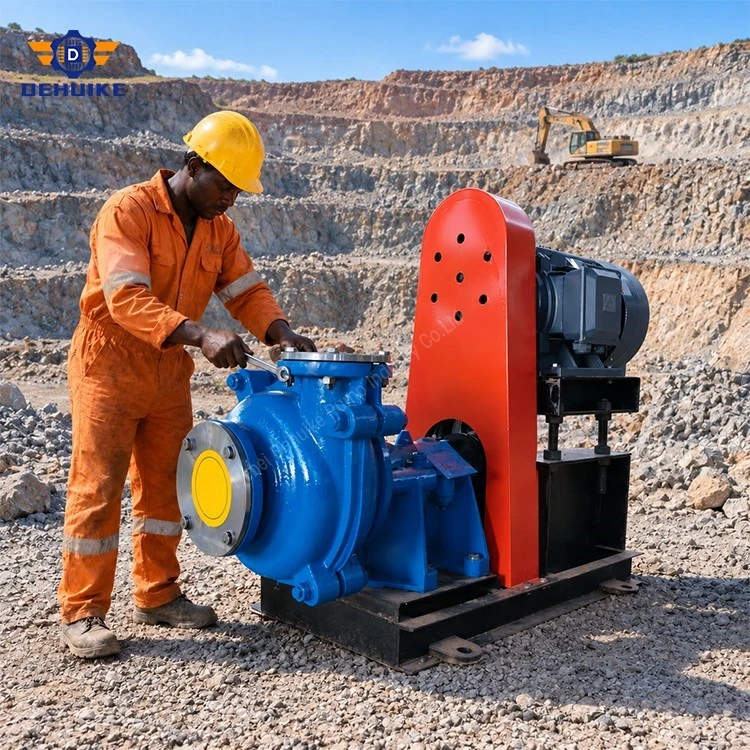
Quality assurance for a Mining Slurry Pump should be linked to verifiable checkpoints. Before production, the order information should identify the exact model, performance point, wet-end materials, sealing arrangement, drive requirements and approved drawing revision. This prevents a family-level description from being mistaken for the specification of the delivered pump.
During manufacture, useful control points may include incoming material identification, casting or forming inspection, dimensional checks on machined parts, shaft and bearing inspection, seal-area verification, coupling alignment and rotating-clearance checks. The inspection scope depends on the supply agreement, so the buyer should confirm which records, reports or certificates are included.
Before dispatch, the pump should be checked against the order and packing list. The review may cover model marking, connection dimensions, accessory quantity, spare-part labels, protective treatment and packing condition. If a performance or pressure test is included, its result should be tied to the correct model and agreed acceptance criteria.
These quality statements describe a controlled review approach, not an unsupported certification claim. ISO, CE, third-party inspection, material certificates or other documents should be listed only when they are actually available for the ordered supply. The same rule applies to warranty terms, inspection reports and delivery commitments.
Customer Questions
Q: What information is needed to select a Mining Slurry Pump?
A: Provide flow rate, total head, slurry specific gravity, solids concentration, particle size, temperature, pH, suction condition, pipeline length and power supply. A process drawing or existing pump curve is useful when available.
Q: Is a mining slurry pump suitable for tailings?
A: It may be suitable when the selected model, material and duty point match the tailings. Tailings concentration, settling tendency, particle size and pipeline resistance must be reviewed before confirmation.
Q: How is the wet-end material selected?
A: The choice depends on particle hardness, particle size, concentration, chemical conditions and temperature. Metal and lined options should be compared against the actual medium, not selected only by price.
Q: Can the same model handle different mineral slurries?
A: A model may cover more than one duty, but the operating point, speed, seal and wet-end material may need to change. Confirm the new slurry data before reusing a previous selection.
Q: What causes short wear-part life?
A: Common factors include excessive solids concentration, hard or sharp particles, operation away from the approved point, poor suction conditions, incorrect material selection and delayed inspection. The actual cause should be confirmed from operating records.
Q: What documents should accompany the quotation?
A: A useful quotation package may include the selected model, performance curve, outline drawing, motor data, material description, sealing arrangement and recommended spares, according to the confirmed scope.
Q: Can the pump be customized for a mining project?
A: Project-specific voltage, speed, seal, base, coupling and documentation may be discussed. Customization must be confirmed against the pump design and written into the final technical specification.
Q: How should the pump be operated after installation?
A: Follow the approved manual for priming, rotation direction, valve position, seal water, lubrication and start-up checks. Avoid dry running and do not operate outside the confirmed performance range.

Hot Tags: mining slurry pump, China mining slurry pump manufacturers, suppliers, factory