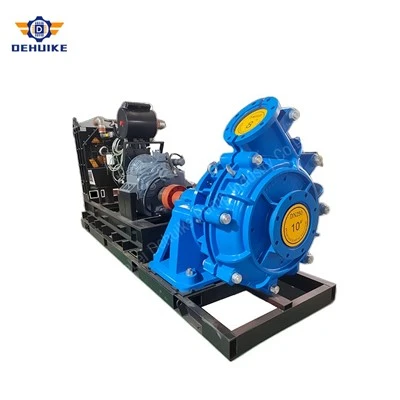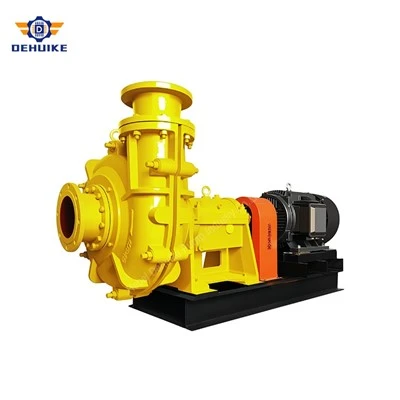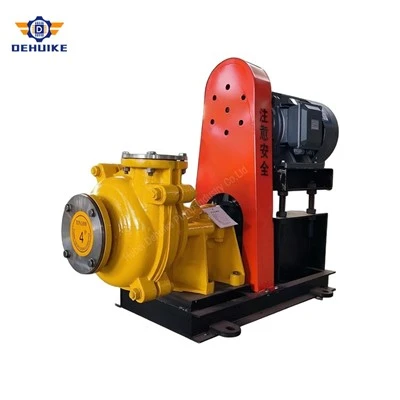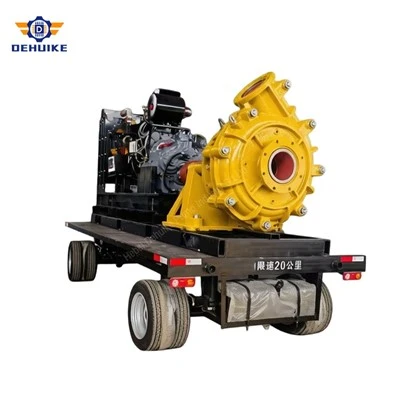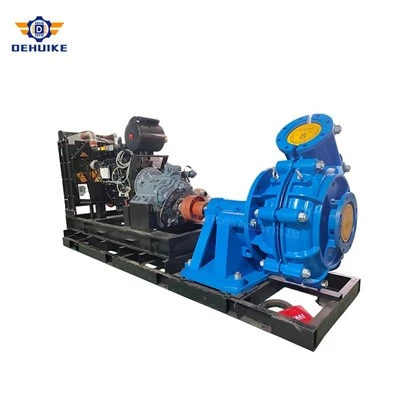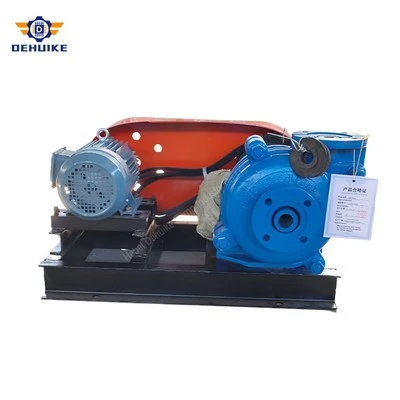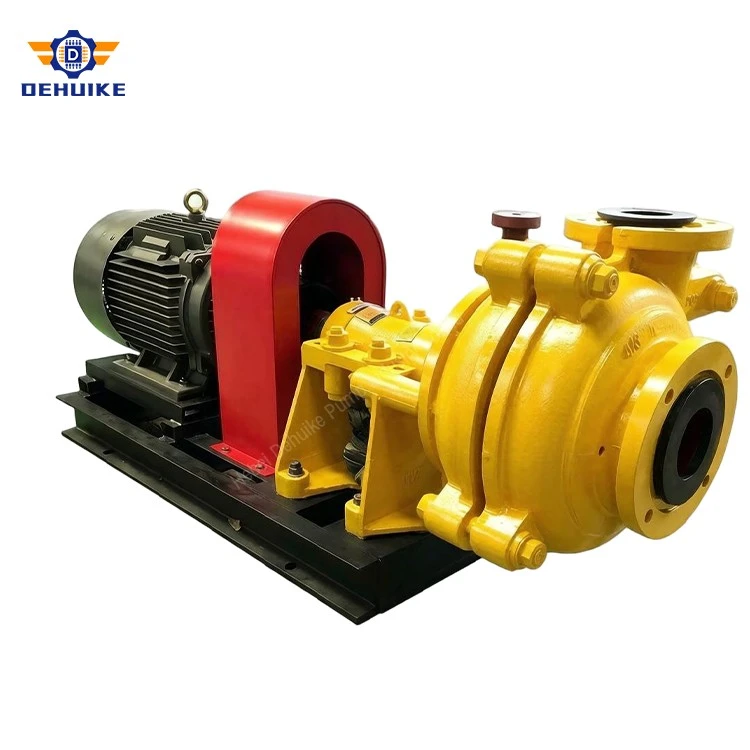
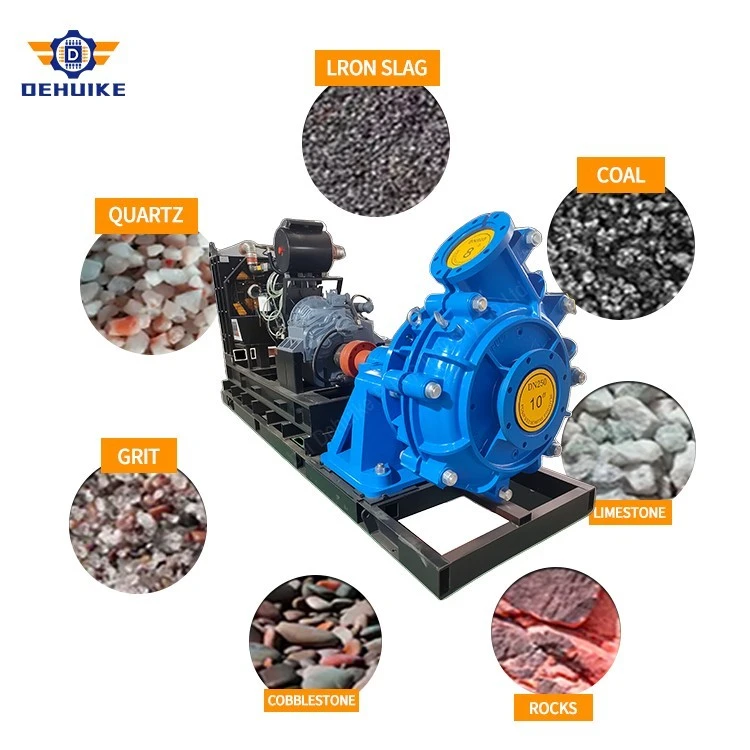
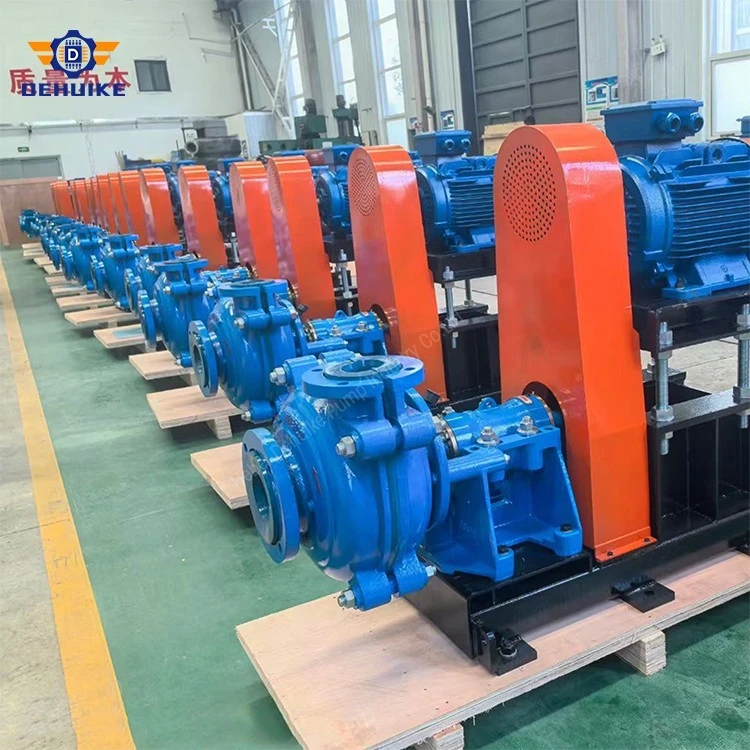
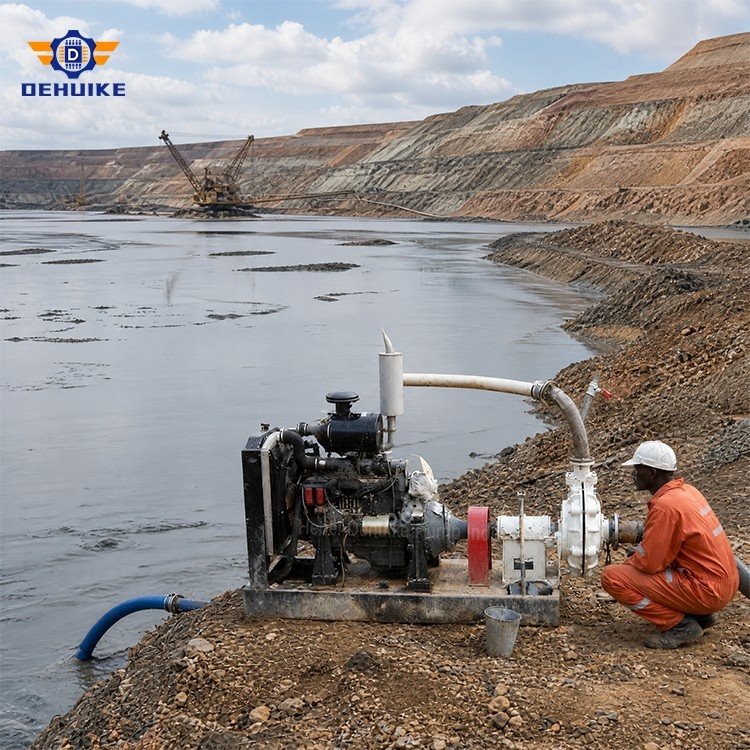
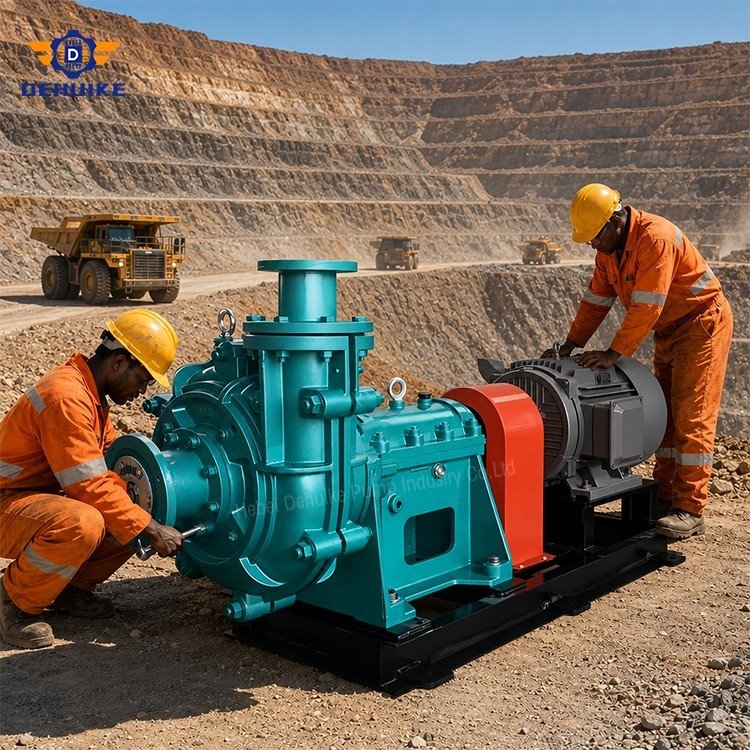
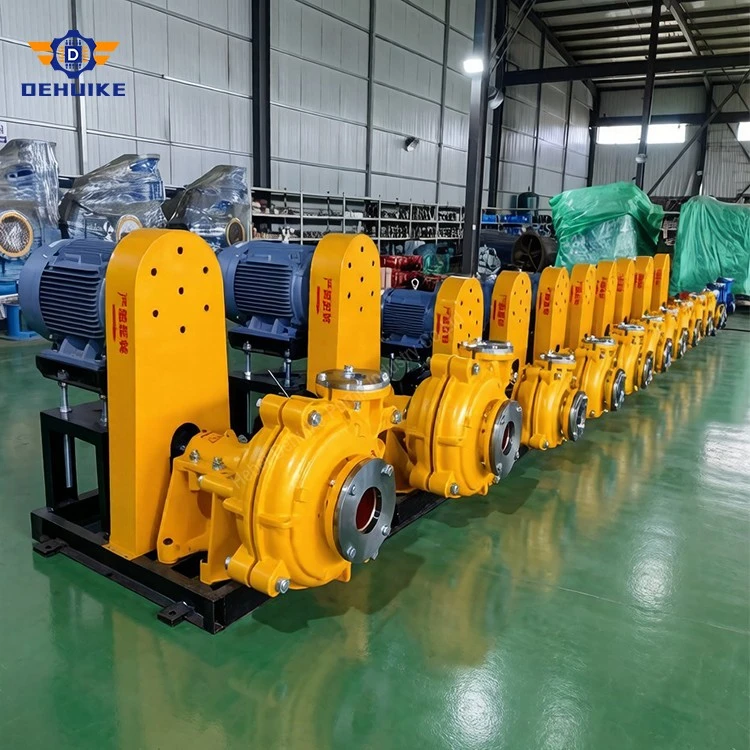
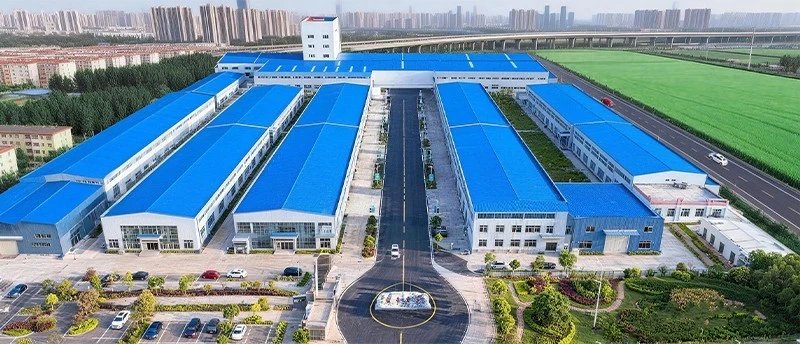
Hebei Dehuike Pump Industry Co., Ltd. is one of the most reliable manufacturers and suppliers of high chrome slurry pump in China. With abundant experience, we are committed to providing high quality customized pumps with competitive price. Welcome to wholesale bulk high chrome slurry pump for sale here from our factory. Also, pricelist is available.
Product Positioning
Ask three suppliers for a high chrome impeller and you will receive three parts that look the same, weigh about the same, and are described with the same words. In service they can differ by a factor of two or three in life. The reason is that high chrome names a family of alloys, and inside that family the carbon content, the chromium content, the alloy additions that make a thick section harden, and the soundness of the casting all move independently.
None of this is exotic metallurgy. It is the ordinary content of a material certificate, and it can be specified, measured and compared. What it cannot be is inferred from a product description, which is why two quotations that both say "high chrome alloy" may be quoting two different materials.
The structure that does the work
A high chromium wear iron is a white cast iron with roughly 23 to 30 per cent chromium and 2.4 to 3.6 per cent carbon, usually with molybdenum, nickel, copper and manganese added in small amounts. It is not a single-phase metal. The structure is a dense network of eutectic chromium carbides of the M7C3 type, standing in a matrix that is intended to be martensitic after heat treatment.
The carbides are the part that resists abrasion. Their hardness is in the region of 1,200 to 1,600 HV, which is harder than the quartz that makes up most of the sand and gangue in a typical slurry. When a quartz particle strikes the surface, it cannot cut the carbide; it can only cut the matrix between them. So the wear resistance is not a property of the alloy as a whole but of a structure: hard particles held in a hard support.
That structure explains the two failure modes that matter. If the matrix is hard, the carbides stay locked in place and the surface polishes slowly, with the carbides standing slightly proud. If the matrix is soft - because the section did not harden, or the heat treatment was wrong - the matrix erodes away first, the carbides lose their support and fall out, and the surface becomes pitted and rough. The second liner is not a softer alloy; it is the same alloy with a worse structure.
Carbide volume, matrix hardness, and section size
Carbide volume fraction is set mainly by carbon and chromium together. More carbon and more chromium mean more carbide, which raises wear resistance and lowers toughness. That trade is deliberate and directional: a liner for fine tailings can carry a high carbide fraction, while an impeller for coarse rock with occasional tramp metal needs enough matrix toughness to survive impact without spalling.
Matrix hardness is set by the heat treatment and, critically, by the section thickness. A thick liner cools more slowly in the mould and through the hardening cycle, and slow cooling lets the austenite transform to pearlite instead of martensite. Pearlite is soft. The result is a liner that measures well at the surface where the hardness was checked and is soft at the mid-section where the wear actually reaches. This is why molybdenum and nickel are added: they slow the transformation enough that a thick section still hardens through.
A buyer cannot see any of this, but a buyer can require it. Hardness quoted as a single figure "58 to 62 HRC" tells you almost nothing unless it names where it was measured. A specification that asks for hardness at the wear face and at a defined depth below it, on a section that represents the thickest part of the casting, is a specification that separates the two liners described above.
What each material clause controls, and how it can be checked
|
Clause |
What it controls |
How it is verified |
|
Chromium 23 to 30% |
Carbide volume, corrosion resistance |
Chemical analysis, ladle or product |
|
Carbon 2.4 to 3.6% |
Carbide volume against toughness |
Chemical analysis |
|
Mo, Ni additions |
Hardening through a thick section |
Chemical analysis against section |
|
Hardness at wear face |
Resistance to matrix erosion |
Test at a defined point, not a riser |
|
Hardness at depth |
Whether the core is soft |
Sectioned sample or test coupon |
|
Soundness |
Cracks, gas porosity, shrinkage |
Radiography or ultrasonic on thick parts |
The soundness question
A casting defect does not show in a hardness figure. A shrinkage cavity just under the wear surface, a gas pore, or a hairline crack from a sharp internal corner can sit in a liner that passes every dimensional and hardness check and fail in the first month, usually with a piece missing rather than a worn area.
The practical countermeasures are partly in the drawing and partly in the inspection. Generous corner radii, gradual thickness transitions and a riser arrangement that feeds the thick section are foundry decisions that a buyer rarely sees but can ask about. On the inspection side, radiography or ultrasonic examination of the thick sections, and a dye-penetrant check on machined faces, are the checks that find what hardness testing cannot.
For ordinary wear parts the cost of full radiography is hard to justify. For the large frames - the 8/6 and larger casings and impellers - it is worth a conversation, because a failed large liner costs more in downtime than the inspection ever will.
The conditions where high chrome is the wrong purchase
High chrome is an abrasion material first. Its corrosion resistance comes from the chromium in the matrix, and it is adequate for neutral and mildly alkaline slurries, but it is not a stainless alloy. Below about pH 4, the matrix corrodes and the carbides are undermined, and the surface fails by a combination of corrosion and erosion that looks like accelerated wear. High chloride concentrations do the same at higher pH, because chlorides attack the passive film locally and pit the matrix.
Temperature is the second limit. The alloy is used in slurry service across a broad range, but very hot and chemically aggressive streams call for a different material decision - an elastomer lining, a stainless or duplex wet end, or a ceramic - and the pump should be re-selected rather than re-lined. A high chrome part installed because it is the default, in a stream that is actually acidic, is an expensive way to learn this.
The third limit is impact. High chrome is hard and not tough. Tramp metal, large rock, frozen lumps and dry-start shocks crack it rather than wear it. Where the stream can carry any of these, the answer is upstream protection - a screen, a magnet, a trap - and, where the risk remains, a wet end with more toughness and less carbide. Adding more chrome to solve an impact problem moves the failure from gradual wear to sudden breakage.
Repair, re-use, and the end of a liner
High chrome parts are not usually welded in the field. The alloy needs preheat and a matching electrode, the heat-affected zone loses hardness, and a repair that looks sound can crack beside the weld on the next thermal cycle. For a small throat bush or a cover plate, replacement is almost always cheaper than a proper weld procedure. For a large casing, the decision is worth taking to the foundry rather than to a local workshop.
Worn liners also have a second life in some plants, where a liner that has worn on one face is turned or re-fitted to present a fresh surface. This works only where the geometry allows it and where the remaining thickness still carries the pressure. It is a legitimate way to stretch a maintenance budget, and it should be a planned decision rather than an improvisation in the workshop.
One further point on re-use: the parts that are worth keeping are the ones with wall thickness still above the pressure requirement and no cracks. A liner that has worn to a thin band near the cutwater should not be re-fitted, because that thin band is where the next breakthrough will happen. Where the plant keeps a re-use register, record the minimum remaining thickness at the same reference points used for the thickness log, so the decision is made on numbers rather than on how the part looks in the workshop light.
Writing the clause, and comparing what comes back
A workable material clause for a high chrome wet end names six things: the alloy designation as the foundry knows it, the chemical composition range, the hardness at a defined wear-face point, the hardness at a defined depth, the heat treatment to be applied, and the soundness examination required for parts above a stated size. It also asks for the record: a certificate with the actual values, not a range copied from a standard.
With that clause in hand, quotations become comparable. Two suppliers quoting "high chrome" can be asked the same six questions, and the answers will differ - in chromium, in molybdenum, in the depth at which hardness was checked, in whether a section was examined at all. Those differences are the price difference, and they are also the life difference.
The last question worth asking is about consistency rather than specification: whether the foundry checks every cast or every batch. A grade that is right on the certificate and variable in production is a grade that will produce one good liner and two poor ones, and the site will conclude that high chrome does not work.
Service conditions and how high chrome stands up to them
|
Condition |
Effect on a high chrome wet end |
Better direction |
|
Neutral to mildly alkaline slurry |
Good; abrasion resistance governs life |
High chrome is appropriate |
|
pH below about 4 |
Matrix corrodes, carbides undermined |
Corrosion-resistant alloy or lining |
|
High chloride |
Local pitting of the matrix |
Stainless or duplex wet end |
|
Coarse angular rock |
Rapid wear, risk of spalling at edges |
Higher toughness, controlled velocity |
|
Tramp metal, frozen lumps |
Cracking rather than wear |
Upstream screening; tougher wet end |
|
Fine tailings, long hours |
Slow uniform wear, long life |
High chrome, high carbide fraction |
FAQ
Q: Is a harder liner always a longer-lasting liner?
A:No. Hardness measured at one point says nothing about the matrix at depth, the carbide volume or the soundness of the casting. A very hard but brittle liner can fail earlier than a moderately hard and sound one on an impact duty.
Q: Does more chromium always mean better wear resistance?
A: Up to a point, chromium raises carbide volume and corrosion resistance. Beyond that, the gain in wear resistance is small and the loss in toughness is real. The balance belongs with the duty, not with a rule that more is better.
Q: Can hardness be checked on the finished part?
A: At the accessible wear face, yes, and that is worth doing at goods receipt. At depth, it cannot be checked without sectioning, which is why the depth requirement is normally satisfied by a test coupon or a sectioned sample at the foundry.
Q: What is the single most useful thing to ask for?
A: The certificate with actual measured values and the point of measurement, for every cast of the wear part. It converts a grade name into a record, and it is the only document that lets a site compare one supplier with another over time.

Hot Tags: high chrome slurry pump, China high chrome slurry pump manufacturers, suppliers, factory