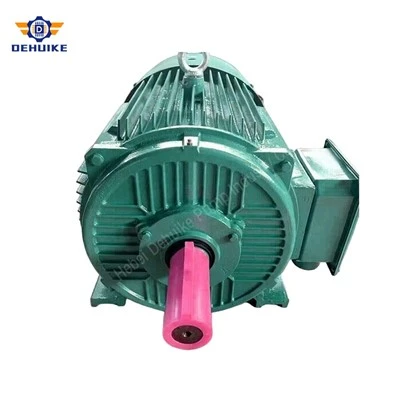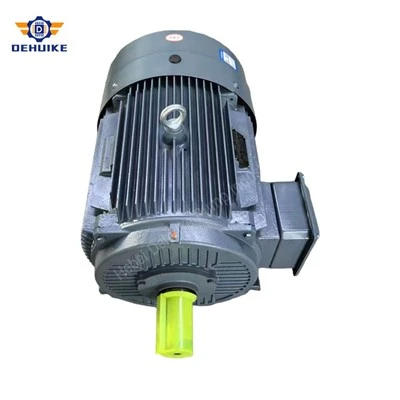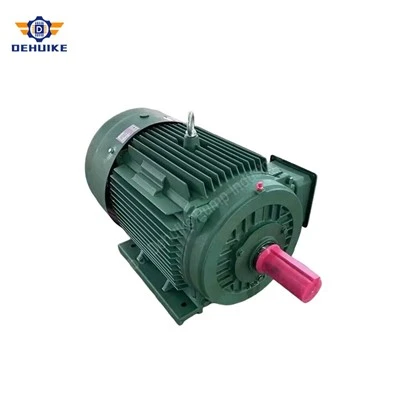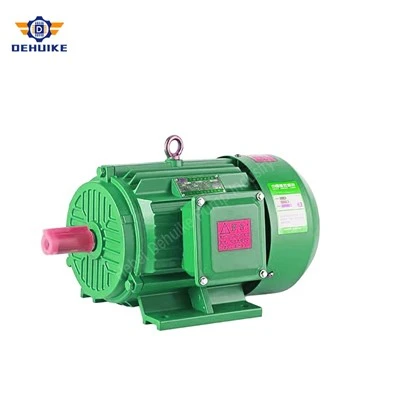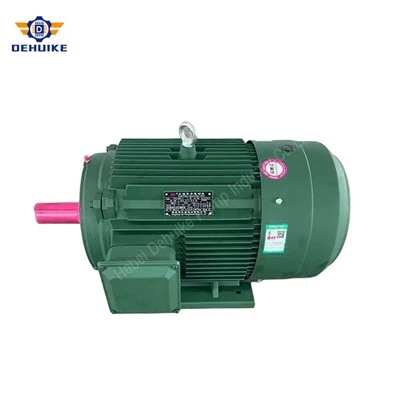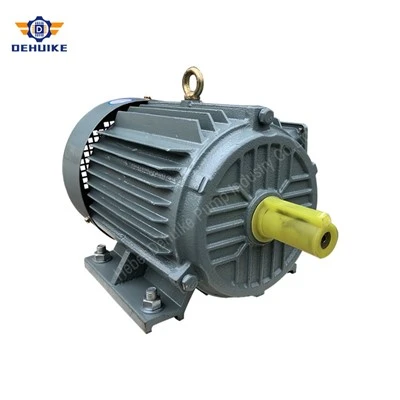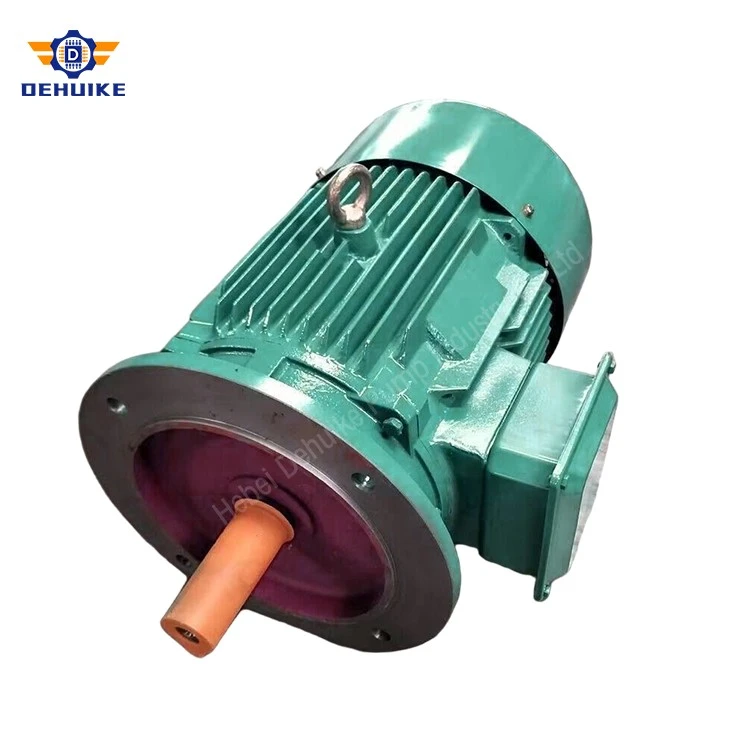
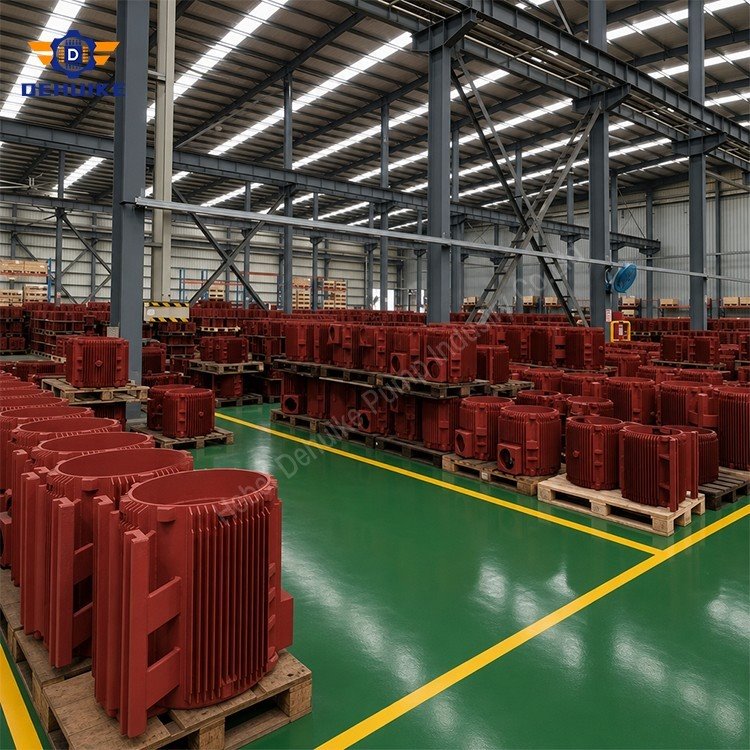
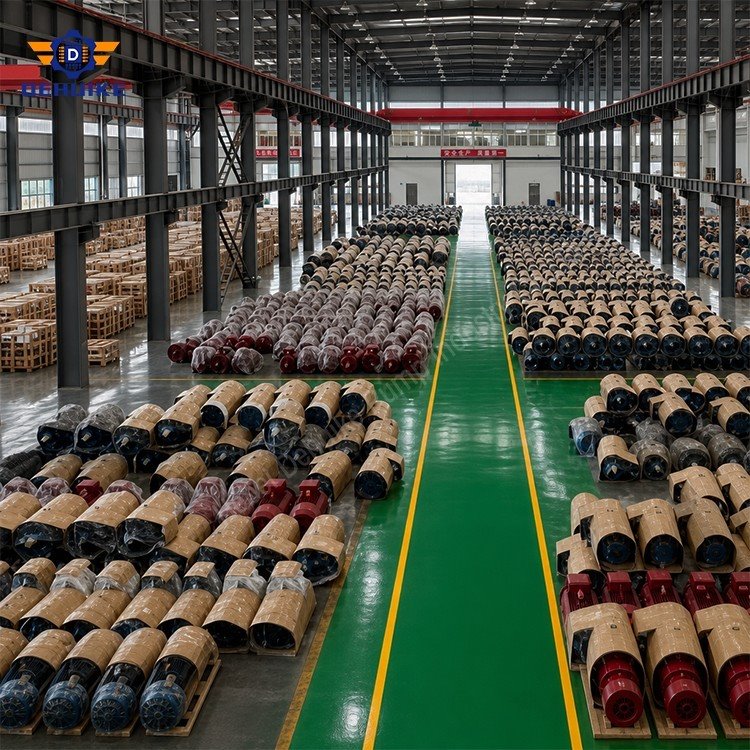
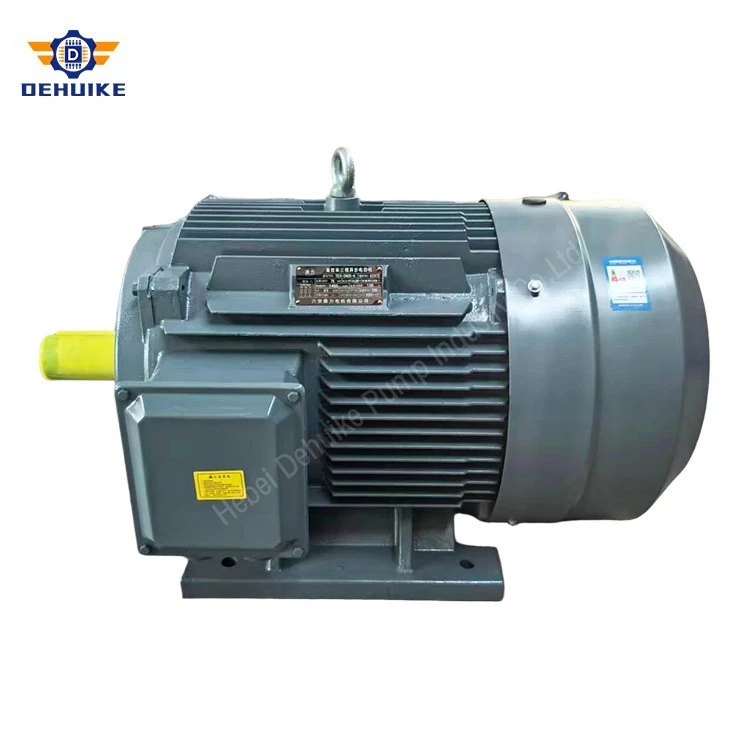
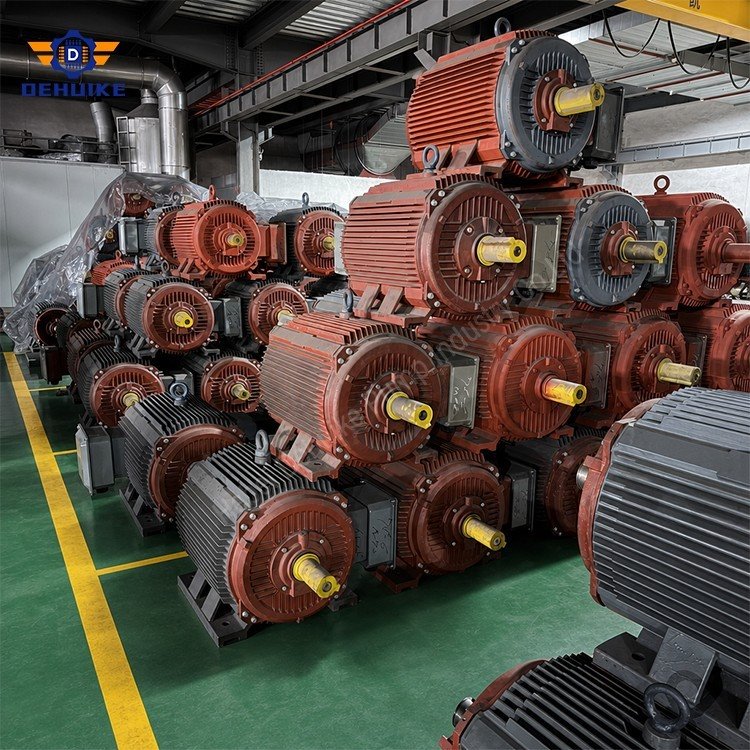
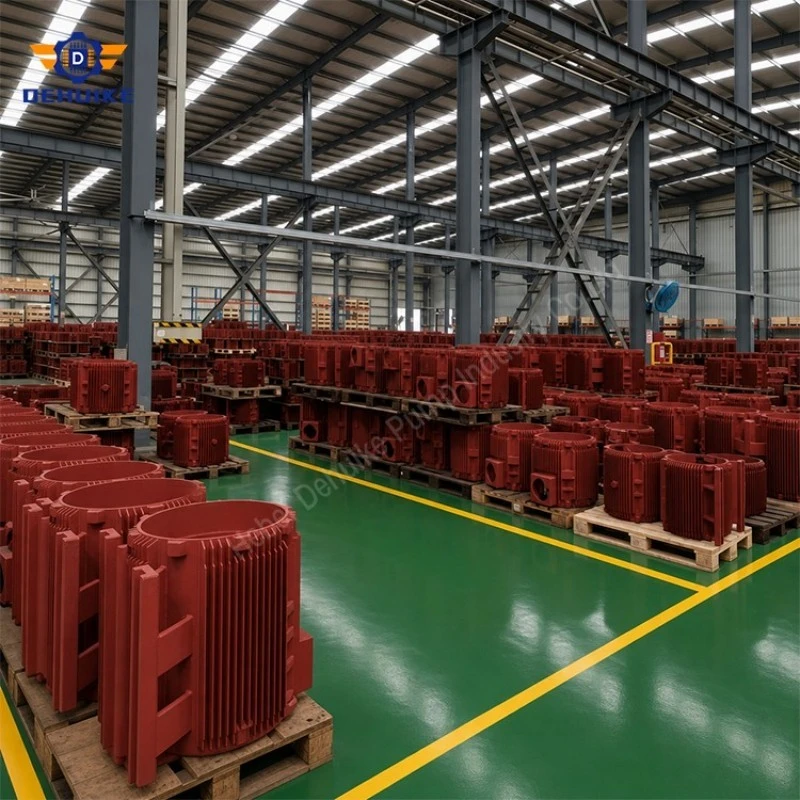
Hebei Dehuike Pump Industry Co., Ltd. is one of the most reliable manufacturers and suppliers of three phase electric motor in China. With abundant experience, we are committed to providing high quality customized pumps with competitive price. Welcome to wholesale bulk three phase electric motor for sale here from our factory. Also, pricelist is available.
Product Introduction
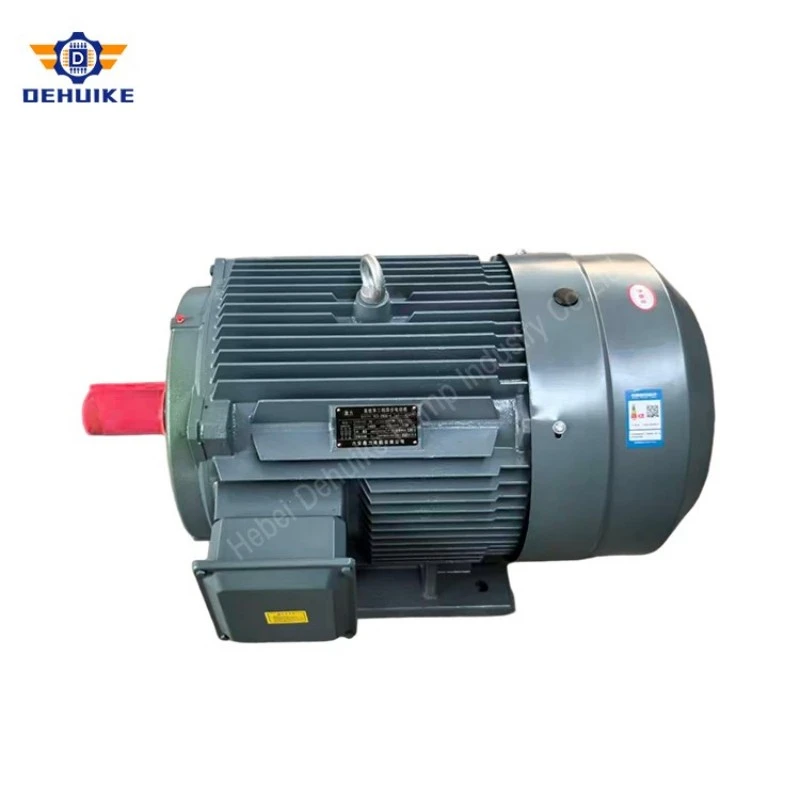
Three Phase Electric Motor A three-phase electric motor is a power-driven device that utilizes three-phase alternating current as its power supply. It is widely used in industries, agriculture, transportation, and construction. This equipment is based on the principle of electromagnetic induction. By passing three-phase alternating current through the stator windings, a rotating magnetic field is generated, and this magnetic field interacts with the rotor windings to produce electromagnetic torque, thereby converting electrical energy into mechanical energy efficiently.
Three-phase electric motors are mainly divided into two categories: three-phase asynchronous motors and three-phase synchronous motors. Among them, three-phase asynchronous motors have a simple structure, are durable, have low manufacturing costs, and are easy to maintain, accounting for the vast majority of the industrial motor market. They are commonly used in fans, pumps, compressors, and conveyor belts, etc. Three-phase synchronous motors, on the other hand, have constant speed and adjustable power factor, and are suitable for large industrial equipment and power systems with high requirements for speed accuracy. With the continuous improvement of energy efficiency standards, modern three-phase electric motors are developing towards the direction of high efficiency, energy conservation, intelligence, and environmental friendliness.
Development Evolution
Three Phase Electric Motor
Theoretical Foundation
The birth of the three-phase motor was based on the theory of electromagnetism. In 1824, Arago discovered the principle of rotating magnetic fields, providing a theoretical basis for the rotation of the motor. In 1831, Faraday discovered the law of electromagnetic induction, revealing the mechanism of the conversion between electrical energy and mechanical energy, further laying the scientific foundation for the invention of the motor. These early scientific discoveries pointed out the direction for the practical application of the three-phase motor later on.
Invention and Commercialization
At the end of the 19th century, with the rise of alternating current technology, the invention of the three-phase motor became a milestone in the history of electrical engineering. From 1885 to 1888, Nikola Tesla and Galileo Ferraris independently invented multi-phase alternating current motors. Tesla's design innovatively adopted the three-phase alternating current system, effectively solving the problem of difficult startup of single-phase motors, and applying for related patents.
In 1889, Mikhail Dolivo-Dobrowolsky made important improvements to the three-phase motor and invented the squirrel-cage rotor and the wound-rotor rotor, significantly optimizing the structure of the motor, making it have industrial practical value. Subsequently, George Westinghouse purchased the relevant patents and promoted the commercial application of the three-phase alternating current system, making it quickly replace direct current and become the mainstream standard for global power transmission and application.
Structural composition
Three Phase Electric Motor
The structure of a three-phase motor mainly consists of the stator, rotor and air gap. These components work together to achieve energy conversion.
Stator
The stator is the fixed part of the motor, mainly consisting of the frame, stator core and stator winding. The frame is usually made of cast iron or steel plates and is used to support the stator core and fix the end cover, while also serving as the heat dissipation shell of the motor. The stator core is formed by stacking mutually insulated silicon steel sheets and has slots on the inner circumference for embedding the stator winding. The use of silicon steel aims to reduce eddy current losses generated by the alternating magnetic field and improve the efficiency of the motor. The stator winding is the electrical part of the motor, made of insulated wires wound around, and the three-phase stator winding is offset by 120 degrees in electrical angle in space. After being supplied with three-phase alternating current, it generates a rotating magnetic field.
rotor
The rotor is the rotating part of an electric motor, mainly consisting of the rotor shaft, rotor core, and rotor winding. The rotor shaft is used to support the rotor and output mechanical power. The rotor core is also made by stacking silicon steel sheets and has slots on its outer circumference. The rotor winding is classified into squirrel-cage type and wound type according to its structure. The squirrel-cage type rotor is composed of conductors inserted into the rotor slots and short-circuit rings at both ends. Its shape resembles a cage, and it has a simple and sturdy structure, making it the most widely used form. The winding of the wound rotor is similar to that of the stator winding. It is usually connected in a star configuration and is connected to an external rheostat through slip rings and brushes. This structure has good starting performance and can be speed-adjusted by external resistance, but the maintenance is relatively complex.
Air gap
The air gap is the annular space between the stator and rotor. To reduce the excitation current, improve the power factor and motor efficiency, the air gap of a three-phase asynchronous motor is usually very small, typically ranging from 0.2mm to 2mm. The uniformity of the air gap has a significant impact on the smooth operation and performance of the motor.
|
Direction-Related Situation |
Question to Resolve Before Start |
|
New equipment installation |
Does the installed phase sequence produce the required machine rotation? |
|
Motor replacement |
Was the replacement connected and checked against the machine's designated direction? |
|
Pump system |
Does rotation match the pump manufacturer's required direction before full hydraulic operation? |
|
Fan or blower |
Does the impeller move air in the intended direction and support the designed system flow? |
|
Reversible machine |
Has the approved control scheme been specified for required directional changes? |
|
Multi-motor line |
Are all drives moving product or material in the coordinated direction? |
The motor should never be reconnected by guesswork. Direction, controls, and machine safety features must be handled through the approved electrical and commissioning process.
Main classification
According to the operating mode
Based on the different operating principles, three-phase motors are mainly divided into asynchronous motors and synchronous motors. Three-phase asynchronous motors have simple structure, low cost, and are easy to maintain, making them the most widely used. However, their power factor is relatively low and their speed regulation performance is relatively poor. Three-phase synchronous motors, on the other hand, have a constant speed, adjustable power factor (can operate in a capacitive state to improve the power factor of the power grid), and high efficiency. They are suitable for large power constant-speed loads or situations requiring power factor compensation.
According to the rotor structure
According to the structural form of the rotor winding, three-phase motors can be classified as squirrel-cage type and wound-rotor type. Squirrel-cage motors have a simple structure, are sturdy, operate reliably, and are inexpensive. They are divided into ordinary squirrel-cage type, deep-slot type, and double-squirrel-cage type. Wound-rotor motors are externally connected with slip rings and brushes to connect resistors, have a small starting current, a large starting torque, and can be smoothly speed-regulated, but maintenance is more complex and the cost is higher.
According to the protection form
According to the different protection capabilities of the enclosure, three-phase motors can be classified as open type, protective type, closed type, and flameproof type, etc. Open-type motors have the lowest price, good heat dissipation, but have high requirements for the environment, are prone to dust and water droplets entering, and are suitable for clean and dry environments. Protective-type motors can prevent water droplets or solid foreign substances from falling into the motor from above. Closed-type motors have a closed enclosure and can prevent dust, iron filings, and other debris from invading, suitable for harsh environments. Flameproof-type motors are specifically used in places with explosive gas mixtures (such as coal mines, petrochemicals), and can prevent internal sparks from causing external explosions.
The motor inquiry should identify the following starting information:
|
Starting Factor |
Project Detail Needed |
|
Load at rest |
Unloaded, partially loaded, fully loaded, pressurized, or mechanically restrained condition. |
|
Rotating inertia |
Impeller, flywheel, gearbox, belt, drum, or process mass that must accelerate. |
|
Start frequency |
Number of starts, stops, or restarts expected during the operating period. |
|
Acceleration expectation |
Required ramp time or process limitation on how quickly the machine may accelerate. |
|
Supply limitation |
Generator operation, transformer capacity, long feeder, weak network, or site rule affecting start behavior. |
|
Control purpose |
Simple start/stop, sequence operation, soft starting, or adjustable-speed process control. |
|
Mechanical condition |
Coupling, belt, gearbox, valve, damper, clutch, or material condition affecting torque demand. |
A motor that runs satisfactorily after reaching speed may still be unsuitable if the starting condition was not evaluated. The starting question should therefore be resolved in the approved configuration, not left to field improvisation.
Model specification
The Chinese national standard has clear regulations on the model designation of three-phase motors, mainly including product codes, center height of the frame, frame length, and pole number, etc., to facilitate user selection and management.
Model naming rules
Take the Y series three-phase asynchronous motor as an example, its model usually consists of the following parts:
Product code: Y indicates asynchronous motor, YE indicates high-efficiency asynchronous motor, YB indicates explosion-proof asynchronous motor, etc.
Center height of the frame: refers to the distance from the bottom of the frame to the center of the shaft extension (mm), such as 80, 100, 132, etc.
Frame length code: S indicates short frame, M indicates medium frame, L indicates long frame. Some models will also have numbers after them to indicate the length of the core.
Pole number: indicates the number of magnetic poles of the motor, which determines the synchronous speed of the motor. Common ones include 2 poles (3000 r/min), 4 poles (1500 r/min), 6 poles (1000 r/min), 8 poles (750 r/min), etc.
Series of standards
With the update of energy efficiency standards, the three-phase motors on the market are mainly divided into different energy efficiency series. The Y series and Y2 series are general-purpose fully enclosed self-fan-cooled squirrel-cage three-phase asynchronous motors. Among them, the Y2 series has better protection level (IP54/55) and efficiency than the Y series. The YE2 series belongs to high-efficiency three-phase asynchronous motors and complies with the IE2 energy efficiency level (corresponding to the 2nd level of the original GB 18613-2012). Currently, the YE3 series ultra-high efficiency three-phase asynchronous motors have become the mainstream in the market, complying with the IE3 energy efficiency level (corresponding to the 3rd level of GB 18613-2020), which is the lowest energy efficiency entry standard in China. In addition, there are also the YE4 series ultra-high efficiency motors and the YBX series flameproof motors, etc.
Application fields
Three-phase motors serve as the core power source in industrial production and are widely used in various sectors of the national economy. In the field of industrial machinery, they are mainly used to drive key equipment such as fans, water pumps, compressors, conveyor belts, machine tools, cranes, and crushers, supporting the efficient operation of the manufacturing industry. In construction projects, three-phase motors are often used in elevators, central air conditioning systems, water supply and drainage pumps, and ventilation equipment, ensuring the comfort and safety of buildings. The transportation sector also cannot do without three-phase motors, which are widely used in electric trains, ship propulsion, and the drive systems of some high-end electric vehicles. Moreover, in energy and power facilities such as agricultural irrigation, water conservancy power generation, and wind power generators, three-phase motors also play an indispensable role.
Hot Tags: three phase electric motor, China three phase electric motor manufacturers, suppliers, factory