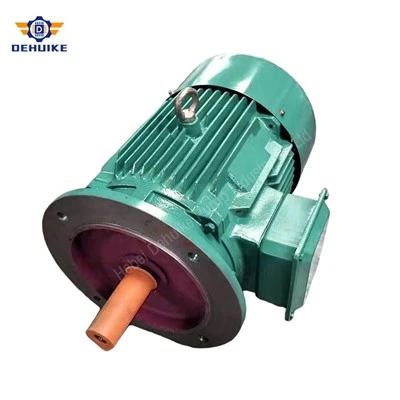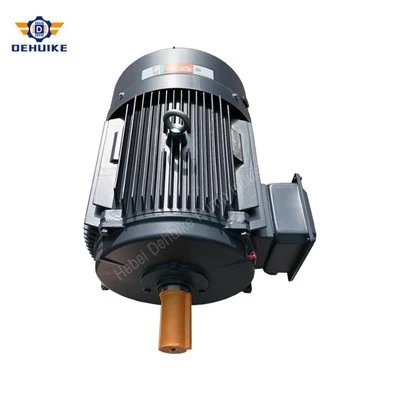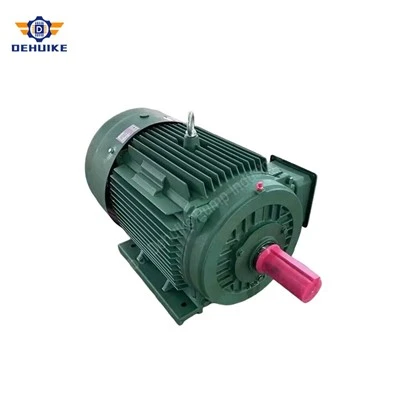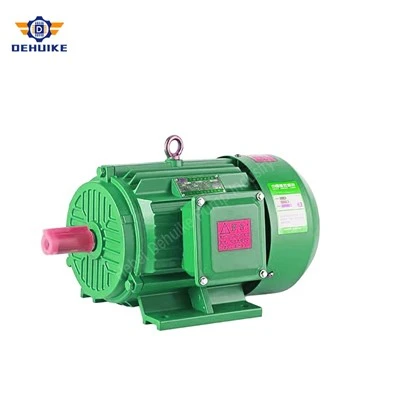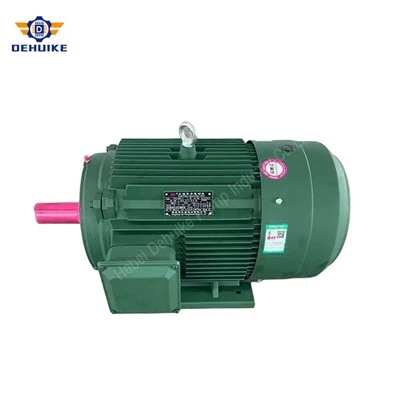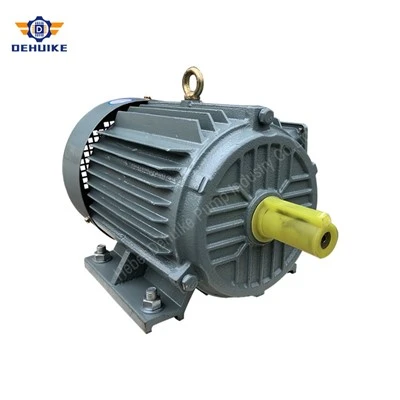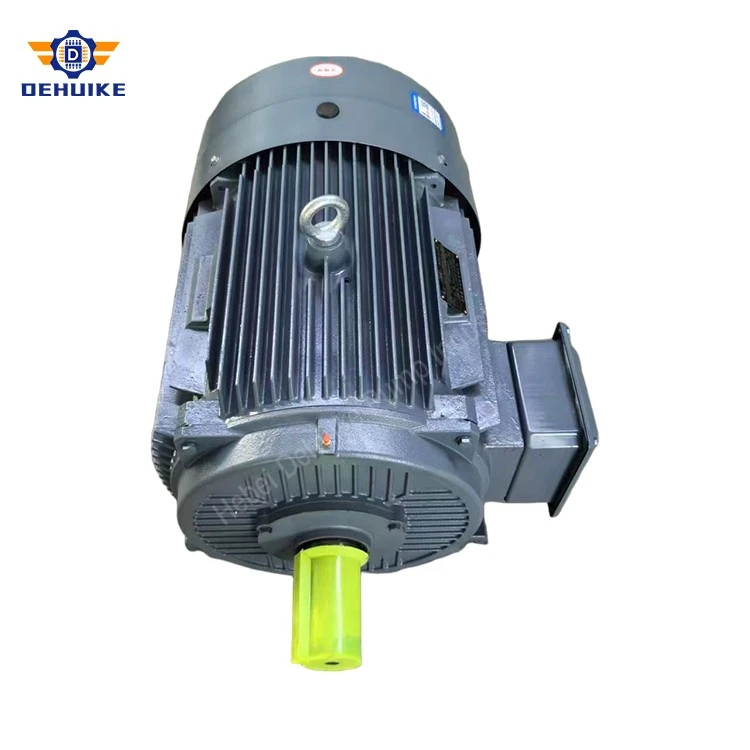
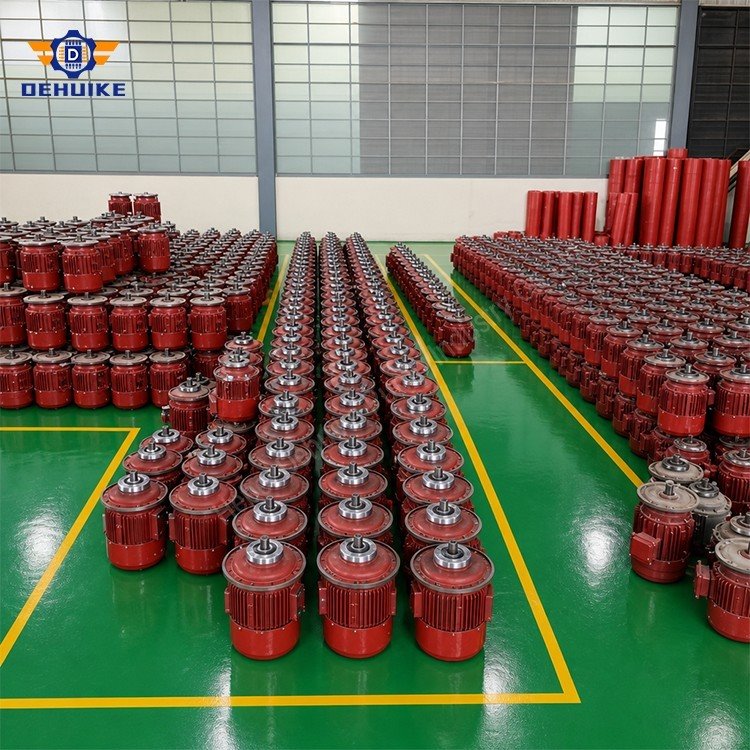
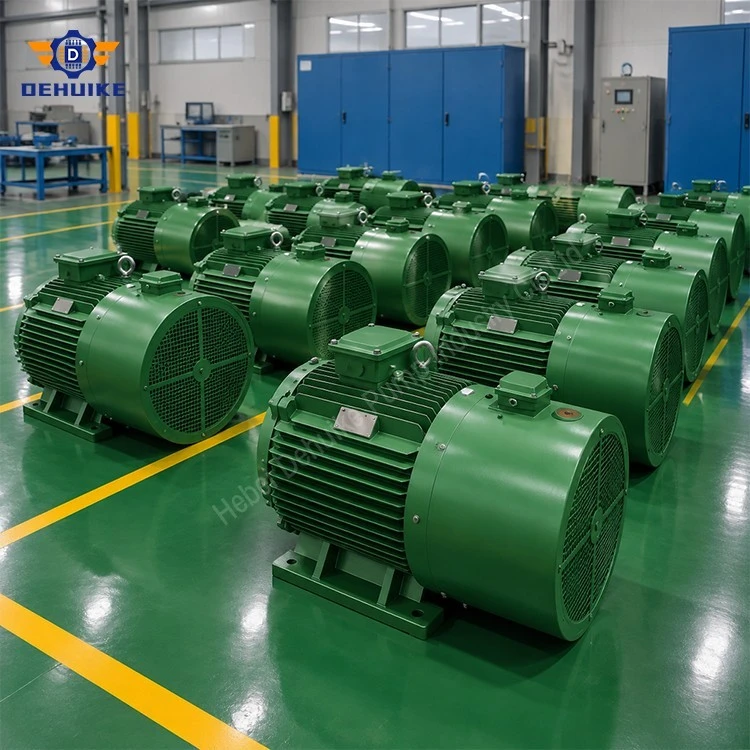
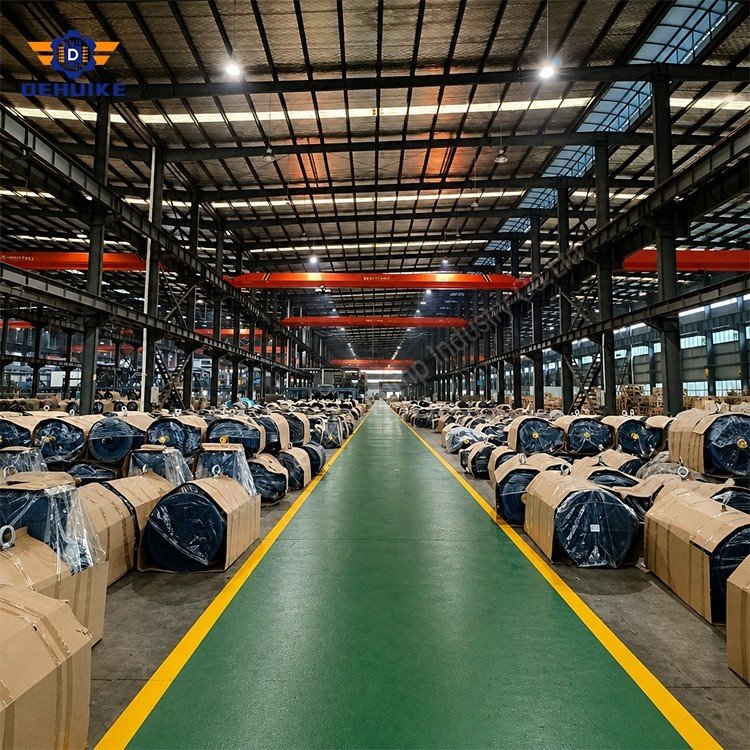
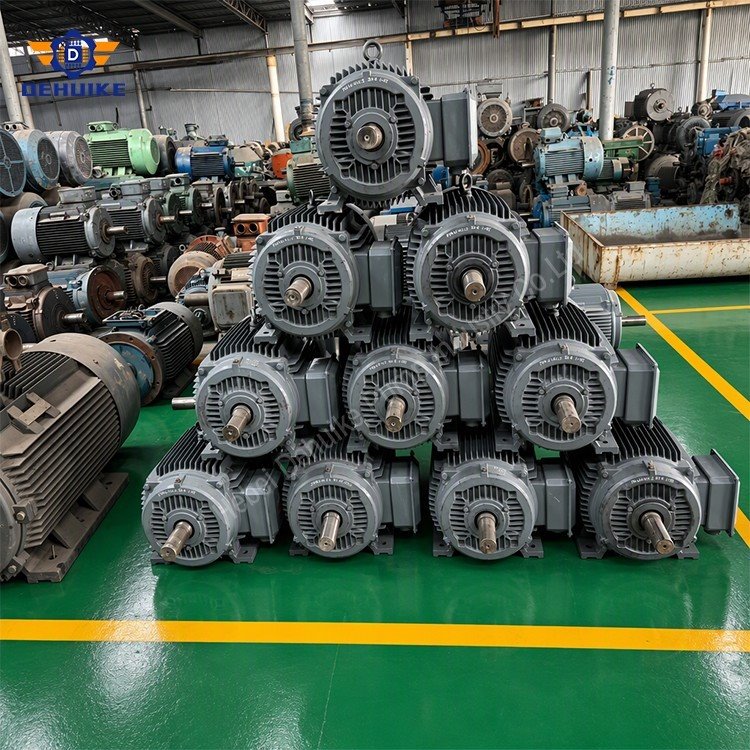
Hebei Dehuike Pump Industry Co., Ltd. is one of the most reliable manufacturers and suppliers of single phase electric motor in China. With abundant experience, we are committed to providing high quality customized pumps with competitive price. Welcome to wholesale bulk single phase electric motor for sale here from our factory. Also, pricelist is available.
Electromagnetic Conversion Dynamics
Modern decentralized infrastructure, agricultural irrigation networks, residential utility stations, and remote workshop facilities frequently lack access to three-phase electrical utility grids. In these operating environments, machinery drives must function seamlessly from standard single-phase alternating current lines. However, single-phase induction machines encounter an inherent physical hurdle rooted in classical electromagnetism: a single alternating current feeding a single stator winding generates a pulsating, stationary magnetic field rather than the revolving magnetic vector naturally produced by polyphase electrical systems. Without an auxiliary phase-displacement mechanism, the rotor experiences zero net starting torque at standstill, remaining stationary while drawing destructive locked-rotor current.
The industrial Single Phase Electric Motor solves this electromagnetic dilemma through precision phase-splitting architecture. By incorporating an auxiliary winding positioned in space quadrature (90 electrical degrees apart) relative to the primary running winding, and combining it with calibrated phase-shifting capacitors, the motor creates an artificial elliptical revolving magnetic flux. This revolving flux induces rotor currents in the squirrel-cage winding, generating robust starting breakaway torque. Once the rotating shaft accelerates past approximately 75% to 80% of synchronous speed, an internal mechanical centrifugal switch or solid-state potential relay disengages the starting circuit, allowing the machine to transition into efficient, smooth continuous-running operation.
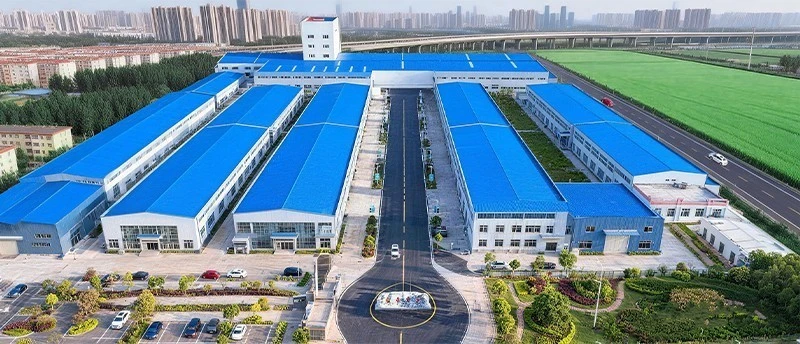
Hebei Dehuike Pump Industry Co., Ltd. (operating internationally under the DHK Pump banner) manufactures high-torque, energy-efficient single-phase induction motors engineered to power critical fluid handling equipment, commercial air compressors, grain augers, and light industrial process machines. Leveraging over 30 years of specialized electro-mechanical and foundry manufacturing experience, our enterprise produces robust prime movers spanning 0.18 kW to 3.7 kW (0.25 HP to 5.0 HP) in both 2-pole and 4-pole configurations. Operating from an integrated manufacturing campus exceeding 8,000 m² and supported by 900+ audited industrial component suppliers, our motors operate reliably across 50+ countries worldwide.
Equipment Characteristics
A rigorous mechanical and electrical breakdown of our Single Phase Electric Motor highlights the structural integrity and advanced winding topologies that ensure reliable field performance under wide voltage swings and severe ambient operating conditions:
Advanced Capacitor-Start / Capacitor-Run (CSCR) Dual Topology: For challenging applications characterized by heavy initial starting resistance-such as positive-displacement piston compressors, reciprocating slurry pumps, and loaded conveyor belts-our premium dual-capacitor units deliver superior starting torque ratios (exceeding 2.5 to 3.0 times full-load torque). An electrolytic high-microfarad capacitor provides massive starting torque during acceleration, while an oil-filled metallized polypropylene run capacitor remains permanently in the auxiliary winding circuit during normal operation, optimizing running power factor (cos φ ≥ 0.95), reducing running amperage, and minimizing acoustic hum.
Heavy-Duty Totally Enclosed Fan Cooled (TEFC) Enclosure: Built to withstand dust-laden agricultural atmospheres, outdoor pump plinths, and humid process environments, our motors feature heavy-walled cast-iron or high-ductility die-cast aluminum frames rated to IP54 and IP55 protection standards. External cooling air is driven over aerodynamic longitudinal frame fins by a bidirectional polypropylene cooling fan protected beneath a stamped steel fan cowl, ensuring rapid thermal dissipation and low operating skin temperatures.
Low-Loss Silicon Steel Core & Class F Insulation System: Stator and rotor cores are stamped from high-permeability, low-core-loss cold-rolled non-oriented silicon steel sheets (50WW800 grade). Magnet wire windings utilize Class F (155°C) copper wire insulated with dual-layer polyamide-imide enamels, impregnated via automated vacuum-pressure varnishing cycles. The motor operates with conservative Class B temperature rise (80K limit), providing substantial thermal safety margin when operating under high ambient temperatures or low-line voltage conditions.
Vibration-Resistant Centrifugal Actuator & Stationary Switch: The internal starting cutout mechanism integrates a precision-balanced rotating centrifugal actuator mounted on the rotor shaft paired with a heavy-duty stationary contact switch. Utilizing silver-cadmium oxide electrical contact tips, the switch resists arc pitting during repeated high-current starting cycles. Alternatively, for hermetically sealed or explosive environments, electronic solid-state starting relays can be fitted to eliminate mechanical sparking entirely.
Precision-Machined 40Cr Rotor Shaft & C3 Clearanced Bearings: The central motor shaft is turned from high-tensile 40Cr structural alloy steel, featuring precision-ground bearing journals held within tight tolerance bands. Rotors are mounted on deep-groove ball bearings featuring internal C3 radial clearances and pre-packed with high-temperature synthetic polyurea grease, resisting axial belt-drive loads and preventing bearing race brinelling.
Technical Parameters
Matching an industrial Single Phase Electric Motor to mechanical equipment requires precise verification of rated output power, synchronous speed, full-load amperage, starting torque multipliers, and thermal duty ratings. Dehuike Machinery manufactures standard single-phase units compliant with international IEC 60034 standards as well as NEMA electrical performance classifications.
The technical parameter table below summarizes standardized operational data for our high-torque dual-capacitor (CSCR) single-phase motor series operating at 220V–240V, 50Hz, across both 2-pole (high-speed) and 4-pole (standard torque) configurations:
To assist mechanical engineers and equipment builders with mounting compatibility, shaft couplings, and thermal enclosure selection, the following dimensional and mechanical reference outlines standard structural parameters across our motor frame range:
Electrical Feeder Sizing Protocol: Because single-phase induction motors draw locked-rotor currents ranging from 5.5 to 7.0 times rated running current during initial startup, long electrical feeder cables can suffer severe terminal voltage drops. When starting under low terminal voltage, developed starting torque declines proportionally to the square of the voltage ($T_{start} \propto V^2$). For example, a 15% voltage drop reduces starting torque by approximately 28%, potentially stalling high-inertia loads. We recommend sizing upstream branch circuits and feeder cables to restrict starting voltage dips to less than 10% at the motor terminals. Furthermore, selecting the motor operating point within the Rated Optimal Efficiency Point (BEP) minimizes stator heating and maximizes power factor.
Precision Manufacturing
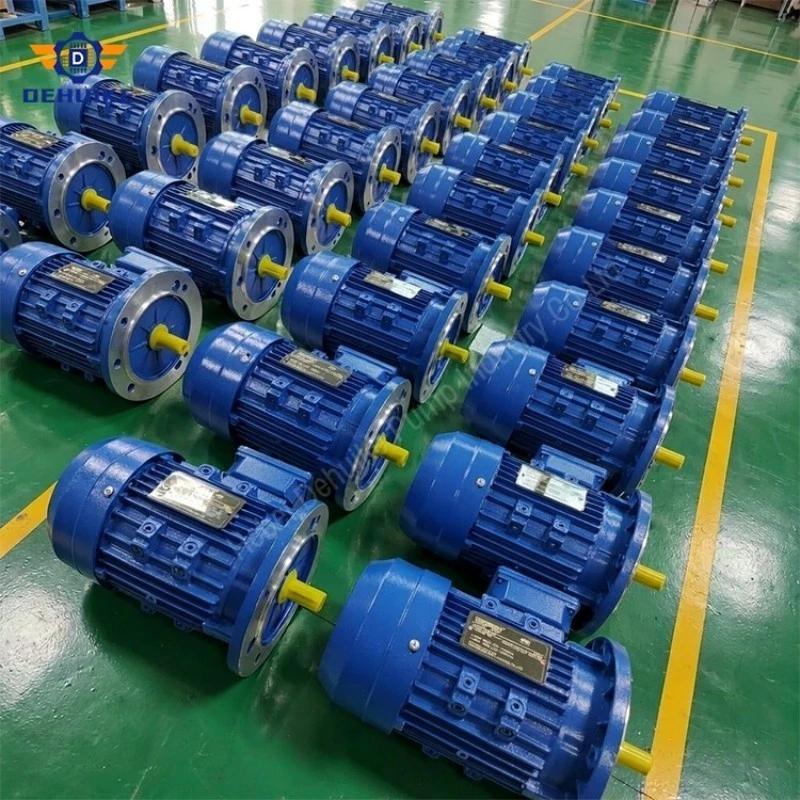
Manufacturing a high-efficiency Single Phase Electric Motor that exhibits whisper-quiet operation and decades of structural longevity demands meticulous attention to electro-mechanical tolerances, magnetic flux alignment, and automated winding integrity. At Dehuike, every motor undergoes a vertically integrated production sequence:
High-Speed Stamping of Silicon Steel Laminations: Stator and rotor laminations are punched from prime electrical-grade non-oriented silicon steel coils using multi-station progressive carbide dies on high-speed precision stamping presses. Laminations are interlocked automatically with precise slot skewing on the rotor core, optimizing magnetic flux distribution and suppressing high-frequency harmonic cogging torque.
Automated CNC Stator Winding & Phase Insulation Insertion: Stator cores are wound on automated CNC winding machines that insert main and auxiliary coils into stator slots with uniform slot fill factors. Class F phase insulation separators (DMD composite sheets) are mechanically inserted between winding phases, preventing electrical shorts during high-voltage transient surges. Coil end turns are tightly laced with high-tensile polyester cord.
Vacuum Pressure Impregnation (VPI) Varnishing Cycle: Wound stators undergo an automated pre-heating cycle followed by total submersion in solventless Class F epoxy-ester resin within vacuum-pressure impregnation chambers. Under alternating vacuum and positive nitrogen pressure cycles, the resin penetrates deeply into slot voids, eliminating internal air bubbles, anchoring copper conductors against magnetic vibration, and protecting windings against moisture and chemical fumes.
High-Pressure Die-Cast Aluminum Rotor Manufacturing: Squirrel-cage rotor conductors and end rings are cast in high-purity virgin aluminum (99.7% Al) using high-pressure cold-chamber die-casting machines. This process guarantees completely void-free rotor bars with uniform electrical conductivity. Following casting, the rotor exterior diameter is precision finish-turned on CNC cylindrical grinders to maintain uniform air gaps between stator and rotor within ±0.03 mm.
Computerized Dynamic Balancing (ISO 1940 Grade G2.5): Assembled rotor shafts undergo two-plane precision dynamic balancing on digital horizontal balancing stands. Material is removed from rotor end rings until residual dynamic unbalance complies strictly with ISO 1940 Grade G2.5 standards, ensuring virtually zero rotational vibration and prolonged bearing service life.
Quality Assurance & Testing Protocols
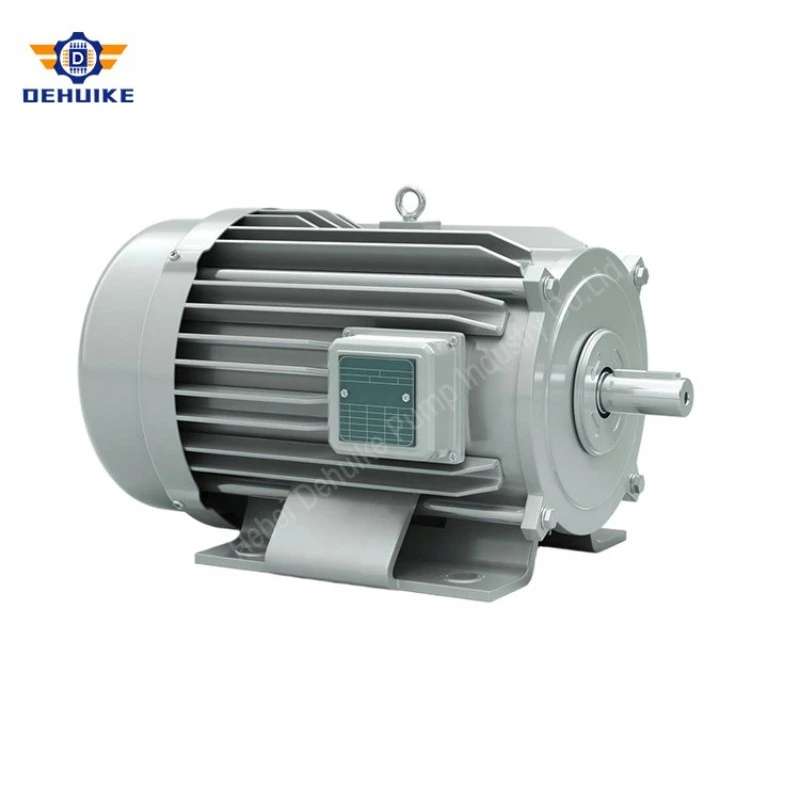
To guarantee uncompromised reliability across demanding export markets, Hebei Dehuike Pump Industry Co., Ltd. subjects every manufactured Single Phase Electric Motor to rigorous electro-mechanical testing under accredited ISO 9001 quality management systems, reinforced by international EAC and RoHS product certifications:
Surge Comparison & High-Potential Dielectric Withstand Testing: Prior to final motor assembly, 100% of wound stators undergo automated impulse surge comparison testing to verify turn-to-turn insulation integrity, followed by high-potential (Hi-Pot) dielectric testing at 1,800V AC for 60 seconds between winding terminals and the grounded metal core, verifying zero leakage current.
Full-Load Heat Run & Dynamometer Performance Verification: Random production units from each batch are mounted on our computerized dynamometer test bed. Motors are operated under full rated load until thermal equilibrium is established. Stator winding temperatures are logged via thermocouple sensors using the resistance variation method, confirming that steady-state temperature rise remains comfortably within Class B (80K) limits.
No-Load Current, Speed & Acoustic Vibration Auditing: Completed motor assemblies undergo automated end-of-line testing. Equipment records no-load operating current, rotational speed, power factor, and starting switch disengagement timing. Precision sound level meters verify that running noise levels remain strictly below 72 dB(A) at 1 meter distance.
Capacitor Dielectric Integrity & Centrifugal Switch Cycling: All starting and running capacitors are batch-screened for capacitance tolerance (within ±5%) and dissipation factor. Rotating centrifugal switches undergo accelerated mechanical cycling tests exceeding 50,000 actuation cycles to ensure positive, spark-free contact opening and closing.
Manufacturing Pedigree
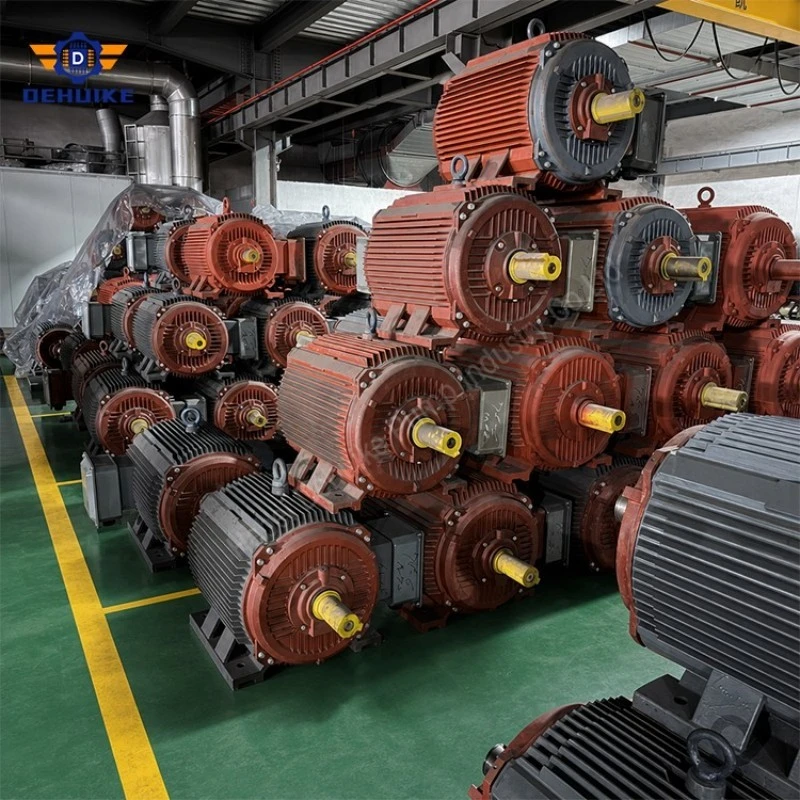
Procuring industrial electric prime movers for equipment manufacturing or global project deployment demands selecting a partner with proven metallurgical mastery, precision assembly facilities, and responsive commercial flexibility. DHK Pump delivers decisive commercial and engineering advantages:
Over Three Decades of Fluid Machinery & Prime Mover Heritage: With over 30 years of continuous specialized engineering experience, Hebei Dehuike Pump Industry Co., Ltd. deeply understands the electro-mechanical synergy between electric motors and driven machinery. Unlike pure motor assemblers, our engineering heritage in centrifugal pumps and heavy fluid equipment ensures that our motors are perfectly matched to real-world mechanical loading profiles.
8,000+ m² Modern Integrated Manufacturing Facility: Our unified production facility in Hebei Province integrates precision core stamping, automated coil winding, vacuum impregnation, CNC machining, dynamic balancing, and computerized testing bays under one roof, guaranteeing complete quality traceability from raw silicon steel coils to finished export cartons.
Vetted Industrial Supply Network (900+ Certified Partners): Backed by our extensive cooperative network of 900+ audited component partners across China, we maintain permanent safety stocks of high-purity copper magnet wire, SKF/NSK equivalent precision bearings, metalized film capacitors, and certified electrical enclosures, guaranteeing stable production timelines even during global market shortages.
Comprehensive 24-Month Factory Warranty Commitment: We support our manufacturing excellence with an official 24-month (two-year) comprehensive warranty covering all structural, electrical, and mechanical components against defects in materials and workmanship. This warranty commitment reflects our profound institutional confidence in our single-phase drive technology.
Flexible Voltage, Frequency & Flange Customization: We engineer motors tailored to global electrical standards, supporting dual-voltage/dual-frequency ratings (such as 115V/230V 60Hz for North American and South American grids, or 220V–240V 50Hz for European, Asian, and African markets). Custom shaft extensions (metric, imperial, stainless steel AISI 316) and specialized mounting flanges (NEMA 56C, IEC B34, B35) are readily available.
Worldwide Procurement Support
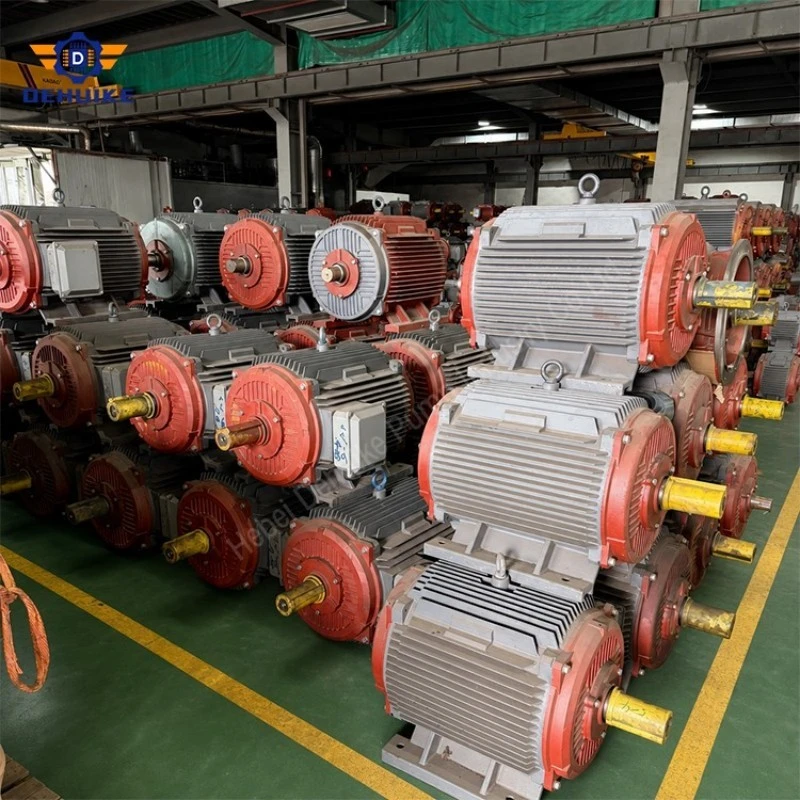
Hebei Dehuike Pump Industry Co., Ltd. provides comprehensive end-to-end engineering support and streamlined international procurement logistics to support equipment manufacturers, regional distributors, and engineering contractors worldwide:
Application Sizing & Torque Matching Consultation: Our specialized applications engineering desk conducts complimentary electro-mechanical reviews for equipment builders. By evaluating driven machine rotational inertia ($GD^2$), breakaway friction torque, acceleration time limits, and supply cable runs, our engineers verify motor sizing and provide comprehensive 2D/3D CAD mounting models within 2 hours of inquiry receipt.
Consumable Spares & Strategic Component Stock: To protect continuous operations, we maintain ready inventory reserves of essential replacement assemblies-including starting capacitors, running capacitors, centrifugal switches, terminal blocks, cooling fans, and bearing rebuild kits-available for expedited worldwide dispatch.
Frequently Asked Questions (FAQ)
The following engineering evaluations address the most common technical questions submitted by equipment builders, maintenance technicians, and electrical distributors regarding the selection, installation, and operation of the Single Phase Electric Motor:
Q: What mechanical and operational distinctions separate Capacitor-Start (CSIR) from Dual-Capacitor (CSCR) motors?
A:A Capacitor-Start / Induction-Run (CSIR) motor uses an electrolytic start capacitor in series with the auxiliary winding solely to generate high starting torque. Once the motor reaches ~80% speed, a centrifugal switch disconnects the starting circuit, and the motor runs exclusively on its main winding. While CSIR motors provide high starting torque, their running power factor and electrical efficiency remain modest. In contrast, a Capacitor-Start / Capacitor-Run (CSCR) motor employs two distinct capacitors: a high-capacity start capacitor that disconnects after acceleration, plus an oil-filled run capacitor that remains continuously energized in the auxiliary winding. The run capacitor maintains a near-circular revolving magnetic field during normal operation, yielding higher continuous efficiency, superior power factor (cos φ ≥ 0.95), reduced line current, and quieter running characteristics.
Q: How does feeder cable length and supply voltage drop affect motor starting performance?
A: Single-phase induction motors draw locked-rotor inrush currents approximately 6 to 7 times higher than their full-load running current. If the supply feeder cable is undersized or excessively long, this heavy inrush current induces a substantial line voltage drop across the cable resistance. Because the developed starting torque of an induction motor is proportional to the square of the terminal voltage, even a moderate 10% voltage drop reduces starting torque by approximately 19%, while a 15% voltage drop reduces torque by nearly 28%. If terminal voltage drops below the threshold required to overcome machine breakaway friction, the rotor will stall, causing the start winding to overheat rapidly. Proper cable sizing and dedicated branch circuits are essential to ensure terminal voltage remains within ±5% of nameplate rating.
Q: Can a single-phase electric motor be configured for reversible rotation, and how is direction changed?
A: Yes. The rotational direction of a single-phase induction motor is determined by the relative magnetic polarity between the main winding and the auxiliary (start) winding. To reverse the direction of shaft rotation, it is necessary to reverse the polarity of either the auxiliary winding or the main winding relative to each other (customarily, the leads of the auxiliary winding, designated Z1 and Z2, are transposed). In our standard terminal boxes, this reversal is easily accomplished by swapping two copper terminal bridge links. Directional change must be executed only when the motor is completely stopped; reversing connections while running will not change direction because the centrifugal switch is open and running torque dominates.
Q: Is a capacitor part of every single-phase motor design?
A: The starting and running arrangement depends on the specific motor design. Product documentation for the supplied configuration should define the applicable construction. Do not assume that all single-phase motors use the same capacitor or switching arrangement.
Q: Why do centrifugal start switches occasionally fail, and what preventative measures prevent switch damage?
A: Centrifugal switch assemblies comprise rotating governor weights and stationary electrical contact points. Common failure causes include excessive dust or moisture entering the motor housing (which gums up the sliding mechanism), frequent rapid starts exceeding rated motor thermal duty (which causes electrical contact arcing and pitting), and prolonged low-voltage stalling (where the motor fails to reach 80% speed, leaving the start capacitor energized until the thermal protector trips). Preventative measures include selecting TEFC enclosures for dusty settings, respecting maximum starts-per-hour limitations (typically no more than 10 to 15 starts per hour depending on load inertia), and verifying correct supply voltage.
Q: How do thermal overload protectors safeguard single-phase motors against burnout?
A: Our single-phase motors can be equipped with internal bimetallic thermal overload protectors embedded directly in the stator winding overhang. These protectors respond simultaneously to winding temperature and electrical current draw. If the motor experiences a mechanical stall, continuous overload, phase undervoltage, or cooling fan blockage, the internal bimetallic disc deflects under heat and snaps open the control circuit before the copper insulation reaches destructive temperatures. Available in automatic-reset (for unattended pumping stations) or manual-reset configurations (for machinery where unexpected restarts pose safety risks), these protective devices ensure comprehensive thermal security.

Hot Tags: single phase electric motor, China single phase electric motor manufacturers, suppliers, factory