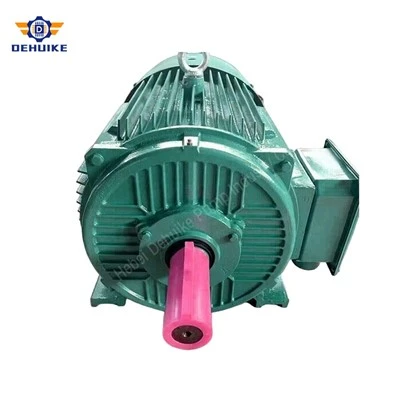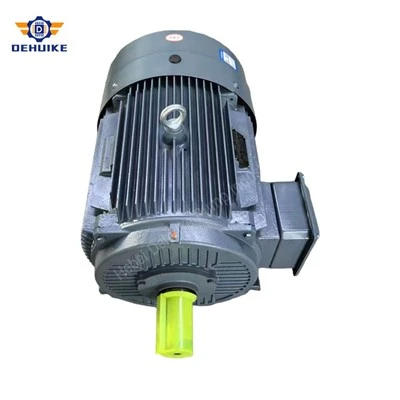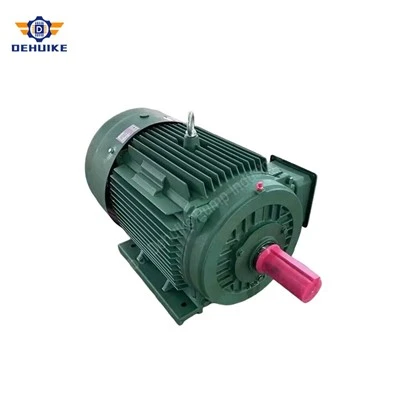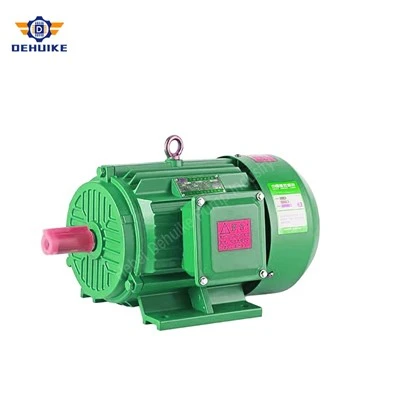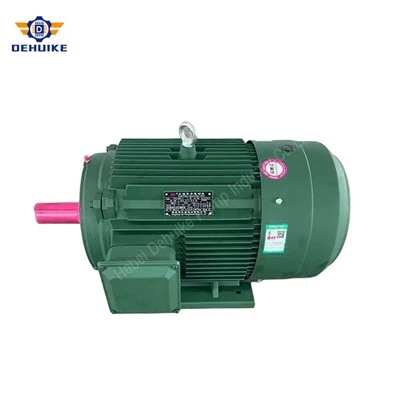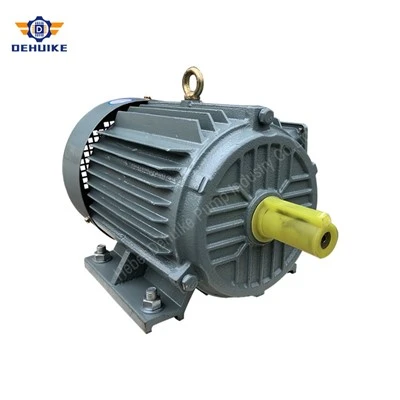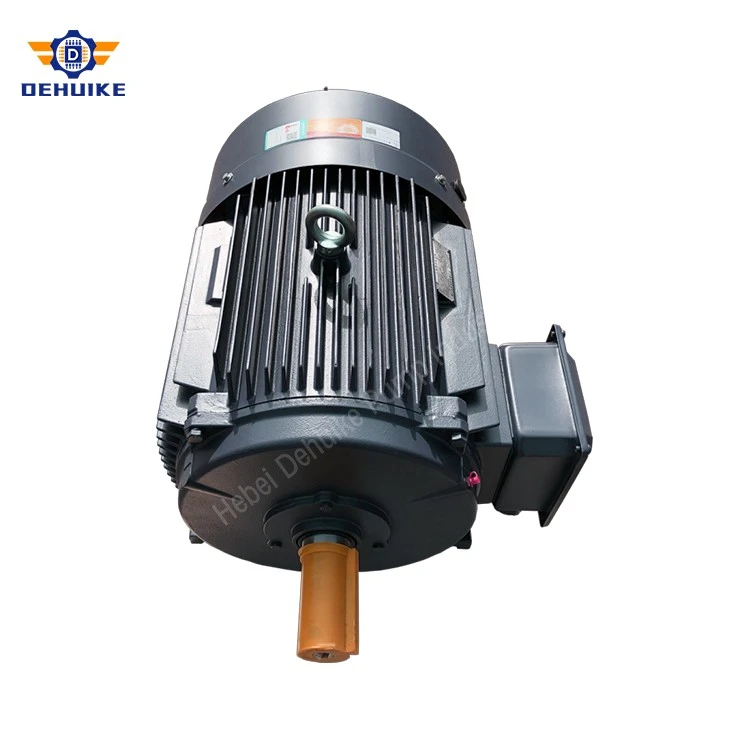
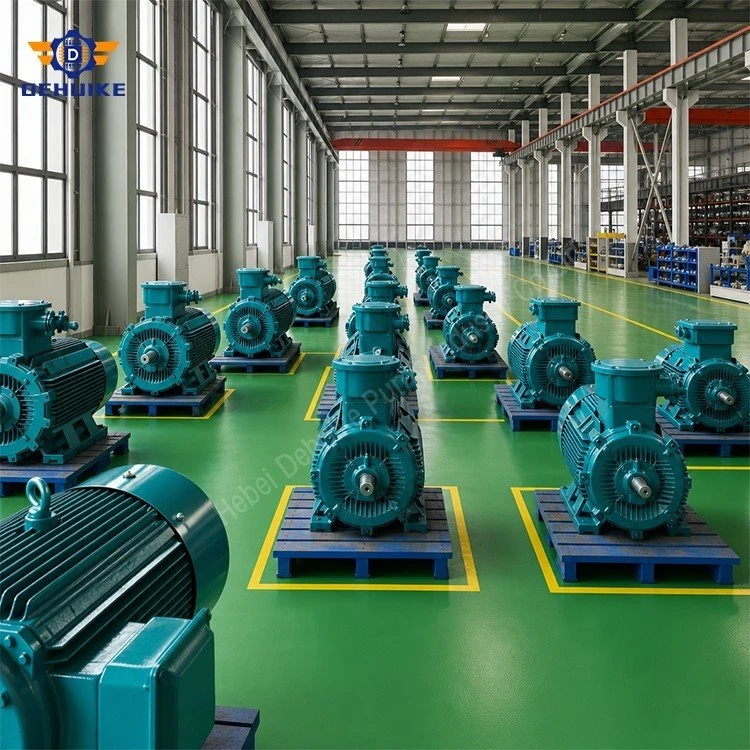
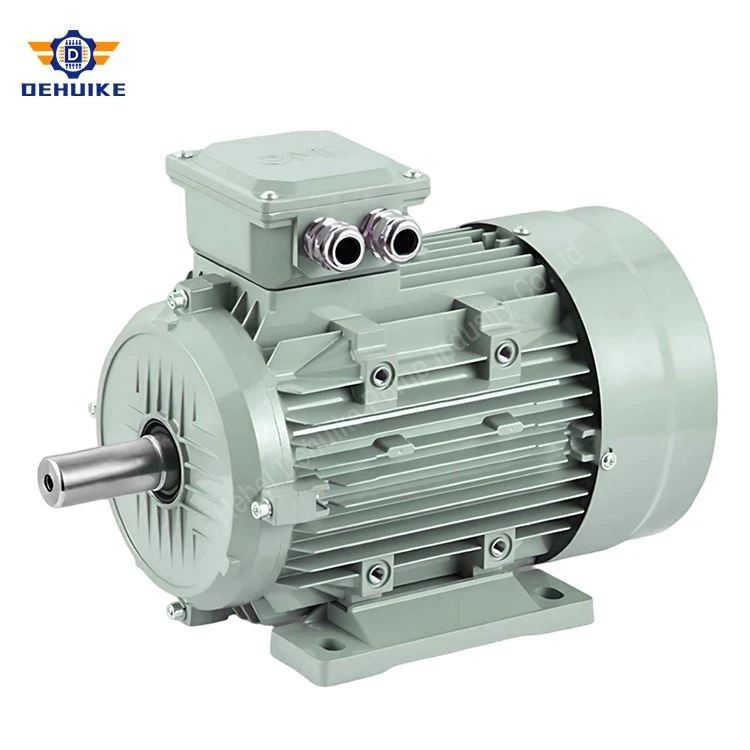
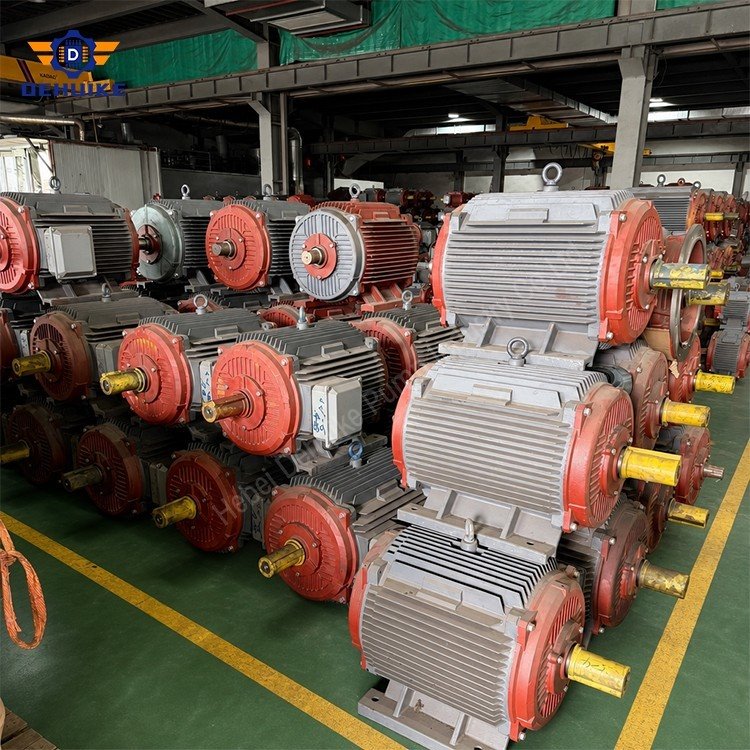
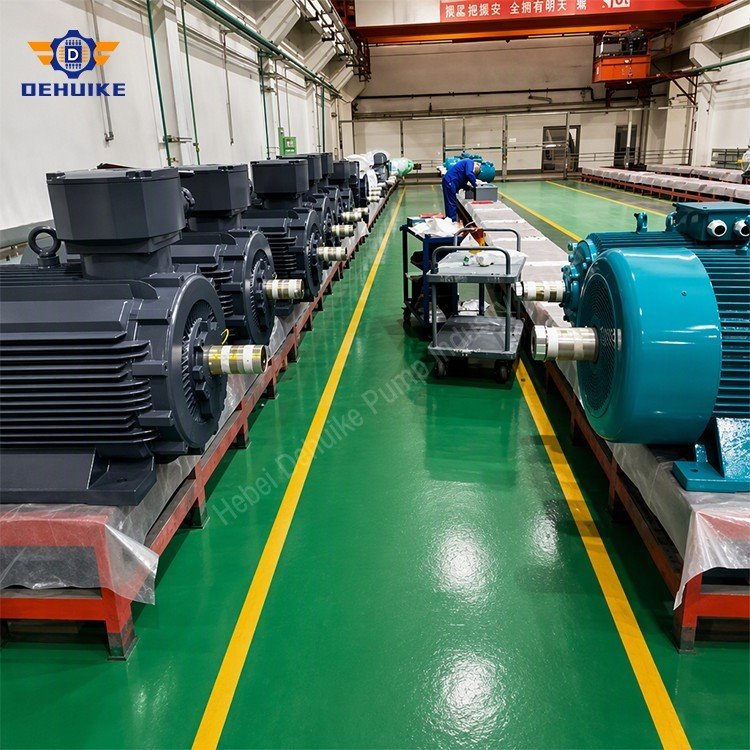
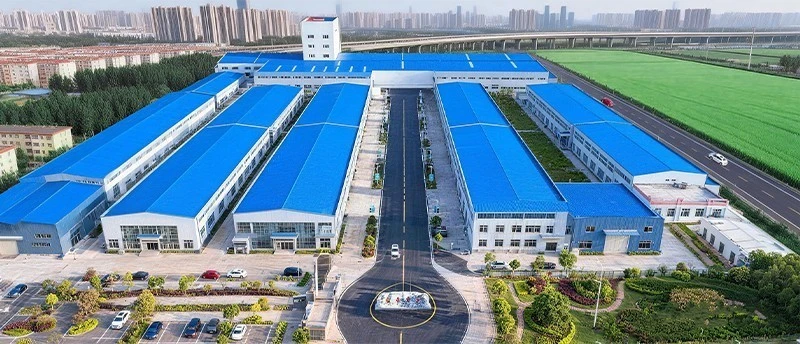
Hebei Dehuike Pump Industry Co., Ltd. is one of the most reliable manufacturers and suppliers of high efficiency electric motor in China. With abundant experience, we are committed to providing high quality customized pumps with competitive price. Welcome to wholesale bulk high efficiency electric motor for sale here from our factory. Also, pricelist is available.
Why a motor fails at fourteen months
A 45 kW motor on a borehole pump in a steel plant failed inside its warranty period. The windings were black, the bearings were dry, and the maintenance report said "motor fault". Nobody had checked the obvious things first: the pump was running at 52 kW because the impeller had been changed two years earlier, the motor sat in a corrugated shed at 46 °C in summer, and the drive belt had been tensioned by feel.
The motor was the thing that broke, not the thing that was wrong.
This article is about the decisions that keep that from happening: what the nameplate actually commits the motor to, what duty really means, and the handful of site conditions that decide whether a correctly chosen motor survives.
SThe short version
A motor is rated for a stated duty, ambient and altitude. Take any one of those away and the rating no longer applies.
Power alone never specifies a motor: frame, mounting, shaft, flange, voltage, poles, enclosure and starting method all come with it.
Efficiency classes (IE1 to IE4 under IEC 60034-30-1) describe the motor, not the installation. They cannot recover losses created by throttling, bad alignment or an oversized pump.
The three killers we see most are misalignment, blocked cooling, and running at the wrong point on the driven machine's curve. All three are installation issues.
Replacement is a measuring job before it is a purchasing job.
## 3. What the nameplate is telling you
The plate is a short contract. Every field on it is a condition, and once the site breaks that condition, the warranty conversation changes.
Compare the Cost Drivers Before Comparing Purchase Prices
The purchase price of a motor is visible at the start of a project. Its operating cost is accumulated over months or years of production. For equipment with long daily running hours, even a modest change in input power at the same shaft output can become relevant to the ownership decision.
A simplified comparison framework is shown below. It is a planning method, not a substitute for the actual motor data, local electricity tariff, or measured load profile.
A useful lifecycle estimate begins with annual running hours. A motor operating occasionally in a workshop and a motor operating every day in a production line have very different energy-exposure profiles. Next, determine the actual shaft demand instead of relying only on the rating of the equipment it replaces. Then identify whether the machine runs at a stable condition or spends substantial time at reduced flow, reduced speed, partial load, or changing torque.
This approach does not promise a fixed saving percentage, because a credible result depends on measured or specified conditions. It does make the conversation more useful. Buyers can compare options with the parameters that affect their own project rather than with generic claims.
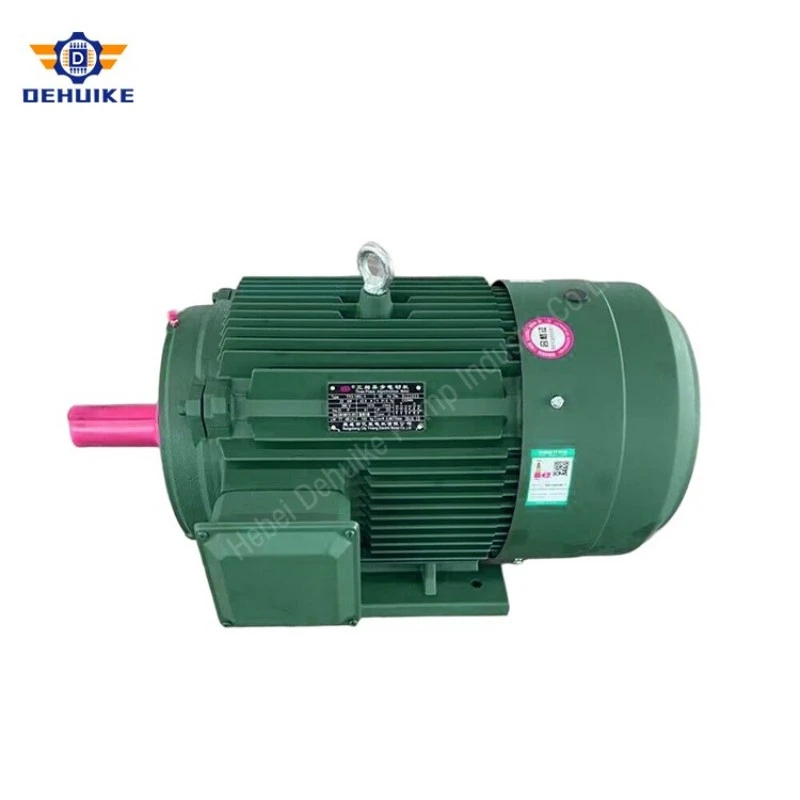
What the nameplate is telling you
The plate is a short contract. Every field on it is a condition, and once the site breaks that condition, the warranty conversation changes.
|
Field |
What it fixes |
Where people get it wrong |
|
kW / HP |
Shaft output at the rated point, not the electrical input |
Sizing on the old motor's rating instead of the measured load |
|
Voltage and frequency |
The supply the winding was designed for |
Assuming a 400 V motor tolerates a 380 V bus with 8 percent drop |
|
Poles / speed |
Nominal speed at that frequency, minus slip |
Forgetting that a 4-pole 50 Hz machine runs about 1,450 rpm, not 1,500 |
|
Duty (S1, S2, S3) |
How long it may run, and how often it may restart |
Treating an S3 crane motor as if it were continuous duty |
|
Enclosure / IP code |
What it keeps out, and which cooling path it uses |
Putting a TEFC motor in a washdown bay and calling the IP code enough |
|
Insulation class and rise |
Thermal headroom at rated ambient |
Reading class F as permission to run 30 °C above ambient |
|
Ambient and altitude |
The conditions the rating was established at |
Installing at 1,800 m and expecting full torque |
|
Efficiency class |
The verified efficiency band of the design |
Using IE3 as proof that the whole drive train is efficient |
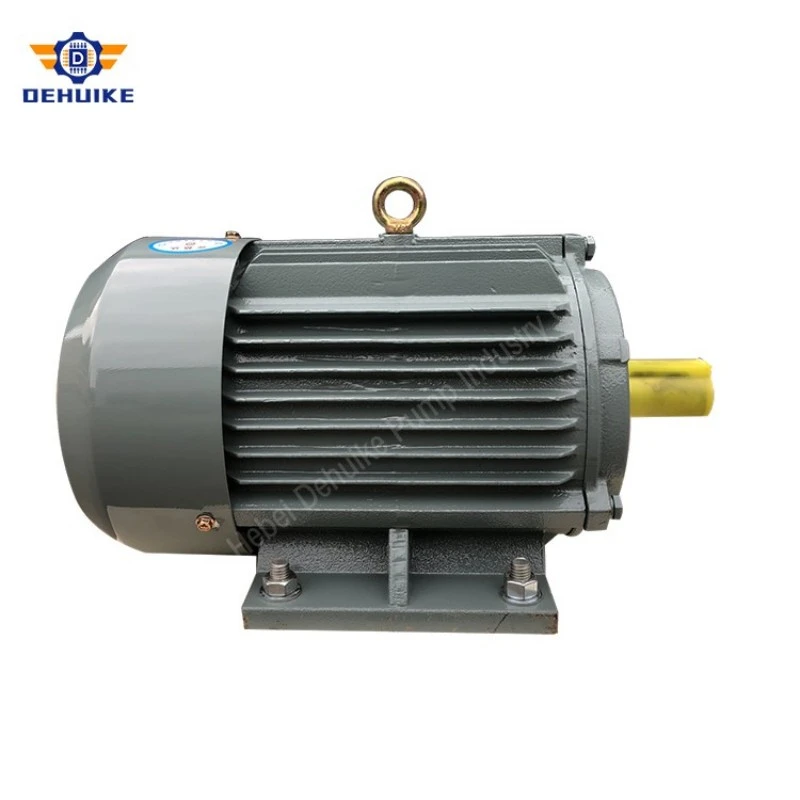
Two rules follow. If the ambient is above the nameplate value, the output has to come down; a rough working figure for air-cooled machines is 1 percent of rating per degree above 40 °C, and altitude above 1,000 m costs roughly 1 percent per 100 m for cooling-limited designs. And if the load is genuinely higher than the plate, replace the motor or fix the machine, but do not simply raise the trip setting.
Duty is the part buyers skip
Duty type is where most quiet mismatches live.
S1 continuous means the machine can run at rating indefinitely, which is what a pump or fan usually needs. S2 short-time defines a period followed by a rest long enough to return to ambient temperature. S3 intermittent defines a cyclic pattern with a duty ratio, and it is common on hoists, cranes and some conveyors. A motor designed for S3 with a 40 percent duty ratio will overheat if someone runs it continuously, and the nameplate said so.
Starting is the second half of duty. Every start draws several times rated current and heats the rotor and stator; the heat has to dissipate before the next start. Frequent starting on a large machine is a thermal problem long before it is an electrical one. If the process needs many starts per hour, that belongs in the enquiry, together with the inertia of the driven machine - a high-inertia fan or a loaded conveyor accelerates slowly, and long acceleration at high current is the worst case for winding temperature.
This is also where oversizing goes wrong. Extra capacity sounds safe, and on a lightly loaded motor the losses per unit of output actually rise. A 55 kW motor carrying a 30 kW load runs at low power factor and low efficiency; it is not "safer" than a 37 kW unit doing the same work.
Enclosure, environment, and the cooling path
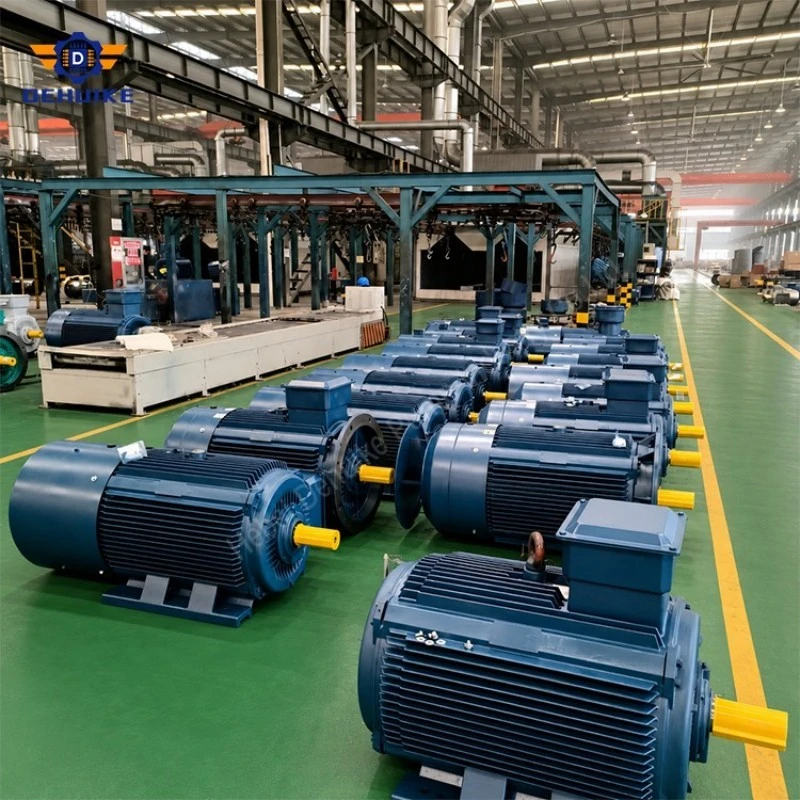
TEFC - totally enclosed, fan cooled - is the default for industrial duty. A shaft-mounted external fan pulls air over a finned frame; nothing passes through the interior. It is simple, cheap to maintain, and completely dependent on that external airflow.
Which is why the most common environmental failure is not water. It is a blocked cooling path: dust on the fins, a fan cowl packed with paper fibre, a motor tucked into a corner where hot air recirculates, or a variable-speed installation where the fan slows down with the motor. The last one deserves its own note. On a drive-fed motor running at 30 percent speed, the shaft fan moves very little air, so a separately powered blower or an inverter-duty cooling arrangement may be necessary.
IP ratings describe ingress protection, not cooling. IP55 keeps dust and low-pressure jets out; it says nothing about whether the motor can shed heat in a 50 °C room. Higher numbers are not free either: an IP65 terminal box helps in a washdown area, but a sealed frame with no breathing path can trap condensation instead of keeping it out, and the fix then costs more than the rating did.
Coastal and chemical sites add another dimension: moisture and chloride attack frames, terminal boxes and bearing housings, and a motor that sits idle in humid air collects condensate whether or not it is running. Space heaters exist for that reason and are cheaper than a rewind.
Installation: the part that decides the service life
Nearly every premature failure we see traces back to workmanship rather than design. In order of how often it bites:
Alignment. A directly coupled motor aligned by eye puts a bending load on both bearings and a once-per-revolution vibration into the frame. Dial indicators in two planes, with pipe strain removed and the base grouted, take an hour and add years.
Belt tension. Over-tensioned belts destroy bearings on both the motor and the driven shaft; under-tensioned belts slip, glaze and generate heat. Gauge, not thumb.
Foundation and base. A soft foot or a base that flexes under torque produces vibration that no balancing will fix.
Cabling and protection. Correct conductor size for the run, correct overload setting for the actual full-load current, correct earthing, and a phase sequence check before the first start. Phase reversal on a pump is a dry run waiting to happen.
Baseline records. Current per phase, winding temperature, vibration and noise in the first hour of running. Six months later, the comparison answers the question that matters: has something changed?
The failure patterns worth recognising
Bearings account for the largest share of motor downtime in most plants, and most of those failures are mechanical in origin: misalignment, over-greasing, contaminated grease, or a bearing chosen for radial load only while the belt pulls sideways.
Winding failures usually have a thermal story: sustained overload, blocked cooling, voltage unbalance, or repeated starting. Voltage unbalance deserves a mention because its effect is larger than its size - a few percent of imbalance produces a much larger percentage of negative-sequence current and extra rotor heating.
On drive-fed motors, fast switching edges stress insulation and can damage bearings through shaft currents. Inverter-duty windings, correct cable lengths and, where needed, shaft grounding are the countermeasures, and they belong in the specification rather than in the repair bill.
Standstill is its own risk. A motor that runs twice a month in a humid climate accumulates moisture in the winding; insulation resistance falls, and the first start after a long idle is the one that fails.
Frequently Asked Questions
Q: What makes a High Efficiency Electric Motor different from a standard selection?
A: The difference should be confirmed by the performance and efficiency information for the specific motor configuration. In practical procurement, the term indicates that efficiency is a primary selection criterion alongside power, speed, duty, mounting, electrical supply, and operating environment. The confirmed data sheet-not a generic title-defines the final product.
Q: Will a high-efficiency motor always reduce the total energy used by my equipment?
A: It can reduce avoidable motor losses at its rated operating conditions, but total equipment energy use also depends on the driven machine, transmission, control method, load profile, and process requirement. Review the entire system when estimating operational impact.
Q: Should I choose the largest motor rating for extra safety?
A: Not automatically. Additional capacity can be appropriate when supported by start conditions, load growth, ambient conditions, or other technical evidence. It should be selected through a duty review rather than used as a default rule.
Q: How do efficiency classes affect international projects?
A: Efficiency classifications and legal requirements can vary by market and product scope. Identify the destination and project requirement in the inquiry, then confirm the applicability and required classification for the final motor configuration before order approval.
Q: Can the motor be used with speed control equipment?
A: Speed control may be suitable for some applications. The motor and control arrangement must be assessed together for the actual operating range, torque behavior, cable installation, and system requirements. Confirm this arrangement before supply.
Q: What information is most important for a replacement motor?
A: Provide the existing motor nameplate data, power and speed requirement, supply information, mounting dimensions, shaft interface, installation environment, driven machine type, control method, and the operating reason for replacement. Photographs and interface drawings are useful when available.
Q: Why does the operating environment affect efficiency and reliability?
A: High temperature, blocked ventilation, contamination, moisture, vibration, and unsuitable installation can increase operating stress. These conditions influence the real thermal and mechanical duty, so they should be addressed in the product configuration and maintenance plan.
Q: What documents should be confirmed before shipment?
A: Confirm the approved technical schedule, motor identification details, mechanical interface information, requested inspection or test documentation, marking, and packaging requirements. The exact document set should be agreed in the purchase order.

Hot Tags: high efficiency electric motor, China high efficiency electric motor manufacturers, suppliers, factory