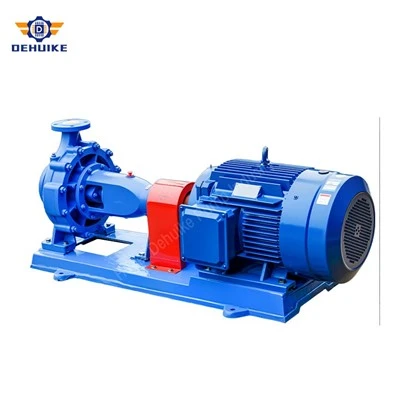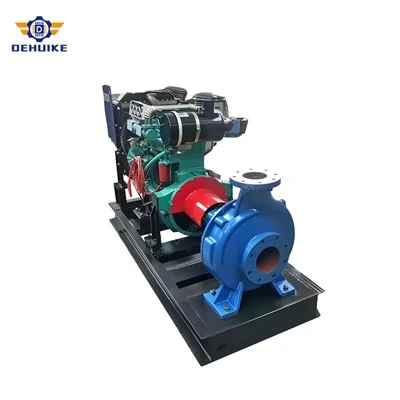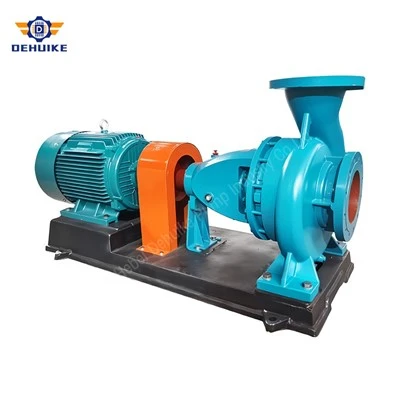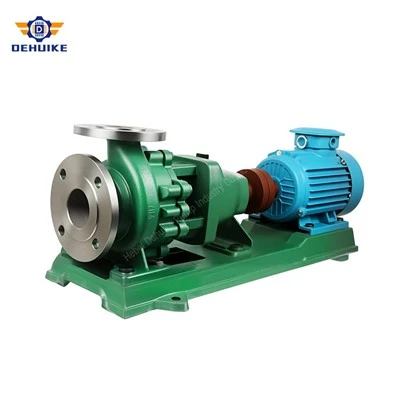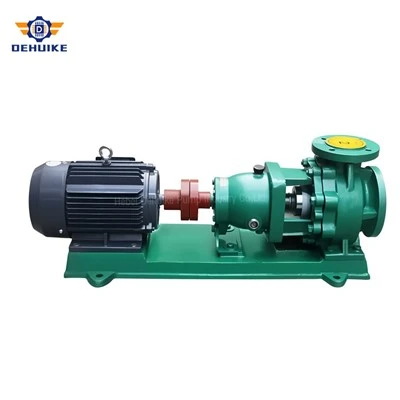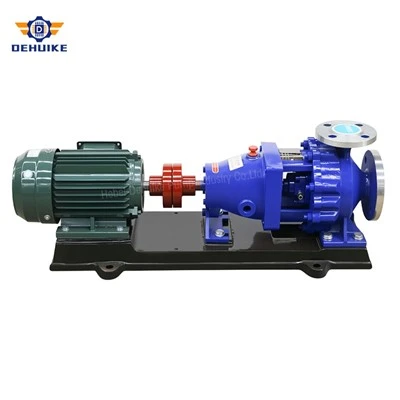

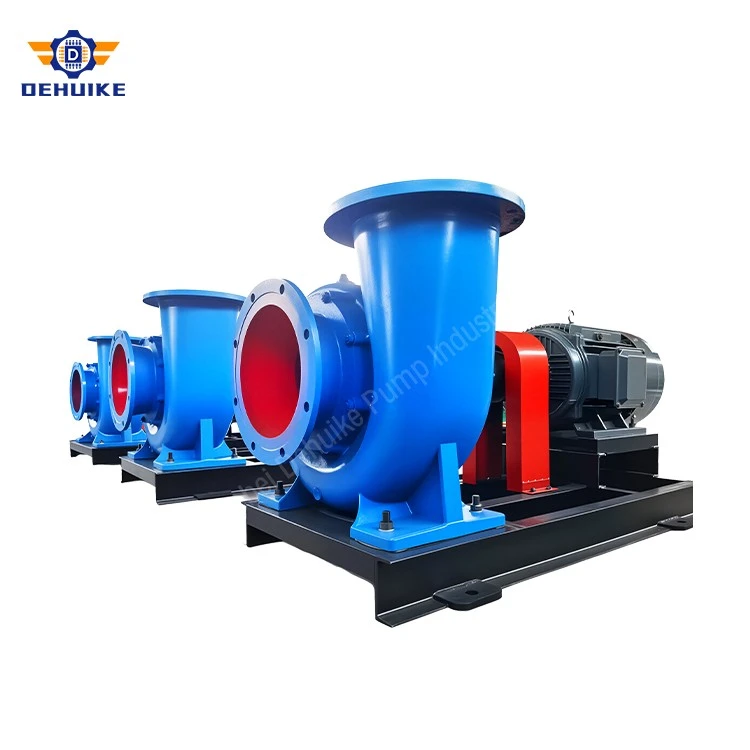
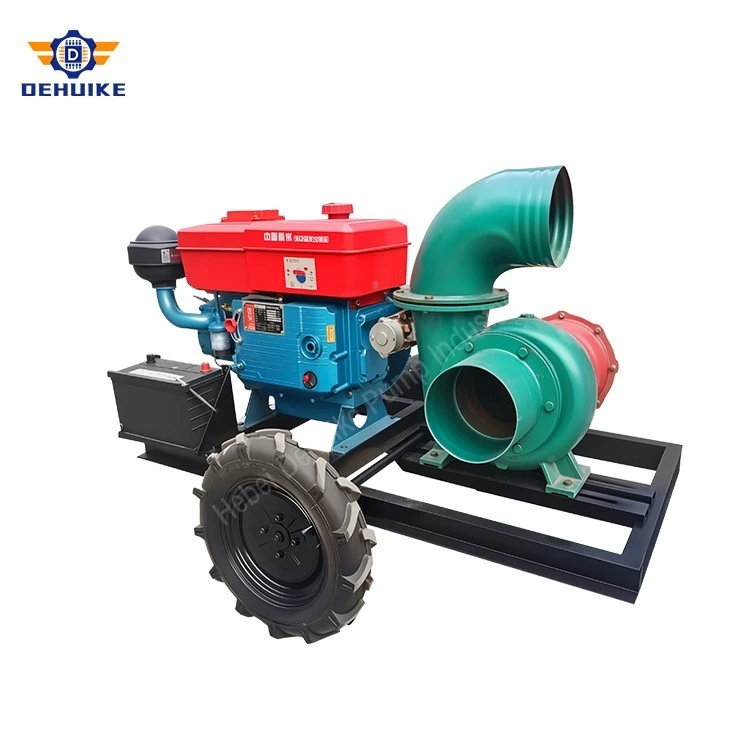
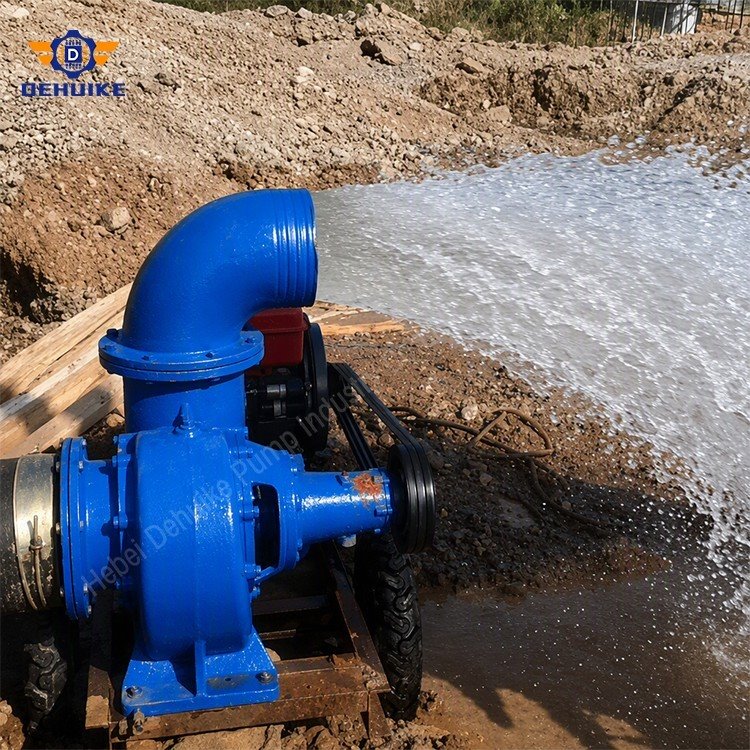
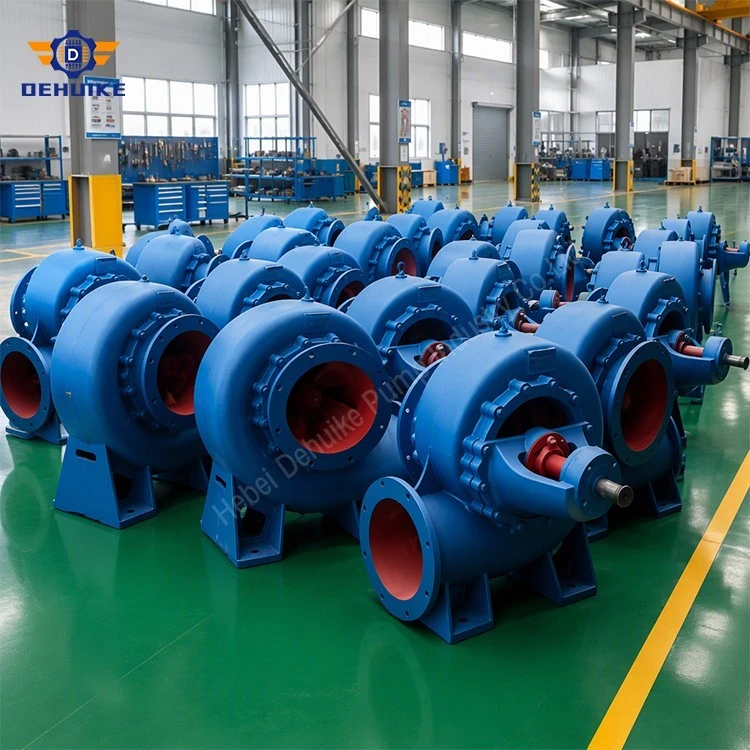
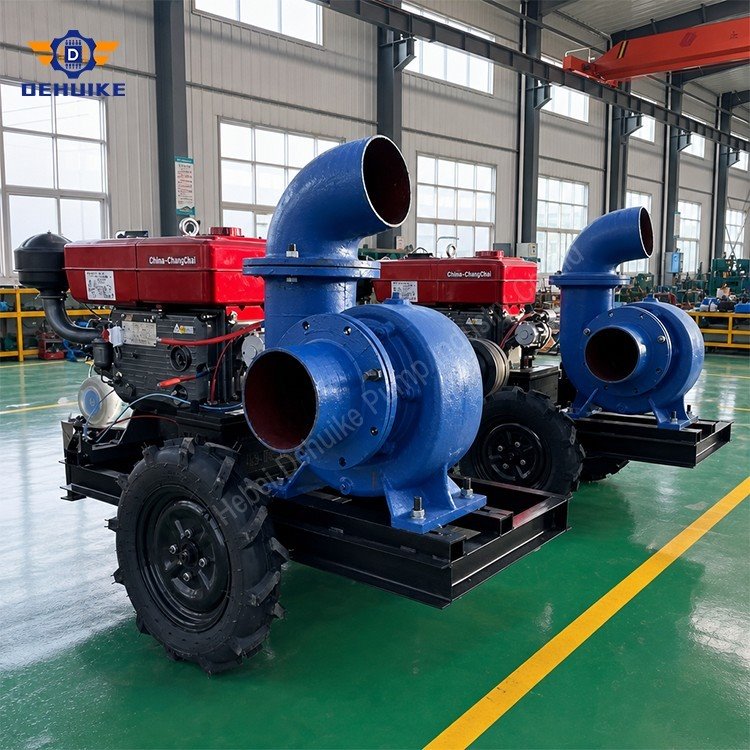
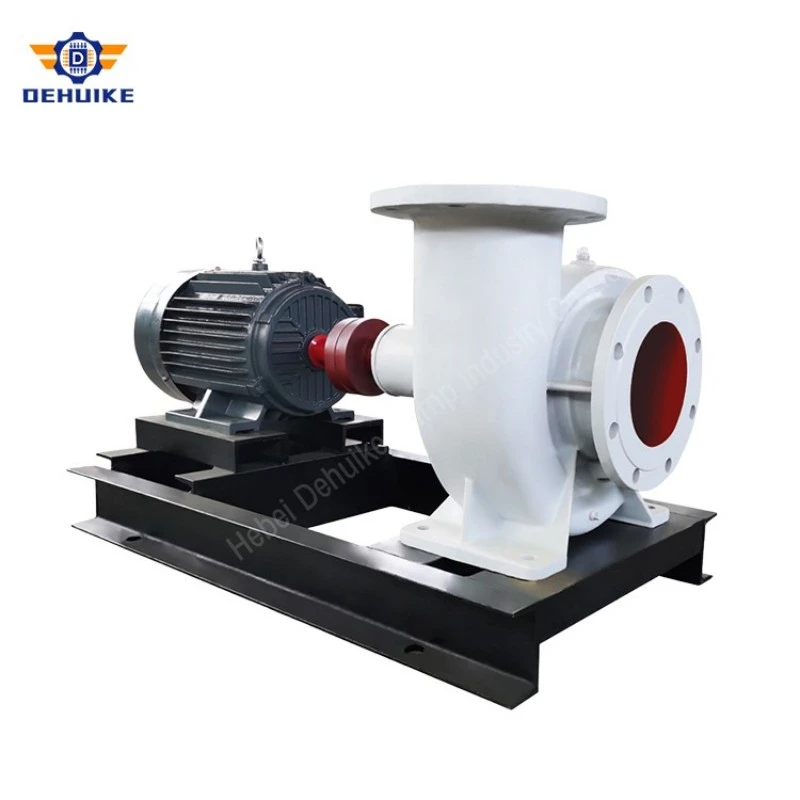
Hebei Dehuike Pump Industry Co., Ltd. is one of the most reliable manufacturers and suppliers of river water mixed flow pump in China. With abundant experience, we are committed to providing high quality customized pumps with competitive price. Welcome to wholesale bulk river water mixed flow pump for sale here from our factory. Also, pricelist is available.
Fluvial Hydraulic Dynamics, Riverbed Water Abstraction, and Sediment-Tolerant Volute Principles
Extracting raw water from natural river channels, tidal estuaries, and alluvial streams represents a fundamental engineering requirement for agricultural irrigation districts, municipal raw-water works, and industrial cooling lagoons. Pumping from natural riverbanks introduces severe hydraulic complexities: water stages fluctuate significantly between monsoon crests and dry-season low flows, while suspended river sediments, alluvial sand, and floating organic matter accelerate abrasive component wear.
Conventional radial centrifugal pumps suffer from rapid impeller channel clogging and poor energy efficiency when tasked with transferring massive volumetric streams over modest elevation lifts (10 to 25 meters). Conversely, low-head axial propeller pumps exhibit unstable operating characteristics during river stage drops and cannot overcome lengthy discharge line friction without overloading their drivers. The River Water Mixed Flow Pump provides an optimal fluvial engineering solution, delivering large volumetric throughput from 250 m³/h up to 580 m³/h per unit across total dynamic heads reaching 20 meters, while maintaining flat power demand curves, dependable solids passage, and exceptional fuel economy.
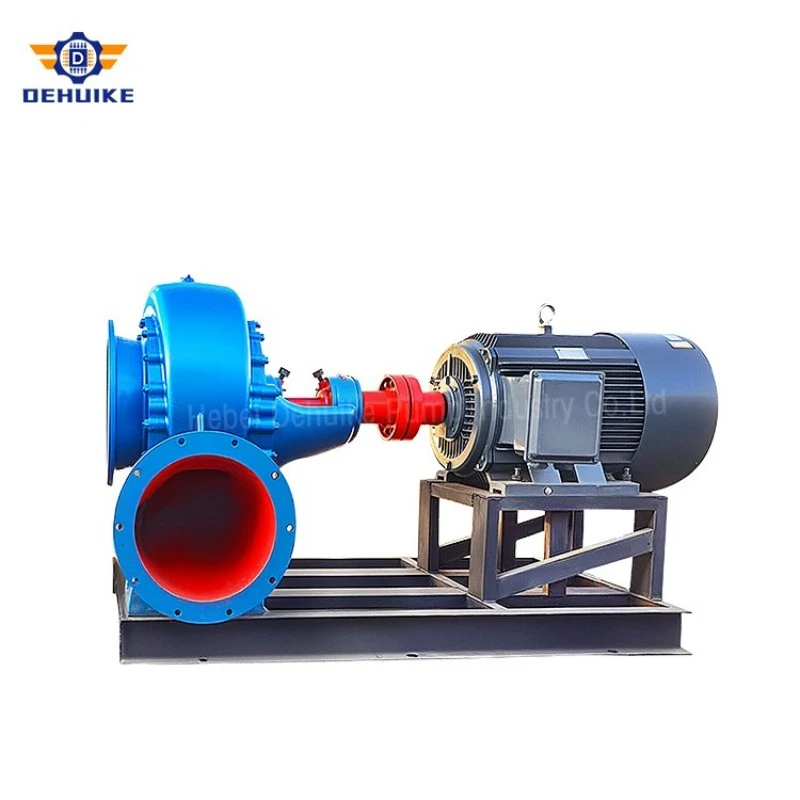
At the core of the machine, a semi-axial hydraulic runner accelerates raw river liquid diagonally. Water enters through the horizontal suction throat, meeting three-dimensionally twisted blades inclined between 35 and 50 degrees relative to the shaft axis. Operating at a moderate 1450 r/min rotational speed, the runner imparts centrifugal acceleration and forward axial displacement simultaneously. This blended momentum trajectory maintains a generous cross-sectional waterway, preventing flow separation, reducing internal eddy resistance, and passing suspended alluvial silt without abrasive turbulence.
An expanding cast-iron spiral casing collects the discharged liquid from the runner perimeter. As fluid travels along the widening volute path, kinetic velocity converts smoothly into static discharge pressure with high hydraulic efficiency. Operating at an optimal specific speed (ns = 320 to 600), the River Water Mixed Flow Pump maintains high energy conversion across fluctuating river levels. Driven by industrial diesel engines, three-phase electric motors, or tractor PTO linkages, the equipment provides stable, cost-effective water abstraction throughout long seasonal irrigation campaigns.
Hebei Dehuike Pump Industry Co., Ltd. manufactures the DHW fluvial abstraction series to provide dependable water handling machinery for municipal, agricultural, and industrial stations worldwide. Engineered with heavy-walled cast housings, silt-tolerant diagonal impellers, and versatile trailer or skid mountings, the machinery operates smoothly at 1450 r/min. Capable of pumping raw river water carrying suspended sand and plant debris, the DHW series delivers an adaptable, fuel-efficient fluid transfer asset for waterworks worldwide.
Fluvial Hydraulic Specifications & Tri-Tier River Intake Performance Schedules
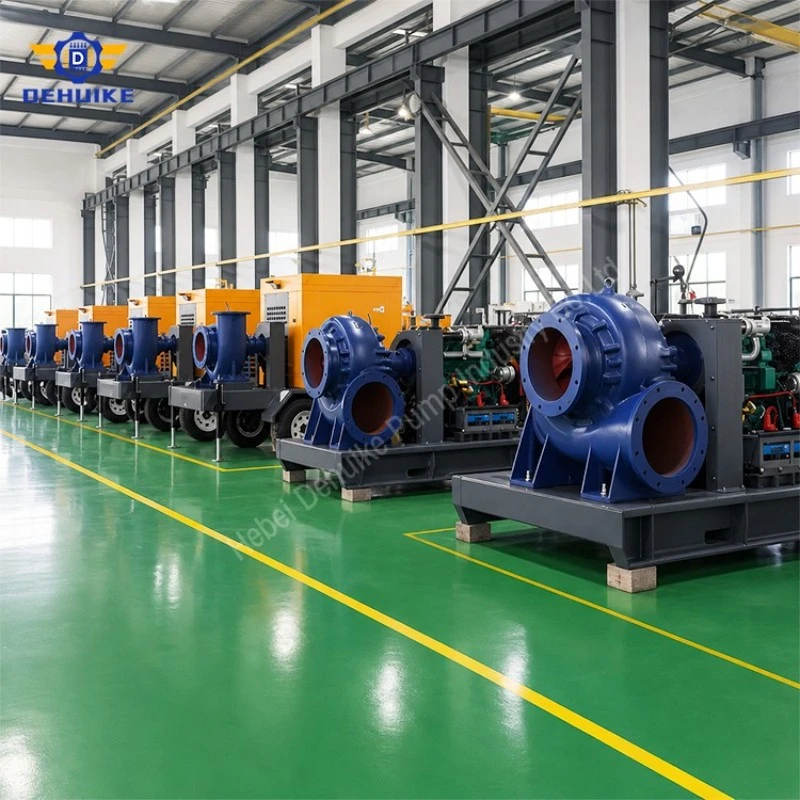
To assist water resource planners, civil engineering consultants, and agricultural cooperative managers in matching pumping hardware with seasonal river discharge curves, the DHW River Water Mixed Flow Pump portfolio is structured into three distinct operational tiers based on discharge bore, volumetric delivery, and driver power envelopes. This clear technical grouping eliminates specification ambiguity and facilitates accurate river intake station sizing.
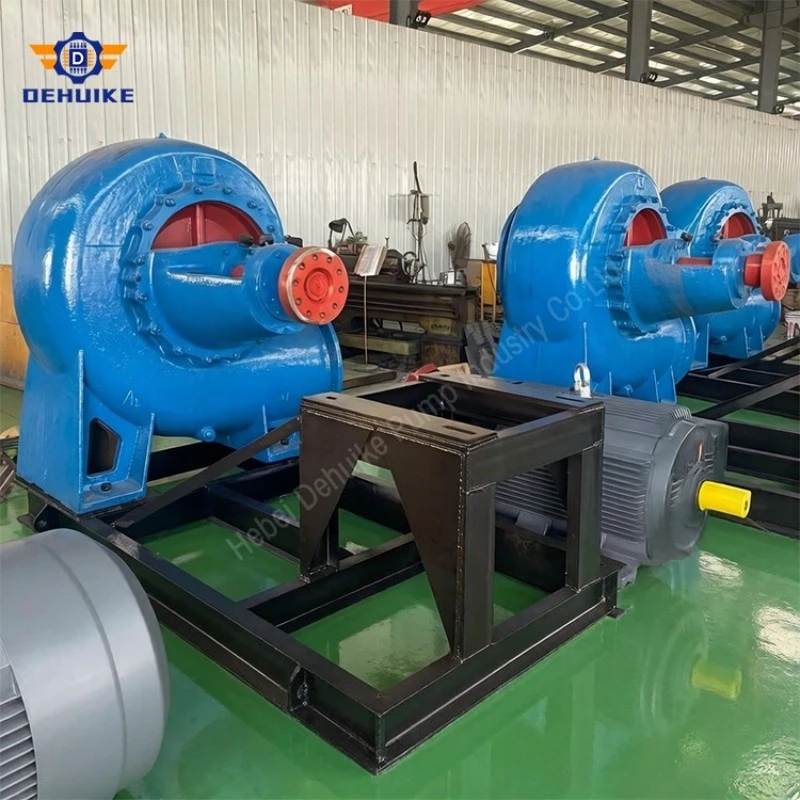
2.1 Tier 1: 100 mm Bore High-Mobility Stream Bank Skimming Unit (Model DHW250-20)
Model DHW250-20 anchors Tier 1 as an agile riverbank skimming unit. Featuring a 100 mm (4-inch) discharge port, it couples to an 8 HP diesel engine at 1450 r/min to deliver 250 m³/h at 20 meters total dynamic head. Mounted on a lightweight two-wheel cart under 340 kg, it enables fast deployment along steep river banks.
|
Model |
Discharge Bore |
Rated Flow (Q) |
Rated Head (H) |
Speed Rating |
Diesel Engine Rating |
Drive Adaptability |
|
DHW250-20 |
100 mm |
250 m³/h |
20 m |
1450 r/min |
8 HP |
Diesel Engine / Electric Motor / Tractor PTO |
With a total skid package weighing below 340 kg, river station workers can position the DHW250-20 across sloping banks on a pneumatic-tired two-wheel frame. The single-cylinder 8 HP diesel prime mover provides steady torque, sustaining continuous river skimming without thermal derating.
2.2 Tier 2: 125 mm to 150 mm Aperture Canal Flume & Estuarine Diversion (Models DHW280-20 & DHW300-20)
Tier 2 addresses mid-scale river diversion flumes, tidal estuary water exchanges, and regional agricultural header canals through two calibrated stages: Model DHW280-20 and Model DHW300-20. Sizing the delivery connection at 125 mm and 150 mm maintains moderate water velocities, suppressing line friction losses over multi-kilometer canal runs.
Tier 2 provides graduated capacities: Model DHW280-20 features a 125 mm (5-inch) delivery port discharging 280 m³/h at 20 meters head with an 8 HP diesel engine. By refining internal casing contours, it yields 30 m³/h more water than Tier 1 without increasing fuel burn. For expansive river schemes, Model DHW300-20 expands the connection to 150 mm (6 inches) coupled with a 15 HP industrial diesel engine, producing 300 m³/h at 20 meters head to sustain delivery across extensive aqueduct systems.
|
Model |
Discharge Bore |
Rated Flow (Q) |
Rated Head (H) |
Speed Rating |
Diesel Engine Rating |
Drive Adaptability |
|
DHW280-20 |
125 mm |
280 m³/h |
20 m |
1450 r/min |
8 HP |
Diesel Engine / Electric Motor / Tractor PTO |
|
DHW300-20 |
150 mm |
300 m³/h |
20 m |
1450 r/min |
15 HP |
Diesel Engine / Electric Motor / Tractor PTO |
This dual-model lineup provides practical flexibility: river station operators feeding low-head gravity trenches can deploy the 8 HP DHW280-20 to reduce diesel operating costs, while installations requiring extra static lift for elevated levee crossings rely on the 15 HP DHW300-20.
2.3 Tier 3: 200 mm Main River Stem Water Abstraction & Regional Diversion (Model DHW580-20)
At the heavy-duty flow apex, Model DHW580-20 serves primary river intakes and large diversion aqueducts through an expansive 200 mm (8-inch) flanged delivery port. Driven by a 22 HP industrial diesel engine operating at 1450 r/min, this machine discharges 580 m³/h at 20 meters total dynamic head.
|
Model |
Discharge Bore |
Rated Flow (Q) |
Rated Head (H) |
Speed Rating |
Diesel Engine Rating |
Drive Adaptability |
|
DHW580-20 |
200 mm |
580 m³/h |
20 m |
1450 r/min |
22 HP |
Diesel Engine / Electric Motor / Tractor PTO |
Capable of transferring 580,000 liters every hour (161 L/s), a single Tier 3 station draws massive water volumes from river mainstreams into distribution canal headers. Robust exterior casing ribs absorb hydraulic pressure shocks, while the 22 HP diesel prime mover provides steady governor control under shifting water elevations.
2.4 Consolidated River Intake Engineering Master Matrix
The master schedule below summarizes certified performance parameters across all three tiers of the DHW River Water Mixed Flow Pump line, validated under standard 20°C clean water test bench conditions:
|
Operational Tier |
Model |
Discharge Port |
Nominal Capacity |
Rated Head |
Speed |
Diesel Engine |
Drive Options |
|
Tier 1: Agile Field Unit |
DHW250-20 |
100 mm |
250 m³/h |
20 m |
1450 r/min |
8 HP Diesel |
Diesel / Electric / Tractor PTO |
|
Tier 2: Canal Diversion |
DHW280-20 |
125 mm |
280 m³/h |
20 m |
1450 r/min |
8 HP Diesel |
Diesel / Electric / Tractor PTO |
|
Tier 2: High-Volume Canal |
DHW300-20 |
150 mm |
300 m³/h |
20 m |
1450 r/min |
15 HP Diesel |
Diesel / Electric / Tractor PTO |
|
Tier 3: Municipal Flood Relief |
DHW580-20 |
200 mm |
580 m³/h |
20 m |
1450 r/min |
22 HP Diesel |
Diesel / Electric / Tractor PTO |
Fluctuating Water-Level Adaptability, Abrasive Silt Resistance, and Fuel Economy
Pumping raw water directly from natural watercourses imposes operational challenges absent in closed industrial pipe loops. The DHW River Water Mixed Flow Pump incorporates specialized hydraulic and structural characteristics designed to operate continuously despite abrasive silt loads and fluctuating river stages.
3.1 Seasonal Fluvial Stage Adaptability
Natural river water levels change dramatically across dry and wet seasons. While pure axial pumps suffer steep power spikes when suction stages drop, the DHW series exhibits a flat, non-overloading power demand profile across its operating envelope. Prime mover drivers maintain continuous rotational velocity without engine stall or thermal trip-out as river elevations fluctuate.
3.2 Low-Speed 1450 r/min Hydrodynamic Wear Resistance
Suspended fluvial sand and alluvial quartz particles cause severe erosion when pumped at high velocities. Operating at 1450 r/min rather than 2900 r/min reduces peripheral blade tip velocity by half. Because erosion rates scale with fluid velocity cubed, this moderate rotational speed cuts abrasive wear by more than 70%, extending impeller and volute service life over multi-year abstraction cycles.
3.3 Broad High-Efficiency Hydraulic Plateau
Energy expenditure accounts for the majority of long-term pumping station operating costs. The hydrodynamic profile of the DHW runner establishes an expansive high-efficiency band spanning 70% to 125% of the Rated Optimal Efficiency Point (BEP). By avoiding turbulent recirculating losses, diesel prime movers consume between 210 and 235 g/kWh, saving substantial fuel costs over thousands of hours of river extraction.
3.4 Deep Suction Lift Margins
Featuring an expanded suction throat and gentle vane entry angles, the DHW series limits Net Positive Suction Head Required (NPSHr) between 2.8 and 3.8 meters. This provides an abundant safety cushion against vapor cavitation, allowing reliable static suction lifts exceeding 5.5 meters from elevated river levees without impeller pitting.
Fluvial Engineering Advantages, Siphon Integration, and Hardened Metallurgy
Selecting pumping machinery for river abstraction requires hardware tailored to rural field practicalities. Hebei Dehuike Pump Industry Co., Ltd. incorporates specialized adaptations that differentiate the DHW series from generic industrial pumps.
4.1 Pontoon Barge and Floating Station Mounting
Because water stages rise and fall seasonally, fixed bankside pump foundations can become flooded or left stranded above suction limits. The DHW series features balanced, compact channel-steel skids suitable for installation on floating river pontoon barges moored to bankside dolphins. As river elevations fluctuate, the floating pumping set rises and falls with the water surface, maintaining constant suction submergence.
4.2 Siphon Pipe Adaptation Without Foot Valves
Mechanical foot valves installed in muddy river bottoms frequently foul with silt, leaves, and debris, causing loss of prime. The DHW series pairs seamlessly with over-the-levee siphon piping. When coupled with an engine-exhaust or vacuum-assist priming system, the pump purges the siphon conduit crown rapidly, establishing full siphon flow in minutes and eliminating bottom foot valves entirely.
4.3 Replaceable Sacrificial Casing Wear Plates
To protect structural castings against abrasive scoring from riverbed silt, DHW pumps incorporate renewable front and back casing wear rings. Operators can replace these rings during seasonal turnarounds with standard hand tools, restoring original hydraulic clearances without purchasing a new casing.
4.4 Multi-Drive Baseframe Compatibility
DHW river sets support three field drive options: (1) self-contained diesel engine skids with integrated fuel tanks for remote un-electrified riverbanks, (2) electric motor baseplates with heavy-gauge coupling guards for permanent intake houses, and (3) tractor PTO drive shafts for seasonal cooperative pumping.
Fluvial Quality Standards, Casing Hydrostatic Proofing, and Rotor Testing
Quality control at Hebei Dehuike Pump Industry Co., Ltd. operates in strict conformance with our audited ISO 9001 quality framework. River intake pumps endure continuous grit scouring and dynamic hydraulic thrust, requiring rigorous shop testing before crating.
5.1 Hydraulic Shell Pressure Proof Evaluation
Every raw casing is blanked with heavy test plates and pressurized with water to 1.5 times the rated shutoff pressure (minimum 0.6 MPa / 6.0 bar) for a full 30-minute hold period. Ultrasonic thickness gauging and non-destructive dye penetrant checks confirm structural casting soundness and complete absence of porosity.
5.2 Factory Test Bench Performance Mapping
Completed river pump packages undergo full-load hydraulic trials on our automated closed-loop test facility conforming to ISO 9906 Grade 2B standards. Calibrated electromagnetic flow meters, digital pressure transducers, and power analyzers record Q-H head curves, shaft power draw, and hydraulic efficiency to verify compliance with submittal parameters.
5.3 Rotor Dynamic Balancing and Mechanical Run-In
Prior to casing assembly, all diagonal runners are mounted on balancing arbors and checked via digital two-plane balancing equipment compliant with ISO 1940 Grade G2.5 limits. Precision metal removal along the shroud rim eliminates rotating unbalance forces. During full-speed shop test runs at 1450 r/min, accelerometers capture vibration signatures to certify conformance with ISO 10816 standards.
Global River Abstraction Experience, Fluvial Deployments, and Case Records
Dehuike river intake pumping sets have accumulated decades of proven field endurance across major river deltas and seasonal streams worldwide.
6.1 Mekong River Alluvial Intakes in Vietnam and Cambodia
Along the lower Mekong River delta, agricultural cooperatives operate in tidal freshwater zones where seasonal water stages shift by up to 5 meters while carrying heavy suspended alluvial silt. Dehuike has supplied over 200 DHW diesel skid units to local water districts. Pumping directly from natural riverbanks during dry-season cultivation, these sets deliver continuous irrigation without casing erosion or bearing contamination.
6.2 Nile Basin Plantation Pumping in Egypt and Sudan
Commercial agribusiness projects along the Nile River rely on DHW300-20 and DHW580-20 pumping stations to supply canal flumes across sandy arid plains. Operating in ambient desert temperatures exceeding 45°C, the heavy-section cast volutes and industrial diesel powerplants provide reliable volumetric water delivery during peak summer demand.
6.3 Indus and South American River Water Networks
From river diversion schemes in South Asia to raw industrial water intakes along major South American waterways, Dehuike equipment operates in more than 50 to 90 countries worldwide. Our technical engineers routinely coordinate with international contractors to supply customized skid bases, specialized suction transitions, and regional power-matched drives.
Manufacturing Infrastructure, Enterprise Scale, and Comprehensive Warranty Backing
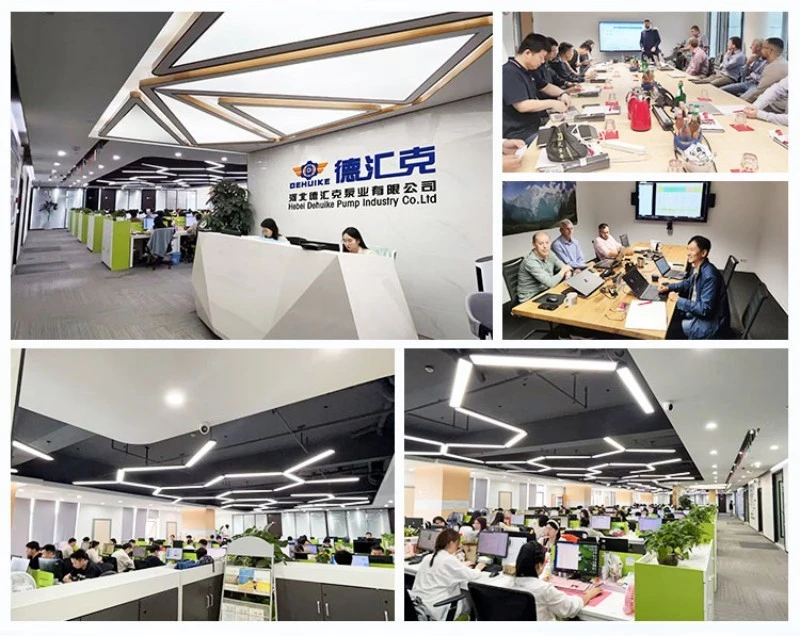
Selecting durable pumping equipment for river water extraction requires partnering with an established manufacturer offering proven technical capability and dedicated international support. Hebei Dehuike Pump Industry Co., Ltd. produces heavy-duty fluid machinery backed by more than thirty years of specialized industrial pump manufacturing, tracing engineering roots back over four decades.
8.1 Production Complex and Quality Governance
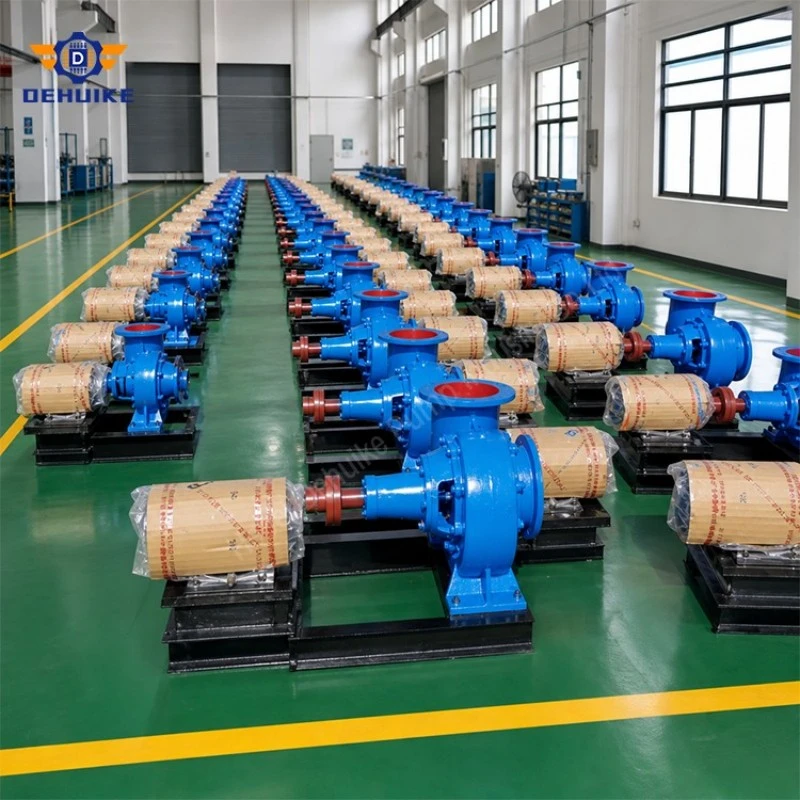
Our factory grounds encompass over 8,000 square meters of advanced manufacturing bays, equipped with induction melting crucibles, precision boring machinery, and computerized hydraulic test loops. Following our founding motto 'Survive on Quality | Develop on Integrity', quality assurance personnel oversee every production sequence: from metallurgical spectrographic assays to CNC milling, dynamic runner balancing, and test-bench performance logging.
8.2 Certified Component Supply Network and Regulatory Approvals
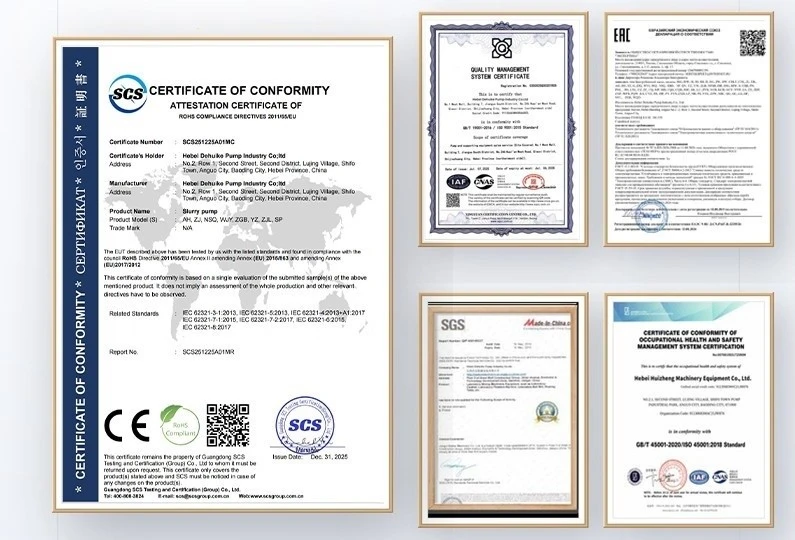
Dehuike's manufacturing capabilities are supported by an established industrial ecosystem of more than 900 vetted supplier partners providing heavy-duty diesel engines, certified electric motors, and precision rolling-element bearings. This supply integration allows Dehuike to execute municipal intake tenders and agricultural bulk orders on tight schedules. All manufacturing operations conform to ISO 9001 standards, with product lines carrying CE, EAC, and RoHS international certifications.
8.3 Complete 24-Month Factory Warranty and Global Shipping Logistics
To validate our engineering durability, Hebei Dehuike Pump Industry Co., Ltd. provides a Comprehensive 2-Year (24-Month) Manufacturer Warranty on complete pumping assemblies (standard mechanical wear components excluded).
Priority Air Cargo: Recommended for urgent replacement components and critical spare packages weighing between 50 kg and 500 kg, ensuring accelerated customs processing.
Maritime Cargo Shipping: Standardized for volume container consignments and heavy skid-mounted diesel pump sets exceeding 500 kg, available through Less-than-Container Load (LCL) or Full-Container Load (FCL 20GP/40HQ) under FOB or CIF destination port trade terms.
Technical FAQ: River Silt Erosion, Siphon Operation, and Mobile Mounting
To support consulting hydraulic engineers, project managers, and irrigation district operators, our technical department has compiled authoritative answers addressing river water abstraction.
Q1: How does a River Water Mixed Flow Pump prevent excessive casing wear when pumping sandy river water?
Abrasive wear is minimized through low-speed design and robust metallurgy. Operating at a moderate 1450 r/min reduces impeller tip velocity by 50% compared to high-speed 2900 r/min pumps, cutting erosive impact by over two-thirds. Furthermore, Dehuike equips all DHW river pumps with replaceable front and rear casing wear plates, allowing operators to restore original hydraulic clearances easily after years of sandy water pumping without replacing structural castings.
Q2: Can the pump operate with bankside siphon discharge pipes?
Yes. The DHW series is exceptionally well-suited for siphon piping arrangements that eliminate costly mechanical gate valves. Because the mixed-flow impeller generates high volumetric discharge immediately upon starting, it rapidly evacuates air trapped in the siphon crown, establishing full siphon flow automatically. Once primed, dynamic head drops to the difference in water elevations plus pipe friction, optimizing fuel economy.
Q3: Can the DHW series be installed on floating pontoon barges?
Yes. Because the horizontal DHW pump and diesel engine share a compact, balanced channel-steel base skid, the complete set can be anchored onto floating steel pontoon barges moored along riverbanks. This allows the pump to rise and fall with natural river stage fluctuations, maintaining constant suction lift regardless of seasonal river floods or droughts.
Q4: What preventive maintenance schedule is recommended for river water pumping operations?
Preventive maintenance includes checking engine lubricants and cooling fluid levels before daily startup, inspecting packing box cooling seepage (aiming for 20 to 60 drops per minute to cool the shaft sleeve), and greasing bearing pedestals with EP2 lithium grease every 500 operating hours. Following seasonal irrigation shutdown, open the volute drain valve to evacuate all water, preventing freeze damage in cold climates.
Q5: What crating and maritime transport procedures does Dehuike support for overseas deliveries?
All export pumps are drained of residual fluid, treated internally with protective anti-rust oil, and fitted with heavy blind flange covers. Machinery sets are mounted to solid wood skids and crated in fumigated ISPM-15 plywood export boxes. We support standard Incoterms 2020 terms, offering FOB Chinese export port and CIF destination port deliveries globally.

Hot Tags: river water mixed flow pump, China river water mixed flow pump manufacturers, suppliers, factory