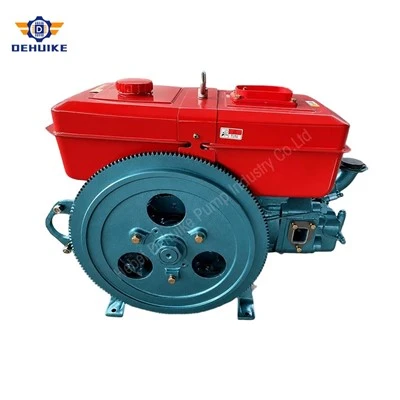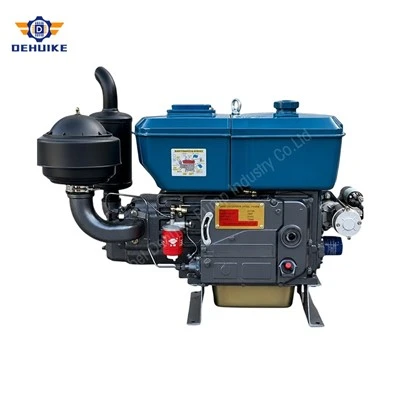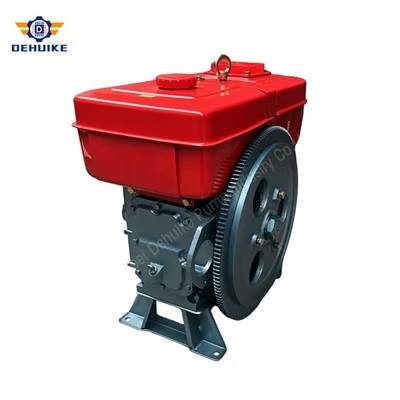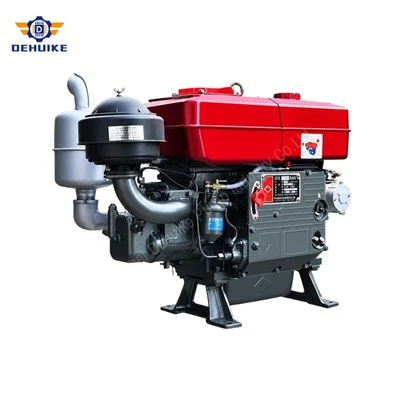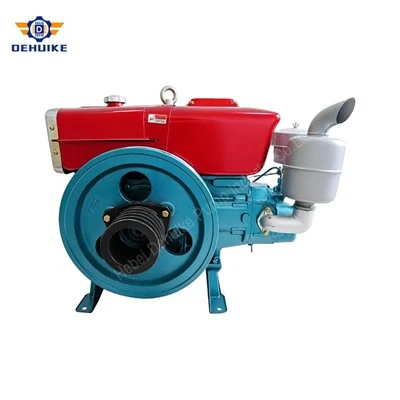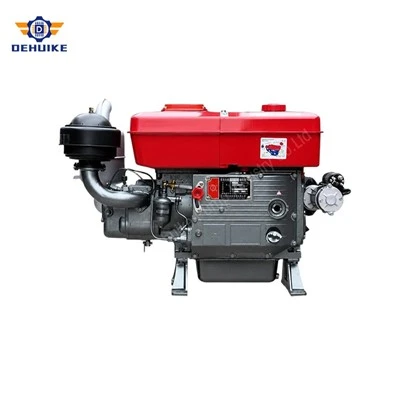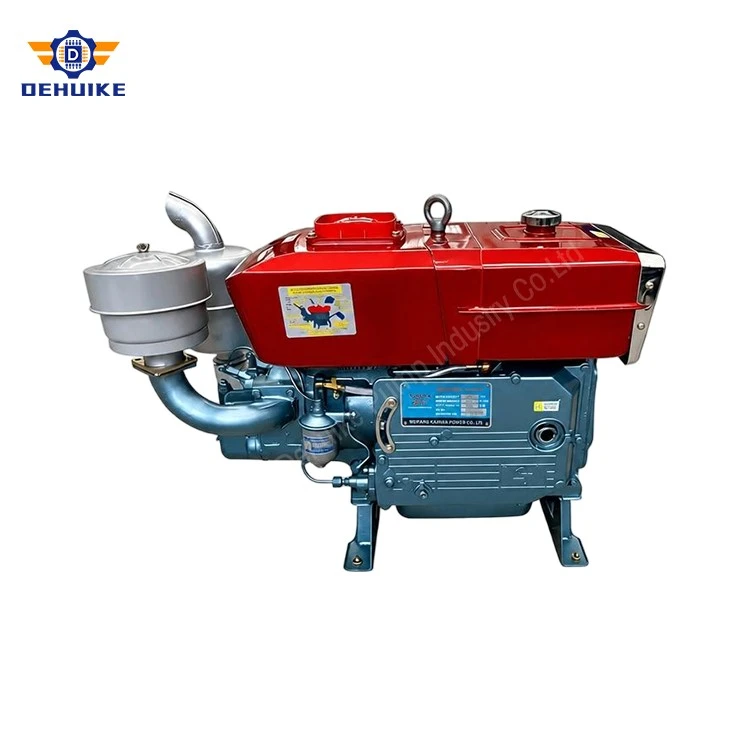
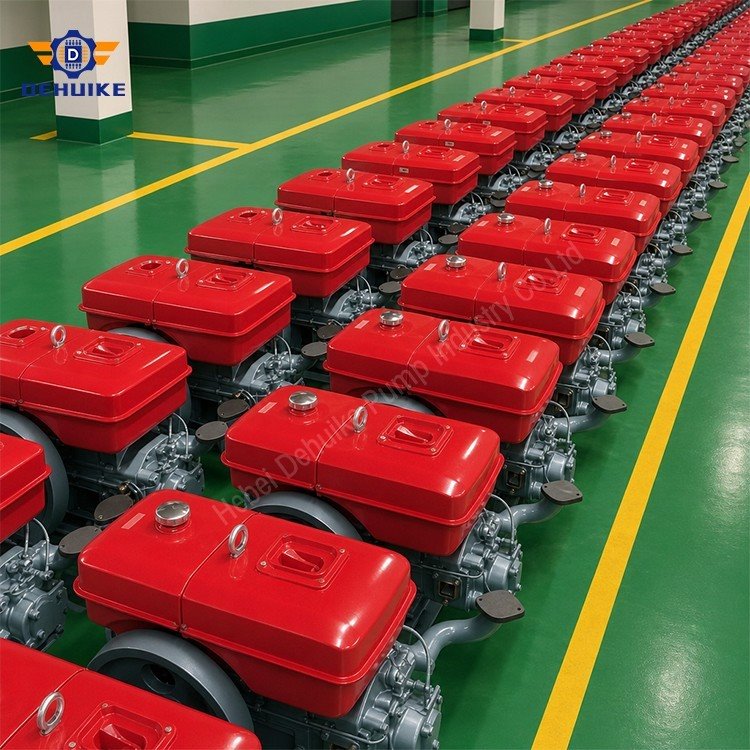
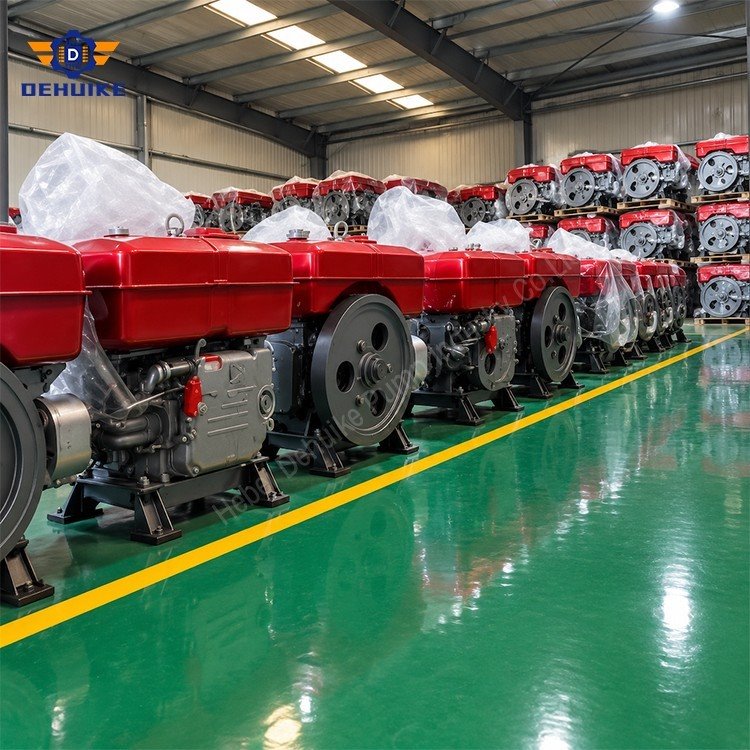
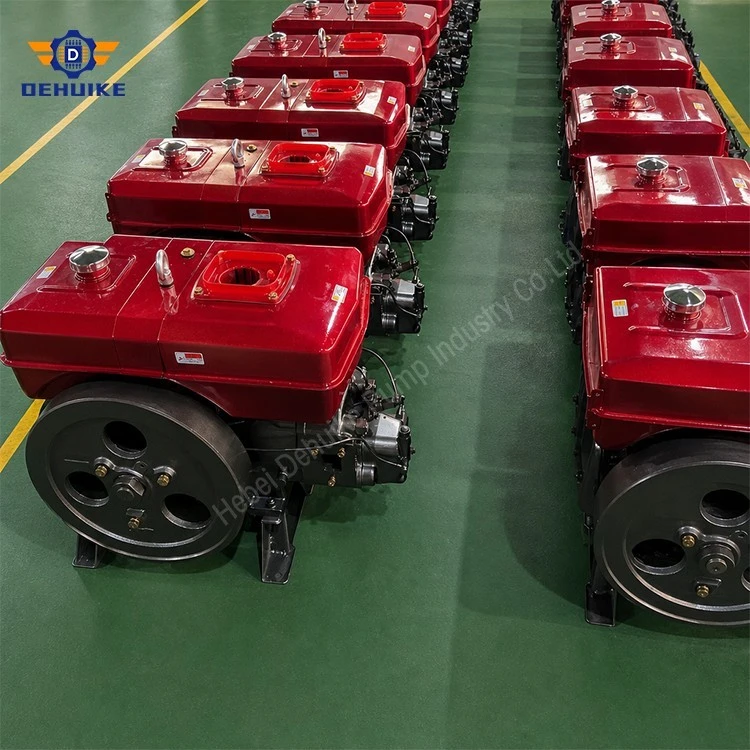
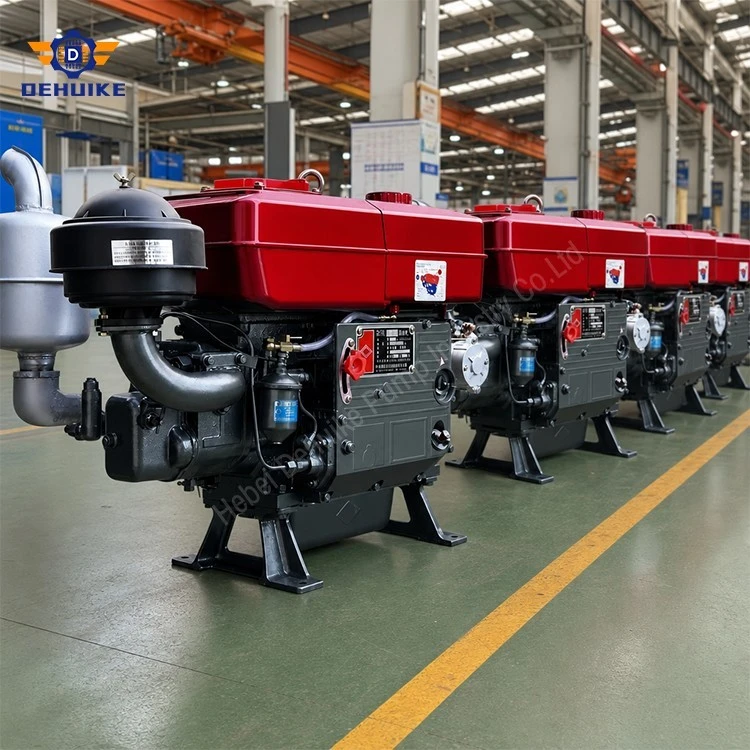
Hebei Dehuike Pump Industry Co., Ltd. is one of the most reliable manufacturers and suppliers of diesel generator engine in China. With abundant experience, we are committed to providing high quality customized pumps with competitive price. Welcome to wholesale bulk diesel generator engine for sale here from our factory. Also, pricelist is available.
Introduction
Field conditions in many global regions pose severe challenges to conventional engine systems. In arctic and high-altitude mining regions where ambient temperatures plunge below -30 deg C, liquid coolants face constant risks of gelation, freeze-cracking of cast engine blocks, and delayed cold-start warmup cycles. Conversely, in hyper-arid desert mining operations, ambient temperatures exceeding 45 deg C cause rapid coolant evaporation, mineral scale accumulation within narrow radiator tubes, and catastrophic coolant boiling. An Air Cooled Diesel Engine circumvents both extremes entirely: it contains zero liquid coolant to freeze during winter shutdowns, zero water to boil off under blistering solar loads, and reaches optimal cylinder wall operating temperatures within minutes of cranking, sharply mitigating cold-start bore condensation and cylinder liner acid etching.
Technical Data Matrices and Model Classification
To provide plant engineers, project managers, and equipment package integrators with unambiguous selection data, the DHK Air Cooled Diesel Engine series is classified into three separate performance categories based on displacement, cylinder configuration, and power capacity. To avoid confusing distinct structural architectures, each category is detailed below with verified parameter tables derived directly from official factory performance data.
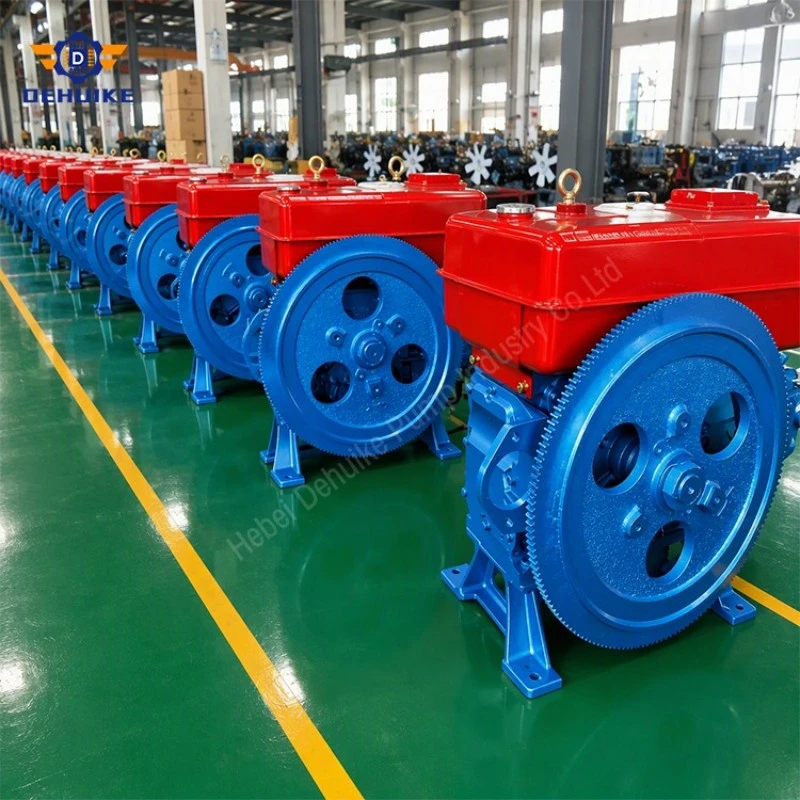
Product Details and Air-Cooling Architecture
The structural architecture of an Air Cooled Diesel Engine differs fundamentally from water-jacketed machinery. Every structural casting, cooling fin contour, and airflow management duct is engineered to facilitate rapid, uninhibited convective heat dissipation while withstanding severe cyclic mechanical stress.
- Individual Finned Cylinder Barrels: Unlike monobloc liquid-cooled blocks where multiple cylinders share a common water jacket, DHK air-cooled engines feature individually cast cylinder barrels manufactured from high-tensile alloy cast iron with elevated lamellar graphite content. The exterior surface features deep, aerodynamically tapered horizontal cooling fins with calculated spacing to maximize exposed surface area while preventing turbulent airflow stagnation. Because each cylinder barrel expands independently, thermal stresses on the crankcase are greatly mitigated, completely eliminating cylinder head gasket distortion caused by uneven multi-cylinder thermal growth. In the event of localized mechanical scoring, individual barrel replacement can be performed in the field without stripping the entire engine block.
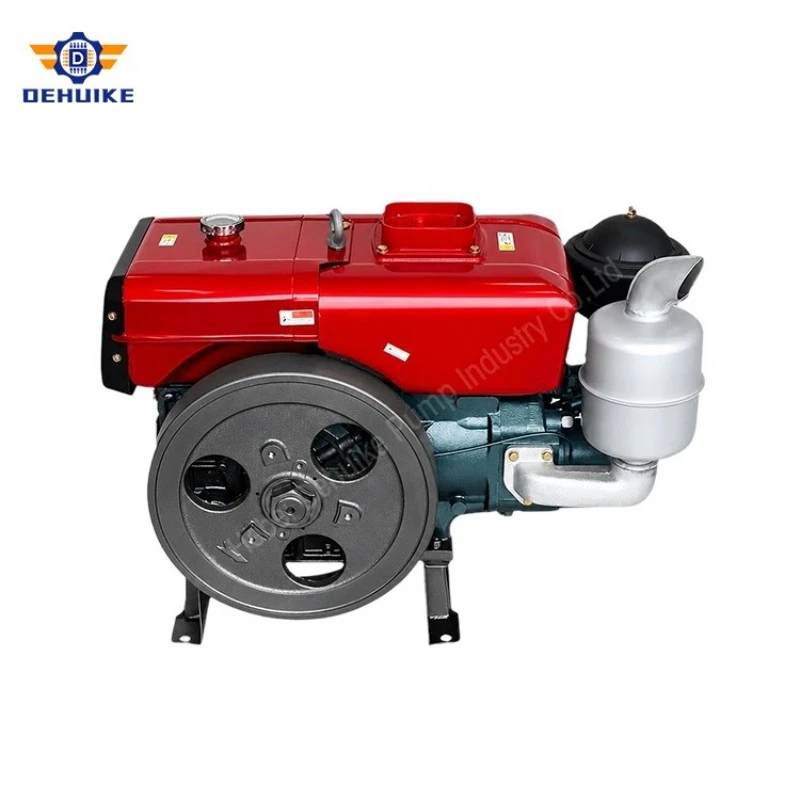
- Air-Stream Integrated Lubricating Oil Heat Exchanger: Engine oil performs approximately 30% of total internal heat dissipation in an air-cooled architecture. DHK engines incorporate a multi-row aluminum plate-fin oil cooler mounted directly within the primary pressurized air ducting from the cooling fan. Before the cooling air reaches the cylinder barrels, it passes across the oil cooler core, lowering lubricating oil temperatures below 110 deg C under sustained peak load. This direct air-to-oil heat rejection maintains optimal hydrodynamic oil film thickness on crankshaft journals and piston skirts without relying on liquid coolant circuits.
- Heavy-Duty Crankcase and Rotating Assembly: The main crankcase is cast from heavily ribbed alloy cast iron, featuring a deep-skirt tunnel or underslung bearing design with high torsional rigidity. The crankshaft components are drop-forged from heat-treated chromium-molybdenum alloy bars with induction-hardened journals and dynamically balanced counterweights. Reciprocating assemblies utilize eutectic hypereutectic aluminum-silica formulations, equipped with internal oil-cooling galleries supplied by pressurized crankcase oil spray nozzles, hard-anodized ring lands, and plasma-coated top compression rings that resist high-temperature micro-welding.
Production Process and Manufacturing Engineering
Manufacturing an industrial Air Cooled Diesel Engine demands precise metallurgical recipes, specialized thin-wall foundry tooling, and micron-accurate machining to ensure that cooling fins and mechanical components perform reliably under high thermal gradients.
- Specialized Precision Foundry for Deep-Finned Castings: Individual cylinder barrels and cylinder heads are poured in our dedicated foundry using automated precision metal die casting and resin-bonded core assembly. The extremely thin cross-sections of the cooling fins (tapering from 3.5 mm at the base to 1.8 mm at the tip) require precise mold preheating, vacuum-assisted molten metal evacuation, and controlled pouring velocity to avoid cold shuts, fin misruns, or porosity. Inoculation agents are added to the melt to refine graphite flake distribution, optimizing both tensile strength (>280 MPa) and thermal conductivity.
- Automated Robotic Fin Deburring and Ultrasonic Cleaning: Upon shakeout and cooling, cast barrels and heads are transferred to robotic finishing cells equipped with vision-guided deburring tools that remove all parting-line casting flash between adjacent cooling fins. Unobstructed fin passages are essential for designed convective heat transfer. After deburring, parts pass through automated multi-stage ultrasonic degreasing and high-pressure washing tanks to eliminate residual foundry sand, metal chips, and particulate matter.
- High-Precision CNC Machining and Plateau Honing: Machining of cylinder barrel mounting flanges, internal liner bores, and cylinder head combustion chambers is performed on advanced multi-axis horizontal CNC machining centers in temperature-controlled workshops. Cylinder bores undergo specialized three-stage diamond plateau honing, creating a precise 45-degree cross-hatch micro-groove pattern. This plateau finish provides microscopic oil reservoirs that ensure immediate hydrodynamic lubrication upon startup while keeping oil consumption below 0.5% of fuel burn.
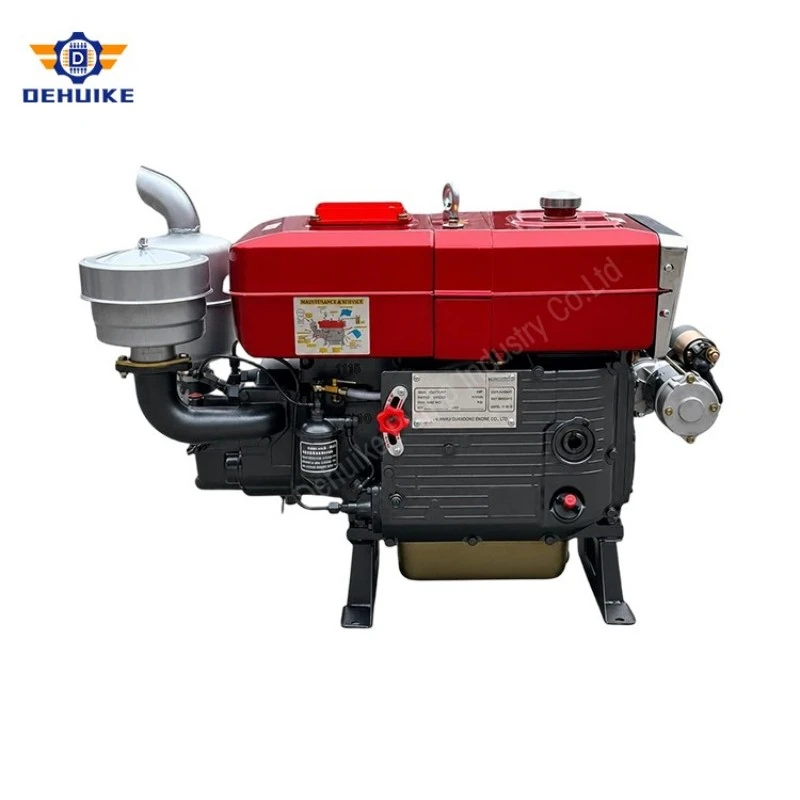
- Non-Destructive Sonic and Magnetic Particle Testing: Every forged crankshaft, connecting rod, and cast cylinder barrel undergoes rigorous non-destructive examination (NDT). Magnetic particle inspection detects surface micro-cracks on highly stressed radii and journals, while ultrasonic flaw detection scans internal forged matrices for voids or slag inclusions. Furthermore, cylinder heads undergo high-pressure pneumatic bubble immersion testing at 0.6 MPa to confirm combustion chamber and port sealing integrity.
- Dynamic Blower Balancing and Torque-Angle Assembly: Axial cooling fan rotors are dynamically balanced on digital two-plane balancing machines to achieve residual unbalance levels within ISO 1940 Grade G2.5, ensuring smooth blower operation up to 3,600 rpm. Engine assembly is executed in cleanroom assembly bays utilizing digital multi-spindle torque-angle fastening tools that continuously log bolt tension data, ensuring permanent joint clamp loads across all thermal operating cycles.
Quality Assurance and Factory Testing Protocols
Dehuike Pump Industry enforces an uncompromising quality management regime certified under ISO 9001, EAC, and RoHS directives, subjecting each Air Cooled Diesel Engine to exhaustive physical and dynamometer evaluations prior to final packaging.
- 100% Full-Load Computerized Dynamometer Validation: Every assembled engine undergoes rigorous dynamometer testing following ISO 3046 procedures. Test protocols encompass stepped thermal stabilization at 25% load, 50% load, 75% load, 100% continuous prime load, concluding with an acute 10% peak power margin verification. Digital thermocouple arrays continuously record cylinder head temperatures, exhaust gas temperatures at each exhaust runner, crankcase blowby volume, and lube oil gallery pressure. Full test reports are permanently archived under the engine's serial number.
- Extreme Thermal Wind Tunnel and Shroud Mapping: Prototype and batch-sample engines undergo thermal wind tunnel evaluation where external ambient temperatures are elevated to 50 deg C inside environmental test cells. Infrared thermographic imaging verifies that cooling air velocity and mass flow across the cooling fins maintain all cylinder barrel temperatures within a narrow 15 deg C delta across the entire cylinder bank, confirming that no localized thermal hotspots exist.
- Thermal Shock Cycling and Endurance Proofing: To verify structural durability under sudden operating transitions, sample units undergo accelerated thermal shock cycling. Engines are operated at 100% continuous prime power until full thermal saturation is achieved, followed by immediate shutdown and cold-air soak, repeating across hundreds of cycles. Post-test disassembly and coordinate measuring machine (CMM) inspection verify that cylinder barrel roundness, deck flatness, and valve seat concentricity exhibit zero permanent deformation.
- Two-Year Manufacturer Warranty Guarantee: Underlining our manufacturing confidence, Dehuike Pump Industry backs every complete DHK Air Cooled Diesel Engine with a comprehensive 24-month (2-year) factory warranty against structural material defects and manufacturing faults (standard consumable wear items excluded). Our global technical division provides rapid warranty support, authenticated spare parts fulfillment, and engineering guidance to ensure maximum machine availability.
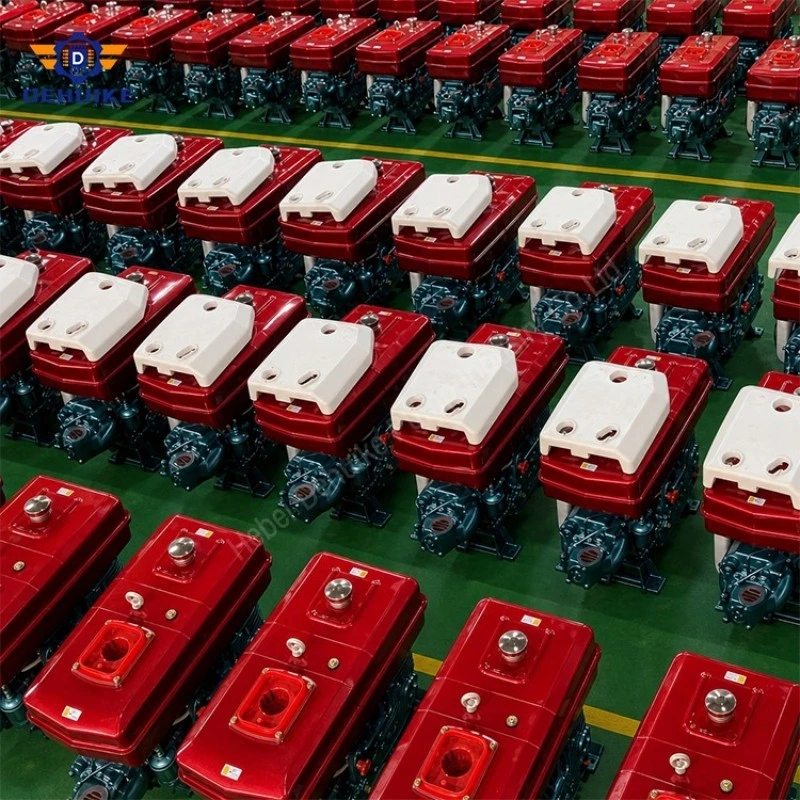
Application and Field Deployment Scenarios
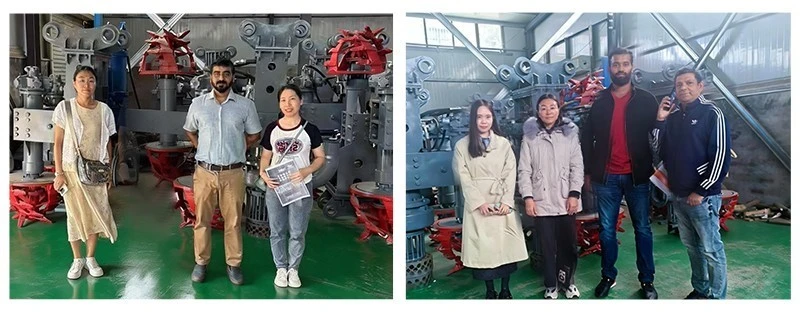
The autonomous cooling design and rugged mechanical architecture of the DHK Air Cooled Diesel Engine make it the preferred prime mover across demanding industrial, municipal, and agricultural operations.
- Remote Dryland Agricultural Irrigation Pumping: In agricultural regions where water resources are restricted or canal water contains high silt concentrations that would rapidly foul liquid cooling radiators, DHK air-cooled engines (such as DHK-36, DHK-108, and DHK-184) directly drive mixed-flow irrigation pumps, deep-well turbine pumps, and self-priming canal pumps. Operating unassisted in dusty field environments, the engines eliminate water cooling maintenance, running continuously throughout critical crop watering seasons.
- Mobile Construction and Pipeline Dewatering Skids: Civil engineering contractors operating highway construction, trenching, and foundation excavation require dewatering pumps that can be towed rapidly between worksites. DHK Category I and Category II air-cooled engines are mounted on heavy-duty mobile trailer skids driving trash pumps and high-flow self-priming dewatering units. Because there is no radiator to puncture or coolant to spill during transport across rough terrain, equipment reliability on job sites is substantially higher.
- Open-Pit Mining and Quarry Extraction Drives: Mining operations in arid desert plateaus or high-altitude mountain ranges subject machinery to extreme dust, vibrating rocky terrain, and wide daily temperature swings. DHK engines connect directly via flexible couplings or industrial gear reducers to heavy centrifugal slurry pumps, sump pumps, and aggregate wash pumps. Equipped with cyclonic multi-stage air pre-cleaners, the engines operate 24 hours a day without risk of radiator fin clogging or coolant boiling.
- Sub-Zero Alpine and Arctic Industrial Operations: In northern mining concessions and alpine infrastructure projects where winter temperatures drop below -25 deg C, conventional water-cooled engines demand continuous block heaters or risk cracked engine blocks if anti-freeze concentrations drift. DHK air-cooled engines eliminate liquid freezing risks entirely. Fitted with cold-start intake grid heaters and high-torque 24V electric starters, the engines start dependably and assume load without waiting for complex liquid cooling circuits to warm up.
- Standby Power and Emergency Flood Control Packages: Municipal flood diversion stations and critical industrial facilities require prime movers that can sit idle for months without maintenance and start instantly during seasonal storms. DHK Category III engines (including DHK-880, DHK-1350, and DHK-2600) power high-capacity axial drainage pumps and emergency generator sets, providing thousands of kilowatts of dependable mechanical power during electrical utility blackout emergencies.
Our Advantages and Global Supply Capabilities
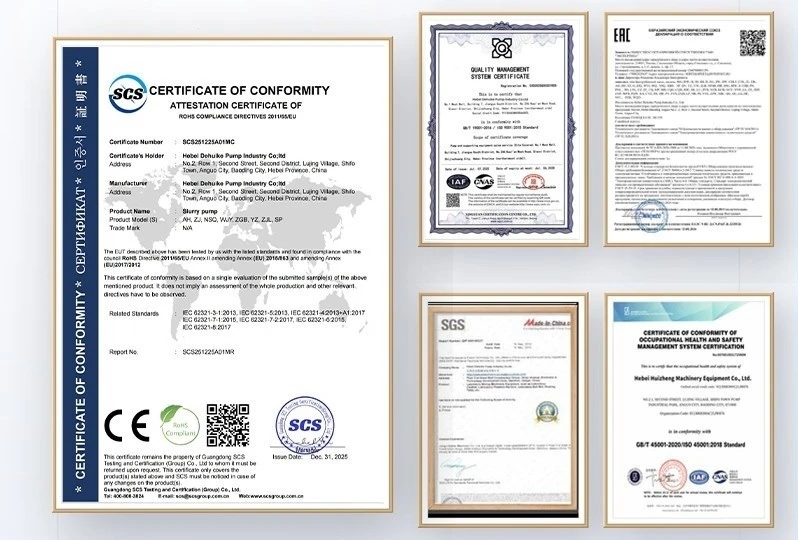
Choosing Dehuike Pump Industry as your powertrain partner gives engineering contractors, commercial distributors, and industrial end-users direct access to world-class manufacturing infrastructure and comprehensive international support.
- Over 40 Years of Specialized Mechanical Engineering Heritage: With more than four decades of dedicated industrial manufacturing, casting metallurgy, and fluid machinery engineering experience, Dehuike Pump Industry possesses deep technical know-how in mechanical powertrain integration. Our engineers calculate torsional matching, rotational inertia, and continuous shaft torque to ensure that connected pump impellers and driven machinery operate harmoniously without premature fatigue.
- Modern 6,000+ m2 Intelligent Production and Testing Complex: Our advanced manufacturing facility features multi-axis CNC machining centers, automated robotic welding and cleaning cells, an integrated precision casting foundry, and high-capacity digital engine dynamometer testing halls. This extensive production footprint supports both standardized volume production and tailored engineering customizations for specific client skid frames.
- Robust Supply Network of 900+ Certified Industrial Partners: Our production continuity is sustained by more than 900 audited component manufacturing partners. This supply chain ecosystem guarantees immediate access to specialized alloy forgings, high-pressure fuel injection components, heavy filtration media, and electrical control modules, ensuring steady production schedules and predictable delivery lead times.
- Proven Track Record Across 90+ Countries Worldwide: DHK engines and integrated fluid pump systems operate successfully across 90+ overseas territories across the Asia-Pacific basin, the Gulf region, North Africa, sub-Saharan mining hubs, and Latin America. From desert oil installations in Saudi Arabia and the UAE to agricultural river basins in the Philippines and mining operations in Chile and Peru, DHK machinery delivers proven field dependability.
- Professional Export Crating and Multimodal Logistics: Every outbound crated unit undergoes export-grade anti-oxidation preservation: fuel circuits are flushed with calibration anti-corrosion fluid, bare metal surfaces are protected with vapor-corrosion-inhibiting (VCI) protective oil, and equipment is vacuum-jacketed within multilayer aluminized barrier films containing desiccant silica charges. Machinery is secured in fumigated solid export wooden crates engineered for maritime container transport. Shipments are managed via reliable air freight (for time-critical component consignments between 50 kg and 500 kg) and ocean container freight (for machinery consignments exceeding 500 kg) under standardized FOB and CIF destination port contractual terms.
Frequently Asked Questions (FAQ)
Q1: What are the primary mechanical benefits of choosing an Air Cooled Diesel Engine over a liquid-cooled engine?
An Air Cooled Diesel Engine eliminates the entire liquid cooling system-including the radiator, water pump, thermostat, cooling hoses, expansion tank, and coolant. Industry studies show that approximately 40% of all field diesel engine breakdowns originate in liquid cooling circuit failures (such as hose punctures, water pump seal leaks, radiator fin clogging, scale buildup, or thermostat sticking). By removing these components, an air-cooled engine achieves significantly higher operational availability, weighs less, reaches optimal operating temperature faster, and completely eliminates the risk of winter engine block freezing or high-ambient coolant boiling.
Q2: How does an Air Cooled Diesel Engine maintain safe operating temperatures in ambient heat above 45 deg C?
DHK air-cooled engines are thermally engineered to operate in ambient temperatures up to 50 deg C. Cooling is provided by a high-output, engine-driven axial blower fan that forces high-velocity cooling air across individually finned cylinder barrels and aluminum cylinder heads. Because the temperature differential between the hot cylinder cooling fins (operating around 150 deg C to 170 deg C) and the ambient air (45 deg C to 50 deg C) remains substantial (over 100 deg C), convective heat transfer is extremely rapid and efficient. In contrast, liquid-cooled engines have a smaller temperature differential between boiling coolant (100 deg C) and 45 deg C air, making them much more vulnerable to overheating under intense solar radiation.
Q3: What routine maintenance is required to maintain the cooling efficiency of an air-cooled engine?
Routine cooling maintenance is straightforward: periodically inspect and clean the exterior cooling fins of the cylinder barrels and heads. In dusty quarry or agricultural environments, compressed air (or high-pressure water spray during shutdowns when the engine is cold) should be blown through the cooling air shrouds to remove accumulated dust, straw, or oil-mist coatings that could act as thermal insulation. Additionally, inspect the cooling fan drive belt tension every 250 operating hours, and replace engine lubricating oil and oil filters every 250 to 500 hours using high-grade API CI-4/CJ-4 heavy-duty diesel engine oil.
Q4: How should consulting engineers size an air-cooled engine when directly driving an industrial water pump?
When directly coupling an Air Cooled Diesel Engine to a centrifugal or slurry pump, consulting engineers should calculate the pump's maximum absorbed brake horsepower (BHP) at the Peak Efficiency Point (BEP) across its full performance curve. Standard engineering practice dictates sizing the engine's continuous Prime Power rating with a 15% to 20% power reserve above maximum pump shaft demand. This surplus accommodates transmission coupling losses, transient fluid viscosity increases, and high-altitude derating, ensuring the engine runs within its optimal fuel consumption band without lugging.
Q5: Can DHK air-cooled engines operate on high-sulfur diesel fuel in remote mining regions?
Yes. DHK China II (Tier 2) mechanical engines utilize robust mechanical in-line injection pumps and heavy-duty mechanical injector nozzles that easily tolerate diesel fuels containing sulfur concentrations up to 3,000 to 5,000 ppm. When utilizing high-sulfur fuels, selecting lubricants formulated with an alkaline reserve (TBN exceeding 12 to 15 mg KOH/g) is recommended to neutralize acidic combustion byproducts. For projects requiring compliance with modern emissions regulations, China III (Tier 3) electronically governed common-rail platforms are available, optimized for clean low-sulfur fuels.
Q6: What export documentation and warranty support accompany overseas shipments?
Every DHK engine shipment is accompanied by an authenticated technical documentation package comprising the factory Certificate of Quality, certified dynamometer load test sheets, engine dimensional drawings, electrical schematics, and an illustrated Operation and Maintenance Manual with complete parts catalogs. All machinery is covered by a 24-month (2-year) complete factory warranty backed by Dehuike's international technical service department. Complimentary 12-month operational service packs (filtration cartridges, alternator v-belts, and seal kits) are systematically packed to ensure seamless commissioning upon site arrival.

Hot Tags: diesel generator engine, China diesel generator engine manufacturers, suppliers, factory