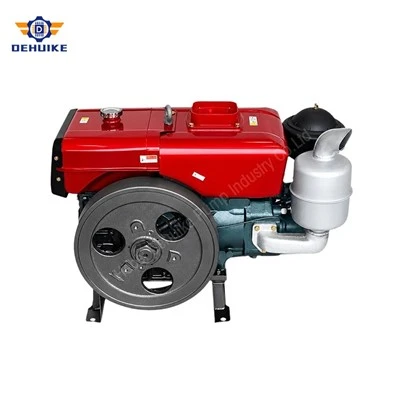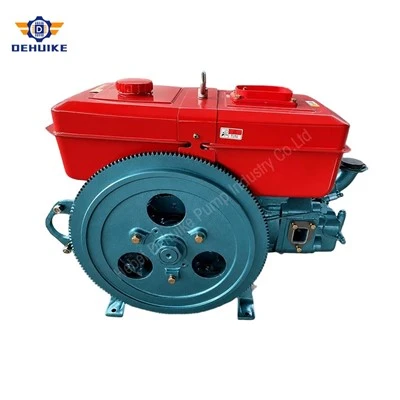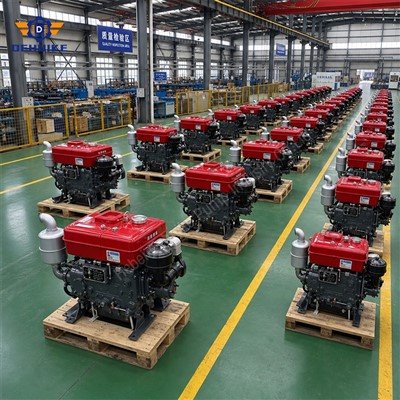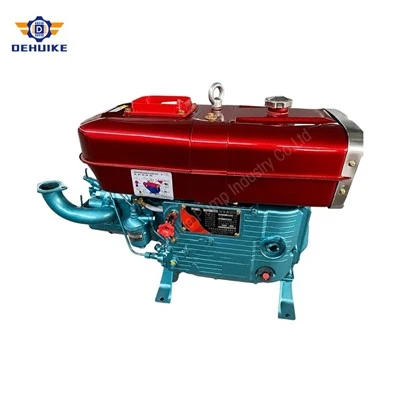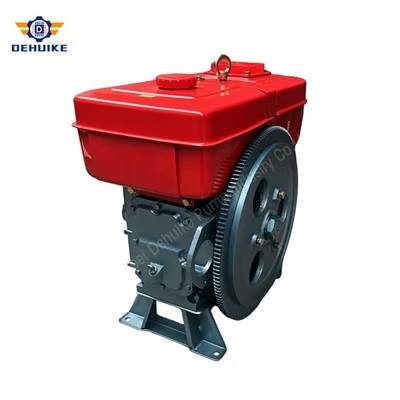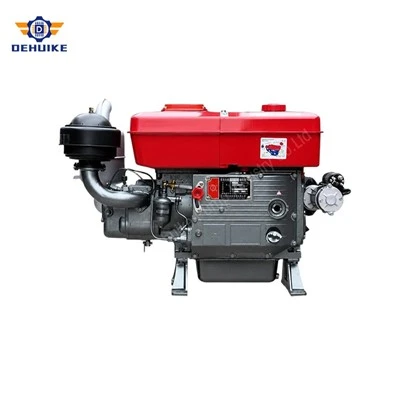

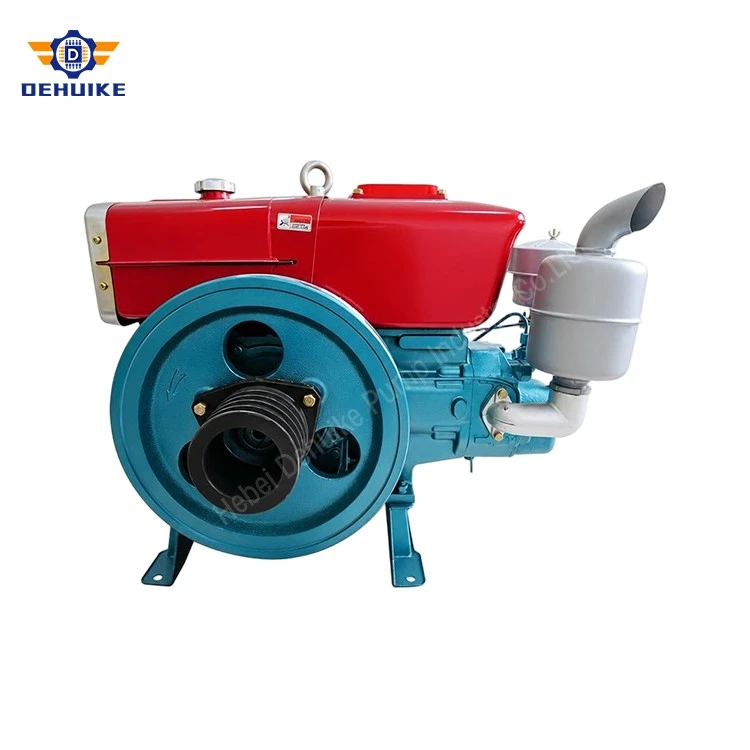
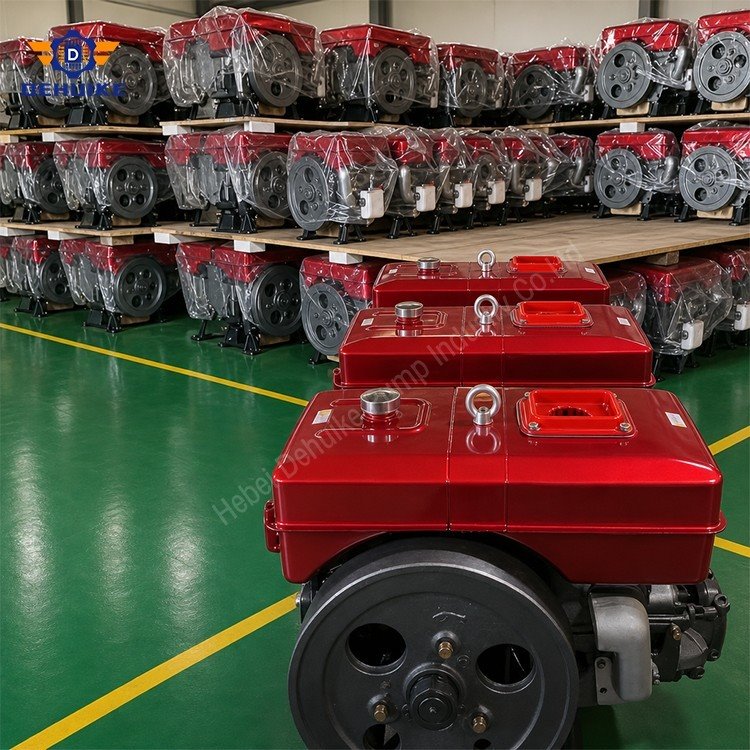
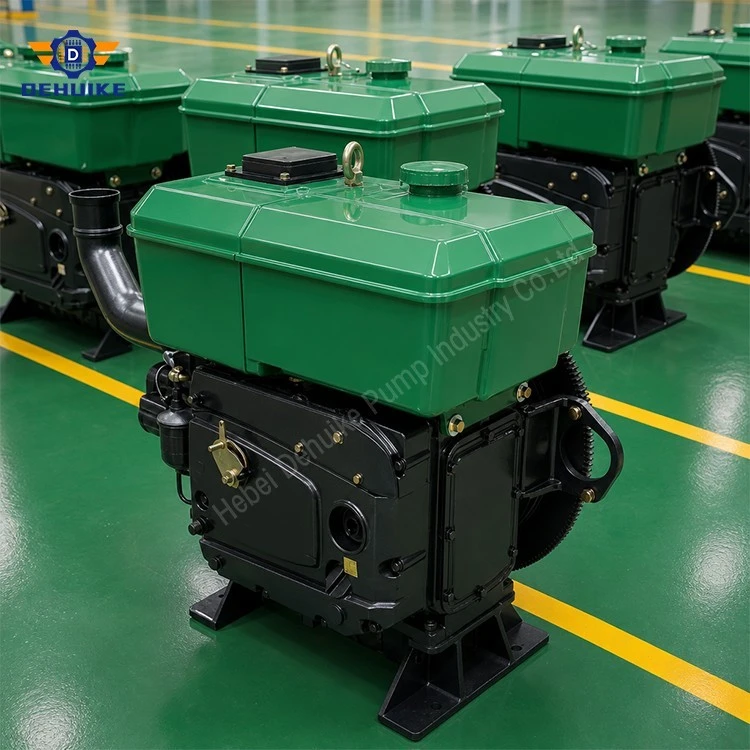
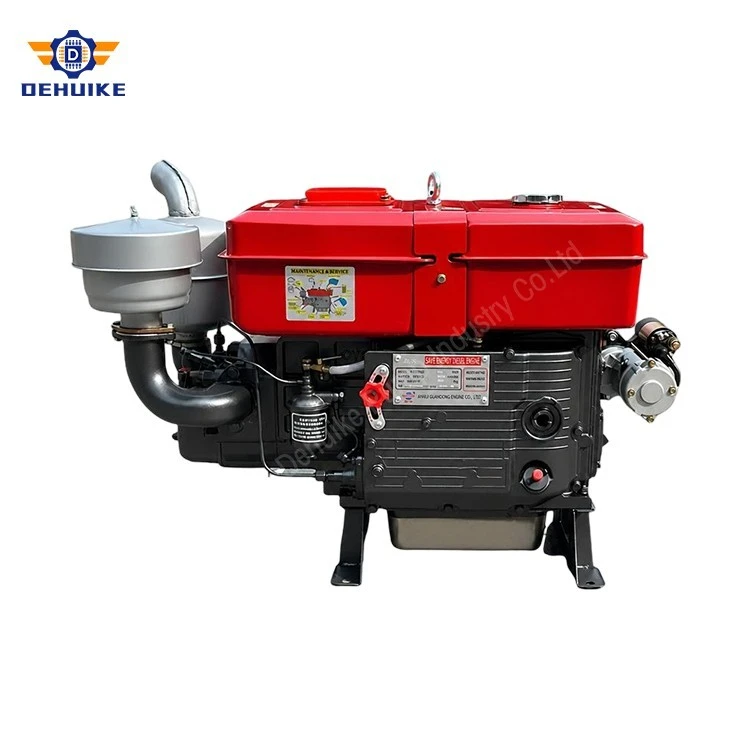
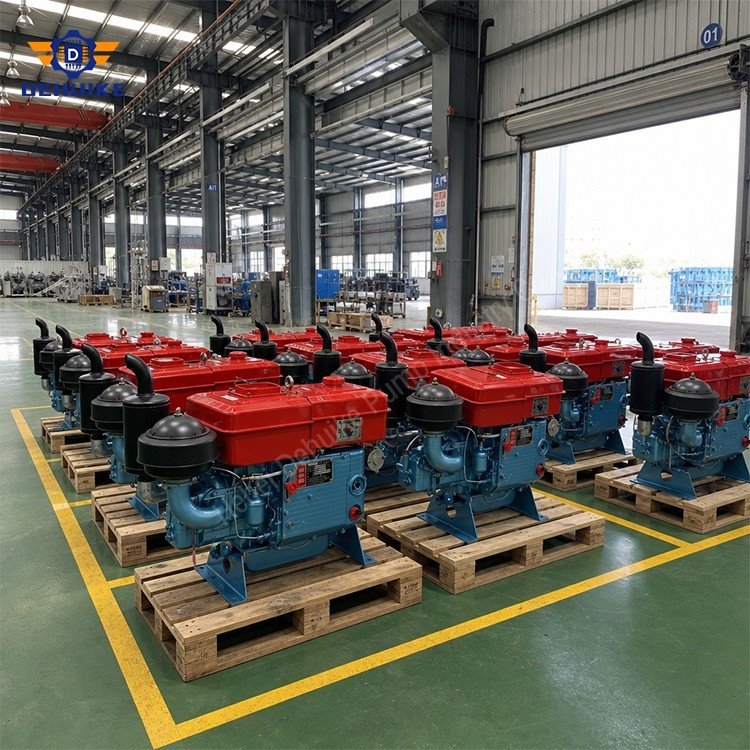
Hebei Dehuike Pump Industry Co., Ltd. is one of the most reliable manufacturers and suppliers of single cylinder diesel engine in China. With abundant experience, we are committed to providing high quality customized pumps with competitive price. Welcome to wholesale bulk single cylinder diesel engine for sale here from our factory. Also, pricelist is available.
Single Cylinder Diesel Engine Selection for Pump and Machinery Assemblies
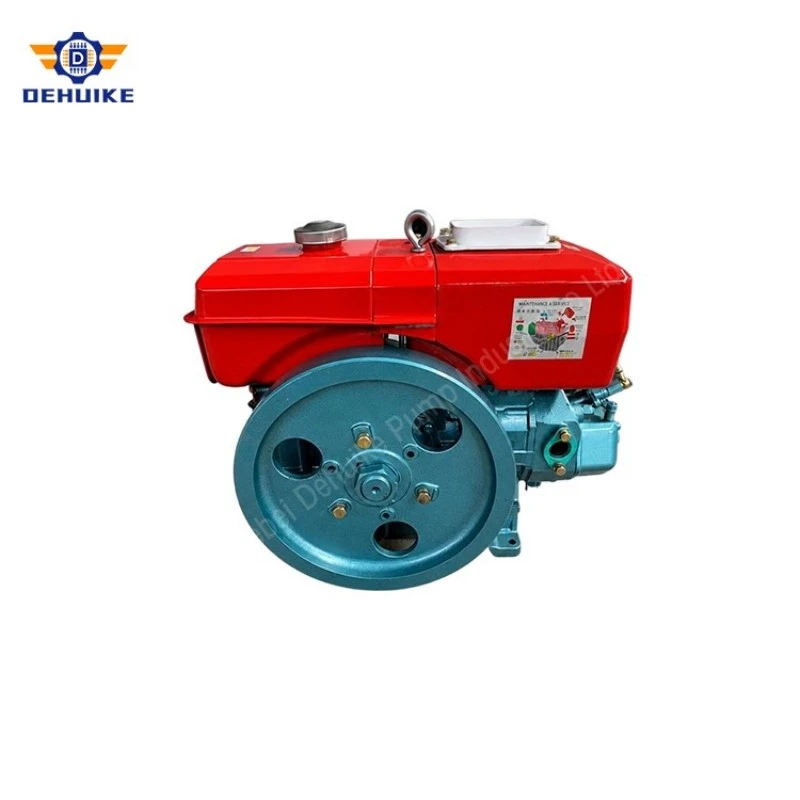
A machine working beyond the reach of a suitable electrical supply needs a drive that can be specified together with its load, frame and operating routine. This single cylinder diesel engine series provides seven rated power choices for that task. The engines use a horizontal arrangement, a four-stroke cycle and water cooling. Their common rated speed is 2200 rpm, with listed outputs between 8.8 and 23 kW.
For an equipment builder, the useful starting point is the power required at the driven shaft. An irrigation pump, drainage assembly and agricultural implement may all need diesel power, yet their transmission, starting load and installation space can differ considerably. The engine should be reviewed as part of the working assembly, including the cooling equipment and the parts connecting it to the machine.
The following sections compare S195 through ZS1130 and explain what to settle before purchasing. Rated power, combustion arrangement, fuel-consumption limits and handling data are kept with the relevant model. This allows buyers to shortlist a unit without confusing a higher maximum-output figure with the normal rating or assuming that engines sharing an overall size have identical mounting interfaces.
Begin with the Buyer's Selection Questions
Start by describing the job in terms the equipment assembler can use. Identify the driven machine and its power requirement at the proposed working speed. Where power is transmitted through a coupling, belt or other arrangement, include the transmission details in the review. An engine rating at 2200 rpm does not establish how much usable power reaches equipment running at another speed.
Next, describe how the machine will be used. Record the expected working hours, the usual load and the conditions under which it must start. A field unit attended by an operator presents a different starting routine from equipment expected to be restarted frequently. Specify whether hand cranking is acceptable or an electric starter is required, rather than leaving the choice to a model name.
Then examine the installation. Allow space for the selected cooling arrangement, routine servicing and access to the driven equipment. Ask for a drawing that identifies mounting positions and the drive connection. The published envelope is useful for initial planning, but final fabrication should follow the approved drawing for the supplied engine and accessories.
Finally, decide which data are needed to approve the purchase. The seven rated outputs are 8.8, 11, 12.1, 12.5, 14.7, 20 and 23 kW. These values form a screening sequence, not a statement that every intermediate requirement is automatically covered. Confirm the intended load and operating conditions with the supplier before committing to a power step.
There is also a combustion-system distinction. S195 and ZS1100 use swirl combustion; the remaining five references use direct injection. Preserve that distinction in the equipment schedule and parts records. Do not infer a particular emissions approval, starting characteristic or maintenance interval from the combustion description alone.
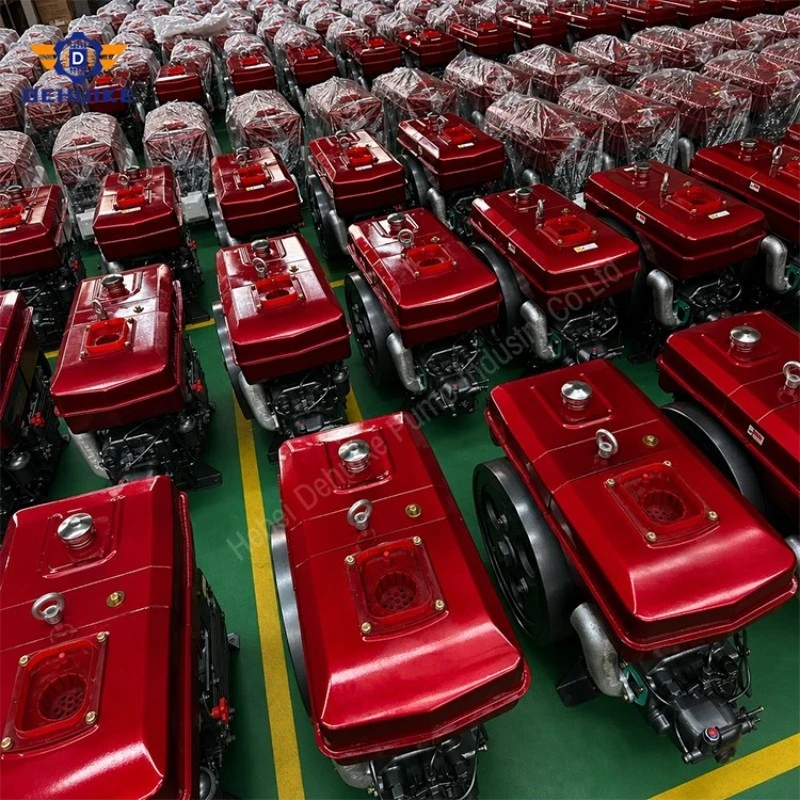
Compare the Series Through Selection Cards
Each row below brings the selection data for one engine into a single record. Read its rating together with displacement, combustion type and mass. Maximum power is shown only for models with a supplied value. The listed dimensions are retained as the preliminary package reference and should be confirmed against the order drawing.
|
Model |
Power at 2200 rpm |
Cylinder |
Combustion and consumption |
Package reference |
|
S195 |
Rated 8.8 kW |
Bore 95 mm |
Swirl |
145 kg |
|
ZS1100 |
Rated 11 kW |
Bore 100 mm |
Swirl |
155 kg |
|
ZS1105 |
Rated 12.1 kW |
Bore 105 mm |
Direct injection |
155 kg |
|
ZS1110 |
Rated 12.5 kW |
Bore 110 mm |
Direct injection |
180 kg |
|
ZS1115 |
Rated 14.7 kW |
Bore 115 mm |
Direct injection |
185 kg |
|
ZS1125 |
Rated 20 kW |
Bore 125 mm |
Direct injection |
208 kg |
|
ZS1130 |
Rated 23 kW |
Bore 130 mm |
Direct injection |
212 kg |
The larger bore and displacement values accompany increasing rated power across this series, but displacement is not a substitute for a load calculation. ZS1105 and ZS1110, for example, have different displacement and rated output even though both list 13.2 kW as maximum power. Their identical maximum figure does not make them equivalent replacements.
Specific fuel consumption is expressed as fuel mass per unit of output energy. It is not a fixed hourly fuel-use figure. Comparing the stated limits can help screen models, but estimating fuel purchasing or tank requirements also needs the actual load, operating duration and applicable test conditions. Request those conditions if consumption is important to the commercial comparison.
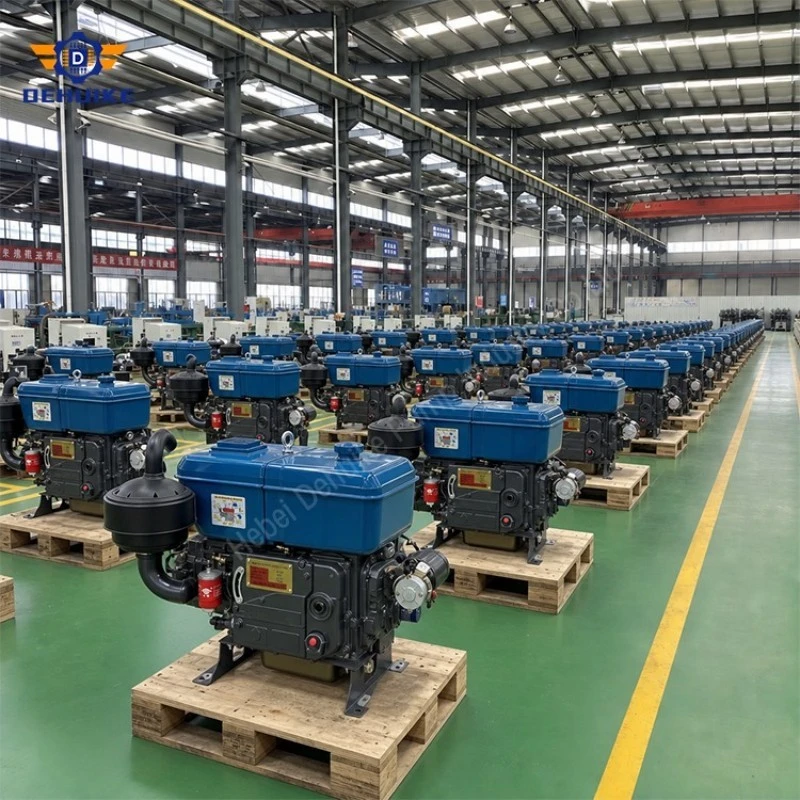
Precision Production Methods and Structural Metallurgy
Manufacturing a heavy-duty High Torque Diesel Engine demands dense grain structures, high fatigue margins, and sub-micron machining tolerances.
- High-Nickel Gray Iron Foundry Technology: Engine blocks and bedplates are cast from high-strength gray iron alloyed with nickel and molybdenum. Poured in automated chemically bonded silica molds with bottom-gating systems, the castings achieve a fine, homogeneous pearlitic matrix exceeding 300 MPa tensile strength, ensuring extreme dampening of torsional vibration.
- CNC Line Boring of Main Crankcase Saddles: Main bearing saddle tunnels are line-bored in a single horizontal setup on multi-axis CNC machine centers. Precision air-gauging audits bore roundness and taper within 0.003 mm, guaranteeing true journal centerline alignment under full hydrodynamic bearing pressures.
- Thermal Induction Fillet Hardening: Crankshaft journals undergo deep-case induction hardening with specialized dual-frequency inductor coils that harden both the cylindrical journal and the critical transition fillet radii, eliminating fatigue stress risers and elevating torsional fatigue strength by over 45%.
- Multi-Axis Robotic Fastener Tensioning: High-stress structural joints-such as main bearing bedplate studs and connecting rod bolts-are tensioned using robotic multi-axis nutrunners operating under yield-point monitoring algorithms that measure bolt elongation under continuous strain-gauge feedback.
- Automated Full-Load Hydraulic Dynamometer Sign-Off: Each completed engine is mounted on computerized hydraulic dynamometers. The acceptance protocol executes automated load-step profiling across 25%, 50%, 75%, and 100% continuous prime torque ratings, finalized by a short 110% torque overload proof run to verify lube oil film pressures and thermal stabilization.
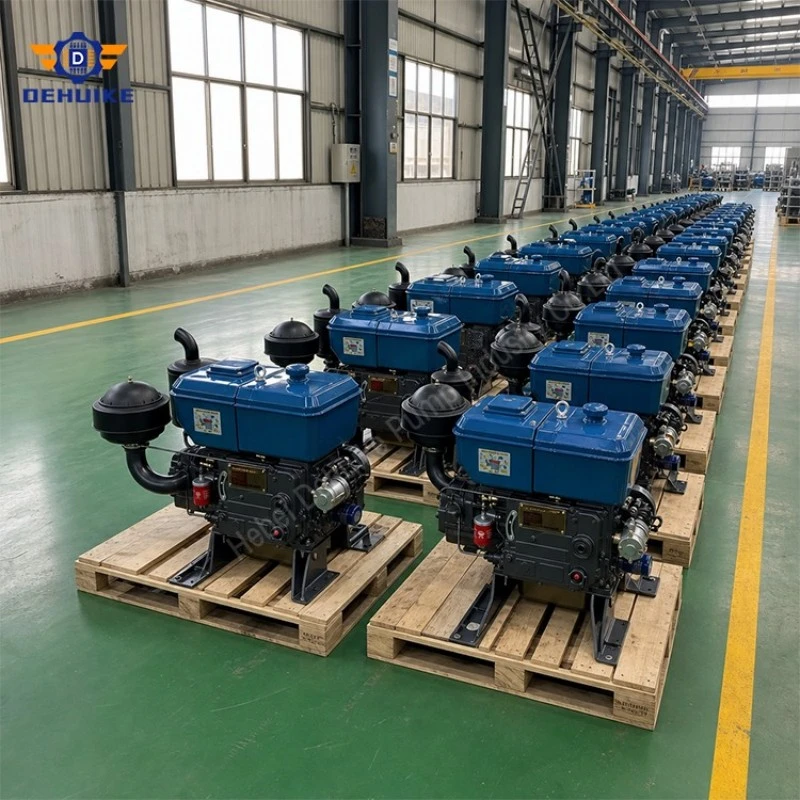
Proven Global Footprint and Operating Track Record
Dehuike High Torque Diesel Engines provide dependable mechanical propulsion and pumping power across key international mining basins and commercial waterways.
- Latin American Open-Cast Mining Corridors: Operating in the rugged Andean copper corridors of Chile and Peru, DHK engines drive high-head tailings booster pumps and pit dewatering skids at elevations exceeding 2,800 meters, overcoming air-density penalties through high low-speed torque reserves.
- Southeast Asian Riverine Dredging and Marine Transport: Installed as inboard prime movers on cargo barges and sand dredgers across the Mekong and Kapuas river basins, DHK high-torque units spin large-diameter workboat propellers through dense silt bars without rotational stall.
- Middle Eastern Arid Construction and Deep Well Operations: In Saudi Arabia, the UAE, and Oman, DHK engines drive positive-displacement fluid pumps and continuous drilling rigs, running continuously through 50 deg C summer ambients with heavy dust-filtration packs.
- Central Asian Irrigation and Drainage Networks: Agricultural reclamation projects in Kazakhstan and Uzbekistan employ DHK high-torque engines to drive high-volume axial relift pumps, maintaining continuous canal flow throughout extended seasonal watering campaigns.
- Certified Heavy Export Crating and Global Shipping: Each machinery consignment receives marine-grade preservation: internal fluid passages are treated with protective oil, exposed metal faces are coated with corrosion-inhibiting wax, and the engine is heat-wrapped in vapor-barrier foil. Units are anchored to reinforced timber platforms within export-grade packing cases compliant with international ISPM-15 rules, arranged for containerized ocean shipping (weights over 500 kg) or priority air transport (emergency components from 50 kg to 500 kg) under standardized Incoterms (FOB / CIF destination ports).
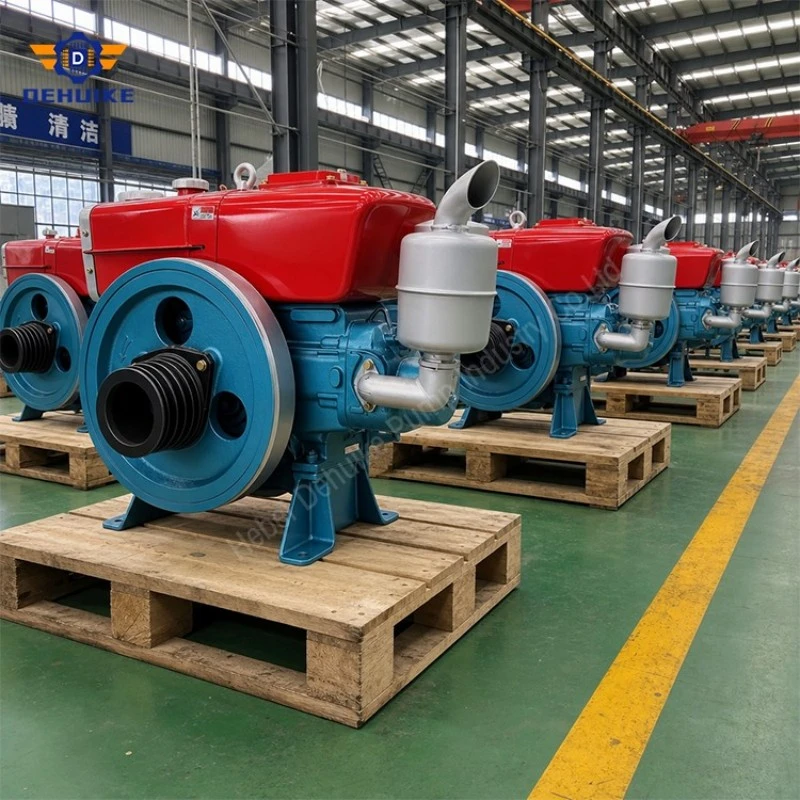
Technical Engineering Services and Lifecycle Support
Customer commitment at Dehuike encompasses comprehensive equipment lifecycle backing, equipping global engineering partners, fluid equipment packagers, and plant operators with end-to-end technical services.
- Engineering Driveline Matching and Torsional Modeling: Our technical team provides comprehensive torsional vibration calculations (TVC) for package builders, ensuring drive coupling stiffness, flywheel inertia, and pump shaft dynamics operate far outside critical resonant speeds.
- Planned Field Overhaul and Fluid Monitoring Programs: To support continuous uptime across isolated mining concessions and municipal river stations, Dehuike provides structured maintenance schedules. We supply fluid wear-metal analysis guidelines, laser alignment audit tools, and tailored intermediate maintenance packs to maximize operational availability and prevent unexpected equipment downtime.
- Guaranteed Ten-Year Genuine Spare Parts Fulfillment: Dehuike commits to maintaining genuine replacement component availability-including crankshafts, connecting rods, bearing shells, cylinder liners, and fuel injection pumps-for at least ten years following equipment commissioning.
- Flexible Local Assembly and Technology Transfer Packages: For international engineering firms seeking tariff advantages and localized manufacturing content, Dehuike delivers partially assembled and fully disassembled knockdown packages, supported by detailed engineering assembly instructions, calibration test specifications, and specialized assembly shop fixtures.
- Comprehensive Two-Year Structural Warranty Protection: All DHK high-torque units feature two full years (24 months) of manufacturer warranty protection against subsurface casting flaws, metallurgical anomalies, and component machining errors (customary consumables and wear parts excepted).
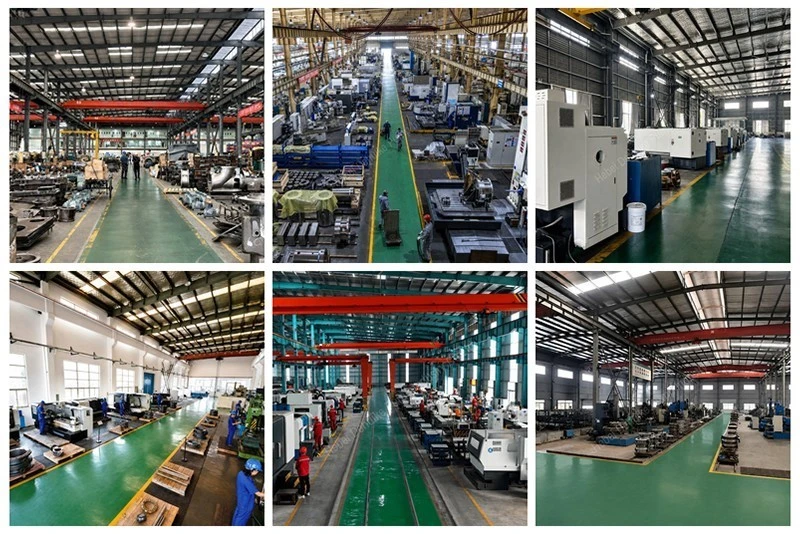
Manufacturing Strengths and Powertrain Engineering Advantages
Selecting Hebei Dehuike Pump Industry Co., Ltd. gives global project contractors, mine operators, and machinery packagers measurable technological and logistical advantages.
- Forty-Year Industrial Engineering Synergy: Drawing upon four decades of combined pump hydraulic engineering and engine manufacturing experience, Dehuike possesses unique capability in driveline co-design. Rather than treating the engine and pump as separate purchases, our engineers perform integrated torsional resonance modeling, harmonizing flywheel inertia and coupling elastomeric properties to eliminate destructive resonant frequencies.
- Modern 6,000+ m2 Integrated Powertrain Facility: Our heavy industrial complex encompasses extensive automated foundry lines, CNC machining galleries, cleanroom sub-assembly rooms, and computerized dynamometer test cells capable of validating multi-megawatt engine ratings under simulated field loads.
- Vetted Heavy Industrial Supplier Ecosystem: Our production continuity is sustained by more than 900 vetted industrial component suppliers, guaranteeing steady access to certified alloy steel forgings, precision injection hardware, and heavy cooling cores without supply bottlenecks.
- Factory-Aligned Heavy Structural Skids: We supply pre-engineered structural baseplates where high-torque engines, heavy-duty centrifugal pumps, reduction gearboxes, and flexible couplings are precision-aligned using laser metrology before leaving the factory.
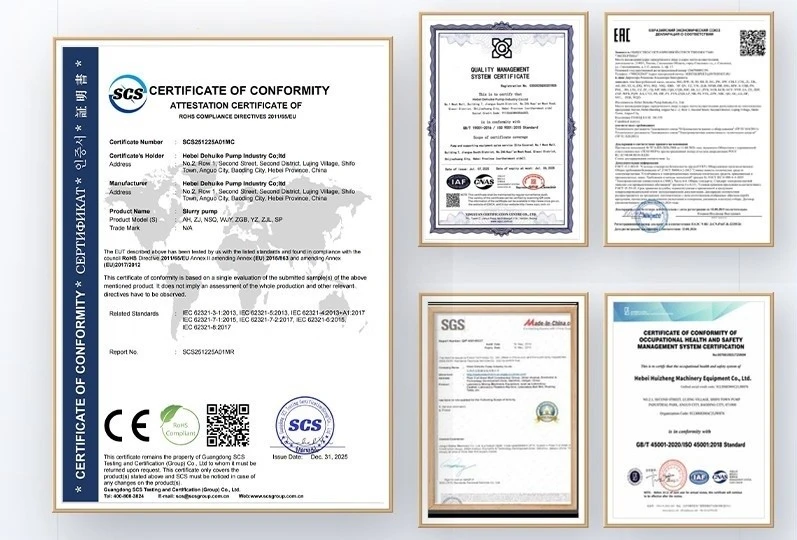
Frequently Asked Questions (FAQ)
Q1: What mechanical design factors give a High Torque Diesel Engine its superior lugging authority compared to standard engines?
A High Torque Diesel Engine achieves superior lugging ability through a combination of long-stroke cylinder geometry, high cylinder displacement, and heavy flywheel rotational inertia. The extended piston stroke increases the crankshaft throw radius, providing a mechanical lever arm that multiplies combustion force into shaft torque. Furthermore, DHK engines feature fuel injection governors calibrated for a steep torque rise percentage (20% to 35% torque backup). When driven equipment encounters a sudden resistance spike and engine speed drops slightly, the governor automatically increases fuel injection volume, delivering peak torque at lower speeds to power through the obstruction without stalling.
Q2: Why is low-speed high torque particularly critical when driving heavy industrial slurry and dredging pumps?
Centrifugal slurry and dredging pumps operate under severe hydraulic transients. When pumping high-density tailings, mineral gravel, or silt-sand mixtures, sudden changes in slurry viscosity or localized pipeline blockages can dramatically increase absorbed shaft torque within milliseconds. If driven by an engine with insufficient torque reserve, the engine will decelerate, causing the pump impeller to lose flow velocity and leading to complete pipeline sanding-in. A high-torque diesel maintains steady rotational speed through these transient slurry surges, keeping fluid velocity above critical settling thresholds.
Q3: How does crankshaft journal overlap contribute to structural rigidity in high-torque diesel engines?
Crankshaft journal overlap refers to the dimensional intersection between the diameter of the main bearing journal and the diameter of the crankpin journal when viewed along the axis of rotation. In DHK high-torque engines, large-diameter main journals and short-throw pin arrangements create substantial journal overlap. This structural overlap stiffens the crankshaft web, drastically reducing bending and torsional deflection under high peak firing pressures and preventing main bearing edge-loading and journal micro-cracking.
Q4: What technical rules govern power sizing when pairing a high-torque engine with an industrial centrifugal pump?
When sizing a High Torque Diesel Engine for a high-head slurry or gravel pump, engineering designers calculate the maximum shaft torque and brake horsepower absorbed at the pump's Peak Efficiency Point (BEP) with the largest intended impeller diameter. Sound application guidelines dictate specifying a continuous prime power rating with a 15% to 20% torque headroom above peak shaft demand. This operational reserve compensates for mechanical coupling friction, sudden slurry specific gravity surges, and environmental derating (plus 1% for every 5-degree temperature climb beyond 25 deg C, and 1% per 100 meters elevation above 1000 m), allowing the engine to run cleanly in its optimum specific fuel consumption zone without bogging down.
Q5: How does oil viscosity and hydrodynamic lubrication protect bearings in high-torque diesel machinery?
High-torque operation at lower rotational speeds subjects crankshaft main and connecting rod bearings to extreme specific surface pressures. Maintaining a continuous hydrodynamic oil wedge requires engine lubricants with high dynamic viscosity and high-temperature high-shear (HTHS) ratings. Dehuike specifies heavy-duty diesel oils conforming to API CI-4 through CK-4 service categories. In normal operating climates (-15 deg C to 40 deg C), SAE 15W-40 multigrade oil provides optimal oil film strength; for high-ambient desert environments exceeding 45 deg C, synthetic SAE 20W-50 or 15W-50 is advised to prevent hydrodynamic oil film collapse during sustained full-torque operation.
Q6: What technical documentation and certifications accompany DHK high-torque engine consignments?
Every outbound DHK high-torque powertrain consignment is delivered with a validated factory engineering documentation binder. This package includes the manufacturer's Certificate of Quality, certified dynamometer power and torque curves, dimensional CAD mounting drawings, electrical schematics, and an Operator Handbook containing component cross-sectional schematics. All engines are covered by Dehuike's 24-month (2-year) factory warranty through our international engineering department. Initial service kits containing replacement filters, drive belts, and copper sealing washers are provided to ensure rapid site startup.

Hot Tags: single cylinder diesel engine, China single cylinder diesel engine manufacturers, suppliers, factory