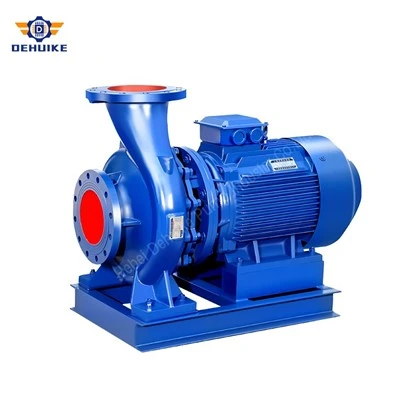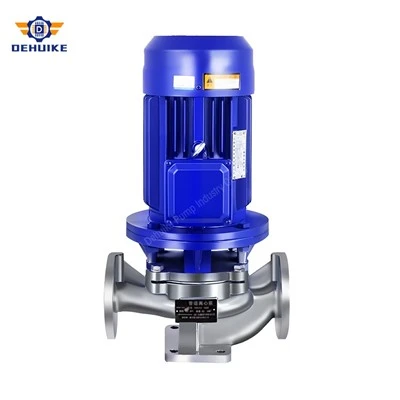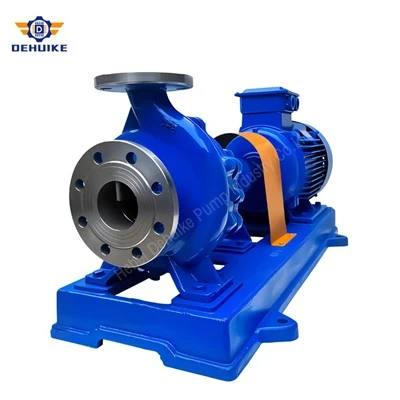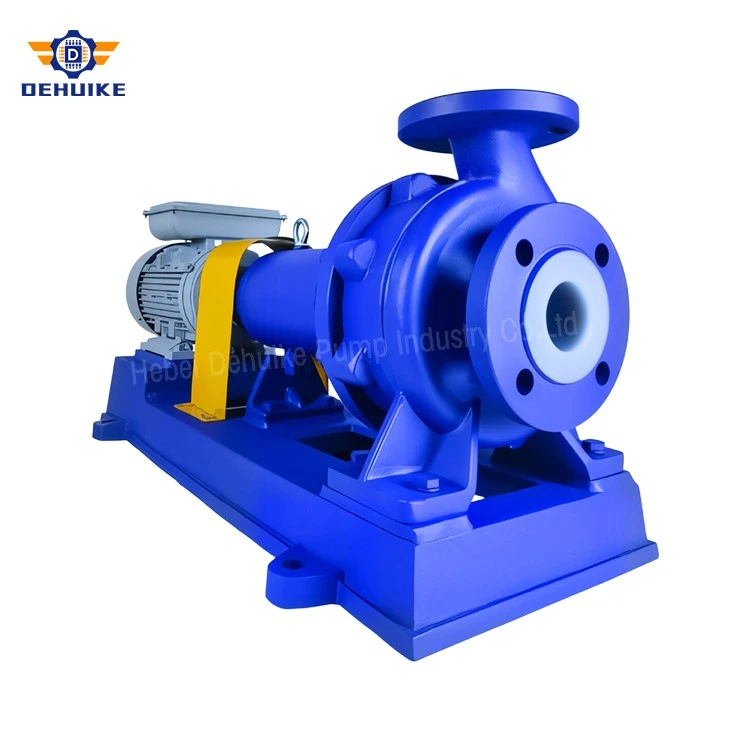
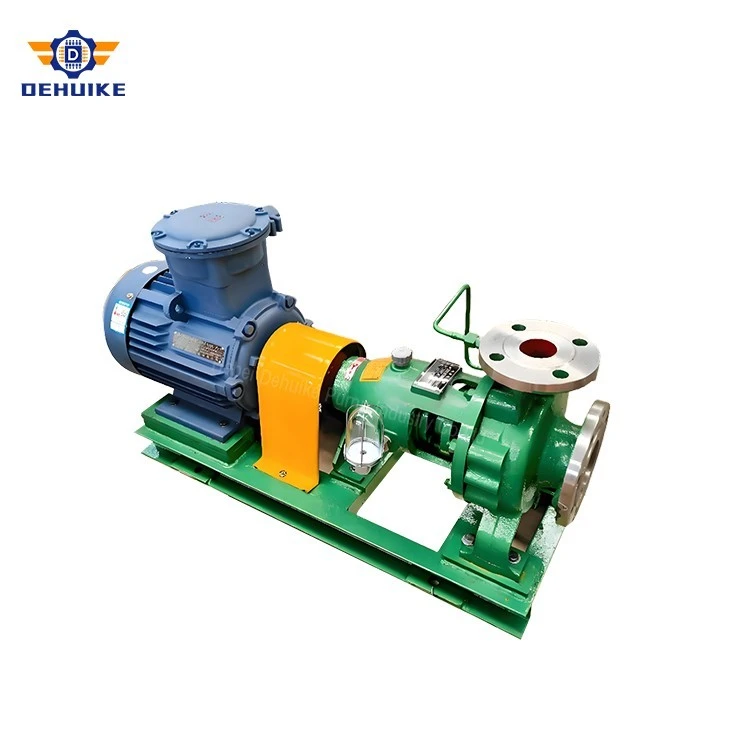
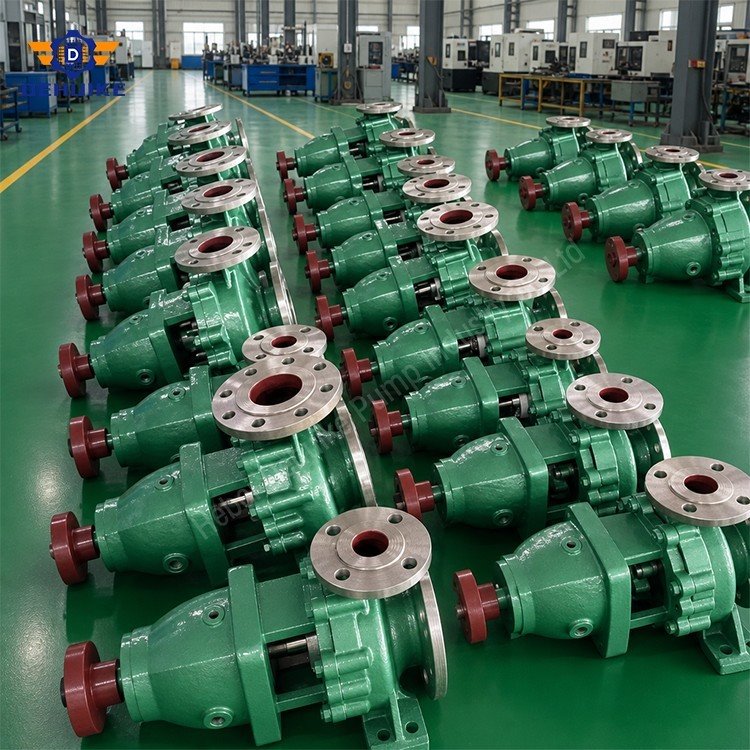
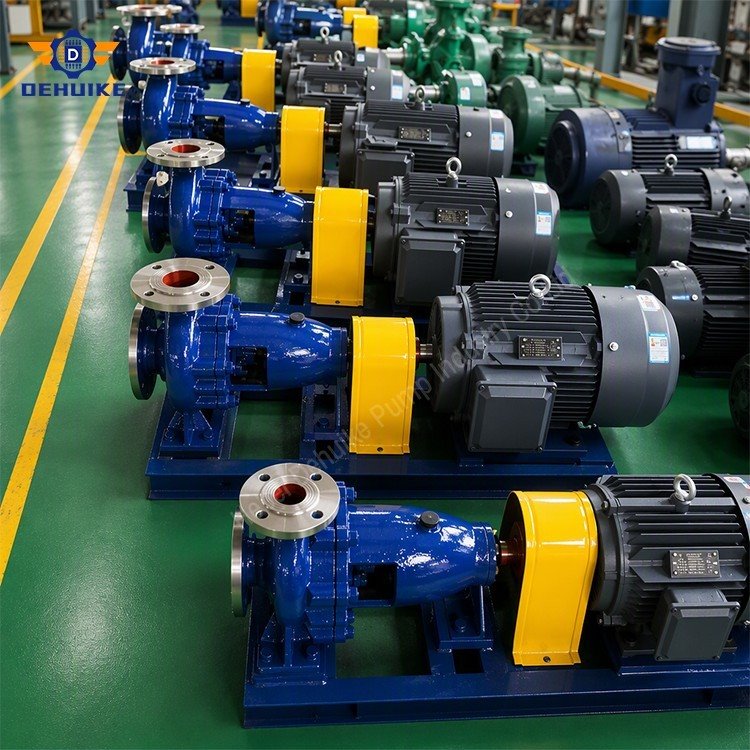
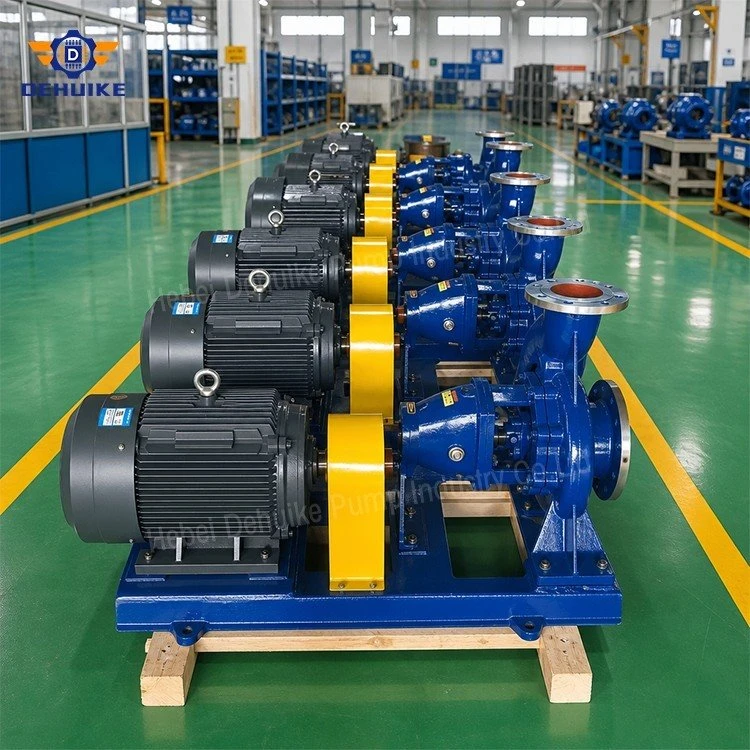
Hebei Dehuike Pump Industry Co., Ltd. is one of the most reliable manufacturers and suppliers of corrosion resistant chemical pump in China. With abundant experience, we are committed to providing high quality customized pumps with competitive price. Welcome to wholesale bulk corrosion resistant chemical pump for sale here from our factory. Also, pricelist is available.
One Hydraulic Platform, Four Material Worlds
Ask a supplier for a chemical pump and the answer usually arrives as a family name: stainless, fluoroplastic, magnetic drive, acid resistant, alkali resistant. Each of those pages looks like a different product, and buyers compare them as if they were.
In the range behind those pages they are largely the same pump. The same IH casings, the same impeller diameters, the same 2,900 r/min motors, the same performance figures - 6.3 to 200 m³/h, heads from 5 to 125 m - appear under every heading. What actually changes is the wetted material and the shaft sealing arrangement, and those two decisions are driven by the fluid and by what a leak would cost, not by the name on the catalogue page.
Reading the code before reading the label
An IH model number carries three numbers: suction bore, discharge bore, impeller diameter in millimetres. IH65-40-200 is a 65 mm inlet, 40 mm outlet, 200 mm impeller machine, rated at 25 m³/h and 50 m. IH100-80-125 is 100 mm in, 80 mm out, 125 mm impeller, 100 m³/h at 20 m. The same code appears in the stainless version, the fluoroplastic version and the magnetic version of the same duty, which is exactly why the family names confuse buyers: they describe the material, and the code describes the hydraulics.
The A and B suffixes mark trimmed impellers. An IH65-40-250B is the 250 mm casing at a reduced diameter, giving 70 m instead of 80 m at slightly lower flow - a correction for a duty that was over-estimated, not a different pump. Two quotations that list IH65-40-250 and IH65-40-250B are quoting the same machine at two heads, and the price difference should be small.
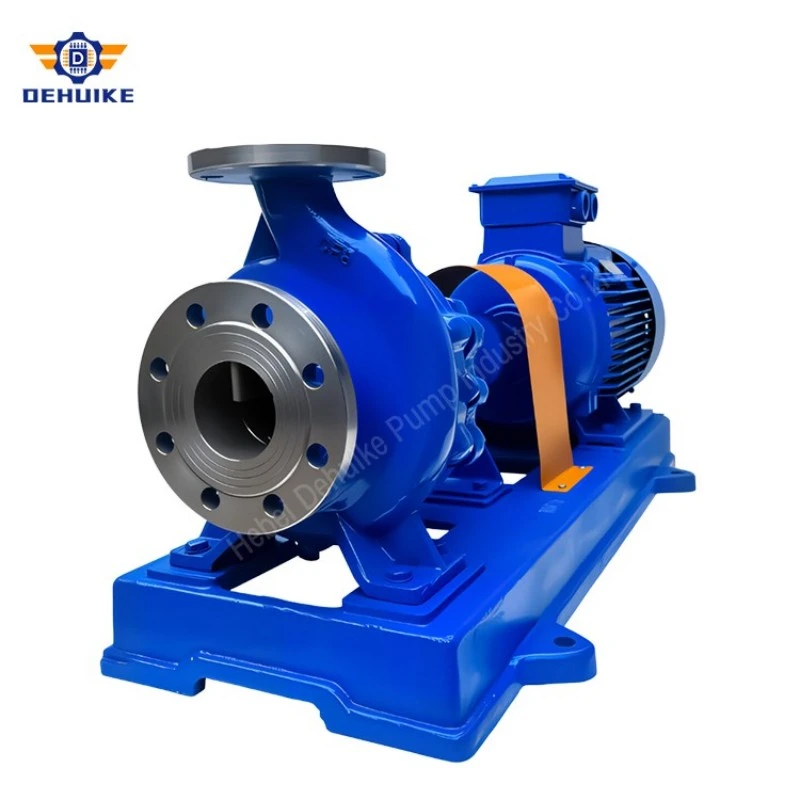
The stainless answer, and the chloride question
Type 304 and 316L stainless are the default for clean chemical transfer, and for most of the duties in a plant they are correct: good mechanical strength, repairable, familiar to every maintenance team, and cheap compared with the alternatives. The limit is not the acid in general. It is chlorides.
Chloride ions attack the passive oxide layer on stainless in local spots rather than uniformly, so the failure appears as pitting under a deposit and crevice corrosion at a gasket face, both of which progress through the wall faster than a uniform corrosion rate would suggest. Temperature accelerates it, and a pump that survives a cold chloride duty can fail within months on the same duty at 60 °C. Hot concentrated caustic is the other classic trap: 300-series steels are susceptible to stress cracking in caustic service at temperature, and a pump that looks metallurgically adequate on a corrosion chart can crack at a flange or a threaded connection.
For buyers, the practical rule is that "stainless" describes a family and not a grade, and that the chloride content, the temperature and the presence of deposits decide whether 316L is the right answer. A supplier who is told only "dilute acid" cannot answer that question, and will usually supply 316L because it is what the last order was.
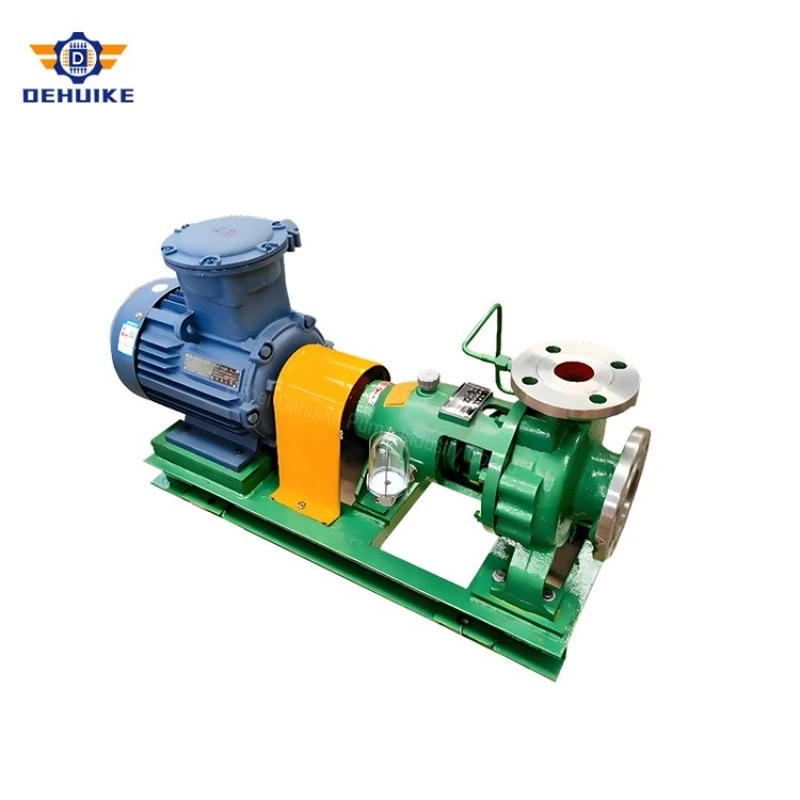
Fluoroplastic: what it covers, and where it stops
A fluoroplastic-lined or all-plastic pump answers the chloride problem by removing the metal from the wetted path. The casing, impeller and gland area are protected by a fluoropolymer, and the pump becomes chemically inert to almost the whole range of acids, alkalis and oxidisers at moderate temperature. For hydrochloric acid, mixed acids, hypochlorite and plating solutions, this is often the only sensible wetted material.
Its limits are mechanical rather than chemical, and they matter at the specification stage. Temperature: the resin itself tolerates far more heat than the pump assembly does, because the lining, the flange faces and the seal have their own ceilings, and the practical limit is set by the manufacturer rather than by the polymer datasheet. Pressure and temperature interact: a lining rated for a pressure at ambient is not automatically rated for the same pressure at 80 °C. Abrasion: a soft lining wears quickly if the fluid carries crystals or solids, and a plastic pump is the wrong tool for a slurry. And permeation: some aggressive small molecules pass slowly through fluoropolymers, which matters for a double-seal arrangement and for anything under vacuum.
One installation detail also belongs here. Lined and plastic casings are more sensitive to bolt torque and thermal cycling than metal ones, and a flange tightened unevenly will distort a lining that had been perfectly good. The pump is not fragile, but it does not tolerate being installed like a cast iron one.
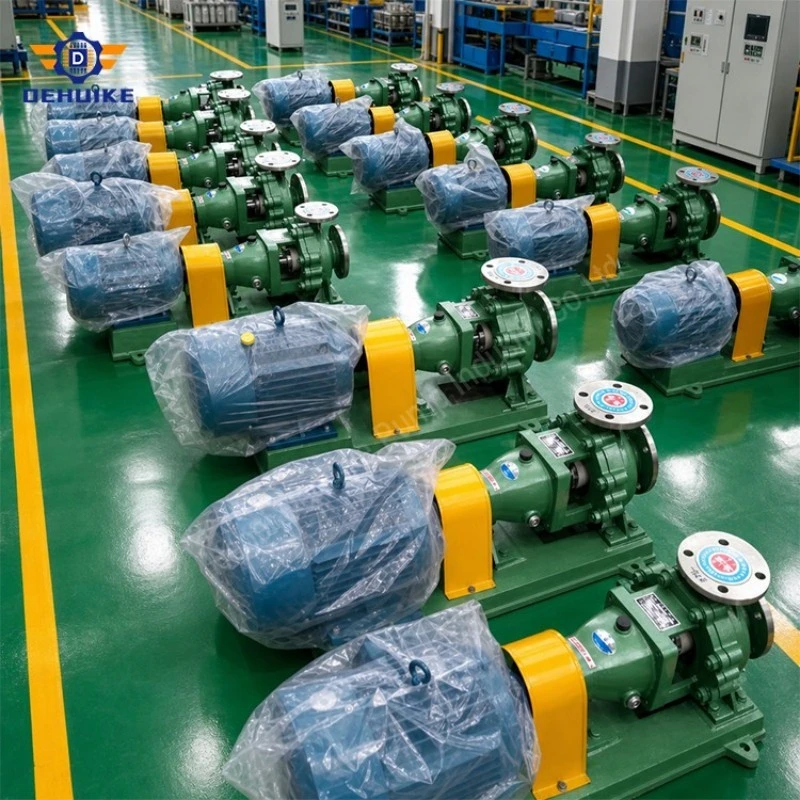
Magnetic drive: no seal, and a different set of rules
A magnetic drive removes the shaft seal altogether. The impeller is driven through a magnetic coupling across a containment shell, so the only possible leak path is a static gasket, and the pump becomes a genuinely zero-emission machine for a hazardous duty. That is why it is specified for acids, solvents, heat-transfer fluids and anything where a dripping gland would be a reportable event.
The trade is that the pumped liquid now has two extra jobs: it lubricates the bearing that carries the impeller, and it cools the containment shell. Three consequences follow, and they are where magnetic drives fail in service.
No dry running. A magnetic drive pump running without liquid destroys its own bearing in minutes, because there is nothing between the rotating parts. Dry-run protection is not optional on these machines; it belongs in the specification as a device, not as an instruction.
Nothing abrasive, nothing that crystallises. The bearing clearance is small, and a fluid carrying sand, scale or crystals will grind it away. The same applies to a fluid that solidifies on cooldown, which is why crystallising duties need a flush or a jacket rather than a hopeful selection.
Heat in the shell. Eddy currents in the metallic containment shell generate heat, and at low flow there is less liquid moving through to carry it away. A magnetic pump run at a closed valve, even briefly, can heat its shell and its magnets faster than a conventionally sealed pump would notice.
Temperature limits come from the magnets rather than the hydraulics. Standard grades lose strength at elevated temperature, so a magnetic drive on a hot duty needs the higher-temperature magnet grade and a correspondingly higher price, and the ceiling should be confirmed rather than assumed. Viscosity limits are tighter than for a conventionally sealed pump for the same reason: the fluid has to flow through the bearing gap, and a thick liquid will not.
None of this makes magnetic drive a compromise. It makes it a different pump with different rules, and the buyer who understands that gets a machine that runs for a decade without a leak.
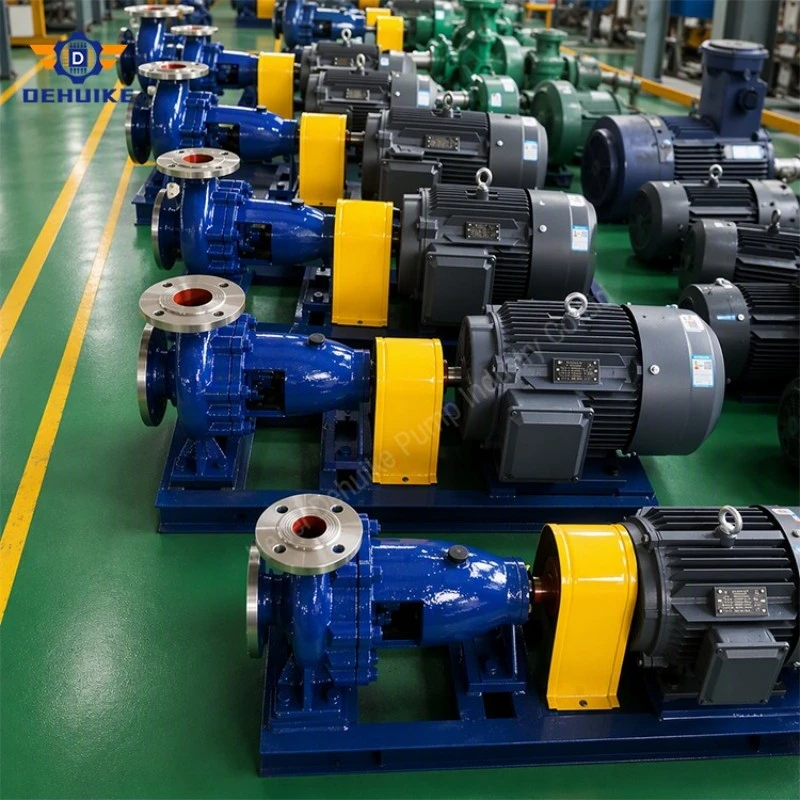
Let the leak decide
Between a stainless pump with a mechanical seal, a fluoroplastic pump with a mechanical seal, and a magnetic drive, the hydraulic performance is nearly the same. What differs is the probability of a leak and what happens when one occurs. That is the decision axis, and it is usually more decisive than corrosion charts.
A mechanical seal on a chemical duty can be made very reliable, but it remains a dynamic seal, and every dynamic seal eventually leaks. Whether that matters depends on where the leak goes: a drip into a bunded sump on a water-like fluid is a maintenance note, while the same drip on a hot solvent in a basement is an evacuation. A magnetic drive changes the question from "how often will it leak" to "can this fluid be handled by a pump with no dynamic seal at all", which is a technical question with a clear answer.
Table 1 The three configurations, by what they are good for
|
Configuration |
Best for |
Where it stops |
Leak posture |
|
Stainless, mechanical seal |
Clean acids, solvents, water-like fluids, no chlorides |
Chlorides, hot caustic, high-temperature acids |
Dynamic seal; route the leak and inspect it |
|
Fluoroplastic, mechanical seal |
HCl, mixed acids, hypochlorite, plating baths |
Abrasion, high temperature, pressure at temperature |
Dynamic seal; wetted path inert |
|
Magnetic drive |
Hazardous, toxic, odorous or expensive fluids |
Dry running, solids, crystals, high viscosity, high temperature |
Static gaskets only; no shaft seal |
The hydraulic penalty nobody mentions
All of these duties share one performance reality: efficiency falls as head rises in a single-stage machine, and the chemical range is no exception. At 25 m³/h the 125 mm impeller gives 20 m at 69 per cent, the 160 mm gives 32 m at 65 per cent, the 200 mm gives 50 m at 60 per cent, the 250 mm gives 80 m at 50 per cent, and the 315 mm gives 125 m at 40 per cent. A duty at 125 m is available in one stage, but it costs more than twice the energy per cubic metre of the same flow at 20 m, and the shaft power rises accordingly.
The temptation in chemical service is to specify the highest head available so that the pump covers any future change. That produces a machine running far from its best point, with a hot motor, a seal under more pressure than the duty needs, and an efficiency that shows up in the plant's energy account every month. Where the future head is genuinely uncertain, a smaller impeller with a later trim, or a variable-speed drive, is the cheaper way to keep the option open.
Table 2 Same flow, rising head, falling efficiency (25 m³/h duties)
|
Model |
Head (m) |
Efficiency |
Shaft power (kW) |
Motor (kW) |
|
IH65-50-125 |
20 |
69% |
1.97 |
3.0 |
|
IH65-50-160 |
32 |
65% |
3.35 |
5.5 |
|
IH65-40-200 |
50 |
60% |
5.67 |
7.5 |
|
IH65-40-250 |
80 |
50% |
10.89 |
15 |
|
IH65-40-315 |
125 |
40% |
21.3 |
30 |
A worked case
A plating line needs 25 m³/h of 30 per cent hydrochloric acid at 50 °C, lifting 45 m, from a day tank two metres below the pump. The duty fits IH65-40-200 exactly, in any material. Type 316L is the wrong answer: concentrated HCl at 50 °C attacks it quickly. The fluoroplastic version handles the fluid, and the question becomes sealing - a mechanical seal on HCl will work, but it will drip into a plant room shared with operators.
The magnetic version of the same hydraulic end, with fluoroplastic wetted parts and a bearing that tolerates the acid, answers both: no dynamic seal, no drip. It needs dry-run protection, a suction line that keeps the pump flooded to two metres of available NPSH, and confirmation that the magnet grade suits 50 °C. The hydraulic selection does not change at all; only the material and the seal arrangement change, which is the point of the whole exercise.
Questions that come with the fluid sheet
Q1: Is a magnetic drive always better than a sealed pump?
A: No. It is the better answer when the fluid is hazardous enough that a leak matters and clean enough that a wet bearing survives. On a dirty, crystallising or abrasive duty a sealed pump with a suitable flush is the more durable choice.
Q2:Can 316L handle dilute hydrochloric acid?
A:The manufacturer's figure for the assembled pump, not the resin datasheet. Linings, flange faces and seals each have their own ceiling, and pressure ratings have to be read at the operating temperature rather than at ambient.
Q3: What temperature limit applies to a fluoroplastic pump?
A: While two-pole 2900 rpm configurations offer compact footprints for high-head clean duties, four-pole 1450 rpm drives (J-series) are strongly indicated when handling liquids with kinematic viscosities above 30 cSt, warm volatile chemicals near boiling point, or slurries carrying fine crystal suspensions. Lowering rotational velocity reduces impeller peripheral tip speed by half, curbing mechanical seal face friction, suppressing cavitation inception, and extending equipment service life significantly.
Q4: Why does the higher-head version use so much more power?
A:Because power rises with head and efficiency falls as the impeller grows within a single stage. A 25 m³/h duty at 125 m takes more than ten times the shaft power of the same flow at 20 m. If the head is genuinely needed, that is the price; if it is a margin added "just in case", it is paid every hour for nothing.
Dehuike Pump Industry supplies the IH chemical pump range in stainless steel, fluoroplastic and magnetic drive configurations, covering 6.3 to 200 m³/h and heads to 125 m, with trimmed impeller versions available on the same casings. Manufacturing operates under ISO quality management system certification, with more than forty years of pump experience, over thirty product series and customers in more than ninety countries. Send the fluid sheet, the temperature and where the leak would go, and the selection will be argued from those three.

Hot Tags: corrosion resistant chemical pump, China corrosion resistant chemical pump manufacturers, suppliers, factory