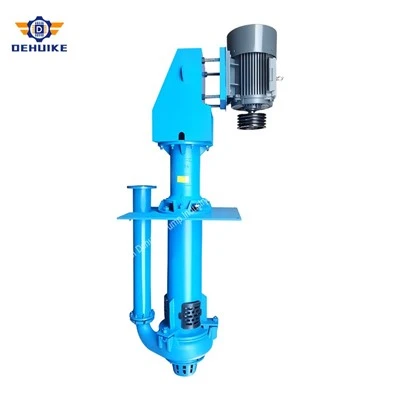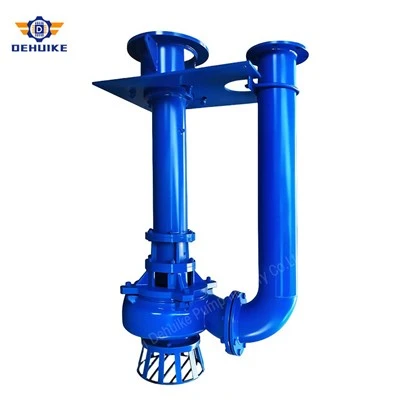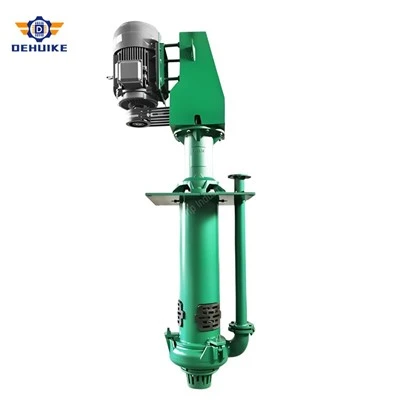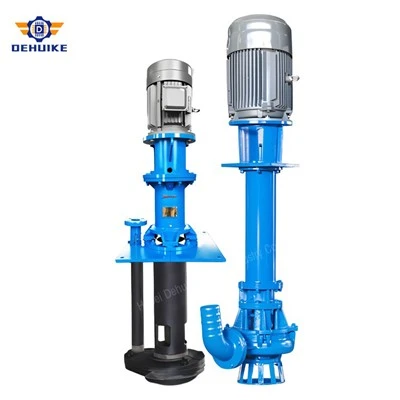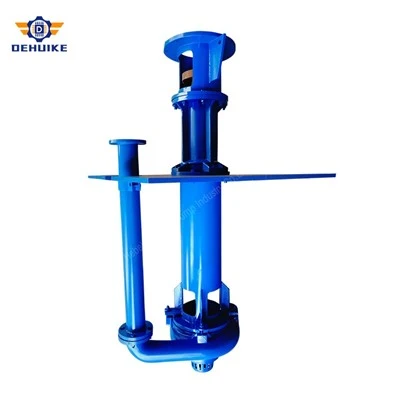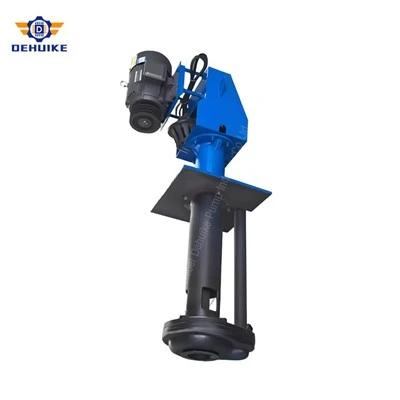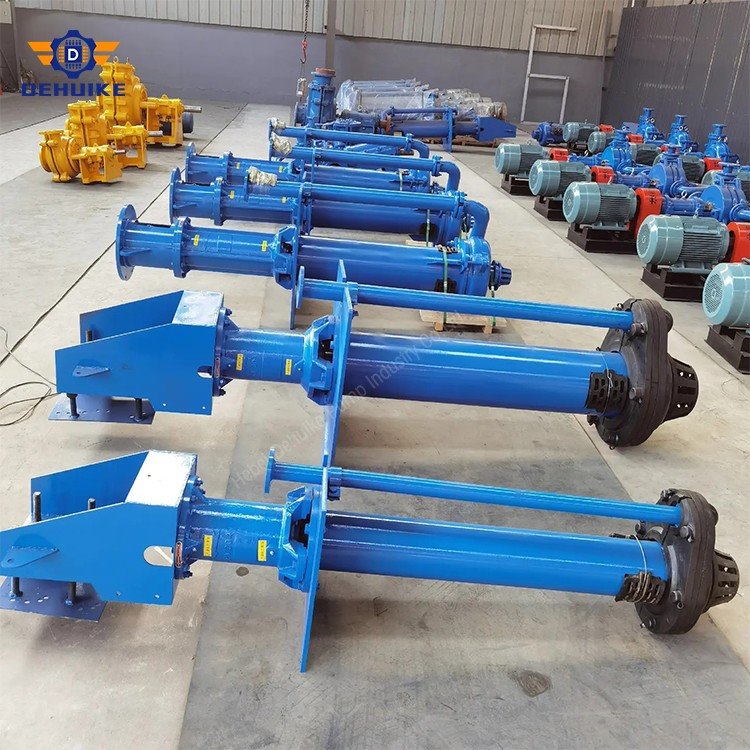
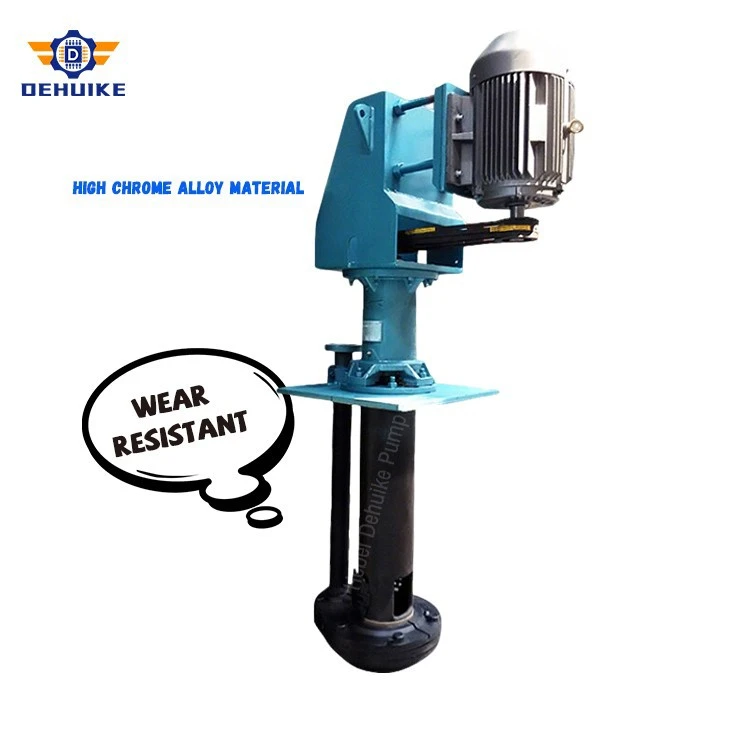
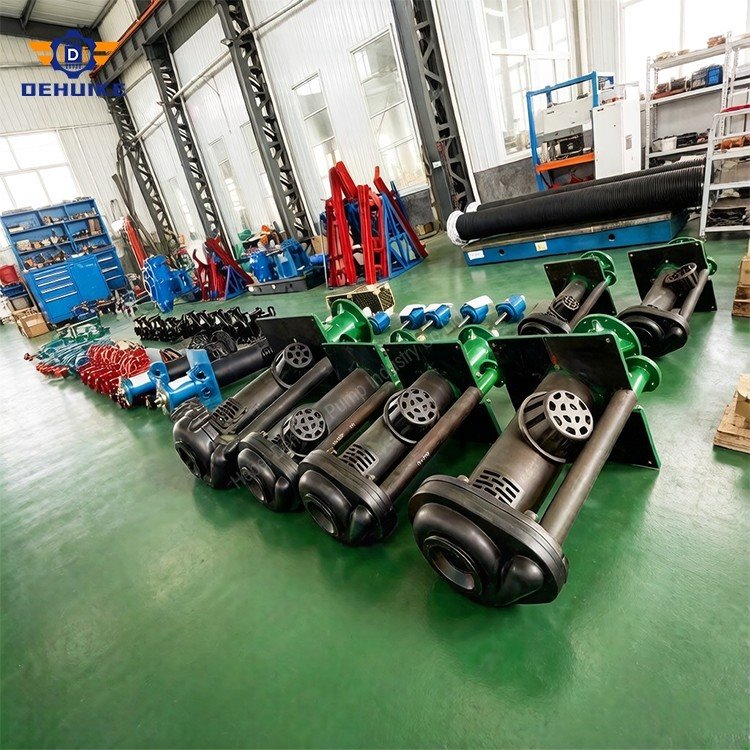
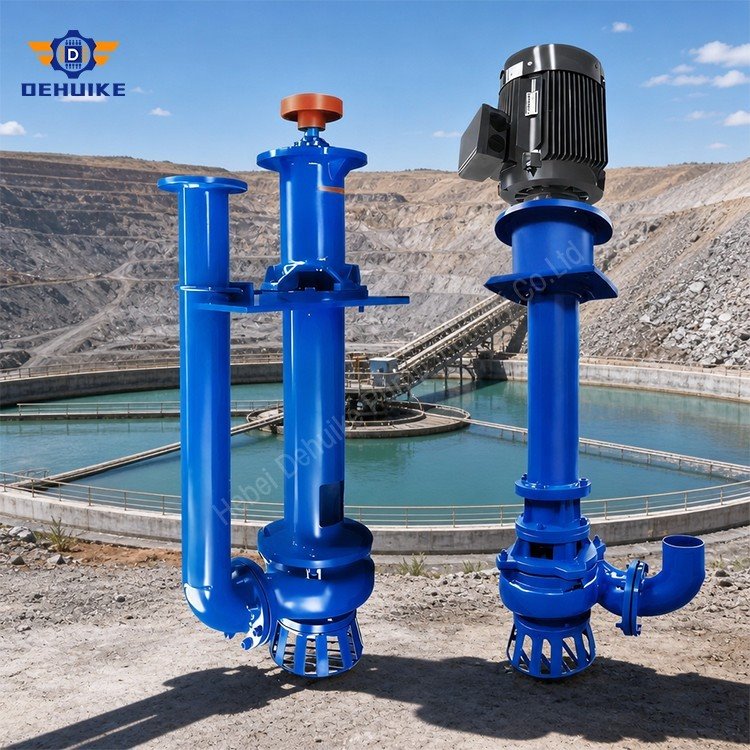
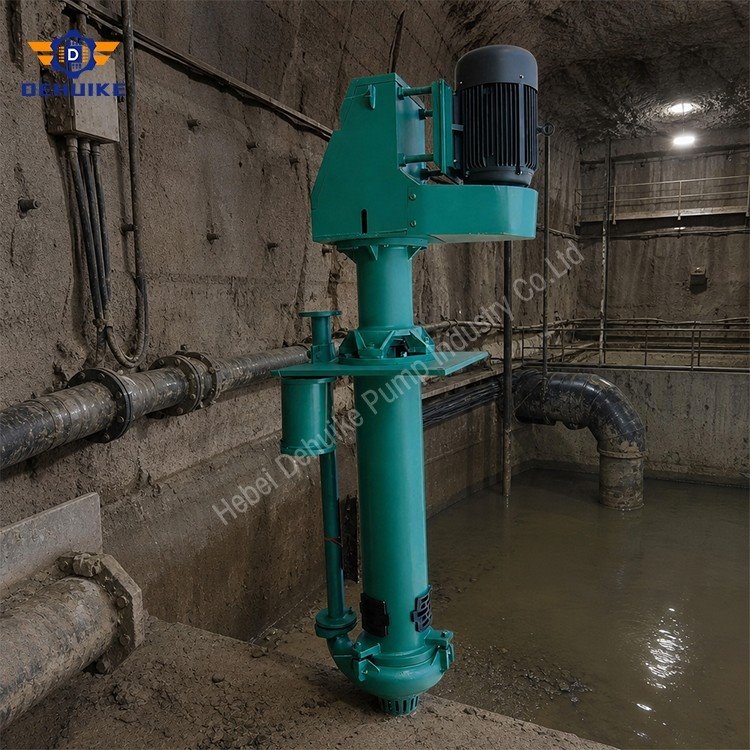
Hebei Dehuike Pump Industry Co., Ltd. is one of the most reliable manufacturers and suppliers of vertical slurry handling pump in China. With abundant experience, we are committed to providing high quality customized pumps with competitive price. Welcome to wholesale bulk vertical slurry handling pump for sale here from our factory. Also, pricelist is available.
Introduction
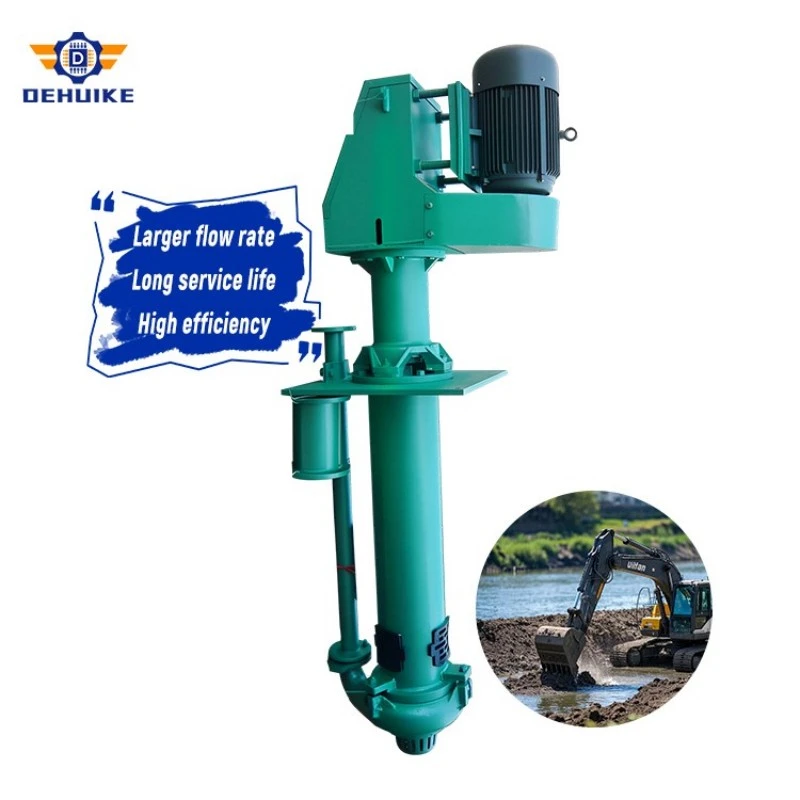
The Vertical Slurry Handling Pump is a vertical cantilever centrifugal pump engineered for transporting abrasive solid-liquid mixtures from collection sumps, process trenches, and thickener underflow pits in mining, metallurgical, and industrial processing facilities. The product name emphasizes its core function: handling - the managed transport of heterogeneous slurries containing coarse solids, fibrous material, and varying concentrations that would rapidly degrade conventional drainage pumps.
Within the solids handling pump classification, the Vertical Slurry Handling Pump occupies the heavy-duty segment designed for continuous slurry transport duty cycles rather than intermittent drainage. The distinguishing engineering feature is its true cantilever architecture: all rotating bearings, drive couplings, and sealing elements are positioned above the sump mounting baseplate. Below the liquid surface, the pump has zero submerged mechanical seals, stuffing boxes, or guide bearings. This eliminates the dominant failure mechanism in sump pumping - abrasive slurry penetrating submerged seals and destroying bearings and motor stators.
The open impeller geometry features back-curved vanes without front or back shrouds, allowing oversized solids and fibrous material to pass through the vane channels without clogging. This non-clog design is critical in mineral processing applications where tramp iron, rope fibers, and oversized rock fragments periodically enter the sump. Standard submerged setting depths range from 0.9 m to 2.4 m, extendable to 3.5 m with bolt-on suction extension pipes without adding lower submerged bearings.
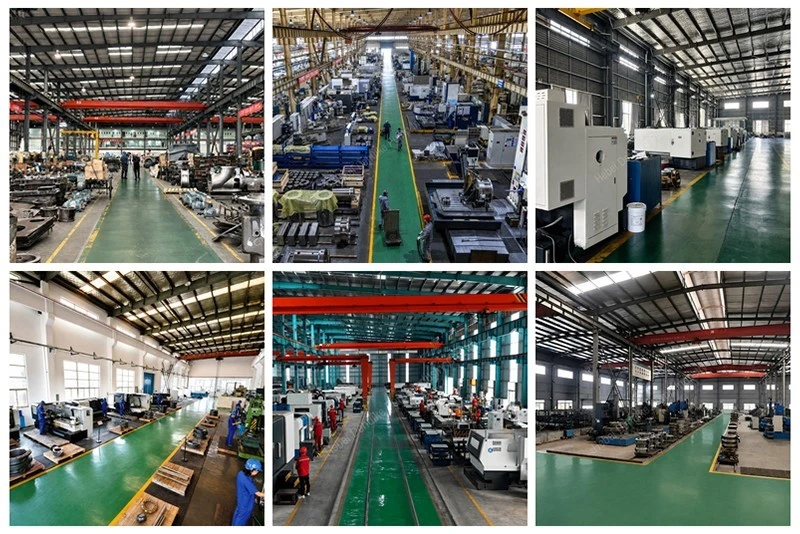
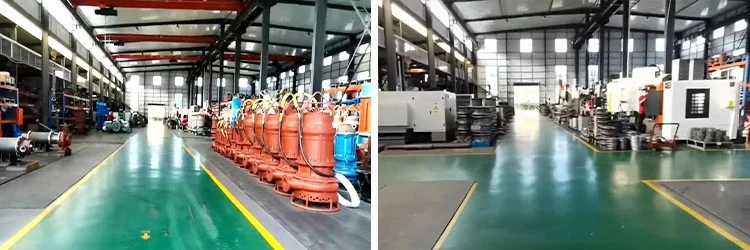
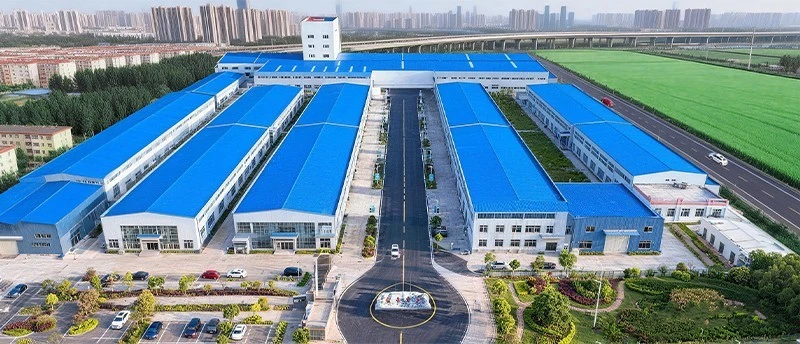
Manufactured by Hebei Dehuike Pump Industry Co., Ltd. (DHK Pump) with over 30 years of specialized slurry equipment manufacturing experience, the pump is produced from a modern facility exceeding 6,000 square meters with over 900 qualified industrial supply chain partners. Wet-end components are standardly cast from ASTM A532 Class III Type A high-chromium white iron (27% Cr, 58-62 HRC, designated A05).
Our Advantages
The Vertical Slurry Handling Pump delivers measurable total cost of ownership advantages over horizontal end-suction pumps and submersible motor pumps in continuous slurry handling applications. The economic case for selection is grounded in life cycle cost (LCC) analysis rather than initial purchase price alone:
- Life Cycle Cost (LCC) Economics and Seal Elimination ROI:
In conventional submersible pump installations, submerged mechanical seals represent the highest-cost wear item and the leading cause of unplanned failure. Each seal replacement requires pump extraction from the sump, workshop disassembly, new seal cartridge installation, and re-installation - typically 8 to 16 labor hours per event, occurring every 3 to 6 months in abrasive service. The Vertical Slurry Handling Pump eliminates this cost category entirely by removing all submerged dynamic seals. Over a 24-month operational period, the avoided seal replacement labor and parts cost alone typically exceeds the initial purchase price differential between vertical cantilever and submersible configurations.
- Indefinite Dry-Running and Snore-Condition Immunity:
In sump applications with fluctuating inflow, the pump routinely enters snore condition, drawing air-slurry mixtures when liquid levels drop below the suction strainer. Because no submerged elastomeric or metallic seal faces depend on liquid lubrication, the open impeller continues rotating without thermal seizure, frictional overheating, or cavitation damage. This allows unattended cyclic operation through dry-wet-dry sequences - a common scenario in batch-process mill floor drainage and batch thickener underflow transfer - without the motor protection trip events that plague submersible installations.
- Modular Depth Configuration and Drive Flexibility:
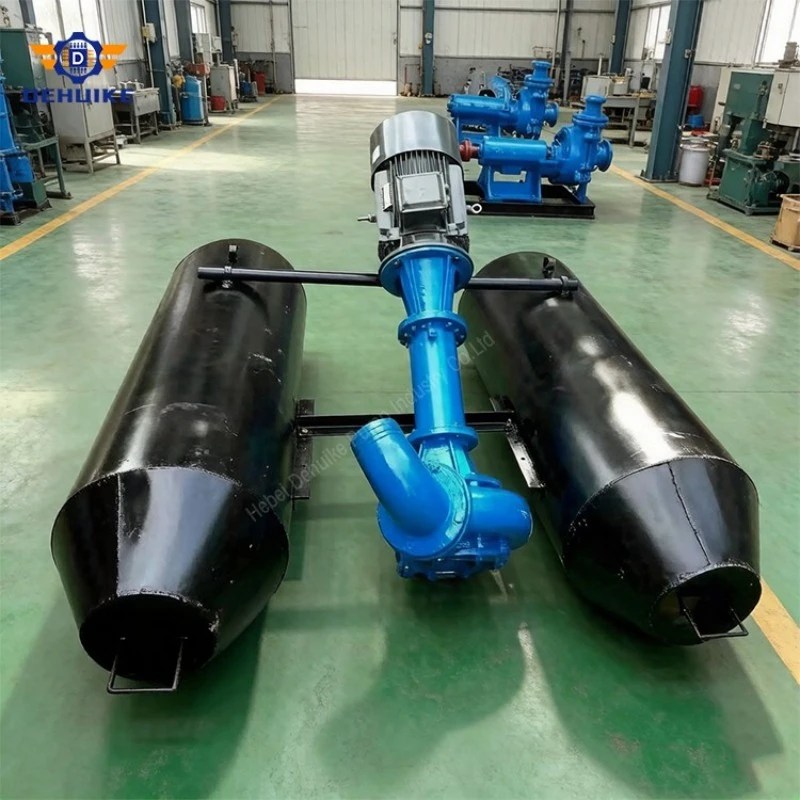
Column lengths are configurable from 0.9 m to 2.4 m in standardized 300 mm increments. For pit depths exceeding standard column limits, bolt-on suction extension pipes achieve drawdown depths up to 3.5 m without introducing lower submerged guide bearings. Drive options accommodate direct IEC or NEMA flexible coupling for fixed-speed duty, or overhead V-belt pulley transmission for speed trimming to match site system resistance curves without investing in variable frequency drives.
- Institutional 24-Month Factory Warranty:
Manufactured under ISO 9001 certified quality protocols, every complete Vertical Slurry Handling Pump unit carries a formal 24-month (2-year) factory warranty against manufacturing defects. Wear items subject to normal abrasive degradation (impeller, volute liner, wear plate) are excluded from the institutional warranty but are engineered for replacement without removing the pump from the sump, further reducing lifetime maintenance cost.
Experience and Markets
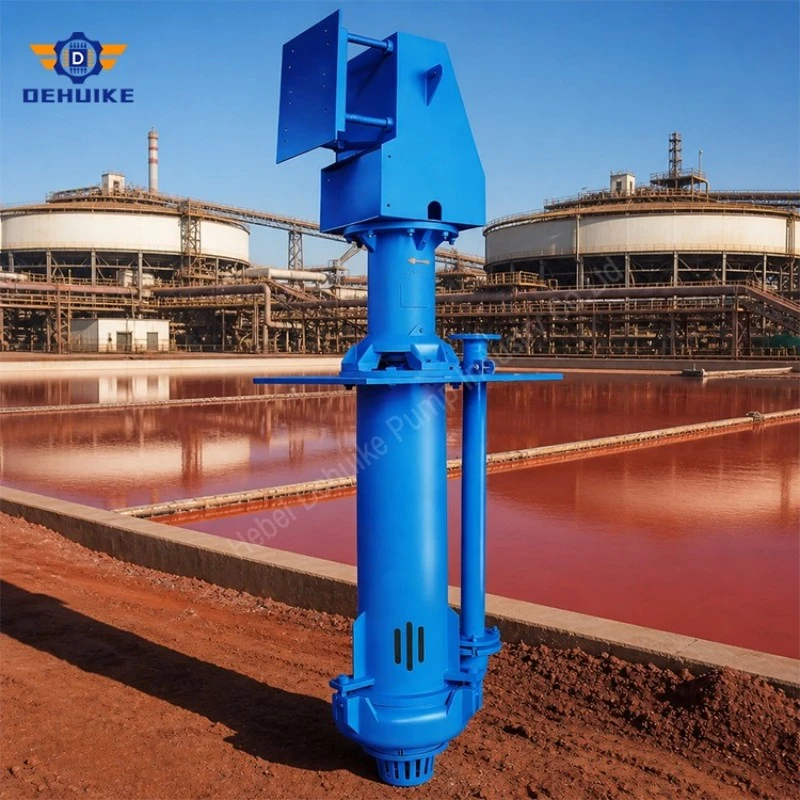
Hebei Dehuike Pump Industry Co., Ltd. brings more than 30 years of specialized slurry equipment manufacturing experience to global heavy industries. The Vertical Slurry Handling Pump has established active operational presence in more than 50 countries across diverse mining, metallurgical, and industrial processing sectors:
- Copper Concentrator Tailings Handling (South America and Central Africa):
In copper sulfide flotation concentrators, our vertical slurry handling pumps evacuate tailings slurry from thickener underflow collection sumps to tailings disposal facilities. The tailings slurry contains fine silica and pyrite particles at 30-45% solids concentration with a specific gravity of 1.3-1.5. The high-chromium A05 alloy wet-end components resist the combined grinding and gouging abrasion from angular silica fragments, while the open impeller passes occasional coarse surges during thickener rake pull events without clogging.
- Phosphate Rock Slurry Transport (North Africa):
In phosphate beneficiation plants, the pumps handle slurry from thickener underflow collection pits and dewatering filter feed sumps. The slurry contains sharp phosphate rock particles at 35-45% solids concentration. The high-chromium A05 metallurgy resists the cutting and gouging abrasion from angular phosphate fragments, while the cantilever architecture eliminates submerged seals that would require frequent gland water supply in remote desert mining sites.
- Coal Preparation Plant Heavy Media Circuit (East Asia):
In coal washery plants, the pumps handle dense magnetite heavy-media slurry from thickener underflow sumps and raw coal dewatering collection pits. The slurry density reaches 1.5-1.8 S.G. due to suspended magnetite fines used for density separation. The pumps operate unattended through 12-hour shifts with remote vibration monitoring, while the open impeller allows coal fragments and occasional tramp iron to pass without internal damage.
- Aggregate Washing and Sand Classification (Multiple Regions):
In aggregate classification settling lagoons and silica sand washing facilities, the pumps transfer settled sand mud from collection sumps to dewatering screens or hydrocyclone feed lines. The open impeller design passes oversize rock fragments without clogging while maintaining steady flow output through fluctuating sump levels common in batch-fed washing circuits.
Quality Assurance
Reliability in severe slurry handling operations requires verifiable metallurgical quality control and structured acceptance testing at every manufacturing stage. Each Vertical Slurry Handling Pump undergoes a comprehensive testing protocol before dispatch:
- ASTM A532 Metallurgical Quality Control and Chemistry Verification:
Wet-end castings (volute liners, impellers, wear plates) are produced from ASTM A532 Class III Type A high-chromium white iron. A benchtop optical emission spectrometer (OES) analyzes liquid alloy samples within 60 seconds prior to tapping, certifying that Chromium (26-28%), Carbon (2.8-3.3%), Silicon (0.5-0.8%), and Molybdenum meet ASTM A532 specifications before mold pouring proceeds. This real-time chemistry verification prevents out-of-specification heats from entering the casting line.
After heat treatment, each casting batch undergoes Brinell hardness testing to verify the target 58-62 HRC range. Metallographic examination of polished cross-sections confirms the proper M7C3 eutectic carbide distribution pattern - the microstructure that provides primary wear resistance. Castings failing hardness or metallographic criteria are quarantined and re-heat-treated or scrapped.
- 1.5x Design Pressure Hydrostatic Casing Testing:
Every pump volute, discharge column pipe, and flanged manifold is hydrostatically tested to 1.5 times the maximum rated working pressure for a minimum of 30 minutes. Digital pressure transducers monitor for any pressure decay indicating structural leakage, weeping, or casting porosity that could propagate under sustained operating pressure.
- ISO 9906 Grade 2B Computerized Hydraulic Performance Verification:
Finished pump assemblies are mounted on the factory full-scale computerized hydraulic test bench. Calibrated electromagnetic flowmeters and high-frequency pressure transmitters record head, flow rate, power consumption, and efficiency across 5 throttling points. Performance curves are validated against ISO 9906 Grade 2B acceptance criteria, with digital performance certificates generated for traceability.
- Dual-Laser Shaft Alignment and ISO 10816-3 Vibration Audit:
Motor-to-pump coupling alignment is established using dual-laser geometric instruments, maintaining radial and angular concentricity within 0.05 mm. During full-speed no-load and load testing, 3-axis vibration velocities are audited against ISO 10816-3 Class II limits (RMS velocity below 2.8 mm/s for normal operation, shutdown above 4.5 mm/s).
- EN 10204 3.1 Material Test Certificate Documentation:
Each unit ships with a comprehensive technical dossier including EN 10204 3.1 Mill Test Certificates detailing chemical composition and mechanical hardness data, dynamic balance certificates (ISO 1940 G2.5), hydrostatic test records, hydraulic performance certificates, and protective coating dry film thickness (DFT) reports.
Installation Instructions
Proper field installation of the Vertical Slurry Handling Pump is critical for achieving designed service life and vibration-free operation. The following structured procedure should be executed by qualified installation personnel:
- Pre-Installation Checklist and Site Preparation:
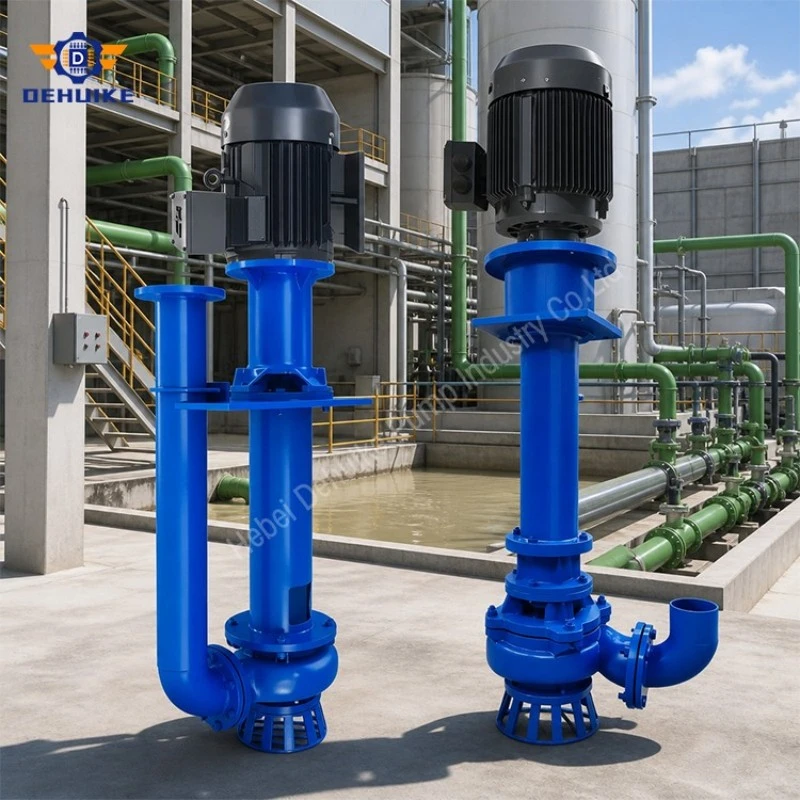
Before pump delivery, verify that the sump pit dimensions match the general arrangement (GA) drawing provided with the quotation. Confirm that the concrete foundation pad is cured to minimum 28-day compressive strength and is flat, level, and free of cracks. Check that the discharge piping route is clear of obstructions and that the motor power cable is routed to the mounting location. Verify that all lifting equipment (overhead crane or chain hoist) is rated for the total lifted weight of pump, motor, and column assembly.
- Step 1: Baseplate Positioning and Precision Leveling:
Position the baseplate on the pit rim and verify level using a precision machinist level (sensitivity 0.02 mm per meter). Adjust with steel shims under the baseplate feet until level is within 0.1 mm per meter in both longitudinal and transverse axes. Proper leveling at this stage is essential: an out-of-level baseplate induces angular misalignment between the motor shaft and pump shaft that cannot be fully corrected by shimming the motor feet alone.
- Step 2: Epoxy Grouting and Anchor Bolt Torque:
After leveling, grout the baseplate to the concrete foundation using non-shrink epoxy grout. Pour grout continuously from one side to avoid air entrapment, filling the void between the baseplate underside and foundation. Allow the grout to cure fully (typically 48-72 hours depending on ambient temperature) before tightening anchor bolts to the specified torque value using a calibrated torque wrench in a cross-pattern sequence.
- Step 3: Column Pipe and Discharge Elbow Connection:
Bolt the column pipe flange to the volute discharge flange using new gaskets and stud bolts tightened in a crisscross pattern to specified torque. Connect the upper discharge elbow to the pit-top baseplate flange, verifying that the discharge pipe centerline aligns with the site piping system. Misalignment at this connection induces stress on the column pipe and can cause vibration and premature bearing wear.
- Step 4: Motor Mounting and Dual-Laser Precision Alignment:
Mount the electric motor on the bearing housing drive bracket. Perform initial rough alignment using a straight edge and feeler gauges across the coupling halves. Then perform precision alignment using dual-laser geometric instruments, adjusting shims under the motor feet until radial and angular misalignment are within 0.05 mm. This precision is non-negotiable: misalignment exceeding 0.1 mm will generate excessive vibration and accelerate coupling insert and bearing failure.
- Step 5: Suction Strainer Verification and Trial Run Procedure:
Verify that the suction strainer is bolted securely to the lower suction flange and that all fasteners are torqued to specification. Fill the bearing housing with recommended EP2 lithium-complex grease. Rotate the pump shaft by hand to verify free rotation without binding. Start the motor momentarily to verify correct rotation direction matching the arrow on the volute. Then start the pump with the discharge valve partially open and monitor vibration, bearing temperature, and flow output for the first 30 minutes of operation.
Packaging & Delivery
Export-grade packaging and structured international logistics management ensure that every Vertical Slurry Handling Pump arrives at overseas project sites in installation-ready condition:
- ISPM 15 Compliant Fumigation-Free Export Crating:
Each pump unit is packed inside a heavy-duty structural timber case constructed from 25 mm thickness phenolic plywood, fully compliant with ISPM 15 international phytosanitary standards. Internal cold-bent angle iron bracing frames secure the pump column, motor, and ancillary components against shifting during ocean transit. The crate design accommodates forklift handling from all four sides and overhead crane lifting via threaded lifting eyes protruding through the crate top.
- VCI Vapor Corrosion Inhibitor and Desiccant Sealing Protocol:
All machined bare-metal surfaces, including shaft journals, flange faces, and bearing bores, are coated with rust-preventive oil, then wrapped in VCI vapor-corrosion-inhibitor film and heat-sealed inside 0.2 mm polyethylene envelopes. Silica gel desiccant packs absorb residual moisture inside the sealed enclosure. A humidity indicator card is visible through a transparent inspection window on the crate exterior, allowing visual verification of internal moisture conditions without opening the crate.
- Weight-Based Logistics Routing and Freight Selection:
For emergency spare parts shipments between 50 kg and 500 kg, Air Freight provides 5 to 7 day door-to-airport delivery. For complete pump units exceeding 500 kg, Sea Freight (FCL full container load or LCL less-than-container load) offers economical 15 to 35 day transit. All shipments include standard packing lists, commercial invoices, and original bills of lading. Packaging is designed to withstand containerized ocean transport including stacking, vibration, and humidity cycling.
- International Trade Terms (FOB / CIF):
Commercial quotations are issued under FOB (Free On Board) or CIF (Cost, Insurance and Freight to Designated Destination Port) Incoterms. No specific departure port is designated in commercial documentation, ensuring flexible routing through any available international shipping channel. The factory maintains structured warehousing for raw materials, work-in-progress castings, finished components, and wear part inventory, supporting flexible production scheduling and emergency wear part dispatch via air freight within 48 hours of order confirmation.
Our Certificate
The Vertical Slurry Handling Pump is manufactured under a structured certification and compliance framework that demonstrates institutional commitment to quality management, international market access, and environmental responsibility:
- ISO 9001 Certified Quality Management System:
The manufacturing quality system operates under ISO 9001 certification, covering the complete production cycle from raw material procurement and foundry operations through CNC machining, assembly, and hydraulic testing. The certified quality management system mandates documented procedures for charge recipe formulation, heat treatment curve control, machining tolerance verification, and hydraulic performance validation. Internal quality audits are conducted on a scheduled basis to verify ongoing compliance with documented procedures, and the certification is maintained through periodic surveillance audits by the accredited certification body.
- EAC Certification for Eurasian Customs Union Market Access:
The EAC (Eurasian Conformity) certification confirms compliance with the technical regulations of the Eurasian Customs Union, enabling duty-free market access to Russian Federation, Belarus, Kazakhstan, Armenia, and Kyrgyzstan. This certification is relevant for mining and industrial processing customers in Central Asian and Eastern European markets who require conformity with regional technical standards for industrial equipment imported into the customs union territory.
- RoHS Compliance for Restriction of Hazardous Substances:
The RoHS (Restriction of Hazardous Substances) compliance certification confirms that electrical and electronic components incorporated into the pump motor and control panel assembly, including motor winding insulation materials, terminal blocks, and cable assemblies, do not contain restricted levels of lead, mercury, cadmium, hexavalent chromium, polybrominated biphenyls (PBB), or polybrominated diphenyl ethers (PBDE). This compliance supports market access to regions with environmental material restrictions on industrial equipment.
FAQ
To assist consulting engineers and procurement specialists during equipment selection for the Vertical Slurry Handling Pump, we address the most frequent technical questions:
Q1: What is the maximum solid particle size the pump can handle without clogging?
A1: The open impeller design with no front or back shrouds permits spherical solids up to 15 mm to 65 mm depending on model size to pass through the vane channels. The 40PV model handles 15 mm spheres; the 300UV model handles 65 mm spheres. Fibrous material and tramp iron also pass through without clogging, though regular suction strainer cleaning is recommended to maintain flow efficiency.
Q2: How is the maximum submerged depth determined, and can it be extended for deeper sumps?
A2: Standard column lengths range from 0.9 m to 2.4 m based on cantilever shaft critical-speed harmonic analysis. For deeper sumps, a suction extension pipe up to 1.0-1.5 m can be bolted to the lower strainer flange, achieving total drawdown depths up to 3.5 m without adding any lower submerged bearings.
Q3: When should High-Chrome White Iron (A05) be selected versus Synthetic Elastomer (R55) lining?
A3: High-Chrome A05 (27% Cr, 58-62 HRC) is recommended for coarse, sharp solids with high impact velocities and neutral pH. Rubber R55 is optimal for fine-particle slurries (d50 below 0.2 mm) and acidic or alkaline chemical liquors (pH 2-12) where chemical corrosion accelerates metallic wear.
Q4: Can the pump operate continuously when the sump runs dry or inflow is intermittent?
A4: Yes. The Vertical Slurry Handling Pump has zero submerged mechanical seals, packing rings, or lower guide bearings requiring liquid lubrication. It operates indefinitely in snore condition (drawing air and intermittent fluid) without thermal distress, seal failure, or mechanical damage to bearings.
Q5: What certifications and documentation accompany each pump unit?
A5: The manufacturing quality system operates under ISO 9001 certification, with product compliance supported by EAC and RoHS certifications. Each unit ships with EN 10204 3.1 MTC, ISO 1940 G2.5 balancing certificates, ISO 9906 Grade 2B hydraulic performance certificates, hydrostatic test records, and vibration baseline data.
Q6: How to initiate a formal engineering quotation?
A6: Submit required Flow (m3/h), Head (m), Sump Pit Depth (m), and Slurry Specific Gravity to director@dhkpump.com (WhatsApp: +86 19503223662). Our multilingual technical desk operates 24/7 with a 2-hour response target. The engineering team returns GA drawings, motor power calculations, and formal commercial proposals under FOB or CIF terms within 2 hours.

Hot Tags: vertical slurry handling pump, China vertical slurry handling pump manufacturers, suppliers, factory