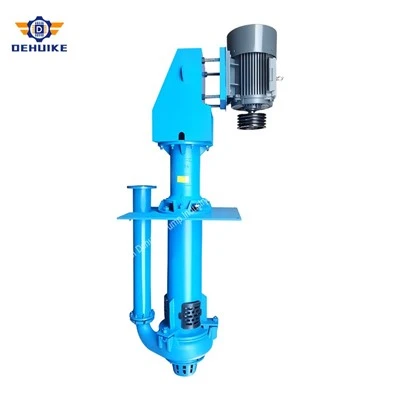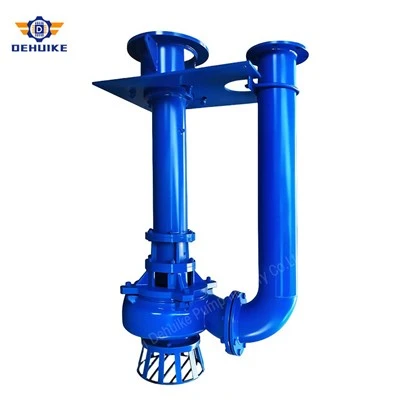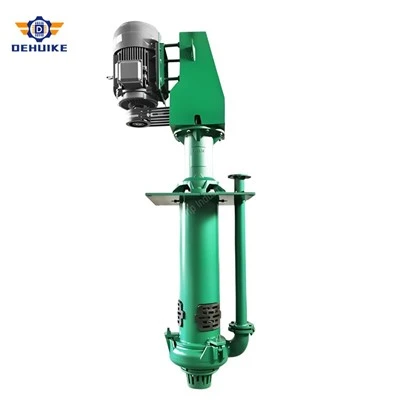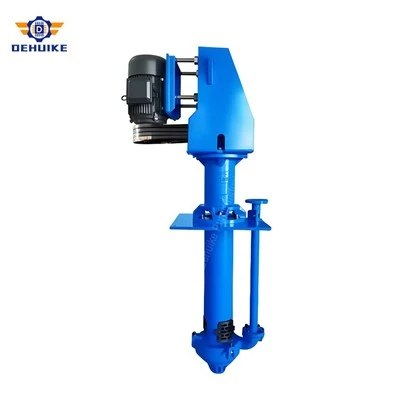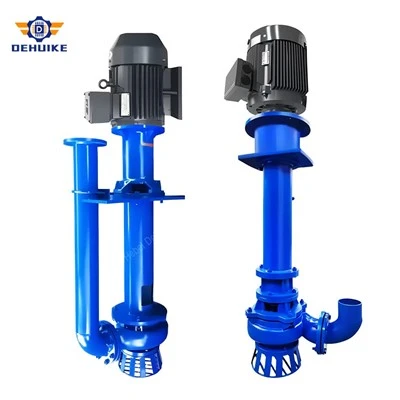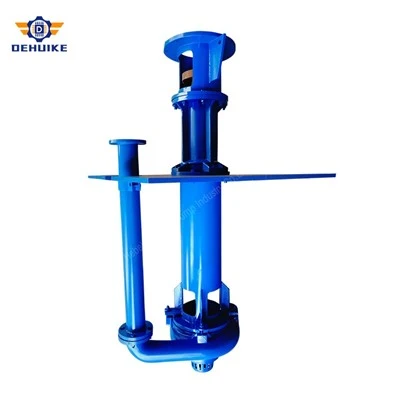

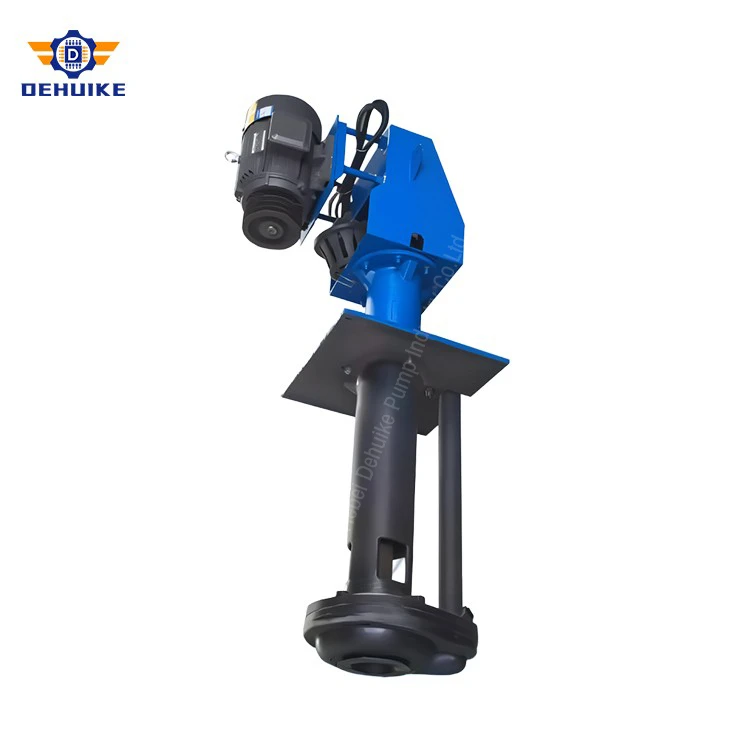
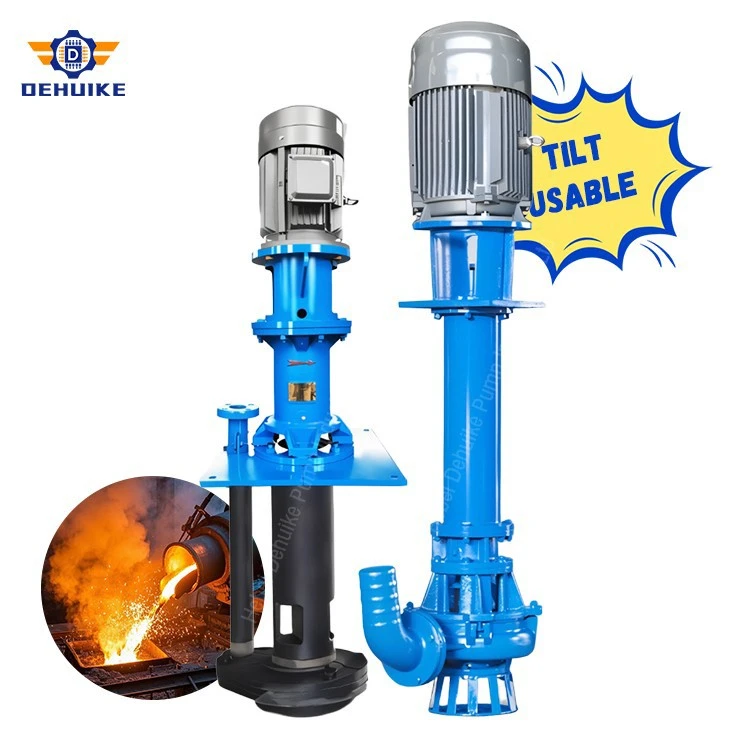
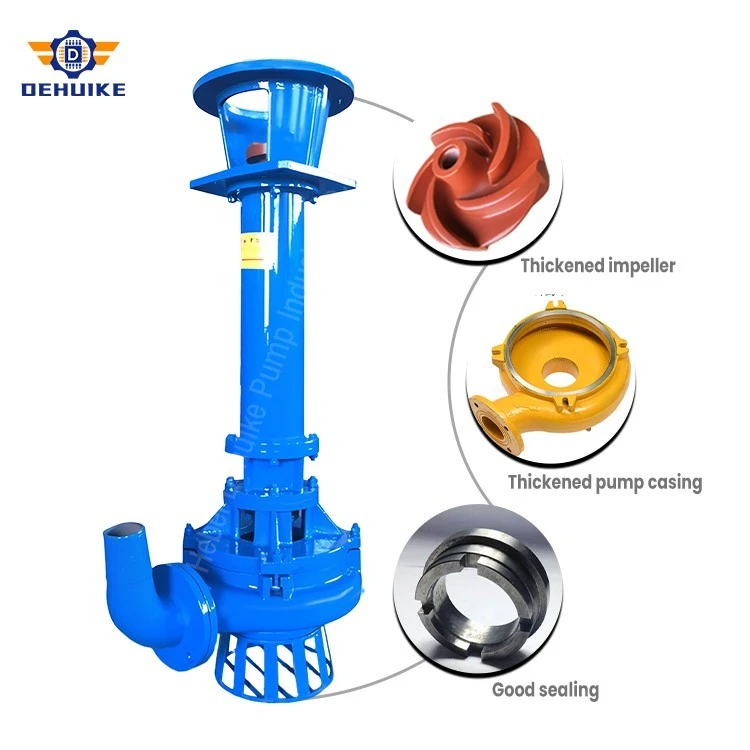
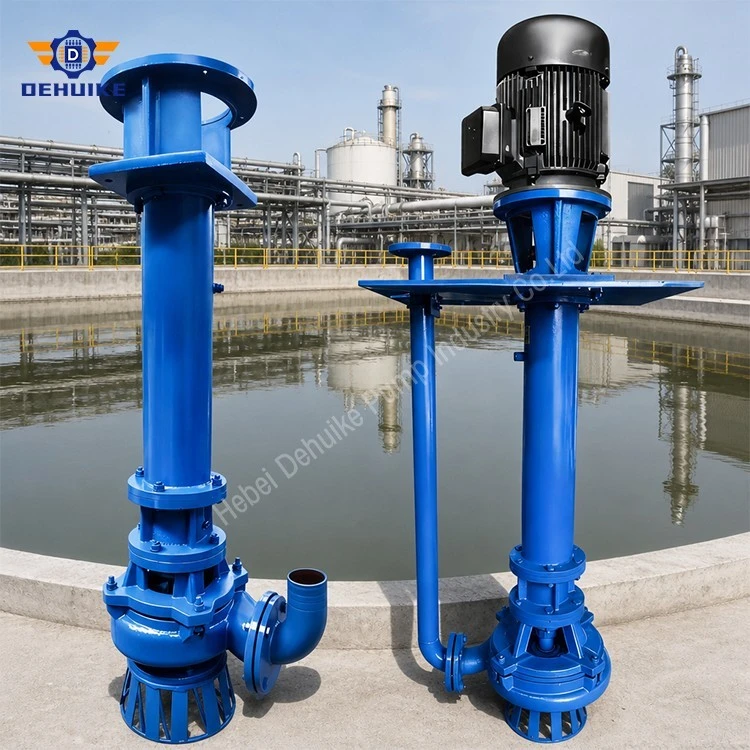
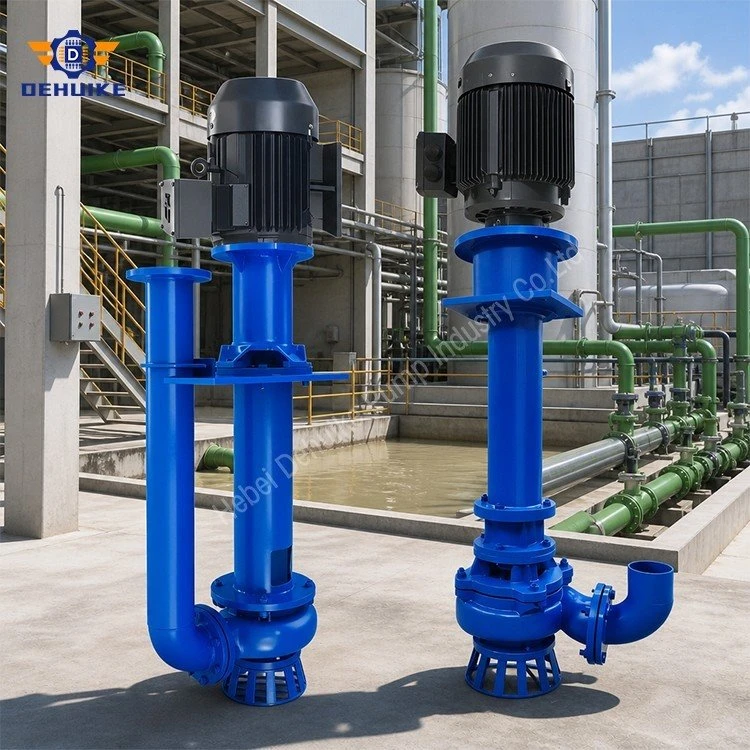
Hebei Dehuike Pump Industry Co., Ltd. is one of the most reliable manufacturers and suppliers of industrial vertical slurry pump in China. With abundant experience, we are committed to providing high quality customized pumps with competitive price. Welcome to wholesale bulk industrial vertical slurry pump for sale here from our factory. Also, pricelist is available.
Practical Role in Plant Sump Slurry Control
An Industrial Vertical Slurry Pump is used where slurry collects below the working floor and must be lifted out of a pit, sump, trench, tank bay, wash-down channel, or process collection pocket. The pump is arranged vertically, with the drive end positioned above the mounting level and the hydraulic end reaching down toward the slurry. This layout suits plants that need a fixed, serviceable sump pump for abrasive liquid-solid mixtures without putting the motor inside the slurry.
In industrial service, the word slurry may refer to many different site conditions. It may be mineral fines in process water, sand from aggregate washing, scale-bearing effluent from a metal plant, settled solids from an industrial basin, tailings overflow, or cleaning water carrying abrasive residue. The pump should not be selected only by the product title. It should be matched to the sump geometry, slurry behavior, liquid level range, transfer distance, discharge destination, electrical supply, and maintenance access.
The main advantage of a vertical arrangement is its separation between the drive area and the slurry zone. Bearings, coupling, motor, and routine inspection points can remain above the sump deck, while the wet end works below the mounting plate. This makes the unit easier to observe, grease, align, and remove than equipment that is fully immersed with its motor in the liquid. The buyer still needs to confirm the depth, shaft arrangement, inlet clearance, support structure, and discharge route before a final model is released.
When a Vertical Slurry Pump Fits Better Than Other Arrangements
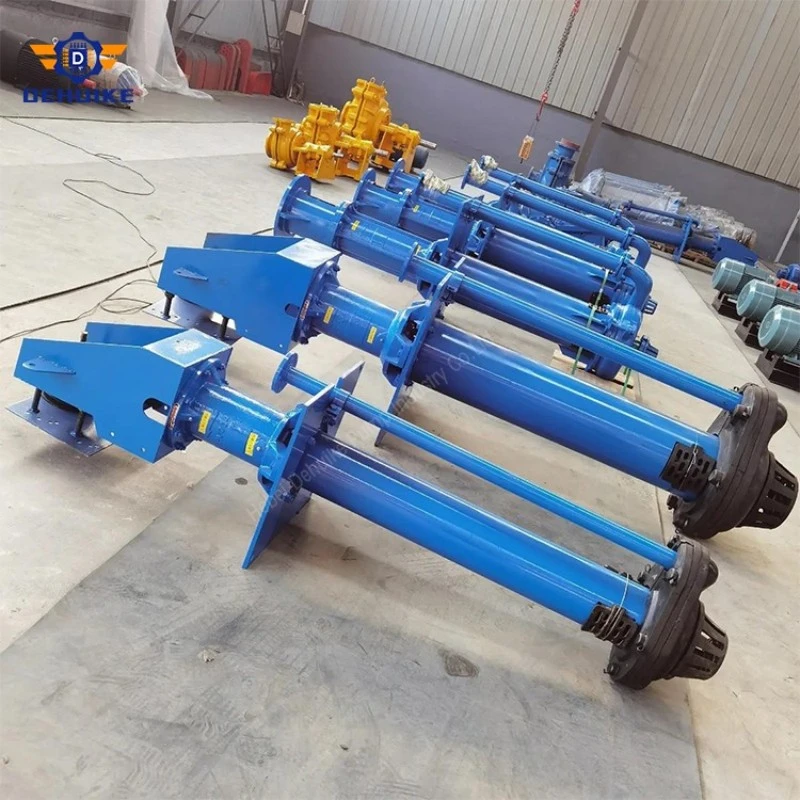
A vertical slurry pump is often considered when a plant has a repeatable sump location and needs frequent access to the drive side. It can be a strong option where the work area has limited floor space, where flooding risk makes dry-mounted suction piping inconvenient, or where the slurry level rises and falls during normal operation. It is also useful when the plant wants the pump to be mounted at the deck level while the hydraulic section reaches into the liquid below.
This does not mean that a vertical pump is always the correct answer. A long horizontal transfer route, a very deep sump, heavy oversize debris, a highly corrosive medium, or unstable suction conditions may require additional review. If the wet end cannot remain properly positioned, if the inlet is repeatedly buried by settled solids, or if the discharge line imposes excessive load on the pump, the installation should be redesigned before purchase.
A responsible selection begins with these questions:
- What slurry enters the sump, and how quickly does it settle?
- What is the normal liquid level and the lowest level during operation?
- How deep must the hydraulic end reach below the mounting deck?
- What capacity and head are required at the discharge destination?
- Does the slurry contain sharp solids, coarse particles, fibers, scale, or occasional debris?
- How will the pump be lifted, inspected, and serviced without interrupting nearby equipment?
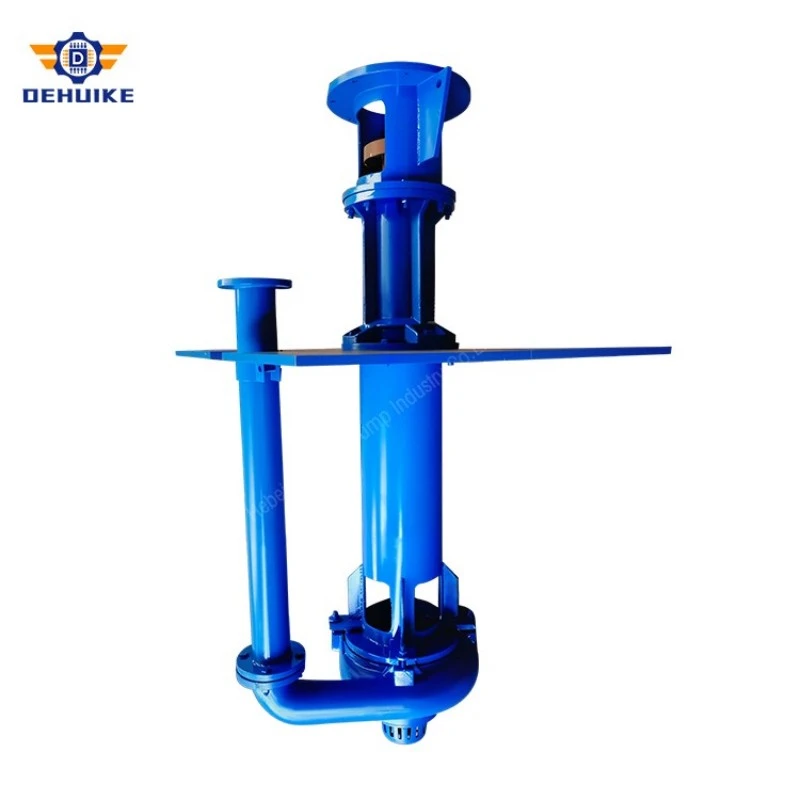
Sump Geometry and Inlet Position
The sump is part of the pump system. Its depth, width, bottom shape, inflow direction, and solids build-up pattern affect whether the pump receives a stable feed. A narrow pit can create poor approach flow. A flat floor may allow solids to collect outside the active intake zone. A side inflow can push sediment against the pump body. If the slurry arrives in batches, the pump may see alternating water-rich flow and dense solids pockets.
Before selection, the buyer should provide a simple sump sketch or site photograph. Mark the mounting deck, liquid level range, solids depth, inflow point, pump location, access opening, and discharge outlet direction. This information is often more useful than a general statement such as "industrial sump duty." It helps the supplier determine whether the pump should be positioned at the center, near a trench, near a wall, or away from a zone where solids are likely to compact.
Inlet clearance is critical. The pump should reach the slurry zone without being forced into compacted material. A strainer, guard, or intake accessory may help block oversized objects, but it can also become a restriction if the opening is too small or difficult to clean. The inlet arrangement should be reviewed with the actual solids, not chosen only from a standard accessory list.
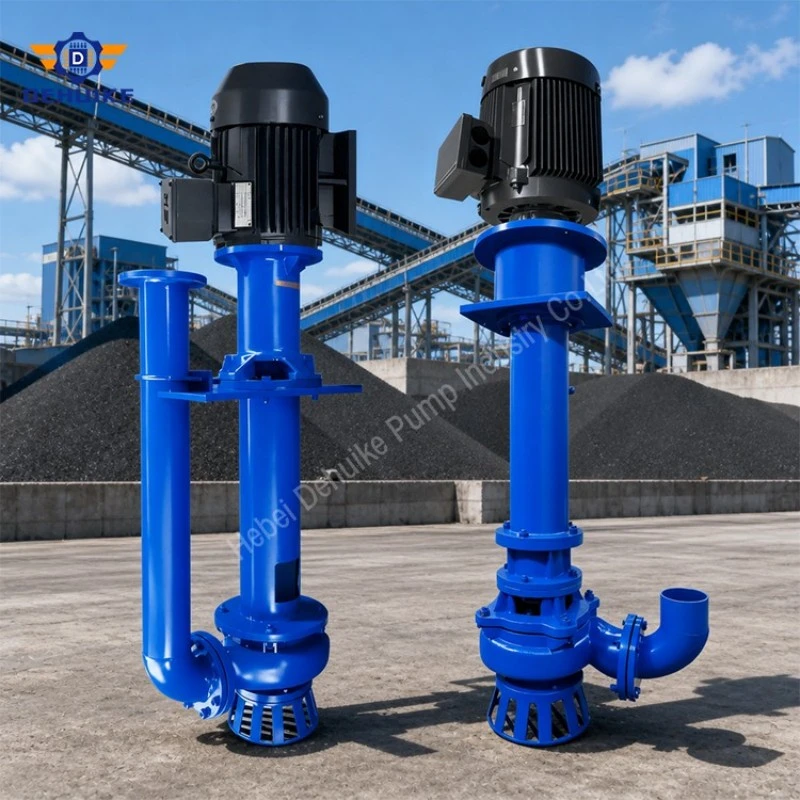
Hydraulic End and Wear Management
The wet-end area of an Industrial Vertical Slurry Pump handles the direct movement of slurry. It receives the mixture, transfers energy through the rotating element, and sends the material into the discharge passage. Abrasive wear may appear at the inlet, impeller, casing passage, wear plate, discharge throat, or other slurry-contact areas, depending on the confirmed design.
Wear should be discussed as a site-specific operating issue. Fine particles can polish surfaces slowly. Sharp mineral fragments can cut and impact. High solids concentration can increase load and local abrasion. Chemical liquid can introduce compatibility questions separate from mechanical wear. For this reason, material choice should follow the real medium: particle hardness, shape, size range, temperature, pH, concentration, and service interval.
A good wear plan identifies which parts are intended for inspection or replacement. It should also record the installed configuration so future spare-part requests are accurate. Maintenance teams should avoid replacing a visibly worn part without checking whether the root cause is normal abrasion, poor sump flow, a changed feed source, pipeline restriction, or an unsuitable operating level.
Drive-End Access and Mechanical Stability
The above-deck part of the pump is important because it carries the mechanical loads created below the deck. The motor, coupling, bearing housing, mounting plate, column, shaft, and discharge connection must remain aligned and supported. Vibration problems often begin when the pump is installed on an uneven foundation, the discharge pipe pulls against the outlet, or the motor and shaft alignment is not checked after installation.
The mounting structure should be rigid enough to support the static weight of the pump and the dynamic forces produced during operation. If the pump is installed on a steel platform, check that the structure does not flex under load. If the pump is mounted on concrete, the base should be level, stable, and accessible for bolt inspection. The discharge piping should be independently supported so the pump does not carry pipeline weight.
Routine access should be planned before the equipment is ordered. Operators need room to check vibration, temperature, grease points, fasteners, coupling guard condition, cable routing, and any abnormal movement. If a crane or hoist is required for removal, the lifting path must be available above the pump. A pump that cannot be safely lifted for inspection is not fully serviceable, even if the hydraulic selection is correct.
Electrical and Control Considerations
Confirm voltage, frequency, phase, motor enclosure, starting method, control panel location, cable routing, and protection requirements. Depending on the project design, protection may include overload response, phase-loss protection, abnormal current monitoring, temperature-related functions, or level control. These features should be listed as selected items rather than assumed.
During the first operating period, record current, vibration, sound, discharge condition, liquid level, and sump behavior. This baseline is useful later. If the pump begins taking longer to clear the sump, if current changes under similar material conditions, or if vibration increases, the maintenance team can compare the new condition against the recorded baseline and inspect the full system in sequence.
Industrial Application Scenarios
Mining and mineral processing plants
The pump may be used in floor drainage trenches, tailings-related collection points, mill area sumps, and process water basins where abrasive fines settle below the working level.
Aggregate washing and sand processing
Settling pits and wash-water channels can collect sand, grit, and fine solids. A vertical pump can be mounted at the pit edge while the wet end reaches the collection zone.
Metallurgical and steel plant sumps
Scale, slag fines, and process sediment can accumulate in pits and water handling areas. The pump selection should consider temperature, particle hardness, and maintenance access.
Industrial wastewater and residue basins
Factories may need to move water mixed with sludge, grit, powder residue, or cleaning solids. Liquid chemistry and settling behavior should be reviewed before confirming materials.
Temporary process recovery points
Where a plant adds a temporary collection pit or wash-down area, the vertical layout can provide deck-level access while keeping the hydraulic end close to the slurry source.
Commissioning and Operating Records
Commissioning should be treated as the start of the maintenance record, not just a start-up event. Before the first run, confirm pump identification, installation position, liquid level, inlet clearance, discharge route, valve position, electrical direction, and pipe support. Start under supervision and observe the system before the plant relies on the pump for normal production.
The first record should include operating current, vibration, sound, approximate discharge behavior, sump level change, and any visible movement of the pipework or pump structure. If the pump is operating in a slurry that varies by shift, record the material condition as well. A short written record can prevent later disputes about whether a problem came from the pump, the sump, the pipeline, or a process change.
When output decreases, do not immediately increase motor power or change speed. First check the sump. Then check the inlet, solids build-up, discharge line, valve position, receiving point, and mechanical condition. Many apparent pump problems are caused by changed material, blocked strainers, pipe restrictions, or a receiving tank that cannot accept more flow.
Maintenance Planning for Industrial Buyers
Maintenance intervals should be based on the actual site duty. A pump handling lightly abrasive wash water does not require the same schedule as a pump moving dense mineral residue. Inspection can be planned around operating hours, observed wear, process shutdowns, and the cost of unexpected downtime.
A focused maintenance plan may include:
- Checking the inlet and surrounding solids build-up;
- Inspecting slurry-contact components when the pump is lifted;
- Confirming bearing temperature and vibration trends;
- Checking coupling alignment and fastener condition;
- Reviewing discharge pipe support and outlet connection;
- Recording any change in the slurry source or plant process.
Spare parts should be selected from the supplied configuration. Useful items may include slurry-contact wear parts, joint seals, coupling components, bearing-related items, and site-specific accessories that are difficult to obtain quickly. A narrow, well-matched spare plan is more valuable than a broad list that does not reflect the installed unit.

FAQ
Q: What is an Industrial Vertical Slurry Pump used for?
A: It is used to lift abrasive or solids-bearing liquid from industrial sumps, pits, trenches, basins, or process collection points to a planned discharge location.
Q: Why choose a vertical design for slurry service?
A: A vertical design keeps the drive side above the sump while placing the hydraulic end in the slurry zone. This can improve service access and reduce the need for a dry suction arrangement.
Q: Can it handle abrasive solids?
A: It can be evaluated for abrasive slurry when the particle size, hardness, shape, concentration, liquid condition, required capacity, and discharge route are defined.
Q: What information is needed before selection?
A: Provide sump depth, liquid level range, slurry description, target flow, head requirement, pipe route, power supply, operating pattern, solids condition, and maintenance access.
Q: Does the pump need a special sump design?
A: The sump should allow stable feed to the inlet, safe mounting, proper clearance, and access for lifting. Poor sump geometry can cause solids build-up or unstable operation.
Q: How should wear parts be planned?
A: Wear parts should be selected from the delivered configuration and the actual slurry condition. Inspection records should guide replacement intervals.
Q: What should be checked if the pump vibrates?
A: Check foundation stability, shaft or coupling alignment, discharge pipe support, inlet obstruction, worn hydraulic parts, and whether the slurry condition has changed.
Q: What should be included in a quotation request?
A: Send the application, sump dimensions, slurry profile, capacity target, head duty, pipeline route, power conditions, operating hours, quantity, destination, and document requirements.

Quotation Data Checklist
For a practical Industrial Vertical Slurry Pump proposal, send the sump layout, liquid level range, slurry type, solids condition, required flow, system head, pipe route, site power, installation constraints, maintenance access, quantity, destination, and required documents. If exact data is not available, mark it as pending and provide photos or a simple sketch. Clear site information allows the pump arrangement, wet-end material, shaft setting, support structure, control method, and spare-part plan to be reviewed as one complete industrial slurry system.
Hot Tags: industrial vertical slurry pump, China industrial vertical slurry pump manufacturers, suppliers, factory