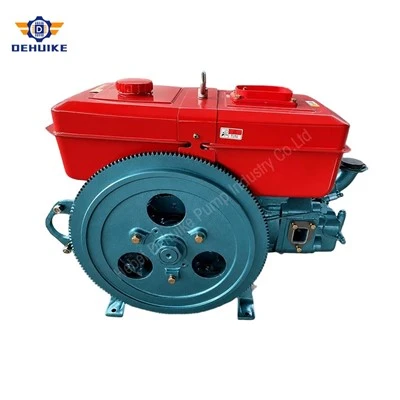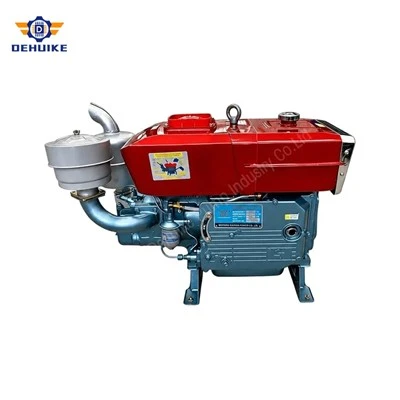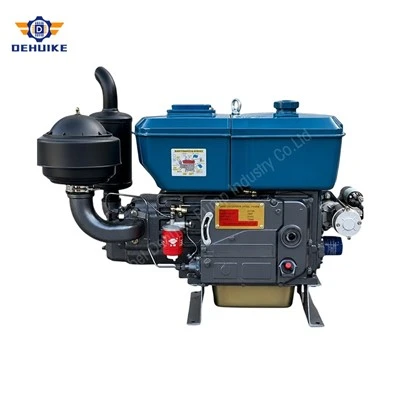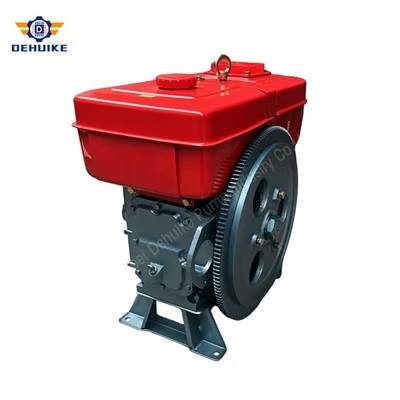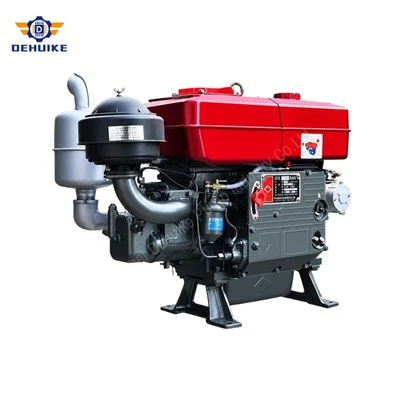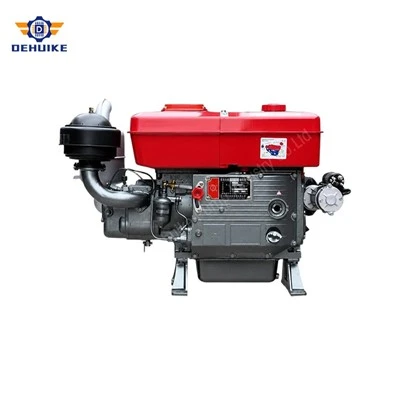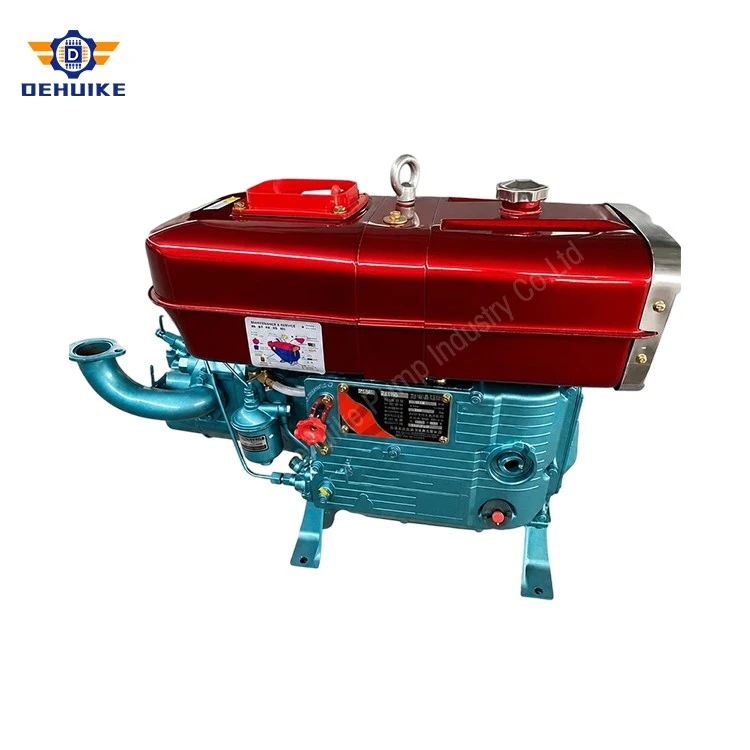
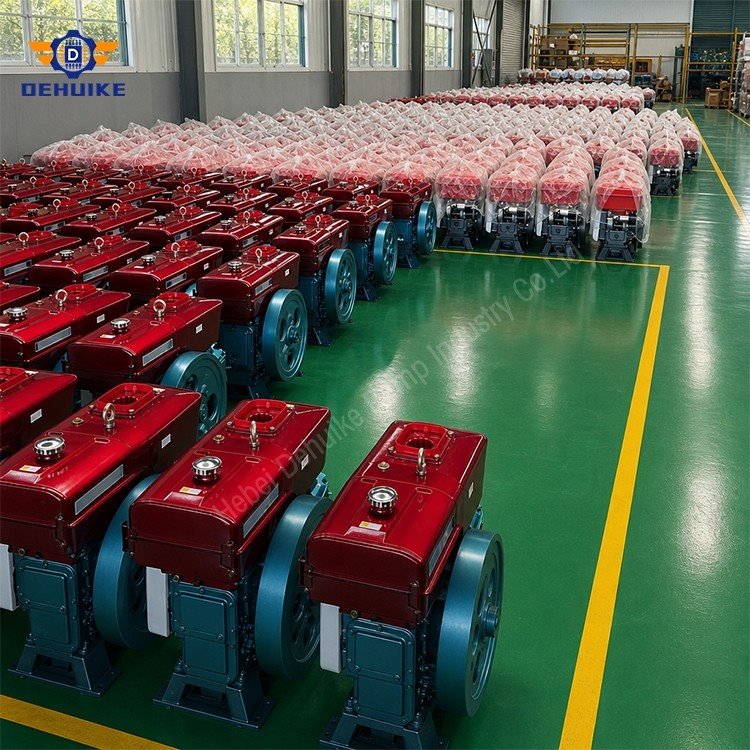
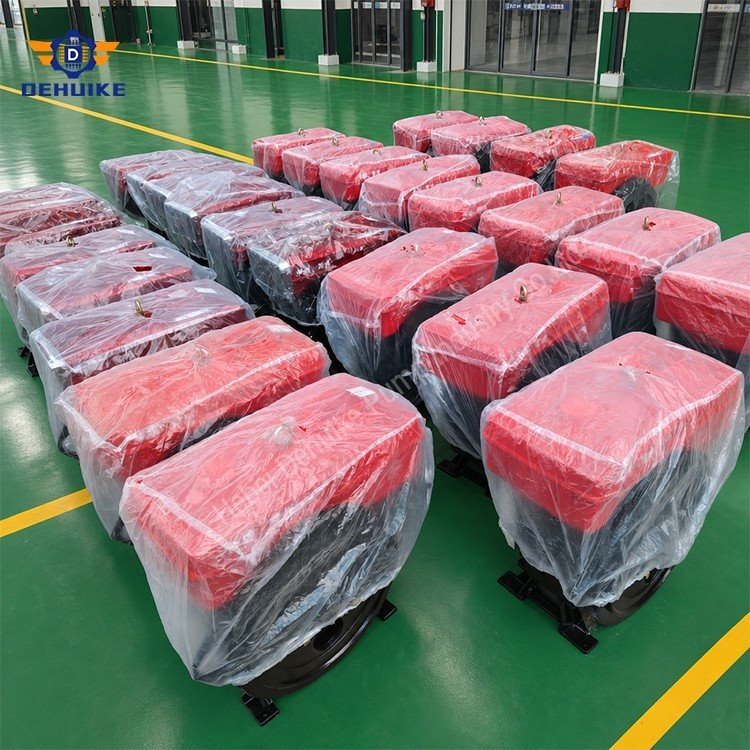
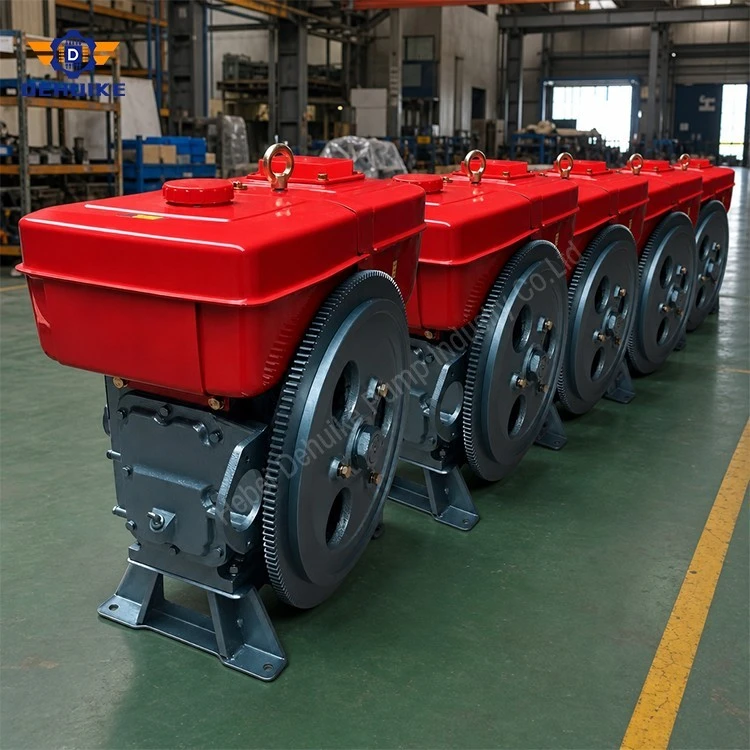
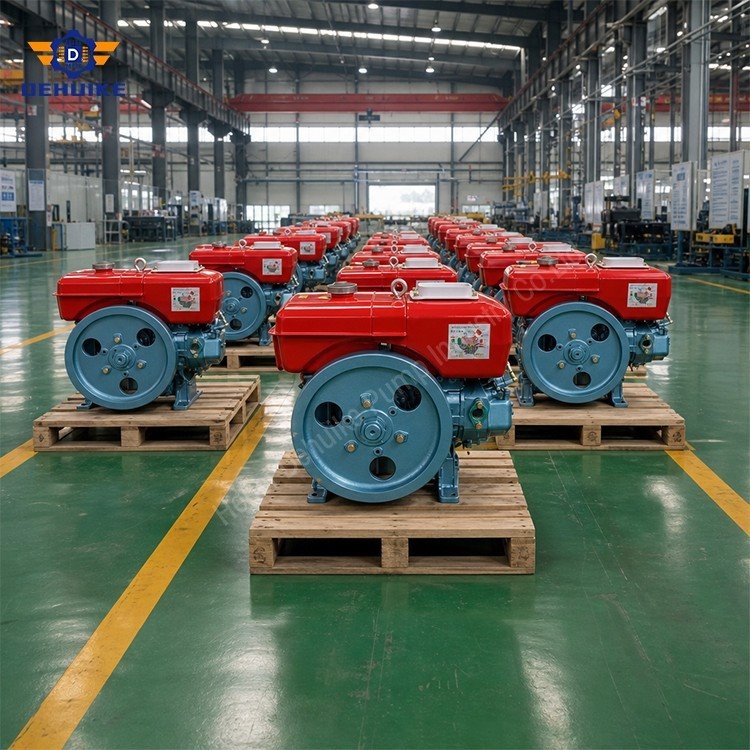
Hebei Dehuike Pump Industry Co., Ltd. is one of the most reliable manufacturers and suppliers of high torque diesel engine in China. With abundant experience, we are committed to providing high quality customized pumps with competitive price. Welcome to wholesale bulk high torque diesel engine for sale here from our factory. Also, pricelist is available.
Executive Introduction
Thermodynamic precision, high fuel utilization, and uncompromised mechanical reliability establish the Four Stroke Diesel Engine as the preeminent mechanical power source across modern global infrastructure, fluid transport, and utility installations. Unlike two-stroke cycle machinery that relies on piston-skirt scavenging ports and crankcase oil mixing, a Four Stroke Diesel Engine executes four distinct, mechanically segregated piston strokes over two complete revolutions (720 degrees) of the crankshaft: intake, compression, power, and exhaust. This discrete four-phase thermodynamic cycle completely isolates the lubricating oil reservoir from combustion gases, delivers superior volumetric scavenging efficiency, and produces exceptional brake mean effective pressure (BMEP) across wide rotational speed bands.
The operational superiority of four-stroke compression-ignition engines is rooted in thermal and mechanical equilibrium. Dedicated intake and exhaust strokes provide generous gas exchange durations, allowing cylinder combustion chambers to fill with pure, dense atmospheric air while thoroughly expelling post-combustion exhaust products. The absence of cylinder wall ports eliminates ring snagging risks, reduces lubricating oil consumption to negligible levels (less than 0.2% of total fuel burn), and provides an intervening idle stroke that allows valve faces, cylinder liners, and piston crowns to experience intermittent thermal cooling. Consequently, a modern Four Stroke Diesel Engine delivers substantially longer mean time between overhauls, lower exhaust gas smoke opacity, and superior compliance with rigorous international environmental directives.
Hebei Dehuike Pump Industry Co., Ltd. builds and supplies the heavy-duty DHK Four Stroke Diesel Engine product lineup, providing international engineering contractors, pumping equipment packagers, and power generation operators with proven prime movers. Drawing upon more than forty years of specialized foundry engineering and hydraulic machinery integration, Dehuike combines high-tensile tunnel crankcases, induction-hardened forged crankshafts, and precision direct-injection fuel delivery systems. Available in configurations spanning verified Stage-II mechanical injection variants to Stage-III electronic common-rail platforms, DHK four-stroke powertrains provide global buyers with verified continuous torque, robust thermal resilience, and minimal lifecycle operating expenses.
Technical Data Matrices and Power Classifications
To assist plant engineers, pumping station designers, and procurement managers in selecting appropriate power units, the DHK Four Stroke Diesel Engine family is structured into three distinct displacement and power brackets. Each tier represents a dedicated mechanical architecture optimized for specific continuous prime power and torque demands. The performance schedules below present verified engineering metrics recorded during standardized factory test cell runs.
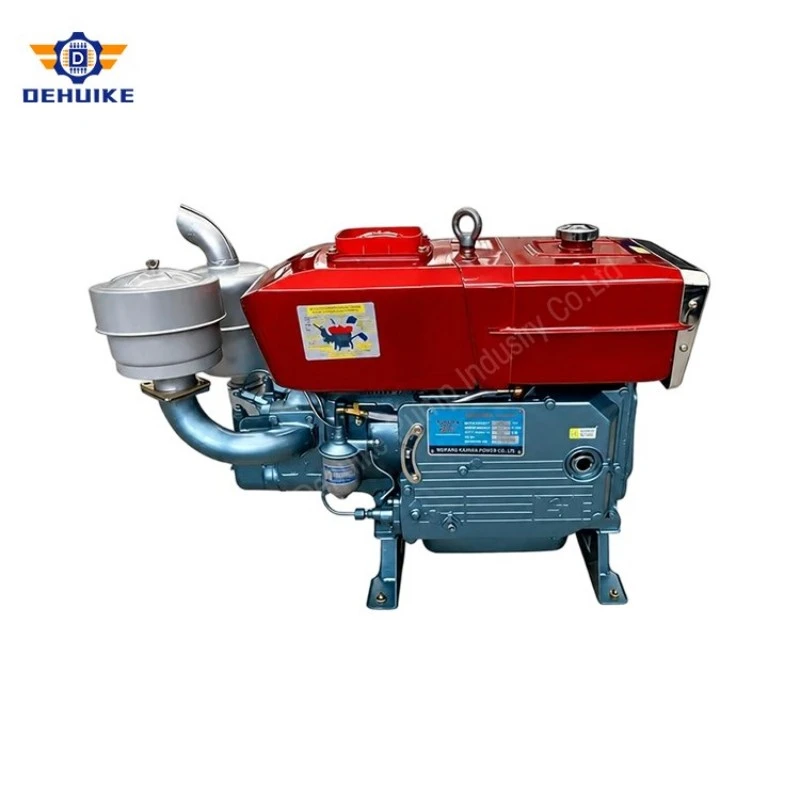
2.1 Tier I: Compact Small-Bore Four-Stroke Series (4 Cylinders)
Tier I encompasses compact 4-cylinder in-line four-stroke engines with swept displacements from 2.50 L to 4.84 L, providing continuous prime power ratings from 20 kW up to 120 kW. These agile four-stroke units serve as the primary drivers for mobile trailer-mounted dewatering pumps, municipal canal relift stations, small agricultural irrigation skids, and stationary standby generator canopies where space constraints and modest running costs predominate.
2.2 Tier II: Intermediate In-Line and Vee Industrial Series (6 & 8 Cylinders)
Tier II encompasses intermediate 6-cylinder and 8-cylinder four-stroke industrial powertrains with swept volumes spanning 14.00 L to 30.56 L, delivering continuous prime outputs from 243 kW to 861 kW. Equipped with removable wet-sleeve cylinder liners, shell-and-plate lubrication oil coolers, and modular SAE flywheel mountings, these engines provide robust mechanical power for municipal storm pumps, heavy industrial process water loops, and continuous base-load mining gensets.
2.3 Tier III: High-Capacity Multi-Cylinder Heavy-Duty Series (12 & 16 Cylinders)
Tier III represents our high-capacity four-stroke power bracket, utilizing heavily ribbed V-12 and V-16 power blocks with swept volumes extending from 23.88 L to 57.20 L. Delivering continuous prime outputs from 515 kW up to 1491 kW and standby peaks reaching 1640 kW, these heavy-duty units power regional flood relief pumping stations, marine cutter-head dredge impellers, deep open-pit mine tailings lines, and isolated multi-megawatt commercial micro-grids.
The published power ratings comply with ISO-3046/I standards, evaluated at standard atmospheric baseline conditions (100 kPa ambient barometric pressure, 298.15 K dry-bulb temperature, 30% relative air moisture). Operating shaft velocities are set for 1500 RPM (50 Hz generation) and 1800 RPM (60 Hz generation). Fuel economy metrics demonstrate excellent thermal conversion, achieving 193 g/kWh on the DHK-1470 platform and maintaining an economical 203 to 217 g/kWh across the high-capacity four-stroke envelope.
Product Details and Four-Stroke Combustion Architecture
The physical architecture of a heavy-duty Four Stroke Diesel Engine requires specialized component geometry to execute high-pressure combustion cycles with minimal parasitic frictional drag.
- Precision Overhead Valve Valvetrain and Camshaft Geometry: Gas exchange in DHK four-stroke engines is governed by heavy-duty overhead poppet valves actuated via forged alloy steel camshafts. Camshaft lobes feature computer-optimized acceleration ramps that provide rapid valve opening with cushioned seat touchdown. Valve stems are manufactured from high-nickel heat-resistant austenitic steel (21-4N), fitted with stellited valve faces that resist high-temperature exhaust gas erosion. Mechanical valve rotators (rotocaps) impart a slight rotational motion to each valve during opening, preventing localized carbon buildup and ensuring uniform circumferential heat transfer to the cylinder head valve seat.
- High-Compression Re-Entrant Piston Combustion Bowl: Pistons are gravity die-cast from eutectic hypereutectic aluminum-silicon alloy, featuring a re-entrant toroidal combustion bowl machined directly into the crown. During the compression stroke, the rising piston forces compressed air into this toroidal chamber, generating high-velocity micro-swirl and squish currents. As the fuel injector discharges diesel spray into the swirling charge, fuel droplets atomize and mix instantaneously, ensuring rapid chemical reaction kinetics, complete carbon burnout, and high thermal efficiency.
- Centrifugally Cast Wet Cylinder Liners with Plateau Honing: Cylinder liners are spun-cast from phosphorus-alloyed gray cast iron to produce dense, flaw-free pearlitic grain structures. The internal bore running surface undergoes high-precision plateau honing, creating a microscopic network of cross-hatched micro-valleys (depth 0.8 to 1.2 micrometers) beneath smooth plateau bearing plateaus. These microscopic oil micro-reservoirs maintain continuous hydrodynamic oil films on piston compression rings, suppressing scuffing and liner polishing across thousands of continuous running hours.
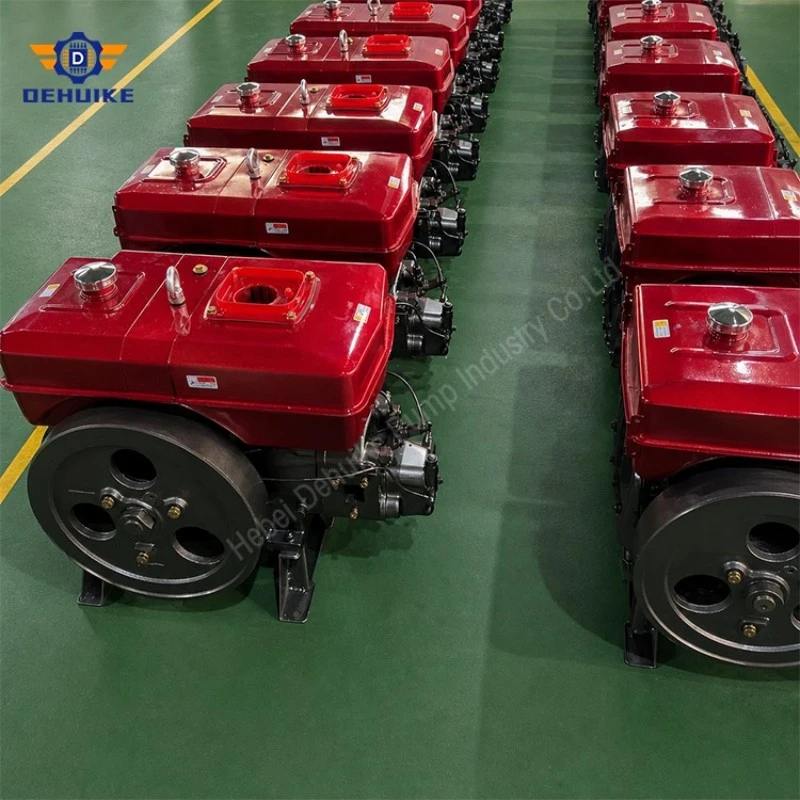
- Deep-Skirt Structural Crankcase with Cross-Bolted Main Caps: The main cylinder block is cast as a single rigid monobloc structure from high-strength HT250 alloy iron. The crankcase walls extend well below the crankshaft centerline (deep-skirt design), stiffened by heavy exterior truss ribbing. Main bearing caps are secured not only by vertical high-tensile studs but also by horizontal cross-bolts that clamp the caps rigidly to the lower block skirt, creating exceptional torsional stiffness that prevents crankshaft flex under 140 bar peak combustion firing pressures.
- Full-Flow Pressurized Engine Lubrication Gallery: Engine lubrication is supplied by an internal gear-driven positive displacement oil pump delivering pressurized oil through an integral crankcase oil gallery. Pressurized lube flows directly to the main journal bearings, connecting rod big ends, camshaft bushings, and overhead rocker gear. Dedicated crankcase piston cooling jets spray continuous streams of engine oil against the underside of the piston crowns, reducing top-ring groove temperatures below 200 deg C to prevent ring sticking and oil degradation.
Features and Operational Characteristics
The worldwide preference for a Four Stroke Diesel Engine in heavy continuous duty is supported by distinct thermodynamic and operational advantages over alternative combustion architectures.
- Exceptional Thermodynamic and Volumetric Efficiency: Because the intake and exhaust phases occupy full 180-degree crankshaft strokes, a Four Stroke Diesel Engine completely avoids the short-circuiting loss of fresh intake air common in ported two-stroke engines. The cylinder is charged with pure, unadulterated air, yielding volumetric efficiencies exceeding 95% in turbocharged variants. This clean scavenging maximizes oxygen availability, resulting in high brake thermal efficiency (exceeding 42%) and remarkable fuel economy under continuous prime loading.
- Total Segregation of Lubricating Oil and Combustion Chambers: In a four-stroke architecture, lubricating oil remains strictly confined to the oil pan, galleries, and friction surfaces, wiped cleanly from cylinder walls by three-piece oil control rings. There is zero requirement for oil premixing in fuel, and no lubricating oil is discharged through exhaust ports. This complete segregation results in minimal lubricating oil consumption, virtually zero particulate exhaust smoke, and clean exhaust gas streams suitable for downstream catalytic oxidation or particulate filtration.
- Broad Usable Torque Band and Heavy Lugging Capability: DHK four-stroke engines generate substantial low-speed torque rise (typically 15% to 25% torque reserve above nominal rated torque). When driven water pumps or dewatering machinery encounter sudden fluid density increases, sediment slugs, or increased hydraulic head, the engine responds with robust lugging torque, maintaining continuous shaft rotation without stalling or hunting.
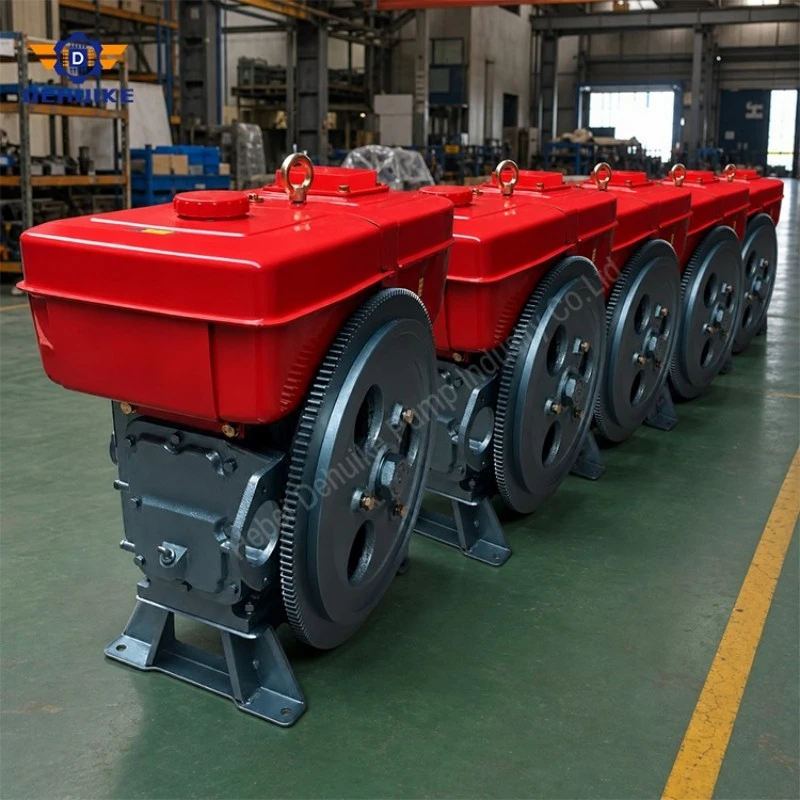
- Reduced Thermal Stress on Cylinder Heads and Valve Components: Because power strokes occur only once every four piston movements, internal combustion chamber surfaces experience an idle cooling period during the intake and exhaust strokes. Peak heat flux into cylinder heads and valve bridges is dramatically lower than in two-stroke engines of equivalent displacement. This intermittent thermal cycle preserves valve seat hardness, prevents thermal fatigue cracking, and significantly prolongs cylinder head operational life.
- Full Compliance with International Emission Standards: The precise valvetrain timing and clean combustion of the four-stroke cycle allow exact control over combustion chemistry. DHK four-stroke engines easily achieve compliance with China II (Tier 2) mechanical standards and China III (Tier 3) electronic standards, exhibiting low carbon monoxide (CO), reduced nitrogen oxides (NOx), and minimal particulate matter (PM).
Production Process and Precision Metallurgy
Building an industrial Four Stroke Diesel Engine requires meticulous metallurgical composition, micron-scale multi-axis CNC machining, and automated quality verification across every manufacturing phase.
- Vacuum-Assisted Electric Induction Casting of Structural Blocks: Engine blocks and cylinder heads are cast in our dedicated foundry using automated resin-bonded sand molding and medium-frequency electric induction melting furnaces. The molten iron melt is treated with inoculants and alloyed with chromium, copper, and molybdenum to achieve dense pearlitic matrices with tensile strength exceeding 280 MPa. Vacuum-assisted pouring prevents mold gas entrapment, eliminating porosity defects in critical high-pressure oil passages and cylinder fire decks.
- Precision Automated Horizontal Milling Cells: Finish machining of cylinder blocks, bearing tunnels, and cylinder heads takes place within precision automated horizontal milling cells in climate-regulated clean workshops. Cylinder liner landing seats, main bearing bores, and camshaft journals are machined in a single clamping reference, maintaining axial parallelism within +/- 0.005 mm and ensuring perfect alignment of the crankshaft and valvetrain.
- Induction Hardening and Superfinishing of Rotating Components: Crankshafts are drop-forged from high-grade 42CrMo alloy structural steel. Journal surfaces and fillet transition radii undergo high-frequency induction hardening to achieve surface hardness of HRC 54-60 with deep hardened case depth. Crankshaft journals and camshaft lobes are then processed through micro-polishing superfinishing machines, achieving mirror-like surface roughness below Ra 0.15 micrometers to ensure immediate hydrodynamic bearing film formation.
- Robotic Multi-Axis Torque-Yield Bolting Spindles: Critical powertrain threaded fasteners-including cylinder head studs, main journal retainers, and rod cap bolts-are torqued using robotic multi-axis nutrunner cells. The equipment operates under computer-directed torque-turn-yield protocols, continuously logging clamping angle, yield inflection points, and final preload, permanently recording the build log of every assembled engine.
- Cellular Dynamometer Load Acceptance Procedures: Every assembled DHK four-stroke engine enters automated dynamometer test cells for full-load verification. The testing sequence includes progressive thermal conditioning followed by continuous prime rating runs at 25%, 50%, 75%, and 100% load, concluding with an acute 10% peak overload verification. Automated data-acquisition systems monitor fuel consumption rates, lube oil pressure, blowby gas volume, and coolant temperature differentials under live load.
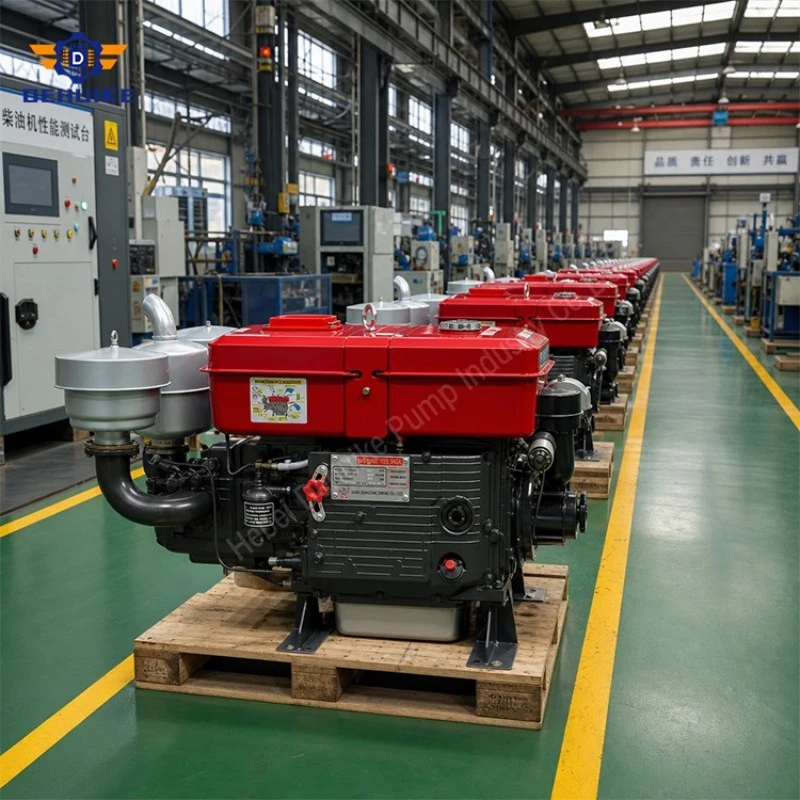
Quality Assurance and Factory Certification Standards
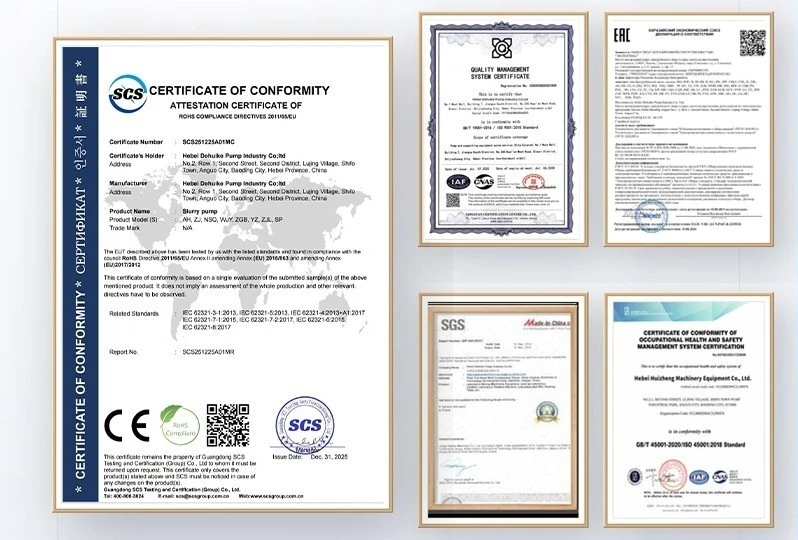
Quality management protocols at Dehuike adhere strictly to certified ISO 9001, Eurasian EAC, and European RoHS standards, requiring each four-stroke powertrain to pass rigorous physical and thermodynamic audits.
- Combustion Gas Pressure and Valvetrain Timing Interferometry: During prototype verification and production quality auditing, combustion chambers are instrumented with piezoelectric pressure transducers to record in-cylinder pressure rise rates (dP/dTheta). High-speed optical shaft encoders verify that valve opening, valve overlap, and fuel injection timing align precisely with thermodynamic design profiles, confirming balanced cylinder firing.
- Non-Destructive Testing of Critical Powertrain Metallurgy: All critical structural components-including forged alloy crankshafts, piston connecting rods, valve camshafts, and multi-valve head castings-undergo fluorescent magnetic particle inspection (MPI) and ultrasonic flaw detection. These NDT procedures ensure that no subsurface forging voids, slag inclusions, or quench micro-cracks compromise structural integrity under cyclic fatigue.
- Thermal Cycle Stress Testing and Coordinate Metrology: Audit sample engines complete accelerated thermal fatigue profiles inside automated test cells, running at full continuous load before experiencing rapid coolant chilling loops. Subsequent teardowns and optical CMM scans confirm zero dimensional warping across the cylinder block, liner seats, or head fire decks.
- Two-Year Manufacturer Warranty Guarantee: Dehuike provides complete 24-month (2-year) structural warranty coverage on all four-stroke engine assemblies, protecting industrial buyers against casting flaws and manufacturing variances (normal scheduled wear parts excepted). Our international technical support division provides expedited parts fulfillment and engineering guidance to ensure maximum machine uptime.
Our Service and Global Client Support
At Dehuike Pump Industry, customer commitment extends across the entire equipment lifecycle, providing international distributors, pump packaging facilities, and industrial end-users with comprehensive technical support.
- Dedicated Commissioning Assistance and System Integration: Our international engineering services group provides comprehensive powertrain matching consultations for equipment builders. By evaluating client pump performance curves, impeller inertia, and continuous shaft horsepower demand at the Peak Efficiency Point (BEP), our engineers specify optimal PTO clutch couplings, flexible drive shafts, and engine speed governor settings to eliminate torsional resonance and ensure smooth fluid flow.
- Preventive Maintenance and Factory Service Contracts: To maximize operational availability in remote mining concessions, municipal pump stations, and agricultural projects, Dehuike offers customized scheduled maintenance agreements. We supply comprehensive preventative maintenance checklists, fluid sampling diagnostic protocols, and scheduled overhaul kits designed to minimize operational downtime and extend total powertrain service life.
- Guaranteed Ten-Year Spare Parts Fulfillment: We understand that industrial machinery must remain productive for decades. Dehuike maintains an extensive central warehouse of authentic replacement parts-including cylinder liners, piston assemblies, main bearings, injector nozzles, high-pressure injection pumps, and complete gasket sets-with a formal guarantee of spare parts availability for ten years following model purchase. Pre-assembled initial service consumable packs (oil and fuel filter elements, alternator v-belts, and valve cover gaskets) are systematically packed with each engine shipment.
- Flexible SKD and CKD Export Assembly Programs: To assist international machinery distributors in minimizing customs duties, reducing ocean freight volume, and promoting domestic industrial employment, Dehuike provides customized Semi-Knocked-Down (SKD) and Completely-Knocked-Down (CKD) supply arrangements. We provide comprehensive technical assembly documentation, specialized assembly fixtures, and quality control guidelines enabling overseas facilities to assemble, test, and brand DHK engines with complete technical autonomy.
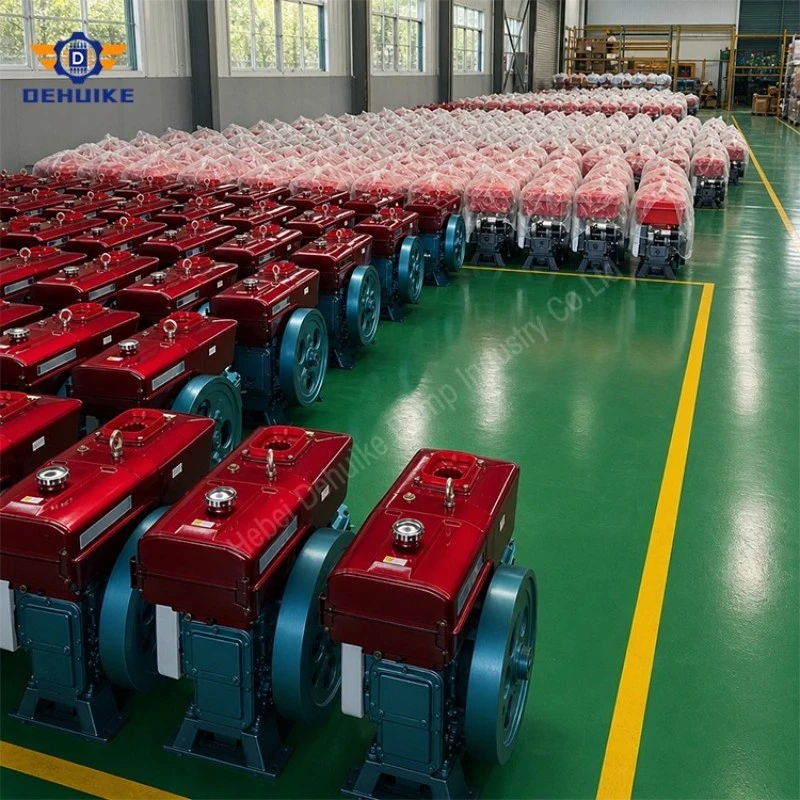
- Seaworthy Protective Packaging and International Shipping: Outbound machinery receives dual-layer anti-rust protection: internal fuel rails are inhibited with calibration preserving oil, exposed shafts and machined faces are sealed with anti-corrosion wax film, and complete engines are heat-wrapped in heavy-gauge barrier foil containing desiccant silica charges. All units are bolted inside fumigated solid timber cases certified under international ISPM-15 standards, arranged for containerized maritime ocean freight (for shipments above 500 kg) or express air freight (for emergency spares between 50 kg and 500 kg) under standard commercial trade terms (FOB / CIF destination ports).
Frequently Asked Questions (FAQ)
Q1: What are the fundamental mechanical reasons for choosing a Four Stroke Diesel Engine over a two-stroke industrial diesel engine?
A Four Stroke Diesel Engine offers several major engineering advantages for stationary and industrial equipment. First, because intake and exhaust events occupy separate, dedicated 180-degree strokes, cylinder scavenging is nearly 100% efficient, eliminating the unburned fuel and fresh-air loss that occurs through two-stroke exhaust ports. This results in significantly higher brake thermal efficiency and 20% to 35% lower specific fuel consumption. Second, a four-stroke engine confines its lubricating oil to the crankcase sump, wiped cleanly by dedicated oil control rings without entering combustion chambers, which eliminates blue exhaust smoke and sharply reduces lubricating oil consumption. Third, having an idle stroke between power events allows intermittent cooling of the cylinder head, valves, and piston crown, resulting in dramatically lower thermal stress and longer operational life.
Q2: How frequently should valve clearance (lash) be inspected and adjusted on a DHK four-stroke engine?
On DHK industrial four-stroke diesel engines, valve lash should be inspected and adjusted after the initial 50-hour break-in period, and subsequently every 500 to 1,000 operating hours as part of routine preventive maintenance. Correct valve clearance ensures that valves seat firmly against their cylinder head inserts, allowing proper heat conduction into the water jacket while preventing valve burning. Clearances should always be measured with a precision feeler gauge when the engine is completely cold, following the exact intake and exhaust lash specifications indicated on the engine serial nameplate.
Q3: How does the closed crankcase ventilation (CCV) system manage blowby gases in a four-stroke diesel engine?
During the compression and power strokes, a minute volume of combustion gas inevitably slips past the piston rings into the crankcase (blowby). DHK four-stroke engines feature an engineered Closed Crankcase Ventilation (CCV) system equipped with an internal multi-stage coalescing oil-mist separator. The system extracts blowby gases from the valve cover, coalesces microscopic suspended oil droplets, and drains the reclaimed liquid oil back into the engine oil pan. The clean, oil-free blowby gases are then safely routed into the engine intake air stream downstream of the air filter, preventing crankcase overpressurization while eliminating external oil mist discharge into the engine room.
Q4: How should consulting engineers size a four-stroke diesel engine when directly driving a high-capacity centrifugal water pump?
When pairing a Four Stroke Diesel Engine with an industrial water or slurry pump, mechanical engineers should evaluate the pump's absorbed shaft power at its Peak Efficiency Point (BEP) across the entire system head curve. Sound engineering practice recommends specifying an engine whose continuous Prime rating includes a 15% to 20% power safety margin over maximum pump shaft demand. This buffer accommodates transmission belt/coupling friction losses, transient fluid viscosity increases, and atmospheric derating (roughly 1% per 100 meters above 1000 m elevation, and 1% per 5 deg C above 25 deg C ambient), ensuring the engine operates cleanly within its lowest specific fuel consumption band without lugging or thermal overloading.
Q5: What lubricating oil specification and drain intervals are recommended for DHK four-stroke industrial engines?
DHK four-stroke engines require high-quality heavy-duty diesel engine lubricating oil formulated to API CI-4 Plus through CK-4 service categories. For general industrial operating temperatures (-15 deg C to +40 deg C), SAE 15W-40 multigrade oil is standard; for arctic climates, synthetic SAE 10W-30 or 5W-40 is recommended. Standard oil drain and filter replacement intervals are established at 250 operating hours under heavy duty, extendable to 500 hours when operating on low-sulfur diesel fuel combined with routine used-oil spectroscopic analysis. Maintaining high lubricating oil quality is critical to preserving hydrodynamic bearing films and preventing piston ring sticking.
Q6: What export documentation and technical certifications accompany DHK four-stroke shipments?
Each exported DHK four-stroke engine package is accompanied by an authenticated technical compliance dossier. This file contains the manufacturer's Certificate of Inspection and Quality, individual computerized dynamometer load charts, dimensioned installation schematics, wiring diagrams, and detailed workshop maintenance manuals with exploded parts illustrations. Every engine is covered by Dehuike's 24-month (2-year) factory warranty through our international engineering division. Complimentary initial maintenance packs (filtration elements, alternator v-belts, and joint gaskets) are systematically packed with each order to guarantee seamless on-site commissioning.

Hot Tags: high torque diesel engine, China high torque diesel engine manufacturers, suppliers, factory