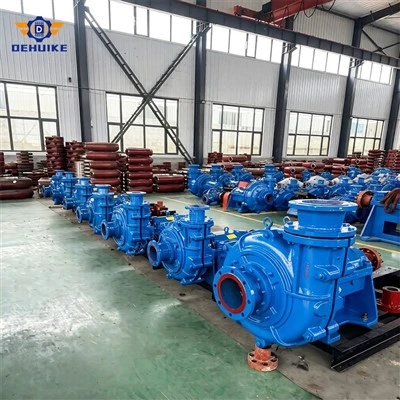
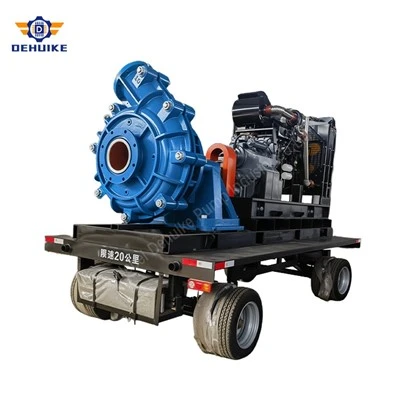
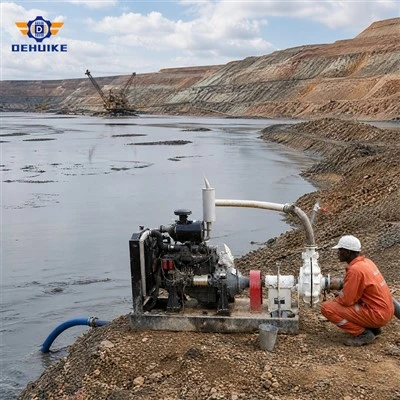
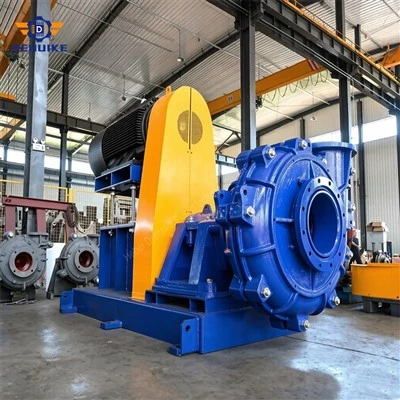
As a critical category of industrial pumps, heavy-duty horizontal slurry pumps are extensively utilized in environments characterized by high abrasion and high corrosion, such as those found in the mining, metallurgy, power generation, and coal industries. Driven by the transformation and upgrading of China's manufacturing sector and the ongoing advancement of infrastructure development, the heavy-duty horizontal slurry pump industry has demonstrated steady growth. In terms of market scale, the Chinese market for heavy-duty horizontal slurry pumps reached 12 billion RMB in 2024, representing a year-on-year growth rate of 7.1%. This expansion is primarily fueled by the continued growth of downstream sectors, including mining machinery, coal washing and processing equipment, and desulfurization systems for thermal power plants. Furthermore, increasingly stringent environmental regulations have spurred demand for high-efficiency, energy-saving, and corrosion-resistant slurry pumps, providing an additional boost to industry growth.
Looking back at the industry's development, the compound annual growth rate (CAGR) from 2015 to 2020 stood at approximately 5.3%, though growth slowed to 2.1% in 2020 due to the impact of the pandemic. Since 2021, however, the industry has experienced a recovery, supported by a rebound in the domestic economy and policies promoting "new infrastructure." The growth rate reached 6.2% in 2021, 6.8% in 2022, and climbed further to 7.0% in 2023. This upward trajectory continued into 2024, underscoring the industry's strong resilience and sustained growth momentum.
Looking ahead to 2025, the market scale for heavy-duty horizontal slurry pumps in China is projected to reach 12.9 billion RMB, with a year-on-year growth rate of 7.5%. This forecast is supported by several factors: first, policy backing for the high-end equipment manufacturing sector under the 14th Five-Year Plan; second, sustained investment in downstream industries such as mining machinery, clean coal utilization, and thermal power generation; and third, the accelerating trend of domestic substitution, as local brands continue to improve their technology and quality, gradually replacing imported products. In terms of regional market distribution, East China remained the largest consumer market for heavy-duty horizontal slurry pumps in 2024, accounting for 32% of the total, followed by North China at 25% and Southwest China at 18%. East China's robust manufacturing base-characterized by a high concentration of enterprises in mining machinery and power equipment-serves as the primary source of demand. In North China, the abundance of coal resources has driven demand for slurry pumps, fueled by the development of coal-washing plants and thermal power stations. Meanwhile, accelerated infrastructure construction in Southwest China-particularly the development of mineral resources in provinces like Yunnan and Guizhou-has also spurred market growth in that region.
Regarding the competitive landscape, the domestic market for heavy-duty horizontal slurry pumps exhibited a high degree of concentration in 2024, with the top five companies collectively holding a market share of approximately 48%. Shijiazhuang Industrial Pump Factory led the market with a 15% share, followed by Shenyang Pump Co., Ltd. (12%), Ebara Machinery (China) Co., Ltd. (9%), Shanghai Kaiquan Pump Group (7%), and LEO Group Zhejiang Pump Co., Ltd. (5%). These companies possess strong competitive advantages in areas such as technical R&D, product performance, and after-sales service, allowing them to secure stable market positions.
As for exports, the value of China's heavy-duty horizontal slurry pump exports reached 1.43 billion yuan in 2024, an increase of 9.2% year-on-year. Key export destinations include Southeast Asia, Africa, and South America, with particularly rapid growth in demand from countries such as Indonesia, Vietnam, Peru, and South Africa. The rising technical sophistication and added value of these exported products indicate that Chinese enterprises are becoming increasingly competitive in the international market.