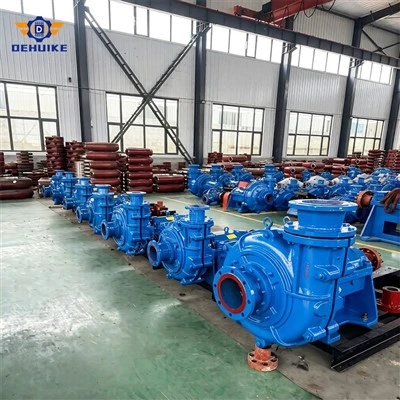
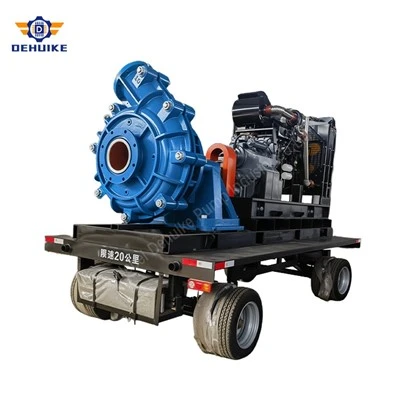
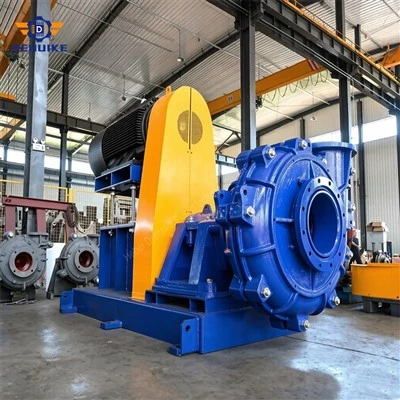
Horizontal slurry pumps are designed for horizontal installation, resulting in a compact structure, a low center of gravity, and stable operation, while also facilitating inspection and maintenance. Compared to standard clear-water pumps, horizontal slurry pumps incorporate specialized considerations regarding the materials used for flow-path components, impeller design, and sealing structures-all engineered to withstand demanding operating environments characterized by high levels of abrasion, corrosion, and solids concentration.
At a given rotational speed, a slurry pump produces a specific, limited head. The flow rate and shaft power at the operating point are determined by the characteristics of the system to which the pump is connected; the head varies as a function of the flow rate.
These pumps offer stable operation and continuous transport, with no pulsation in flow or pressure.
Generally, they lack self-priming capability; the pump casing must be filled with liquid, or the piping system must be evacuated (placed under vacuum), before operation can commence.
Slurry pumps should be started with the discharge valve closed, whereas vortex pumps and axial-flow pumps should be started with the valve fully open, in order to minimize the power required for startup.