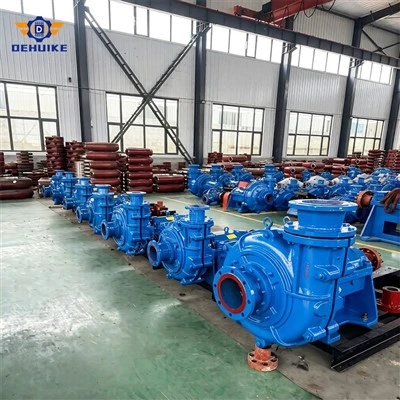
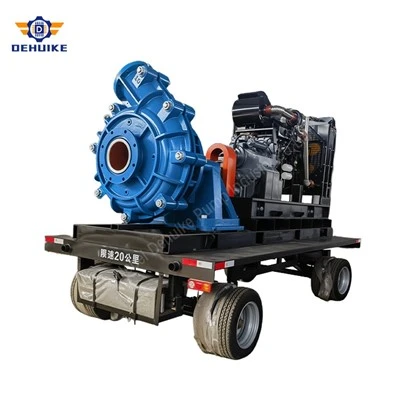
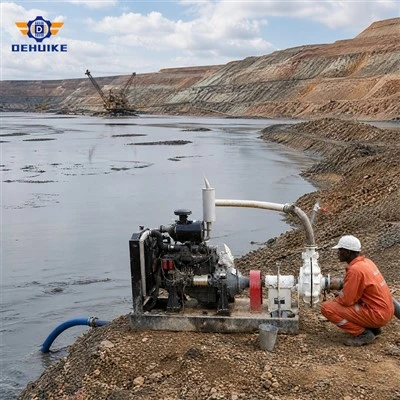
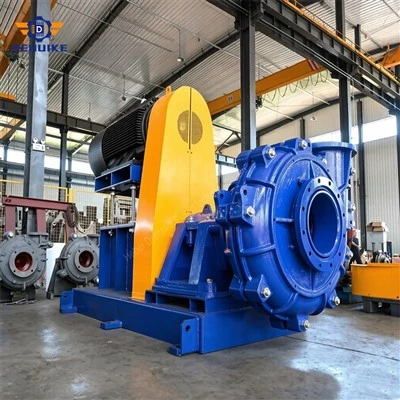
Horizontal Slurry Pumps: Designed for stability and ease of maintenance, suitable for standard operating conditions.
Easy to maintain, stable in operation, and highly adaptable.
Low maintenance complexity: Horizontal slurry pumps feature a "horizontal installation" configuration, with core components-such as the pump casing, impeller, and seals-positioned at ground level. Replacing wear parts (e.g., impellers or packing) does not require dismantling pipelines or lifting the pump body. Routine maintenance can be completed by a standard technician in just 30 minutes, significantly reducing downtime-an ideal solution for applications requiring frequent maintenance (such as daily inspections in mining operations).
Enhanced operational stability: With the pump shaft and motor shaft aligned on the same horizontal plane, concentricity is easily calibrated (deviations can be kept within 0.1 mm). This results in minimal vibration during operation (amplitude ≤ 0.05 mm). Furthermore, the flow-path components (impeller and liners) experience uniform stress, which prevents wear caused by imbalance. Consequently, the mean time between failures (MTBF) is 20%–30% longer than that of vertical pumps.
Suitable for low-to-medium concentration media: Designed for slurries with a solids content of 20%–40% (such as coal slurry in coal washing plants or wastewater in sand and gravel processing), these pumps utilize a closed-impeller design that minimizes backflow. This achieves a transport efficiency of 75%–85% and ensures the system remains resilient against sudden load fluctuations caused by changes in slurry concentration.